The Algarve with little ones
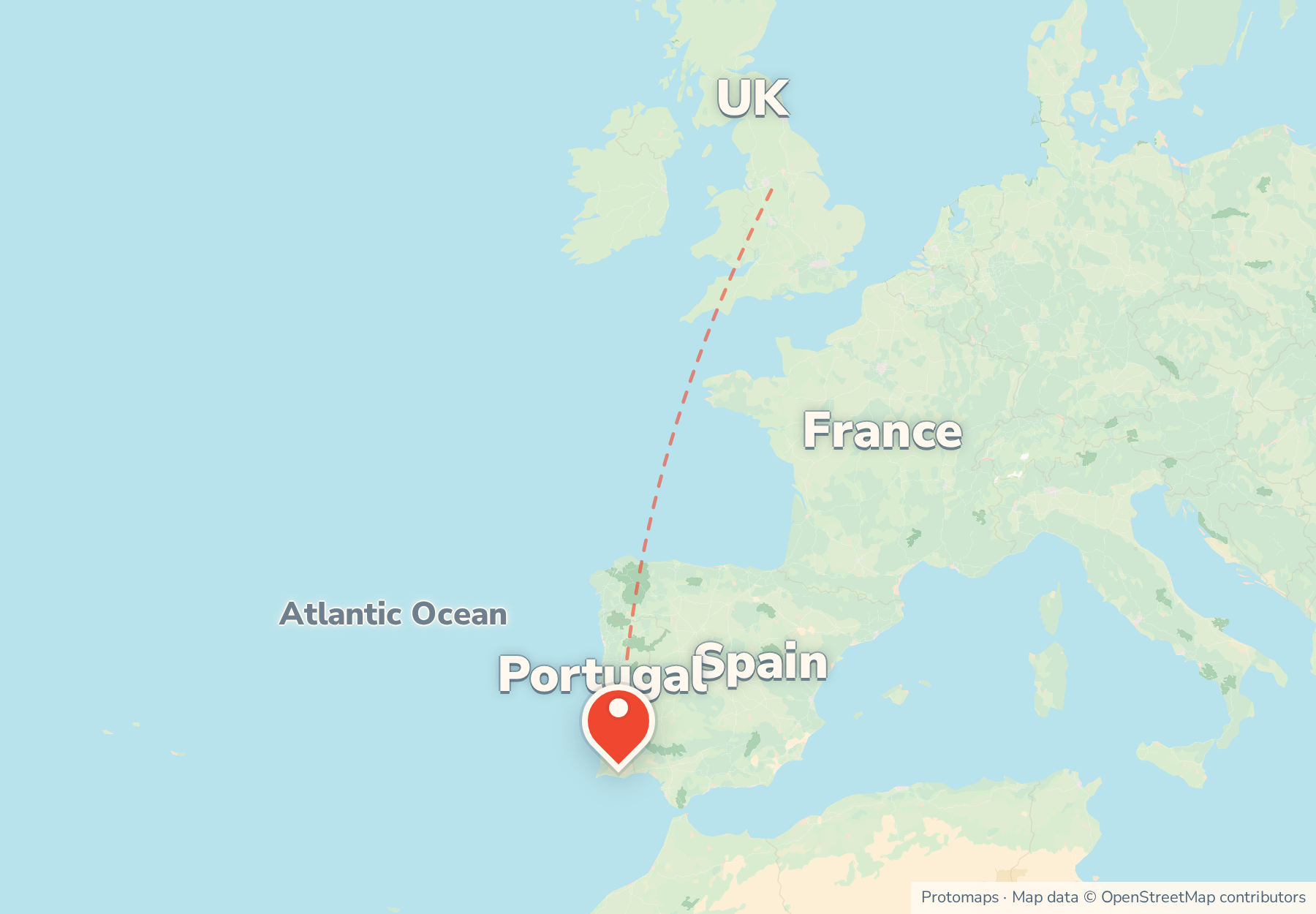
Portugal's south coast is about two and three quarter hours from London, served by one airport with nothing on the coast more than 75 minutes away, and it sits in the same time zone as the UK, so naps and bedtimes don't move. The coast runs from the golden cliffs and famous cove beaches of the west to the long, flat, easy-access sand around the central and eastern resorts.
On this page
A family verdict at a glance
The quick read before the detail: who the Algarve suits, the season to aim for and what to nail down before you book.
Best for
A beach week without jet lag, flat sand and boardwalks for the buggy, and restaurants where children are welcome at dinner, evenings included.
Maybe not for
Anyone who needs a bath-warm sea. This is the Atlantic, around 21 to 22 degrees at its August best, and cooler in the west.
Best ages
Babies and toddlers do well in June and September, and the short flight makes it an easy first trip abroad.
Best areas
Alvor, Vilamoura, Armação de Pêra or Meia Praia at Lagos for flat sand; Tavira and the east, where barrier islands keep the sea warmer and flatter.
Why families pick it
One airport with short transfers, mild summers compared with Greece and supermarkets that cover most of what a baby needs, with formula the thing to bring from home.
Check before you book
Whether your beach is flat or down a staircase, the transfer time, the cot and a heated pool outside high summer.
On UK time, and open all year
Portugal keeps the same time as the UK all year, the clock changes included, so the 5.45am wake-up, the lunchtime nap and the seven o'clock bedtime stay where they are. The flight is about two and three quarter hours from London, a little more from northern airports, into the single airport at Faro, from which nothing on the coast is more than about 75 minutes away.
The swimming season runs roughly May to October, with lifeguards on the main beaches from about June to late September. Winter here isn't like the Greek islands: the Algarve has a big resident population, so towns, restaurants, supermarkets and shopping centres stay open all year. A February half-term week here means mild, often sunny days around 16 to 17 degrees, playgrounds and boardwalks rather than beaches, with swimming in a heated or indoor hotel pool rather than the sea.
A quick gut checkIs the Algarve right for your family?
Worth comparing if
You want a short flight with no time change, flat sandy beaches with boardwalks behind them and a destination that works from a first trip with a baby to a waterpark week at five.
Weigh it up if
You are mainly after warm sea, in which case the Med or the Canaries do it better, or you've set your heart on a cove beach without checking how you get down to it.
To sort out before booking
The beach access at your exact base, flat or steps, the transfer with a child seat booked, the cot and the air conditioning.
The numbers, the basics and the ages
Everything you'd want to skim first: the quick facts, the everyday practicalities and how the Algarve changes as children grow.
Quick facts for UK families
Money, plugs, language and the basics
- The Algarve is Portugal's southernmost region, a strip of coast about 93 miles (150 km) long between the Spanish border and the Atlantic corner at Sagres.
- The currency is the euro and cards are accepted almost everywhere.
- Sockets are the round two-pin European type, so UK plugs need an adapter. The voltage matches the UK.
- The language is Portuguese. English is widely spoken in the resorts, and Portuguese people would rather you tried English than Spanish.
- Tap water is safe to drink but hard and noticeably chlorinated, so most people buy bottled for taste. It's fine for making up feeds once boiled, the same rule as at home.
- Your GHIC card covers state healthcare here, and 112 is the emergency number, the same as the rest of the EU.
- Faro's old town, Tavira's riverfront and the market halls at Loulé and Olhão are short drives from the resorts and worth a morning.
The Algarve by age and stage
Babies
A short flight and pharmacies that cover the essentials. Aim for June or September, a flat base and a cot confirmed.
Toddlers
Boardwalks for the buggy, flat sand for digging and calm lagoon water in the east. Check whether your beach is flat or down steps before you book.
Preschoolers
Old enough for Zoomarine, the ferry to Ilha de Tavira and the smaller waterpark zones.
Young children
By five or six, the big waterslides, the boat trips and the cove staircases are all within reach.
Where to base yourselves
The resort coasts side by side, an orientation map of the region and what the beaches are really like underfoot.
Where to stay with young children
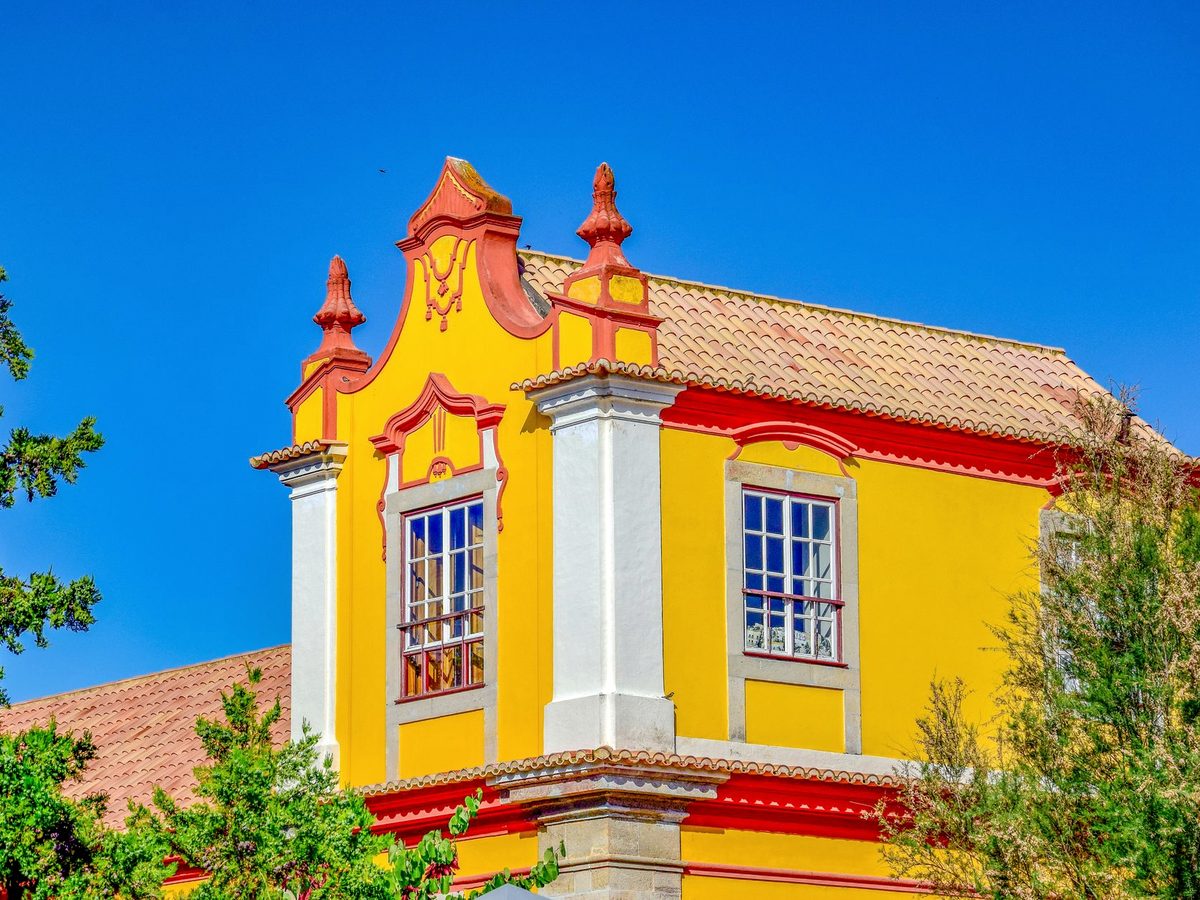
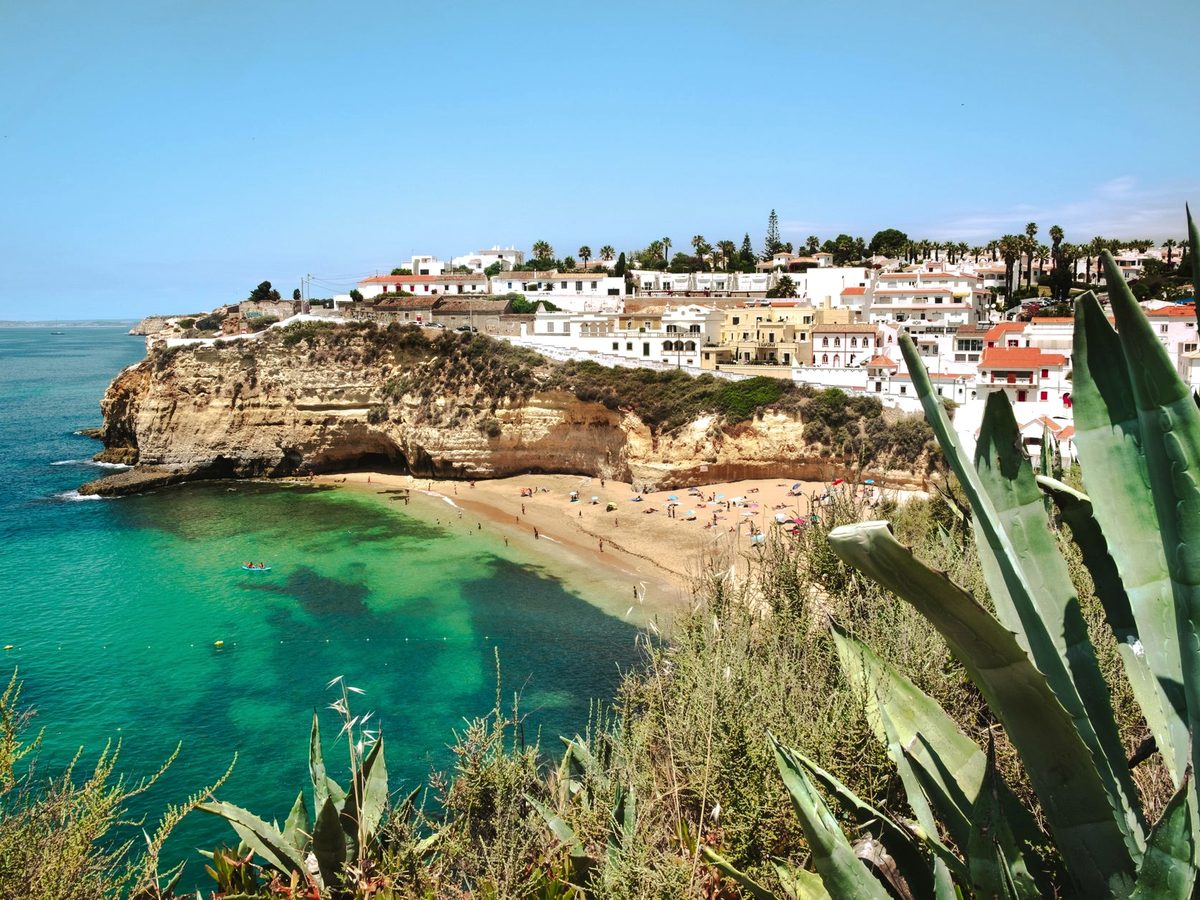
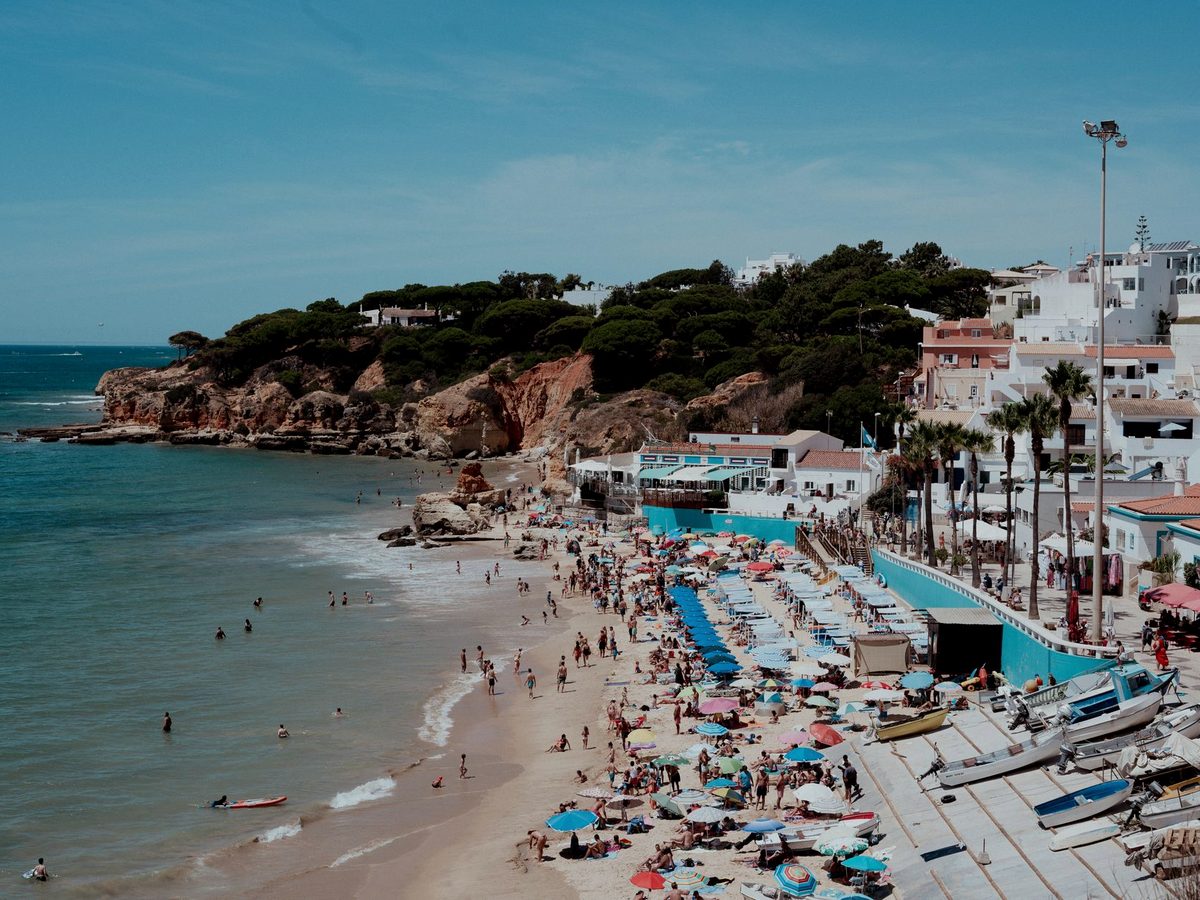
The coast divides into flat beaches and cove beaches at the bottom of cliffs, and with a buggy and a beach tent that distinction matters more than anything else here. The postcard Algarve, the golden stacks and hidden coves of Carvoeiro, Camilo and Marinha, mostly sits below long staircases. The flat Algarve is Alvor with its boardwalk over the dunes, Meia Praia's miles of open sand at Lagos, Armação de Pêra's huge bay, Vilamoura's level marina-front and the island beaches of the east. Only the flat version works as an everyday beach with a two-year-old; the coves are for one outing.
In the centre, Vilamoura is the purpose-built option, with a marina, level promenades and big hotels, while Quarteira next door has the same flat beach, lower bills and more locals than visitors. Two different places share the name Albufeira: the whitewashed Old Town above two sheltered town beaches, reached by an escalator and a lift, is busy in a family way, while the Strip just over a mile (about 2 km) east is the party zone and best left to the 18 to 25s. Armação de Pêra is plainer than its neighbours but flat, walkable and backed by kilometres of sand.
Further west, Praia da Rocha pairs a big lively resort with one of the region's largest beaches, with staircases between the clifftop town and the sand. Carvoeiro is the most photographed village on this stretch, and the least practical, all steep lanes down to a small cove beach off its square. Alvor suits this age best: a compact village with a calm estuary on one side, a huge flat beach on the other and a railed boardwalk connecting it all. Lagos, at the far end, is a walled town with a marina and the region's widest choice of restaurants, with Meia Praia as the everyday beach and the famous coves saved for one early-morning outing. In the east, Tavira is a working riverside town rather than a resort, its beach a ferry ride away on a barrier island of endless flat sand.
| Area | Transfer | The beach | The feel |
|---|---|---|---|
| Vilamoura and Quarteira | About 25 to 30 min | Wide flat sand, level or ramped access | Vilamoura is the upmarket marina end; Quarteira next door is a working town with a palm-lined promenade and better value. |
| Albufeira Old Town | About 35 to 45 min | Flat town beaches, reached by escalator and lift | Whitewashed centre above two sheltered beaches, busy and family-filled in the evenings. Book this side, not the Strip. |
| Carvoeiro | About 50 min | Small cove, steps down from the square | A former fishing village that funnels down to one small beach. Steep streets, low-rise buildings and crowded in peak weeks. |
| Praia da Rocha and Portimão | About 50 to 60 min | Enormous flat sand, staircases from the town above | A big, lively, good-value resort strip on the cliff above one of the region's largest beaches. |
| Alvor | About 50 to 60 min | Huge flat beach and a calm lagoon, boardwalk access | A compact village between an estuary and the open sand, with a long flat boardwalk over the dunes. |
| Lagos | About 60 to 75 min | Meia Praia is flat for miles; the famous coves are step heavy | A walled working town with a big choice of restaurants, Meia Praia for every day and the coves for one outing. |
| Tavira and the east | About 35 to 40 min | Endless flat island sand, reached by a short ferry | A town on a river rather than on the beach, with the warmest, calmest sea in the Algarve behind the Ria Formosa lagoon. |
Map of the main family areas
An orientation map of the areas above, the airport and the bigger days out. The numbers match the key beneath.
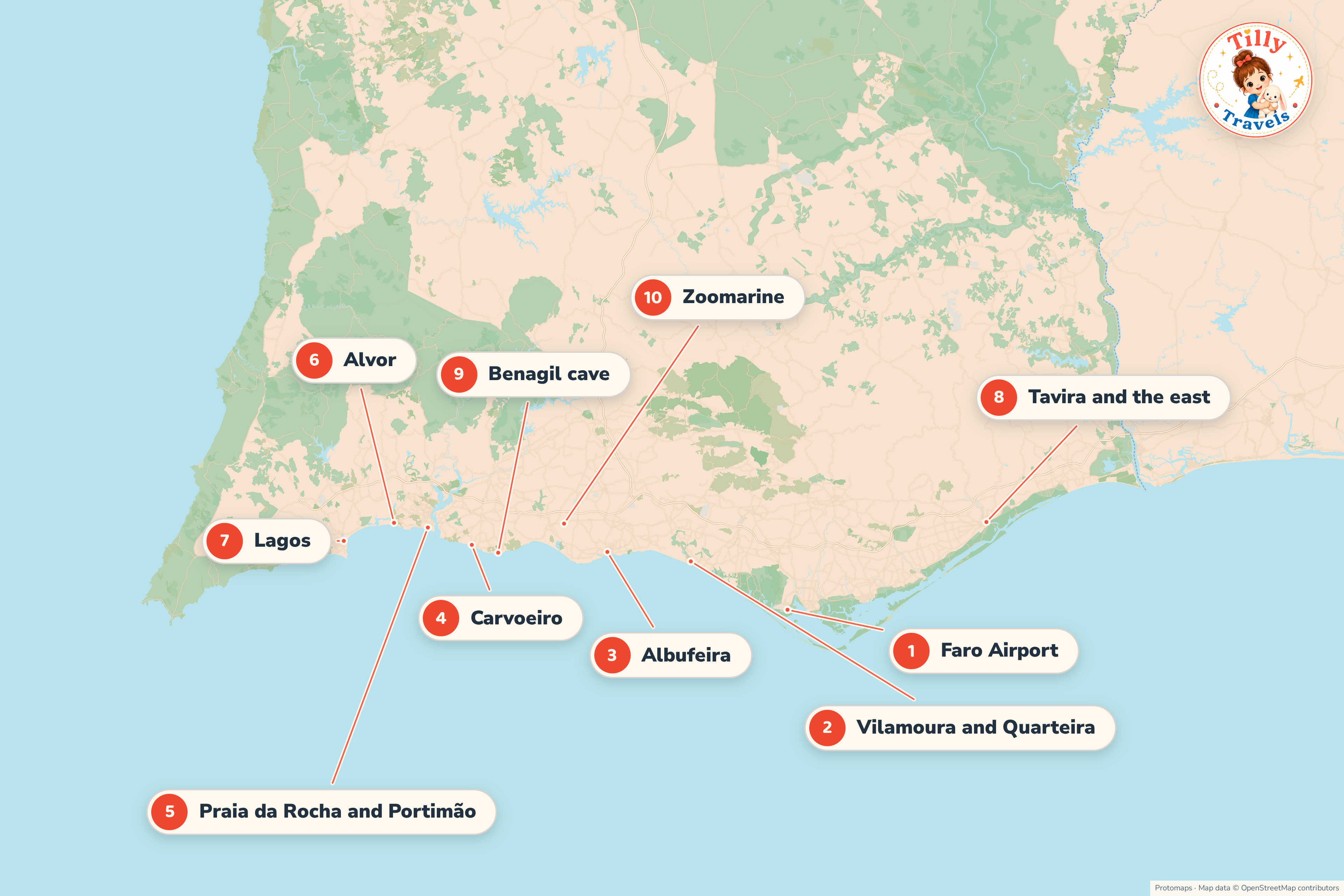
- 1Faro Airport The region's only one, mid-coast
- 2Vilamoura and Quarteira Flat sand, shortest transfers
- 3Albufeira Old Town beaches with lift access
- 4Carvoeiro The cove village, steps from the square
- 5Praia da Rocha and Portimão The big resort beach
- 6Alvor Boardwalk, lagoon and flat sand
- 7Lagos Walled town, with flat Meia Praia
- 8Tavira and the east Warmest, calmest sea
- 9Benagil cave The postcard boat trip
- 10Zoomarine The big family park
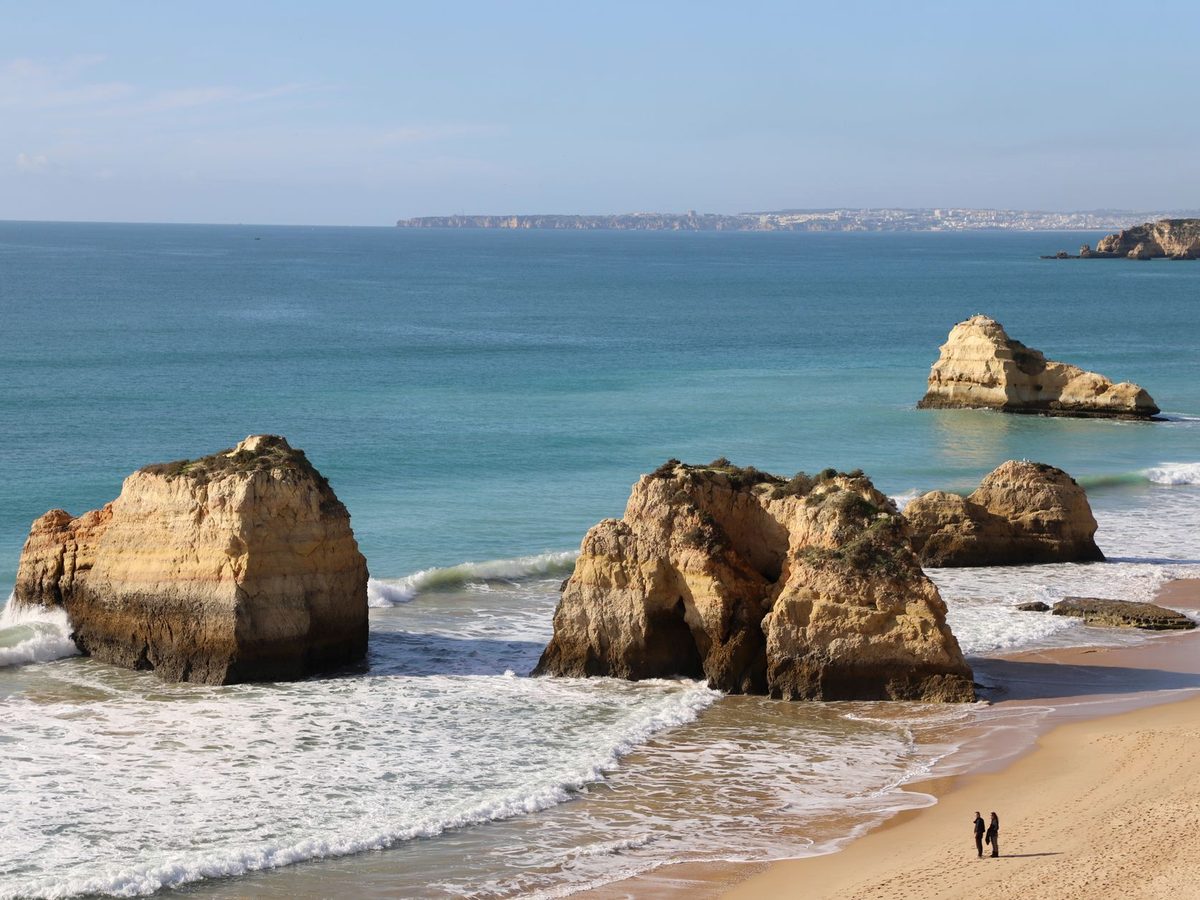
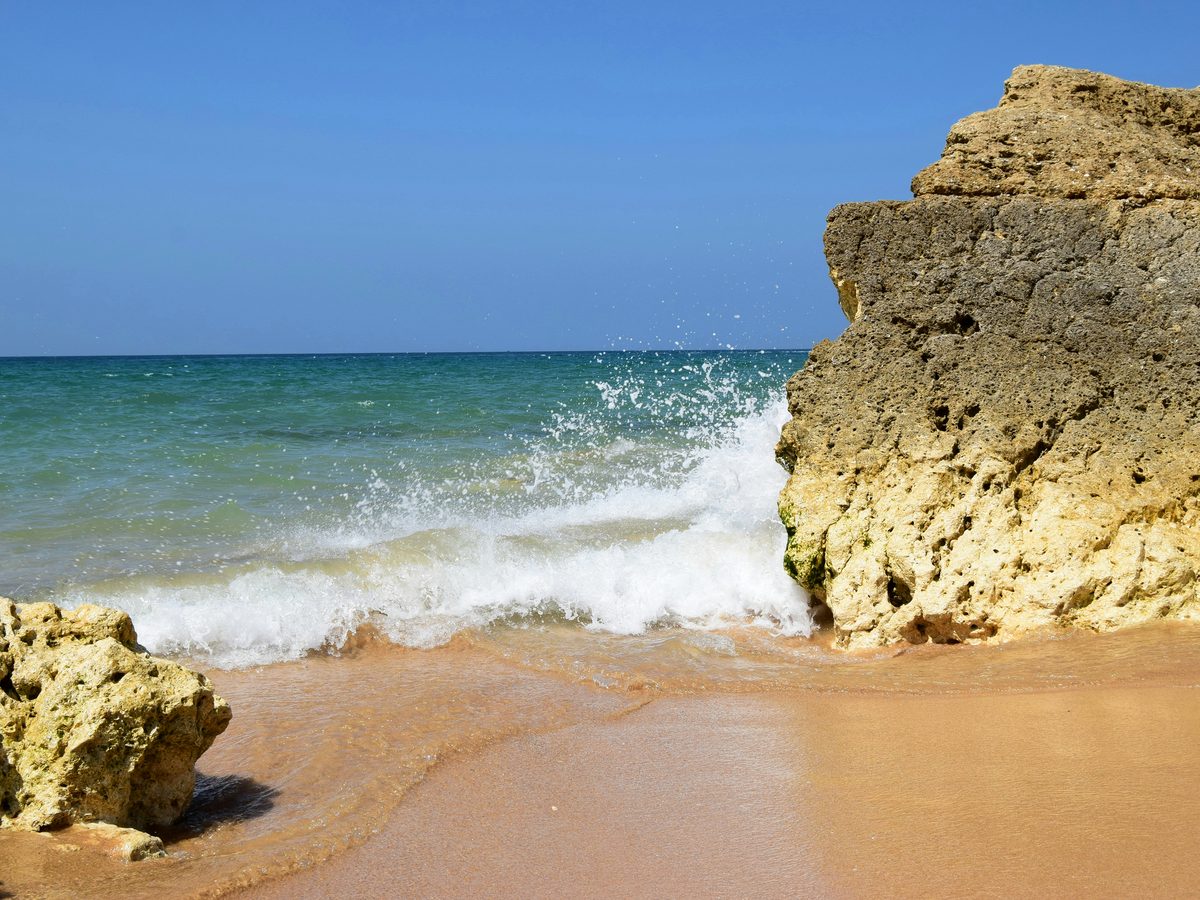
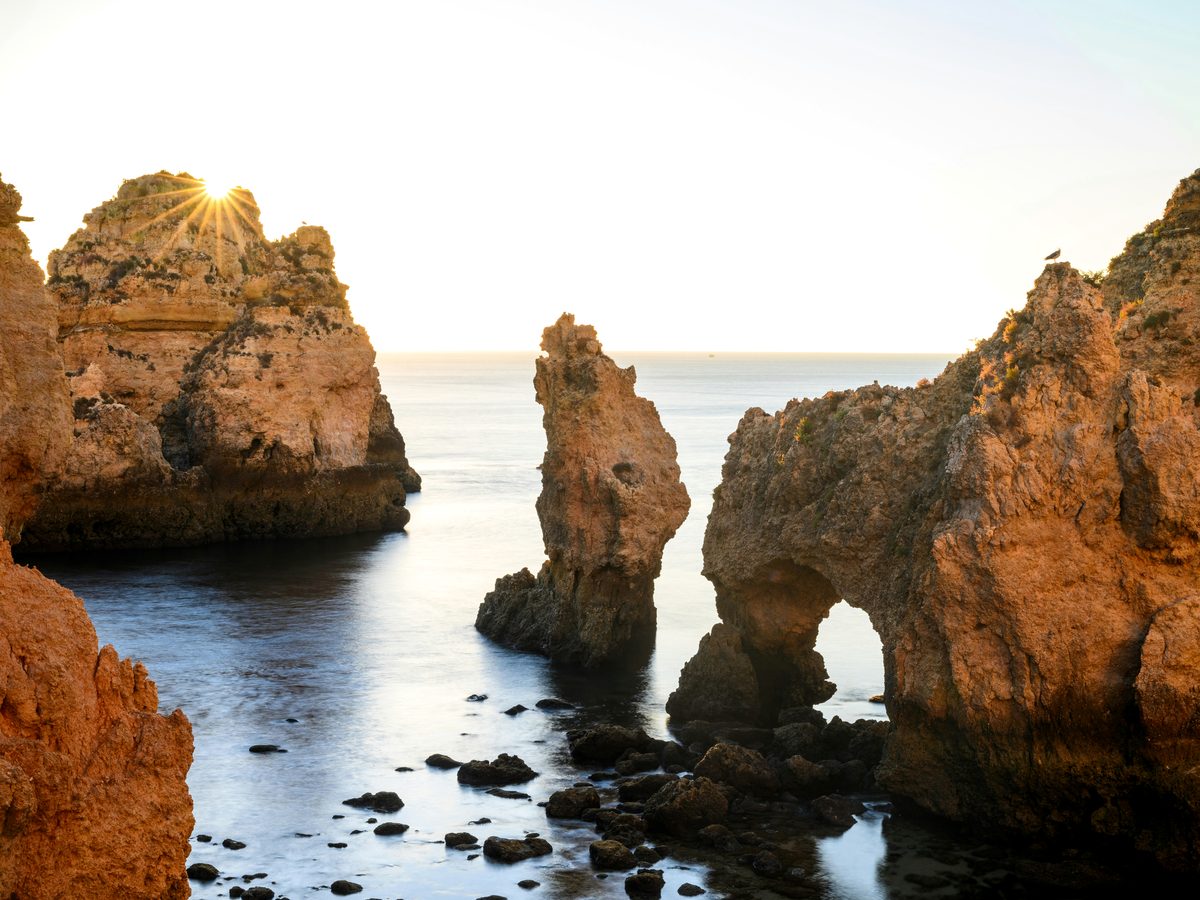
Steps, sand and the Atlantic
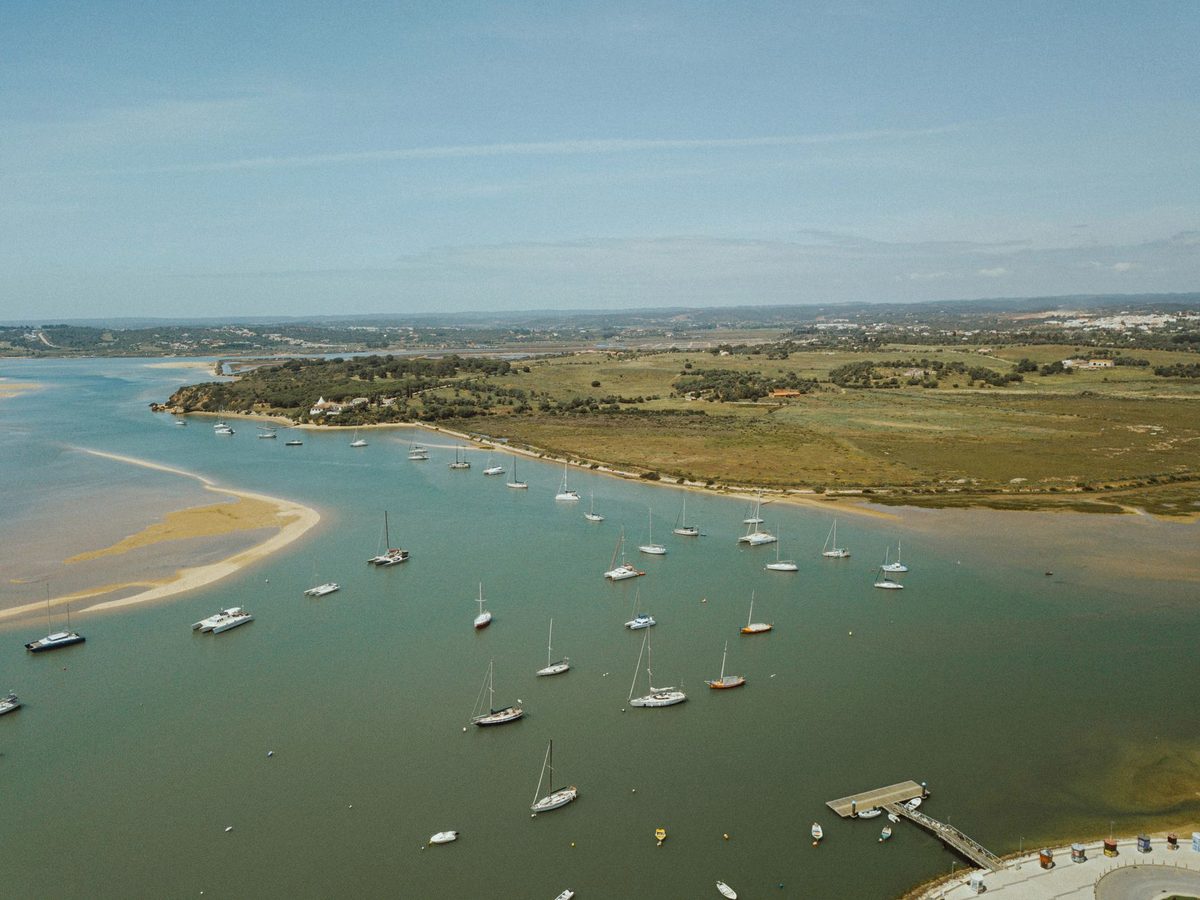
The water here is the Atlantic: about 21 or 22 degrees at the August peak in the central Algarve and a few degrees less towards Lagos and the west, which is cooler than the Med by some margin. That's fine for paddling and short swims, cold for anything longer. The exception is the east, where the barrier islands of the Ria Formosa shelter the coast and the water at Ilha de Tavira and around Cabanas is the warmest and calmest in the region. If warm, flat sea is your priority, go east.
Lifeguards work the main resort beaches from roughly June to late September, with the usual green, yellow and red flags, and a black and white chequered flag, which means the lifeguard is off duty and the beach is unsupervised. Outside the official season the flags come down entirely, however fine the weather. The south coast resort beaches are calm in summer; the wild, west-facing coast beyond Sagres is surf territory with strong rips, a place to watch big waves with a toddler, not to swim with one.
Weather, days out and the daily shop
When to go month by month, the outings that suit small children, eating out and where to stock up.
Weather across the beach season
The figures below are typical averages rather than a forecast. The Algarve runs a few degrees cooler than Greece or the Balearics in high summer, with an Atlantic breeze that makes July and August far more manageable with a baby, though that same cooling breeze can leave you underestimating how strong the sun is. Winter, from November to March, is mild at around 16 to 20 degrees with more rain, and unlike the Greek islands everything except the beach bars stays open.
| Month | Daytime high | Overnight low | Rain | Wet days | Sea temp |
|---|---|---|---|---|---|
| January | 16.5° | 8.5° | 49 mm | 6 | 16° |
| February | 17° | 9° | 42 mm | 5 | 15° |
| March | 19.5° | 11° | 38 mm | 4 | 15° |
| April | 21° | 12.5° | 39 mm | 5 | 16° |
| May | 23.5° | 14.5° | 21 mm | 3 | 18° |
| June | 27° | 17.5° | 6 mm | 1 | 19° |
| July | 29° | 19° | 1 mm | 0 | 20° |
| August | 29° | 19.5° | 0 mm | 0 | 20° |
| September | 26.5° | 18° | 22 mm | 2 | 21° |
| October | 24° | 16° | 56 mm | 6 | 20° |
| November | 20° | 12° | 76 mm | 7 | 18° |
| December | 17.5° | 9.5° | 90 mm | 7 | 17° |
Typical monthly averages from weather-station records. Sea temperature is the open-water figure, so a sheltered bay can feel a degree or two warmer.
June and September are the months to aim for if you can travel outside school holidays: mid-twenties warmth, dry days and beaches with space on them. September has the warmer sea of the two. October can still produce a warm week early on, though the lifeguards have gone home by then.
Filling the daysThings to do with little ones
Most days are the beach, a nap and the boardwalk. The big paid day out is Zoomarine near Albufeira, a marine park with an aquarium, a beach-style pool zone, funfair rides and a little train, and well set up for young children. Its dolphin shows use captive dolphins, which a growing number of families and UK operators now choose to avoid; the rest of the park works without them, so that's a call to make before you book. It closes from roughly December to March.
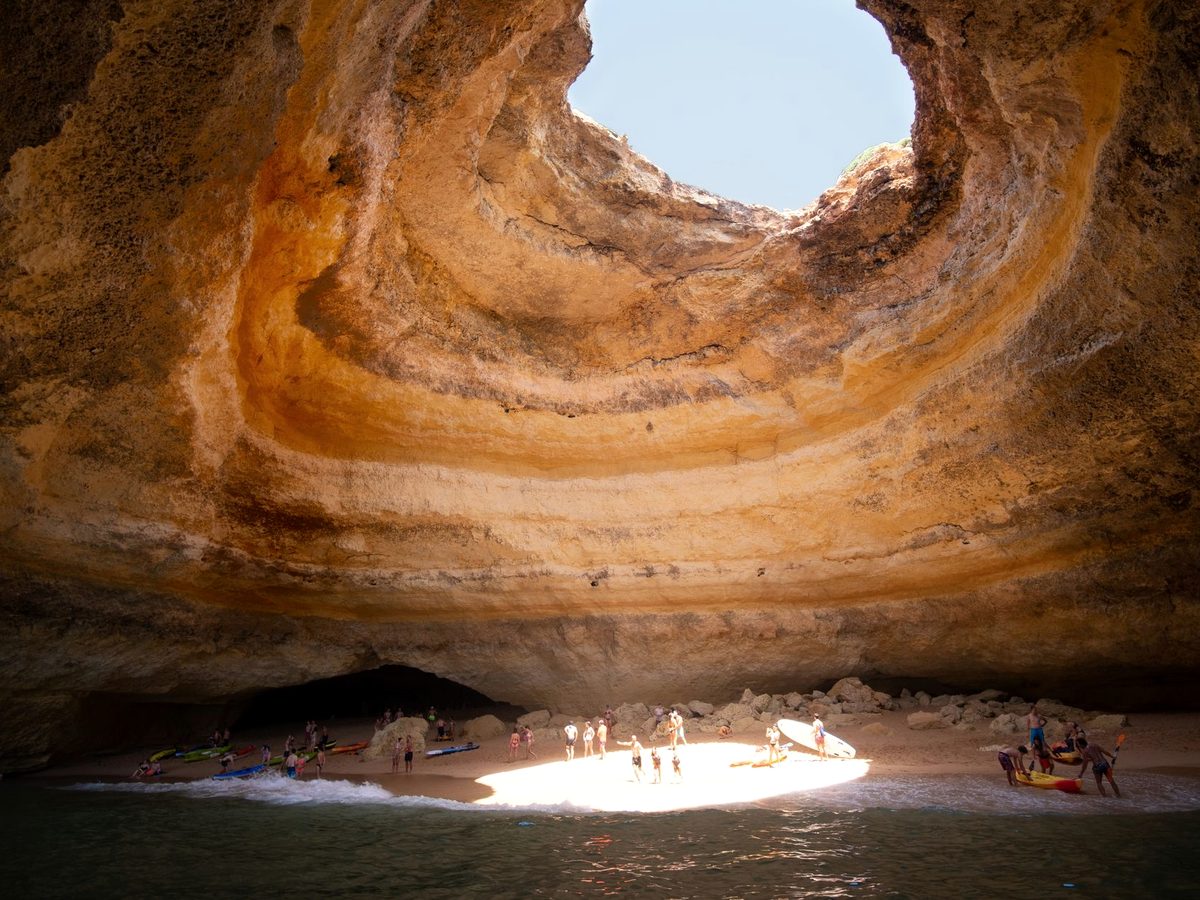
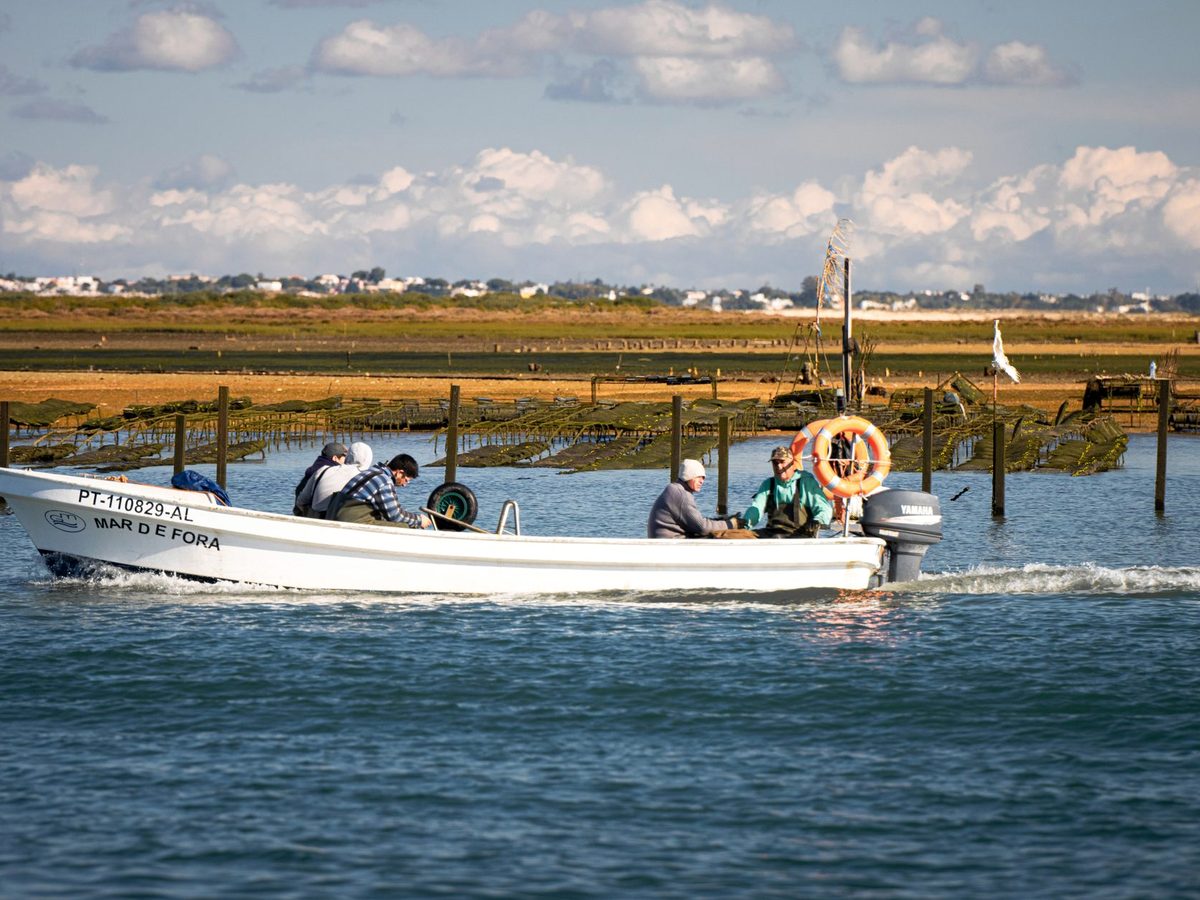
Which boat trip works depends on your child's age. The famous Benagil cave runs are mostly small open boats and RIBs riding Atlantic swell, and many operators won't take a child under one, with some setting their minimum age higher; the clifftop path above the cave is free and safe with a toddler. For a baby or toddler, the calm choice is a flat-water cruise on the Ria Formosa lagoon out of Faro, Olhão or Tavira, all sandbanks, flamingos and no swell. Wild dolphin trips are open-sea speedboat outings, and at least one major operator takes nobody under five, so save those for an older sibling.
For waterparks, Aquashow near Vilamoura has a heated indoor waterpark open through the winter and off-season, good for a rainy day or a February trip. Slide & Splash near Carvoeiro is the big-slide park, better once someone passes 1.1 metres, and Aqualand at Alcantarilha is the smaller, cheaper one with a dedicated mini-slide zone. Krazy World at Algoz is a rustic farm-park half day of goat feeding and pony rides rather than a finished theme park, and prices accordingly. The morning markets at Loulé and Olhão suit an early toddler start, and the MAR Shopping centre near Almancil has a free supervised Lego play area, useful on a wet day.
Eating out with children
Portugal is one of the easiest countries in Europe to eat out in with a baby. Children are welcomed rather than tolerated, including in the evening, highchairs are normal and most kitchens will do a meia dose, a half portion at roughly two thirds of the price, even where there's no children's menu. Dinner also starts earlier than in Spain, with resort kitchens open from six or seven, so a toddler-hour tea is no trouble.
One custom to know: the couvert. Bread, olives and sometimes cheese or sardine paste arrive at the table unasked, and you pay a euro or three per item you touch. You can wave it away without offence, or keep it, since bread and olives for a euro or two will hold a hungry toddler until the food arrives. For the food itself, grilled chicken with the piri-piri sauce on the side, grilled fish, tomato rice and omelettes cover most small appetites, and a pastel de nata covers pudding.
Milk, nappies and pharmaciesSupplies and the first-day shop
Continente, Pingo Doce, Intermarché, Lidl and Aldi cover the big shops, with resort minimarkets for top-ups at a markup. Nappies are sold mainly as Dodot, the Portuguese and Spanish name for Pampers, alongside cheaper own brands, and they cost more than at home, so it's worth packing a few days' worth and buying the rest there. Formula is on the shelves under familiar and unfamiliar names: Aptamil is sold as Aptamil, with NAN and Nutribén alongside, but stages and recipes can differ from the UK product, so bring enough of your own for the trip and buy local stock only as a backup. Pharmacies carry the specialist and hypoallergenic formulas.
The farmácia, marked by a green cross, is the first stop for any small ailment, and pharmacists in the resorts generally speak good English. The children's paracetamol is Ben-u-ron syrup, the Portuguese household name that does what Calpol does, and children's ibuprofen syrup is over the counter too. Bring any medicine your child depends on rather than relying on a like-for-like swap.
Getting around, a real week and the admin
Transfers and hire cars, what a week actually looks like, the health and document checks and a list to pack against.
Getting there and around
Faro is the Algarve's only airport, sitting usefully mid-coast: Vilamoura and Quarteira are 25 to 30 minutes away, Albufeira 35 to 45, Tavira about the same in the other direction, and Lagos at the far end takes up to 75 minutes. The family default is a pre-booked private transfer with child seats requested when you book, because Portuguese law requires children under 12 and under 135 centimetres to ride in a proper child seat in the back, while taxis are legally exempt from the rule. A rank taxi can legally carry your child unrestrained, so book the transfer rather than chancing the rank.
A hire car is optional for a one-resort week and useful for everything else. The A22, the motorway along the whole coast, has been toll free since January 2025, so the older blogs still warning about electronic toll gantries are out of date for the Algarve itself, though gantry tolls do still apply if you drive up to Lisbon. Skip the slow, busy old EN125 coast road where the motorway will do. The regional train line runs the length of the coast and toddlers love it, but several stations sit a long way from their resorts, Albufeira's about 4 miles (6 km) inland, so it's a fun outing in the east, where Faro, Olhão and Tavira stations are a short walk from their centres, rather than a way of getting around.
What a real week looks likeA realistic week with little ones
The day you land is a normal day. A swim, an early dinner and bedtime at the usual hour.
Sand in the morning, lunch and a nap, then the boardwalk or the pool. On a cove beach, carry less and go early.
Zoomarine, a flat-water Ria Formosa boat trip or a morning at Loulé market all fit around a sleep.
A final paddle and a slow pack, with a late checkout if the hotel allows it.
With young children, the beach, the pool, naps and one boat or market day will comfortably fill an Algarve week.
The practical adminHealth, documents and the boring bits
Check the GOV.UK Portugal advice before booking and travelling. The passport rules are the standard European pair: issued less than ten years before you arrive and valid for at least three months after you leave, children's included. Carry a GHIC for each member of the family, which covers state healthcare here, plus travel insurance for everything the GHIC doesn't reach, including private clinics and getting home.
The emergency number is 112. Day to day, the two things to manage are the sun, which is strong from late spring and disguised by the sea breeze, and the water: swim between the flags, stay out on red and know that the chequered flag means nobody is watching. Pharmacies handle the small stuff, every resort has a private clinic used to visitors, and Faro has the region's main hospital.
Before you payBooking checklist
- Check whether your beach is flat or down a staircase before you fall for the photos.
- Book the transfer with the right child seat rather than relying on a taxi.
- Confirm the cot and the air conditioning with the hotel.
- Ask about a heated pool for anything outside July and August.
- Pack a clip-on highchair seat for village restaurants.
- Bring enough formula and any medicines your child relies on.
- Aim for June or September if you can travel outside school holidays.
- Plan the cove beaches as outings with a carrier, not as the everyday beach.
- Confirm the cancellation terms and your travel insurance.
- Recheck the GOV.UK Portugal advice and every passport before you go.
Resort guides in Algarve
We've researched these places to stay in Algarve for families with young children. Each guide covers what it's like, who it suits and what to check before you book.
Questions, links and the last word
The things families ask most, the official pages worth a bookmark and when this guide was last refreshed.
Common parent questions
Is the sea warm enough for little ones?
It's the Atlantic, so even at the August peak it suits paddling and short swims rather than long ones, and it's cooler still towards Lagos and the west. The warmest, calmest water is in the east around Tavira, where barrier islands shelter the coast.
What's this about steps to the beaches?
The postcard Algarve beaches sit in coves below cliffs, and many are reached by long staircases. Praia do Camilo near Lagos is one of the steepest. With a buggy, pick one of the flat bases in the section above and save the cove beaches for a one-off outing with a carrier.
Does the time zone really make a difference?
Yes. Portugal keeps UK time all year, so there is no jet lag to manage in either direction. Spain, Greece and the Balearics are one or two hours ahead; of the big beach destinations only the Canaries share UK time.
Can we go in February half term?
Yes, for a non-beach week. Days are mild and often sunny, the towns stay open, but the sea and unheated pools are far too cold for swimming, so look for a hotel with a heated or indoor pool. Aquashow near Vilamoura has a heated indoor waterpark open through the winter and off-season.
Is Albufeira okay with small children?
The Old Town side is. Evenings there are street performers and ice cream rather than nightlife, and the two town beaches are sheltered and reached by an escalator and a lift. The Strip, just over a mile (about 2 km) east, is the party zone and not somewhere to base a family, though the two are far enough apart that they don't really mix.
Is the Benagil cave trip doable with a toddler?
Most trips are small open boats or RIBs on open Atlantic swell, many operators won't take a child under one and some set their minimum age higher. The calmer choice with little ones is a flat-water lagoon trip on the Ria Formosa in the east, or seeing the cave area from the free clifftop path instead.
Do we need a hire car?
Not for a one-resort beach week, since transfers are short and the resorts are walkable. A car helps for markets, waterparks and beach-hopping, and the A22 motorway along the coast is now toll free. Book child seats with the car or bring your own.
Can we buy our usual formula and nappies?
Mostly yes, under different names. Pampers nappies are sold as Dodot, and Aptamil is on Portuguese shelves under its own name, though stages and recipes can differ from the UK version, so bring enough for the trip and use local stock as the backup. The children's paracetamol is Ben-u-ron syrup, the local equivalent of Calpol.
See more Algarve photos
Open the Algarve photo gallery →Useful links
- GOV.UK Portugal travel advice: passport rules, entry requirements and health updates before you travel.
- Zoomarine: current opening dates and tickets, and the park closes over winter.
- Aquashow: the outdoor park's season dates and the heated indoor winter waterpark.
- Visit Algarve: the official regional tourism site, including beach and event listings.
Last updated 11 June 2026.