Kos with little ones
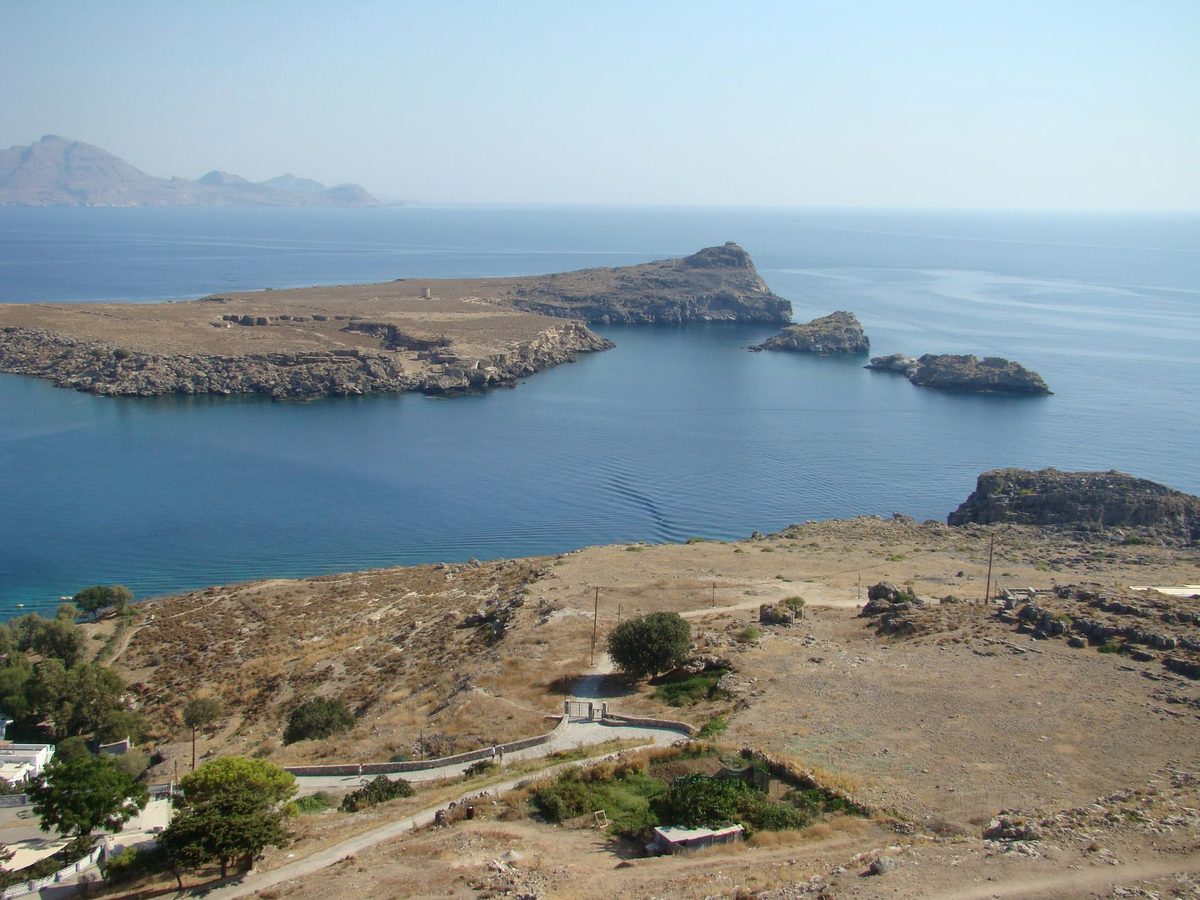
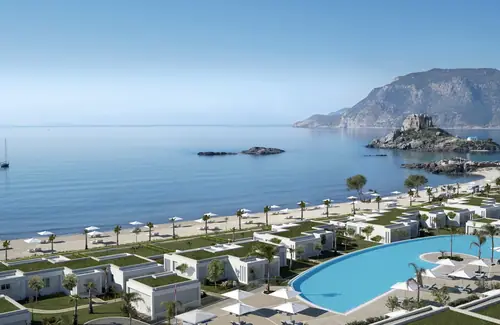
Kos is the Greek package island at a manageable size. The airport sits mid-island, so Kardamena is ten minutes from the plane, most resorts are under 25 and nothing is far. The coastal plain stays flat, so a baby seat on a hired bike works for getting around. Add long shallow sand, a historic capital that costs nothing to wander and a volcano next door for the older ones.
On this page
A family verdict at a glance
The quick read before the detail: who Kos suits, the season to aim for and what to nail down before you book.
Best for
Long shallow sand, low-key resorts and all-inclusive value without Rhodes-scale crowds.
Maybe not for
Not for you if you want dramatic scenery or a long list of paid attractions. Kos is flat, farmed and low-key, and the coast is what you do.
Best ages
Babies through to young children, with the boat days opening up as they get older.
Best areas
Kamari bay for the calmest sea, Mastichari for a working harbour village near the airport, Kos Town for a connected base.
Why families pick it
Low effort from the moment you land, with a real Greek town to potter in and a good boat day in any direction.
Check before you book
Which coast suits your afternoons, the cot and air conditioning for high summer, and a child seat for the transfer.
A flat island with a northerly wind
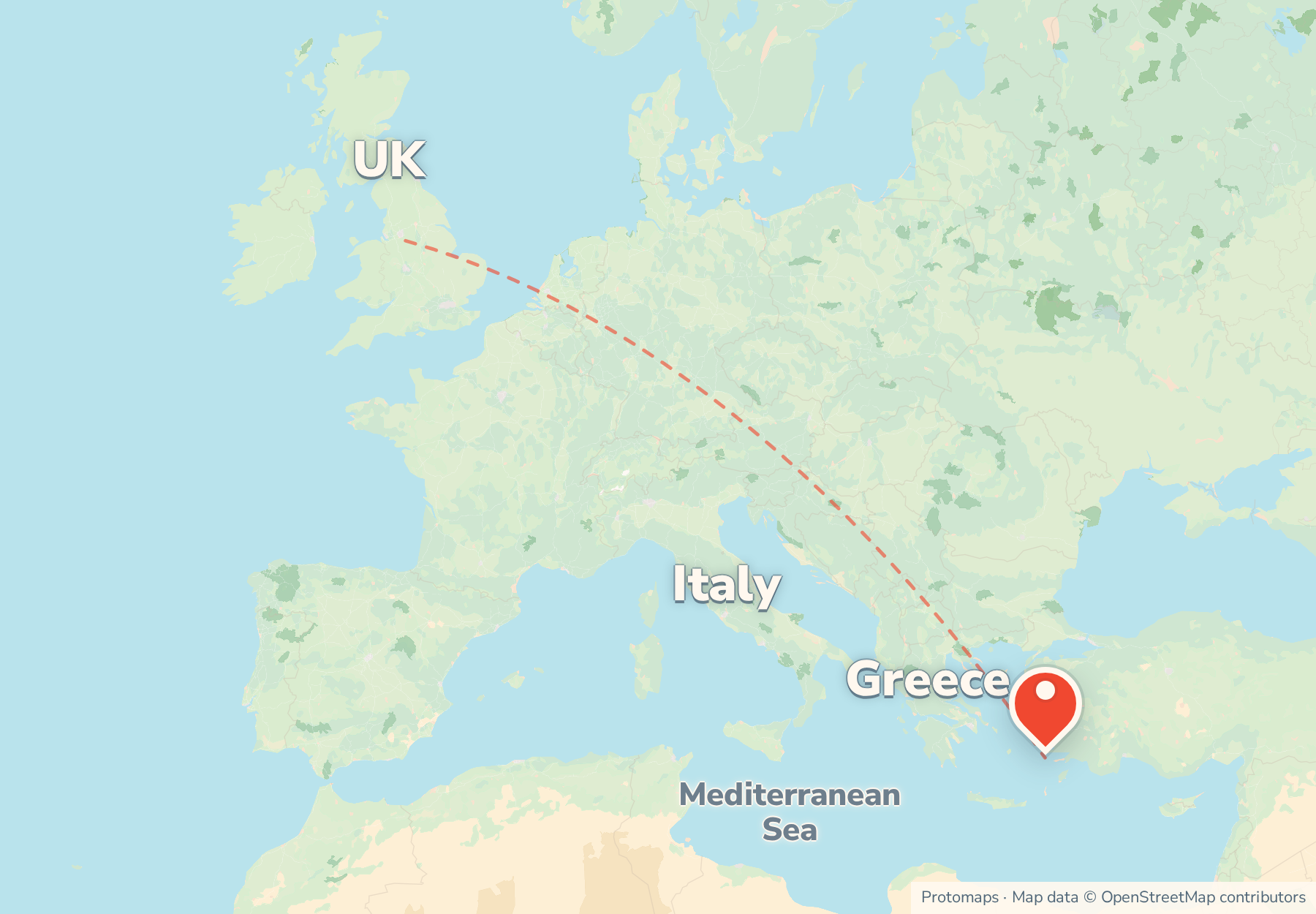
Kos is flat. It calls itself Greece's cycling island, and for once the slogan is literal: the coastal plain barely rises, a segregated cycle lane runs about 8 miles (13 km) along the seafront from Faros through Kos Town to Psalidi, and city bikes with baby seats cost around €10 a day. The same geography puts the airport in the middle of the island, so transfers run from ten minutes to half an hour.
The meltemi is the dry northerly summer wind. On Rhodes it divides which coast to use; on flat Kos it divides the day, because the family sand at Tigaki and Marmari faces it. Mornings there are calm and superb for small children, the wind builds after midday and the windsurf schools come out, and the south coast, Kardamena round to Kamari bay, stays swimmable through the afternoon. Swim north before lunch and head to the south coast after it.
A quick gut checkIs Kos right for your family?
Worth comparing if
You want warm shallow water, a short transfer with a tired toddler and a base where the buggy and the bike both work everywhere.
Weigh it up if
You want mountains and drama, a big sightseeing list or guaranteed flamingos, which winter here and leave before the school holidays.
To sort out before booking
The resort’s afternoon shelter, the cot, a child seat for the journey and bike seats reserved ahead in peak weeks.
Quick facts, everyday details and the ages
Everything to skim first: the facts that matter for planning, the practicalities on the ground and how Kos changes as children grow.
Quick facts for UK families
Money, plugs, language and the basics
- Kos is the third biggest Dodecanese island, long and thin, with Turkey a few kilometres across the strait and Bodrum visible from the north coast.
- Hippocrates was born here, and the town trades on it gently: the plane tree, the healing sanctuary and the medical-history museum pieces.
- The currency is the euro and cards are widely accepted; the buses take cash only.
- Sockets are the round two-pin European type, so UK plugs need an adapter. The voltage matches the UK.
- The language is Greek. English is spoken everywhere tourists go.
- Drink bottled water and use it for formula feeds; it’s cheap by the multipack and kiosk prices for small bottles are capped by law.
- Your GHIC card covers state healthcare; 112 works for everything and 166 calls a Greek ambulance directly.
- Hotels add a nightly climate fee at check-in, up to €15 at five-star places in season, which packages rarely include.
Kos by age and stage
Babies
Ten-minute transfers, shallow morning sand and tavernas that fuss over babies from the first minute.
Toddlers
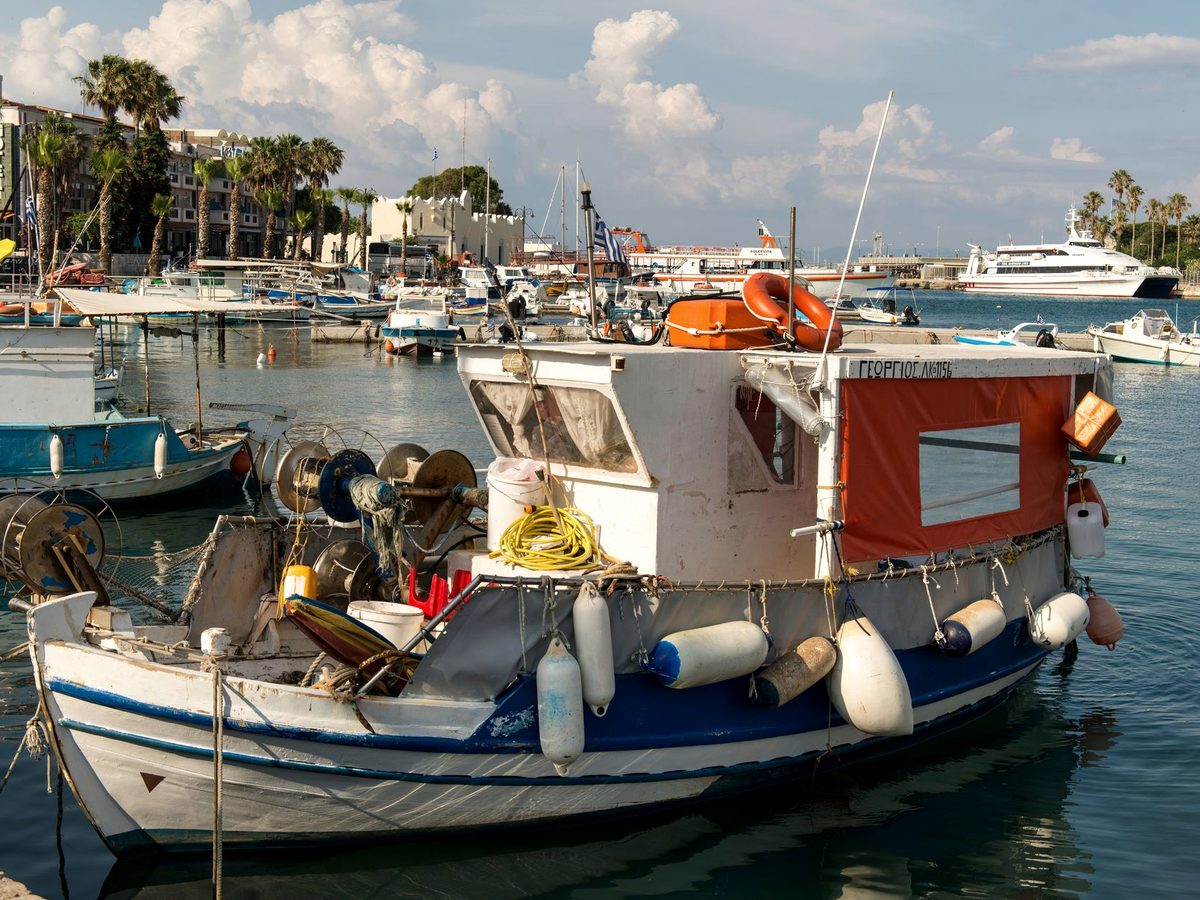
Wading at Kamari and Mastichari, the harbour boats and an ancient agora open enough to toddle between the columns.
Preschoolers
The waterpark at Mastichari, the reopened knights’ castle and the bubbles fizzing up through the sand at Paradise beach.
Young children
The Nisyros volcano comes into range, along with the three-island boat days and the glass-bottom trips from the harbour.
Where to stay and which beach to pick
The family areas side by side, an orientation map of the island and what the beaches are really like underfoot.
Where to stay with young children
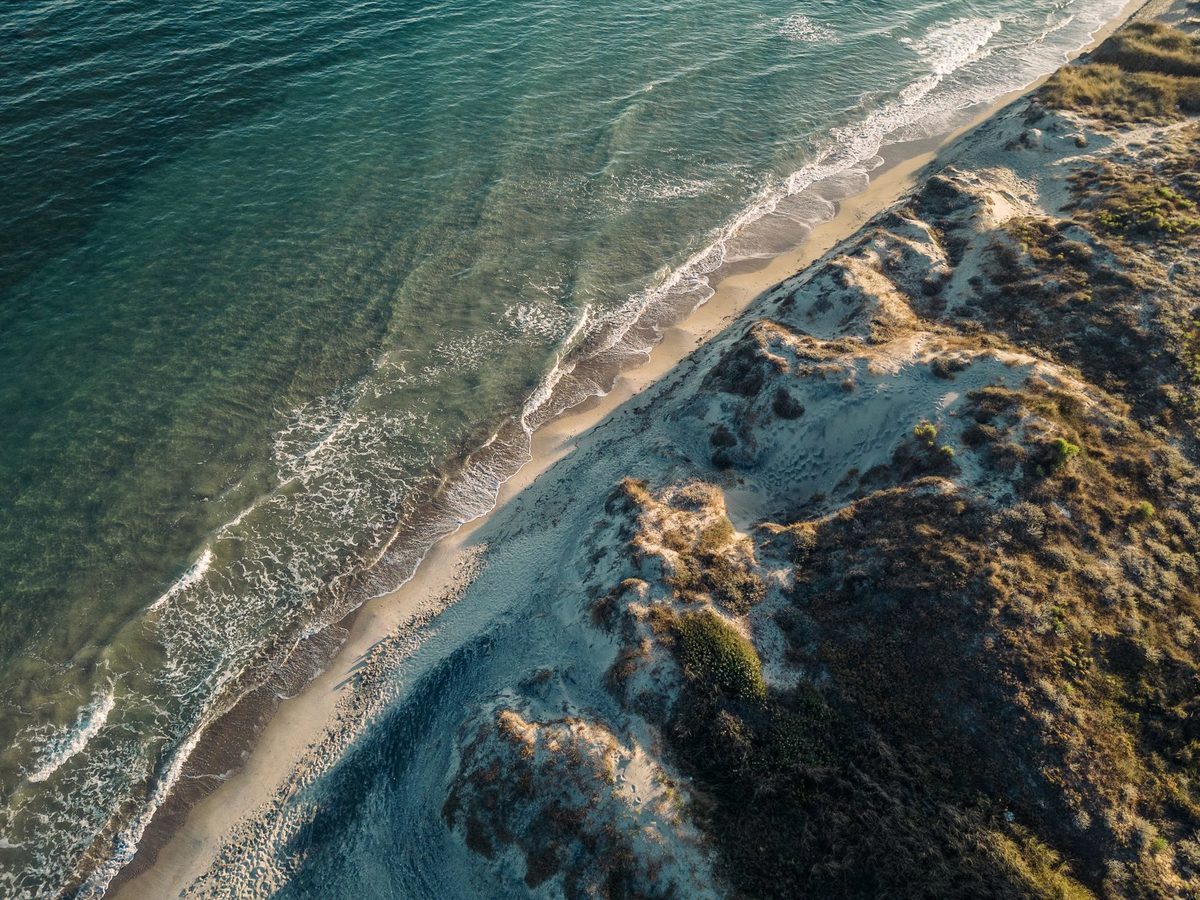
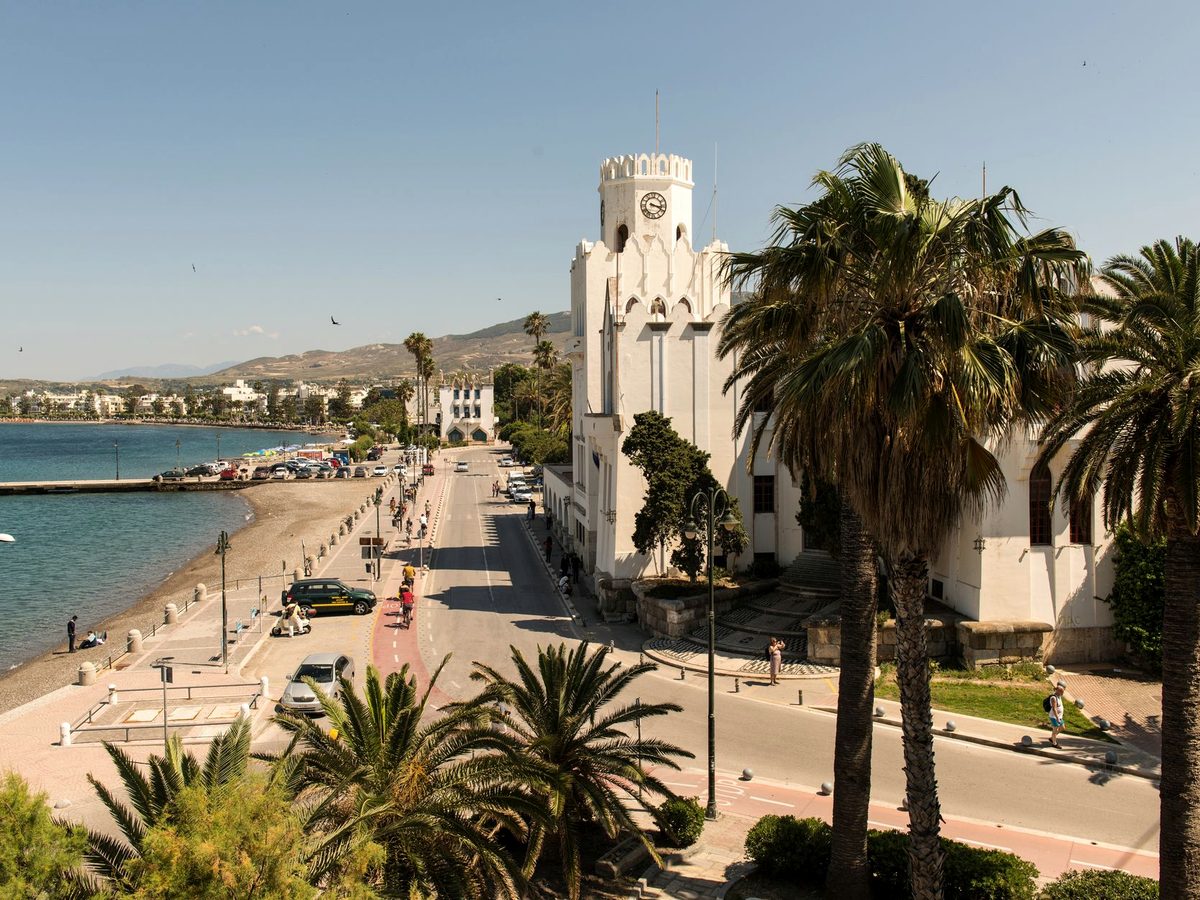
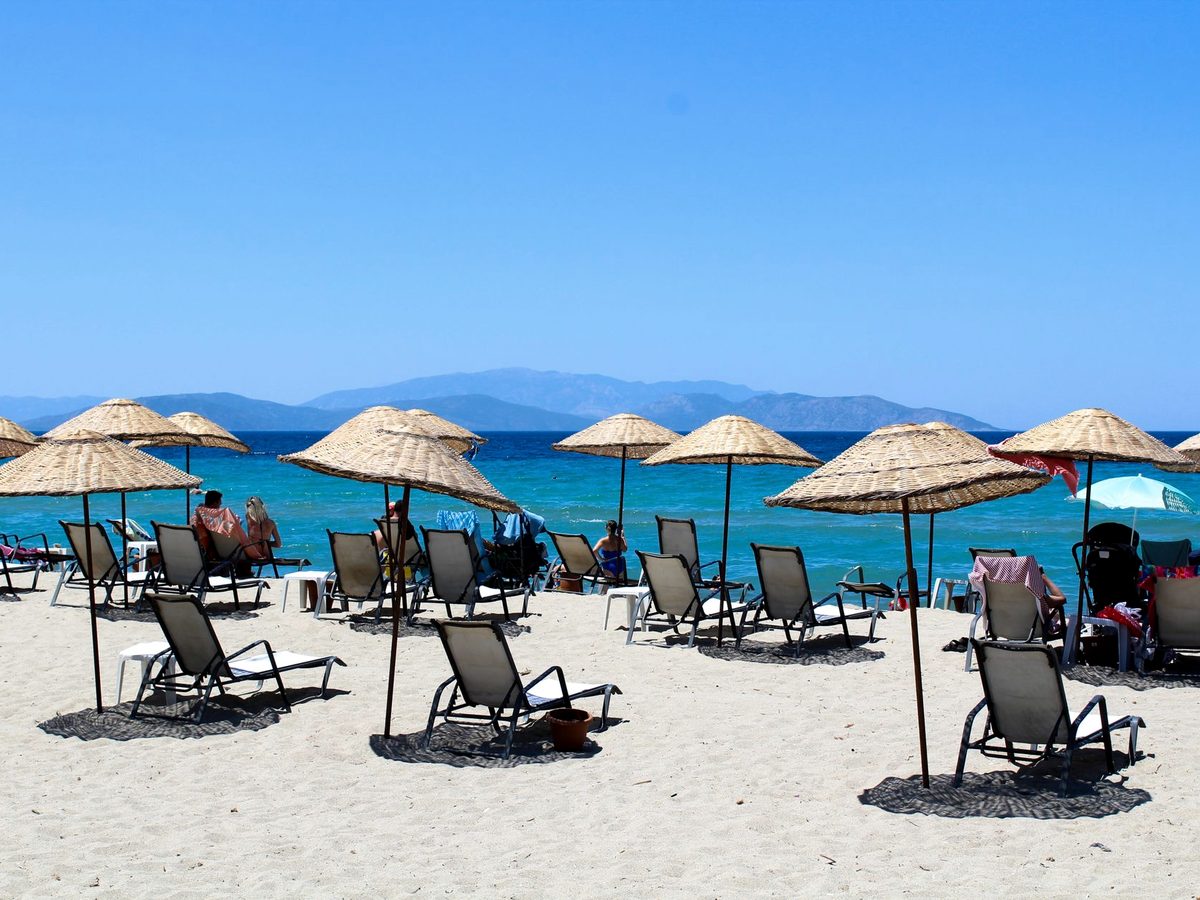
Kos Town is the rare Greek island capital that works as a family base. It’s flat from end to end, the harbour and castle sit in the middle, the cycle lane runs the whole waterfront and every bus route starts here. Its beaches split by direction: Lambi, 2 miles (3 km) north, is the organised family stretch of sand and fine pebble, while Psalidi the other way is darker pebble that deepens quickly, better for the parents’ swim than the toddler’s. Out west along the north coast, Tigaki has 6 miles (10 km) of soft pale sand with a gentle, gradual entry and a low-rise resort behind it, and Marmari next door offers the same sand with dunes and more space.
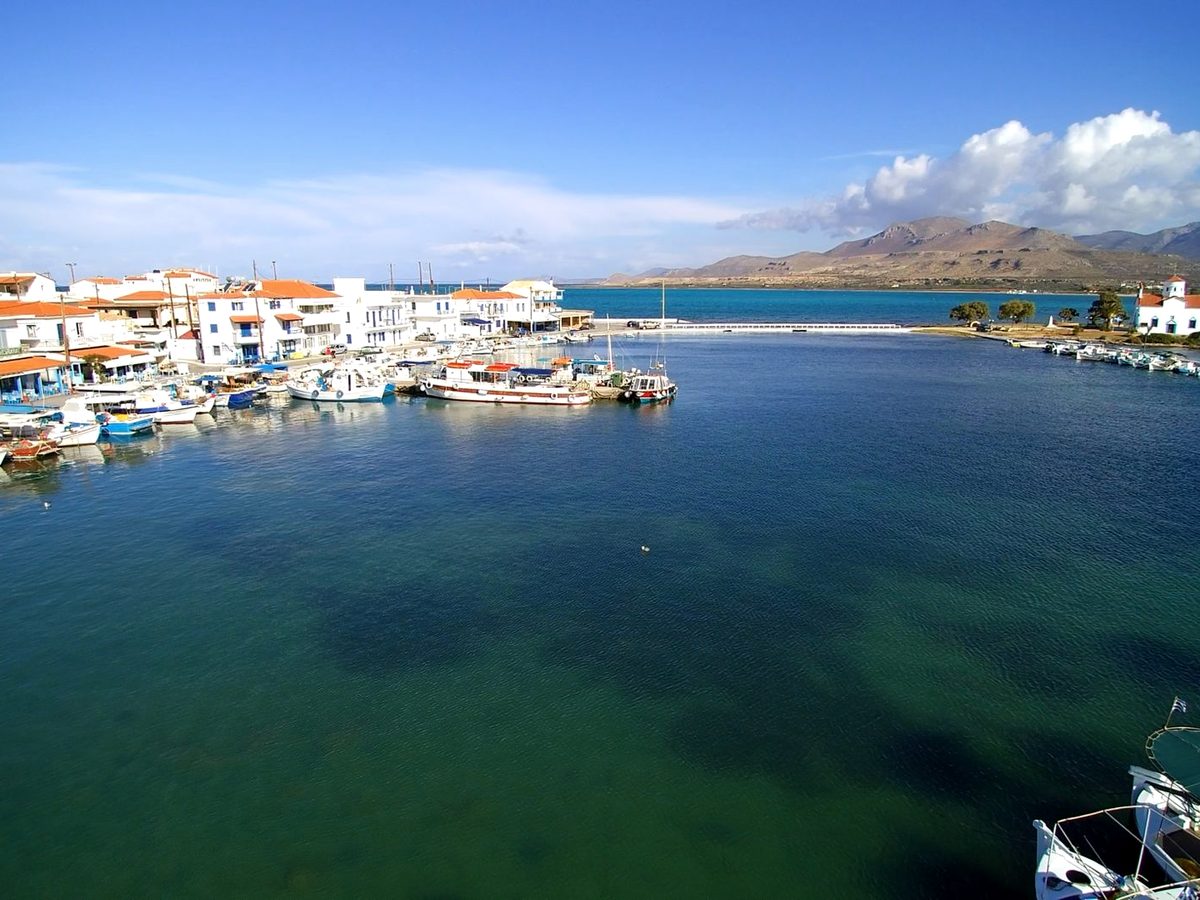
Mastichari, ten minutes from the airport on the north-west corner, is the village option: a working harbour village, only founded in 1926, where the fish tavernas sit by the moored boats, 1.2 miles (2 km) of soft golden sand that stays shallow a long way out, the island’s waterpark on the edge of town and the short Kalymnos ferry from the quay. It’s the self-catering insider pick. Kardamena was once a UK party strip; the nightlife is now contained to one street, busy late and easy to avoid, and the island’s biggest all-inclusive cluster spreads along the sand either side. Its transfer is five to ten minutes.
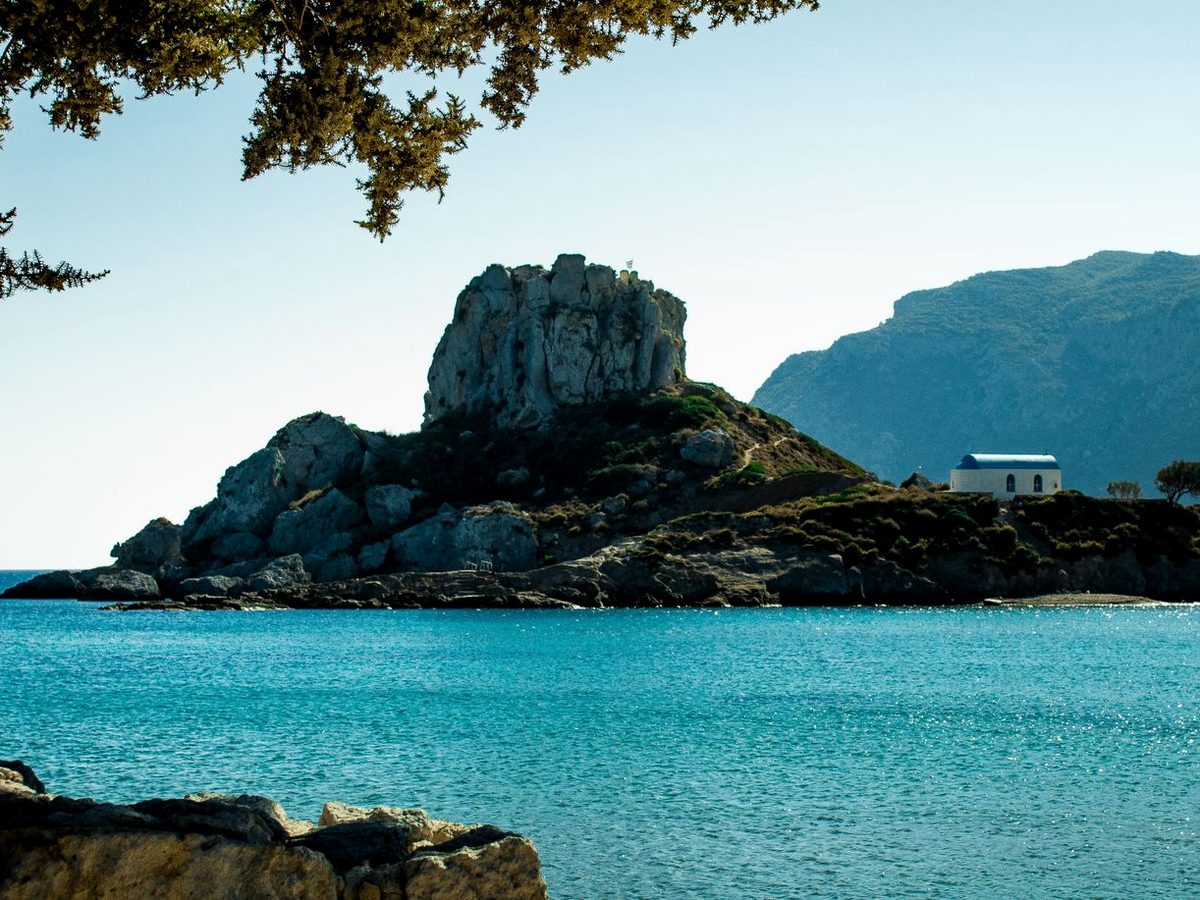
The Kefalos end, 15 to 20 minutes past the airport, is the postcard: Kamari bay’s long crescent stays calm on days the north coast doesn’t, the whitewashed chapel islet of Kastri sits just offshore, and Agios Stefanos beach shelves so gently that small children can wade without drama beside early-Christian ruins. The named-beach strip east of the bay includes Paradise beach, where volcanic gas fizzes up through the sandy shallows and toddlers love watching the bubbles, which is why it gets busy. Kefalos village itself climbs the headland steeply; families stay at bay level. The trade-off for all this calm is distance from Kos Town, about 45 minutes by bus or car.
| Area | Transfer | The beach | The feel |
|---|---|---|---|
| Kos Town | 25 to 30 min | Lambi's organised sand and fine pebble 2 miles (3 km) north; Psalidi's deeper pebble the other way | A real town base: playgrounds, the bike lane along the front and every bus route. |
| Tigaki | About 25 min | 6 miles (10 km) of soft pale sand with a shallow entry | Low-rise and easy-going, with the salt lake behind. Calm mornings; the wind builds after midday. |
| Marmari | About 20 min | The same dune-backed sand as Tigaki, with more space | Quieter and wilder-feeling, with fewer facilities. |
| Mastichari | About 10 min | 1.2 miles (2 km) of soft golden sand, shallow and calm a long way out | A working harbour village, with the short Kalymnos ferry and the waterpark on the edge of town. |
| Kardamena | 5 to 10 min | A long south-coast sand beach in the lee of the afternoon wind | The biggest all-inclusive cluster and the morning boats to the volcano. |
| Kefalos and Kamari bay | 15 to 20 min | A sheltered crescent that stays calm on windy days, with a chapel islet offshore | The calmest swimming on the island. The old village on the headland is steep; the family bit is the bay. |
Map of the main family areas
An orientation map of the areas above, the airport, Zia and the Nisyros volcano. The numbers match the key beneath.
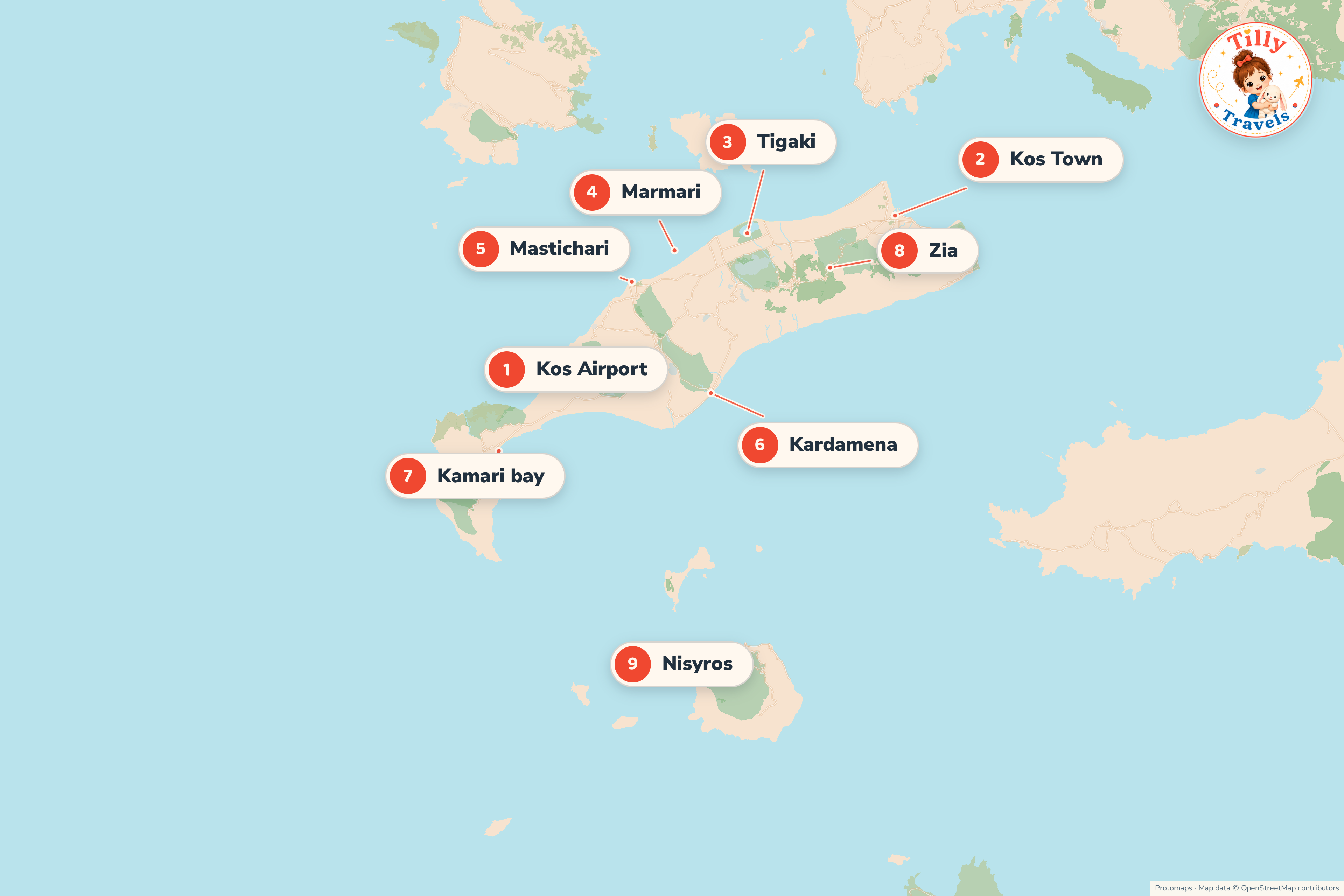
- 1Kos Airport Mid-island at Antimachia
- 2Kos Town The capital and harbour
- 3Tigaki The long shallow sand
- 4Marmari Dunes and space
- 5Mastichari The harbour village
- 6Kardamena All-inclusives and the volcano boats
- 7Kamari bay The calmest swimming
- 8Zia The sunset village
- 9Nisyros The volcano day trip
Beaches, morning and afternoon
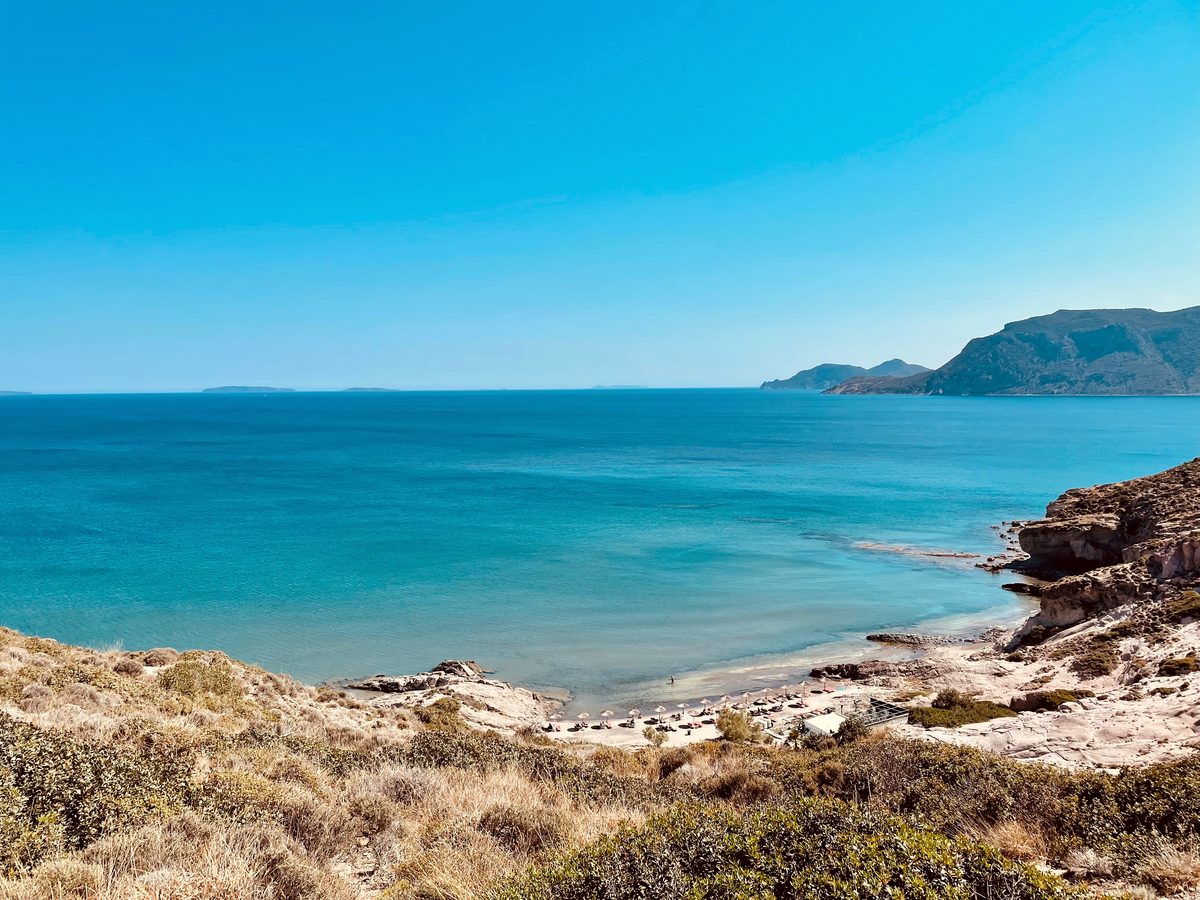
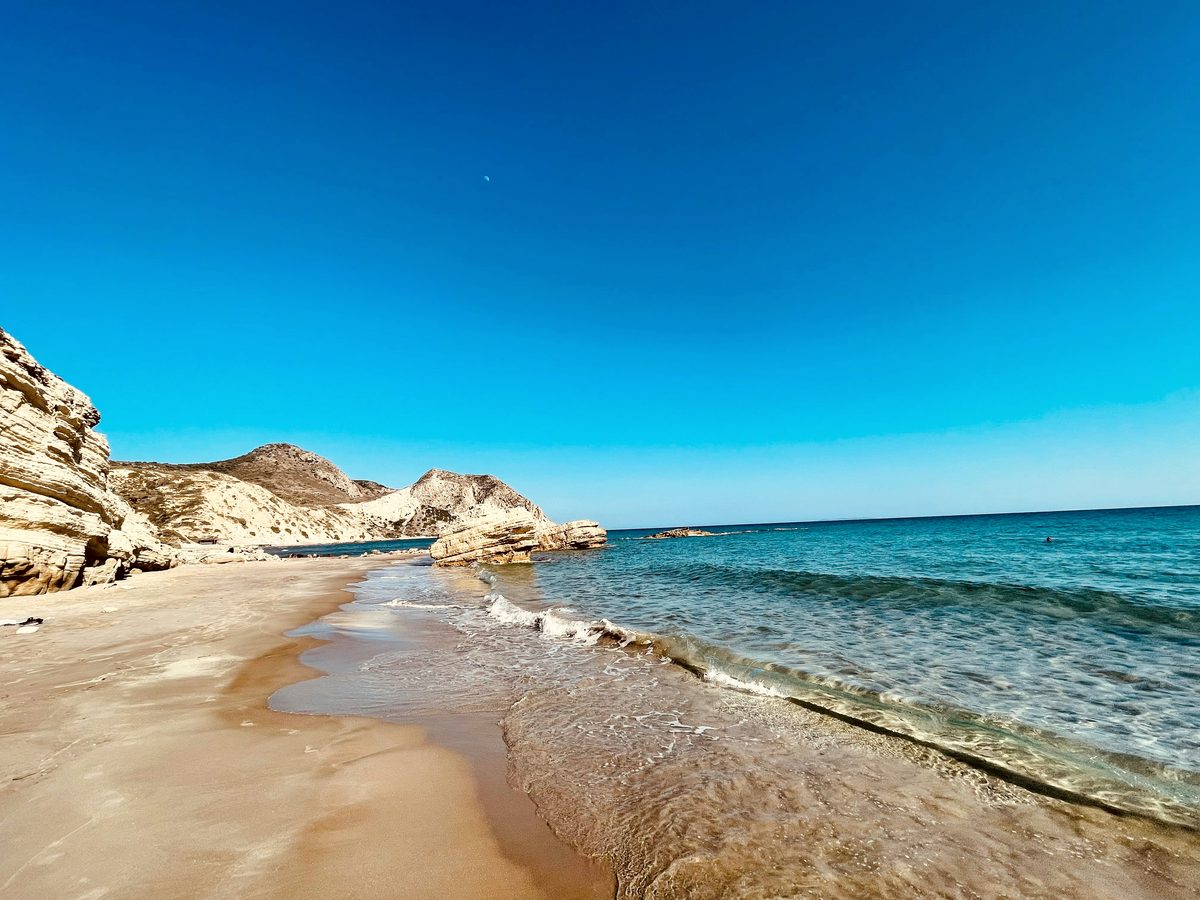
The toddler list starts in the south. Kamari bay and Agios Stefanos are calm nearly all day, Paradise beach stays very shallow for a couple of hundred metres with its fizzing volcanic bubbles, and Kardamena’s long sand sits in the island’s lee. The north coast has the softest sand, Tigaki, Marmari and Mastichari all soft, golden and shallow. Lambi serves Kos Town well; Psalidi and the Therma hot-spring cove are pebbly, quick-deepening and better left to older swimmers. Beach shoes help at Lambi and Kamari, where fine pebble mixes into the sand, though the north-coast beaches are true sand throughout.
The Blue Flag picture repeats the pattern from our other Greek pages: Kos holds 11 flags in 2026, all of them hotel-managed beach sections, so the public sands at Tigaki, Mastichari and Paradise sit off the list for paperwork reasons, not water quality. Lifeguards cover the big hotel beaches from June to September under Greek law, while village beaches often have nobody, so you’re watching the children yourself. The 2024 beach law guarantees most of every beach stays free of rented sunbeds and keeps the strip nearest the water clear, exactly where small children dig.
Weather, days out and the daily shop
When to go through the season, the days out that suit small children on Kos, eating out and where to stock up for the week.
Weather, April to October
The figures below are long-term averages, so treat them as a guide; the summer rows often read low thirties by day in recent years. High summer rain comes to a few millimetres in brief bursts, and the heat carries through the night, which is what makes the air conditioning question matter when you book.
| Month | Daytime high | Overnight low | Rain | Wet days | Sea temp |
|---|---|---|---|---|---|
| January | 14° | 9° | 170 mm | 12 | 18° |
| February | 15° | 10° | 115 mm | 10 | 17° |
| March | 16.5° | 11° | 75 mm | 9 | 17° |
| April | 20° | 13.5° | 35 mm | 7 | 17° |
| May | 24° | 17° | 20 mm | 5 | 20° |
| June | 28° | 21° | 8 mm | 3 | 23° |
| July | 31° | 23° | 2 mm | 3 | 24° |
| August | 31° | 23.5° | 5 mm | 3 | 26° |
| September | 28.5° | 21.5° | 15 mm | 3 | 25° |
| October | 24° | 18° | 60 mm | 6 | 23° |
| November | 20° | 14.5° | 90 mm | 8 | 22° |
| December | 16° | 11° | 135 mm | 12 | 20° |
Typical monthly averages from weather-station records. Sea temperature is the open-water figure, so a sheltered bay can feel a degree or two warmer.
June is the best family month: 28-degree days, a sea past 22 degrees and space on the sand. September runs it close with warmer water, and October still swims at around 22 degrees, half a step behind Rhodes, with the season’s first proper rain as the trade. In July and August, beach early, shade through the middle, out again at five, with hats and UV suits on babies from May onwards.
Filling the daysThings to do with little ones
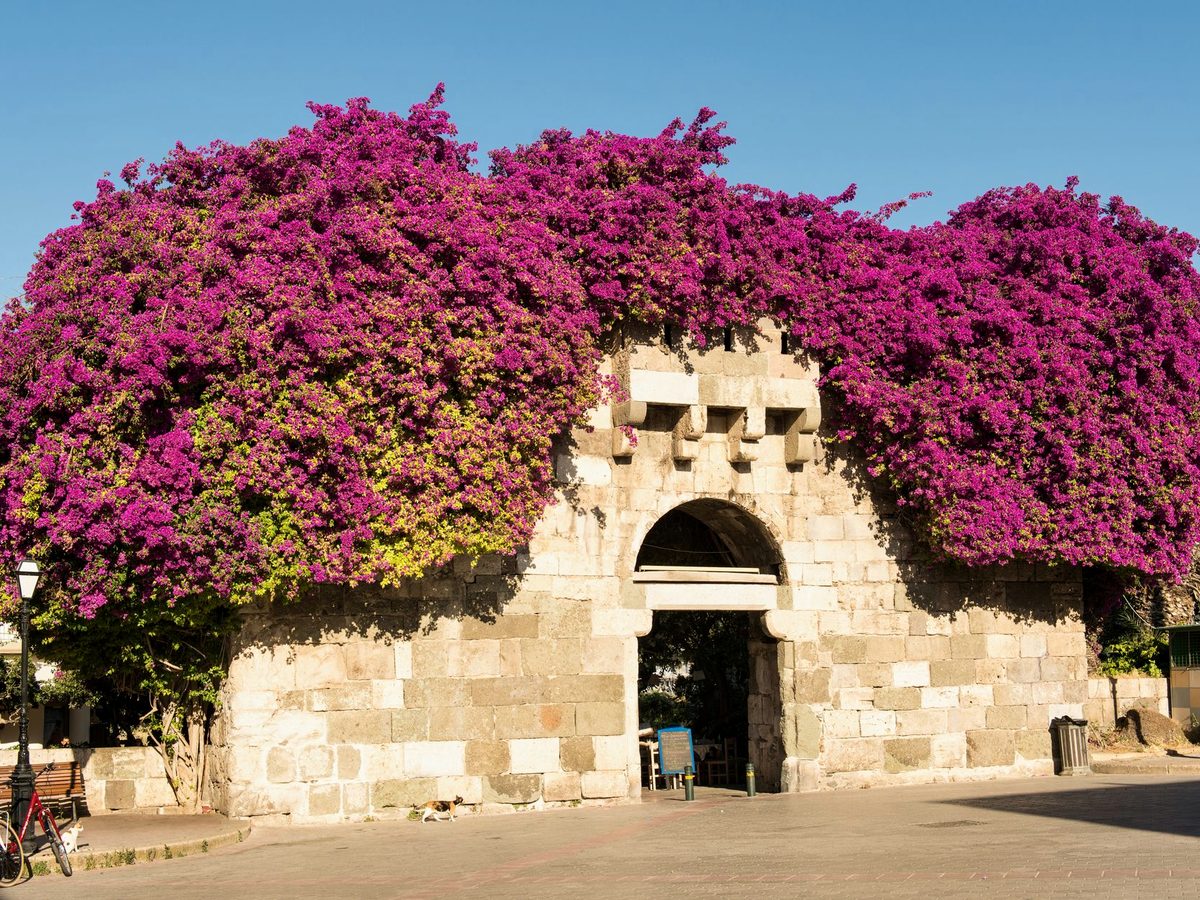
Kos Town’s free circuit sits within ten minutes’ walk. Hippocrates’ plane tree shades the square by the castle bridge; the present tree is perhaps 500 years old, a descendant of the legend at best. The Ancient Agora behind it is the rare ruin a toddler can actually toddle in, open to wander between the columns at the time of writing. The Neratzia castle reopened in 2025 after eight years of post-earthquake restoration, a story most guidebooks haven’t caught up with; check the current hours locally, and expect castle-grade surfaces inside. The Asklepion, the ancient healing sanctuary outside town, is the headline ruin and a carrier job: three terraces of marble steps with a view over the strait to Turkey from the top, best at opening time, one hour, one parent climbing while the other minds the snacks. A combined ticket on the official e-ticket site covers it, the archaeological museum and the Roman villa for about €15, and children go free at Greek state sites.
The bike morning is the one to plan around. Hire a city bike with a baby seat, follow the seafront lane from town towards Lambi or Psalidi with the sea alongside, stop at a playground and roll home for the nap; the flat farm roads out towards Tigaki and the salt lake extend it for confident riders. The Lido waterpark at Mastichari is the big paid day, slides and a wave pool plus children’s pools, with adult entry a bit over €20, child rates below it and the smallest free; check the park’s site for this season’s prices. Like every waterpark, it makes most sense with mixed ages and feels dear if you’ll only use the baby pool. Zia, the mountain village the coaches climb for sunset, works better with young children as an early dinner: terraced tavernas, the whole island spread out below and steep stepped lanes throughout.
The boat days grade by age. The glass-bottom boat from Kos Town harbour and the Mastichari-to-Kalymnos ferry, about 40 minutes each way, suit toddlers, real boats at nap-friendly lengths, with lunch by Kalymnos’ harbour before the ride home. The classic three-island cruise to Kalymnos, Pserimos and Plati is a ten-to-six day afloat, better from about four. Nisyros, the volcano, is better from about four or five. Therma’s hot springs involve a rocky scramble and water hot enough to be uncomfortable, one for older children, and the Bodrum day trip into Turkey now means full border biometrics both ways, which makes it an older-kids idea in 2026. The salt lake at Alikes is free: a flat loop you can push a buggy around, flamingos in winter, a strange white salt pan in summer.
Eating out with children
Greek tavernas welcome children as a matter of culture rather than policy: bread lands early, waiters wave at babies and nobody minds a wanderer. High chairs are common without being guaranteed, so a clip-on seat is worth its bag space. Resort and harbour tavernas serve from about six, two hours before the locals eat, which suits a UK bedtime perfectly. Mastichari’s fish tavernas put the moored boats a few metres from the table, and Zia’s terraces do the early-evening view.
Toddler-friendly food is everywhere: tzatziki and bread, yoghurt with honey, giant baked beans, pastitsio, grilled chicken souvlaki and watermelon. A charged bottle of water usually arrives by default, the island habit, and a gyros is a cheap, reliable lunch.
Milk, nappies and pharmaciesSupplies and the first-day shop
The big shops cluster on the main road at Zipari, between the airport and Kos Town, with Lidl, AB Vassilopoulos and a Carrefour-badged store within the same stretch, which means most transfers drive straight past the arrival-day shop. Sklavenitis trades in Kos Town. Resort minimarkets mark up steeply but open late and on Sundays, when the chains close, so the big shop belongs on a weekday. Nappies run Pampers or the Greek brand Babylino, and fresh milk is easy to find.
Formula needs the pharmacy rather than the supermarket: stage-one milk is in practice a pharmacy product in Greece, at around €13 to €14 a tin (last checked June 2026), under the Almiron name, Aptamil’s sister brand, with actual Aptamil tins common too. Pharmacies are everywhere, green-crossed and good with tourists, and they’re the route for children’s medicines: Depon for paracetamol, Nurofen for children for ibuprofen, with the out-of-hours rota posted on every closed door.
Getting around, a real week and the admin
Transfers and hire cars, what a week on Kos actually looks like, the health and document checks and a list to pack against.
Getting there and around
The airport at Antimachia was rebuilt under Fraport with a modern terminal. In peak season the taxi rank queues when charter flights bunch; a pre-booked transfer with a child seat avoids it. Greek law requires child seats for under-12s below 135 centimetres, rank taxis can’t be relied on to have one, and the short distances make bringing your own seat less of a burden than on bigger islands.
A hire car is optional here in a way it isn’t on most islands we cover. The KTEL buses are cheap and cash-only, €2.50 to Tigaki or Zia and €5.50 to the far Kefalos end (last checked June 2026), running usefully often on weekdays and thinly on Sundays; the bikes cover the town end of the island; and a one-or-two-day hire fills in Kefalos and the hills. Roads are quiet and easy by Greek standards, fuel costs a little more than on the mainland and a UK photocard licence needs no extra permit. Quad bikes are everywhere and almost never covered by travel insurance.
What a real week looks likeA realistic week with little ones
Pool, the supermarket stop on the main road and dinner at six.
North-coast sand in the morning, lunch and a nap, then the pool or a sheltered southern beach if the afternoon wind is up.
Along the seafront lane with the child seat on: castle, plane tree, playground, ice cream, back for the nap.
The short ferry to Kalymnos from Mastichari with a toddler, or the Nisyros volcano from Kardamena with older children.
A final swim and an unhurried pack.
Health, documents and the boring bits
Check the GOV.UK Greece advice before booking and travelling. Passports need to be issued within the last ten years and valid three months beyond departure, children’s included. Carry a GHIC each plus real travel insurance: the GHIC covers the state system, led by the island’s hospital in Kos Town, while the private clinics that hotels point you towards bill your insurer. Nothing on Kos is much more than about 45 minutes from that hospital.
The emergency numbers are 112 for everything and 166 for a state ambulance. The everyday hazards are sun, sea and the odd urchin on rocky stretches; UV runs very high in summer, so hats, suits, cream and midday shade for babies. Taverna cats will find your toddler: look, don’t grab, wash hands before chips.
Before you payBooking checklist
- Check whether your resort is sheltered from the afternoon wind: the south coast is, the north coast is best in the morning.
- For an easy buggy base, look at Kos Town, Tigaki or Mastichari; Kefalos village is steep, so stay down at bay level.
- Confirm the cot and the air conditioning, especially for July and August.
- Book the transfer with the right child seat, or bring your own; the runs are short.
- Reserve bike child seats ahead for peak weeks, and ask about child helmets.
- Budget the nightly climate fee, paid at the hotel and rarely in the package.
- Travelling in October? Check the pool is heated and what’s open in the resort.
- Pack beach shoes for Lambi and Kamari, where pebble mixes into the sand, and a carrier for Zia and the Asklepion.
- Bring formula for the first days; on Kos it’s a pharmacy purchase, not a supermarket one.
- Confirm the cancellation terms and your travel insurance.
- Recheck the GOV.UK Greece advice and every passport before you go.
Resort guides in Kos
We've researched these places to stay in Kos for families with young children. Each guide covers what it's like, who it suits and what to check before you book.
Questions, links and the last word
The things families ask most about Kos, the official pages worth a bookmark and when this guide was last refreshed.
Common parent questions
Can we really cycle with a toddler here?
Yes. Hire shops fit baby seats to city bikes, many deliver to the hotel, and between the seafront lane and the quiet farm roads you can avoid the main highway entirely. We haven't pinned down the Greek rules on carrying children on bikes, so go by what the hire shop fits and insists on, book the seat ahead in peak weeks and ask for a child helmet at the same time.
Which beach when the wind picks up?
Move south for the afternoon swim, as the beaches section sets out, or stay put: from a north-coast base a sheltered hotel pool over the windy midday hours saves a lot of driving with tired children.
Kos or Rhodes?
Kos is the same Greek package holiday at two-fifths the scale: every UK family operator, big all-inclusives and a free historic capital, with transfers in minutes rather than the hour-plus runs to southern Rhodes, and a town where the buggy works everywhere. Rhodes has the bigger castle, more to do on rainy-day standards and more flight choice. With young children, weigh the transfer time first.
Is Kardamena still a party resort?
Not the way it once was. The bars are now confined to a single street, so the simplest safeguard is to book a room a few minutes' walk back from it rather than above it, and to favour the larger all-inclusives spread along the sand. By day it reads like any other family resort, built around the long beach and the morning volcano boats.
Can we take a toddler to the volcano?
Better to wait. Nisyros is a real volcano you can walk inside, and from about four or five, with closed shoes, it's one of the most memorable day trips you can do from a Greek beach resort. The crater floor is hot, sulphurous and shadeless, and the path down is loose scree, so with a baby or toddler take the carrier and keep expectations modest, or do the Mastichari-to-Kalymnos ferry as the boat day instead. The Kardamena boats leave around 09:30 and are back around 15:30, so the day runs straight through a toddler's nap; under-3s travel free and 3 to 11s pay half on the organised tours.
Can we buy our usual formula and nappies?
Nappies, yes, anywhere; the local Babylino brand undercuts Pampers if you're happy to switch. First-stage formula is the one to plan for, because in Greece it's sold through pharmacies rather than supermarkets, and pharmacy hours are shorter, so don't leave the arrival-day tin to chance. The stage numbers don't map exactly onto the UK ones, which is worth a word with your HV or GP before you travel rather than puzzling over a label in a Kos pharmacy.
What happened after the 2017 earthquake?
Kos Town was hit hard, two people died and the old town's monuments spent years behind scaffolding. The 2026 picture is recovery: the Neratzia castle reopened in 2025 after a full restoration and the Defterdar mosque's rebuilt minaret is back on the skyline. Earthquakes remain part of life in the Dodecanese; hotels are built to Greek seismic codes and the advice is the same everywhere, drop, cover and hold on.
Will we see the flamingos at the salt lake?
Only if you travel out of season: the flamingos winter at Alikes and are gone long before the school holidays. In the October and spring shoulder weeks binoculars might catch migrants; in August you'll find a dried white pan that crunches underfoot instead. Plenty of blogs claim August flamingos; they're wrong.
See more Kos photos
Open the photo gallery →Useful links
- GOV.UK Greece travel advice: passport rules, entry requirements and health updates before you travel.
- Hellenic Heritage e-tickets: official tickets for the Asklepion and the combined Kos sites ticket.
- KTEL Kos: bus timetables and fares from Kos Town to the resorts.
- Greek Civil Protection risk map: the daily wildfire risk map, published in English.
Last updated 12 June 2026.