Dubai with little ones
Dubai is the premium version of the winter-sun holiday: 24-degree January days, a warm Gulf sea that shelves so gently a small child can wade out a long way and still be at knee height, and plenty laid on for families, with a Waitrose in the mall and UK formula widely on the shelf. It drops the irritations of a Red Sea trip, with no visa, drinkable tap water and no reef to wade over.
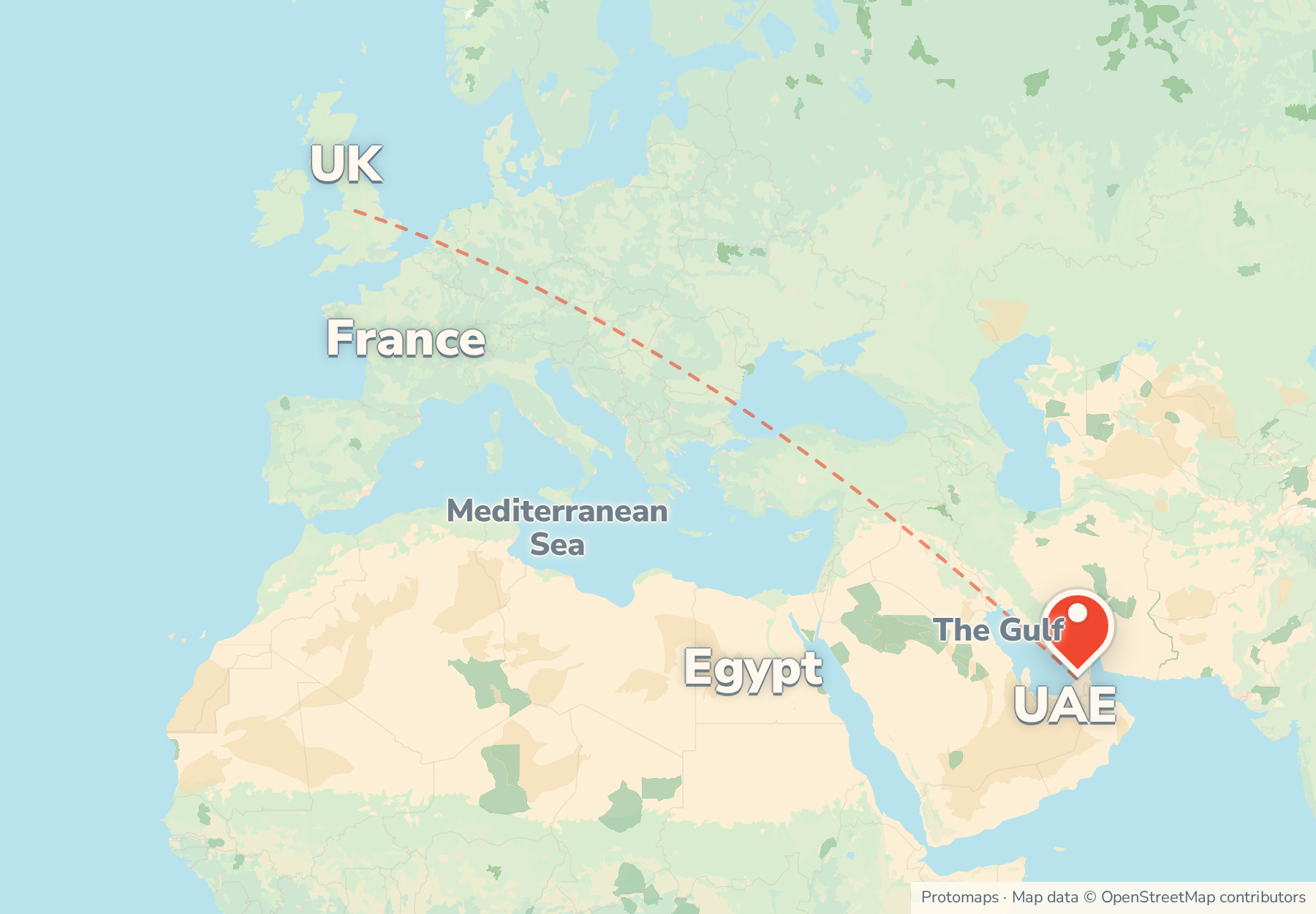
On this page
A family verdict at a glance
The quick read before the detail: who Dubai suits, the season to aim for and what to nail down before you book.
Best for
The warmest winter sun we cover, with calm Gulf shallows and plenty laid on for families.
Maybe not for
Tight budgets, anyone set against a seven-hour flight, or summer travellers, when the heat makes the outdoors unusable in the middle of the day.
Best ages
Works from babyhood for the pool and beach; the aquariums, Legoland and the metro are at their best from about two.
Best areas
Marina and JBR for the walkable beach base, the Palm for a resort island, Downtown for the sights.
Why families pick it
A 24-degree January, no visa, drinkable water and UK brands in the supermarket.
Check before you book
The current Foreign Office advice, the codeine rule for your medicine bag and that your hotel pool is heated.
Winter sun, and what it costs
Start with the weather and the water. In the depths of UK winter Dubai delivers 24-degree days, eight or nine hours of sun, near-zero rain and a Gulf sea that holds in the low twenties, warmer than the Atlantic Canaries and a match for the Red Sea. The sea is the main reason families pick it: a semi-enclosed gulf with no reef, no rocks and no real swell, shelving so gently that a small child wades a long way and stays at knee height. Set against Hurghada it ties on weather, and you skip the visa, the bottled-water rule and the coral underfoot. The cost of that is a seven-hour flight, the longest we cover, and attraction prices that are high by UK standards.
Dubai also goes more smoothly with a little homework. The supplies situation is the opposite of Egypt, with Aptamil, Calpol and Pampers all on the shelf and a Waitrose in the malls where families stay, so nothing has to fly out from home. The one exception is the medicine bag: codeine is a controlled drug here, so co-codamol and Nurofen Plus and anything like them must stay at home or carry official approval. Get that one thing right, pack the everyday kit that is sold there anyway, and the everyday admin is straightforward.
A quick gut checkIs Dubai right for your family?
Worth comparing if
You want guaranteed winter warmth with plenty laid on for families, and the budget can take a premium beach holiday.
Weigh it up if
The seven-hour flight or the bill feels too dear, or your only window is the extreme May-to-September heat.
To sort out before booking
The current Foreign Office advice, the medicine bag, a heated pool and which district suits you.
The numbers, the basics and the ages
Everything you'd want to skim first: the quick facts, the everyday practicalities and how Dubai changes as children grow.
Quick facts for UK families
Money, plugs, language and the basics
- Dubai is one of the seven emirates of the UAE, a single connected city rather than a resort coast; the choice is which district to base yourself in, not which resort.
- The currency is the UAE dirham, pegged to the US dollar; cards work almost everywhere, with cash handy for souks, tips and abras.
- Sockets are the UK three-pin type, so no adapter is needed.
- The language is Arabic, with English universal across the tourist city, signage included.
- The clocks run four hours ahead of the UK in winter and three in summer, so expect a few days of toddler schedule adjustment.
- Tap water is desalinated and safe, including for making up bottles, though most families and hotels still serve bottled.
- UK passport holders get free entry on arrival, with no visa to apply for; every family member including a baby needs their own passport with six months left on it.
- There is no GHIC cover here: comprehensive travel insurance is essential, and it only holds if you are travelling in line with Foreign Office advice (see the box above).
Dubai by age and stage
Babies
The easy supplies, drinkable water and calm shallows suit a baby well; the seven-hour flight and the heat are the things to plan around.
Toddlers
Gulf water made for wading, the driverless metro front seat, splash pads and aquariums, and a free fountain show before bedtime.
Preschoolers
Legoland's Duplo Valley, the OliOli play museum, a rainforest dome and a gentle morning camel ride in the desert.
Young children
The big water parks become an option, the role-play city of KidZania makes sense and the desert and aquariums pay off in full.
Where to base yourselves
The districts side by side, an orientation map of the city and which beaches suit small swimmers.
Where to stay with young children
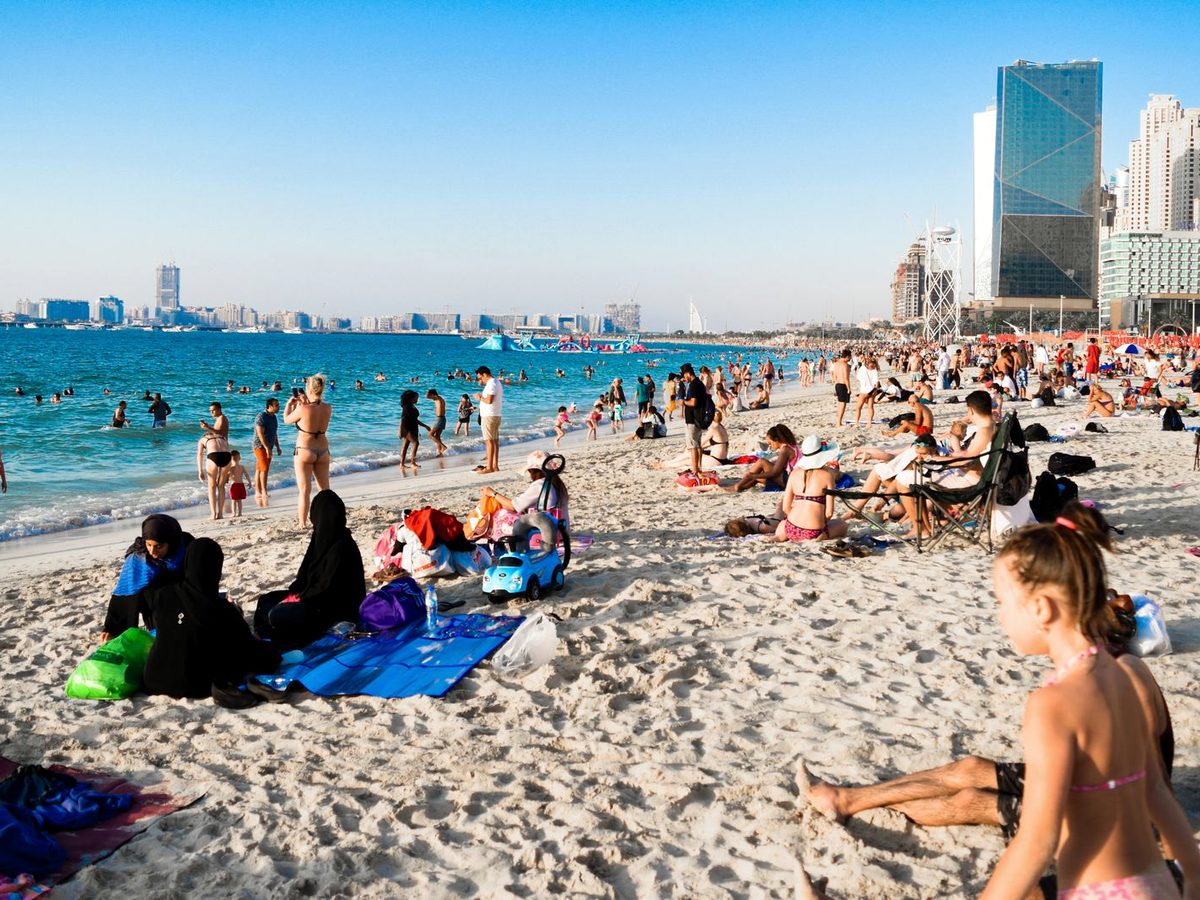
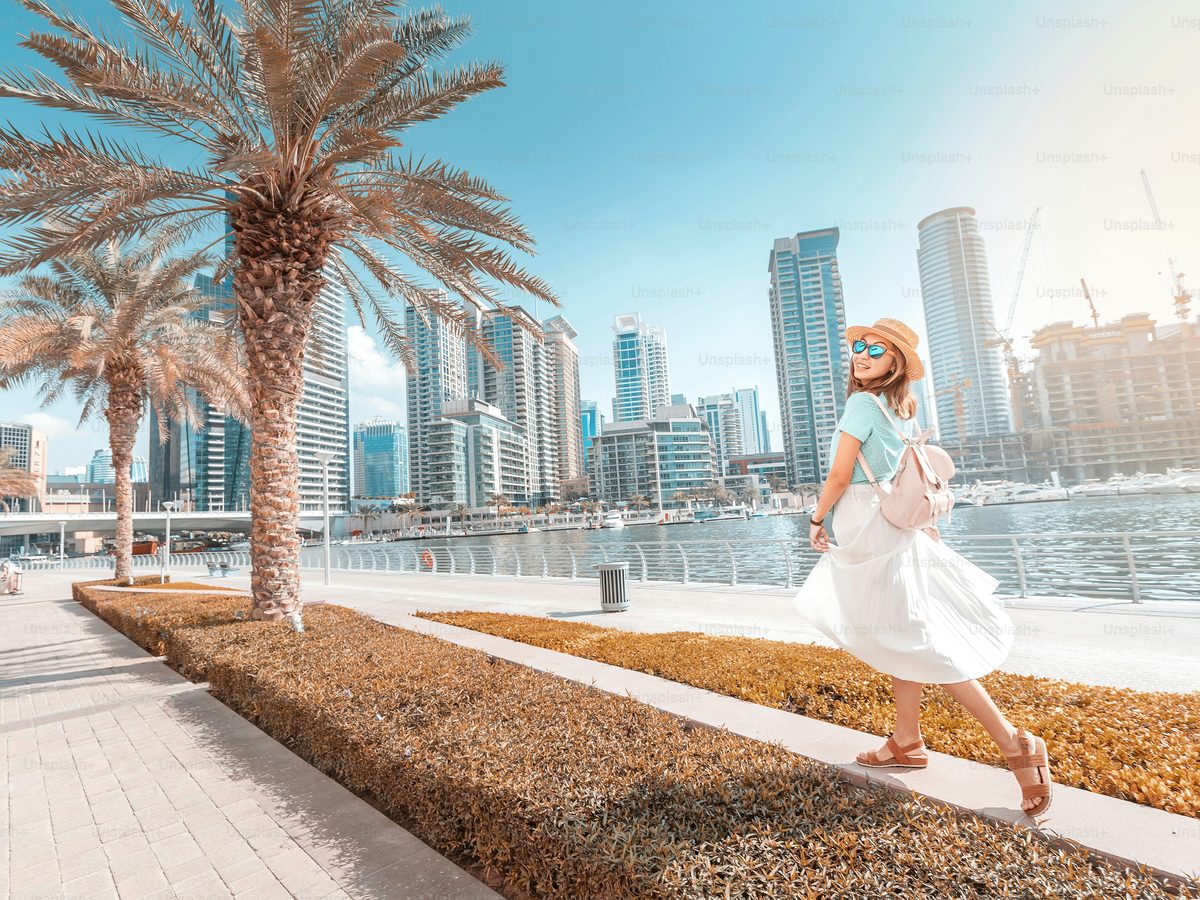
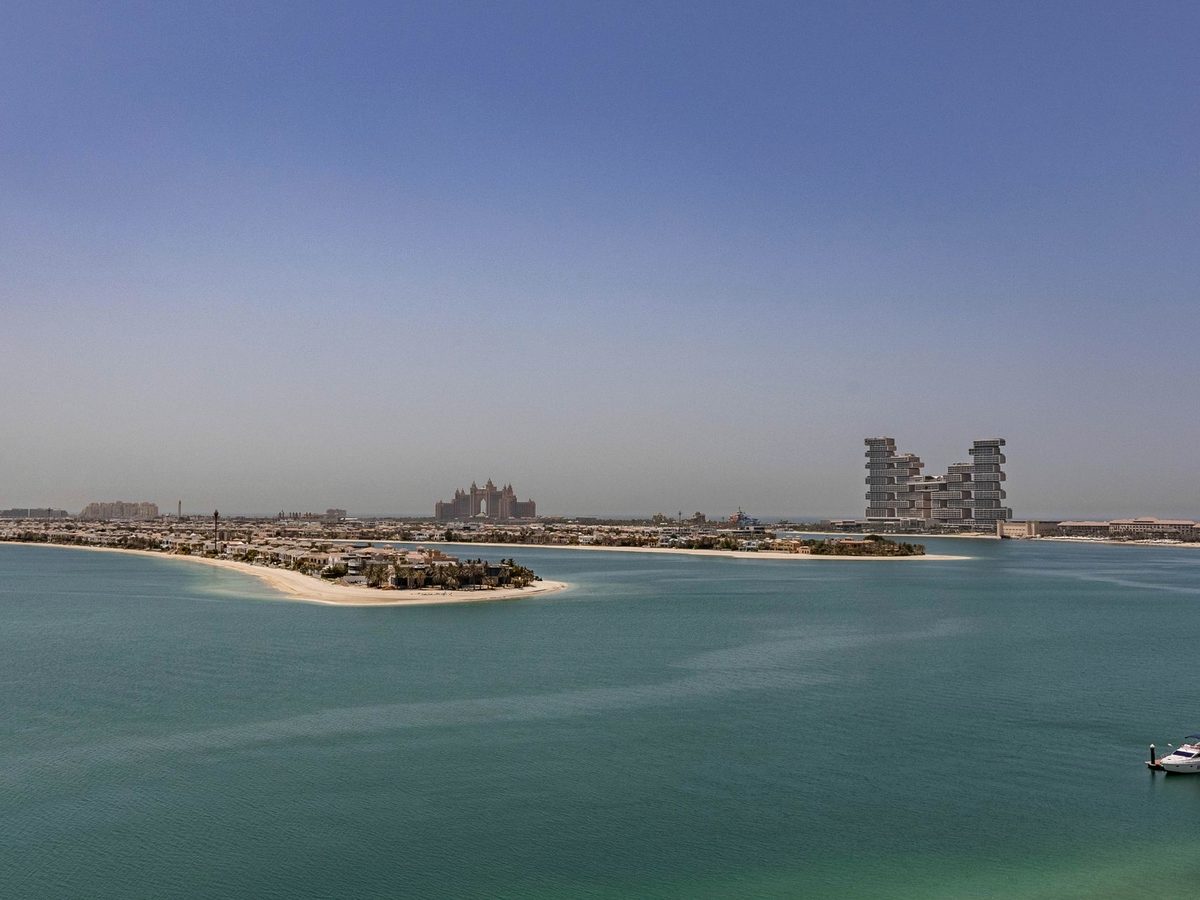
Dubai Marina and JBR is the base that comes closest to a walkable beach holiday. The JBR strip has a Blue Flag public beach with lifeguards, free showers and changing, a flat promenade with no roads to cross and a splash pad behind the sand, and it is the one part of the city where the metro and tram give you real mobility without a taxi. The Gulf here is breakwater-sheltered and toddler-calm. The Palm Jumeirah is the resort-island alternative: hotels with their own beaches, the Atlantis water parks and aquarium on the doorstep and a monorail that doubles as a toddler ride, though it leans on taxis and a hotel-bubble feel.
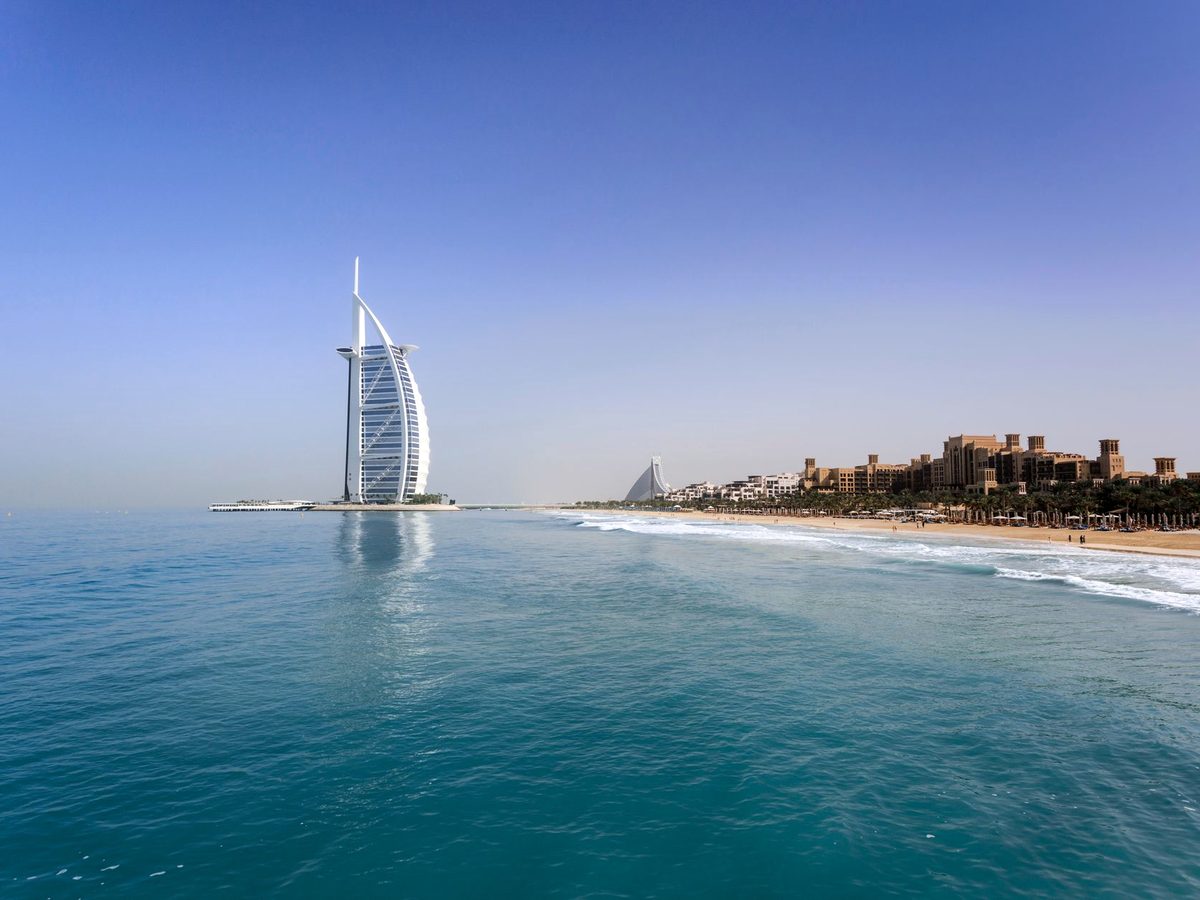
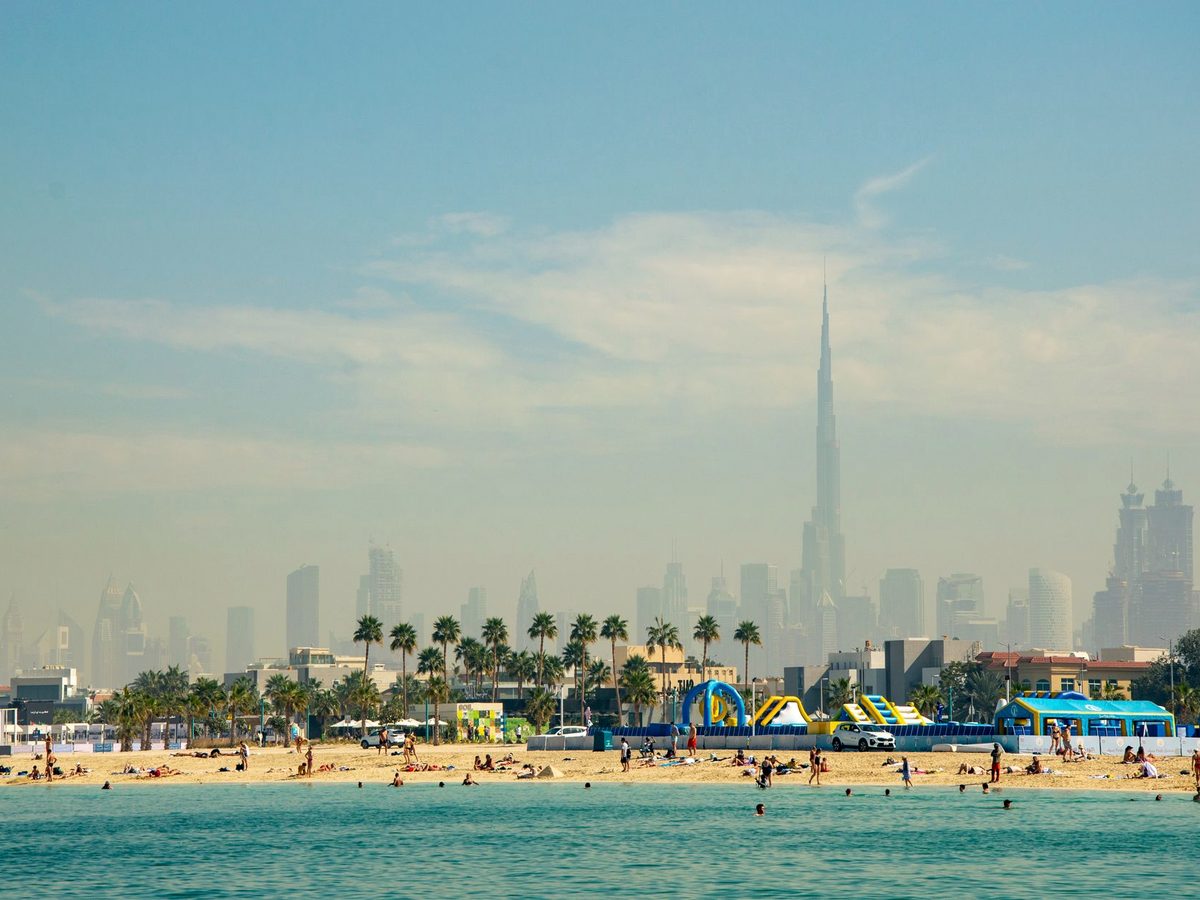
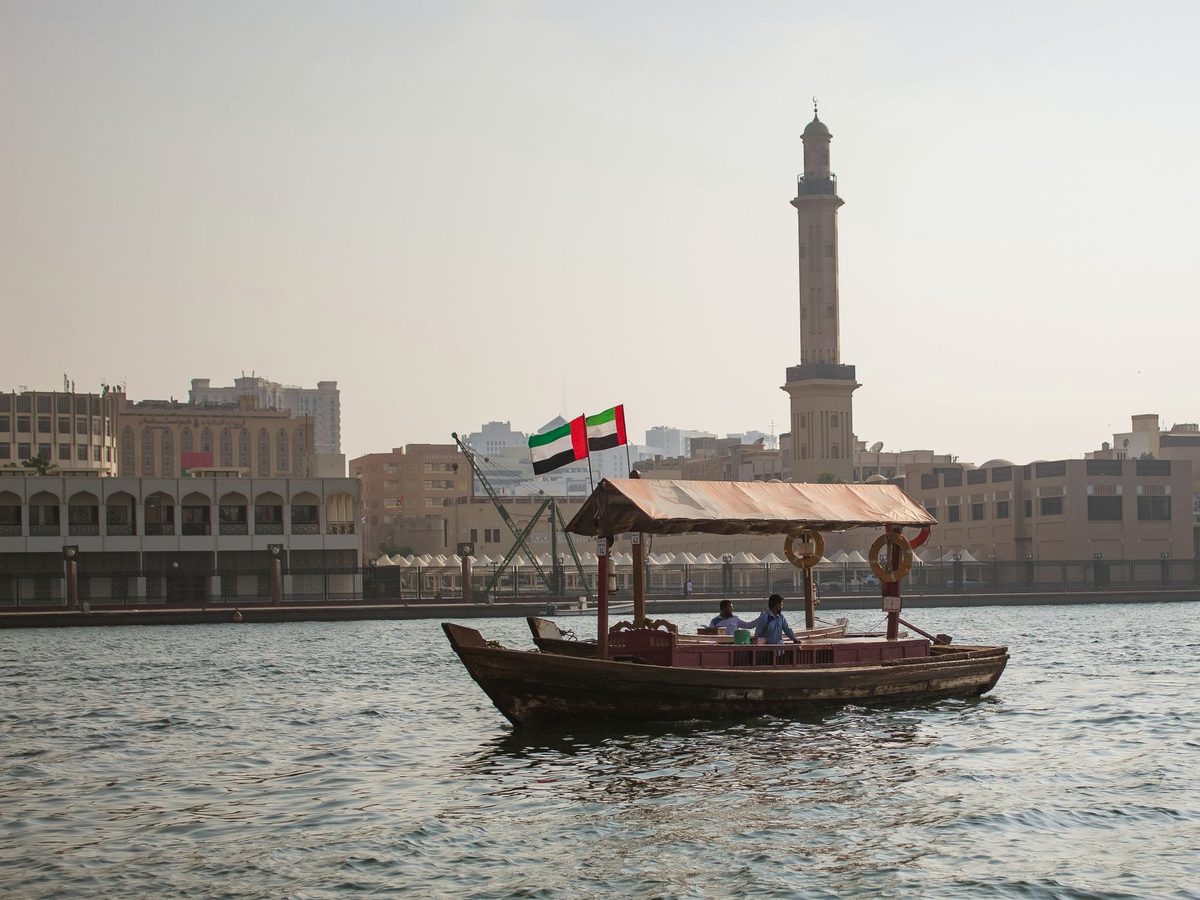
Downtown trades the beach for the sights, putting the Burj Khalifa, the free fountain, the Dubai Mall and its aquarium within one flat, air-conditioned walk, with the nearest sand 15 to 20 minutes away by taxi. Old Dubai around the Creek is the heritage half, where the one-dirham abra, the souks and the modern Al Seef waterfront make a cheap, characterful day rather than a beach base. For free family beach days from any of them, Kite Beach and Sunset Beach on the Jumeirah coast are the ones to head for, with white sand, calm water, playgrounds and food trucks under the gaze of the Burj Al Arab.
Marina or JBR suits a family that wants the beach and a walk; the Palm a self-contained resort week; Downtown a sightseeing-led trip with the pool for swimming. Whichever wins, two booking checks are worth making here: confirm the hotel pool is actually heated for a winter trip, since a 22-degree sea means most swimming happens in the pool, and check the current Foreign Office advice before any money changes hands.
| Area | Getting there | The swimming | The feel |
|---|---|---|---|
| Dubai Marina and JBR | Metro and tram, or a short taxi from the airport | Blue Flag public sand and breakwater-sheltered Gulf water that shelves gently for toddlers | The walkable beach base: a flat promenade, the tram, restaurants and a splash pad, all on foot. |
| Palm Jumeirah | Taxi or the Palm monorail; not on the metro | Private hotel beaches and the big resort water parks, on the same calm Gulf shallows | The resort island: Atlantis, family beach clubs and a novelty monorail, self-contained but car-dependent. |
| Jumeirah beaches | A short taxi from the beach bases | Free Kite Beach and Sunset Beach: white sand, shallow calm water, playgrounds and food trucks | The best-value beach days on the coast, with the Burj Al Arab as the backdrop. |
| Downtown | Central, on the metro | No beach; about 15 to 20 minutes by taxi to the nearest sand | The Burj Khalifa, the free fountain and the mall with its aquarium, flat and fully air-conditioned. |
| Old Dubai and the Creek | On the metro at the Creek | No beach; the water here is the Creek and its one-dirham abra crossings | The heritage half: souks, the wooden water taxis and the modern Al Seef waterfront. |
Map of the main family areas
An orientation map of the areas above, the airport and the big days out. The numbers match the key beneath.
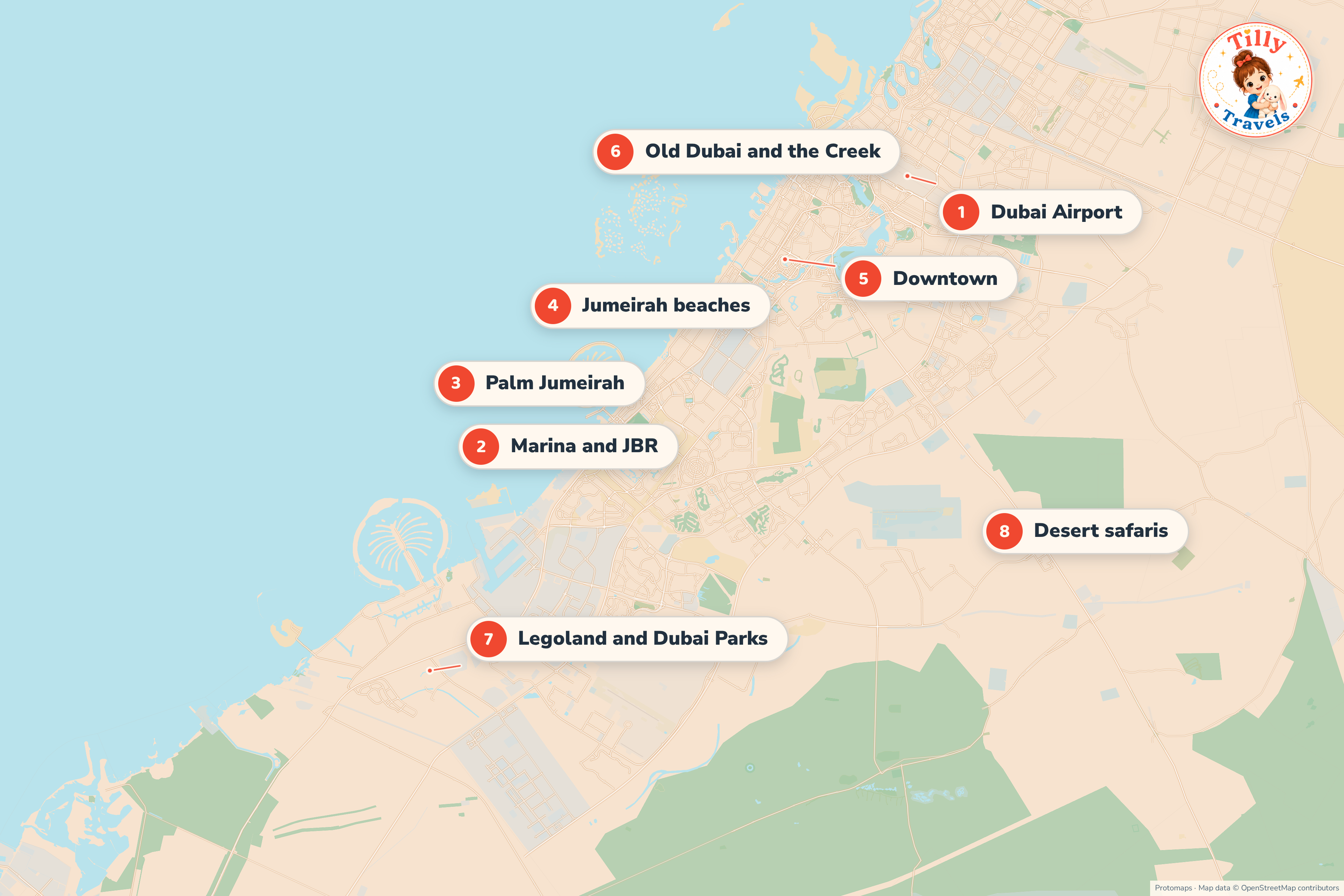
- 1Dubai Airport On the metro
- 2Marina and JBR The walkable beach base
- 3Palm Jumeirah The resort island
- 4Jumeirah beaches Free Kite and Sunset beaches
- 5Downtown Burj, fountain and mall
- 6Old Dubai and the Creek Souks and abras
- 7Legoland and Dubai Parks The big day out
- 8Desert safaris Camels and dunes
The beaches, sorted for small swimmers
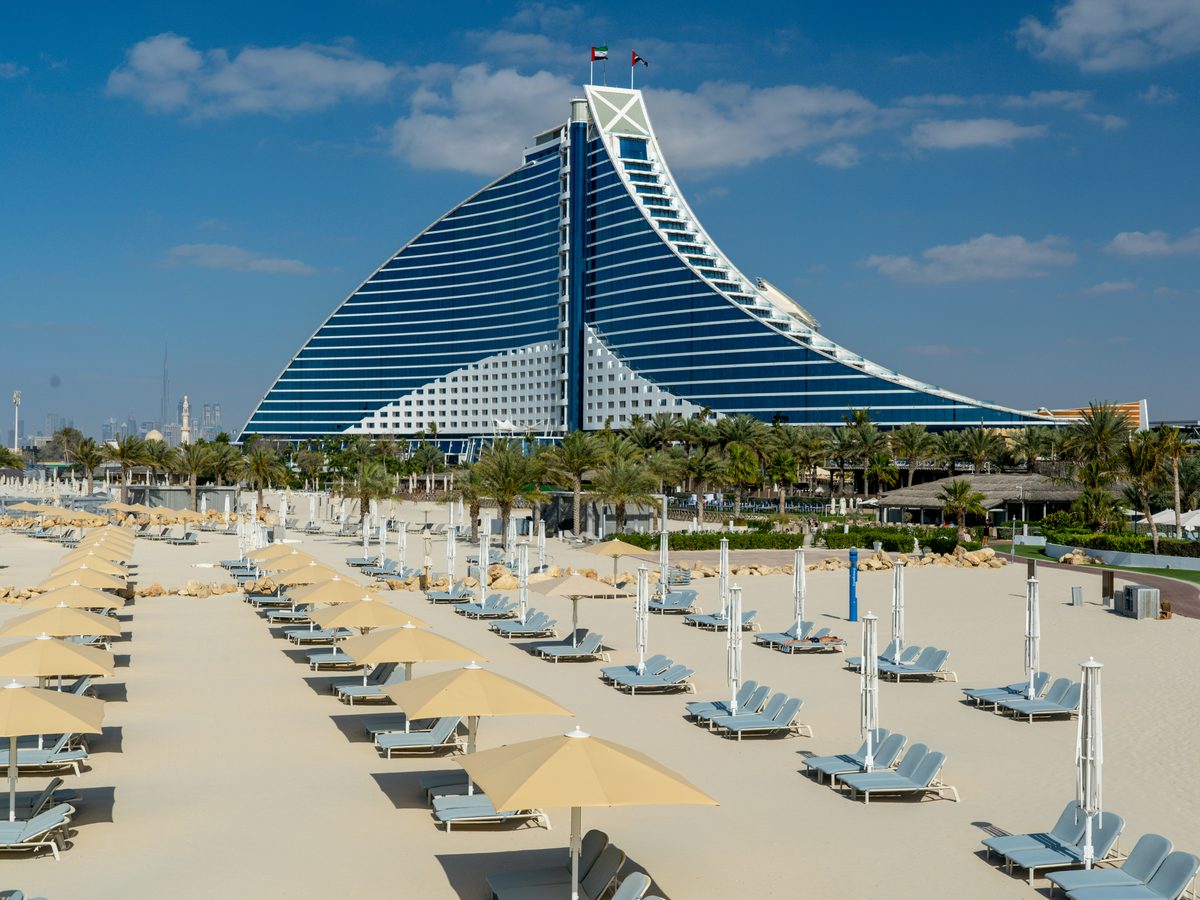
The Gulf is the easiest sea for small children we cover. There is no reef and no rocky entry at the main beaches, the semi-enclosed gulf builds only gentle lapping waves, and the bottom shelves so slowly that a toddler can walk a long way out and still be at knee depth. JBR is the headline family beach: Blue Flag, free, lifeguarded sunrise to sunset, with showers, baby changing and a splash pad behind the sand. Kite Beach and Sunset Beach along the Jumeirah coast do the same job for free, with playgrounds, food trucks and the Burj Al Arab as the view. The water is warmest in November at 28 degrees and settles to a brisker 22 through midwinter, which is when you'll swim mostly in the pool.
The dress-code split matters: the public beaches expect covered or one-piece swimwear, while the hotel beaches and private beach clubs run on ordinary Western norms, which is where most families gravitate, a cover-up in the bag bridging both. Jellyfish are at their lowest from December to April, but lifeguards work daylight hours only and rip currents do occur, so swim between the flags and keep small children close. Beyond the season, the summer beach is unusable, with the sand too hot and the middle of the day off-limits.
Weather, days out and the daily shop
When to go through the season, the attractions and days out that suit small children, eating out and where to stock up.
Weather across the family season
The table covers the November-to-April family window that makes Dubai work. Rain barely registers in any of these months, the sun runs to eight or nine hours a day and the sea stays in the swimmable twenties throughout.
| Month | Daytime high | Overnight low | Rain | Wet days | Sea temp |
|---|---|---|---|---|---|
| January | 24.5° | 15° | 22 mm | 2 | 22° |
| February | 26.5° | 17° | 6 mm | 1 | 22° |
| March | 29° | 19° | 9 mm | 1 | 23° |
| April | 34° | 22° | 3 mm | 1 | 26° |
| May | 38.5° | 26° | 0 mm | 0 | 29° |
| June | 40.5° | 28.5° | 0 mm | 0 | 33° |
| July | 41.5° | 31° | 0 mm | 0 | 34° |
| August | 42° | 31.5° | 7 mm | 0 | 34° |
| September | 39.5° | 29° | 0 mm | 0 | 34° |
| October | 36° | 25.5° | 0 mm | 0 | 32° |
| November | 31° | 21.5° | 8 mm | 1 | 29° |
| December | 26.5° | 17.5° | 17 mm | 2 | 25° |
Typical monthly averages from weather-station records. Sea temperature is the open-water figure, so a sheltered bay can feel a degree or two warmer.
November is the standout: 31-degree days, the warmest winter sea at 28 degrees and sun without the punishing UV that arrives later. December through February is the mild winter-sun range, warm by day and cool enough after dark for a light layer, with February half term a reliably sunny week. March warms up but pushes the UV to extreme, so the full hat-and-cream drill starts then. The months to avoid with little ones are May to September, when days run from 38 to 42 degrees with high humidity and the city moves entirely indoors; hotels are far cheaper, but it is an air-conditioned holiday of malls, aquariums and pools rather than a beach one, and the middle of an August day is no place for a baby.
Filling the daysThings to do with little ones
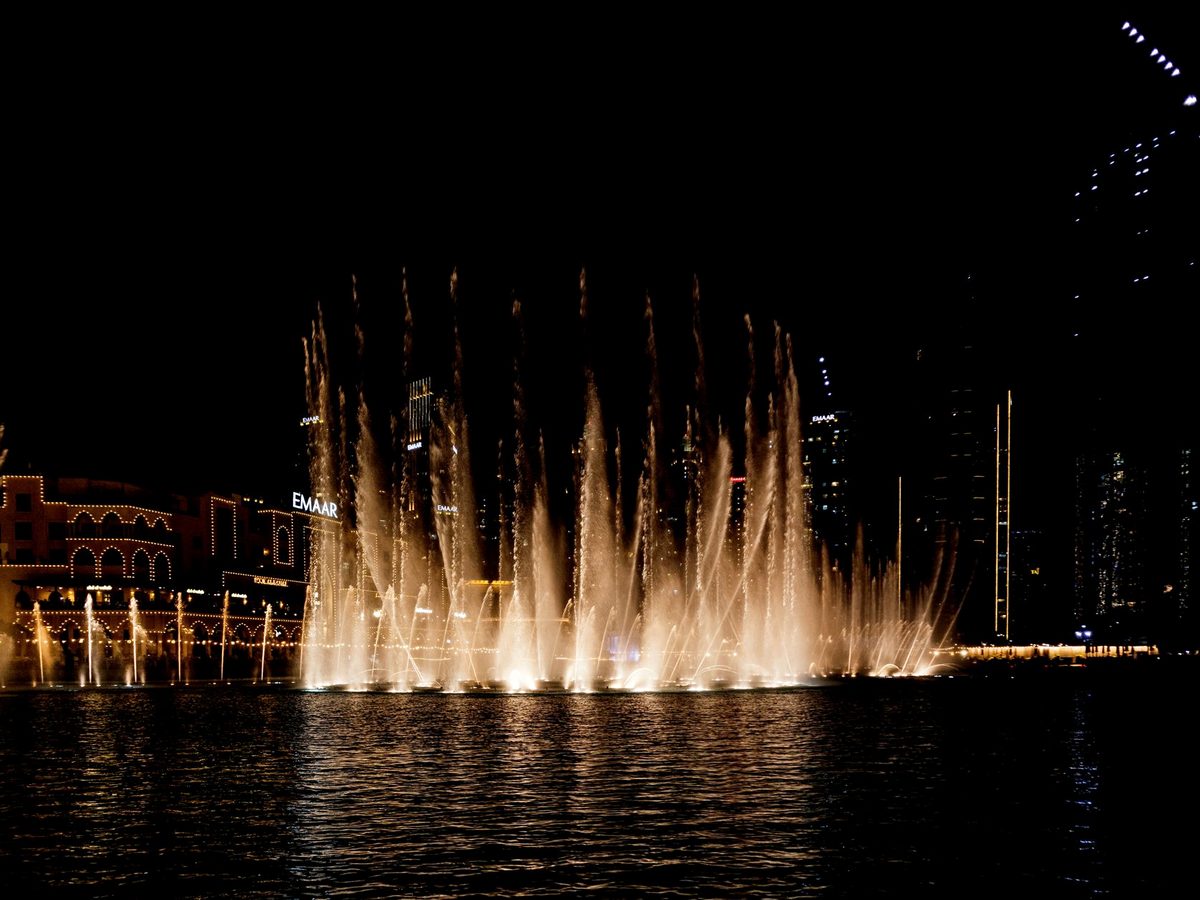
The indoor attractions are the backbone, because they double as heat and rain escapes. The Dubai Mall aquarium is the easy win for toddlers, a walk-through tunnel of sharks and rays with otters and penguins beyond, and you can watch the giant tank free from the mall if the ticket feels too dear. OliOli, a purpose-built play museum with a gallery for under-twos, is the better-value pick for a hot day and the standout for the youngest, while the Green Planet rainforest dome puts sloths and free-flying butterflies at close range. The free Dubai Fountain is the evening set piece: jets, light and music below the Burj Khalifa, with the six o'clock show well before a toddler bedtime.
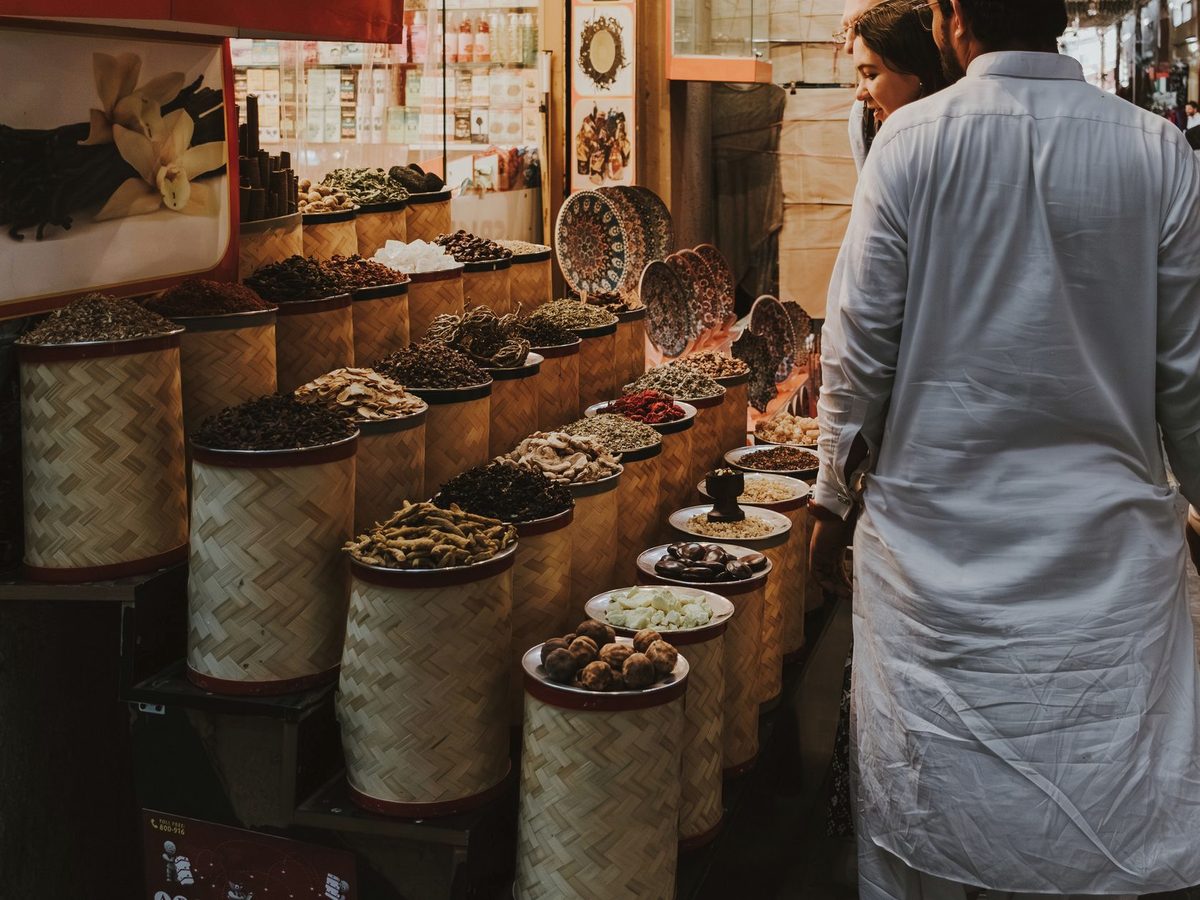
For the bigger days, Legoland is the best of the theme parks for young children thanks to Duplo Valley and its low height limits, with under-threes free, and its water park sits next door. The Atlantis water parks skew older but have a dedicated toddler zone, and a gentle morning desert safari, with a camel ride and camp breakfast, beats the late-night dune-bashing version for small children. The cheap wins more than hold their own: the one-dirham abra across the Creek, the spice and gold souks, Kite Beach's free playground and Global Village's winter evenings. The attractions are dear by UK standards. Most are free for under-threes but a couple draw the line at under-two, and booking online ahead trims the price, so it pays to plan around the free days too.
Eating out with children
Dubai makes eating out with children easy. High chairs are standard from mid-range restaurants up, children's menus are everywhere, and an early 5.30 to 7pm sitting that suits toddler routines is entirely normal rather than a tourist concession. The malls put a vast range of options under one air-conditioned roof, UK chains among them, and the famous weekend brunches have family versions with entertainment laid on, though the bottomless-drinks kind is one to skip with little ones in tow.
Alcohol is served freely in hotels and licensed restaurants, which is where families mostly eat, but not in mall food courts or on the street, and drinking in public is off-limits. The bill is the thing to watch: a mid-range family meal runs higher than at home, so a hotel rate with breakfast included and the odd self-catered supper from Waitrose or Spinneys keeps the week affordable.
Milk, nappies and pharmaciesSupplies and the medicine bag
This is where Dubai is easiest for a family. There is a Waitrose in the Dubai Mall, on the Palm and at the Marina, exactly where families stay, stocking UK brands, and Aptamil, Calpol and Pampers are sold across the supermarkets and pharmacies, with Kendamil available too. Cow and Gate is the one not reliably found, so a baby settled on it should bring a supply. Nothing else needs to fly out from home: pharmacies are everywhere, English-speaking and well stocked, Boots among them, with 24-hour branches in the tourist areas.
The medicine bag is the exception, and it is the one thing to check before you pack. Codeine is a controlled drug in the UAE, so co-codamol, Nurofen Plus, Solpadeine and any codeine product must stay at home unless you hold prior Ministry of Health approval, and arriving with them has led to UK travellers being arrested. Melatonin is prescription-only here too. The everyday kit is no problem at all: plain Calpol, Nurofen for Children, an antihistamine, rehydration sachets, antiseptic cream and a thermometer are all fine and sold locally anyway. Check the current controlled-medicines list before you travel, since it does change.
Getting around, a real week and the admin
The metro and taxis, what a week actually looks like, the health and document checks and a list to pack against.
Getting there and around
The flight is the longest we cover at around seven hours, so book a bassinet seat early if you have a baby, and Emirates is currently the main UK carrier, flying from several UK airports with a strong in-flight family product of bassinets, baby food and kids' kit. Dubai International is vast, so allow time from gate to bags, and the rare treat is that the metro has a station right in the terminals, which skips the taxi queue. For the hotel run, taxis are cheap and metered but do not carry child seats, so a travel seat for the airport transfer is the priority bit of kit.
Around the city you probably do not need a car. The driverless metro is clean, cheap and frequent, with a glass-fronted nose carriage that toddlers love in its own right and under-fives travelling free, and the tram links it to the JBR and Marina shore. Taxis and the Careem app reach everywhere else on a meter, and Careem has a baby-seat filter for booking ahead. Dubai is not a walkable city beyond a few defined zones like the JBR promenade, the Mall area and Al Seef, so assume a taxi or the metro between districts, and weigh a hire car only if you want several out-of-town days in quick succession.
What a real week looks likeA realistic week with little ones
The seven-hour flight, the metro or a pre-booked car-seat taxi from Terminal 3, and a first warm evening by the hotel pool.
The Gulf shallows or a free Jumeirah beach early, an air-conditioned mall lunch and nap, then the heated pool through the hot middle of the day.
A whole day at Legoland's Duplo Valley or the Dubai Mall aquarium, booked online ahead, with the desert kept for a gentler morning safari.
The one-dirham abra across the Creek, a wander through the spice souk and the free fountain show at six as the light goes.
A final pool morning, the metro front seat one more time and the visa-free run back through the airport.
With young children, the pool-and-beach mornings, one big booked day out, one cheap heritage day and a free fountain evening fill a Dubai week and keep you out of the worst of the heat.
The practical adminHealth, documents and the boring bits
The travel advice comes first and is covered in the box at the top of the page: check the current Foreign Office UAE position before you book and again before you fly, since this is a changeable region. Beyond that, there is no GHIC here, so comprehensive travel insurance is the document that matters most, and Dubai's private hospitals are excellent but expensive, which is the whole reason the insurance has to be valid. The emergency number is 999 for police and 998 for an ambulance. Passports need six months' validity, the visa is free on arrival, and registering the trip on the Foreign Office service takes five minutes and helps if anything goes wrong.
The day-to-day is mostly sun and a short briefing on local law. Winter UV still burns and the summer index is among the highest in the world, so the hat-cream-shade routine holds all year and the beach belongs to mornings and late afternoons. The laws that catch families out are easily handled once known: codeine in the medicine bag is the big one, public-beach dress codes the next, and then a handful of common-sense points, no drinking or swearing in public, no photographing people without asking or official buildings at all, and basic discretion during Ramadan.
Before you payBooking checklist
- Check the current Foreign Office UAE travel advice before booking and again before flying.
- Buy comprehensive travel insurance that covers the UAE; there is no GHIC fallback.
- Go through the medicine bag: leave co-codamol, Nurofen Plus and any codeine product at home unless you have Ministry of Health approval.
- Confirm the hotel pool is heated; a midwinter Gulf sea means most swimming happens in the pool.
- Book a travel car seat for the airport transfer; Dubai taxis won't have one.
- Pick the November-to-April window; pass on May to September with a baby.
- Pack a beach cover-up for the public-beach dress code and full sun kit for the extreme UV.
- Book the big attractions online ahead, and check each one's under-two or under-three free threshold.
- Check every passport has six months' validity, including the baby's five-year one.
- If travelling near February half term, check the current-year Ramadan dates and what they mean for opening hours.
Resort guides in Dubai
We've researched these places to stay in Dubai for families with young children. Each guide covers what it's like, who it suits and what to check before you book.
Questions, links and the last word
The things families ask most, the official pages worth a bookmark and when this guide was last refreshed.
Common parent questions
Is it actually safe to go right now?
As of August 2026 the Foreign Office doesn't advise against travel to Dubai or anywhere else in the UAE. That can change after you've booked, so it's worth signing up on the Foreign Office UAE page for an email whenever the advice is updated. UK travellers have been arrested here for arriving with codeine in the medicine bag.
Which medicines can't we pack?
Codeine is a controlled drug in the UAE, which means co-codamol, Nurofen Plus, Solpadeine and anything else with codeine in it cannot be brought in without prior Ministry of Health approval, and arriving with them has led to UK travellers being arrested. The everyday kit is completely fine: plain Calpol, Nurofen for Children, an antihistamine, rehydration sachets and the like are all sold over the counter there anyway. Leave the codeine products at home unless you have done the official permit, and check the current controlled-medicines list before packing.
How does it compare to the Canaries or Hurghada for winter sun?
In January Dubai runs a degree or two warmer than both by day, with a Gulf sea around 22 degrees that matches the Red Sea and beats the Atlantic Canaries, and more reliable sunshine than Tenerife. The trade-offs are the flight and the bill: about seven hours in the air against under six for Hurghada and just over four for the Canaries, and a higher daily spend once you add the attractions. The other Hurghada differences, the visa and the bottled-water rule and the coral, are covered higher up the page.
Do we need a visa?
No. UK passport holders get free entry on arrival for up to 90 days in any 180-day period, with no fee and nothing to apply for in advance. The allowance went up from 30 to 90 days in September 2024, so ignore the older guides that still say 30. Every family member including a baby needs their own passport, valid for at least six months beyond your arrival, and infant passports expire after five years, so check the little one's before you book.
Is the sea warm enough to swim in winter?
For short dips, with most of your swimming in the pool. The Arabian Gulf is around 25 degrees in December, easing to about 22 by January, warmer than the Atlantic but still brisk for a toddler used to a heated pool, so the pattern is a quick paddle and a warm towel rather than long swims. The sea peaks for the winter season in November near 28 degrees and warms again through March and April. A heated hotel pool is what makes a midwinter Dubai trip work, so check yours actually is heated when you book, since not all are.
What's the deal with dress codes on the beach?
It splits between public and private sand. On the free public beaches like Kite Beach and JBR the local expectation is covered or one-piece swimwear rather than bikinis, while the hotel beaches and private beach clubs run on ordinary Western swimwear norms, which is where most visitors naturally end up. Away from the beach, in malls and streets and souks, cover shoulders and knees and you will not give it another thought. A cover-up in the beach bag handles every version of this.
Do we need a hire car?
Probably not, if you base yourself at the Marina, on the Palm or Downtown. The driverless metro and the tram cover the Marina and JBR strip, and taxis and the Careem app reach everything else cheaply and on a meter. Child seats are the gap: Dubai taxis do not routinely carry them, so bring a travel seat for the airport run and longer trips, and use the Careem baby-seat filter or the rear seatbelts for short hops. A car is worth it only if you want several out-of-town days like Legoland or the desert in quick succession.
Is Ramadan a problem at February half term?
Less than the old advice suggests, but worth knowing it overlaps. Ramadan in 2027 is expected to run from around 8 February to 8 March, across half term, and the rules for visitors in Dubai relaxed in 2025: eating and drinking in public is now allowed for non-Muslims, the daytime restaurant screens are gone and hotels and malls serve normally throughout. Children under six were always exempt, so a toddler can be fed anywhere at any time. Expect a quieter, more reflective public mood and some attractions on shorter hours, and check the current-year position before you travel since the detail differs by emirate.
See more Dubai photos
Open the photo gallery →Useful links
- GOV.UK UAE travel advice: the live safety, entry and local-law position; check it before booking and before you fly.
- UAE Ministry of Health controlled medicines: the official list and the permit process for restricted drugs.
- Visit Dubai: the official tourism site for attractions, beaches and family planning.
- Dubai Metro (RTA): routes, fares and the Nol card for getting around without a car.
Last updated 19 June 2026. Travel advice changes; check the GOV.UK UAE page for the current position.