Tenerife with little ones
With young children, where you stay on Tenerife matters more than the island as a whole. The flight from the UK is a proper travel day at four to four and a half hours, but there's no time difference, which makes the first night much kinder. After that the small practical things matter most: a flat walk to the beach, real shade by the pool and somewhere to eat close to the room.
On this page
A family verdict at a glance
The quick read before the detail: who Tenerife suits, where on the island to base yourselves and what to nail down before you book.
Best for
First trips abroad, winter sun and an easy week where the beach, pool, food and buggy walks are all close enough to keep the day simple.
Maybe not for
Families hoping for empty-feeling beaches, wild coves or a July or August trip with a tiny baby.
Best ages
Toddlers and preschoolers usually get the most from it. Babies can be very happy here too, outside the hottest months.
Best areas
Costa Adeje for choice, Los Cristianos for a flatter town feel, Playa de las Américas only with care.
Why visit with young children
No time change, short southern transfers, serviced beaches and promenades that suit pushchair days.
Check before you book
The slope from hotel to sea, cot and lift arrangements, room position, noise and whether the pool has shade where children actually play.
How the south and north differ for families
Most family-holiday research for Tenerife quickly comes back to the southern coast around Costa Adeje, Los Cristianos and the quieter edges of Playa de las Américas. Transfers are shorter, beaches have facilities, promenades suit pushchairs and the weather is more reliably dry, because the south sits in the rain shadow of Mount Teide while the north catches the cloud.
The north, around Puerto de la Cruz and La Orotava, feels greener, cooler and more like a working island. It's relevant if your research includes Loro Parque, Mount Teide National Park, mountain views or a less resort-led stay. From Tenerife South it's usually an hour or more in the car, with less predictable weather.
Tenerife is hilly wherever you stay. Resorts often climb steeply back from the sea, so a hotel that looks a short stroll from the beach can mean a hard push uphill with a tired toddler and a loaded buggy at the end of the day. Some areas, Los Cristianos especially, are noticeably flatter, which is worth a lot when you're doing it all on foot.
A quick gut checkIs Tenerife right for your family?
Tenerife is worth comparing if
You want a resort-based week in the south, somewhere flat or close to the beach and simple days built around pool, snacks, beach and buggy walks.
The main cautions are
The strongest-looking hotels often sit high above the sea, the hotel page is vague about cots or lifts or the nearest nightlife is close enough to hear from the balcony.
Details to pin down before booking
The child seat for the transfer, where the room sits, how much shade there really is, what cot you are getting, what you will eat on arrival night and whether your documents and insurance are sorted.
The quick facts and how it changes as they grow
Everything you'd want to skim first: the practical basics and how Tenerife suits each age from a baby to a young child.
Quick facts for UK families
Tenerife by age and stage
Babies
If you are travelling with a baby, winter, spring and autumn are kinder. The holiday will mostly depend on shade, air conditioning, a cot that is definitely there and a room close enough to retreat to quickly.
Toddlers
Calm town beaches like Los Cristianos, easy pool days and flat promenade walks suit this age. Many toddler days do not need much beyond that.
Preschoolers
Preschoolers can usually handle a bit more, from splash pools and smaller animal parks to a short wild dolphin-watching trip or the gentler areas at Siam Park.
Young children
Once they have more stamina, the bigger Siam Park slides, Loro Parque in the north and the cable car in Mount Teide National Park become more realistic.
Where to base yourselves
The southern resorts side by side, an orientation map of the island and what the beaches are really like underfoot.
Where to stay with young children
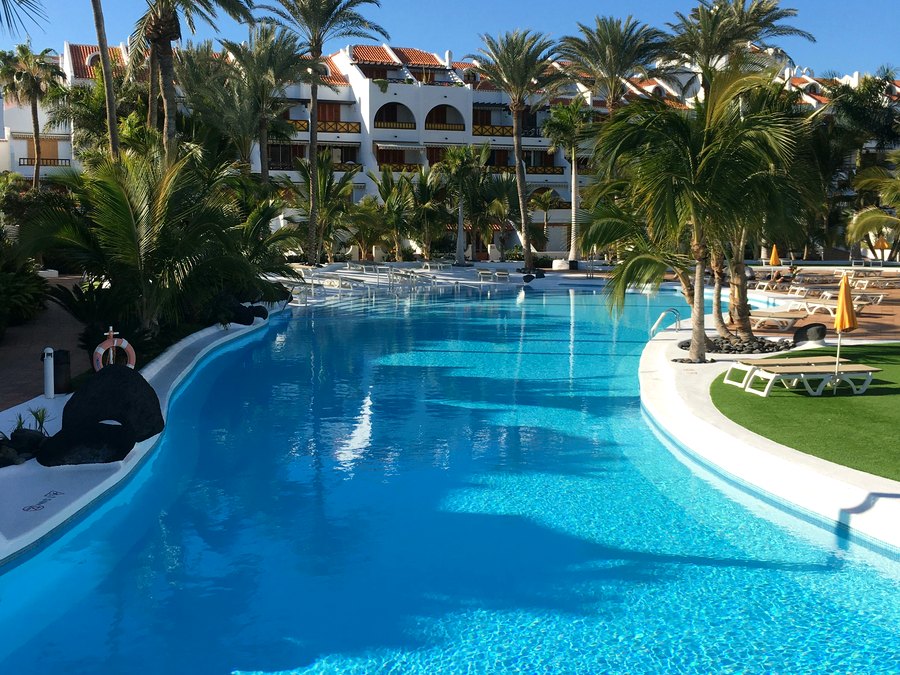
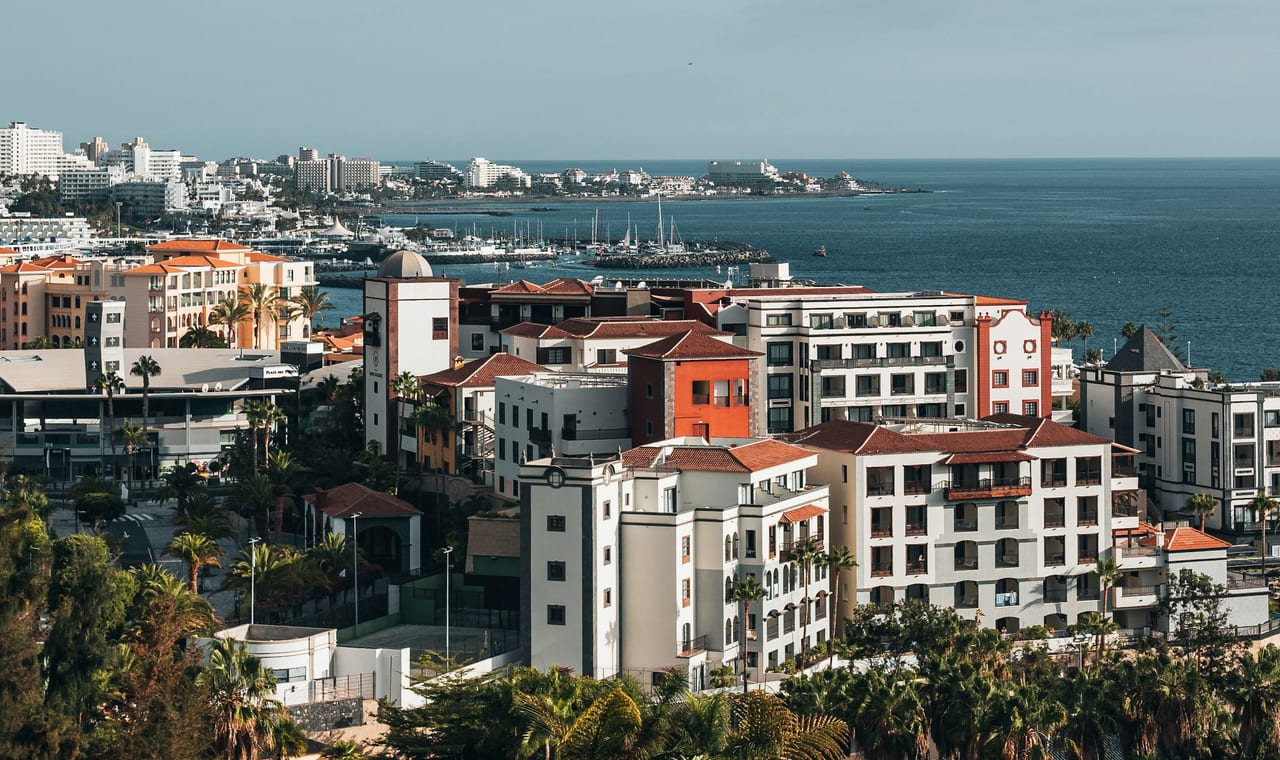
Costa Adeje is usually one of the first areas families research because it has the widest choice of family hotels, serviced beaches and long promenades where a tired toddler can go in the buggy while you walk. Some hotels sit well above the sea, so a room near the front, or a hotel with a reliable shuttle, makes the difference between an easy day and a hot uphill push at the end of it.
Los Cristianos is worth comparing for a flatter, more town-like base. The beaches are calm and central, the shops and restaurants are nearby and very little of the day involves a hill. It's plainer than parts of Costa Adeje, with fewer big resort hotels, which can be a fair trade once a pushchair is involved.
Playa de las Américas can work from a quieter hotel, and it is handy for Siam Park, but it is the area where the exact street matters most. Some pockets are lively well into the night, so a hotel page that only names "Playa de las Américas" needs a closer look before you commit. Puerto de la Cruz and the north are a different kind of Tenerife trip, with greener scenery, a longer transfer from Tenerife South and more changeable weather.
Once you have narrowed the area, the exact hotel matters more than almost anything else. Before you pay, check the slope down to the beach, the cot and lift arrangements, the room's position relative to bars and entertainment and the shade around the pool. A brilliant hotel for a seven-year-old can still be hard work with a baby who needs quiet, a dark room and a short walk back from the water.
| Area | Transfer | The feel | Watch for |
|---|---|---|---|
| Costa Adeje | About 20 min | Widest hotel choice and easy beach-and-pool days | Some hotels sit high above the sea |
| Los Cristianos | About 15 min | Flatter town feel, calm beaches and easy buggy days | Less glossy than the resort strips |
| Playa de las Américas | About 20 min | Handy for Siam Park if you choose the quiet end carefully | Some streets are noisy after dark |
| Puerto de la Cruz, north | About 60 min | Greener, more town-like and good for a different trip | Longer transfer and less predictable weather |
Map of the main family areas
Use this as an orientation map, not a full attractions map. It shows the main family base areas, both airports and the bigger day-trip anchors that change the planning: Siam Park in the south, Mount Teide National Park inland and Loro Parque in the north.
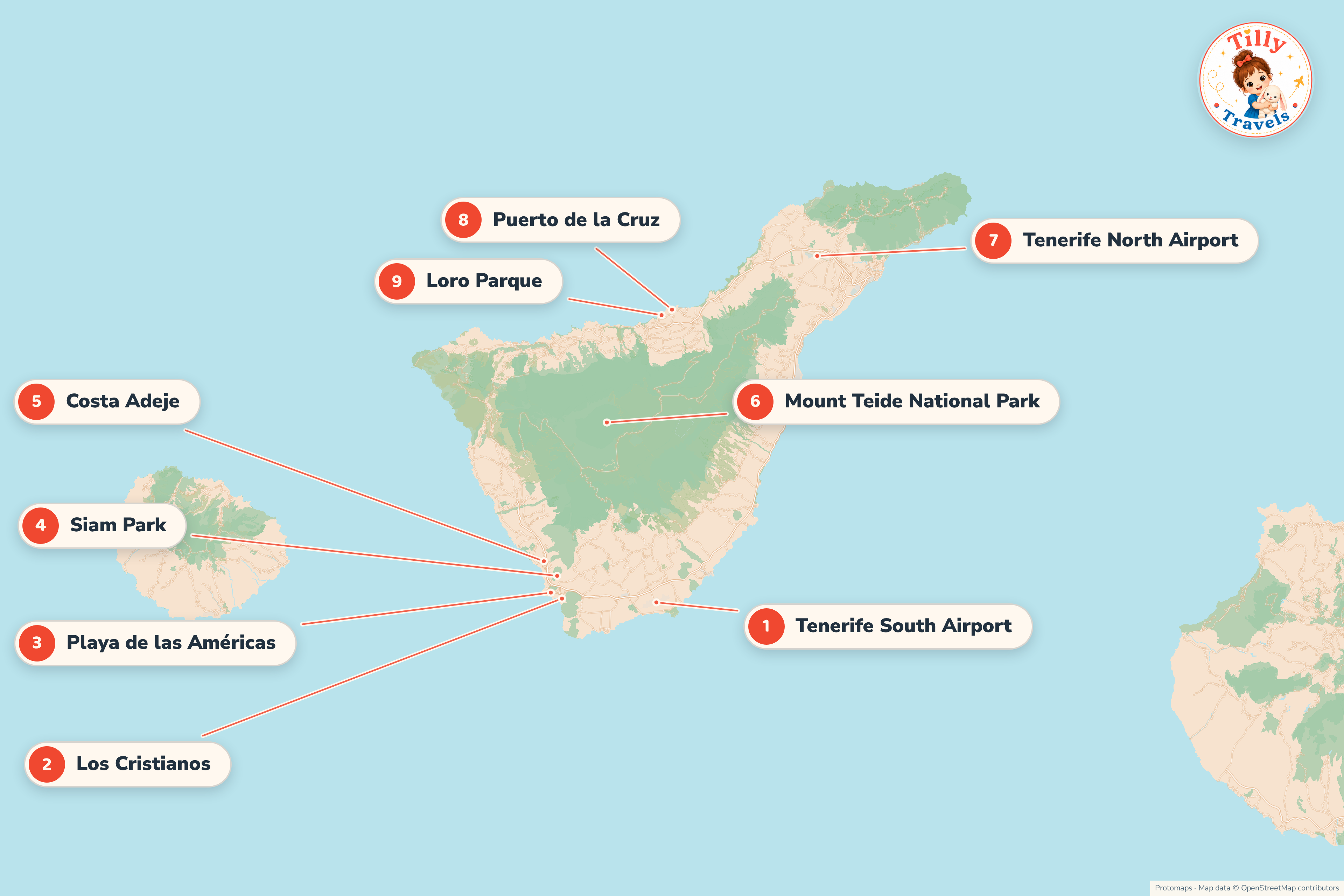
- 1Tenerife South Airport Where almost every family lands
- 2Los Cristianos Flat town area, calm beaches
- 3Playa de las Américas Busier, lively in parts
- 4Siam Park The big south-coast waterpark
- 5Costa Adeje The broadest resort choice
- 6Mount Teide National Park High, cooler and a long day
- 7Tenerife North Airport Useful for a northern stay
- 8Puerto de la Cruz The quieter northern town
- 9Loro Parque Major north-coast day out
Beaches that work with little ones
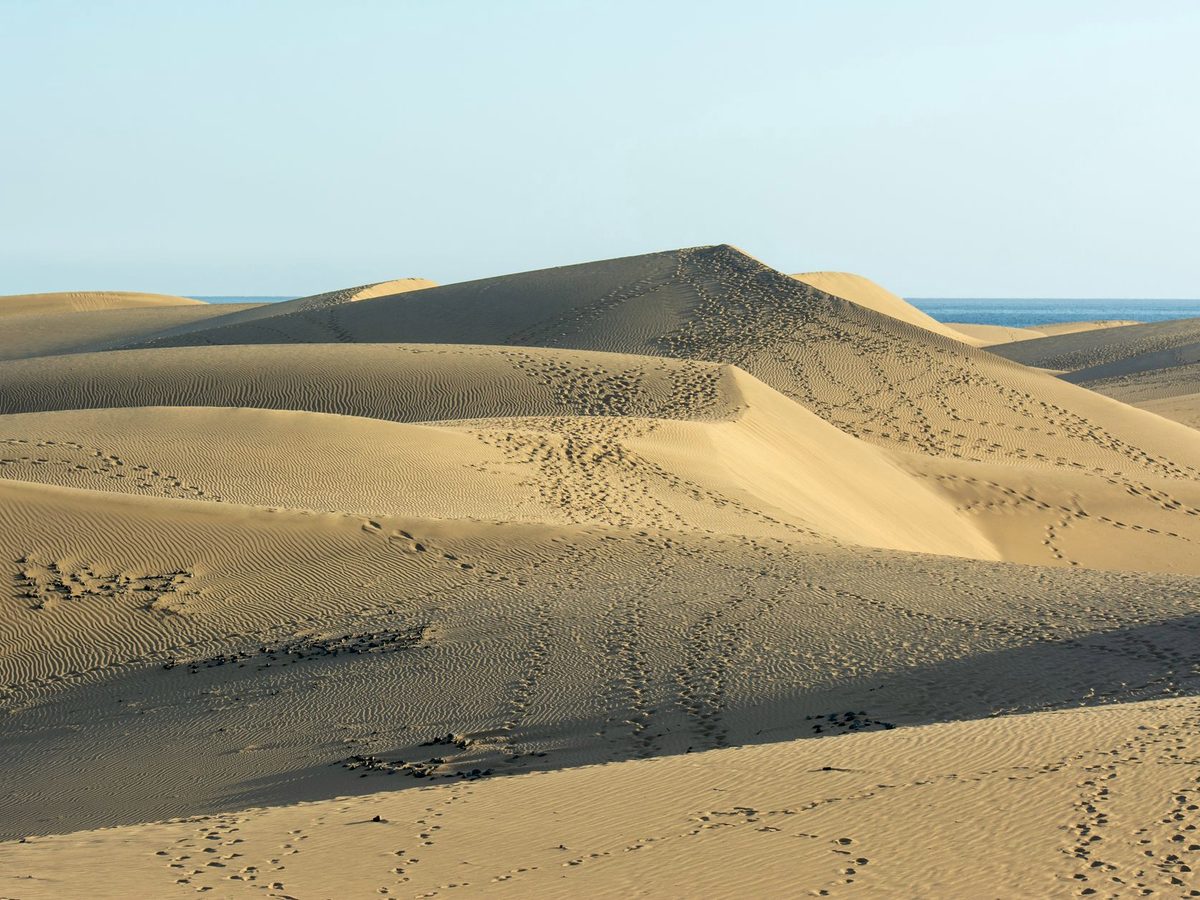
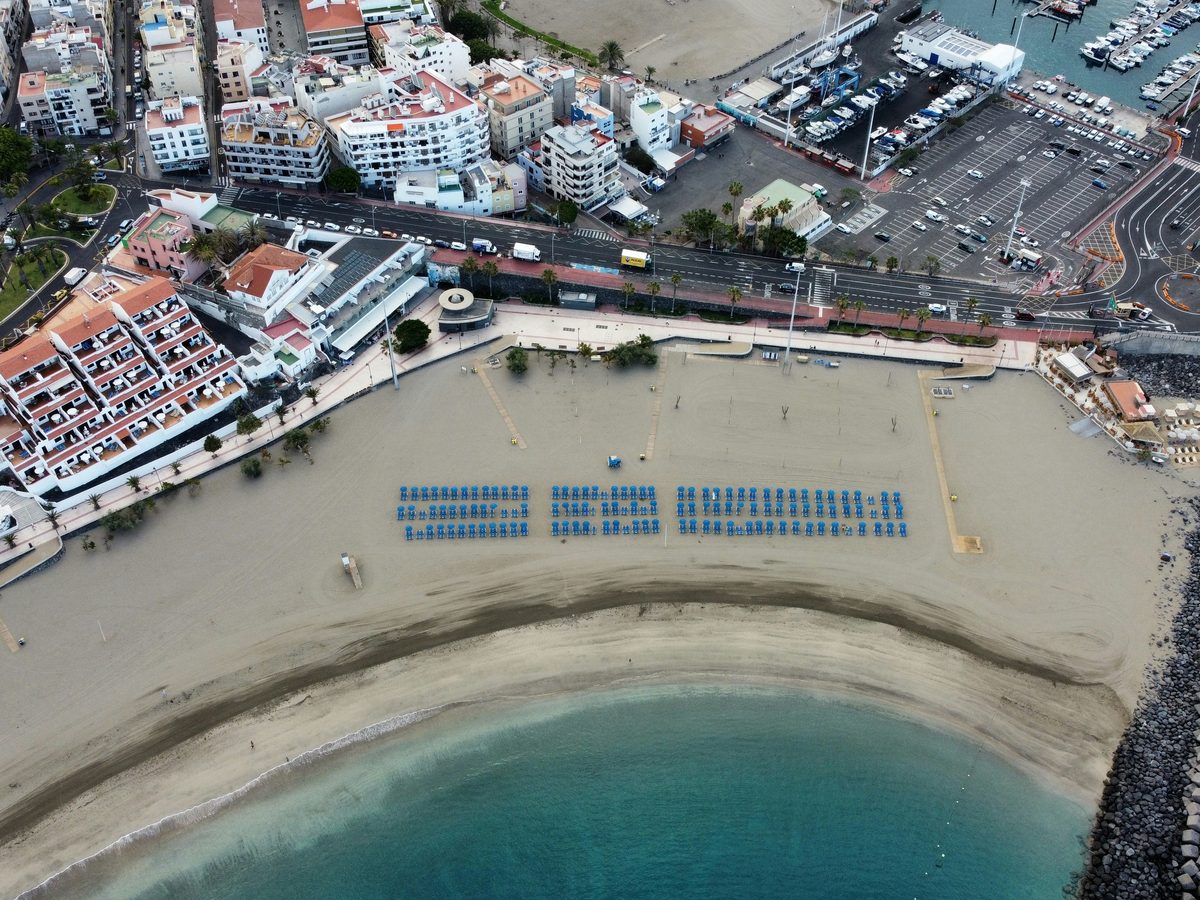
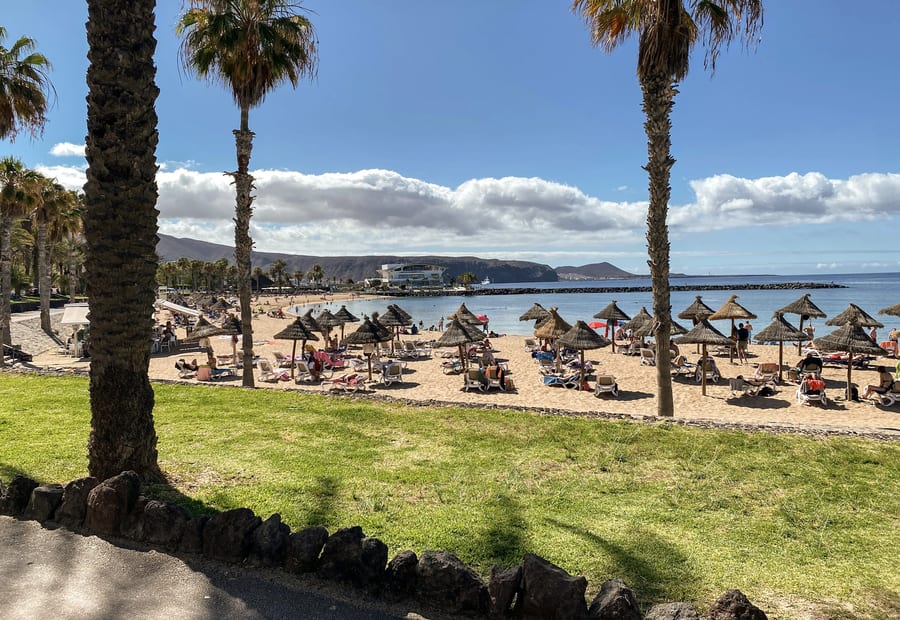
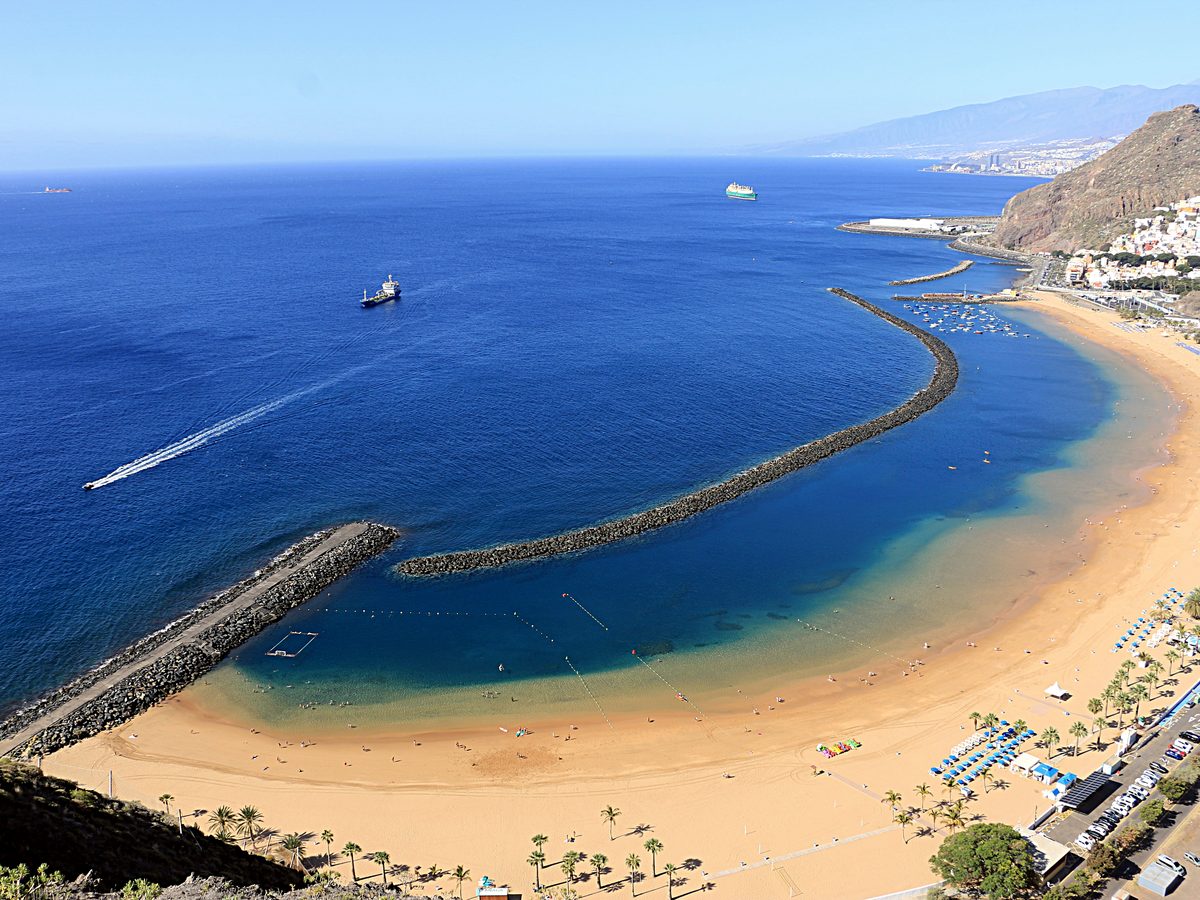
Worth knowing before you picture golden sand: Tenerife is volcanic, so its natural sand is black or grey. The golden beaches along the southern resort strip, Fañabé, El Duque, Las Vistas, El Camisón and Los Cristianos, are largely engineered, with imported sand held in place by breakwaters that also calm the water. Those breakwaters are what keep the swimming gentle, which is the part that helps with young children.
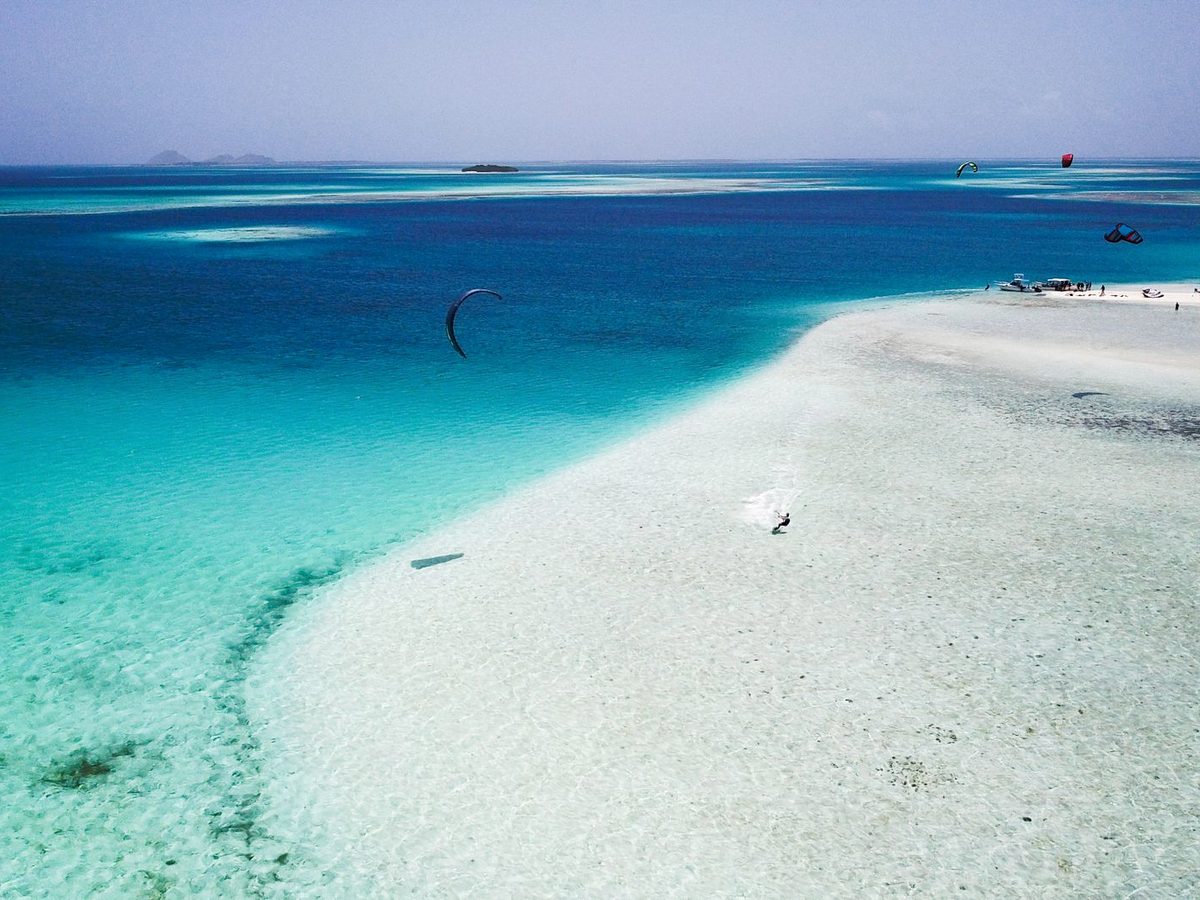
With little children, the most useful beach research is usually around those serviced southern beaches. Las Vistas, on the Los Cristianos and Las Américas border, is the standout: a long golden bay kept settled by breakwaters, with a flat promenade behind it and a free assisted-bathing service of amphibious chairs run daily by marine rescue. Neighbouring Los Cristianos beach is calm and central with everything close by. Playa Fañabé in Costa Adeje has gentle water, parasols, showers, cafes nearby and somewhere to retreat when everyone is sandy and done.
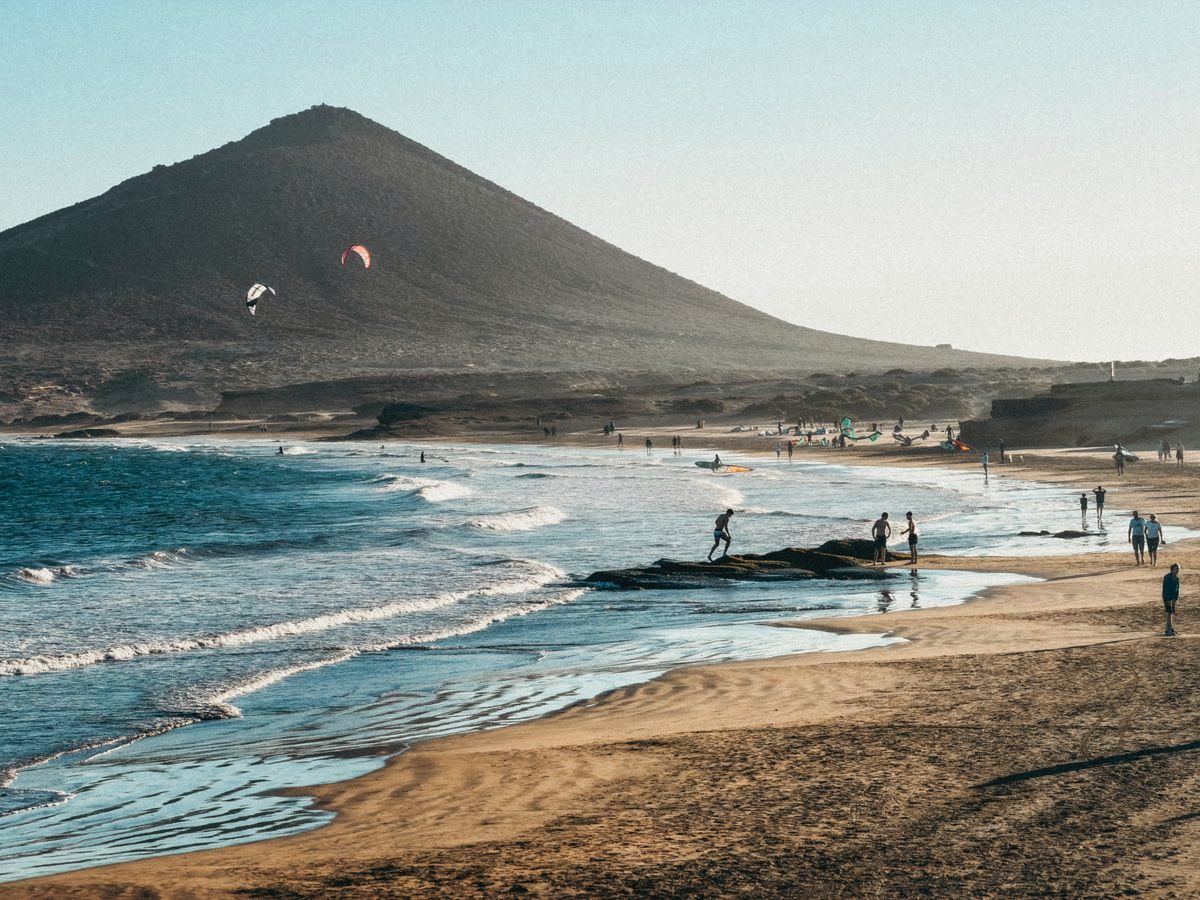
If you do end up on one of the island's black-sand beaches, such as Playa de la Arena in the west, pack beach shoes for everyone: dark volcanic sand gets fierce underfoot in summer and small bare feet feel it first.
Even calm-looking water needs proper attention. Check the beach flags, keep an eye on the sea state and stay within reach of a toddler, who can move into the water faster than you expect.
Don't assume natural shade will be there when a baby needs it. Plan beach trips for the morning or late afternoon, hire a parasol where you can, pack hats and rash vests and treat the shaded promenade as part of the day when the sand gets too hot to sit on.
Weather, days out and the daily shop
When to go month by month, the outings that suit small children and where to stock up on milk, nappies and the rest.
Weather, and the best time to visit
The south coast is popular with families because the south stays warm and dry for much of the year. Winter days usually sit in the low twenties, summer days reach the high twenties, and the sea stays swimmable for much of the year. The figures below are useful for planning, not a guarantee for the week you happen to book. The north and the high ground around Mount Teide National Park can feel several degrees cooler and a good deal cloudier.
| Month | Daytime high | Overnight low | Rain | Wet days | Sea temp |
|---|---|---|---|---|---|
| January | 22° | 15° | 18 mm | 2 | 20° |
| February | 22.5° | 15° | 19 mm | 2 | 20° |
| March | 23° | 15.5° | 8 mm | 1 | 20° |
| April | 23.5° | 16° | 9 mm | 1 | 20° |
| May | 24.5° | 17.5° | 1 mm | 0 | 21° |
| June | 26° | 19° | 0 mm | 0 | 22° |
| July | 28° | 20.5° | 0 mm | 0 | 22° |
| August | 29° | 21.5° | 2 mm | 0 | 23° |
| September | 28° | 21° | 7 mm | 1 | 24° |
| October | 27.5° | 20° | 12 mm | 2 | 24° |
| November | 25° | 18.5° | 14 mm | 2 | 23° |
| December | 23.5° | 16.5° | 29 mm | 3 | 22° |
Typical monthly averages from weather-station records. Sea temperature is the open-water figure, so a sheltered bay can feel a degree or two warmer.
For most families with young children, October to May is the gentlest weather window. Days are usually warm rather than fierce, which makes naps, meals and short outings less awkward. February half term is a popular escape from the UK winter, though it's mild rather than guaranteed hot, so a heated pool is worth confirming. Even in the wetter winter months a rainy day in the south usually means a passing shower rather than a washout.
A couple of times a year, most often between January and April, a calima blows in: a hot, dusty wind off the Sahara that hazes the sky, pushes the temperature up and drops the air quality. It rarely lasts long, but it's worth keeping windows shut and outdoor time short while it passes, especially with a baby or anyone who wheezes. The dust doesn't block the sun, so high-factor cream, hats and UV swimwear still matter every month of the year here.
Filling the daysThings to do with little ones
With babies and toddlers, a good Tenerife day can be as simple as pool, beach, nap, snack and a buggy walk once the heat drops. The flat seafront promenade runs almost unbroken from Costa Adeje through Las Américas to Los Cristianos, lined with cafes and easy with a pushchair, which makes it the best free thing to do here. Keep the bigger plans for days when everyone has slept and the weather looks settled.
Siam Park in Costa Adeje is the biggest waterpark on the island, but there's more than just the big slides. Younger children can use the wave pool, lazy river and the children's water-play areas of The Lost City, which has no height limit. The big slides generally need about 1.25 metres and some also have age rules. Under-threes go free. If your child is still very small, don't feel you have to go. Siam Park makes more sense once they can cope with heat, queues, crowds and a missed nap.
For shorter toddler outings, Aqualand Costa Adeje, Jungle Park and the little Monkey Park are easier to keep contained than a full Siam Park day. The south-west coast also has resident pilot whales and dolphins year-round, so a short trip from Puerto Colón or Los Cristianos can give you a proper holiday memory without using up the whole day. The concrete thing to look for is the Barco Azul, or Blue Boat, flag, an official sustainable-vessel scheme whose boats keep around fifty metres from the animals, don't chase them and carry trained guides. With young children, pick a shorter trip with shade on deck and child life jackets.
Loro Parque, near Puerto de la Cruz in the north, is Tenerife's big animal park, with parrots, penguins and an aquarium tunnel. It's a full day and a fairly long drive from the south. It also keeps marine mammals in captivity, which some families would rather not support, and a wild whale-watching trip is the alternative if that matters to you. Mount Teide National Park is the volcanic high ground in the middle of the island, with the cable car climbing from 2,356 to 3,555 metres on the slopes of Spain's highest peak. The thin air and cold at the top, plus the hour-plus mountain drive and the cable-car logistics, are a lot with very small children, who tend to get little from it. Save it for a trip where missed naps won't wreck the day.
Food, milk, nappies and self-catering
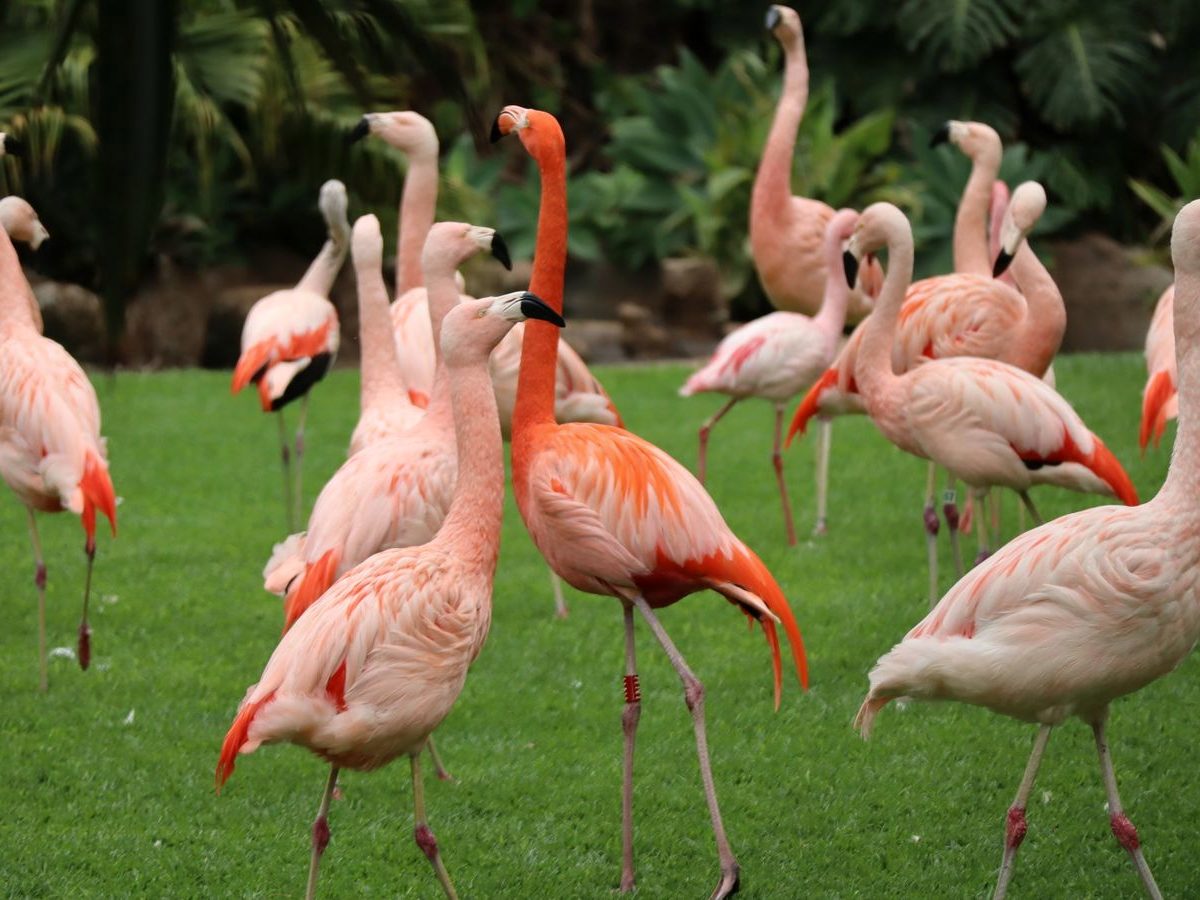
Resort restaurants, especially in Costa Adeje and Los Cristianos, are well used to families, with highchairs, early service and plenty of plain options alongside local dishes such as grilled fish, chicken and papas arrugadas, the salty wrinkled potatoes you see everywhere. Spanish dinner runs late, but resort kitchens serve early. Once bedtime is close, somewhere within a short walk of the room is easier than a better menu further away.
For supplies, supermarkets such as HiperDino, Mercadona, Spar and Lidl are easy to find across the resorts. Nappies are easy: they're sold mainly as Dodot, the Spanish equivalent of Pampers, and labelled by weight in kilograms rather than the UK size-and-age. Formula is the awkward one. Spanish shops sell powder almost exclusively, so ready-to-feed cartons are hard to find, and the local equivalent of your brand may not match the UK recipe. Aptamil, for instance, is sold here as Almirón, but it isn't an identical formulation. Bring enough of your own to cover the whole trip and treat local stock only as backup.
A pharmacy, marked by a green cross, can usually order a specific baby product for the next day if it isn't on the shelf. The pharmacist is also your first stop for minor ailments: children's medicines come under different names here, with paracetamol sold as Apiretal and ibuprofen as Dalsy, both dosed by weight, so know your child's kilos. Out of hours, every pharmacy window shows the nearest farmacia de guardia on the duty rota. Still pack any regular or essential medicine from home.
Much of the islands' tap water is desalinated, so it can taste salty and many people drink bottled by choice. For making up bottles, use still bottled water that's low in minerals, or freshly boiled and cooled water. Bring enough formula and snacks from home for the flight and the first day or two, because a late flight, a delayed transfer or a closed shop is exactly when a "we'll buy it there" plan falls down. Milk, nappies and snacks matter just as much in a hotel room as in an apartment, so ask for a fridge and a kettle even if you aren't fully self-catering. A simple breakfast plan then makes the mornings far easier and gives you an escape from buffet hours.
Getting around, a real week and the admin
Transfers and hire cars, what a week actually looks like, the health and document checks and a list to pack against.
Getting there and around
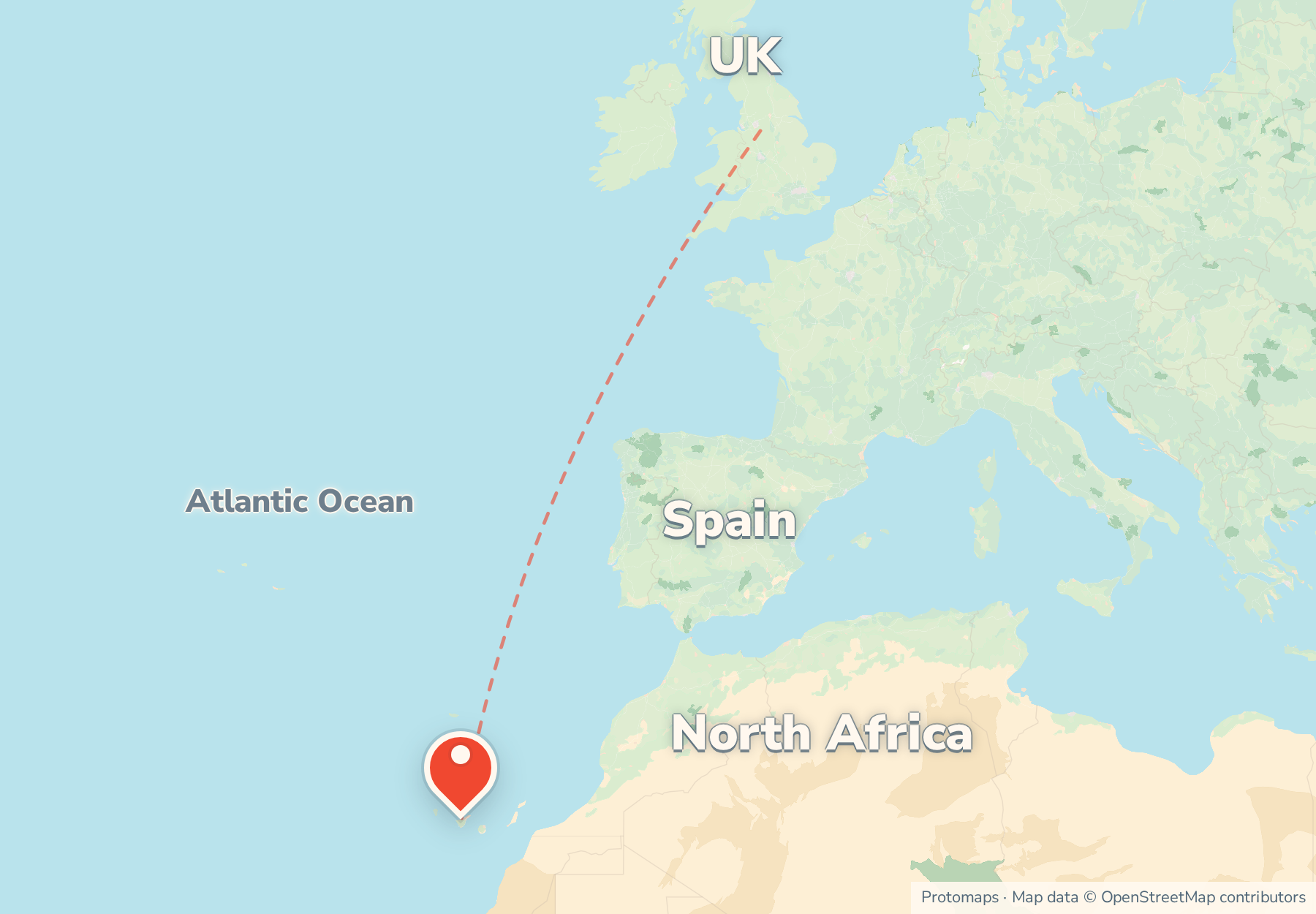
Fly into Tenerife South for any of the southern resorts. Direct flights run year-round from airports right across the UK and take a little over four hours. Transfers from the airport are short, around 15 to 20 minutes to Los Cristianos and Playa de las Américas and a little more to the far end of Costa Adeje. With a baby, a buggy, car seats and too many bags, a pre-booked transfer or taxi is almost always calmer than working out the TITSA bus at arrivals, though the buses are cheap and useful if you're travelling light.
Spanish law requires an approved child seat for anyone under 135cm, and the rule that lets you skip one in a town taxi does not cover the longer airport run, so you need a seat for the transfer whichever way you arrive. If your transfer or taxi provides one, ask for the right type and size for your child's age and weight and confirm it in writing before you travel. If your child needs a specific seat, bringing your own is the surest way to remove any doubt on arrival.
Many families do not need a hire car for a pool-and-beach week, which removes the hassle of parking and unfamiliar roads. A hire car is mainly relevant for Mount Teide National Park, the north coast or quieter beaches. The practical checks are the child seat, parking at your accommodation and whether the mountain driving feels worth it.
What a real week looks likeA realistic week with little ones
Arrive, set up the cot, do the first food shop and protect the early night. After that, most days can be pool shade, feeds, naps, a short walk and dinner before everyone tips over. One gentle outing is enough.
Beach toys, a shallow paddle, pool time, a nap and an evening wander can easily fill the day. Do one small thing at a time and skip the ambitious arrival-night dinner.
Add one bigger outing if the week is going well, perhaps a short boat trip, a smaller animal park or a carefully planned Siam Park day. If the heat, queues or a missed nap look risky, leave it.
You do not need to chase a full itinerary. Some of the best Tenerife weeks with young children look very quiet on paper.
The practical adminHealth, documents and the boring bits
Check the latest GOV.UK travel advice for Spain before you book and again before you travel. Rules change, and this is the place to check entry requirements and any current disruption. Your passport needs to meet the post-Brexit rules on both issue date and expiry date, and children's passports are easy to overlook because they run for a shorter validity. Travel with a GHIC card where you're eligible and proper travel insurance as well, remembering that the GHIC is not a substitute for insurance.
The main practical risks are ordinary holiday ones: sun, heat, water and overtired children. Keep the emergency number 112 in your phone, assume young children need direct supervision around any water even where there are lifeguards, and build the hottest days around shade, fluids and air-conditioned breaks. Confirm your airline's rules for prams, car seats, formula and medicines before you pack, as they vary by airline and route.
Before you payBooking checklist
- Compare the area and the exact hotel separately.
- Check the walking route and slope from hotel to beach.
- Email the hotel to confirm the cot, lifts and where the room is likely to be.
- Ask what shade there is around the pool, especially where toddlers actually play.
- Decide whether you want a fridge, kitchenette or laundry.
- Pre-book the transfer and the right child seats.
- Pack essential formula, medicines and comfort items.
- Check how hot it feels through the day, not just the headline temperature.
- Confirm cancellation terms and travel insurance.
- Recheck GOV.UK Spain advice and passport validity before you go.
Resort guides in Tenerife
We've researched these places to stay in Tenerife for families with young children. Each guide covers what it's like, who it suits and what to check before you book.
Questions, links and the last word
The things families ask most, the official pages worth a bookmark and when this guide was last refreshed.
Common parent questions
Is Tenerife good with a toddler?
Yes, a toddler is one of the easier ages here. A flat base keeps most of the day on foot, and one short outing followed by a nap at home tends to go better than a full schedule.
Is Tenerife good with a baby?
It can be, and the month is the thing that decides it. With a small baby the heat of July and August leaves only the early morning and evening usable, so winter, spring and autumn are kinder. Ask for a fridge for milk even in a hotel room.
Which airport should we fly into?
Tenerife South is the one for the southern resorts. If a deal routes you through Tenerife North for a southern stay, factor in the extra hour each way by road, plus a higher chance of cloud on the drive over the spine of the island.
Do we need a hire car?
For a single-resort week, the flat seafront promenade and local taxis usually cover everything. A hire car is worth it mainly for Mount Teide National Park, the north or quieter beaches, where the bus is less convenient.
Can we buy nappies and formula there?
Nappies are easy to find. Formula is harder, since Spanish shops sell powder almost exclusively and the local equivalent of your brand may not match the UK recipe, so bring enough of your own for the whole trip.
When is it too hot for a baby?
Humidity and warm nights matter as much as the daytime figure, and late summer is when babies sleep worst even when the numbers look manageable. A room with reliable air conditioning helps more than the forecast.
Which beaches are easiest with young children?
Las Vistas in Los Cristianos is the standout for calm, serviced swimming, and Playa Fañabé in Costa Adeje is the other strong all-rounder. Both have a flat promenade behind them, so the buggy walk is easy.
Is Siam Park worth it with little ones?
It is the biggest waterpark on the island, but it is hot, hilly and short on free shade, so arrive early. Under-threes go free, and The Lost City has no height limit, so a small child can get something out of a half-day.
See more Tenerife photos
Open the Tenerife photo gallery →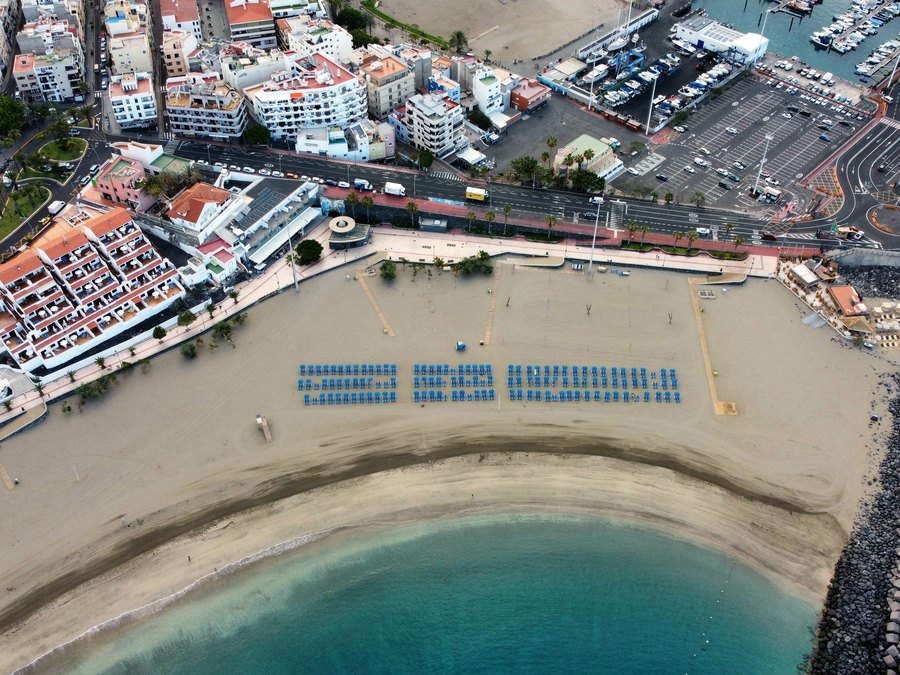
Useful links
- GOV.UK Spain travel advice: passport rules, entry requirements, health and safety updates before you travel.
- Official Tenerife tourist board: destination-wide visitor information, transport context, beaches, events and local practical updates.
- Siam Park: current opening times, tickets, height rules and children's areas before you promise a waterpark day.
- Loro Parque: opening times, tickets, animal shows and access details if you are planning the longer trip north.
- Mount Teide cable car: booking, weather closures and age or altitude guidance before planning a mountain day.
Last updated 24 June 2026.