Lanzarote with little ones
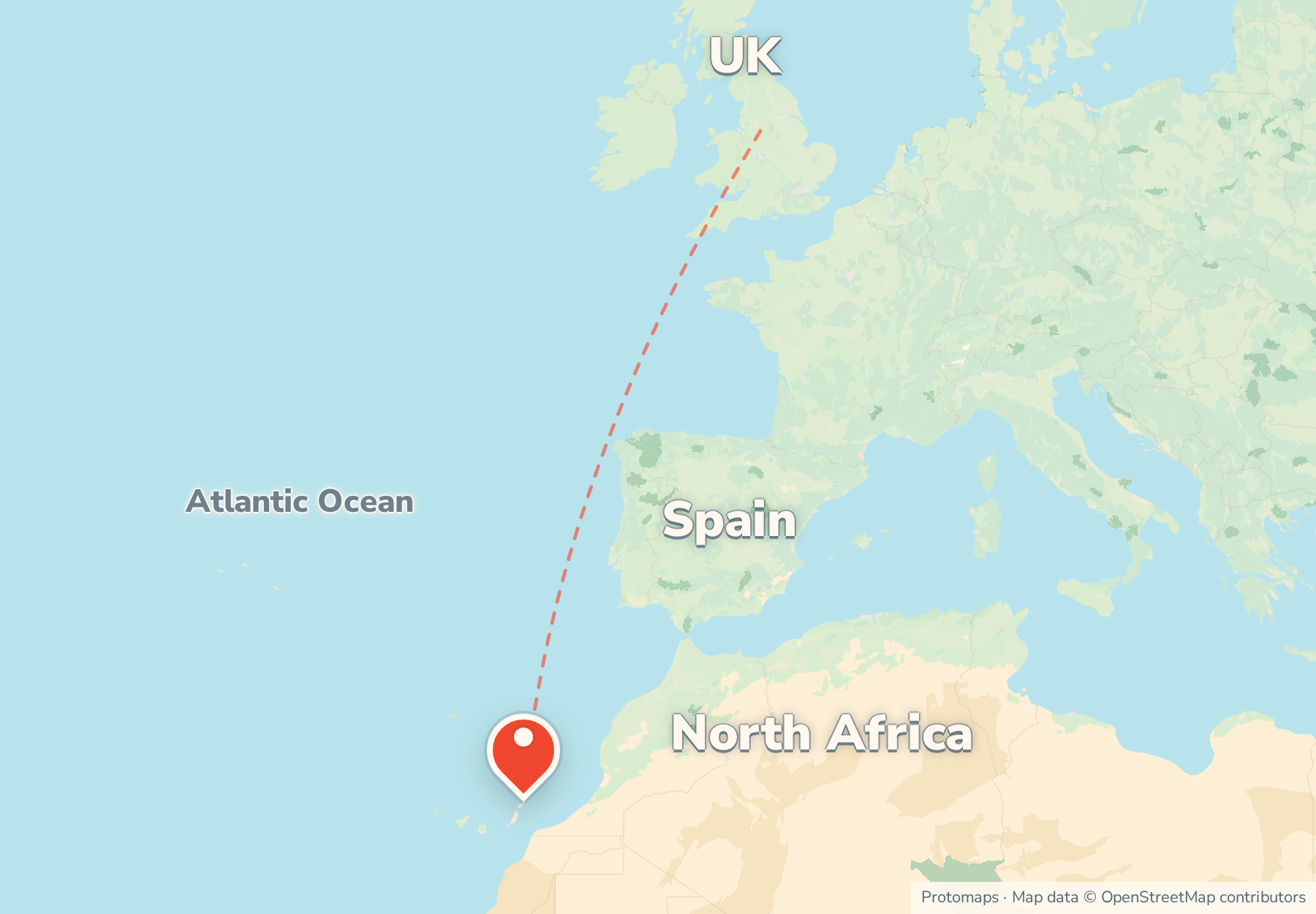
Lanzarote is the easternmost Canary, around four hours from the UK and in the same time zone all year, with about 21 degree days in January and rain on roughly 19 days a year. The whole island is low-rise, whitewashed and volcanic. Rain is rare, so the weather to plan around is the wind: the trades blow most days, which is why families swim on the sheltered south coast.
On this page
A family verdict at a glance
The quick read before the detail: who Lanzarote suits, the season to aim for and what to nail down before you book.
Best for
Winter and shoulder-season sun with no jet lag, calm breakwater-sheltered beaches for small children and a volcanic landscape children stare at from the car window.
Maybe not for
Anyone picturing a still, bath-warm sea. The trade wind blows most days and the Atlantic peaks at around 22 to 23 degrees in autumn.
Best ages
Babies and toddlers do well year round, with September to November the quietest stretch and term-time prices.
Best areas
Playa Blanca for the calmest bays, Puerto del Carmen for the most choice, Costa Teguise if you don't mind the breeze.
Why families pick it
Reliable winter warmth on a four-hour flight, short transfers and children under seven free at every Manrique site.
Check before you book
A heated pool for a winter trip, which way your beach faces in the wind, the cot and the transfer with a child seat.
Winter sun on UK time
The Canaries keep the same clock as the UK all year, including the change dates, so naps, bedtimes and the early wake-up carry on untouched in both directions. January days run around 21 degrees, rain falls on about 19 days in a whole year and the flight is roughly four hours. At February half term it's four to five degrees warmer by day than the Algarve or the western Med.
Winter is pool weather: warm afternoons, evenings around 14 degrees that need a jumper, a sea too cold for small children and unheated pools cold enough to cut swims short. September to November has the warmest sea, at 22 to 23 degrees, with the summer crowds gone and term-time prices, a window only families without school-age children can use.
A quick gut checkIs Lanzarote right for your family?
Worth comparing if
You want warmth outside the summer holidays without a time change, flat low-rise resorts that are easy with a buggy and a day out to an active volcano.
Weigh it up if
A warm calm sea is the whole point of your holiday, or anyone in the family hates wind on the beach.
To sort out before booking
A sheltered beach rather than an exposed one, the cot, the air conditioning and the transfer with a child seat.
The numbers, the basics and the ages
Everything to skim first: the quick facts, the everyday practicalities and how Lanzarote changes as children grow.
Quick facts for UK families
Money, plugs, language and the basics
- Lanzarote is the easternmost large Canary, about 78 miles (125 km) off the north-west African coast, and the whole island is a UNESCO Biosphere Reserve.
- The currency is the euro and cards are accepted almost everywhere, though the buses take cash only.
- Sockets are the round two-pin European type, so UK plugs need an adapter. The voltage matches the UK.
- The language is Spanish. English is spoken throughout the resorts.
- Tap water is desalinated seawater and officially drinkable, but it tastes flat and most people drink bottled. For making up feeds, use bottled water labelled "mineralización débil" and boil it as you would at home.
- Your GHIC card covers state healthcare here, and 112 is the emergency number.
- The Canaries sit outside the EU VAT area, with a local 7 per cent rate instead, so the supermarket shop runs a little cheaper than mainland Spain.
Lanzarote by age and stage
Babies
Warmth when UK days are dark, with bedtimes that stay put. Pick a sheltered bay and a hotel with shade by the pool.
Toddlers
Breakwater-calmed bays with no surf, flat promenades for miles and a baby-kit hire market that delivers cots and buggies island-wide.
Preschoolers
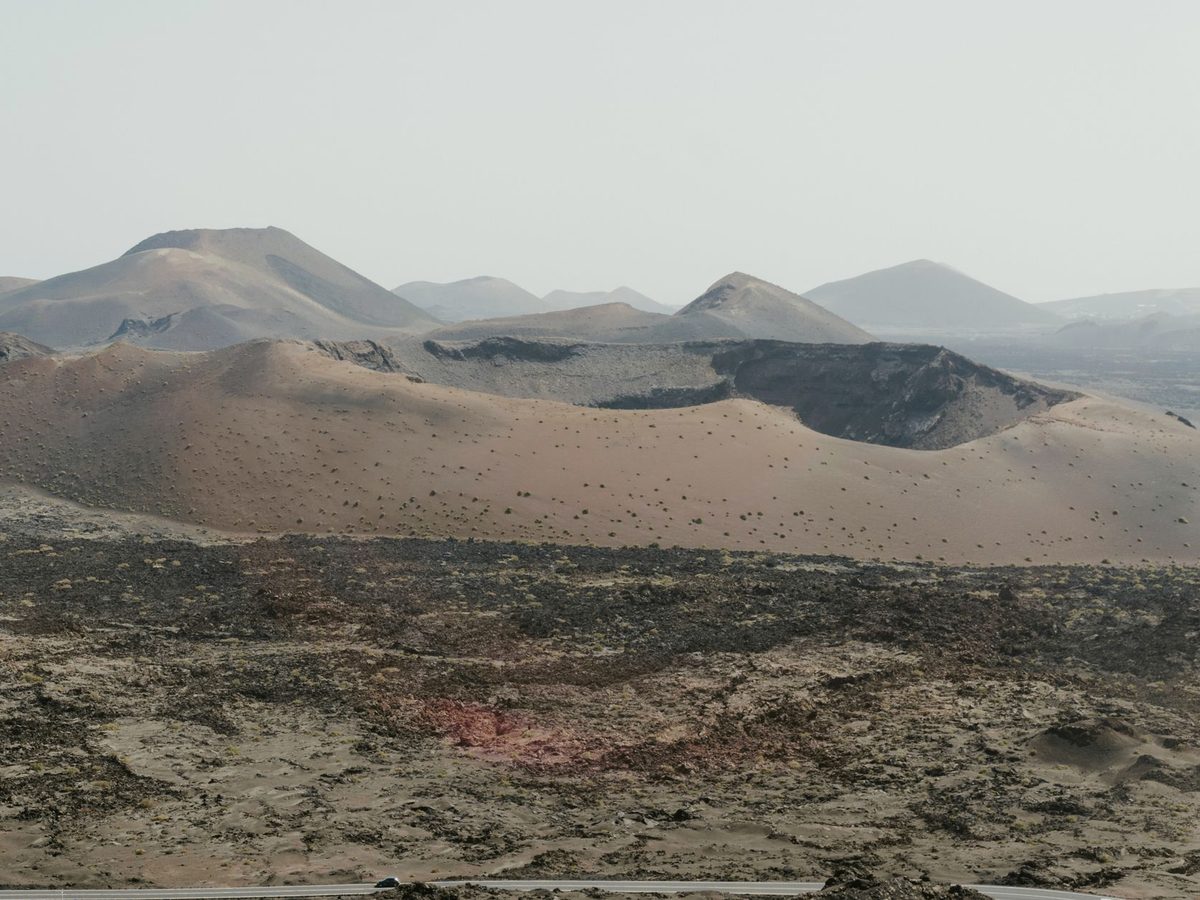
Old enough for the Timanfaya fire demonstrations, Rancho Texas and the ferry to the dunes.
Young children
The caves, the submarine and the bigger waterslides come into range, and they're old enough to understand what the volcano actually is.
Where to base yourselves
The three resort coasts side by side, an orientation map of the island and what the beaches are really like underfoot.
Where to stay with young children
The trade wind blows from the north-east most days, so the south and south-east coasts sit in the island's lee, and that's where all three main resorts are. The north and west coasts take the swell and the wind, which makes them worth a visit but not a base with small children. The calm family bays in the south are imported pale golden sand, not the black volcanic sand you see inland.
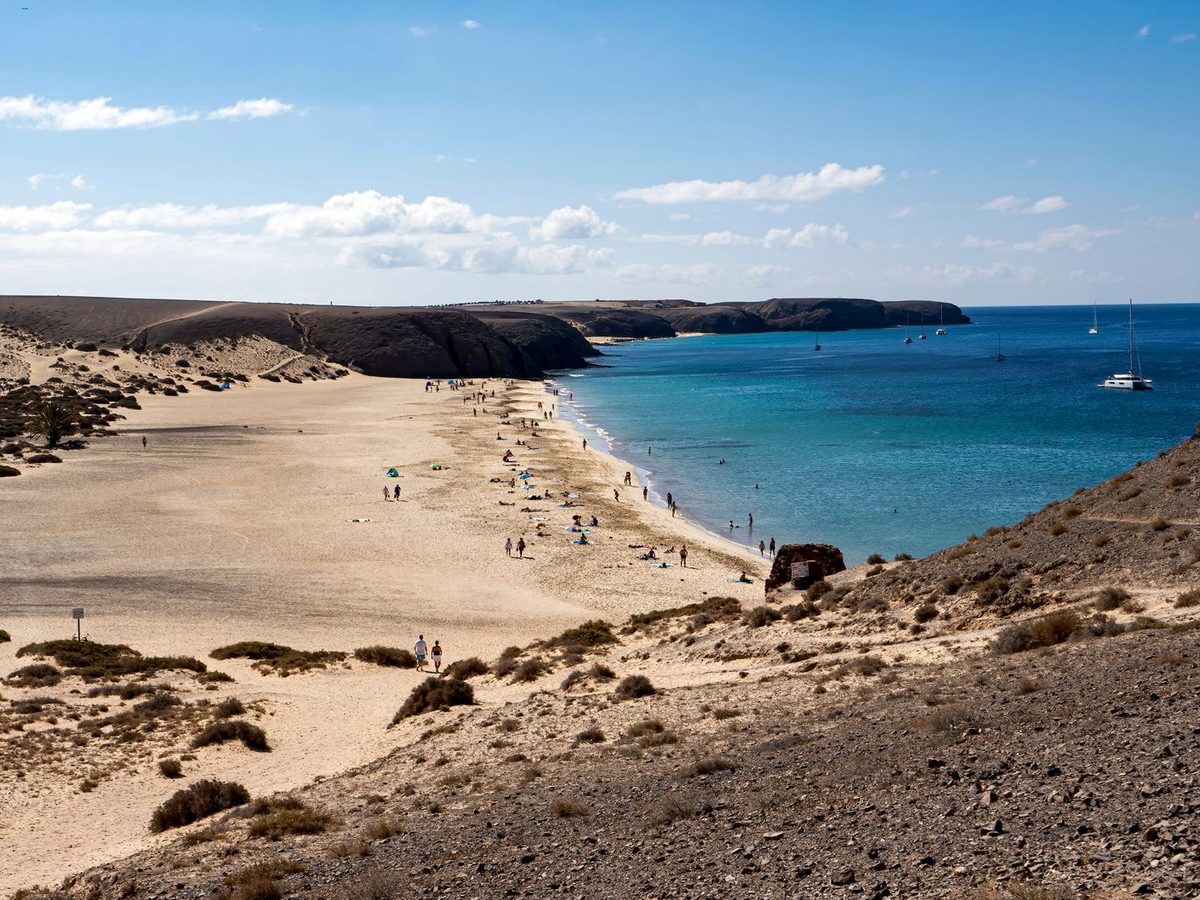
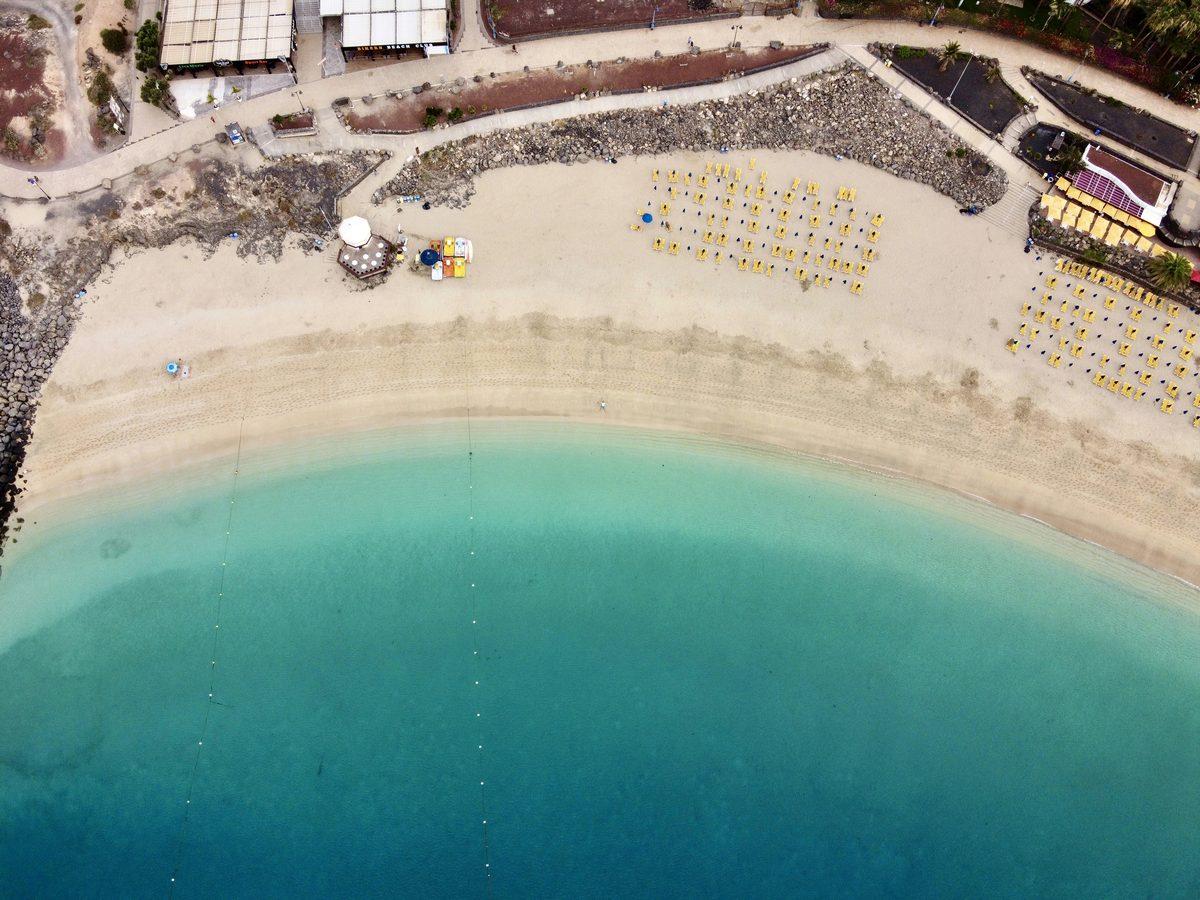
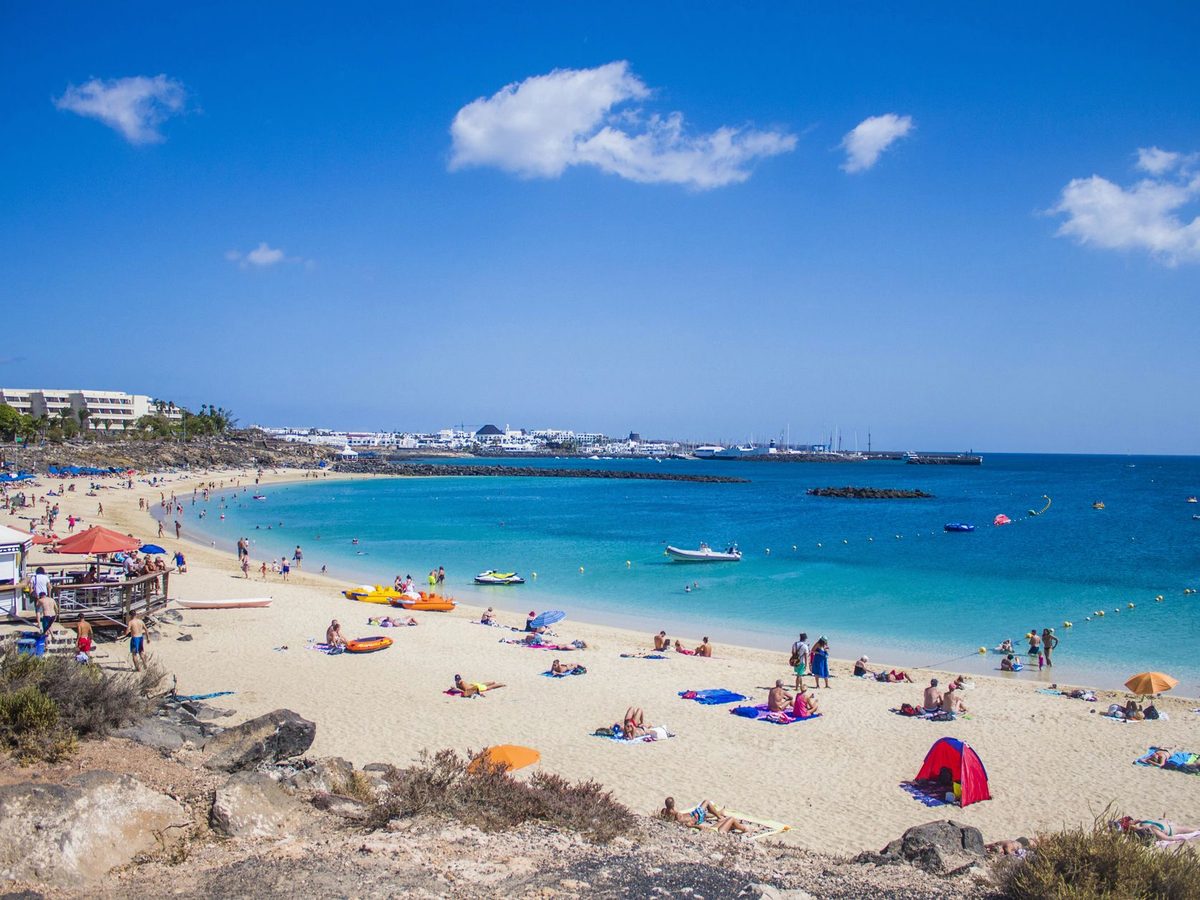
Puerto del Carmen is the biggest and longest-established resort, with about 4 miles (6 km) of flat seafront promenade. It splits into the old town around the fishing harbour, with the harbourside restaurants, and the long beachfront strip, which has everything else. Its beaches suit small children well: Los Pocillos shelves so gently that warm shallow pools form on the sand at high tide, and tiny Playa Chica is a rock-sheltered cove that's almost always flat. Playa Blanca, at the southern tip, is the newest and most sheltered of the three, built around a series of bays where breakwaters keep the water flat at Playa Dorada and Playa Flamingo, with a long traffic-free promenade running the length of the front past the Marina Rubicón. The Papagayo coves are ten minutes away down a bumpy track, sandy and almost facility-free, so they're a short visit with a well-stocked bag rather than a day camp. There are no lifeguards there and the swimming is only calm on calm days.
Costa Teguise is the third option, compact and purpose-built, and the windiest of the resort coasts, which is why the windsurfers use its main beach. With a toddler the answer is El Jablillo, a stone-breakwater cove with barely any swell, and Playa Bastián, which has semicircular stone wind shelters built on the sand. Arrecife is the island's capital rather than a resort, worth a half-day for the lagoon and the castle, and Famara on the north coast is the one to know about in advance: 3 miles (5 km) of surf beach under big cliffs where the rips make swimming unsafe most days. Go for the kite-flying and the surfers, and keep everyone at the water's edge.
| Area | Transfer | The beach | The feel |
|---|---|---|---|
| Puerto del Carmen | About 10 to 15 min | 4 miles (6 km) of flat seafront; Los Pocillos shelves so gently that warm pools form on the sand | The biggest resort, split between a harbourside old town and a long beachfront strip. The most restaurants, hotels and supermarkets of the three. |
| Playa Blanca | About 30 to 40 min | Breakwater-calmed bays at Playa Dorada and Playa Flamingo, with a long flat promenade | The newest and most sheltered of the big three, with the calmest swimming and the Papagayo coves nearby. |
| Costa Teguise | About 20 to 25 min | El Jablillo is a breakwater cove as calm as a pool; the main beach is the breeziest of the resorts | Compact and purpose-built, with the most wind of the three. Head for the sheltered corners with a toddler. |
| Arrecife | About 10 min | El Reducto, a reef-sheltered city beach; check the flags locally before swimming | The working capital rather than a resort. A good half-day out around the lagoon and castle. |
| Famara | About 30 min | 3 miles (5 km) of surf beach below big cliffs. Swimming is not safe here | The wild north coast: surfers, kite flyers and big cliffs. Visit for an afternoon, don't base yourselves here. |
Map of the main family areas
An orientation map of the areas above, the airport and the bigger days out. The numbers match the key beneath.
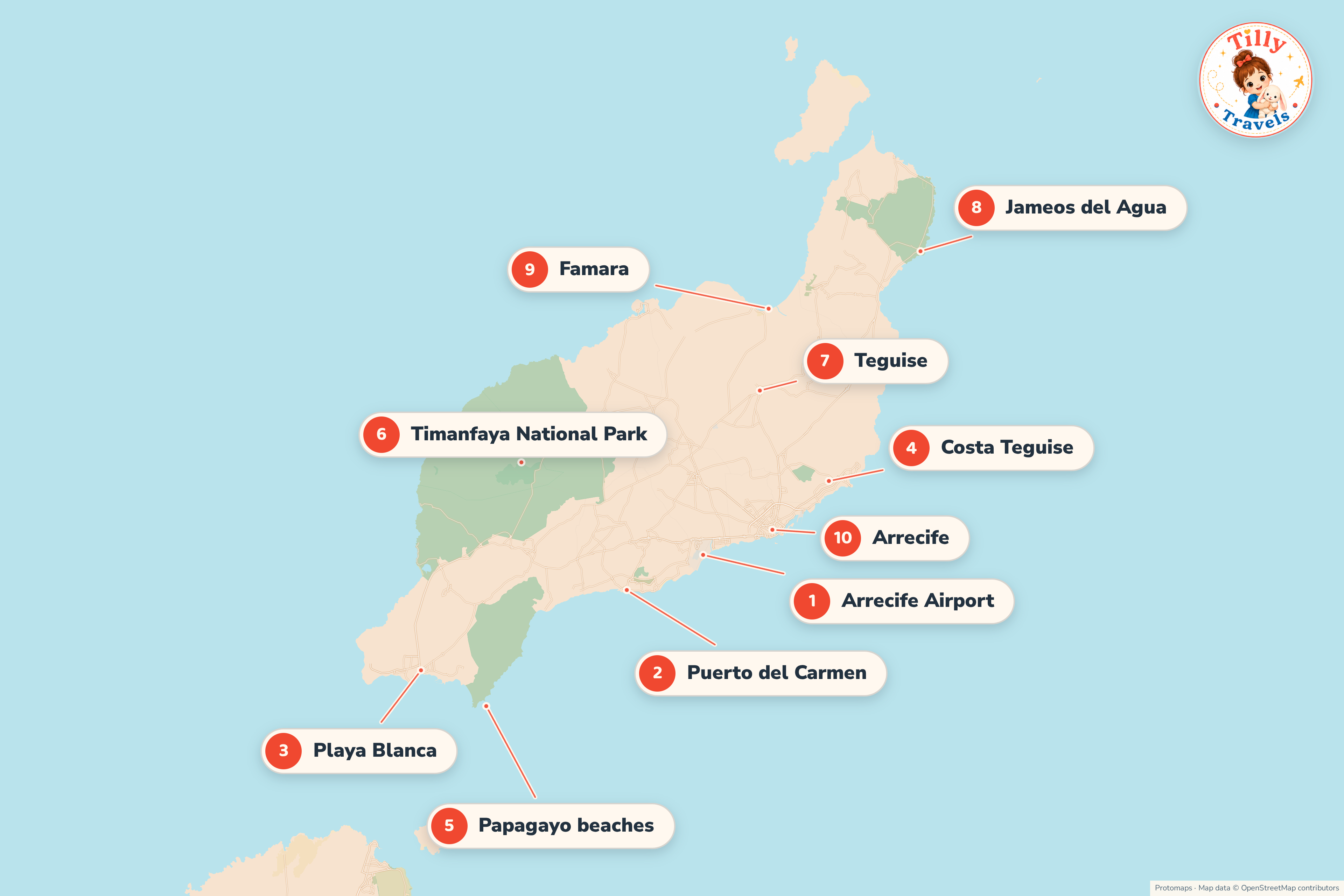
- 1Arrecife Airport Small and quick to clear
- 2Puerto del Carmen The biggest resort
- 3Playa Blanca The calmest bays
- 4Costa Teguise Compact and breezy
- 5Papagayo beaches Sandy, bring everything
- 6Timanfaya The volcano coach tour
- 7Teguise The Sunday market town
- 8Jameos del Agua The lava-cave pool
- 9Famara Surf coast, looking only
- 10Arrecife The capital, a half-day out
Wind, breakwaters and beaches
The best beaches for small children here are partly engineered. Breakwaters turn open water into flat, shallow swimming, which is what makes the southern bays work for a toddler. The water itself is the Atlantic, comfortable rather than warm even at its autumn best, and cold enough for the briefest paddle only in the depths of winter.
The main resort beaches are lifeguarded with the Spanish flag system, green for safe, yellow for caution, red for stay out, and red flags are enforced with fines here. One label to read correctly: several Puerto del Carmen beaches hold Blue Flags while Playa Dorada and Playa Flamingo currently don't, and that says nothing about which suits a toddler, because the Blue Flag is a facilities-and-water-quality certification, not a calmness rating. The two Playa Blanca bays remain the calmest swimming on the island.
Weather, days out and the daily shop
When to go month by month, the volcano and boat trips that suit small children, eating out and where to stock up.
Weather, month by month
The figures below are long-term averages from the airport weather station rather than a forecast. No month is cold and no month is wet; the real variables are the sea temperature and the wind, which blows hardest from May to September. A few times a year, mostly in late winter, a calima blows in instead: a hot, hazy, dust-laden wind off the Sahara that lasts a few days and is worth sitting out indoors with a baby or an asthmatic child.
| Month | Daytime high | Overnight low | Rain | Wet days | Sea temp |
|---|---|---|---|---|---|
| January | 21° | 14° | 17 mm | 3 | 19° |
| February | 21.5° | 14.5° | 16 mm | 2 | 18° |
| March | 23° | 15° | 11 mm | 2 | 19° |
| April | 24° | 16° | 4 mm | 1 | 19° |
| May | 25.5° | 17.5° | 1 mm | 0 | 20° |
| June | 27° | 19.5° | 0 mm | 0 | 21° |
| July | 29° | 21° | 0 mm | 0 | 22° |
| August | 30° | 21.5° | 0 mm | 0 | 23° |
| September | 29° | 21° | 4 mm | 0 | 23° |
| October | 27.5° | 20° | 12 mm | 2 | 23° |
| November | 24.5° | 17.5° | 15 mm | 3 | 22° |
| December | 22° | 15.5° | 17 mm | 3 | 20° |
Typical monthly averages from weather-station records. Sea temperature is the open-water figure, so a sheltered bay can feel a degree or two warmer.
With young children the standout windows are October and November, when the island is at its quietest, and late winter for half-term sun that only the Canaries offer at this flight time. Tenerife South runs about a degree warmer in winter, with much the same rain odds at resort level. Transfers are shorter here, the resorts lower-rise and the landscape volcanic.
Filling the daysThings to do with little ones
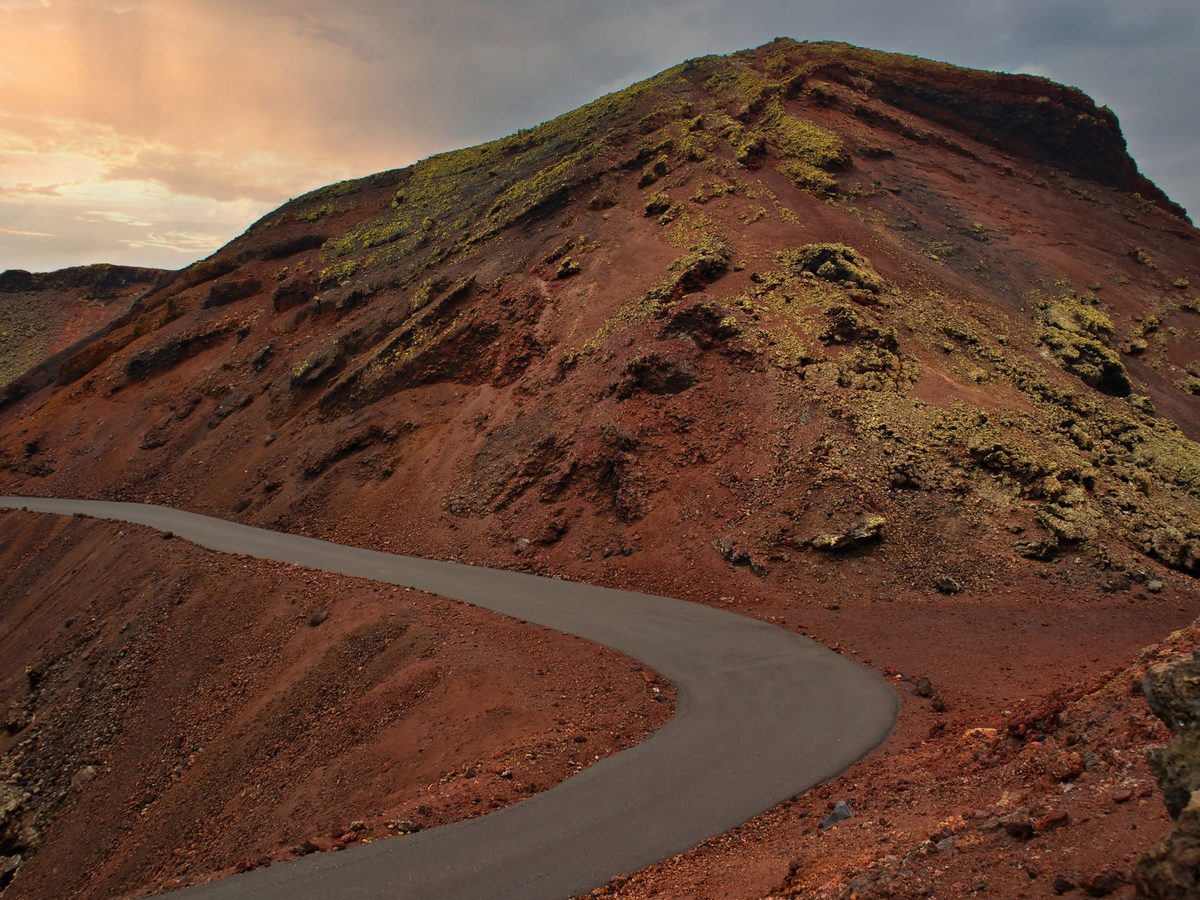
Timanfaya is the island's best-known day out. Entry includes a 35-minute coach ride through the volcanoes with commentary, no stops and no toilet, so go at opening with the loo visited and the nap timed, and take a carrier because buggies don't work on site. At the top, staff pour water into the ground and it erupts as steam, and brushwood catches fire from the heat of the rock. Adult tickets are €30 (last checked 11 June 2026), booked online with timed slots, and children under seven go free, as they do at every one of the island's Manrique-run sites. The camel rides on the volcano's flank are a separate business with a live animal-welfare debate around them, including a petition signed by tens of thousands.
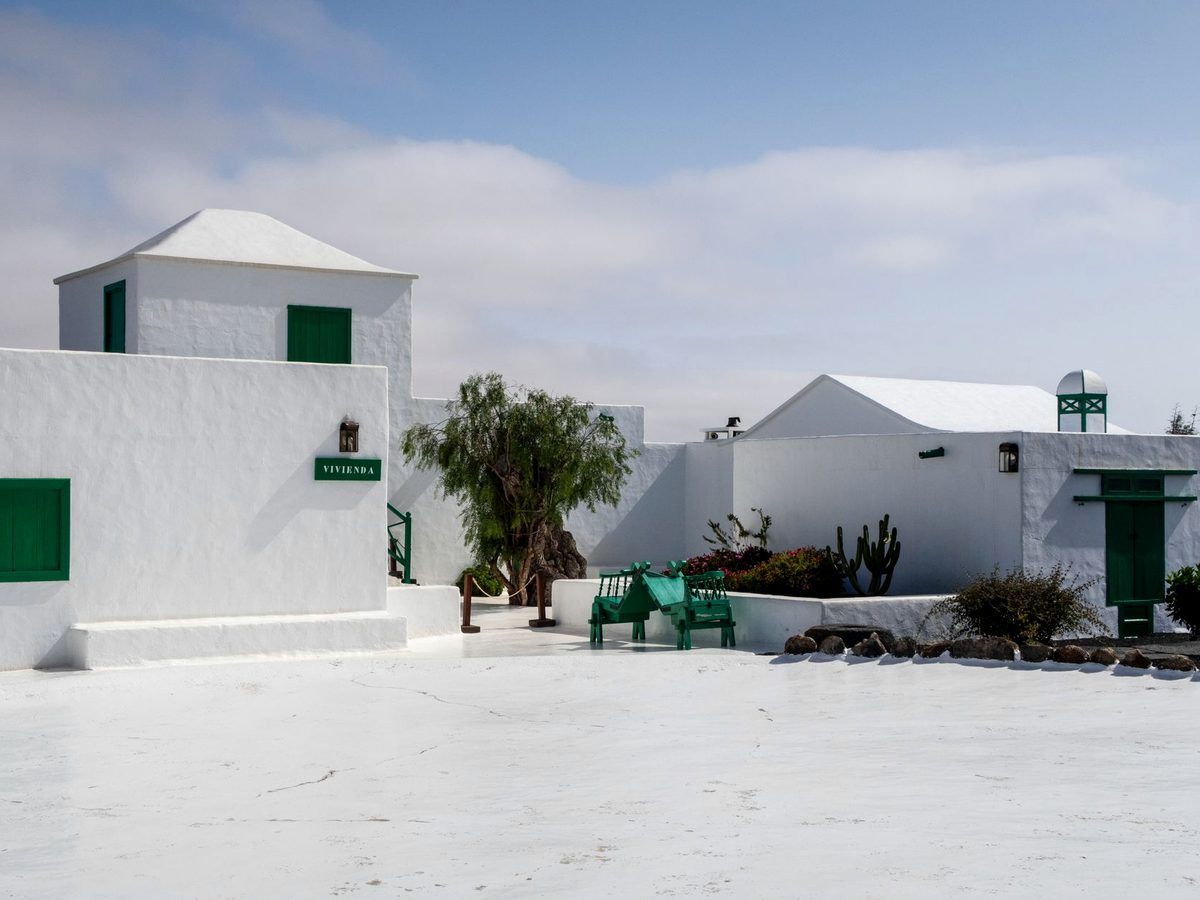
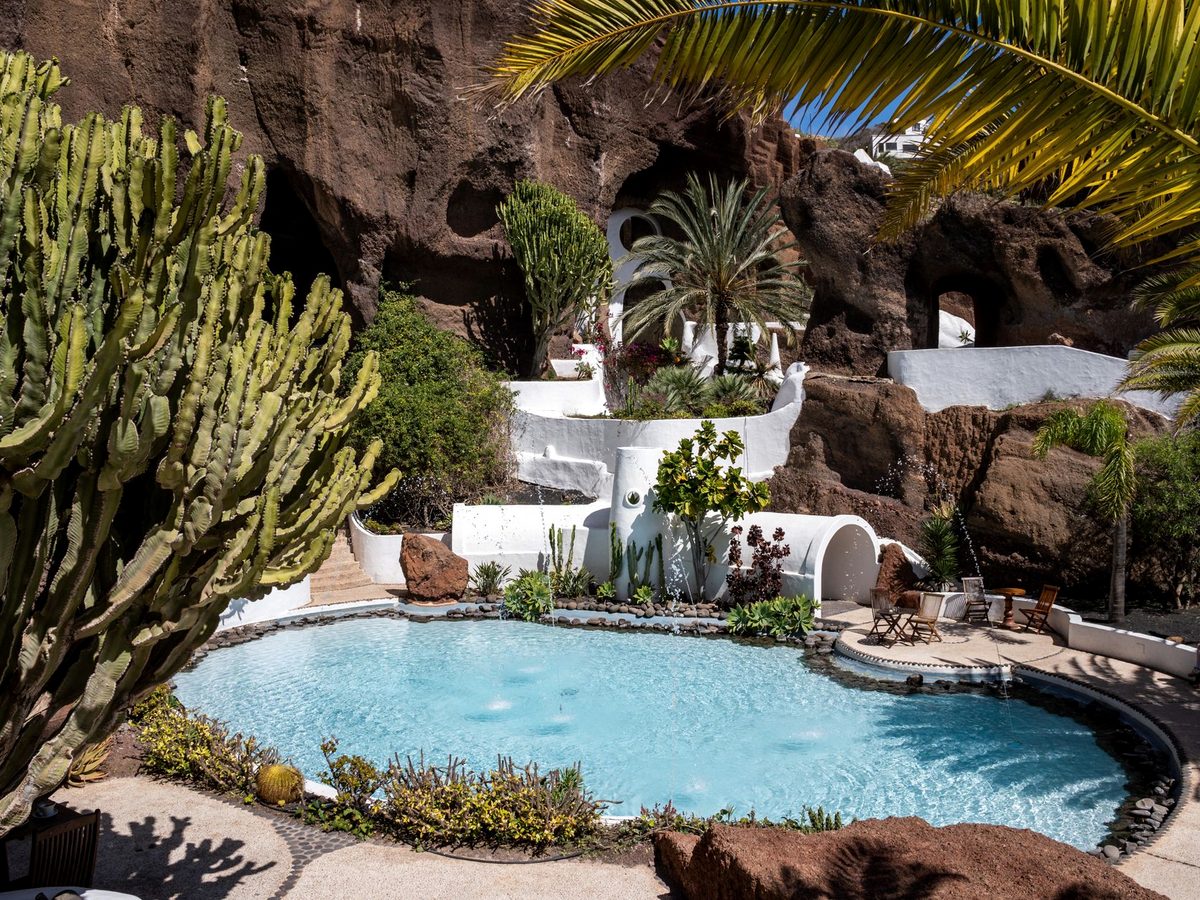
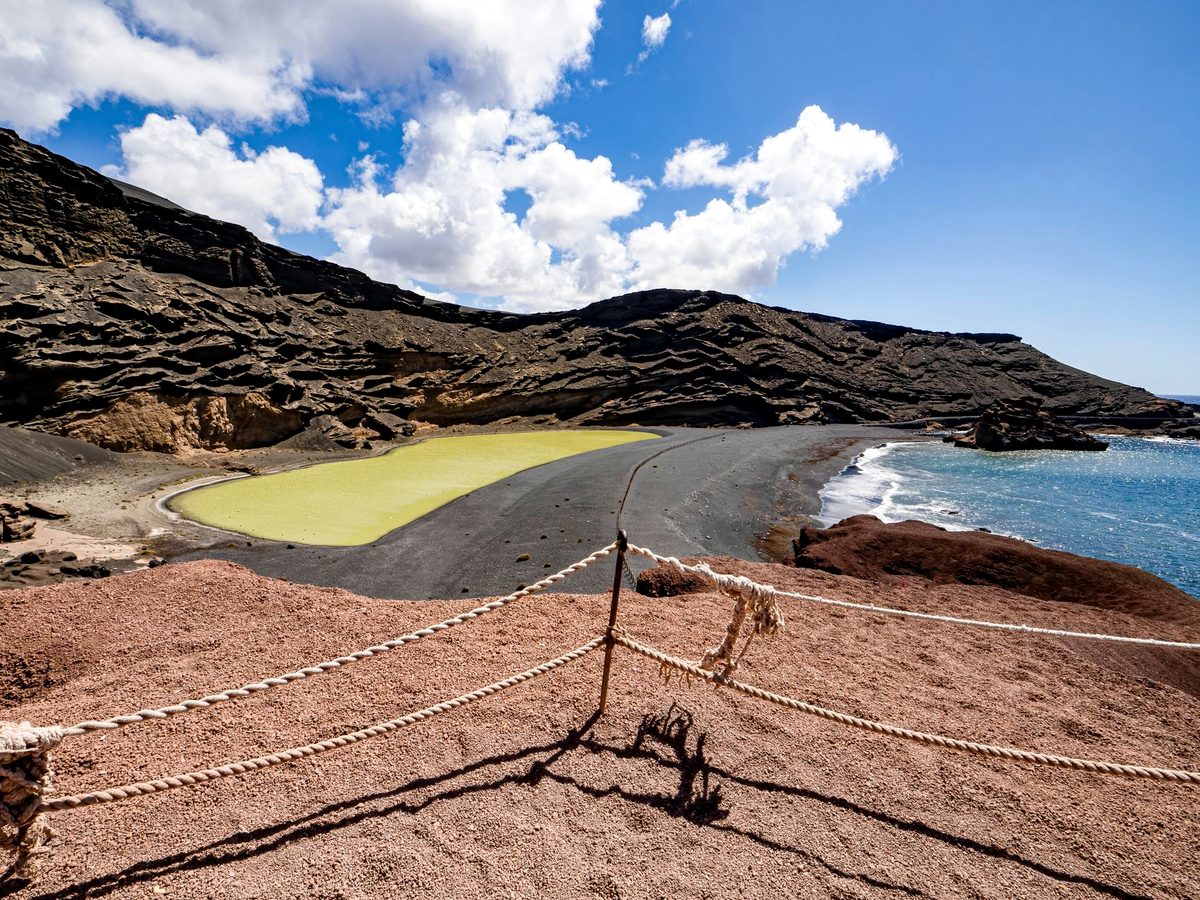
Of the caves, Jameos del Agua is the one for this age: a collapsed lava tube with an underground lake of tiny blind white crabs and the white-and-turquoise pool. It takes about an hour, holds a toddler's attention and ends at a café, and it's carrier territory, with winding volcanic stairs and no buggies allowed. The Cueva de los Verdes next door is a 50-minute one-way guided walk through a lava tunnel, dark and echoey with low sections, which makes it the most skippable of the big sights with a noise-sensitive toddler. The Mirador del Río clifftop café and the cactus garden are easy short stops, and the Fundación César Manrique, the artist's house built into five volcanic bubbles, is one children love because it's a house with rooms inside lava.
Rancho Texas near Puerto del Carmen is the biggest family attraction: a western-themed animal park with pony rides, birds of prey and a toddler splash zone to reset a hot afternoon. It also keeps dolphins and sea lions for shows, which a growing number of families choose to avoid, so know that before you book rather than at the gate. For boats, the 25-minute waterbus between Puerto del Carmen and Puerto Calero is a cheap toddler-sized sea trip that doubles as transport. The two ferry days are better still: Corralejo on Fuerteventura is 25 to 35 minutes from Playa Blanca, with its dunes starting just south of town, and La Graciosa from Órzola is a 25-minute crossing to an island with sand streets and no paved roads, easy with a baby in a sling and hard work with a buggy, since the streets are sand. The Teguise Sunday market is the island's big one, cobbled and crowded by mid-morning, so go at nine with a sling; the Marina Rubicón market at Playa Blanca on Wednesdays and Saturdays is the calm, buggy-friendly alternative.
Eating out with children
Mainland Spain eats late, but the resorts here run on an international clock, with kitchens open from about six, so a toddler-hour tea is never a problem in Puerto del Carmen, Playa Blanca or Costa Teguise. Children are welcome everywhere, highchairs are common and kids' menus appear on most resort menus alongside the Canarian dishes.
There's plenty here small children will eat. Papas arrugadas, the small salted potatoes, come with two mojo sauces: the green one is the mild, toddler-safe dip, while the red can carry a kick. Fresh grilled fish is everywhere, and plain grilled chicken fills the gaps. The harbour restaurants in Puerto del Carmen's old town and the Marina Rubicón boardwalk at Playa Blanca both work well for an evening stroll and dinner with the buggy.
Milk, nappies and pharmaciesSupplies and the first-day shop
Self-catering is easy here. HiperDino, the Canarian chain, is everywhere and opens long hours seven days a week, with Lidl, Aldi, Spar and Mercadona alongside in and around the resorts, though Mercadona closes on Sundays. Nappies are sold mainly as Dodot, the Spanish Pampers, with cheaper own brands at the discounters. For formula, the Spanish equivalent of Aptamil is Almirón, from the same company with similar stage numbering but not an identical recipe, alongside NAN, Blemil and Nutribén; pharmacies carry the full range and can order overnight, so bring enough of your own for the trip and use local stock as the backup. There's also a healthy baby-kit hire market that delivers cots, buggies and sterilisers island-wide, which lightens the luggage considerably.
Pharmacies, marked by the green cross, are the only place to buy medicines, because Spanish supermarkets sell none at all. The children's paracetamol is Apiretal and the ibuprofen is Dalsy, both dosed by weight, with a duty pharmacy rota posted in every window for nights and weekends. Bring any medicine your child relies on rather than counting on a like-for-like swap.
Getting around, a real week and the admin
Transfers and hire cars, what a week actually looks like, the health and document checks and a list to pack against.
Getting there and around
The airport, renamed for César Manrique, is small and quick, with a short walk from arrivals to the taxi rank and car hire desks, and nothing on the island is far. Spanish law requires a proper child seat for anyone 135 centimetres or under, riding in the back, and rank taxis won't normally carry one, so pre-book a transfer or taxi with the seat specified, or bring your own.
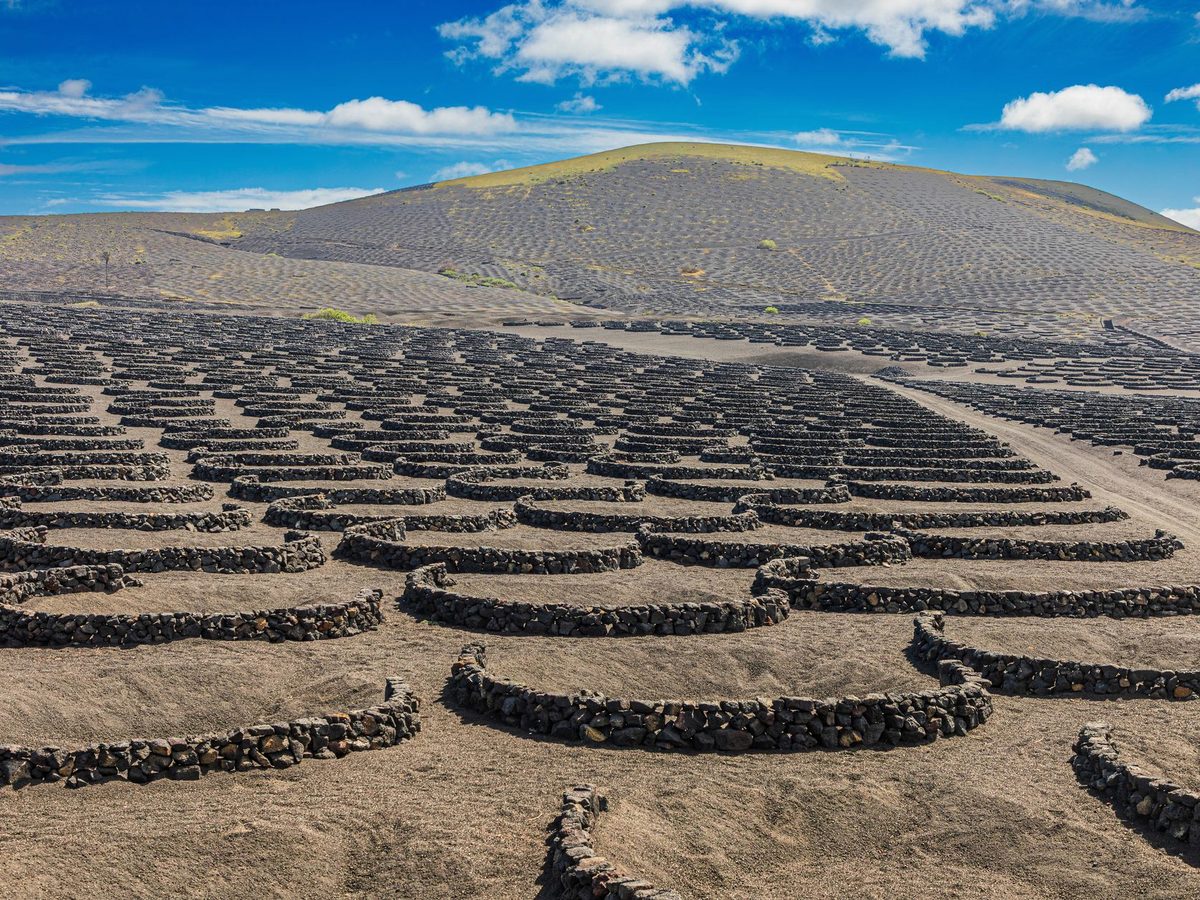
If you hire a car, this is one of the easiest places in Spain to drive: quiet, well-surfaced roads, light traffic and fuel noticeably cheaper than the UK thanks to the islands' lower duty. The local firm Cicar includes child seats, full insurance and a second driver free, which is why so many returning families use it. The buses are cheap and fine for the Arrecife run, with the caveats that they take cash only and the cross-island routes are slow. You see the lava fields and La Geria's black vine pits from the road on most drives, and the LZ-2 through the volcanoes is a good drive for a toddler asleep in the back.
What a real week looks likeA realistic week with little ones
A swim, an early dinner and bedtime at the usual hour.
A sheltered beach in the morning, lunch and a nap, then the promenade once the afternoon breeze picks up.
Timanfaya at opening, Rancho Texas or the ferry to Corralejo's dunes all fit around a sleep.
A final swim and a slow pack, then a normal bedtime at home.
With little ones, the sheltered beach, the pool, naps and one volcano or ferry day will comfortably fill a Lanzarote week.
The practical adminHealth, documents and the boring bits
Check the GOV.UK Spain advice before booking and travelling. Passports need to be issued less than ten years before you arrive and valid for three months after you leave, children's included. Carry a GHIC for each member of the family, which covers state healthcare including the island's main hospital in Arrecife, plus travel insurance for everything else, because the private resort clinics that advertise English-speaking doctors sit outside the GHIC entirely.
The emergency number is 112. The everyday risk to respect is the sun: this is the latitude of the Sahara's edge, the UV is extreme on summer middays and still strong enough to burn young skin in December, and the constant breeze makes the heat easy to underestimate. Hats, UV suits, high-factor cream and midday shade are year-round kit here, not just summer kit. On the water, stick to the lifeguarded resort beaches, follow the flags and don't swim off the north and west coasts.
Before you payBooking checklist
- Confirm a heated pool for any trip between November and April.
- Check whether your beach is breakwater-sheltered or open to the wind.
- Book the transfer with the right child seat, or bring your own.
- Confirm the cot and the air conditioning with the hotel.
- Book Timanfaya's timed tickets online before you go.
- Pack layers for winter evenings and a windbreak for the beach.
- Bring enough formula and any medicines your child relies on.
- Consider October or November, when the resorts are quiet and prices drop.
- Confirm the cancellation terms and your travel insurance.
- Recheck the GOV.UK Spain advice and every passport before you go.
Resort guides in Lanzarote
We've researched these places to stay in Lanzarote for families with young children. Each guide covers what it's like, who it suits and what to check before you book.
Questions, links and the last word
The things families ask most, the official pages worth a bookmark and when this guide was last refreshed.
Common parent questions
Can you swim in winter?
In a heated pool, yes, which is why one is worth confirming before you book a winter trip. The sea is a different question; from February to April the Atlantic sits around 18 degrees, fine for a quick paddle and too cold for small children to stay in.
Is it really warm at February half term?
Yes, more so than the nearer winter-sun options: around 21 degrees by day, which is four to five degrees up on the Algarve or the western Med. Rain falls on only two or three days in the month. Evenings drop to about 14 degrees, so pack layers.
What about the wind?
Pack a pop-up windbreak, because even the sheltered beaches catch the breeze. The trade wind blows most days and hardest in early and mid summer, which is why August rarely feels stifling. Pick a beach in the southern lee and you avoid the worst of it.
Which beach is best for a toddler?
Playa Dorada and Playa Flamingo at Playa Blanca, where breakwaters keep the water flat; El Jablillo at Costa Teguise, a small stone-walled cove; and Los Pocillos at Puerto del Carmen for its warm high-tide shallows.
Is Timanfaya doable with little ones?
Yes, with one thing to plan around: the coach loop has no toilet break, so visit the loo first and book an opening slot before the queues build. Take a carrier rather than a buggy.
Lanzarote or Tenerife?
In winter Tenerife South is about a degree warmer, and at resort level the rain odds are much the same. Lanzarote has 15-minute transfers, nothing built above a few storeys and a stranger, emptier landscape. If you want the warmest option, Tenerife edges it; for shorter transfers and the more unusual island, Lanzarote.
Can we buy our usual formula and nappies?
Under different names. Pampers is sold as Dodot, and the closest formula to Aptamil is Almirón. Children's medicines are pharmacy-only, never on supermarket shelves: paracetamol is sold as Apiretal and ibuprofen as Dalsy.
Do taxis have child seats?
Rarely at the rank, so don't count on flagging one down with a toddler. Either pre-book a transfer or taxi with the seat specified, or bring your own and fit it yourself. A hire car sidesteps the problem.
See more Lanzarote photos
Open the photo gallery →Useful links
- GOV.UK Spain travel advice: passport rules, entry requirements and health updates before you travel.
- CACT Lanzarote: official tickets and opening times for Timanfaya, Jameos del Agua and the other Manrique sites.
- Turismo Lanzarote: the official tourism site, including beach and market listings.
- Fred. Olsen Express: timetables for the Playa Blanca to Corralejo ferry.
Last updated 11 June 2026.