Istria with little ones
Istria is one of the shortest warm-sea flights we cover, a green Croatian peninsula two hours and a bit from London where the food is Italian but the prices are Croatian: pasta, pizza and proper gelato are the local food, and the signage runs bilingual from five centuries of Venice. The coast itself is pebble, smooth rock and concrete lido rather than sand, with one sandy exception near the airport, and the resorts are built around big family pool complexes instead. Around it all sits an unusually dense map of days out, from dinosaur footprints and a safari island to a Roman arena and two full waterparks.
On this page
A family verdict at a glance
The quick read before the detail: who Istria suits, the season to aim for and what to nail down before you book.
Best for
Families who dread the flight, love a pool complex and want dinosaur footprints, a safari island and a Roman arena within an hour of each other.
Maybe not for
Bucket-and-spade purists: outside one beach at Medulin, the coast is pebble, rock and concrete lido.
Best ages
Strong for babies and young children, with the resort pool standing in for the beach; the days out suit twos and up especially well.
Best areas
The Porec laguna zones for resort life, Medulin for the sand, Rovinj for the postcard, Rabac for quiet.
Why families pick it
Italian food that fussy eaters will eat, Central European dinner hours and few UK crowds.
Check before you book
That the kids' club covers your children's ages, and that your dates sit inside June to September.
The coast is rock, not sand
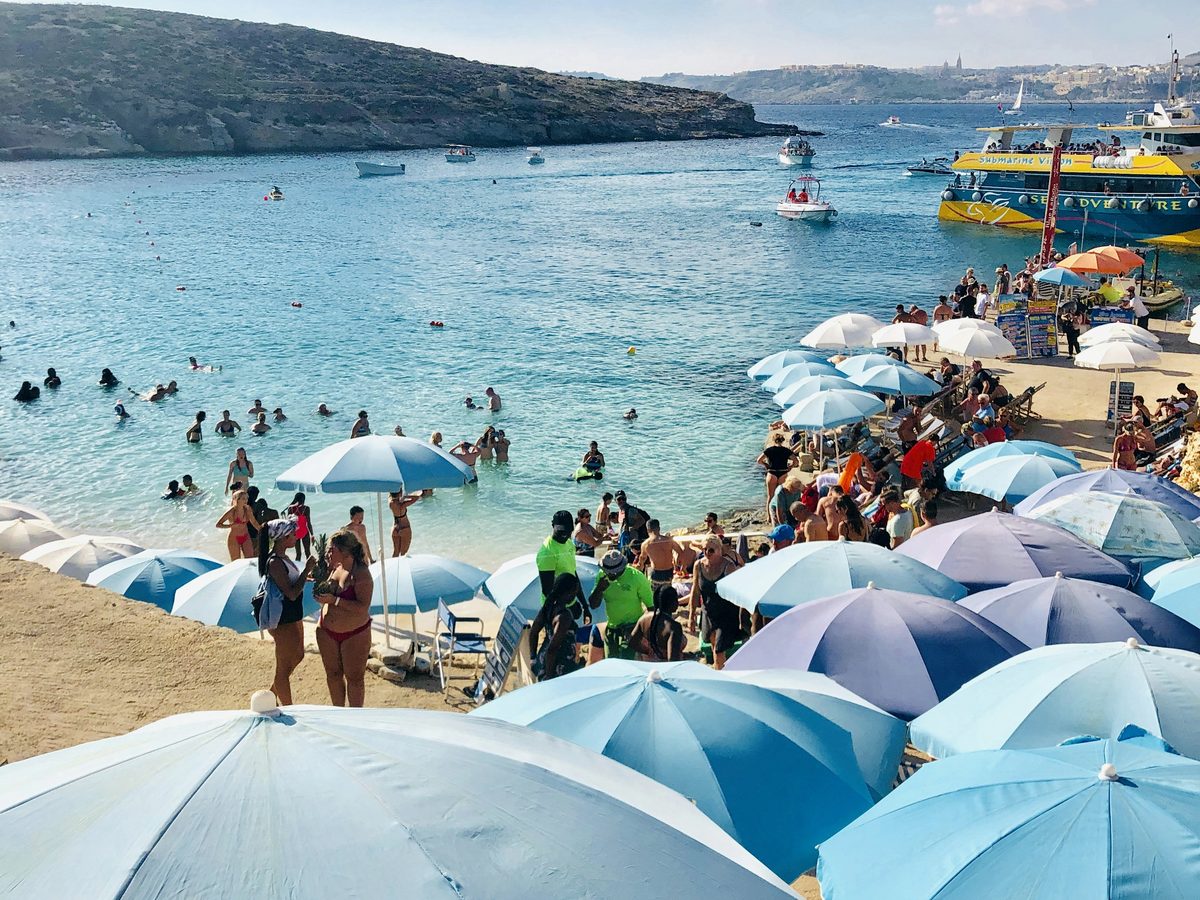
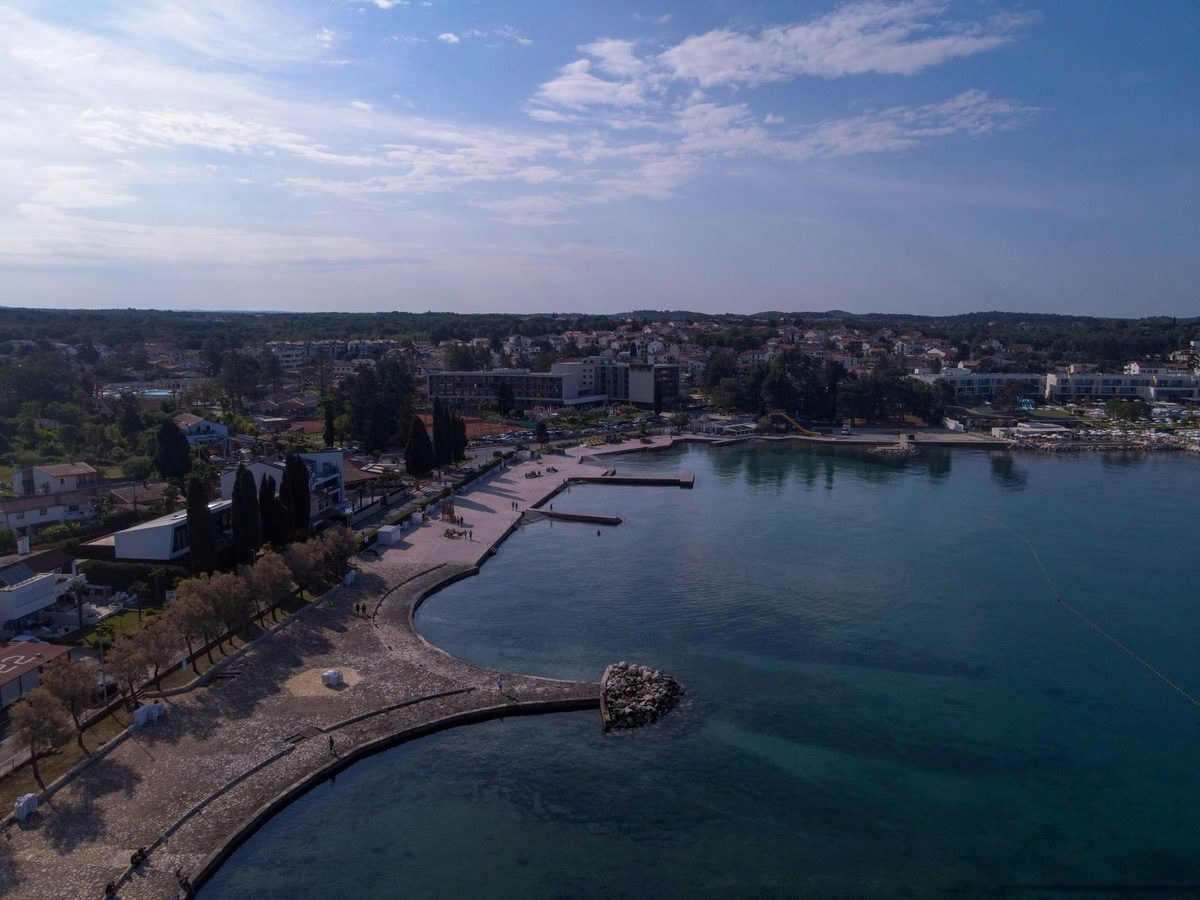
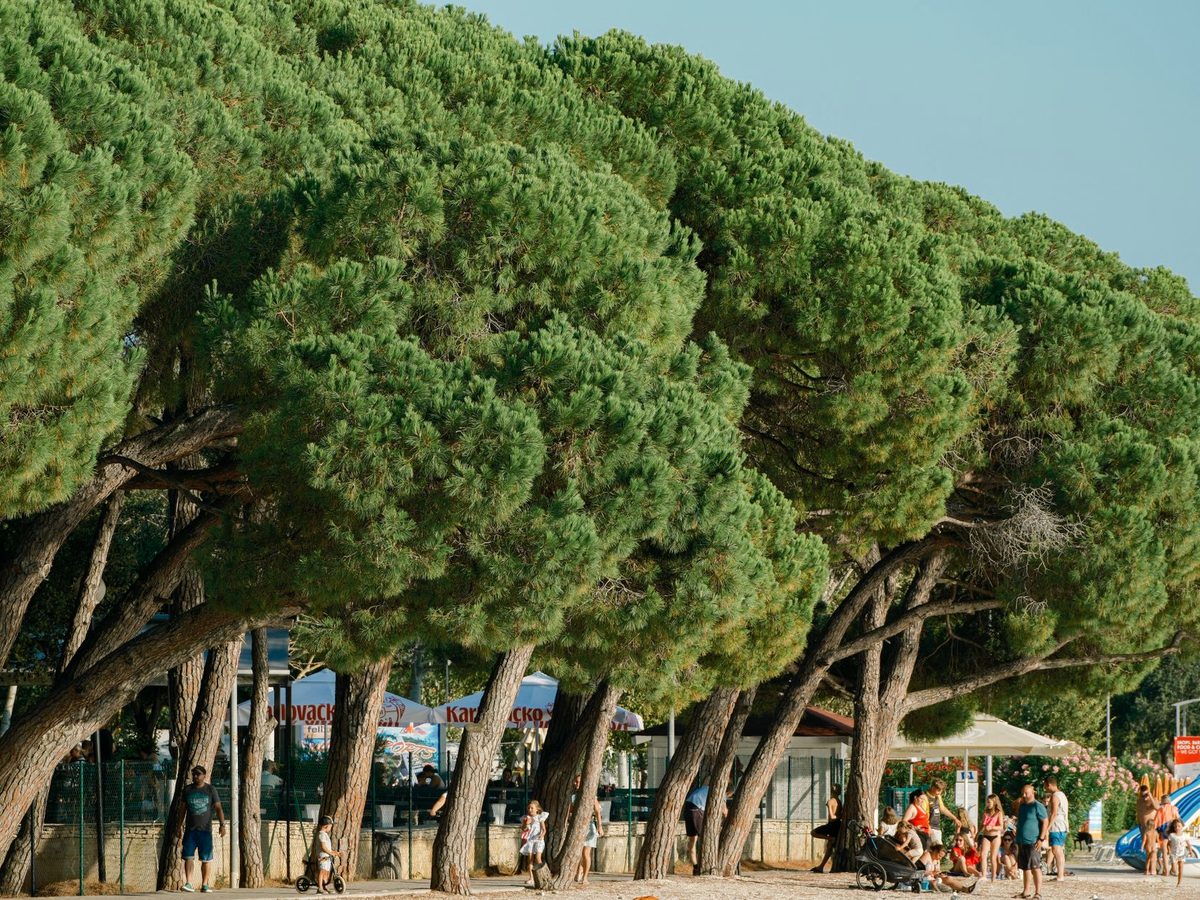
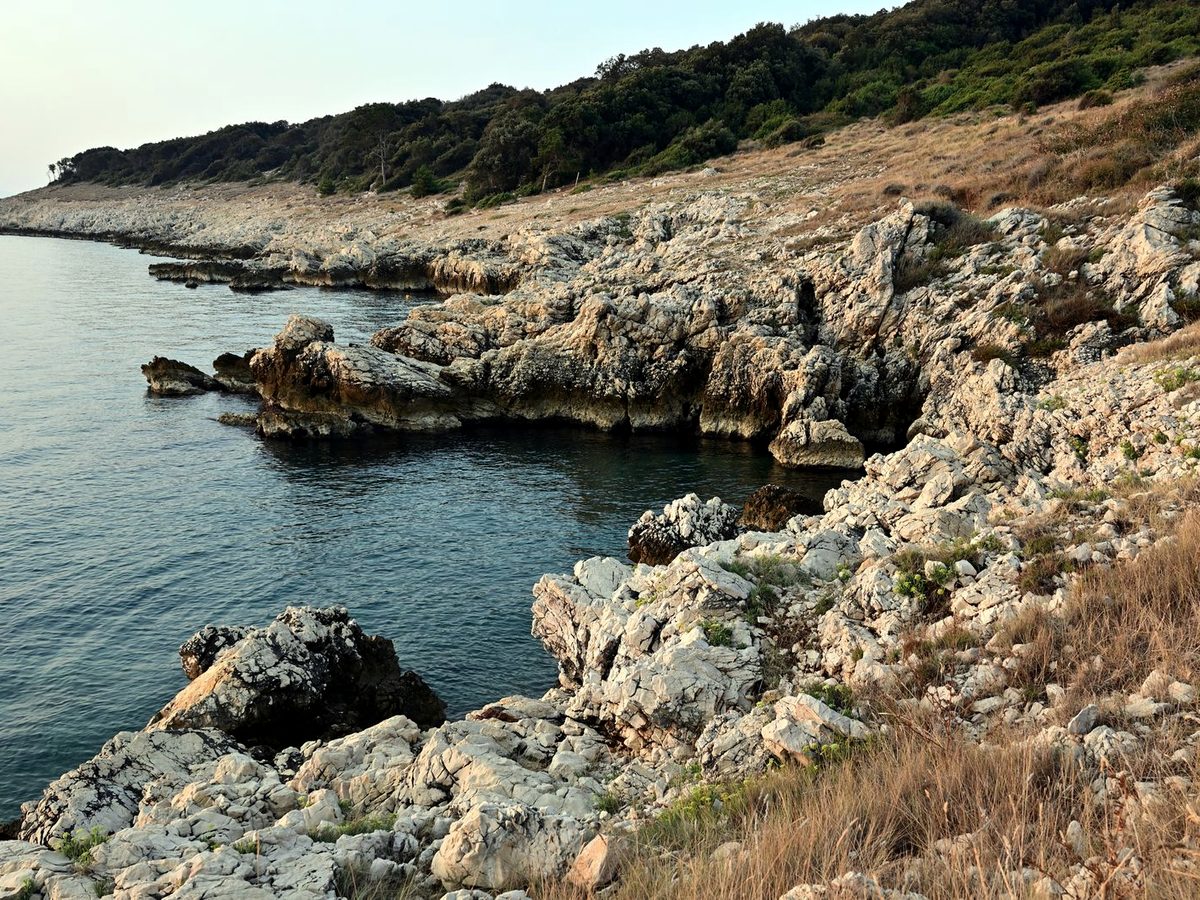
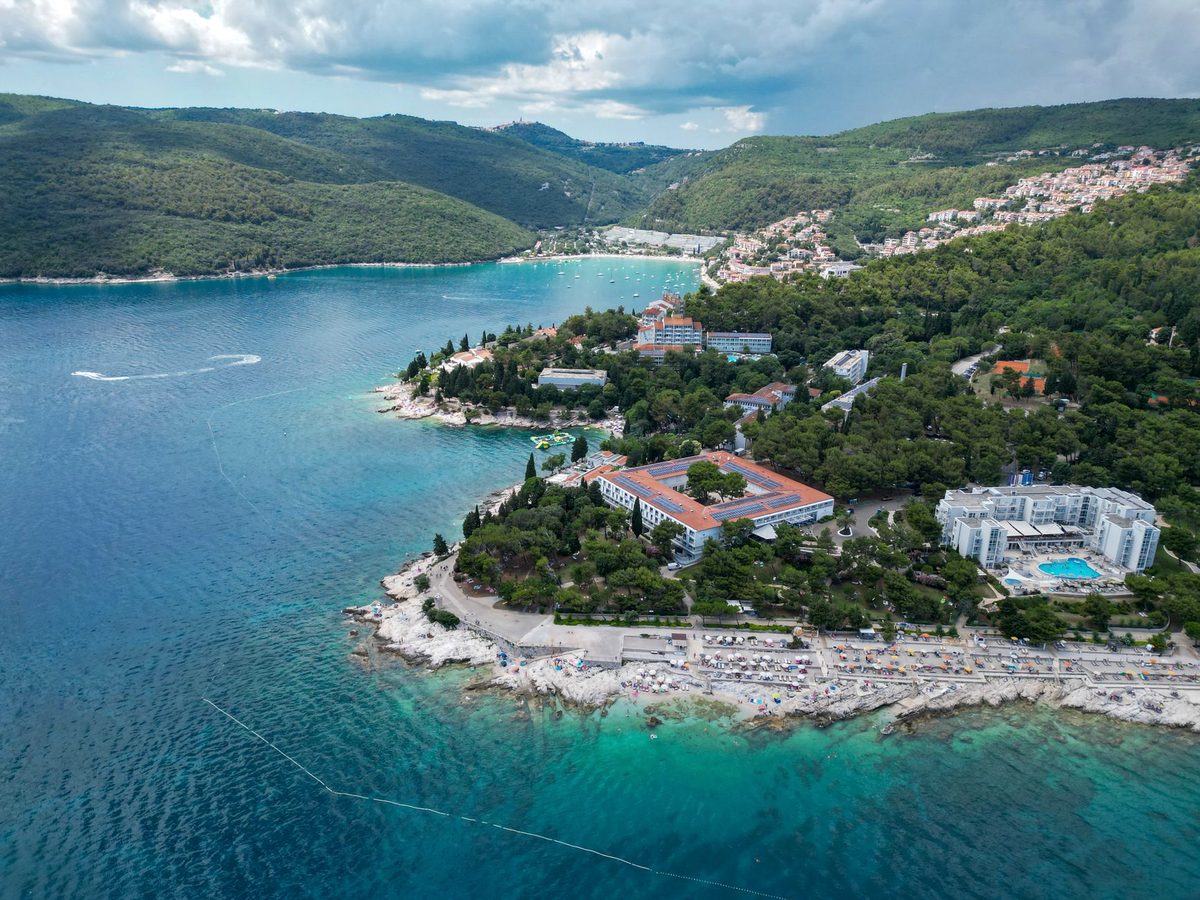
The coast comes first because Istria has almost no sand. The shore is pebble, flat rock slab and paved platform, frequently with steps and ladders into deep, clear water, so pack water shoes for everyone. The one real exception is Bijeca at Medulin, just over half a mile (1 km) of gently shelving natural sand near the southern tip. The absence of sand is why the water stays so clear, the pines grow right down to the shore for shade, and the resorts build big pool complexes for the swimming rather than relying on the beach.
The other thing that defines a holiday here is the Venetian inheritance. Five centuries of Venice left bilingual towns, campaniles and a food culture where pasta, risotto and gelato are the everyday food, served at Central European hours that put dinner at half past six. For a UK family it makes for straightforward feeding, with truffles and Malvazija on the same menu for the adults.
A quick gut checkIs Istria right for your family?
Worth comparing if
You dread the flight above all and want a short one to a proper summer holiday, with pools, days out and food that needs no negotiation.
Weigh it up if
Sand is non-negotiable beyond one beach, or you're hoping for May or October sea warmth.
To sort out before booking
Which resort's pool suits your children, the hire car and whether to fly to Pula or drive in from Trieste.
The numbers, the basics and the ages
Everything you'd want to skim first: the quick facts, the everyday practicalities and how Istria changes as children grow.
Quick facts for UK families
Money, plugs, language and the basics
- Istria is Croatia's north-western peninsula, nearest the Italian border, with the family resorts strung down the west coast and one quiet outpost at Rabac in the east.
- Croatia uses the euro (since 2023) and cards are accepted widely; konobas and market stalls still like cash.
- Sockets are the round two-pin European type, so UK plugs need an adapter. The voltage matches the UK.
- The language is Croatian with official Italian alongside it in many towns; English is comfortable across the resorts.
- The clocks run one hour ahead of the UK, including the change dates.
- Tap water is safe across Istria, including for making up bottles; after a big storm, run the tap until it's clear.
- Your GHIC card covers Croatia's state system; 112 is the general emergency number and 194 calls an ambulance, with Pula's general hospital the regional centre.
- Accommodation adds Croatia's small nightly sojourn tax per person at checkout; under-12s are exempt and teens pay half.
Istria by age and stage
Babies
A short flight, cool nights for sleeping and pine shade by the water, with the resort pool standing in for a sandy beach.
Toddlers
Splash parks and toddler pools, gelato on demand and Bijeca's sand when the bucket calls.
Preschoolers
Hands inside real dinosaur footprints, zebras from an open-top train and two proper waterparks, one with free entry for the smallest.
Young children
The Roman arena, the aquarium in a sea fortress, snorkelling off the rocks and hill-town lunches with a view.
Where to base yourselves
The resort areas side by side, an orientation map of the peninsula and what the rocky shore is really like.
Where to stay with young children
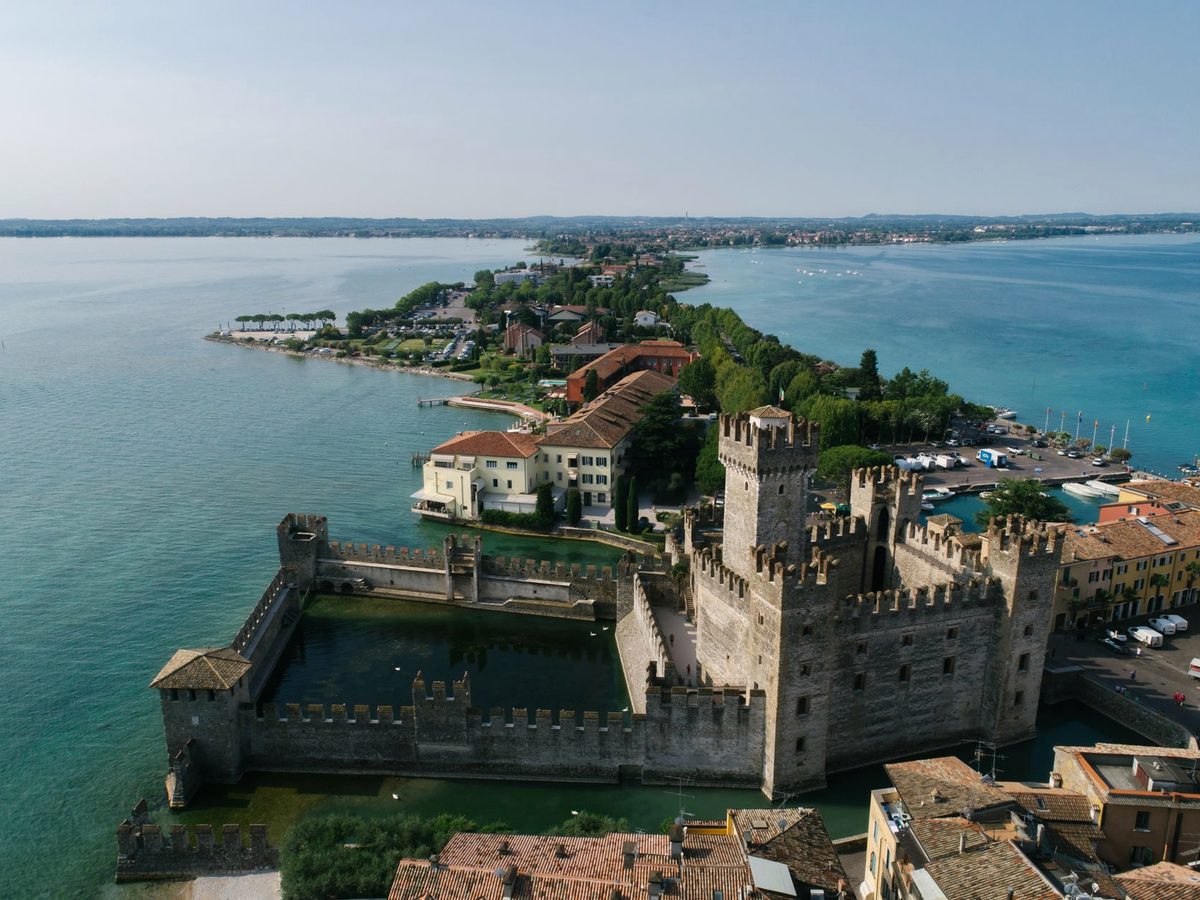
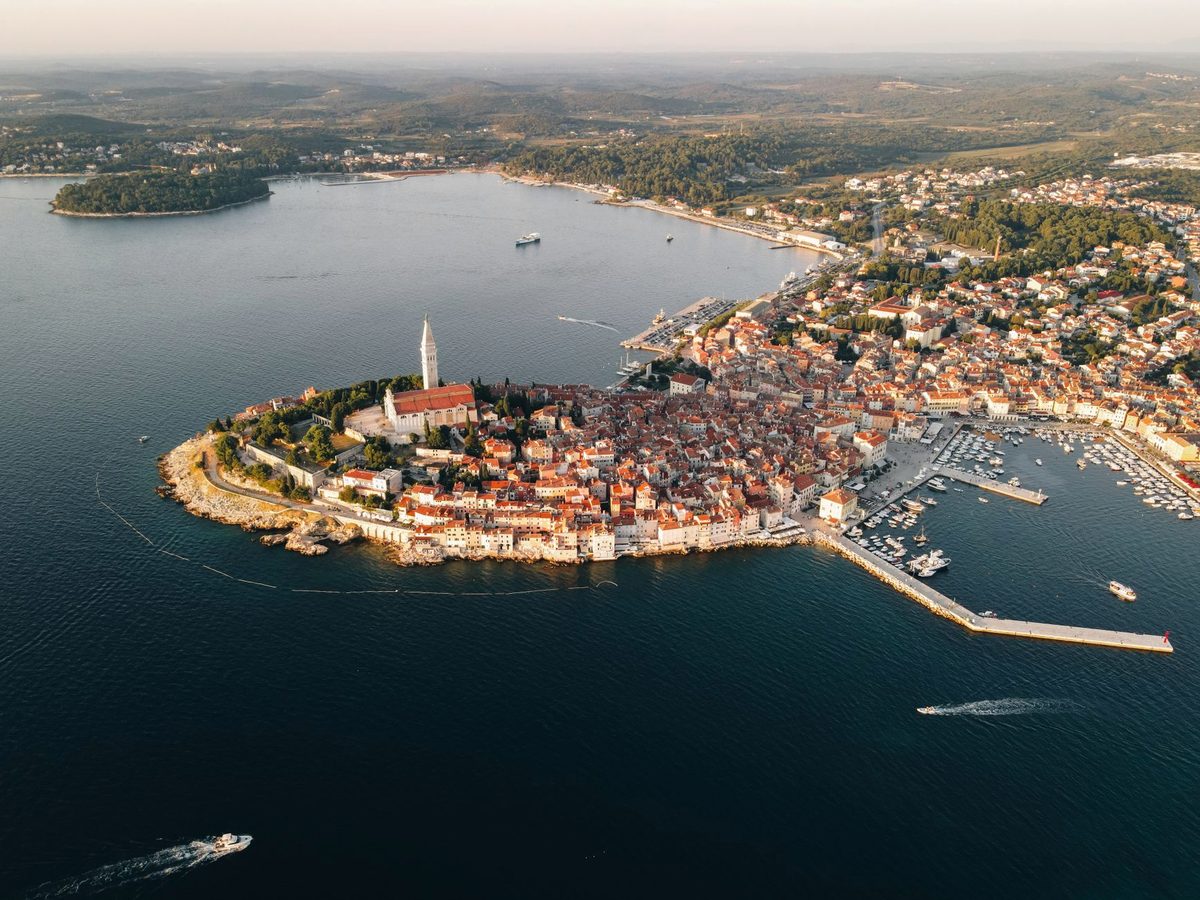
Porec anchors the west coast as Istria's biggest family resort destination: a UNESCO-listed old town ringed by the laguna resort zones, kilometres of pine-shaded, Blue Flagged pebble-and-platform shore backed by family hotels, apartments and enormous campsites, with a waterpark ten minutes away and the cave and dinosaur park in easy reach. Rovinj, half an hour south, is the town people photograph, a Venetian old town stacked on its peninsula, with serious family resorts and a spray-parked campsite on its green edges, though its beaches are rock and pebble underfoot like everywhere else. Between them, Funtana and Vrsar hide an all-inclusive resort with a dedicated toddler pool just up the road from the dinosaur park, plus one of Europe's oldest naturist resorts, worth knowing about before a wrong turn on the coastal path.
The south has the other options. Pula is a working city rather than a resort, but the Verudela peninsula on its edge holds pine-shaded coves and family hotels minutes from the arena, the aquarium and the Brijuni boats, all on the shortest transfer. Medulin, twenty minutes from the plane, has Bijeca's long shallow beach, which makes it the base to choose if your toddler wants buckets and spades, in a lower-key, more local resort than the big western zones. Across on the east coast, Rabac drops down from hilltop Labin to white-pebble coves and some of the clearest water in Croatia, the quietest of the family options.
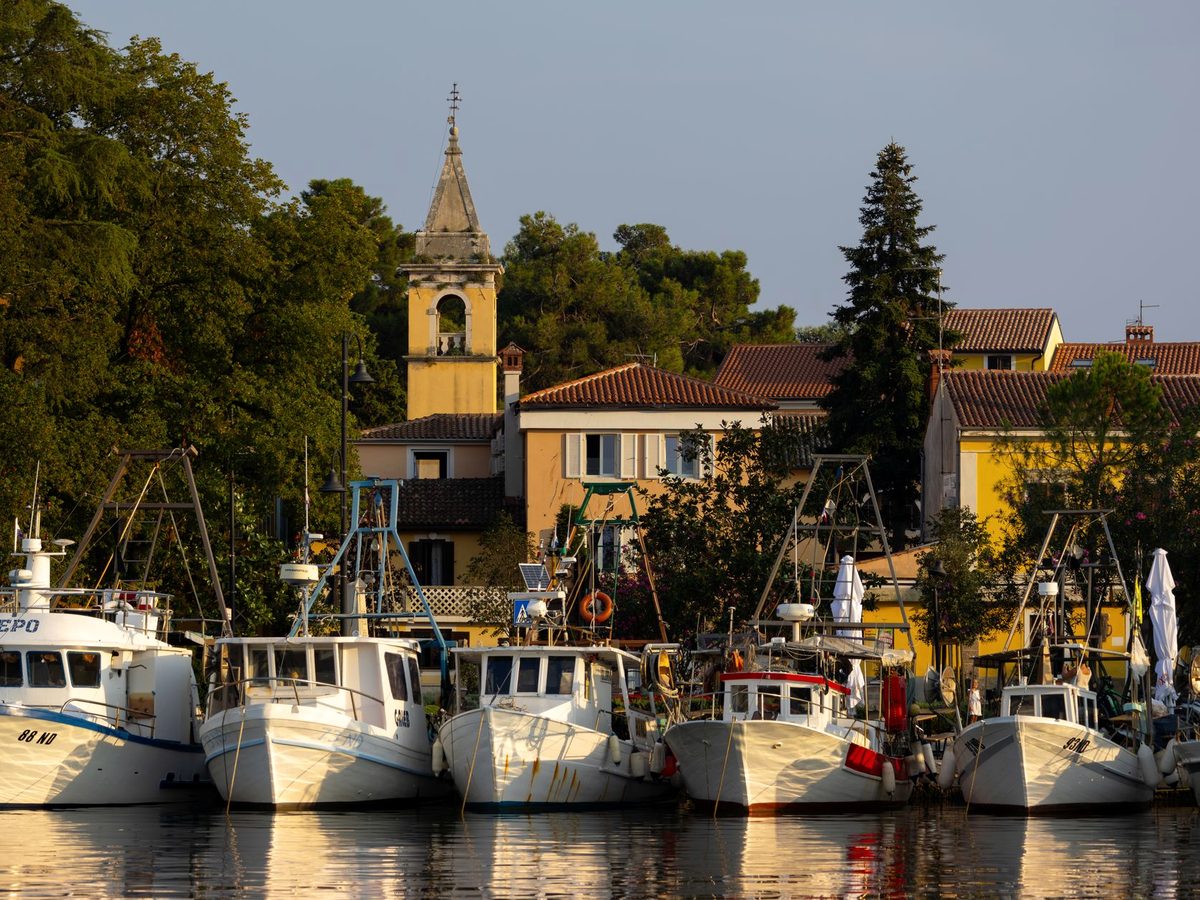
The north-west rounds out the choice. Novigrad is a small walled fishing town with concrete lidos, pebble coves and the Istralandia waterpark ten minutes inland, and Umag beyond it adds big family campsites and a splash-parked resort; both sit closer to Trieste than to Pula, which makes them the natural fly-drive bases. Wherever you land, the operators matter more than usual here, so it's their pool pages, not their beach shots, that tell you what your children will actually swim in.
| Area | Transfer | The swimming | The feel |
|---|---|---|---|
| Porec | About 45 min | Kilometres of pine-shaded pebble and platform, with the swimming mostly in the resort pools | Istria's biggest family resort destination: the laguna resort zones, kids' clubs and a waterpark up the road. |
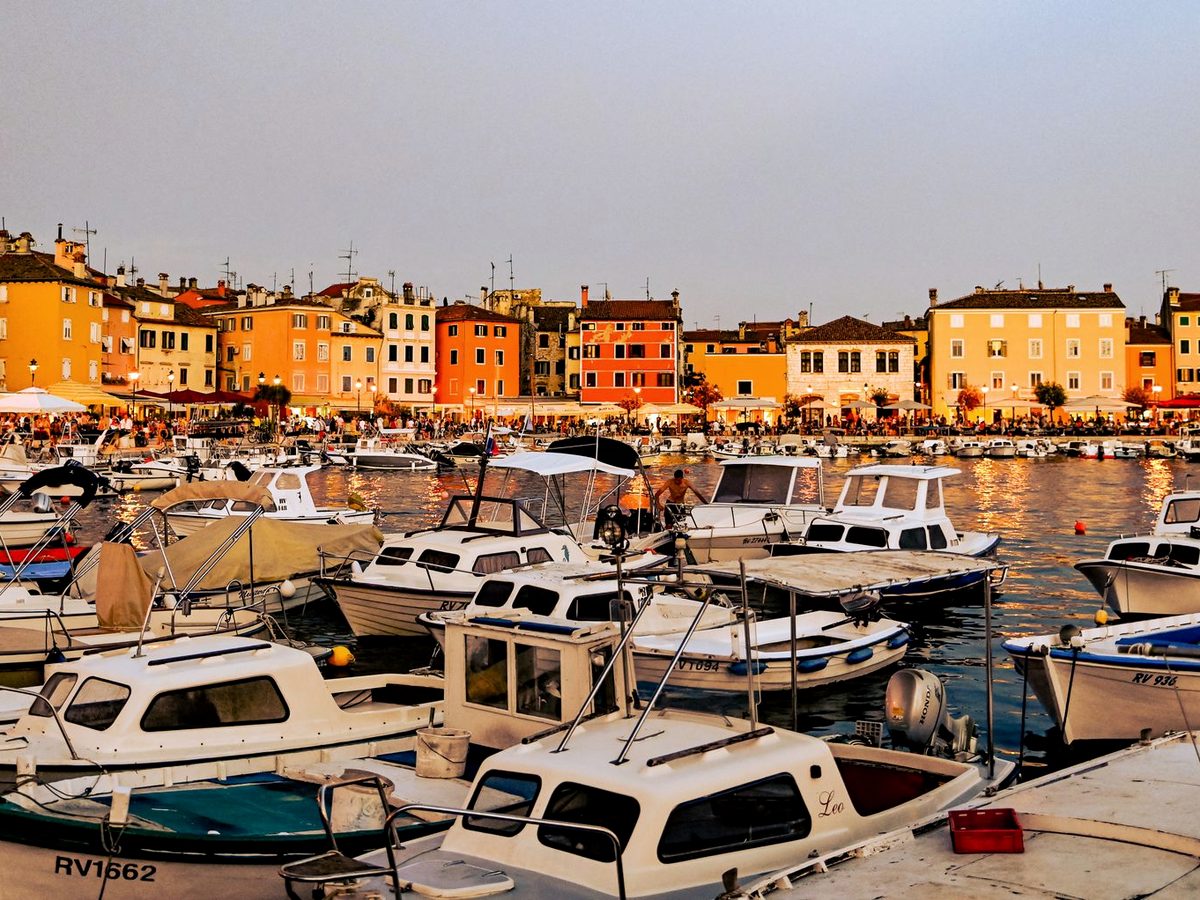
| Rovinj | 35 to 45 min | Smooth rock and pebble below the pines, not bucket-and-spade | The postcard town of coloured houses, with serious family resorts on its green edges. |
| Pula and Verudela | About 15 min | Pebble and rock coves with pine shade on the city's beach peninsula | The city option: the arena, the aquarium fortress and the Brijuni boats minutes away. |
| Medulin | About 20 min | Bijeca: just over half a mile (1 km) of genuine shallow sand, the only one of its kind here | The beach-first base at the southern tip, lower-key than the big resorts. |
| Rabac | About 50 min | Brilliant-white pebble coves with some of Croatia's clearest water | The quiet east-coast cove resort below hilltop Labin. |
| Novigrad | About 1 hour | Concrete lidos by the town, pine-path pebble coves beyond | A small walled town that gets overlooked, with a waterpark ten minutes inland. |
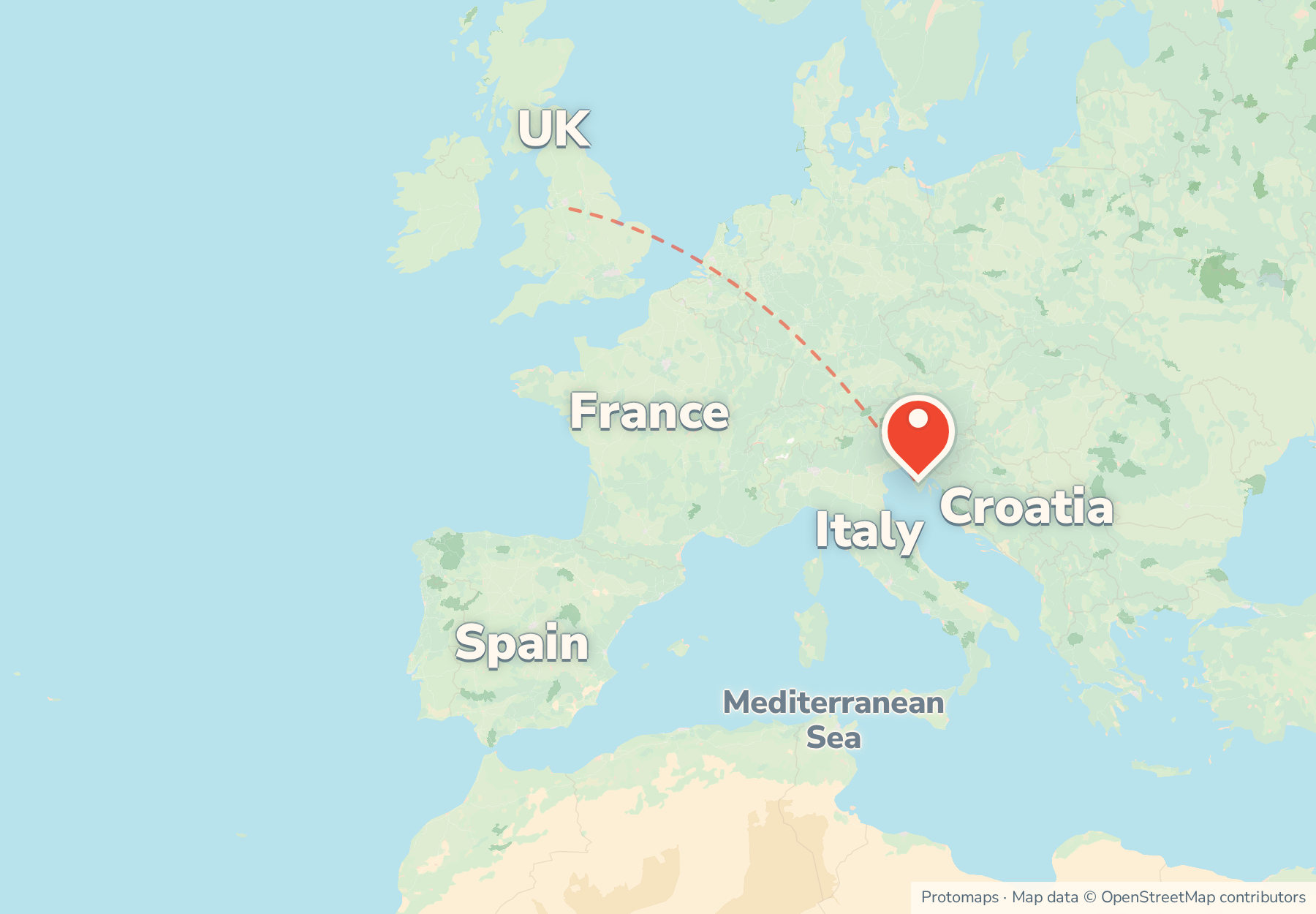
Map of the main family areas
An orientation map of the areas above, the airport and the big days out. The numbers match the key beneath.
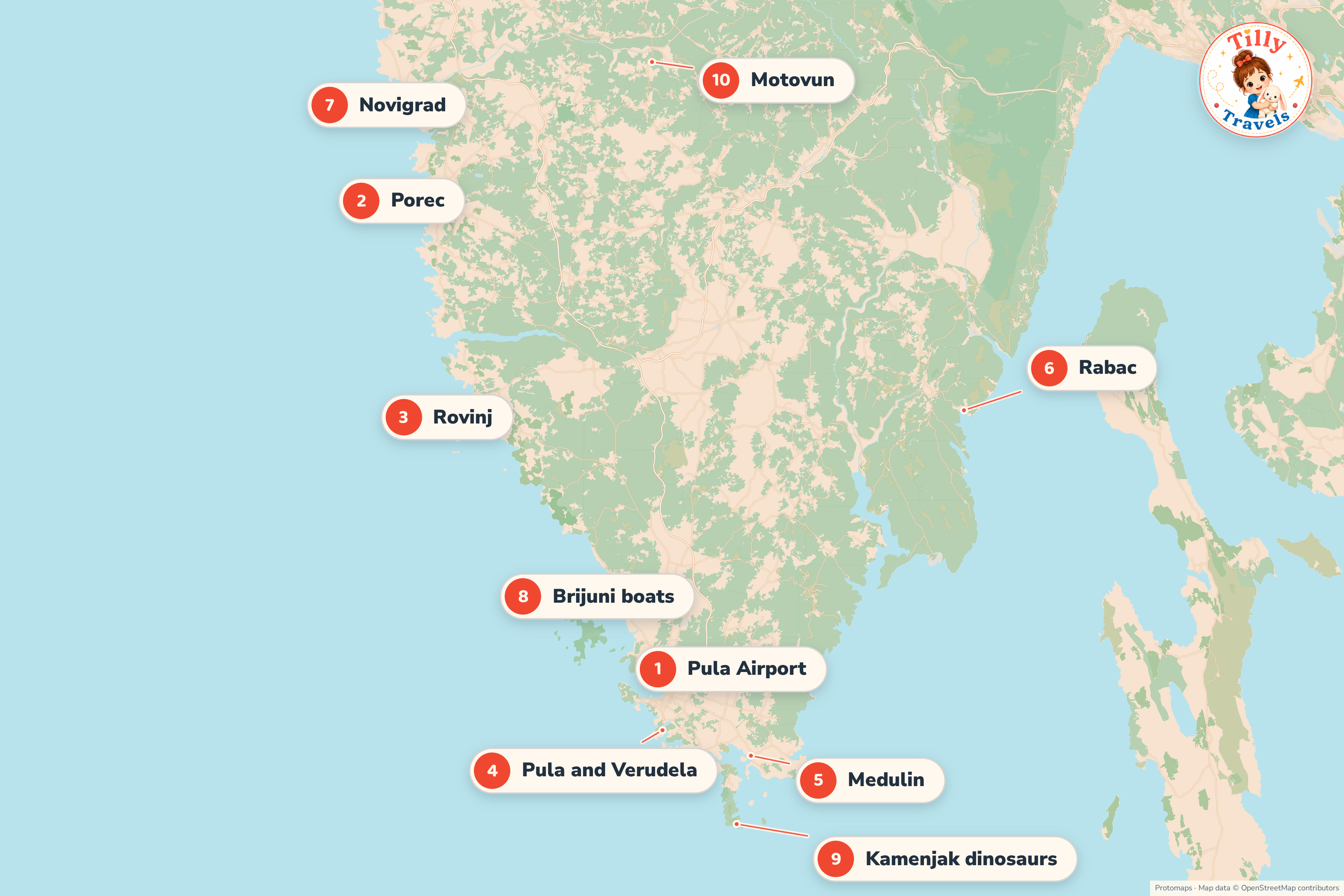
- 1Pula Airport Seasonal and small
- 2Porec The resort heartland
- 3Rovinj The postcard town
- 4Pula and Verudela City plus coves
- 5Medulin The sandy exception
- 6Rabac The white-pebble quiet
- 7Novigrad The fly-drive favourite
- 8Brijuni boats The safari island
- 9Kamenjak dinosaurs Footprints in the rock
- 10Motovun The hill-town lunch
The beaches, sorted for small swimmers
Read any Istrian beach through what's underfoot. The default is managed pebble or paved platform behind pine trees, clean and lifeguarded at the resort beaches, dozens of them Blue Flagged, with ladders and steps where the rock meets deep water; it suits confident swimmers and snorkellers far better than crawlers. The handful of sandy spots form a short list, led by Bijeca at Medulin, the one genuine stretch of shallow natural sand, just over half a mile (1 km), with smaller patches reported near Pula, Porec and Umag that deserve an on-the-ground look before being promised to a toddler.
The pines mean you can park a buggy in the shade without paying for a parasol, and the youngest children mostly swim in the resort pools and splash parks rather than off the rock. Two things to watch where the rock is concerned: sea urchins cling to it, which is what the water shoes are for, and the white pebbles at Rabac roll like marbles underfoot. Summer thunderstorms blow through the northern Adriatic loudly and briefly, and people are back on the beaches within the hour.
Weather, days out and the daily shop
When to go through the season, the dinosaurs and days out that suit small children, eating out and where to stock up.
Weather, May to October
The figures below are long-term averages for the Pula coast. Istria sits at the Adriatic's cooler northern end: high summer matches the Greek islands within a degree or so, while the shoulders fall away faster, and the season maps tightly onto the UK flights, which run roughly May to October only.
| Month | Daytime high | Overnight low | Rain | Wet days | Sea temp |
|---|---|---|---|---|---|
| January | 9.5° | 1.5° | 57 mm | 7 | 12° |
| February | 10.5° | 1.5° | 62 mm | 6 | 11° |
| March | 14° | 4° | 55 mm | 6 | 11° |
| April | 18° | 7.5° | 65 mm | 7 | 13° |
| May | 23° | 12° | 77 mm | 8 | 18° |
| June | 27.5° | 16° | 74 mm | 6 | 23° |
| July | 29.5° | 17.5° | 60 mm | 5 | 26° |
| August | 29.5° | 17.5° | 82 mm | 6 | 26° |
| September | 25° | 14° | 123 mm | 8 | 24° |
| October | 20° | 10° | 91 mm | 7 | 20° |
| November | 14.5° | 6.5° | 121 mm | 9 | 17° |
| December | 10.5° | 2.5° | 92 mm | 8 | 14° |
Typical monthly averages from weather-station records. Sea temperature is the open-water figure, so a sheltered bay can feel a degree or two warmer.
July and August are the proper swimming months, with the August sea at its warmest and nights cooler than Greece, which helps toddlers sleep. June runs a notch cooler in the water but emptier on the platforms. September fades faster here than further south, fine early, cooling late, and October is the end of the season: the resorts wind down and the flights stop. The summer thunderstorm is the one thing to plan around, a brief afternoon downpour rather than a washout.
Filling the daysThings to do with little ones
An unusual amount sits within an hour's drive. The dinosaur material is real, not themed: at Kamenjak, the wild cape past Medulin, 95-million-year-old footprints sit in the shoreline rock with a model-lined trail beside them, and a small child can put a hand inside a genuine print before lunch at the trail's Safari Bar and its playground; Dinopark Funtana then does the animatronic version for the two-to-tens. Brijuni, Tito's island retreat off Fazana, makes a strange, gentle day out: a short boat crossing, then an open-top train through a safari park stocked from diplomatic gifts, zebras, llamas, ostriches and Lanka the elephant, with under-7s reportedly free, worth confirming when booking.
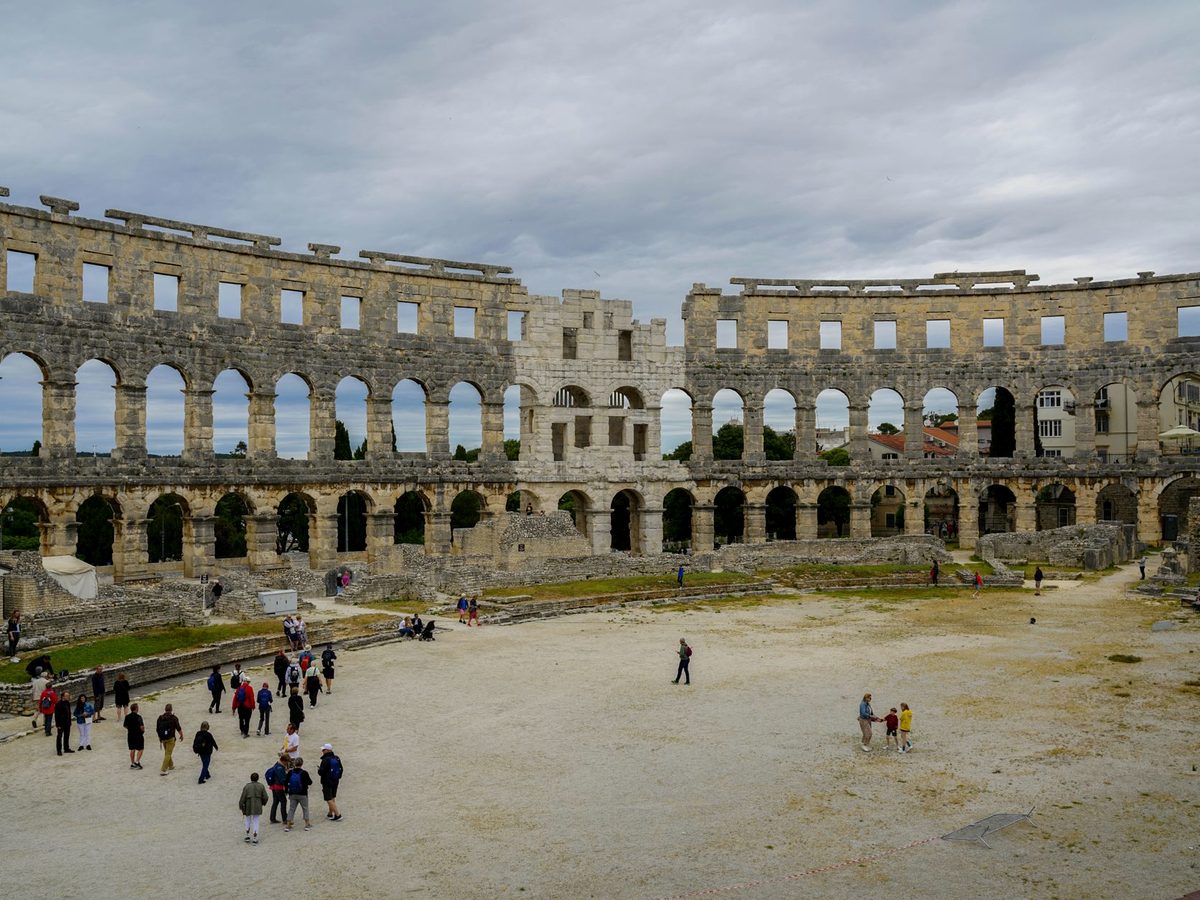
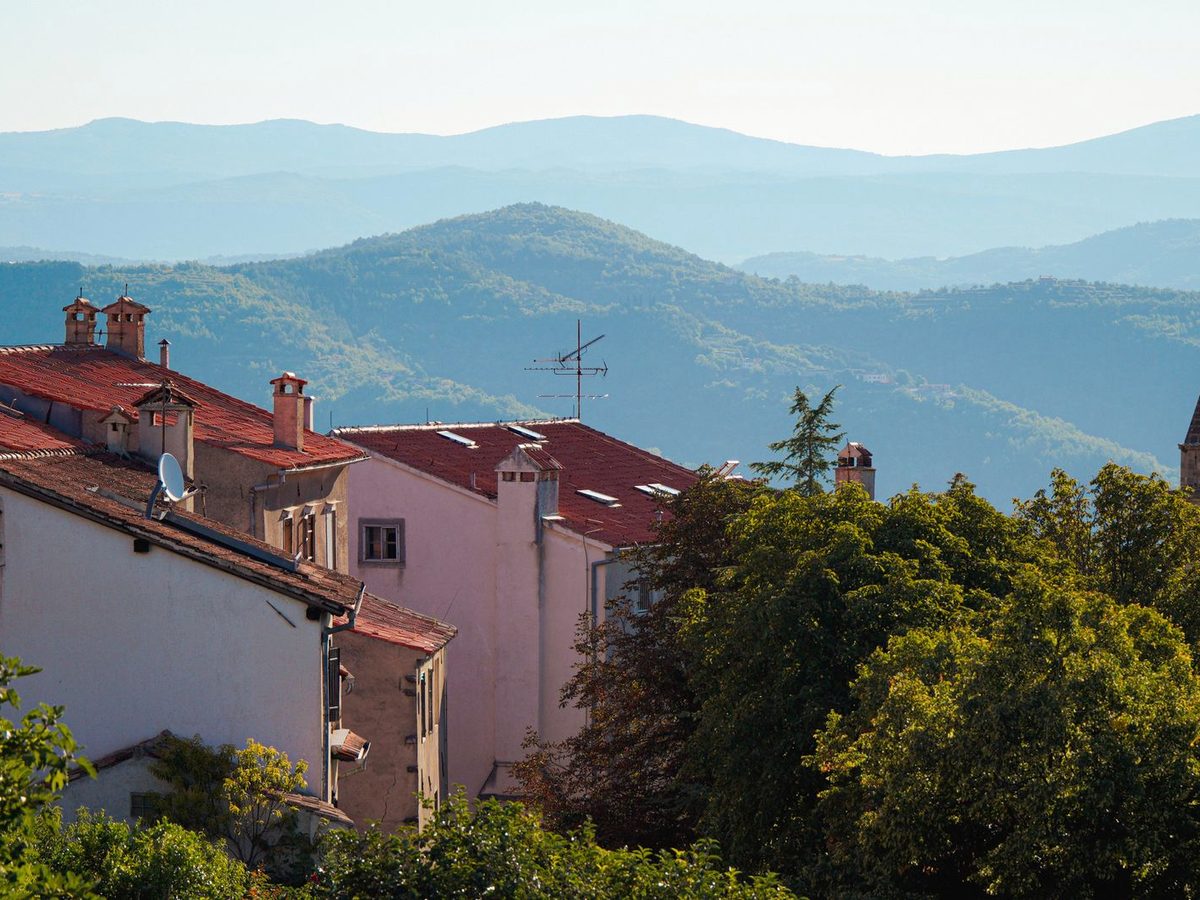
For a wet day or a too-hot one there are indoor and water options. Two full waterparks bracket the Porec belt, with toddler zones at both and children under a metre free at one, a rarity anywhere on this site. Pula's Roman arena, among the best preserved in the world, has an open floor a small child can walk across, and most families don't stay long, with the aquarium in the Verudela sea fortress as a second stop nearby. The Baredine cave near Porec needs a carrier rather than a buggy, and the hill towns, Motovun first among them, suit a short drive and a sit-down lunch above the vineyards before the nap, since their lanes are steep, cobbled and shadeless.
Eating out with children
This is the easiest feeding territory in the eastern Mediterranean. Pasta, pizza, risotto and gelato are the local food rather than tourist concessions, the Istrian house pastas arrive happily plain with butter for a fussy two-year-old, and kitchens run Central European hours, lunch at noon, dinner from six, no siesta gap to outlast. The konoba, the family-run stone tavern, welcomes children as a matter of course even without a formal kids' menu; simple pasta and grilled meat are always on.
The grown-up consolations are serious: truffles from the Motovun forests, prsut, fresh Adriatic fish and Malvazija by the carafe, all a price band below the Italian coast across the water.
Milk, nappies and pharmaciesSupplies and the first-day shop
The supermarket cover is thorough: Konzum everywhere from corner shop to superstore, Lidl, Plodine and Spar in the towns, and DM and Bipa for the widest baby range. Nappies run Pampers plus Violeta, the well-regarded cheaper regional brand. Formula stocks Aptamil, HiPP and Nestle lines in the bigger stores and pharmacies. Two things to bring from home if you rely on them: Cow & Gate, which isn't sold here, and ready-made cartons, which are uncommon. Summer Sundays are usually fine for a shop in the resort towns, but the national holidays on 15 August and 5 August close the shops, so don't plan a first-day shop around those dates.
The pharmacy, the green-cross ljekarna, sells Lupocet, the Croatian children's paracetamol, as a junior syrup with a dosing syringe, and Pula keeps a 24-hour duty pharmacy. The tap water is safe peninsula-wide, formula included, so there's no need to buy bottled.
Getting around, a real week and the admin
Transfers and hire cars, what a week actually looks like, the health and document checks and a list to pack against.
Getting there and around
Pula's little airport is the front door, around two and a quarter hours from London and a little longer from the northern airports, with Jet2 adding UK routes for 2026 alongside easyJet and Ryanair, all seasonal. Transfers scale with the peninsula: fifteen minutes to Pula or Medulin, under three-quarters of an hour to Rovinj, about an hour to Porec and the north-west. The genuine alternative for the northern resorts is flying to Trieste or Venice and driving in, under two hours to Novigrad with no border queue since Croatia joined Schengen, and it unlocks year-round flights the seasonal Pula schedule can't offer.
On the ground the car is near-essential: the buses between towns are sparse and badly timed, the interior has almost none, and the cape, the cave, the waterparks and the hill towns all assume you drive. Croatian law wants children under 135 centimetres in a proper seat in the back, transfer cars don't all carry seats unless asked, and the Ipsilon motorway spine keeps the peninsula's distances short. Within a resort, you can walk everywhere.
What a real week looks likeA realistic week with little ones
A two-hour flight, a short run up the peninsula and the first gelato before the cases are unpacked.
The kids' club and pool complex in the morning, lunch and a nap, then the pine-shaded platform beach for the cooler hours.
Kamenjak's footprint trail with hands in the prints, the Safari Bar playground and a rocky-cove paddle for the steadier walkers.
The boat from Fazana to Brijuni, the open-top train past the zebras and Lanka the elephant, back for an early konoba dinner.
A final pool morning, fuzi with butter for lunch and the flight home.
With young children, the pool mornings, one dinosaur day, one island day and a waterpark-or-arena wildcard fill an Istrian week, with the hill-town lunch as an optional extra.
The practical adminHealth, documents and the boring bits
Check the GOV.UK Croatia advice before booking and travelling. Croatia is in the EU and Schengen, so passports need to be issued within the last ten years and valid three months beyond departure, children's included. Carry a GHIC each plus travel insurance: Pula's general hospital is the regional centre, health centres and tourist clinics cover the resorts in season and the pharmacist makes a sound first stop. The emergency numbers are 112 generally and 194 for an ambulance.
The hazard list is short. The summer sun is strong and bounces off the rock, so keep up the shade and cream; water shoes deal with the sea urchins; the wet platforms are slippery, so hold hands at the ladders; and the afternoon thunderstorms pass quickly if you wait them out indoors.
Before you payBooking checklist
- Judge every hotel by its pool and kids' club pages; the beach photos are rock and platform however they're cropped.
- Sand non-negotiable? Base at Medulin for Bijeca and accept fewer resort frills.
- Pack water shoes for everyone before anything else goes in the case.
- Book the hire car with the child seat, and request a seat for the airport transfer too.
- Heading north-west? Price the Trieste or Venice fly-drive against the Pula routes.
- Keep the dates inside June to September; the shoulders are pool months and October is closed.
- Bring Cow & Gate and ready-made cartons from home if you use them.
- Pack a carrier for the cave, the hill towns and the arena's rougher corners.
- Confirm the cot, the high chair situation and the cancellation terms with the accommodation.
- Recheck the GOV.UK Croatia advice and every passport before you go.
Resort guides in Istria
We've researched these places to stay in Istria for families with young children. Each guide covers what it's like, who it suits and what to check before you book.
Questions, links and the last word
The things families ask most, the official pages worth a bookmark and when this guide was last refreshed.
Common parent questions
Is it true there's no sand?
Near enough. Bijeca at Medulin is the one stretch of shallow sand worth the name, so if sandcastles are the point of the holiday you want to be near it. Everywhere else you'll be on pebble, rock or paved platform, so choose a hotel on its pool and pack water shoes for everyone.
Which resort should we look at?
It comes down to where you want to be rather than which operator, since the big three all run heated pool complexes, splash parks, kids' clubs with nap rooms and managed beaches. Porec's laguna zones give you the widest pick, Rovinj's green edges hold the dearer versions, and the all-inclusive at Funtana sits a toddler pool 800 metres from a dinosaur park.
What's the deal with the safari island?
You catch a boat from Fazana to Brijuni, then ride an open-top train round a safari park stocked from the animals world leaders once gave Tito, including Lanka the elephant from Indira Gandhi. Under-7s are usually free, worth confirming at booking. For small children it works because nothing is rushed and nothing is scary; the train does the walking and the animals are close.
Will the sea be warm enough?
In July and August, yes; the water sits around 25 degrees, on a par with the Greek islands. The catch is the shoulders. May is paddling-only at roughly 18 degrees, and once the flights stop in October there's no swimming holiday left, so an autumn half-term has to go elsewhere. If you can only travel in the cooler months, Malta or the Canaries hold their warmth longer.
Do we need a hire car?
For the days out, yes; the resort itself works without one. Anything you'd drive to, the dinosaur cape, the cave, the waterparks, the hill towns, the buses serve poorly. One legal point parents trip over: children under 135 centimetres need a proper child seat in the back, and transfer cars don't always come with one, so ask or bring your own. Flying into Trieste or Venice and driving down is the other way in for the north-west, and these days the crossing is quick.
Can we buy our usual formula and nappies?
Most of it, yes. Head for the DM and Bipa drugstores, which carry the widest baby range, with Pampers and the cheaper Violeta on the nappy shelf and Aptamil, HiPP and Nestle on the formula one. The gaps to fill before you fly are Cow & Gate, which isn't sold here, and ready-made cartons, which are hard to find. For a temperature you'll want Lupocet, the local children's paracetamol syrup, sold over the pharmacy counter.
Is Pula Arena worth it with a toddler?
Yes, and it's cheap. The floor is open ground, so a small child can walk freely rather than being kept to a path, and most families are done in well under an hour. String it together with the aquarium in the Verudela sea fortress and an ice cream by the harbour and you've a half day in Pula that mostly stays out of the midday sun.
What are the hill towns like with small children?
Manageable in small doses. Motovun and the towns near it are old stone villages on steep cobbled lanes with little shade, so they suit a short visit and a sit-down meal rather than a full day on foot. If you want a flat day away from the beach, one of the two waterparks is the easier call.
See more Istria photos
Open the photo gallery →Useful links
- GOV.UK Croatia travel advice: passport rules, entry requirements and health updates before you travel.
- Istria Tourist Board: the official regional tourism site.
- Brijuni National Park: official boat and safari-park tickets.
- Pula Arena: the amphitheatre's official site and opening hours.
Last updated 12 June 2026.