Sardinia with little ones
Sardinia has some of the shallowest, calmest water in the Mediterranean, on beaches chosen for shallow, safe water with young children. The island splits into three, each with its own airport: Olbia for San Teodoro and the Costa Smeralda, Alghero for the north-west and La Pelosa, Cagliari for the southern shallows at Chia and Villasimius.
On this page
A family verdict at a glance
The quick read before the detail: who Sardinia suits, the three airports and what to nail down before you book.
Best for
Water so shallow a toddler wades for ages before it reaches their waist, on calm, clean sand.
Maybe not for
Families who won't drive on holiday, or if you'd rather not book a beach two days ahead in summer.
Best ages
The shallows suit babies and toddlers from the start; boats, donkeys and aquariums stretch it as they grow into young children.
Best areas
San Teodoro for the all-rounder, Alghero for car-free, Chia and Villasimius for the southern shallows.
Why families pick it
Some of the calmest paddling in the Med, flamingos behind the beach and no toll roads anywhere.
Check before you book
That your flights, villa and beach wishlist all sit in the same corner of a three-corner island.
Three corners, and a ticket for the sand
Sardinia is the Mediterranean's second-largest island, 168 miles (270 km) top to bottom with no motorway, and its three airports serve three separate corners: Olbia in the north-east with the widest choice of UK flights, Cagliari in the south flying mostly from London, Alghero in the north-west on a single Stansted route. Driving the length of the island runs to around three hours, so you're committing to a corner when you book the flight: pick the one whose beaches you want and stay in it. With a third of Sicily's population on nearly the same land, whichever corner you choose feels uncrowded once you're there.
The best-known shallows are now capped and booked in season: La Pelosa near Stintino takes 1,500 people a day at €3.50 a head with under-12s free (last checked June 2026), Cala Brandinchi runs on the San Teodoro beach app, and slots for both go within minutes on August mornings. The caps keep the water calm and the sand walkable, so book ahead and you'll get on. There are hundreds of unticketed beaches for everyday use, so you only need the apps for the few capped ones.
A quick gut checkIs Sardinia right for your family?
Worth comparing if
You want shallow, calm, clean water above all and you'll happily drive to a different beach each day.
Weigh it up if
You want big-resort entertainment on tap without a car, or late-October swimming is the dealbreaker.
To sort out before booking
The corner, the car with its seats and under-four alarm, and which beaches need the apps.
The numbers, the basics and the ages
Everything you'd want to skim first: the quick facts, the everyday practicalities and how Sardinia changes as children grow.
Quick facts for UK families
Money, plugs, language and the basics
- Sardinia is an Italian region in the EU and Schengen, so euros, the GHIC and the usual entry rules all apply as they would in Rome.
- Cards work everywhere that matters; keep coins for beach car parks, lido showers and gelato.
- Sockets are the European two-pin type with Italy's three-pin variant alongside; standard adapters cover both.
- The language is Italian, with Sardinian spoken locally and a Catalan twist in Alghero; tourist-coast English is comfortable.
- The clocks run one hour ahead of the UK.
- Tap water is safe to drink, but local habit is firmly bottled; do the same, and especially for formula.
- 112 covers every emergency, 118 calls an ambulance and 116117 reaches out-of-hours medical advice with English-speaking operators.
- Each comune sets its own small nightly tourist tax with its own child exemptions; check your accommodation's comune for the current rate.
Sardinia by age and stage
Babies
Short flight, gentle time shift and the calmest sea entries anywhere; the driving distances and village-shop limits are the admin.
Toddlers
Toddlers get the most from this island: lagoon-flat shallows, certified family beaches and flamingos in view of the bucket.
Preschoolers
Boat days through granite islands, white donkeys on Asinara, a touch-tank aquarium and waterparks with toddler zones.
Young children
Snorkelling in marine reserves, the cave boat trip at Alghero and Bronze Age towers once the legs and attention arrive.
Where to base yourselves
The three corners side by side, an orientation map of the island and how the beaches shelve underfoot.
Where to stay with young children
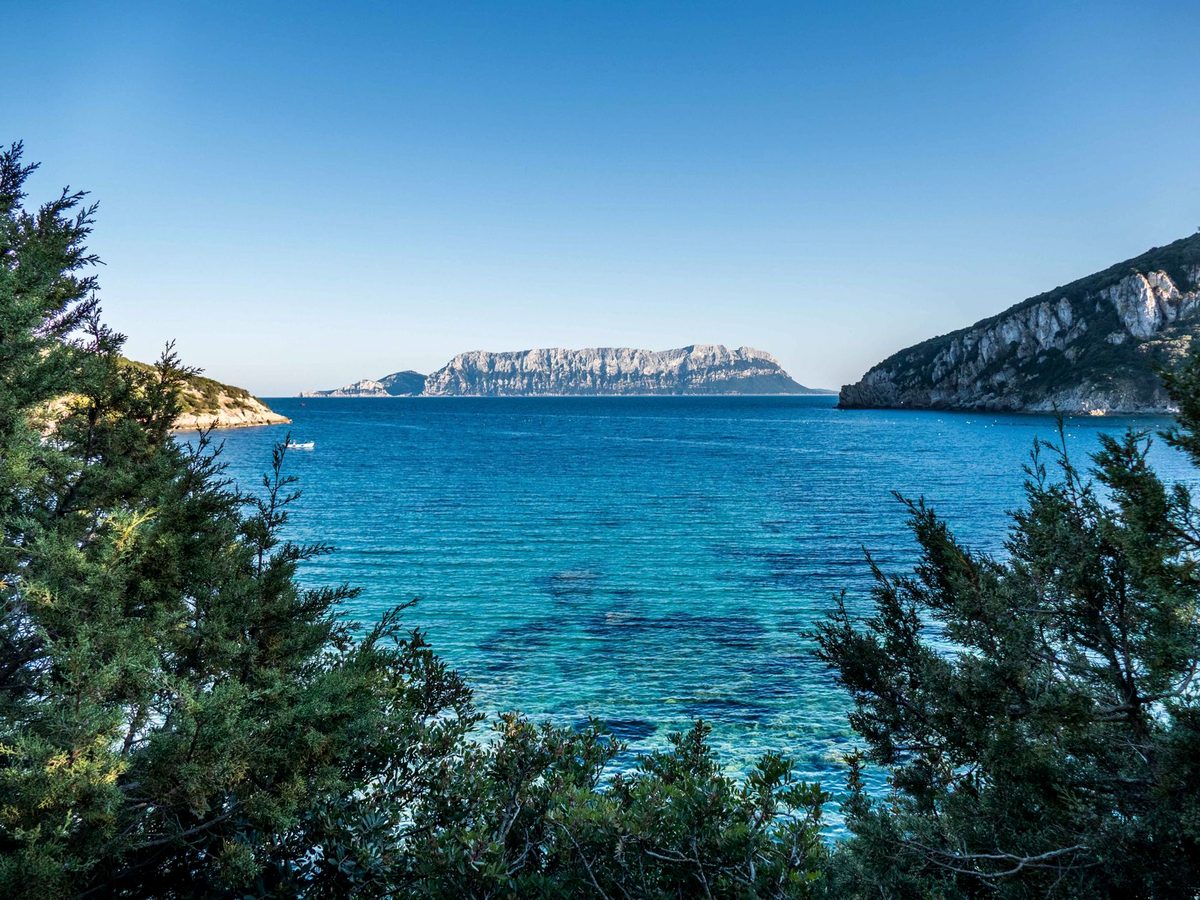
In the north-east, San Teodoro is the base that balances everything: a working town with supermarkets, pharmacies and a playground, La Cinta's 2 miles (3 km) of white sand on the doorstep and booked-but-worth-it Cala Brandinchi up the road. Budoni next door is quieter, with pine forest shade behind its beaches and a UK-market Neilson beachclub with childcare from four months. The Costa Smeralda is just north and is best treated as a day-trip destination: its beaches are public and shallow, its room rates are not, and villages like Arzachena and Cannigione put a family within reach at a fraction of the cost.
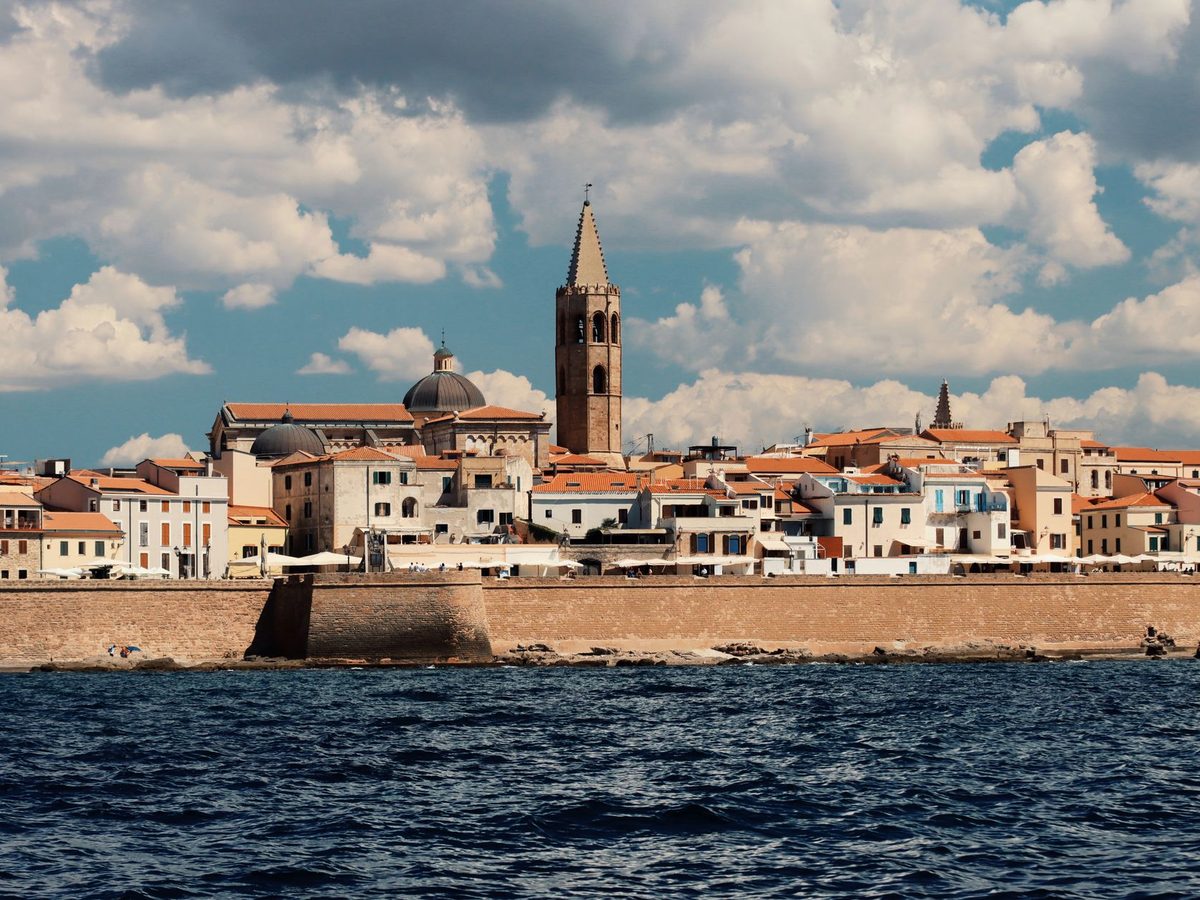
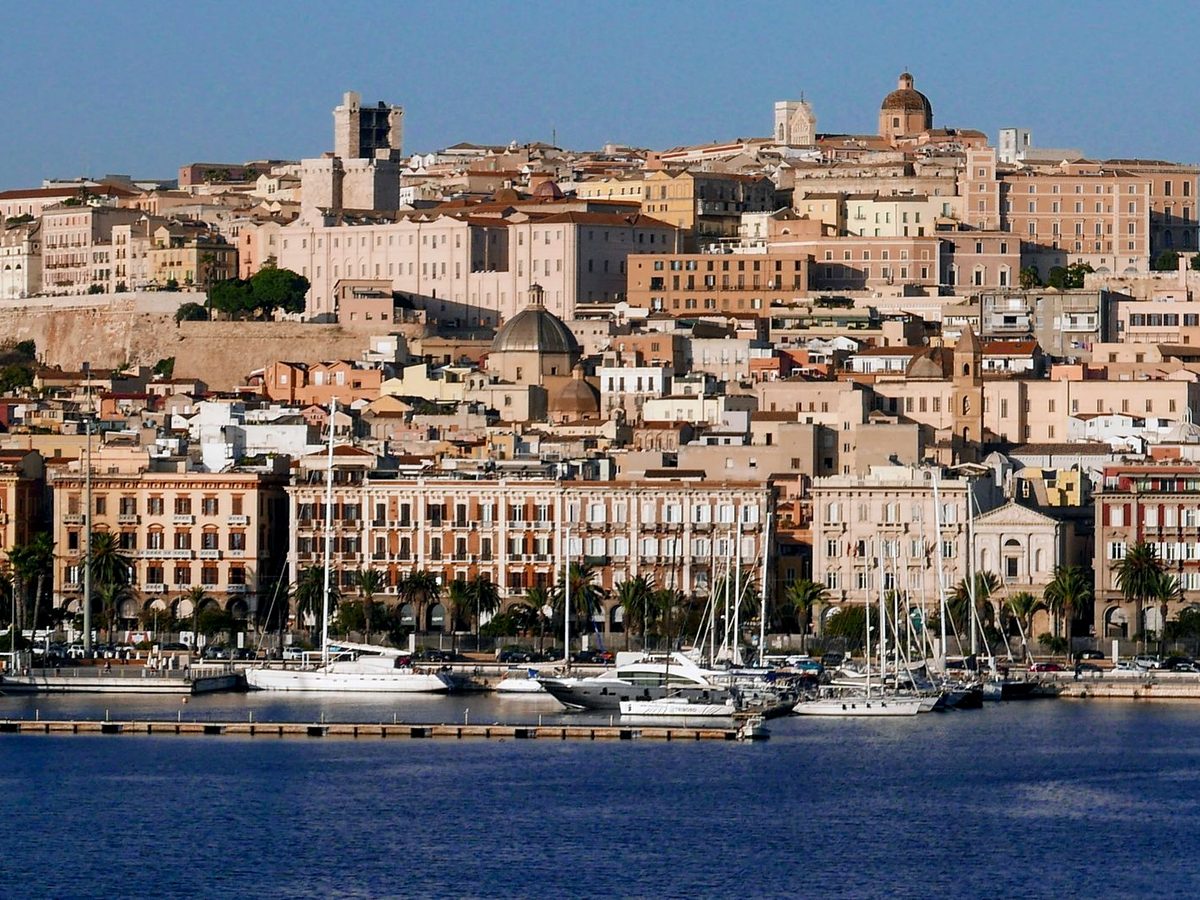
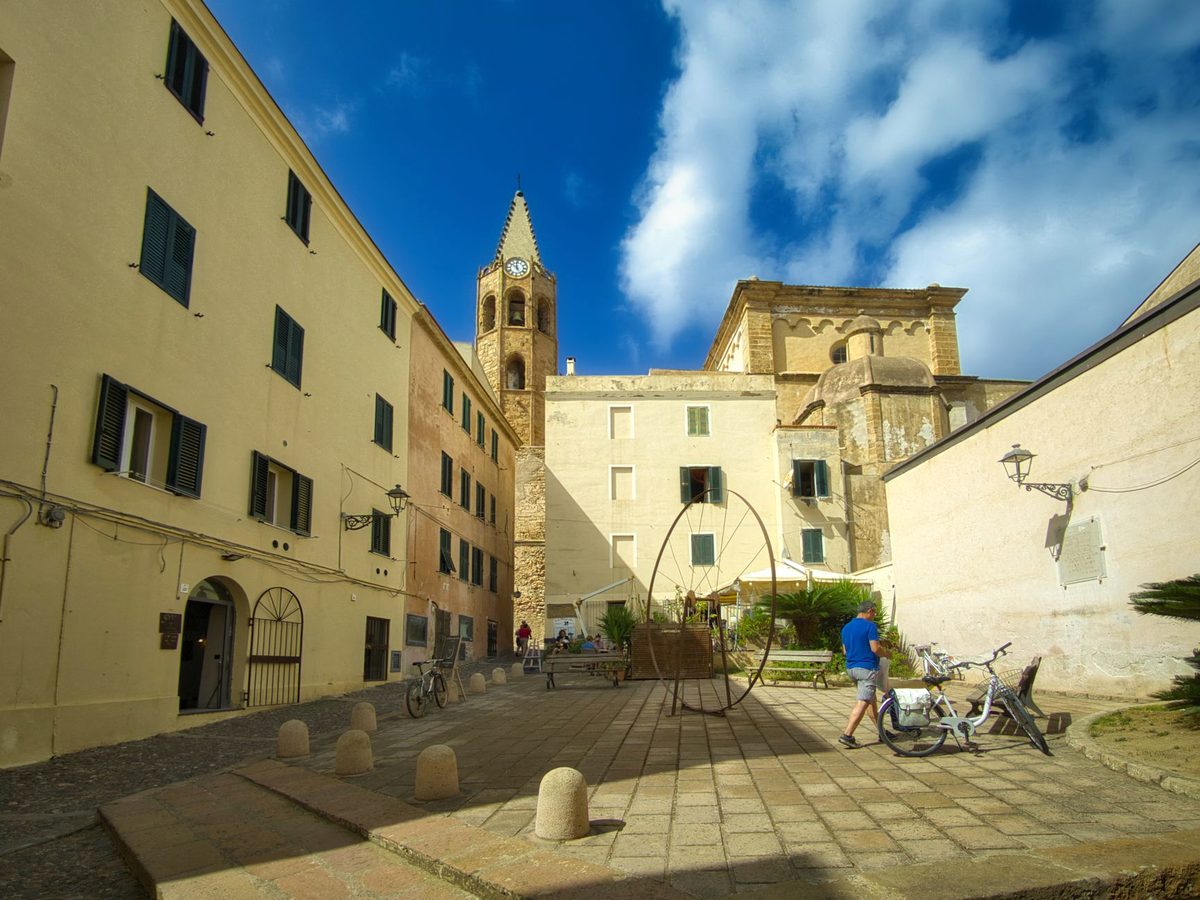
The north-west belongs to Alghero, the island's best car-free choice: a Catalan-flavoured old town, a flat seafront promenade and a summer beach bus running the whole strip of gentle sands from Lido San Giovanni to pine-backed Maria Pia and Mugoni. Stintino, 45 minutes north, sits behind La Pelosa, the ankle-deep bay; it works best as a booked day out from Alghero unless a very small village with one pharmacy sounds like a base. In the south, Chia and Pula have the shallowest water, with Su Giudeu's barely-there depths and the island's biggest cluster of baby-equipped resorts, while Villasimius rings its marine-reserve headland with beaches, so one is always sheltered whichever way the wind sits. Cagliari with Poetto's 5 miles (8 km) of shallow city sand is the only base that needs no car at all.
The practical steer between them: families flying from outside London usually land at Olbia, which makes San Teodoro the default and a good one. If London departures suit and the dates lean towards October, head south. Wherever you book, check whether your chosen week's beaches need the apps, and whether your accommodation's comune exempts children from the tourist tax, before paying the balance.
| Area | Transfer | The swimming | The feel |
|---|---|---|---|
| San Teodoro and Budoni | 25 to 40 min from Olbia | La Cinta's long white sand and Cala Brandinchi's lagoon-flat shallows; pine shade behind Budoni's beaches | The mid-market base: a real town with supermarkets, pharmacies and a proper playground. |
| Costa Smeralda | 35 to 50 min from Olbia | Grande Pevero and Capriccioli, shallow a long way out, public and free to walk onto | The expensive resort coast; swim its beaches from a cheaper base like Arzachena or Cannigione. |
| Alghero | 15 min from Alghero airport | Lido San Giovanni and Maria Pia, the gentlest entries in the north-west, pines behind the dunes | A Catalan-flavoured old town with a flat promenade and the only beach bus on the island. |
| Stintino and La Pelosa | 40 to 45 min from Alghero airport | Ankle-deep over white sand for tens of metres, calm even when the wind blows | A tiny village behind a strictly capped, ticketed beach; treat it as a booked day out more than a base. |
| Villasimius | About an hour from Cagliari | Porto Giunco and Campus shelve gently, with a lee shore whichever way the wind sits | The south-east resort cluster inside a marine protected area, flamingos behind the sand. |
| Chia and Pula | 40 to 55 min from Cagliari | Su Giudeu barely gets deep: dunes, a walk-to islet and a flamingo lagoon beside the towels | The south's shallowest water, where the big family resorts cluster. |
| Cagliari and Poetto | On the airport's doorstep, minutes by train | Five miles (8 km) of shallow city sand, low for tens of metres, with a family lido | The only base that needs no hire car, city life included and flamingos next door. |
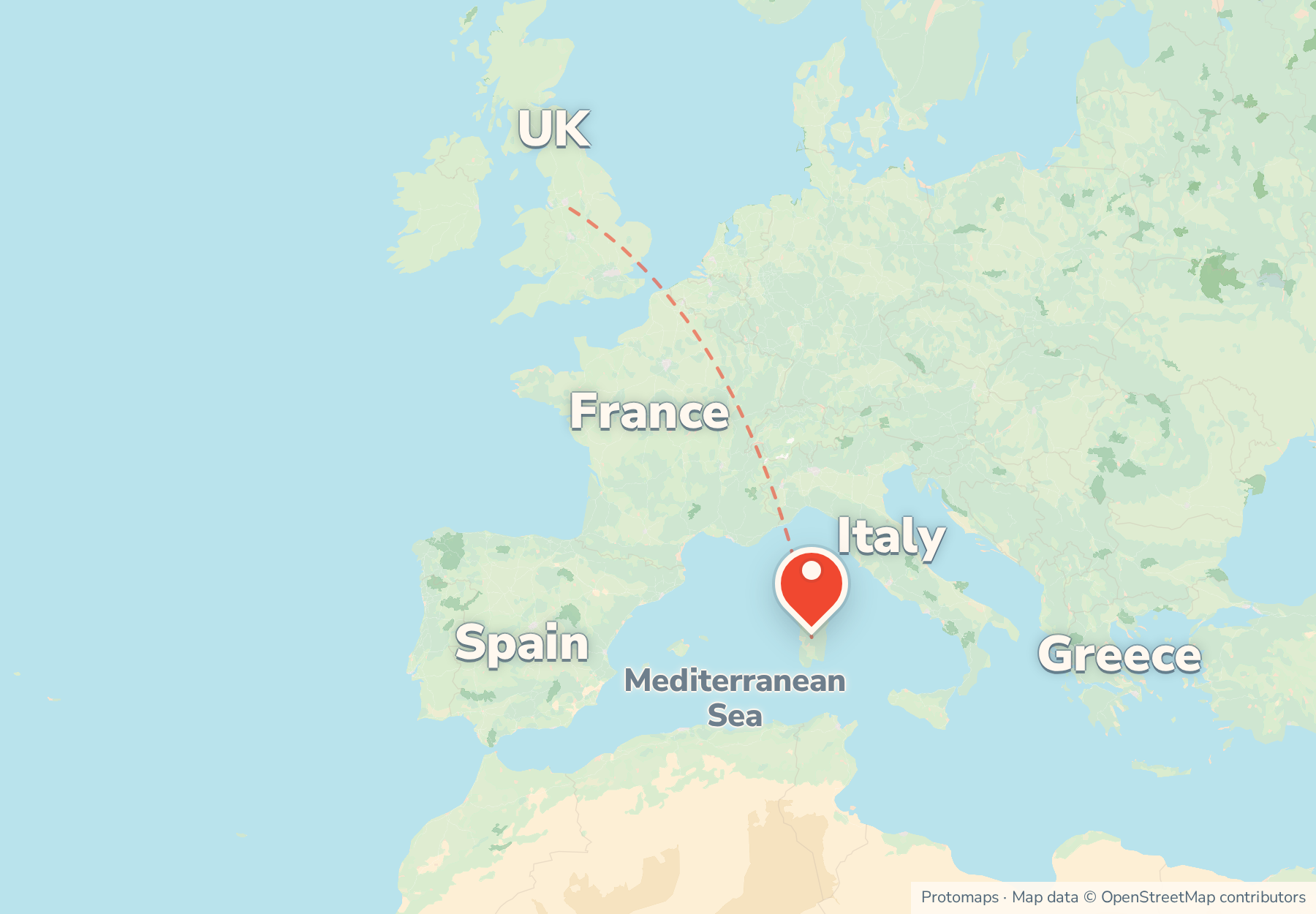
Map of the main family areas
An orientation map of the areas above, all three airports and the big days out. The numbers match the key beneath.
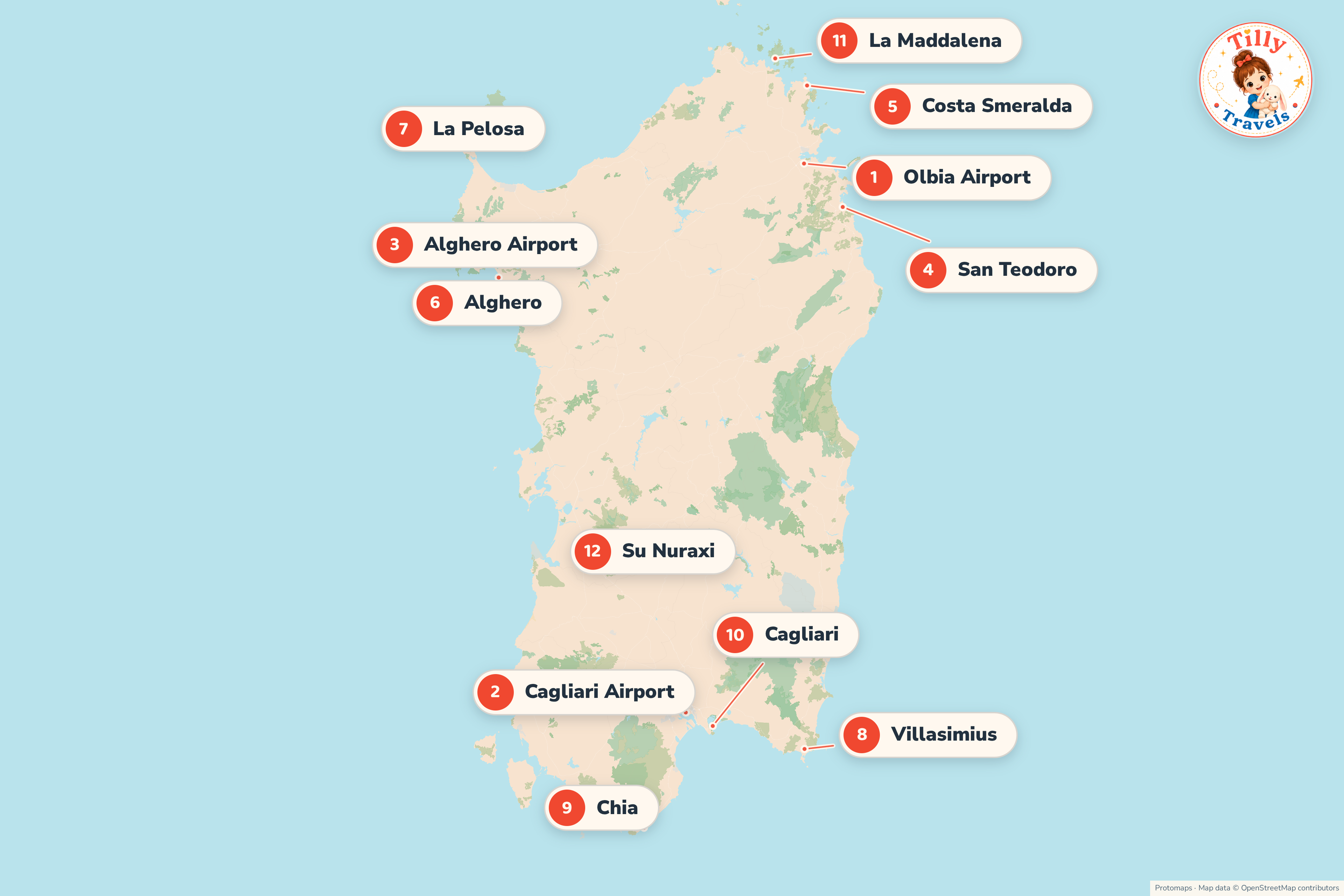
- 1Olbia Airport The widest UK route map
- 2Cagliari Airport Gateway to the south
- 3Alghero Airport The Stansted door
- 4San Teodoro The all-round base
- 5Costa Smeralda Public beaches, expensive hotels
- 6Alghero The car-free choice
- 7La Pelosa The booked day out
- 8Villasimius Sheltered south-east
- 9Chia The shallowest south
- 10Cagliari City base, Poetto beach
- 11La Maddalena The boat day
- 12Su Nuraxi Bronze Age towers
The beaches, sorted for small swimmers
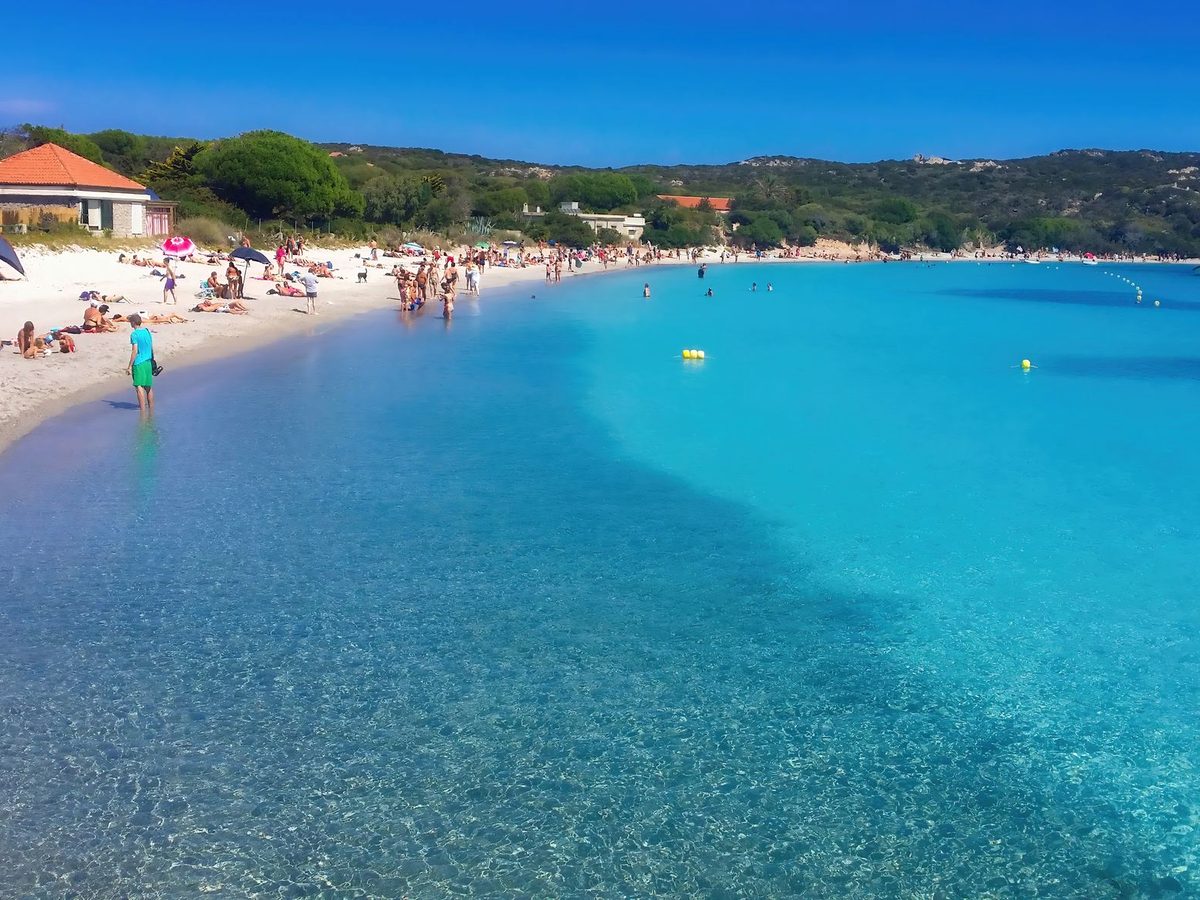
For the youngest waders, the shallowest water runs roughly La Pelosa, then Su Giudeu and Sa Colonia at Chia, then Cala Brandinchi, then Porto Giunco and Campus at Villasimius, then the Alghero strip. La Pelosa has the longest wading distance: ankle-deep over white sand for tens of metres, sheltered by an island so it stays flat when the wind blows. The booking, a rigid straw mat and a foot-rinse on the way out are all required. Su Giudeu at Chia is nearly as shallow without a ticket, water that barely deepens, dunes behind and an islet small legs can reach. Cala Brandinchi gives the north-east its lagoon-flat option, booked through the app a couple of days ahead, while Porto Giunco, Campus and Cala Pira at Villasimius shelve gently inside the marine reserve; Cala Pira adds warm shallow rock pools that suit young children. Alghero's strip and Poetto at Cagliari are the everyday beaches: long, shallow, lifeguarded and served by buses.
One Villasimius beach to plan for: Punta Molentis was capped from June 2026, taking 150 people and 70 cars a day, booked through the Villasimius council site at €10 a head (last checked June 2026), with an umbrella ban for visitors aged 10 to 65, families with under-10s allowed one umbrella per group and over-65s one each, plus a cool-bag ban, so arrive early and pack light or pick another beach in the cluster. A few wider points worth knowing in advance. The Bandiera Verde, an Italian award given to beaches a panel of paediatricians judges suitable for children, flies over sixteen Sardinian beaches including Alghero, the San Teodoro coast and Poetto. The maestrale wind matters more than rain here, hitting the west coast hard while the east stays calm, with La Pelosa the sheltered exception in the windy corner. Le Bombarde near Alghero deepens after a few metres despite its family reputation, and every beach on the island is public.
Weather, days out and the daily shop
When to go month by month, the outings that suit small children, eating out and where to stock up.
Weather, May to October
The figures below are for Cagliari in the south; Olbia in the north matches the summer numbers almost exactly and runs about a degree cooler in the sea through autumn. Summer UV reaches 9 to 10 against a UK peak of 7 to 8, so hats, shade and SPF 50 matter all season.
| Month | Daytime high | Overnight low | Rain | Wet days | Sea temp |
|---|---|---|---|---|---|
| January | 14.5° | 5.5° | 40 mm | 7 | 15° |
| February | 15.5° | 5.5° | 31 mm | 6 | 14° |
| March | 17.5° | 7° | 30 mm | 6 | 14° |
| April | 20° | 9.5° | 42 mm | 6 | 15° |
| May | 24.5° | 13.5° | 23 mm | 4 | 18° |
| June | 29° | 17.5° | 10 mm | 2 | 22° |
| July | 32° | 20° | 2 mm | 0 | 25° |
| August | 32° | 20.5° | 13 mm | 1 | 27° |
| September | 28° | 17.5° | 38 mm | 4 | 25° |
| October | 24.5° | 14° | 38 mm | 4 | 23° |
| November | 19.5° | 10° | 73 mm | 9 | 20° |
| December | 16° | 7° | 53 mm | 8 | 16° |
Typical monthly averages from weather-station records. Sea temperature is the open-water figure, so a sheltered bay can feel a degree or two warmer.
June and September are the best months with young children: 28 or 29-degree days, a swimmable sea, no booking panic and shoulder prices. July and August deliver the warmest water in exchange for peak crowds, doubled rates on the north-east coast and beach slots that sell out in minutes; the heat is manageable the usual way, mornings and late afternoons outside. October splits the island: the south keeps a 22-degree sea and drier skies than Sicily's east coast, while the north cools faster. May is kind on land and brisk in the water. Whatever the month, the maestrale can blow for a day or two; when it does, the east coast and the sheltered bays keep the paddling open.
Filling the daysThings to do with little ones
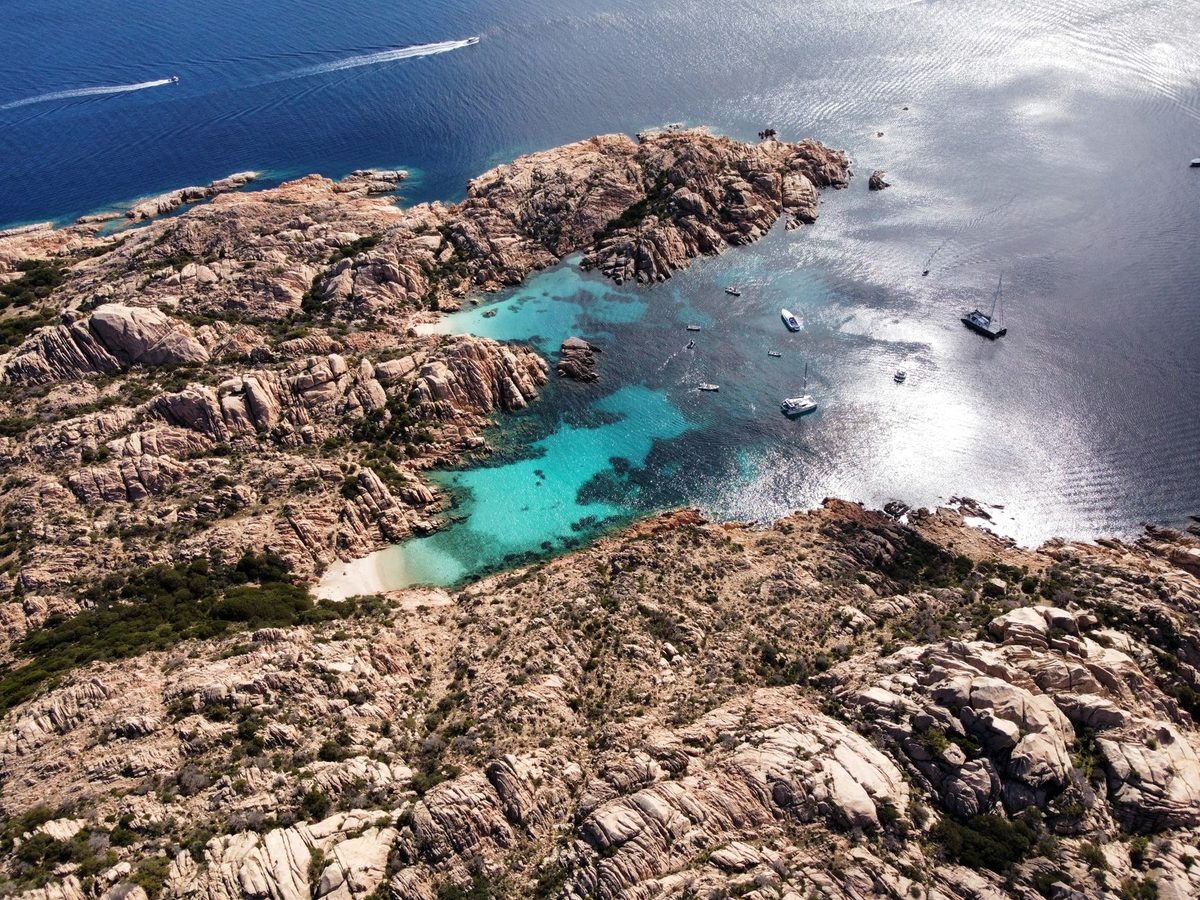
Boat days are the standout. From Palau, full-day cruises thread the La Maddalena archipelago's granite islands with swimming stops in shallow coves, shaded decks and lunch aboard, a long day that works best from about three; the 15-minute car ferry to La Maddalena town makes the short version for younger crews. From Stintino, boats cross to Asinara national park, where albino donkeys wander a carless island toured by electric minivan, a reliable hit with young children in the kinder months. At Alghero, the family route to Neptune's Grotto is the boat from the harbour, 40 minutes under serious cliffs; the cave itself is a chilly, damp, carrier-only add-on beside a staircase of 654 steps that nobody should attempt with a toddler.
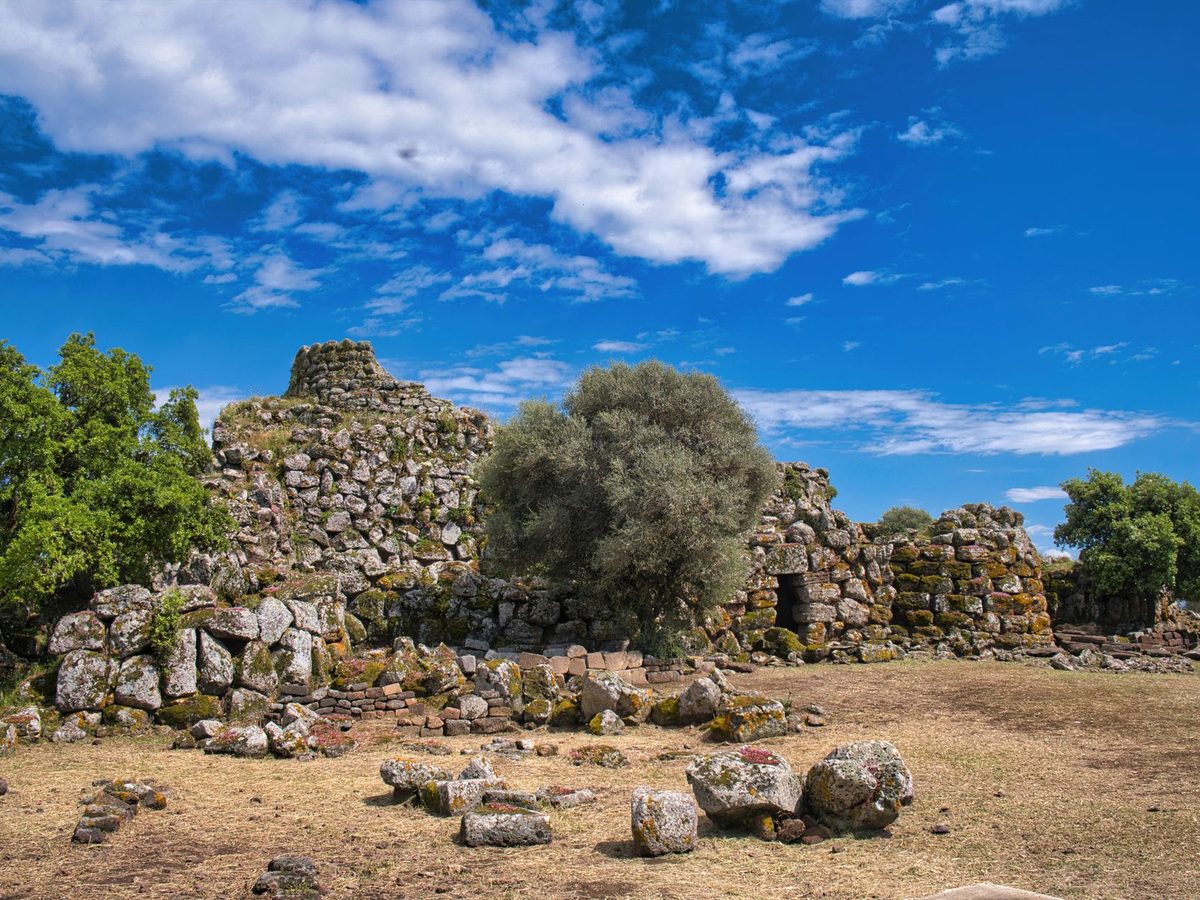
On land, the flamingos are the main draw: from the sand at Porto Giunco, Chia and La Cinta, or at full colony scale on the flat paths of Cagliari's free Molentargius park, early in the morning before the shadeless heat builds. Nora's seaside ruins near Pula pair a first-tour-of-the-morning carrier visit with the calm beach right beside them, and under-sixes go free; Su Nuraxi's Bronze Age towers, impressive but wrong for toddlers on their own and free under six, are worth the drive only when paired with the miniature-Sardinia park just over half a mile (1 km) away, dinosaurs and tiny aquarium included. Waterparks fill the gaps, Aquadream above Baja Sardinia and Aquafantasy at Isola Rossa, both with toddler zones, and the Cala Gonone aquarium's touch tank, free for under-sixes, covers the east coast's hot or wet afternoons.
Eating out with children
Sardinian food has plenty small children will eat. Culurgiones, soft potato-and-cheese pasta parcels, are the easiest first dish; pane carasau, the paper-thin crackbread on every table, doubles as a ready-made snack, broken small for the youngest; fregola works best ordered al pomodoro rather than with its default clams; and seadas, fried pastry with mild cheese and warm honey, is a safe dessert once it cools enough to eat. Suckling pig is the parents' agriturismo treat, booked deliberately for a fixed evening sitting.
The awkward part is dinner timing: kitchens open for dinner around 7.30pm at the earliest, with a closed gap after lunch. The local stopgap is a 5pm gelato, entirely normal here, with bars serving panini and focaccia through the afternoon and pizzerias opening first. Self-catering or all-inclusive sidesteps the wait, which is part of why the resort model suits this island. Restaurants welcome children warmly, mezza porzione (a half portion at about two-thirds of the price) is a standard request, and high chairs are less reliable than at home, so a clip-on seat travels well.
Milk, nappies and pharmaciesSupplies and the first-day shop
Conad is the island's default supermarket, with big stores in Olbia and Pula anchoring their corners and smaller Conad City branches in the resort towns; Eurospin and Lidl cover the discount end in the larger places. Supplies can be sparse in the small villages: Stintino has one small shop and one pharmacy, and Chia's resorts sit a drive from the nearest proper town, so fold the big shop into the journey from the airport while passing somewhere substantial.
For the baby kit, Mellin is the Italian formula stalwart alongside Aptamil, Nidina and HiPP, with first-stage milks usually bought at the pharmacy; Italian Aptamil isn't identical to the UK product, so a baby settled on a specific UK formula should travel with the full holiday's supply. Plasmon is the main jarred-food brand, Pampers nappies are sized by kilogram rather than UK numbers, and Tachipirina is the Calpol equivalent, sold over the counter with a dosing syringe. Pharmacies follow the green-cross rota system, with the duty pharmacy listed on every closed door.
Getting around, a real week and the admin
Flights and hire cars, what a week actually looks like, the health and document checks and a list to pack against.
Getting there and around
Flights run two and a half to three hours, and which airline you fly depends on the corner: Olbia hosts easyJet, Jet2, Ryanair, BA and TUI from airports across the UK; Cagliari has Ryanair from Stansted year-round and seasonal BA from Gatwick; Alghero relies on Ryanair from Stansted. Transfers are short by island standards, 25 to 30 minutes to San Teodoro, about 40 to Stintino or Pula, an hour to Villasimius, but driving the island end to end runs past three hours, so resist any itinerary that tries two coasts in one week with a toddler.
On the ground, you'll use the hire car most days. There's no ride-hailing of any kind, buses serve towns rather than coves and taxis thin out beyond the cities, so book the car early with child seats and the legally required anti-abandonment alarm for any under-four. The roads are easy: not a single toll road on the island, a decent dual-carriageway spine in the SS131, and parking that mostly just costs coins. The east-coast SS125 is slow and winding, best driven in daylight; ZTL camera zones guard the old centres of Cagliari, Alghero and Olbia, and the two car-free exceptions, Alghero's beach bus and Cagliari's city network, are covered above.
What a real week looks likeA realistic week with little ones
Land at the right corner's airport, collect the smallest car that fits and do the big shop at a proper supermarket before the village-only stretch.
Unticketed sand most days: the lagoon end of the local beach all morning, a long shaded lunch and an afternoon around the pool or back on the towels.
A capped beach, done properly: slots reserved on the app a day or two before, the straw mat in the boot for La Pelosa and arrival before the car park fills.
A boat day through the La Maddalena islands or out to Asinara's white donkeys, or simply flamingo-spotting from the lagoon path with a gelato after.
A slow morning on the nearest sand, sandcastles demolished and buckets emptied before the journey home.
With young children, one corner of the island, one booked-beach day, one boat or flamingo day and a string of unticketed sand fills the week without a single long drive.
The practical adminHealth, documents and the boring bits
Italy's familiar framework applies: GHIC plus travel insurance, 112 for emergencies, 118 for an ambulance and 116117 for out-of-hours advice in English, with a summer tourist medical service operating in the resorts. The paediatric map is worth knowing by corner: Olbia's Giovanni Paolo II hospital runs a 24-hour children's A&E covering the north-east, Cagliari's Brotzu hospital is the island's main one for the south, and Alghero's paediatric unit currently covers daytime only, with overnight emergencies heading to Sassari about 40 minutes away, a live staffing situation worth a fresh check if you're basing there with a baby.
The everyday hazards are sun first and everything else second: UV hits 9 to 10 in high summer, two or three points above a UK heatwave, so pack shade, SPF 50 and UPF suits. Jellyfish appear occasionally rather than constantly, with a seawater rinse and antihistamine cream the response; mosquitoes are milder than much of southern Europe, with repellent at dusk and screens enough at the coast, and the West Nile cases Italy logged in 2025 centred on inland wetlands away from the resort coasts, posing very low risk to healthy children.
Before you payBooking checklist
- Pick the corner first and check flights, villa and beach wishlist all belong to the same airport.
- Book the hire car early with child seats and the under-four anti-abandonment alarm requested.
- Diary the beach bookings: La Pelosa releases slots ahead and two days out, the San Teodoro app a day or two before.
- Pack or plan to buy a rigid straw mat for La Pelosa; the sand-free microfibre kind doesn't qualify.
- Carry the full holiday's formula if your baby is settled on a UK brand; the Italian version differs.
- Choose June or September if the dates flex; budget double for August on the north-east coast.
- Pack a clip-on high chair, reef-grade sun kit and a windbreak for the west coast.
- Check your comune's tourist tax and its child exemption before settling the balance.
- If basing in Alghero with a baby, confirm the hospital's current overnight paediatric arrangements.
- Recheck GOV.UK Italy for entry rules and passport dates before you fly, and brief everyone that the sand stays.
Resort guides in Sardinia
We've researched these places to stay in Sardinia for families with young children. Each guide covers what it's like, who it suits and what to check before you book.
Questions, links and the last word
The things families ask most, the official pages worth a bookmark and when this guide was last refreshed.
Common parent questions
Which airport should we fly into?
It depends on the corner you want. Olbia (OLB) suits most UK families, with flights from the widest spread of airports and easy reach of San Teodoro and the Costa Smeralda. Cagliari (CAG) is better for Chia or Villasimius but mostly runs from London. Alghero (AHO) covers the north-west on a single Stansted route. Compare fares for all three before committing, since the corners are too far apart to switch once you land.
How does the beach booking actually work?
For La Pelosa, go to spiaggialapelosa.it: it costs €3.50 a head with under-12s free (last checked June 2026), one batch of slots opens well ahead and the rest at 9am two days before the date, so set an alarm for the second release in summer. Cala Brandinchi and Lu Impostu use the santeodorospiagge.it app at €2 a head (last checked June 2026), opening a couple of days ahead. Punta Molentis at Villasimius is booked through the Villasimius council site at €10 a head (last checked June 2026). All three sell out fast in August. If you miss a slot, the unticketed beaches next door take the overflow.
Is Costa Smeralda doable on a normal family budget?
Swimming there is; sleeping there isn't. The way families keep the cost down is to stay in Arzachena, Cannigione or San Pantaleo, where rooms cost a fraction of Porto Cervo, then drive in for the day. Park before ten when the small car parks fill, bring a picnic to skip the beach-club prices, and walk straight onto Grande Pevero or Capriccioli. The only outlay is the car park, because every beach in Sardinia is open to the public.
Do we need a hire car?
For most bases, yes, because there's no Uber or ride-hailing anywhere on the island. Two places let you skip it: Alghero, with a summer beach bus along its whole strip, and Cagliari with Poetto, reachable by city train and bus. Everywhere else, book the car at the same time as the flights. One thing to add at booking: Italian law requires an anti-abandonment alarm for any child under four, and the hire desk can supply one if you ask in advance rather than at the counter.
Is October half term warm enough?
In the south, early October is fine for paddling and sandcastles at Chia or Villasimius, though a late-October week reads cooler. For sea you can count on swimming in, Sicily and Rhodes are warmer. For mild quiet beaches at well below peak prices, the southern corner is a good fit.
Can we make up bottles with the tap water?
Use bottled for formula. Buy a still mineral water, checking the sodium and nitrate figures on the label as you would at home. Boil and cool it the usual way before making up a feed. Tap water is legally safe and fine for teeth, baths and washing up, but the taste, summer chlorine and limescale put most local families on bottled, and small resort towns can run their supply hard in August.
Is it true you can't take sand home?
Yes. Regional law protects the island's sand, shells and pebbles, fines run into the hundreds and thousands of euros, and bags are checked at Cagliari airport. The practical answer is to empty the bucket onto the beach before you pack, and to tell the children at the start of the holiday so the last day isn't a surprise. La Pelosa adds its own rules on top: a rigid straw mat under your towel, not a microfibre beach towel, and a foot-rinse on the way out.
Where will the children see flamingos?
From the sand, no special trip needed. Lagoons sit right behind Porto Giunco at Villasimius, Su Giudeu at Chia and La Cinta at San Teodoro, so you can spot them between paddles. For more of them, Cagliari's Molentargius park has the full colony on flat pushchair-friendly paths and is free to walk in. Go early: there's no shade and no café, so it gets hot by mid-morning.
See more Sardinia photos
Open the photo gallery →Useful links
- GOV.UK Italy travel advice: entry requirements and health notes before you travel.
- Sardegna Turismo: the official tourism site for beaches, parks and events.
- La Pelosa booking: the only official booking site for the Stintino beach; ignore resellers.
- San Teodoro beaches: the official app and site for Cala Brandinchi and Lu Impostu slots.
Last updated 13 June 2026.