Malta with little ones
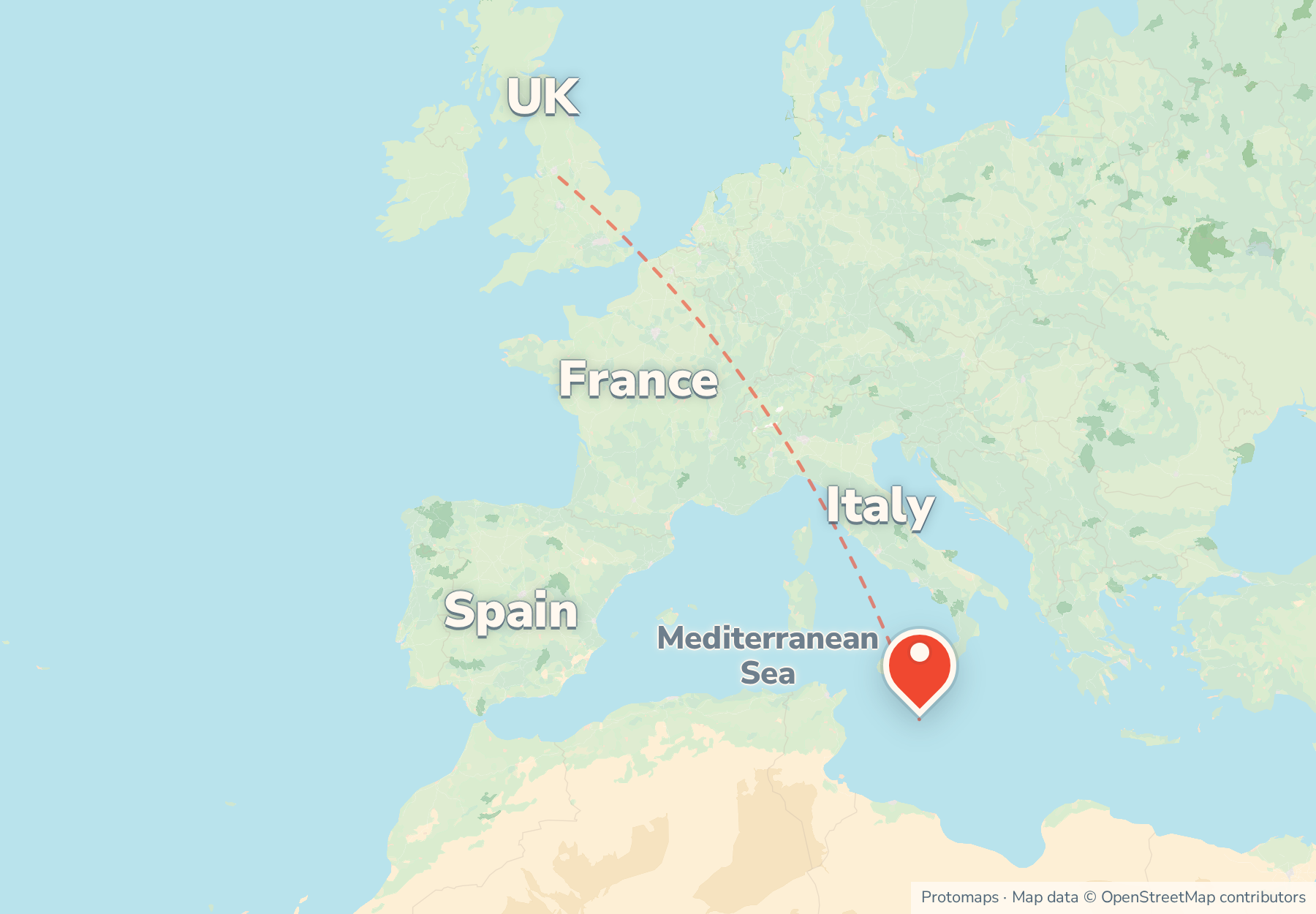
Malta is the Mediterranean island that feels least like being abroad, in all the ways that help with a baby. English is an official language used in hospitals and pharmacies, the cars drive on the left, the sockets take UK plugs without an adaptor and the chemist sells Calpol by name. Add a short flight, mild weather well into autumn and a sister island, Gozo, a ferry-hop away, and a lot of the usual friction of a trip abroad simply isn't there.
On this page
A family verdict at a glance
The quick read before the detail: who Malta suits, the season to aim for and what to nail down before you book.
Best for
The least-hassle trip abroad you can have with a baby, on a three-hour flight with short transfers at both ends.
Maybe not for
If you're picturing endless sand. Most of the coast is flat limestone, and the wrong base means driving to every beach day.
Best ages
Strong from babies up, with an unusual depth of indoor, air-conditioned options for the hottest hours.
Best areas
Mellieha for the sand, Bugibba and Qawra for value, Sliema for the ferry-and-city version, Gozo for the slow one.
Why families pick it
History a toddler can climb on, a 25-minute ferry to a quieter island and a sea still warm enough to swim in October.
Check before you book
Whether your dates land on the local village festa and its fireworks, and how long the transfer to a northern beach base runs.
The familiar island
Malta was British for a century and a half, and what's left is practical. English is an official language of the courts, schools and hospitals, and the traffic drives on the left. When a child spikes a fever at midnight, the doctor on the phone speaks English. Few other EU beach destinations have that.
The other thing to know is the coastline. These are limestone islands, and most of the shore is bare rock platform rather than beach; the sand concentrates in a handful of northern bays, led by Mellieha's long shallow sweep, plus Gozo's red sand on Ramla. Rock swimming's good once children can snorkel and jump, but for the bucket-and-spade years the north is where you'll want to be, and if a listing says there's a beach five minutes away, check what kind.
A quick gut checkIs Malta right for your family?
Worth comparing if
You want minimal hassle with a baby in tow, some history and castles alongside the swimming and a short transfer at both ends.
Weigh it up if
The week is judged purely on beach quality and space; bigger, emptier sand exists elsewhere at the same flight time.
To sort out before booking
The base (north sand, resort value or city ferry), the hire car decision and a Blue Lagoon time slot if Comino is on the list.
The numbers, the basics and the ages
Everything you'd want to skim first: the quick facts, the everyday practicalities and how Malta changes as children grow.
Quick facts for UK families
Money, plugs, language and the basics
- Malta is three inhabited islands: Malta itself, quieter Gozo across a 25-minute ferry and tiny Comino between them, the whole archipelago smaller than the Isle of Wight.
- The currency is the euro and cards are accepted almost everywhere; coins help for buses, pastizzi counters and parking.
- Sockets are the UK three-pin type at the same voltage. Leave the adaptors at home.
- Menus, signs, medicine dosing instructions and hospital paperwork are all in English.
- The clocks run one hour ahead of the UK, including the change dates.
- Tap water is safe but hard and noticeably chlorinated; locals drink bottled, and still bottled water is the one for making up formula.
- Your GHIC card covers Malta's state system and 112 is the emergency number; the main hospital is Mater Dei near Valletta, with its own hospital on Gozo.
- Accommodation adds a small nightly eco-contribution per adult, capped per stay; under-18s are exempt (rates rise from 1 July 2026, still small and still capped).
Malta by age and stage
Babies
One of the least-hassle trips abroad with a baby, with medical help easy to ask for and familiar chemist shelves. Midsummer humidity is the one real downside.
Toddlers
Mellieha’s knee-deep shallows stay shallow a long way out, the aquarium lets the under-threes in free and the harbour ferries are entertainment in themselves.
Preschoolers
Popeye Village, the Playmobil park with its under-fours zone, boat trips and a cannon fired at noon.
Young children
Knights, walled cities, catacombs and snorkelling off the rocks.
Where to base yourselves
The resort areas side by side, an orientation map of the islands and what the beaches are really like underfoot.
Where to stay with young children
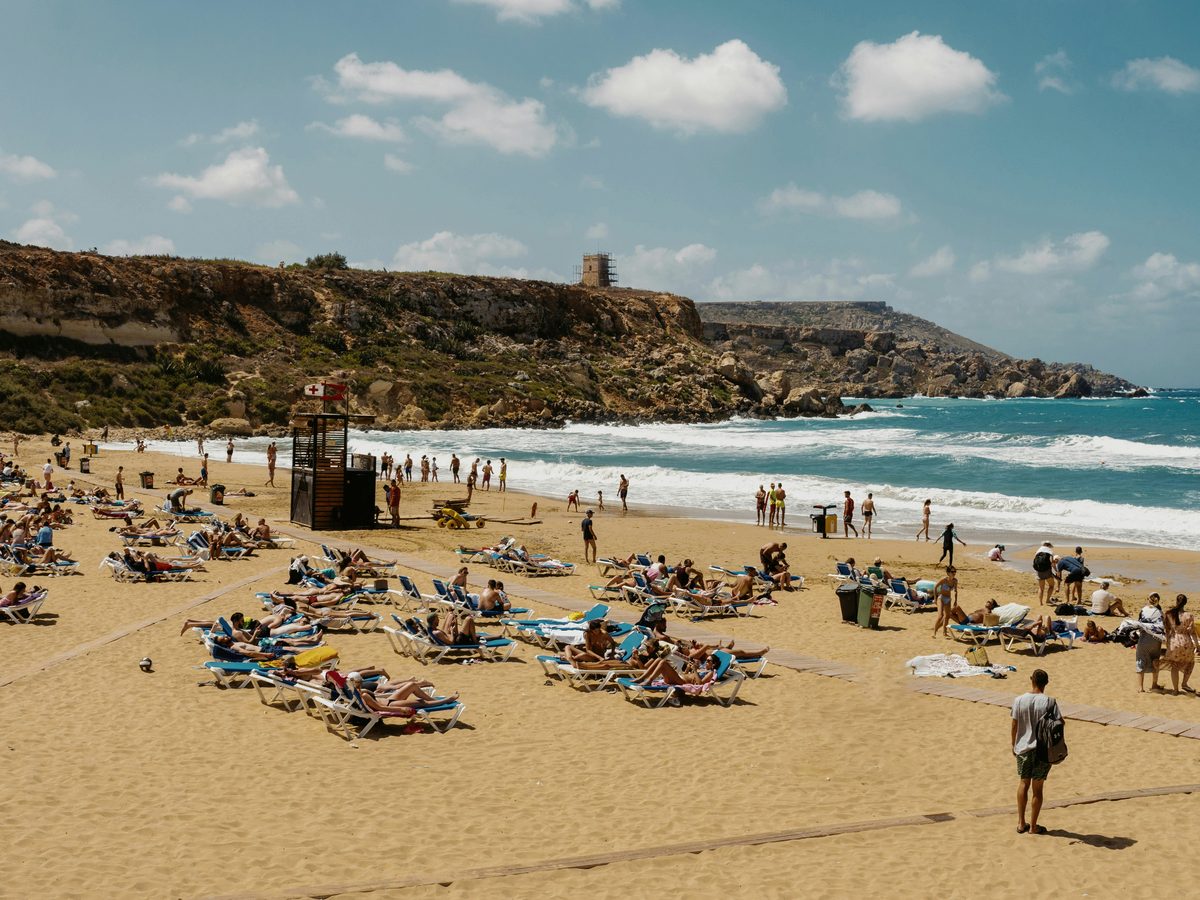
How much sand you want sorts most of the choice. Mellieha, in the north, suits a classic beach week: the bay below the town is Malta's largest sandy beach, the water stays shallow a long way out, and the area catches a sea breeze that cuts the humidity on peak-summer afternoons. Golden Bay, fifteen minutes round the coast, offers a smaller crescent of golden-orange sand below clay slopes with a hotel above it. The cost of the north is the transfer, the longest on the island at up to an hour, though on an island this size that's still short.
The middle path is the St Paul's Bay sprawl of Bugibba and Qawra: the island's value-resort strip on a rocky headland, with a compact man-made sandy beach on the promenade, a free natural rock pool that suits supervised paddlers and the national aquarium on the seafront. The swimming here is mostly off flat limestone into clear, deeper water, better for confident swimmers than crawlers. Sliema and St Julian's are the urban version: shops, restaurants and the quick ferry hop to Valletta, with one compact sandy bay at St George's and the Paceville nightlife district immediately behind it, lively after dark in a way the rest of the island isn't.
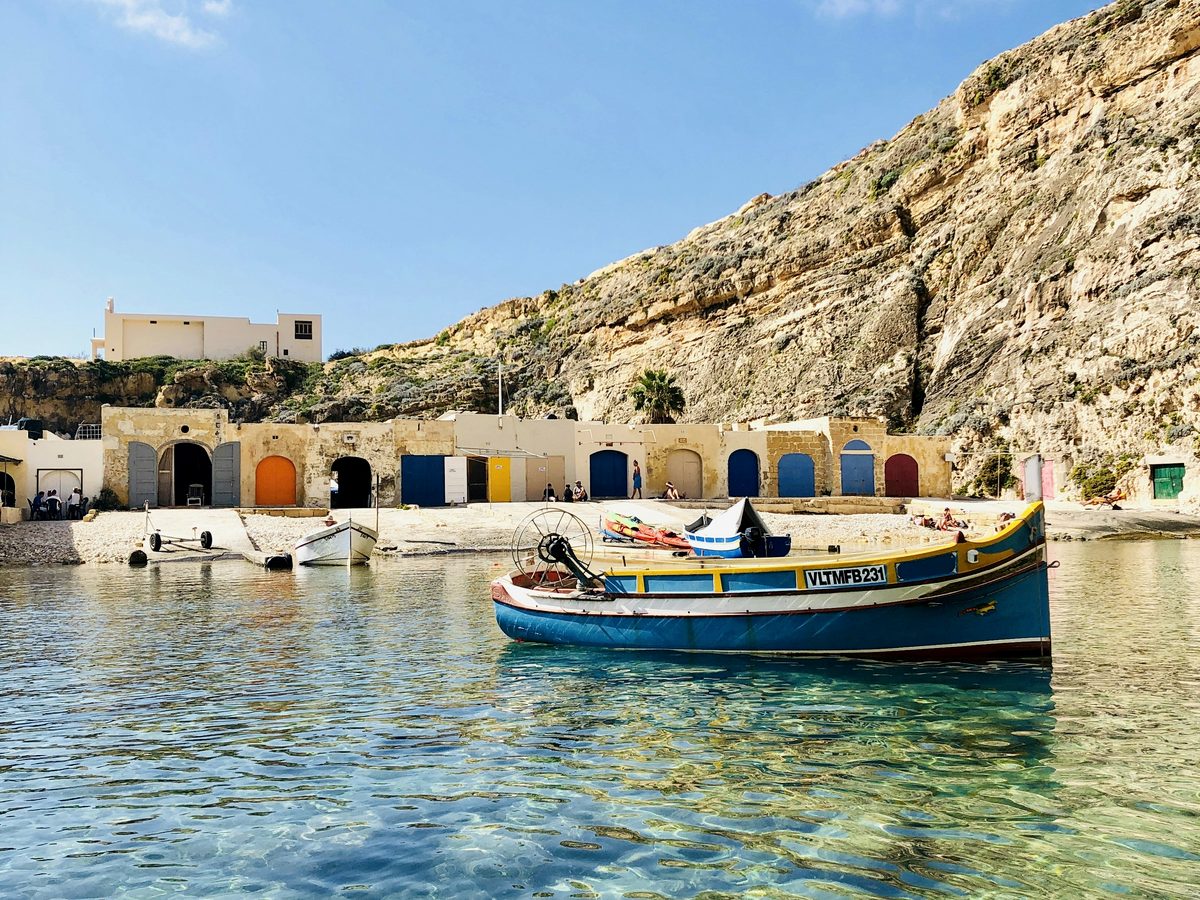
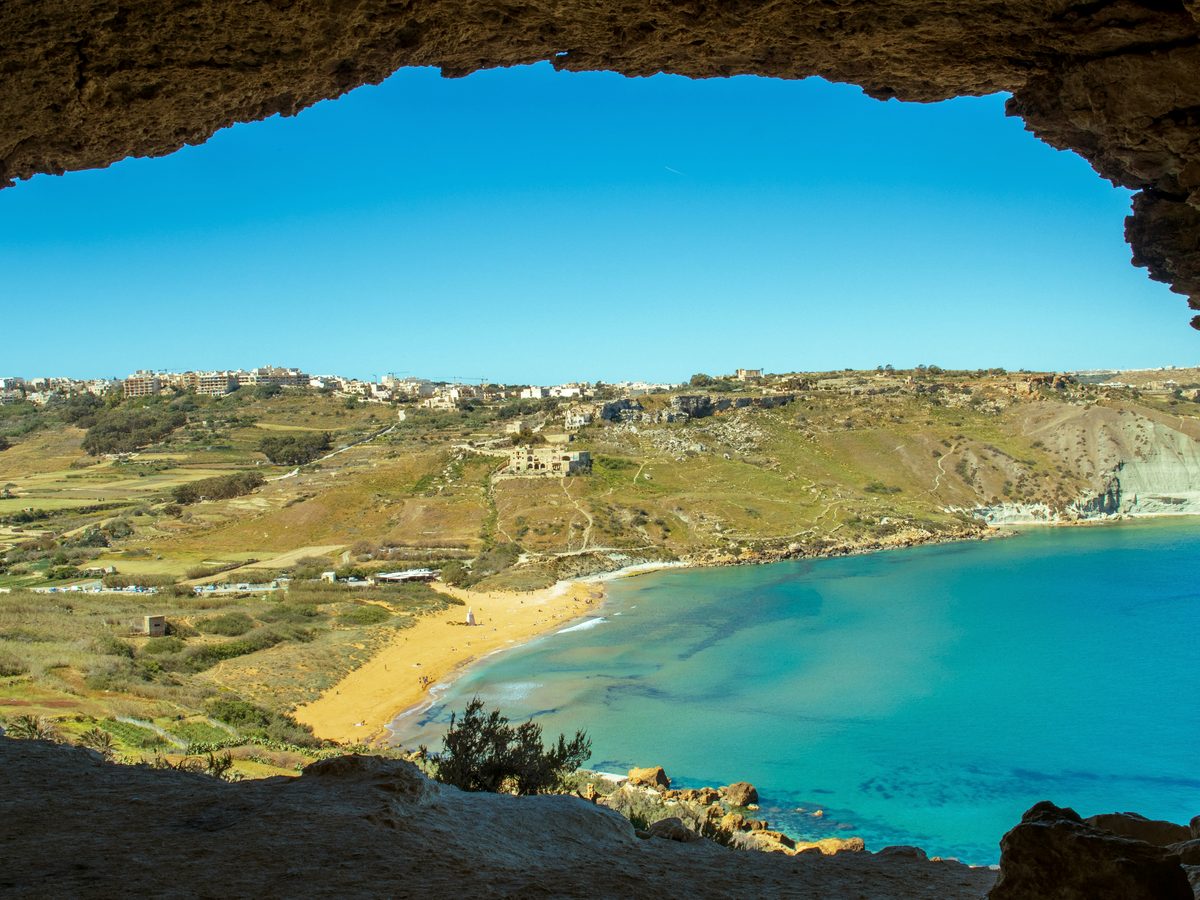
The left-field option is to base on Gozo itself. Gozo's quieter and slower: Marsalforn offers a calm sandy crescent with proper facilities, the red sand at Ramla is a short drive, Victoria's miniature citadel sits in the middle, and Malta becomes the day trip rather than the base. Choose it for a second visit, when you already know you want it slow.
| Area | Transfer | The swimming | The feel |
|---|---|---|---|
| Mellieha Bay | 45 to 55 min | Malta's biggest sandy beach, shallow for a long way out, lifeguards in season | The family base in the north, with the village on the hill above and a sea breeze that takes the edge off hot afternoons. |
| Golden Bay | About 45 min | A crescent of golden-orange sand under clay slopes, with full facilities | Smaller and wilder-feeling than Mellieha, with a hotel above the sand. |
| Bugibba and Qawra | 25 to 30 min | Rocky platforms plus a compact man-made sandy beach on the promenade | The value resort strip, with the aquarium on the seafront and a natural rock pool for little paddlers. |
| Sliema | 20 to 25 min | Rocky shoreline; the swimming is off flat limestone, not sand | The urban base: shops, restaurants and the frequent little ferry to Valletta, with beach days done as day trips. |
| St Julian's | 20 to 25 min | The one sandy city beach at St George's Bay, compact and central | Hotels and restaurants in numbers, with the Paceville nightlife district right behind the bay after dark. |
| Marsalforn (Gozo) | Ferry crossing | A small, calm sandy crescent with good facilities | The slower-island option: base on Gozo and treat Malta as the day trip instead. |
Map of the main family areas
An orientation map of the areas above, the airport and the big days out. The numbers match the key beneath.
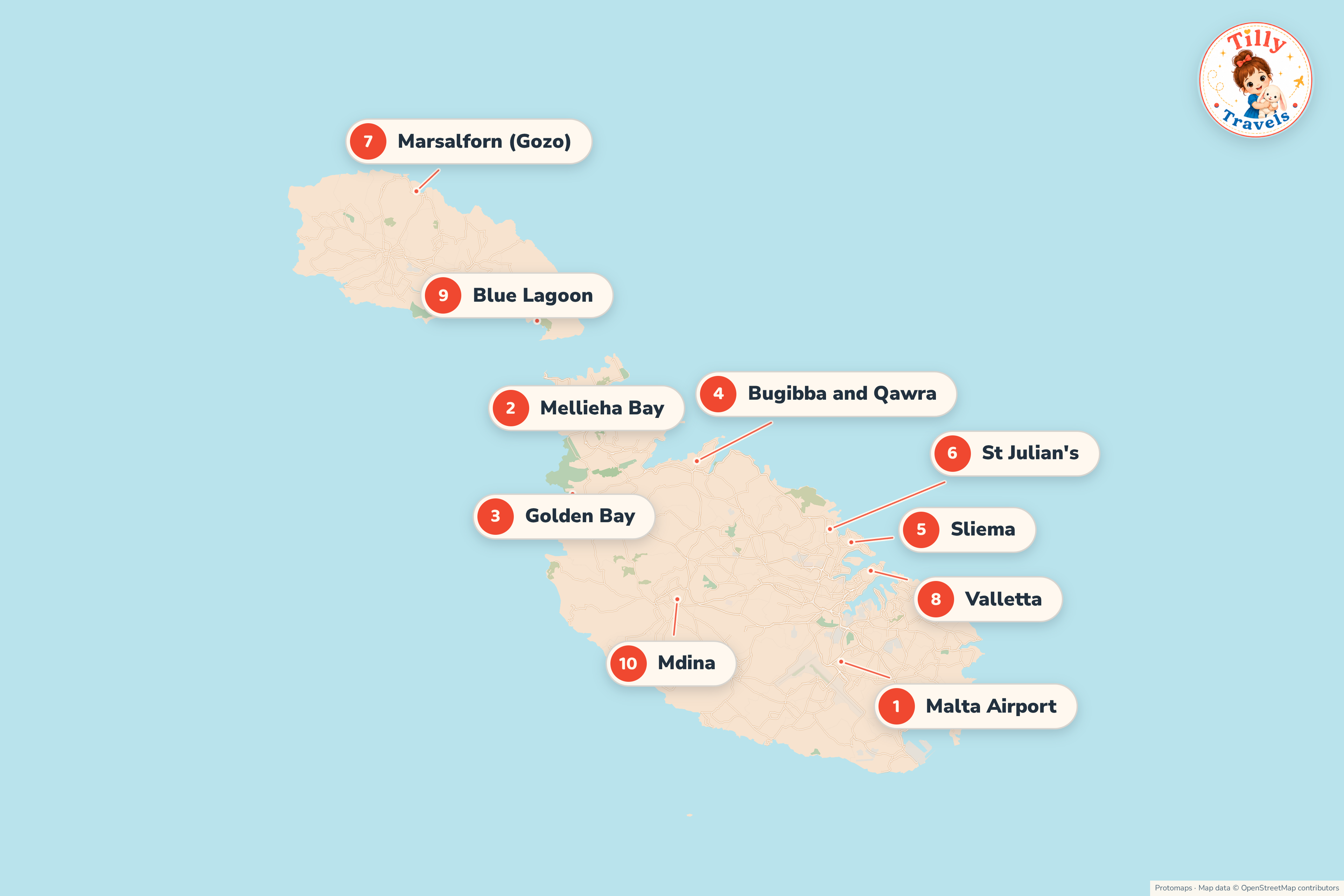
- 1Malta Airport Central, nowhere far
- 2Mellieha Bay The big sandy shallows
- 3Golden Bay The golden crescent
- 4Bugibba and Qawra Value and the aquarium
- 5Sliema The city-ferry base
- 6St Julian's Hotels and nightlife
- 7Marsalforn The Gozo base
- 8Valletta The capital day out
- 9Blue Lagoon The booked boat day
- 10Mdina The silent city
The beaches, sorted for small swimmers
The toddler shortlist is short and northern. Mellieha Bay is the best of them: around 800 metres of sand where the water stays close to knee depth for a long stretch, with lifeguards in season, full facilities and a summer bus down from the town. Golden Bay is the next best, with proper sand and gentler crowds. On Gozo, Ramla's red sand is the standout, with a shallow entry, but the bay faces north and picks up swell after windy days, so check conditions before promising a swim. Marsalforn stays calmer and better-equipped. The urban options, St George's Bay in St Julian's and the man-made perched beach at Bugibba, are compact but do the job if you're staying nearby.
Everything else is rock. The flat limestone platforms at Sliema, Qawra and around the coast offer ladder-and-step entries into clear, quickly deepening water: good snorkelling from about four or five up, not a place for free-range toddlers, and water shoes are essential here, not optional. Natural rock pools, like the free perimeter pool on the Bugibba front, give little ones somewhere calmer to paddle. The flag system is the familiar green, yellow and red, with separate jellyfish signs; the mauve stinger drifts in on some winds, mostly in late summer, painful rather than dangerous. The most photographed beaches after Mellieha, Għajn Tuffieħa on Malta and San Blas on Gozo, both sit below roughly 200 steps with no other way down.
Weather, days out and the daily shop
When to go month by month, the outings that suit small children, eating out and where to stock up.
Weather across the season
The figures below are long-term averages for the islands. The sea stays warm deep into autumn, which is why October half term works.
| Month | Daytime high | Overnight low | Rain | Wet days | Sea temp |
|---|---|---|---|---|---|
| January | 16° | 9.5° | 77 mm | 10 | 16° |
| February | 15.5° | 9° | 74 mm | 8 | 15° |
| March | 17.5° | 10° | 41 mm | 6 | 15° |
| April | 20° | 12.5° | 22 mm | 4 | 16° |
| May | 24.5° | 15.5° | 7 mm | 1 | 19° |
| June | 29° | 19.5° | 5 mm | 1 | 23° |
| July | 32° | 22° | 0 mm | 0 | 26° |
| August | 32° | 23° | 14 mm | 1 | 27° |
| September | 28.5° | 21° | 55 mm | 4 | 27° |
| October | 25° | 18° | 79 mm | 6 | 24° |
| November | 21° | 14.5° | 86 mm | 9 | 22° |
| December | 17.5° | 11° | 80 mm | 9 | 18° |
Typical monthly averages from weather-station records. Sea temperature is the open-water figure, so a sheltered bay can feel a degree or two warmer.
July and August are intense: low-thirties days, humid nights and sun strong enough to drive you off the beach by late morning, with the northwest coast's breeze the easiest corner. June and September are the family months. October cools to the mid-twenties with a sea around 24 degrees, warmer than the Balearics by then, at the price of more shower days. A couple of times a year the sirocco blows in from the Sahara, hot, dusty and orange-skied for a day or three; treat a sirocco day as an indoor day with a baby. Winter is mild and pleasant city-break weather, but for a January beach week the Canaries remain the right answer, not Malta.
Filling the daysThings to do with little ones
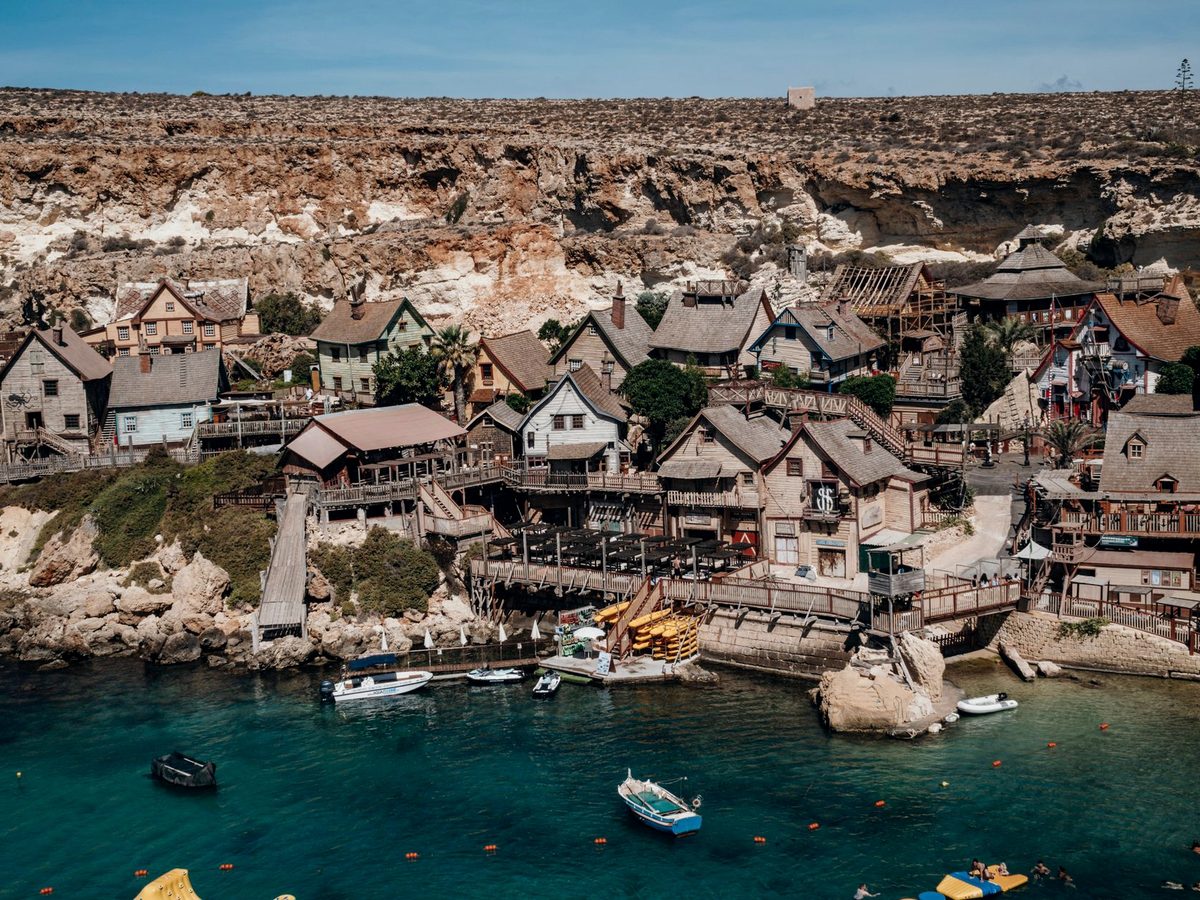
The paid attractions cover the toddler years unusually well. The national aquarium at Qawra is the reliable one: more than two dozen tanks, a tunnel through the tank, a touch pool and free entry for the under-threes, in cool dark rooms that are good for the hottest part of a day. Popeye Village at Anchor Bay, the 1980 film set kept alive as a small theme park, suits twos to eights with its character shows, splash pools and a short boat ride round the bay; it's compact enough not to overwhelm. The quiet bargain is the Playmobil FunPark in the industrial south, attached to the actual factory: an air-conditioned indoor play hall with a dedicated under-fours zone, an outdoor pirate area and cheap entry. Esplora, the interactive science centre above the Grand Harbour, adds water play outdoors and button-pressing indoors, free under three.
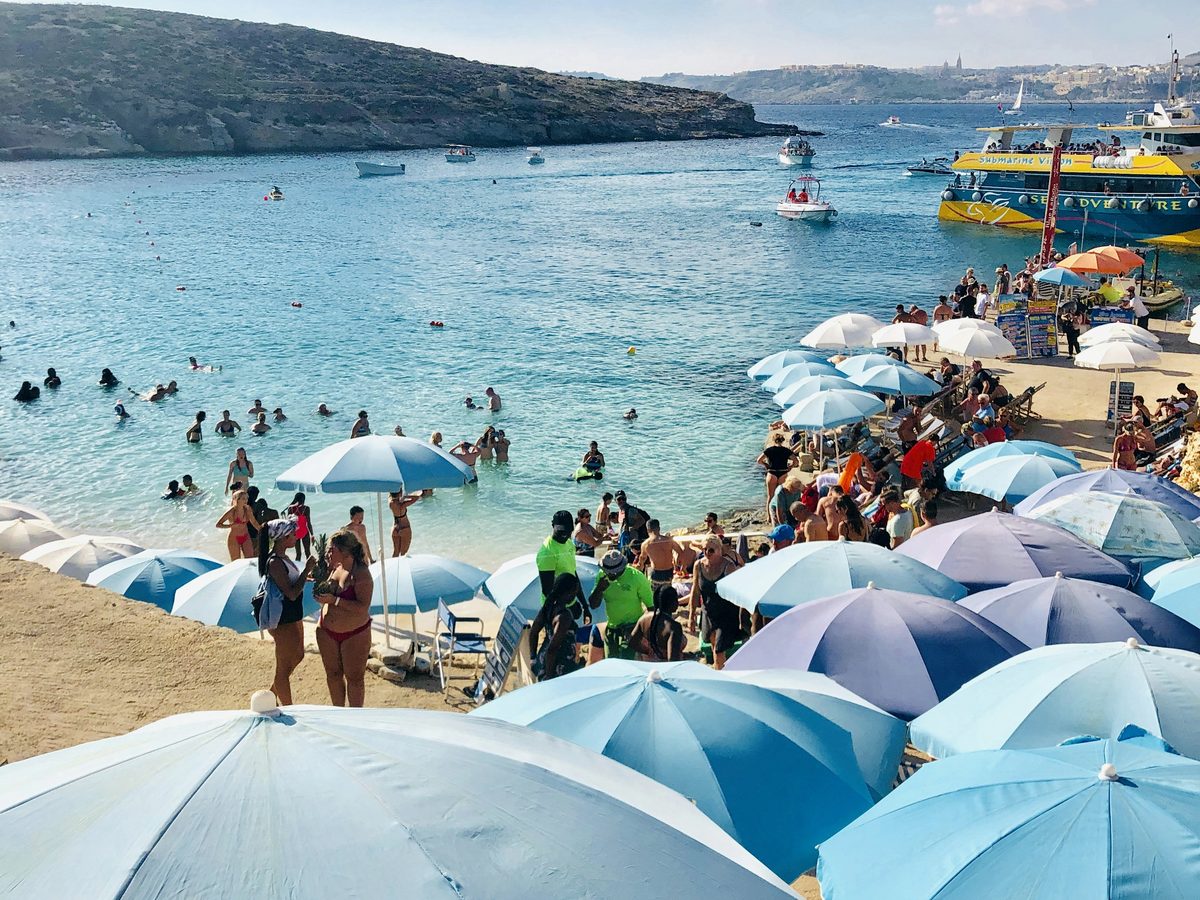
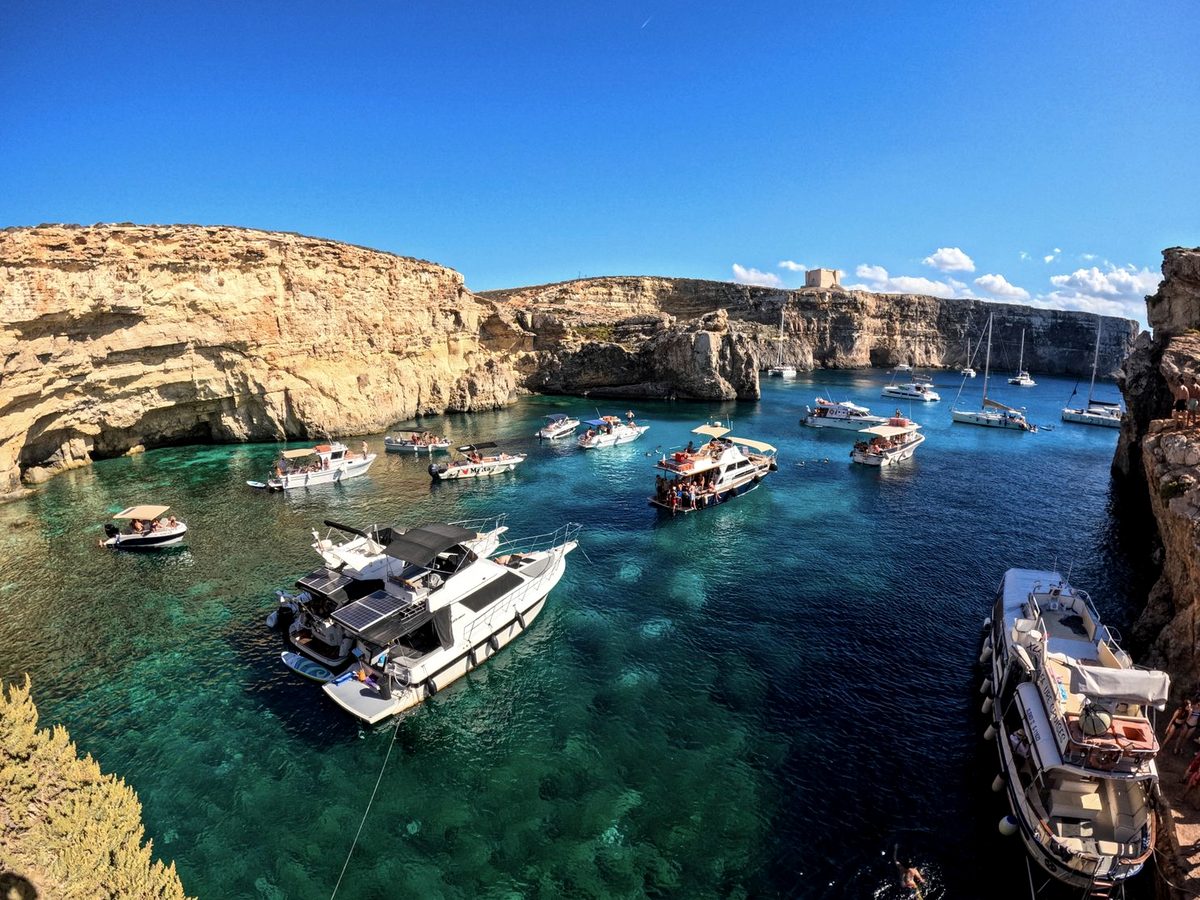
The free days are the water ones. The Sliema-Valletta ferry crosses every fifteen minutes or so, a few minutes each way, and the traditional dghajsa water taxis run across the Grand Harbour to the Three Cities, which kids tend to love. The Gozo ferry from Cirkewwa runs round the clock, takes the car and costs a few euros return as a foot passenger; on the other side there's the red sand at Ramla, the walkable citadel above Victoria and fishing-village lunches. Comino's Blue Lagoon now runs on a free time-slot pass with visitor numbers capped, under-fives exempt from the pass entirely, so the place long known for overcrowding can now be planned around.
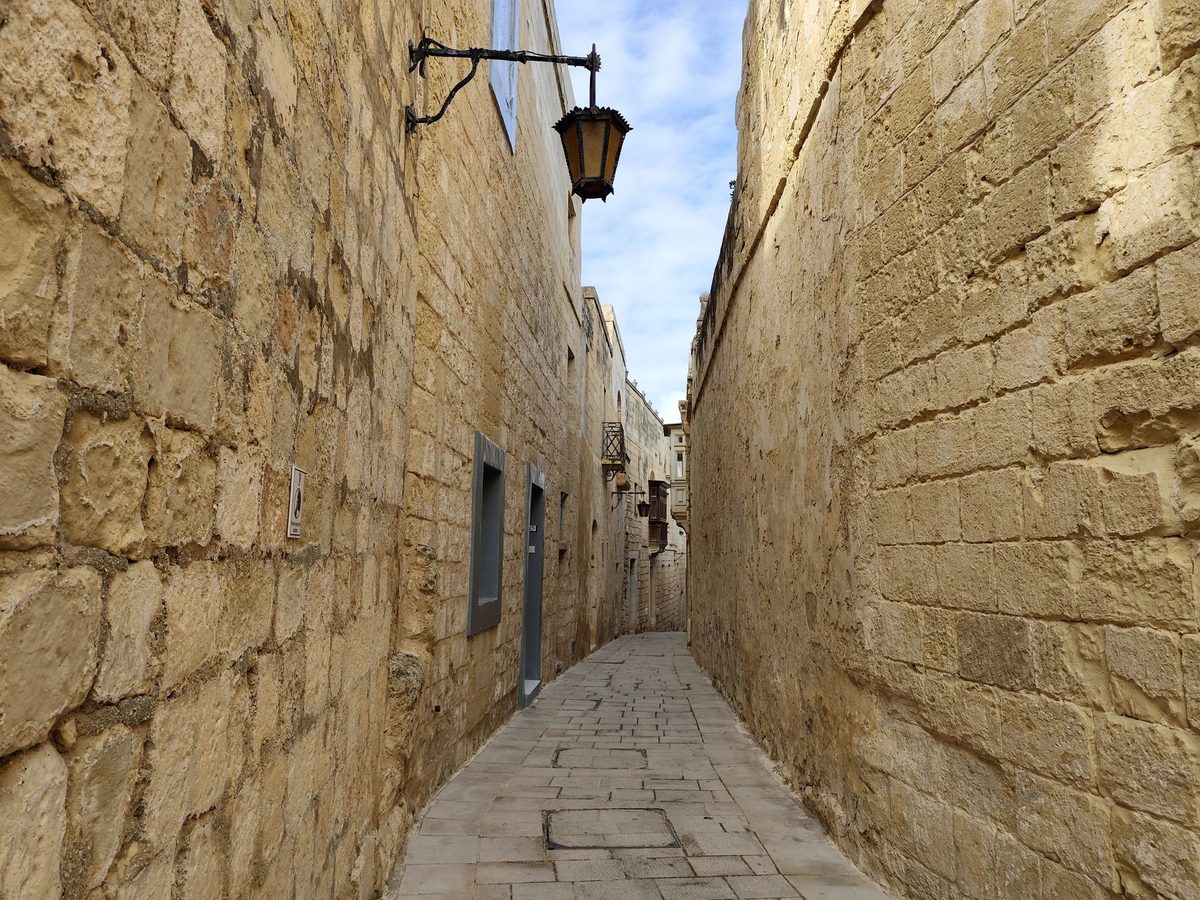
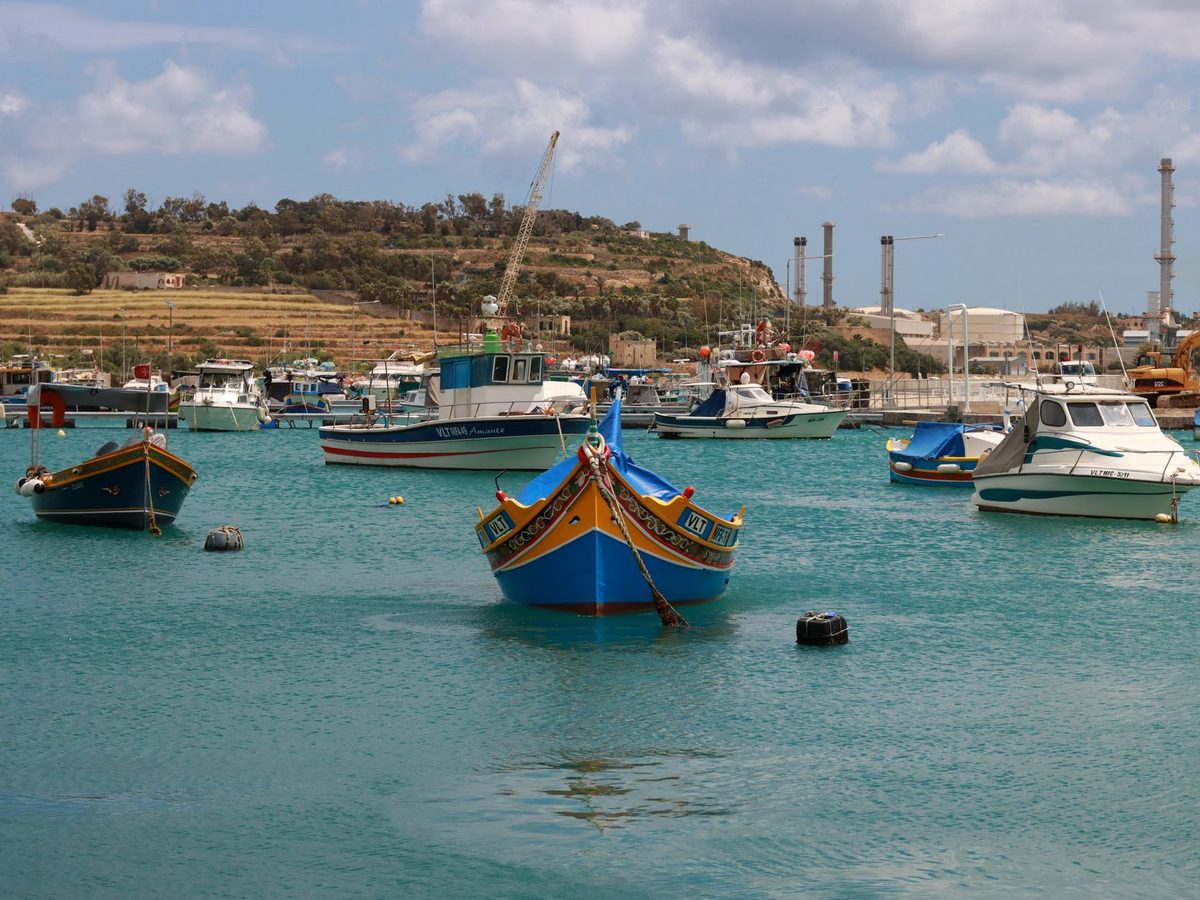
The history suits small children. Valletta is best entered from the sea and climbed by the glass Barrakka lift, with the shaded gardens and the noon cannon at the top; a carrier beats the buggy everywhere except the main spine. Mdina, the silent walled city in the island's centre, is traffic-free, mostly level inside the gate and made for a slow wander with a sleeping pram; skip its dungeon attraction with this age group. Marsaxlokk's Sunday fish market and painted luzzu boats make a strong half-day, and the village festas, fireworks, brass bands and lit churches, are covered in the questions below. The horse-drawn karrozzin carriages look tempting, but welfare concerns have been raised formally, so plenty of families now skip them, especially in the heat.
Eating out with children
Feeding small children here is easy: menus need no decoding, high chairs are widely available and the kitchens open early by Mediterranean standards. Dinner runs earlier than Spain or Italy, with 6.30pm perfectly normal in the resorts, and the one-hour time difference means mealtimes fall earlier in your body clock. The local standby is the pastizz, a flaky ricotta-filled pastry sold for small change at counters everywhere, reliably accepted by toddlers in mid-meltdown.
Beyond that the food's mostly fish and seafood, with Marsaxlokk's harbour restaurants the fish destination, plus rabbit stew as the national dish for the adults and familiar international standards throughout the family zones.
Milk, nappies and pharmaciesSupplies and the first-day shop
The shopping is reassuringly familiar. Marks and Spencer food halls trade in Sliema, Valletta and Mellieha, the local chains Greens and Welbee's stock proper baby aisles, Lidl covers the budget end with its own nappies, and Pampers sells as Pampers. Aptamil is in the larger supermarkets, ready-made bottles included; Cow & Gate ready-made cartons are the harder find, so bring those if you rely on them. HiPP Organic only turns up in the premium stores, safest brought from home. The pharmacy sells Calpol by name, alongside Panadol, and out-of-hours rotas hang in the window. UK prescriptions aren't recognised, so anything prescription-only needs a local GP visit.
Get into one habit with the water. Malta's tap supply is largely desalinated, safe by every standard but hard and strongly chlorinated, so buy still bottled water in multipacks for drinking and formula, and use the tap for baths, washing-up and cooking.
Getting around, a real week and the admin
Transfers and hire cars, what a week actually looks like, the health and document checks and a list to pack against.
Getting there and around
The airport sits in the middle of the island, which makes every transfer short: about twenty minutes to Sliema or Valletta, half an hour to Bugibba and only the far-northern beach bases stretching towards the hour. Ryanair, easyJet, Jet2 and BA cover a wide spread of UK airports in around three hours. On the ground the buses reach everywhere eventually under the Tallinja brand, cheap with a two-hour transfer window, but they radiate from Valletta, fill up in summer and carry no child seats, so they suit day trips more than daily beach runs. Bolt and the local eCabs app handle taxi work; for the airport leg with a baby, a pre-booked transfer with a child seat beats both.
A hire car's more worth it here than on most islands, because the sand, Popeye Village, the Gozo ferry and Mdina all sit away from the urban bus heartland, with your UK licence valid as it is. Children under 12 or under 150 centimetres legally need a child seat, pre-booked or brought along, and rear-facing babies in the front need the airbag off. Taking a hire car across on the Gozo ferry is normal practice, though some firms want it declared in the rental terms, and the car queue at Cirkewwa on summer Saturdays runs long, so cross early or midweek; foot passengers walk straight on.
What a real week looks likeA realistic week with little ones
A short hop from the airport, the first swim and pastizzi from the corner shop for whoever stays awake.
The sandy bay in the morning, an air-conditioned lunch and nap, then back to the water or the pool until early dinner.
The 25-minute ferry with the car, red sand at the big bay, lunch in a village and the citadel ramparts if naps allow.
The Sliema ferry to Valletta, up the cliff in the glass lift, gardens, gelato and home before the heat peaks.
A final swim, a last pastizz and a transfer measured in minutes rather than hours.
Health, documents and the boring bits
Check the GOV.UK Malta advice before booking and travelling. Passports need to be issued within the last ten years and valid three months beyond departure, children's included. Carry a GHIC each plus travel insurance: the GHIC works in Malta's state system, Mater Dei near Valletta is the main hospital with full paediatric A&E, and Gozo has its own general hospital. The emergency number is 112.
The hazard list is mostly the sun: very high summer UV with reflection off pale rock and sea, so shade through the middle of the day, SPF 50 and UV suits matter. Respect the beach flags, keep rock-platform swimming for confident swimmers, watch for jellyfish signs in late summer and bring ear defenders for festa fireworks. The rest is ordinary supervision.
Before you payBooking checklist
- Check what kind of beach is actually near the accommodation; on this coastline "beach" often means rock platforms.
- Basing for sand? Look north: Mellieha or Golden Bay, and accept the longer transfer.
- Book the Blue Lagoon visitor pass and an early slot if Comino is on the list; under-fives don't need one.
- Reserve the child seat with the hire car, or bring your own; under-12s need one by law.
- Pack ear defenders if travelling June to September; festa fireworks are loud and frequent.
- Bring ready-made formula cartons if you use them, and HiPP from home if that's your brand.
- Going for October half term? Pack for the odd shower alongside the swim kit.
- Plan the Gozo crossing for early or midweek; the Saturday car-ferry queue runs long in summer.
- Confirm the cot, the high chair and the cancellation terms with the accommodation.
- Recheck the GOV.UK Malta advice and every passport before you go.
Resort guides in Malta
We've researched these places to stay in Malta for families with young children. Each guide covers what it's like, who it suits and what to check before you book.
Questions, links and the last word
The things families ask most, the official pages worth a bookmark and when this guide was last refreshed.
Common parent questions
Do we really not need a plug adaptor?
Really. Malta uses the same three-pin sockets as the UK at the same voltage, so the monitor, the steriliser and the white-noise machine all plug straight in. It's one of three British leftovers that make the trip easier, along with driving on the left and English in schools, courts and hospitals.
Which area should we stay in?
It comes down to whether your week is mostly beach or mostly days out. For sandy mornings, base in the north at Mellieha or Golden Bay. For ferries and city days with the odd swim, stay on the urban coast at Sliema. On a tight budget with a beach on the doorstep, Bugibba or Qawra work well. Choose Gozo only if you've been before and want it slow.
Is the Blue Lagoon doable with a toddler?
Yes. The water is shallow and sandy-bottomed, which is rare here, so it's one of the easier swims for a small child. The island itself has almost no shade and few facilities, so take a parasol, water and snacks across on the boat rather than expecting to buy them. Go on an early slot while it's still quiet.
Is Malta good for October half term?
It's one of the strongest short-haul options for it. Late October typically brings mid-20s days and a sea still around 24 degrees, which the Balearics can't match that late. There's a real chance of showers, so it's worth having an indoor option in mind, such as the science centre, the aquarium or the indoor Playmobil park.
Do we need a hire car?
Not essential, but it makes a beach week far easier, and the buses carry no child seats. It mostly hangs on your base. Stay in Sliema for ferries and city days and you can manage without one; stay north for the sand and you'll want one. Book a child seat with it, since under-12s and anyone under 150 centimetres need one by law.
Can we buy Calpol and our usual formula?
Calpol yes, by name. Formula depends on your brand: Aptamil is easy to find, Cow & Gate ready-made and HiPP Organic are not, so pack those if you use them. Whatever you feed, make it up with still bottled water, not the tap, which is hard and heavily chlorinated here.
Is Valletta doable with a buggy?
Yes, if you stick to one route. Take the ferry from Sliema, the glass lift up to the gardens, then keep to Republic Street; the side streets turn to staircases quickly. A cannon's fired from the gardens at noon and mid-afternoon, which preschoolers love and which is loud enough to warn babies about. Two to three hours at toddler pace is about right.
What about the festa fireworks?
Between June and September almost every weekend brings a village festa somewhere, with bands, lit-up churches and serious fireworks, including ground-level bangers that go off through the day. The colour and the bands delight small children; the bangs need respect. Pack ear defenders for babies and toddlers and check the festa calendar for your village, because if your hotel is in a celebrating parish the noise runs late.
See more Malta photos
Open the photo gallery →Useful links
- GOV.UK Malta travel advice: passport rules, entry requirements and health updates before you travel.
- Visit Malta: the official tourism site, including the Blue Lagoon visitor pass system.
- Gozo Channel: the Cirkewwa to Gozo car ferry timetable and fares.
- Malta Public Transport: bus routes, fares and the Tallinja card.
Last updated 12 June 2026.