Corfu with little ones
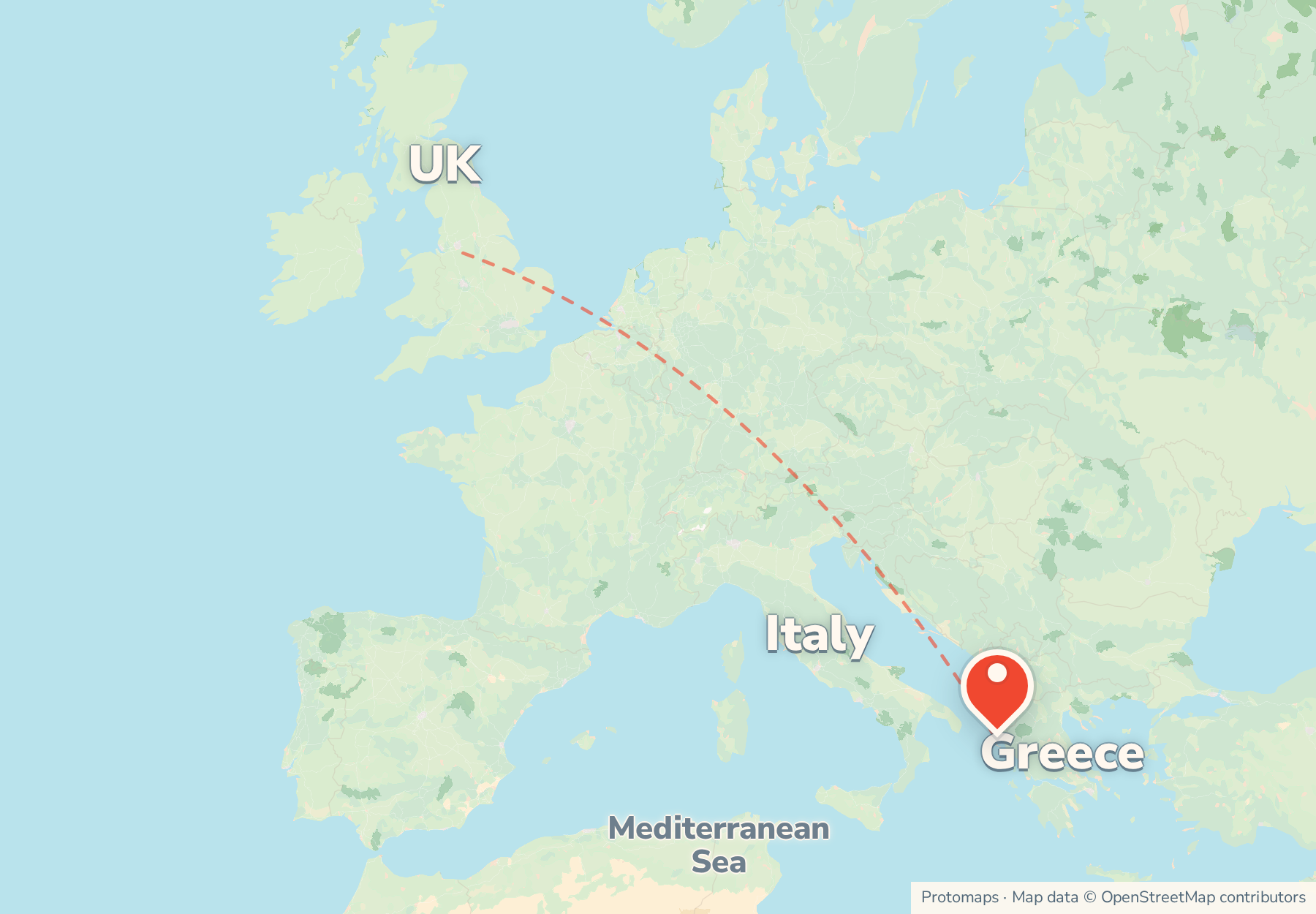
Corfu is the green Greek island: olive groves, cypress trees and a Venetian old town, with a holiday season that runs from May to October. The flight is about three and a quarter hours and Greece is two hours ahead of the UK. Pebble beaches are the island default, so the sandy bays, mostly strung along the resort coasts, are where most families base themselves.
On this page
A family verdict at a glance
The quick read before the detail: who Corfu suits, the season to aim for and what to nail down before you book.
Best for
A warm summer holiday with calm shallow water, child-welcoming tavernas and a Venetian old town for a slow morning out.
Maybe not for
Anyone wanting winter sun, a buggy-everywhere city break or golden sand on every beach. Pebbles are the default here.
Best ages
Toddlers and preschoolers in June or September. Babies do well then too, with more care in the July and August heat.
Best areas
The sandy north coast for facilities, Arillas and San Stefanos for quiet shallow water, Agios Georgios South for the beach itself.
Why families pick it
A short-ish flight, tavernas that welcome children, shallow calm water on the sandy beaches and evenings that suit a toddler's clock.
Check before you book
Whether the beach is sand or pebble, the transfer time from the island's one airport, the cot and the air conditioning.
A summer island, two hours ahead
Corfu is a summer island. The season runs from May to October, and outside those months the resort hotels, beach bars and most restaurants close, the direct UK flights thin out and the resorts go quiet. There's no winter-sun trip to be had here, which is the biggest difference from somewhere like the Canaries. July and August are hot, humid and busy, so most parents of little ones aim for the shoulder months.
With young children that shift mostly helps. A child who normally sleeps at seven is ready for bed at nine local time, which is when Greek families, children included, are out eating. Evenings at the taverna feel normal rather than a race against bedtime. Coming home you land back those two hours, so the first morning is early but the adjustment is short.
A quick gut checkIs Corfu right for your family?
Worth comparing if
You want a green, hilly island in the school summer term or the shoulder months, with shallow water for paddling, relaxed tavernas and a proper old town to wander.
Weigh it up if
You need winter warmth, you'd rather not think about which beaches are sandy, or you're tempted by a hotel in the pebble coves with a determined paddler in tow.
To sort out before booking
The transfer time from the airport, a child seat for it, whether the beach is sand or pebble, the cot, the air conditioning and a plug-in mosquito repellent for the room.
The numbers, the basics and the ages
Everything you'd want to skim first: the quick facts, the everyday practicalities and how Corfu changes as children grow.
Quick facts for UK families
Money, plugs, language and the basics
- Corfu is part of Greece, in the Ionian islands off the country's north-west coast, with a population of around 100,000.
- The currency is the euro. Cards are widely accepted, though small tavernas and beach bars often prefer cash.
- Sockets are the round two-pin European type, so UK plugs need an adapter. The voltage matches the UK.
- The language is Greek. English is spoken throughout the resorts and menus come translated.
- Use bottled water for drinking and for making up feeds. It's cheap in any supermarket and the tap supply varies around the island.
- Your GHIC card works in Greece for state healthcare, and 112 is the emergency number, the same as the rest of the EU.
- The heavy winter rain that keeps the island green is also why summer evenings come with mosquitoes.
Corfu by age and stage
Babies
June or September, a room you can cool, a cot confirmed and a sandy resort with the taverna close by. July and August take more managing.
Toddlers
Shallow sandy water at the sandy resorts, easy-going tavernas and evenings that fit their clock.
Preschoolers
Old enough for the donkey rescue, a short glass-bottom boat and the waterpark's small slides, and to remember the lot.
Young children
Aqualand's bigger slides, boat days, the fortress in Corfu Town and snorkelling over the pebbles all come into range.
Where to base yourselves
The resort coasts side by side, an orientation map of the lot and what the beaches are really like underfoot.
Where to stay with young children
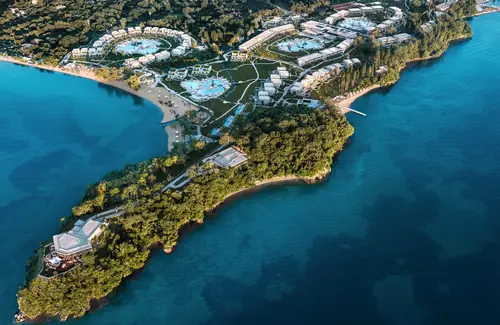
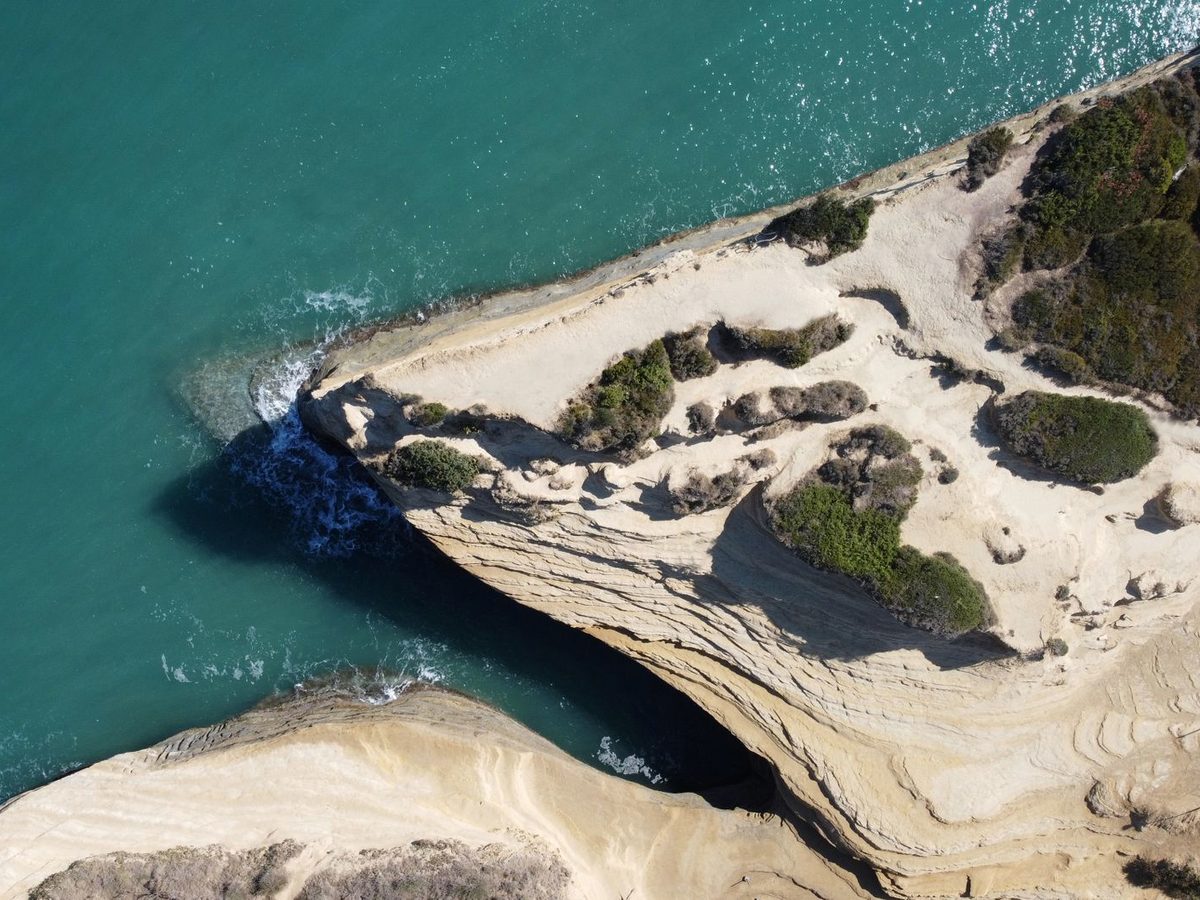
The sandy north coast has the most going for families with little ones. Sidari is the liveliest of its resorts, with sandy beaches, a flat centre and the carved sandstone coves of the Canal d'Amour on its doorstep, best treated as a supervised paddle rather than a swimming spot, since the soft cliffs are roped off in places. Roda and Acharavi, just along the coast, are calmer and flatter, with long shallow beaches of sand mixed with shingle and good supermarkets within walking distance.
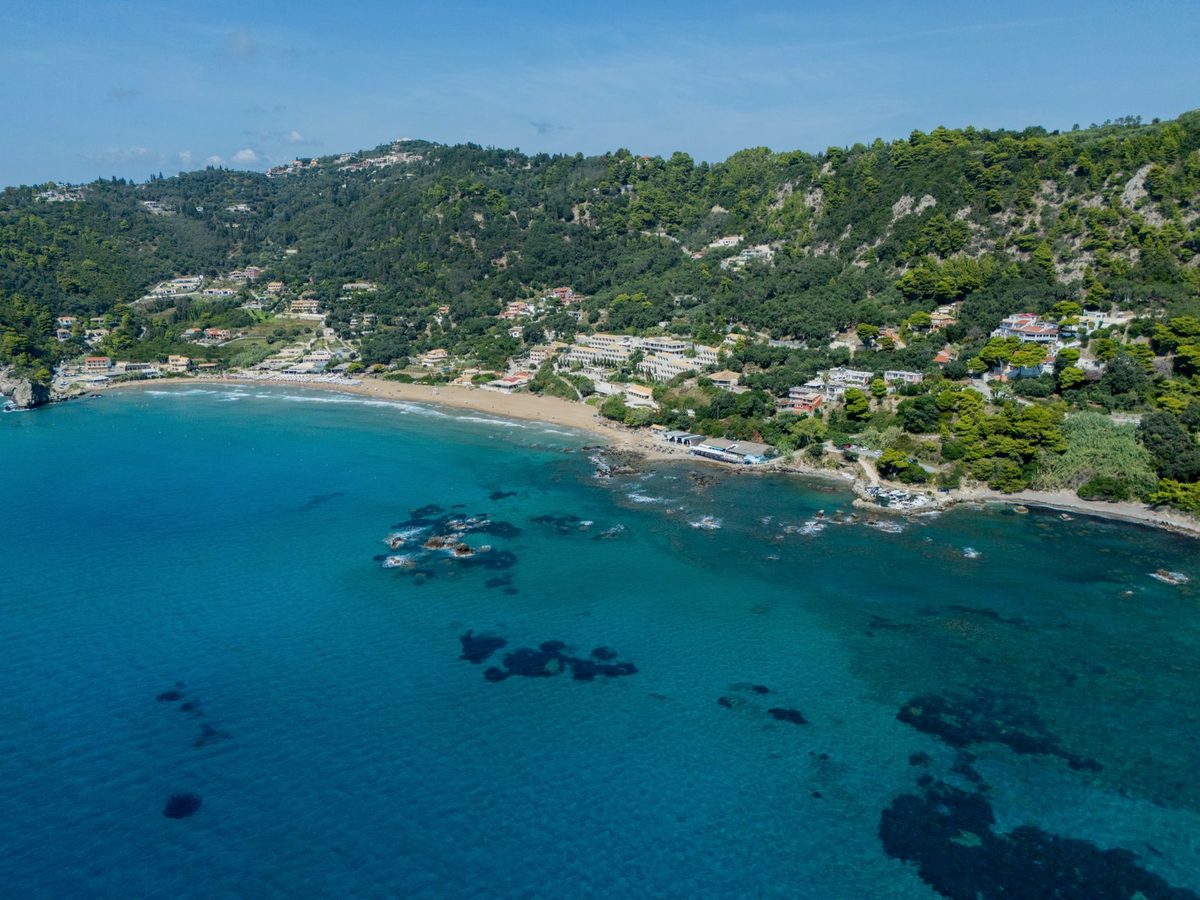
The north-west villages of Arillas and San Stefanos are smaller and quieter, with long sandy beaches and some of the shallowest, calmest water on the island. Evenings there are family-run tavernas rather than entertainment, which suits a quiet week better than a lively one. Down in the south-west, Agios Georgios South has a huge stretch of gentle sand with the Issos dunes next door, attached to a low-key resort.
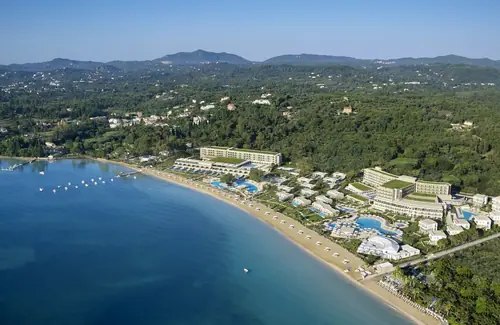
The east coast trades beach quality for convenience. Dassia and Gouvia are fifteen to twenty minutes from the airport with calm, coarse-sand-and-shingle beaches and everything within reach, and Moraitika and Messonghi to the south offer a similar deal with a quieter village feel on the Messonghi side. The north-east, from Barbati round to Kassiopi, is all green hills and clear coves, but the coves are pebble and shelve quickly, which makes daily paddling harder work with a toddler. One resort to rule out entirely is Kavos in the far south, which is the island's club strip and no place for a family holiday.
| Area | Transfer | The beach | The feel |
|---|---|---|---|
| Sidari | About 50 to 60 min | Sandy, with sandstone coves | The liveliest of the north resorts, flat through the centre with plenty of places to eat. |
| Roda and Acharavi | About 45 to 50 min | Sand mixed with shingle, long and shallow | Laid-back, family-focused and flat, with good supermarkets. You'll still want sea shoes for the shingle. |
| Agios Georgios South | About 45 to 60 min | Long sand, very gentle slope | A wide shallow beach that suits toddlers, with the Issos dunes next door. A quiet resort. |
| Arillas and San Stefanos | About 40 to 60 min | Sand, exceptionally shallow | Small, peaceful north-west villages with family-run tavernas and very little nightlife. |
| Dassia and Gouvia | About 15 to 20 min | Coarse sand and shingle, calm | The shortest transfers on the island. Convenient and well equipped, short on charm. |
| Moraitika and Messonghi | About 30 to 45 min | Sand and shingle, shallow | Messonghi has a quieter fishing-village feel; Moraitika is livelier along its main road. |
| Barbati and Kassiopi | About 30 to 70 min | Pebble coves, clear water | Wooded hills and clear coves in the north-east, harder work with a paddling toddler. |
Map of the main family areas
An orientation map of the areas above, the island’s one airport and the bigger days out. The numbers match the key beneath.
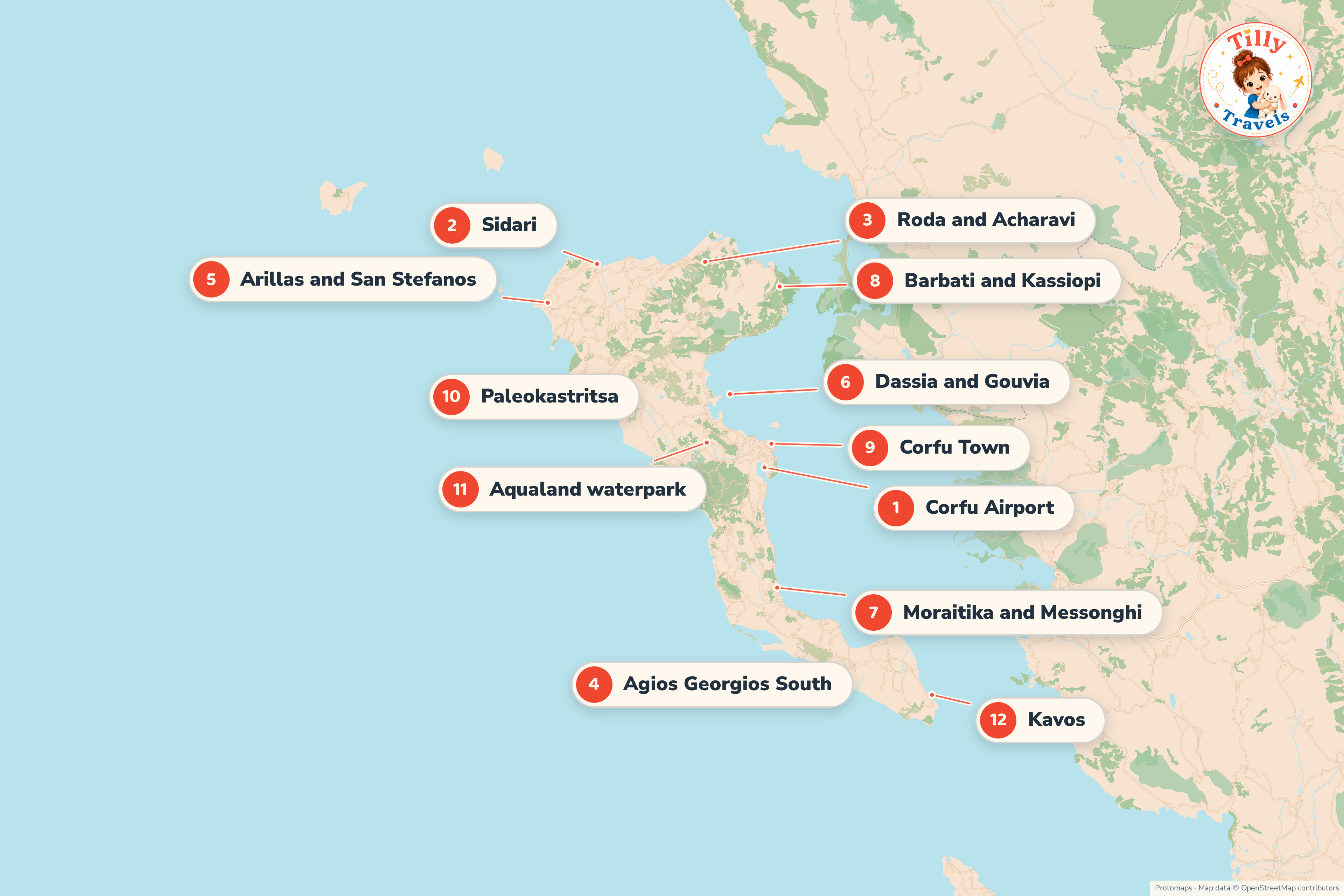
- 1Corfu Airport The island’s one airport, beside Corfu Town
- 2Sidari Sandy north-coast resort
- 3Roda and Acharavi The laid-back north strip
- 4Agios Georgios South The big south-west beach
- 5Arillas and San Stefanos Quiet north-west villages
- 6Dassia and Gouvia Shortest transfers
- 7Moraitika and Messonghi South-east pair
- 8Barbati and Kassiopi The pebble north-east
- 9Corfu Town The UNESCO old town
- 10Paleokastritsa West-coast day trip
- 11Aqualand The big waterpark
- 12Kavos The club strip to avoid
Beaches that work with little ones
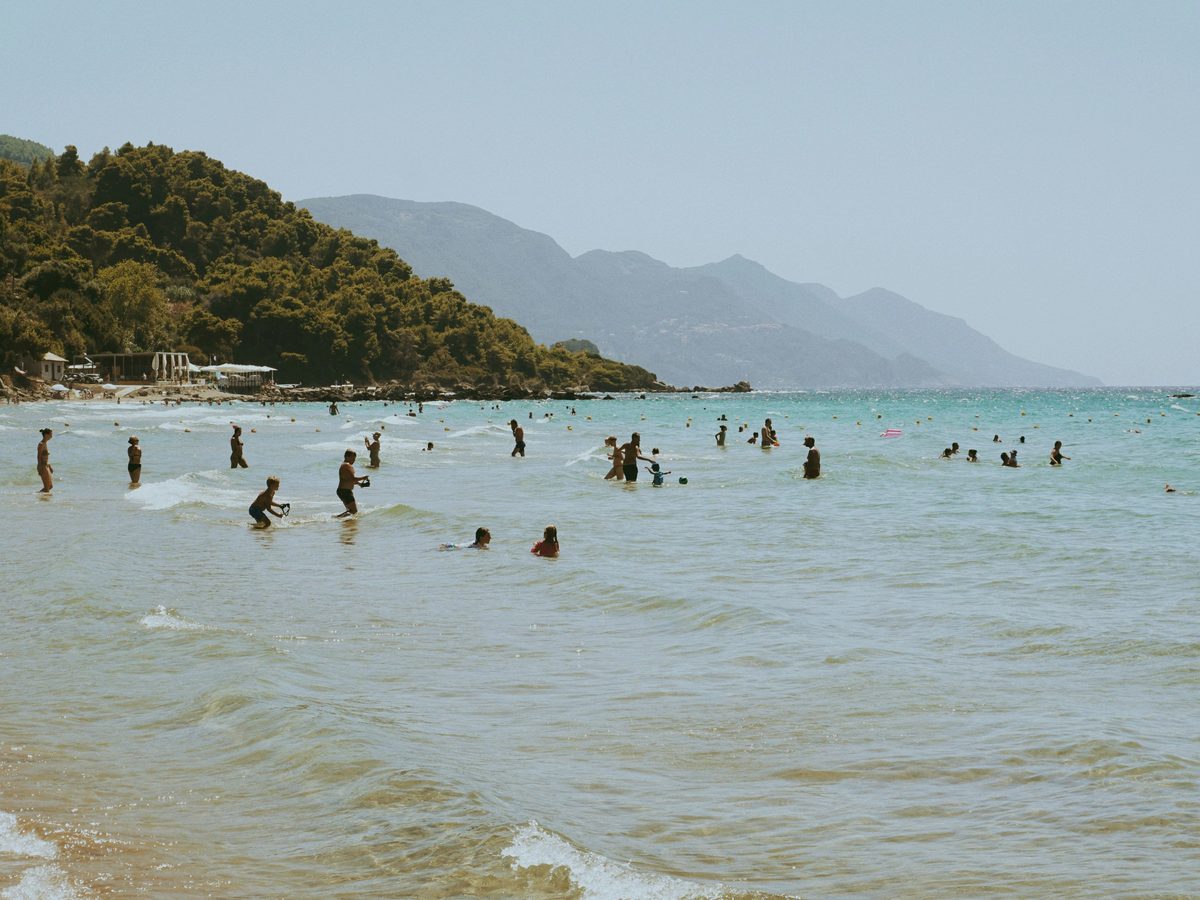
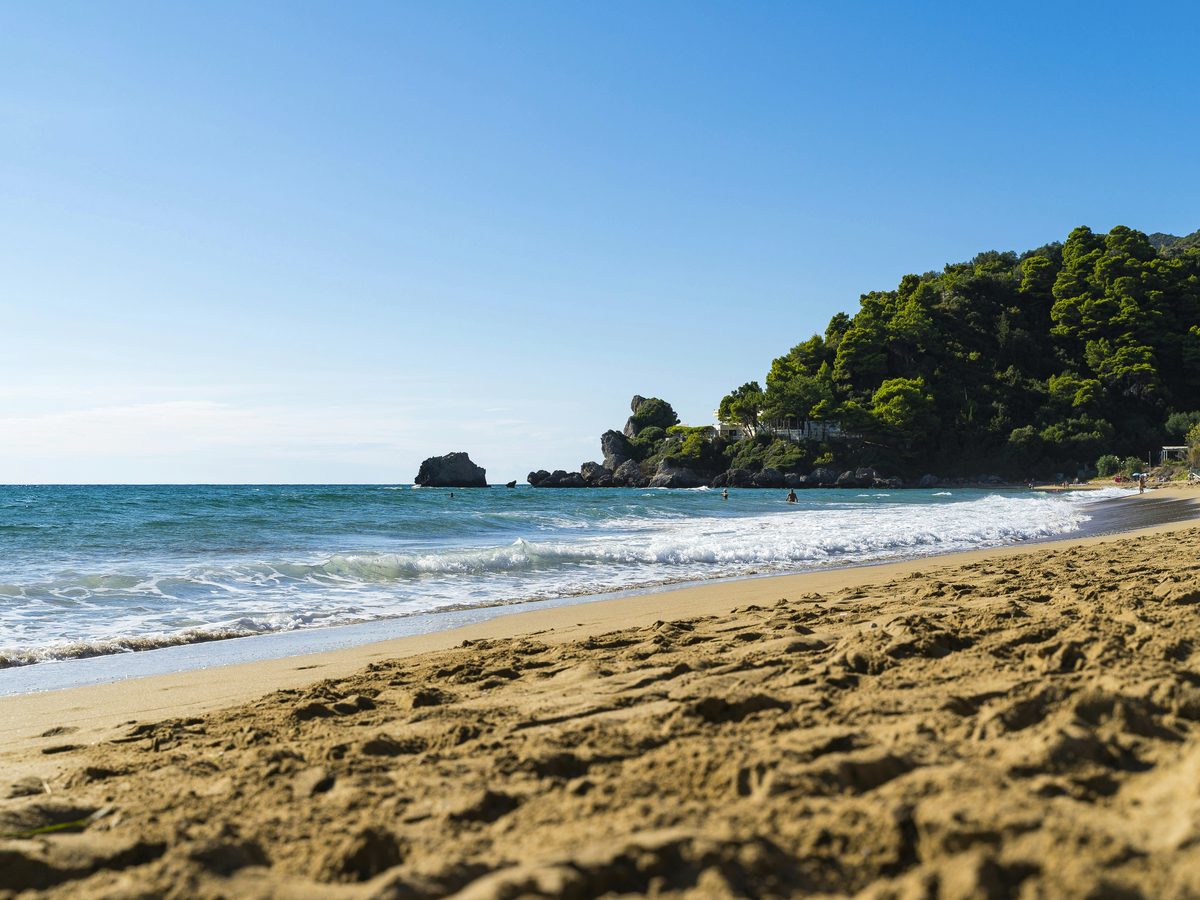
Corfu's beaches divide sharply, and knowing which kind you're booking matters more here than on most islands. The sandy ones, mainly Sidari, Roda and Acharavi in the north, Arillas and San Stefanos in the north-west, Glyfada on the west coast and Agios Georgios South, give you sand for digging and gently shelving water. The rest of the island runs to pebble and shingle, which keeps the water clear but is hard going with a barefoot two-year-old. Sea shoes for everyone cost a few pounds and solve most of it, including hot shingle and the odd sea urchin on rocky entries.
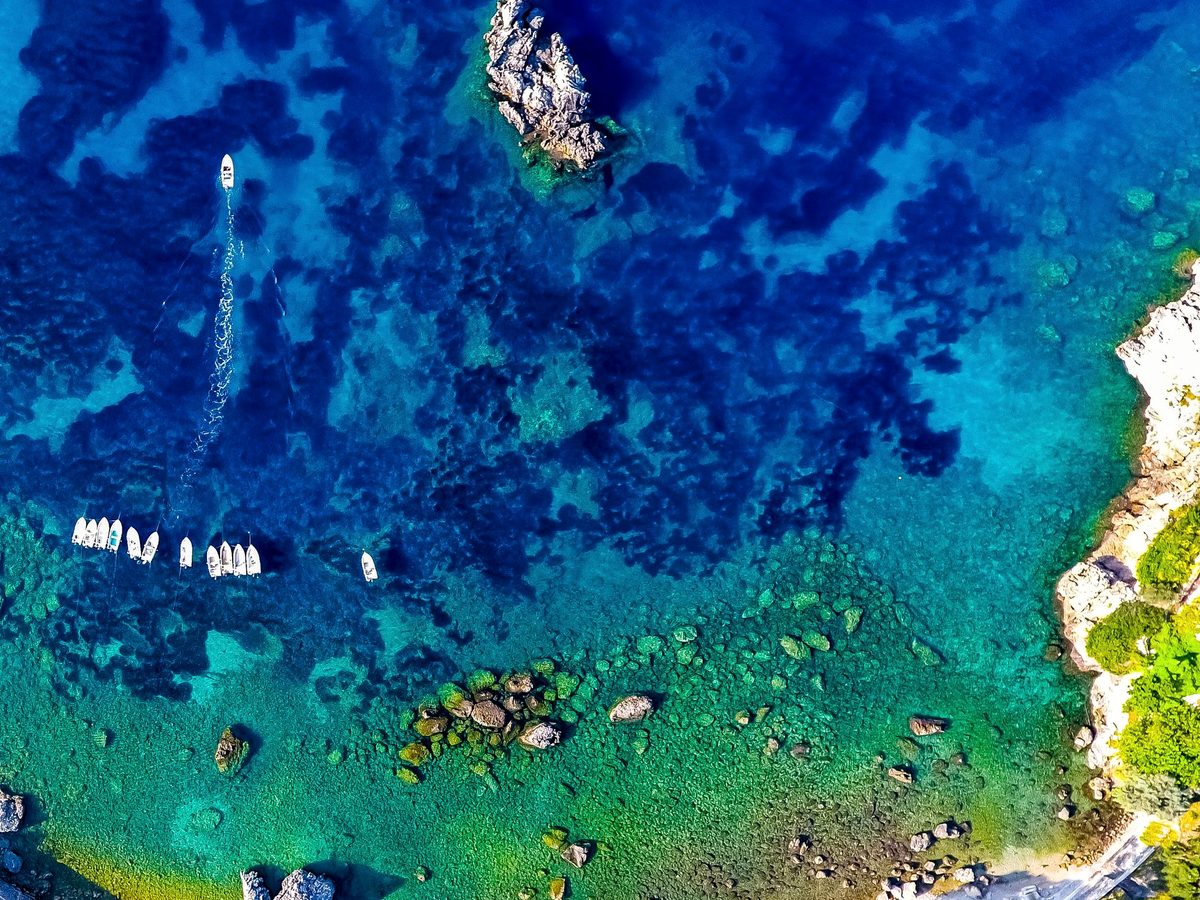
Lifeguards and flags are patchier than in Spain. The bigger organised beaches have lifeguard towers in season and a simple flag system, but plenty of smaller beaches have neither, so keep your own watch on anyone in the water. The bays at Paleokastritsa sit below steep green cliffs in deep water and are worth a day trip, but the water is noticeably colder than the rest of the island and gets deep quickly, so it suits an admiring paddle better than an afternoon's swimming with small children. Sunbeds at the family resorts are reasonable; the fashionable west-coast beach bars charge several times as much.
Weather, days out and the daily shop
When to go month by month, the outings that suit small children, eating out the Greek way and where to stock up.
Weather, month by month
The figures below are typical averages for the season rather than a forecast. Corfu is green because it gets serious winter rain, over a metre a year, which is also why the resorts shut for the winter. From November to April it's mild, wet and mostly closed. Summer is reliably hot, with high humidity in midsummer and more of it than you'd get on Atlantic islands like the Canaries.
| Month | Daytime high | Overnight low | Rain | Wet days | Sea temp |
|---|---|---|---|---|---|
| January | 14° | 6° | 134 mm | 10 | 16° |
| February | 14.5° | 6.5° | 115 mm | 9 | 15° |
| March | 16° | 7.5° | 94 mm | 8 | 15° |
| April | 19° | 10° | 57 mm | 6 | 16° |
| May | 24.5° | 14.5° | 31 mm | 4 | 20° |
| June | 29° | 18.5° | 19 mm | 2 | 23° |
| July | 32° | 20.5° | 9 mm | 1 | 26° |
| August | 32° | 21° | 27 mm | 1 | 27° |
| September | 27° | 18° | 91 mm | 5 | 25° |
| October | 23.5° | 14.5° | 136 mm | 7 | 23° |
| November | 18.5° | 11° | 179 mm | 10 | 21° |
| December | 15° | 8° | 178 mm | 11 | 18° |
Typical monthly averages from weather-station records. Sea temperature is the open-water figure, so a sheltered bay can feel a degree or two warmer.
With young children the choice usually comes down to June or September: both give you high-twenties days, a warm sea and resorts below peak capacity. May is cooler still and cheaper, with the trade-offs that the sea is brisk and some places are only just opening for the year. July and August work better once children can handle heat, crowds and later nights.
Filling the daysThings to do with little ones
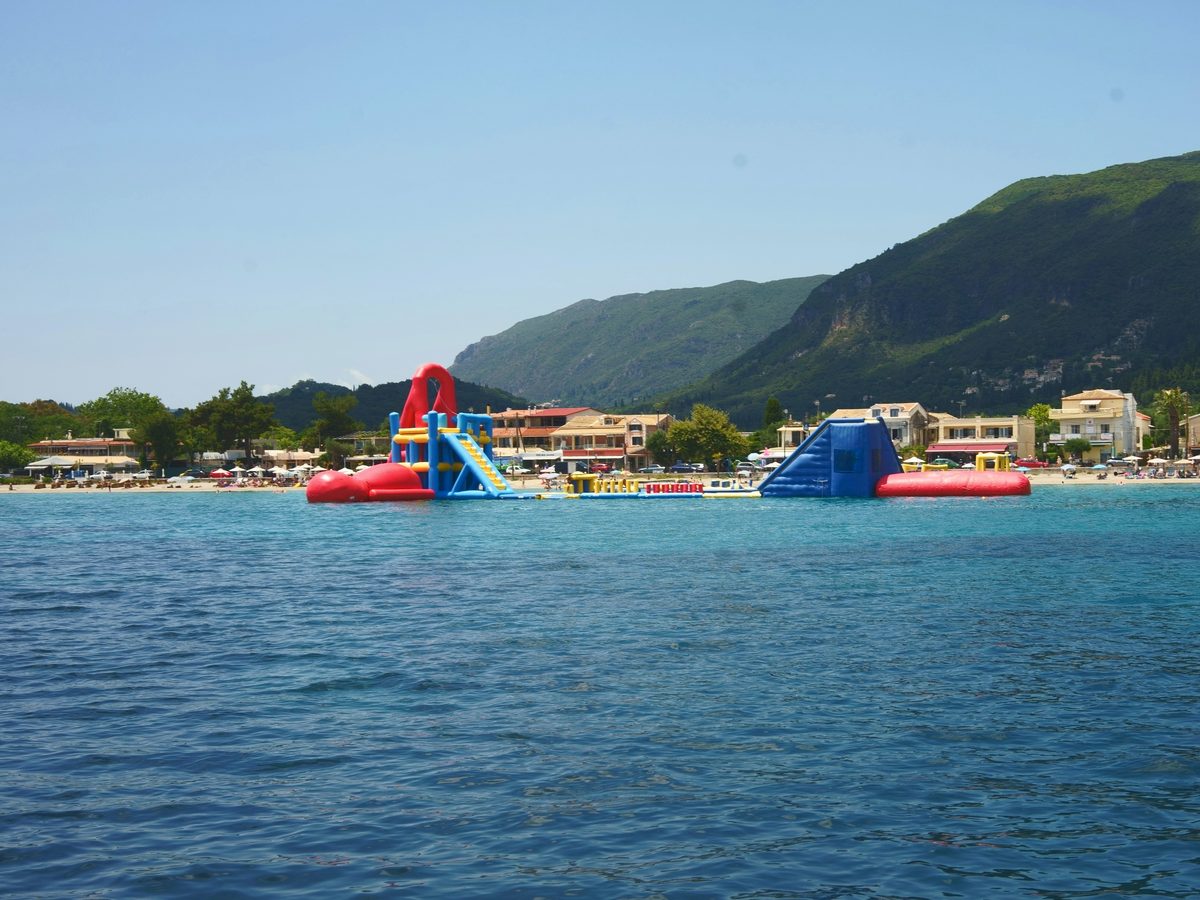
Most Corfu days with a toddler are the beach, a long lunch, a sleep and a taverna. When you want an outing, Aqualand, in the middle of the island, is one of Europe's biggest waterparks, with a baby pool and a dedicated play zone for two-to-eights alongside the big slides. Children under three and a half go free, and a cheaper half-day ticket from 2pm fits neatly after a nap. It's a big, hot site, so it suits children from about three upwards.
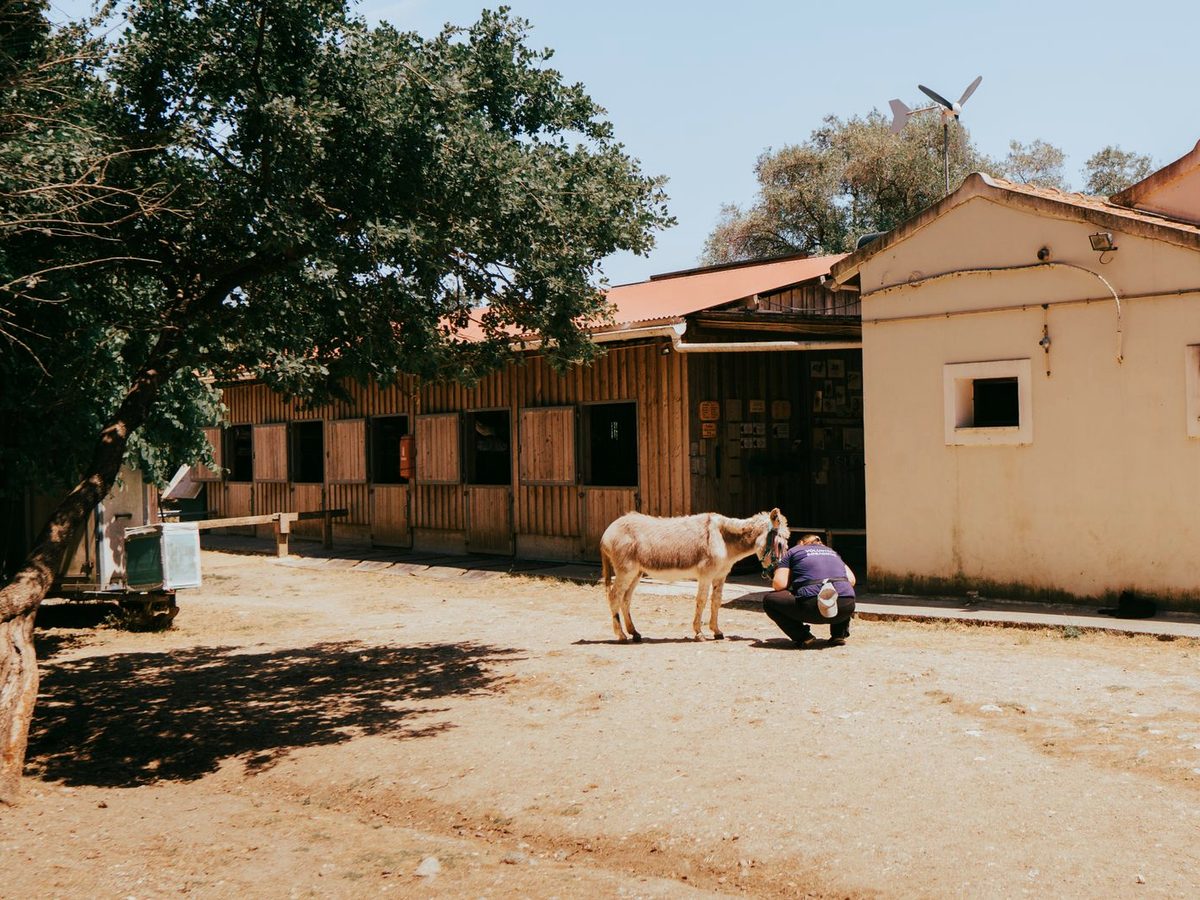
With a toddler, the short, low-cost outings beat the big day out. The donkey rescue near Paleokastritsa is free to visit, runs on donations and lets small children meet and groom the residents. The little aquarium at Paleokastritsa is toddler-scaled, with a guided tour of about forty minutes. From the same bay, glass-bottom boats and a semi-submarine get you out over the clear turquoise water in under an hour, short enough to hold a toddler's interest; the Paxos and Antipaxos cruises run eight to ten hours dock to dock and are best saved for a holiday without small children.
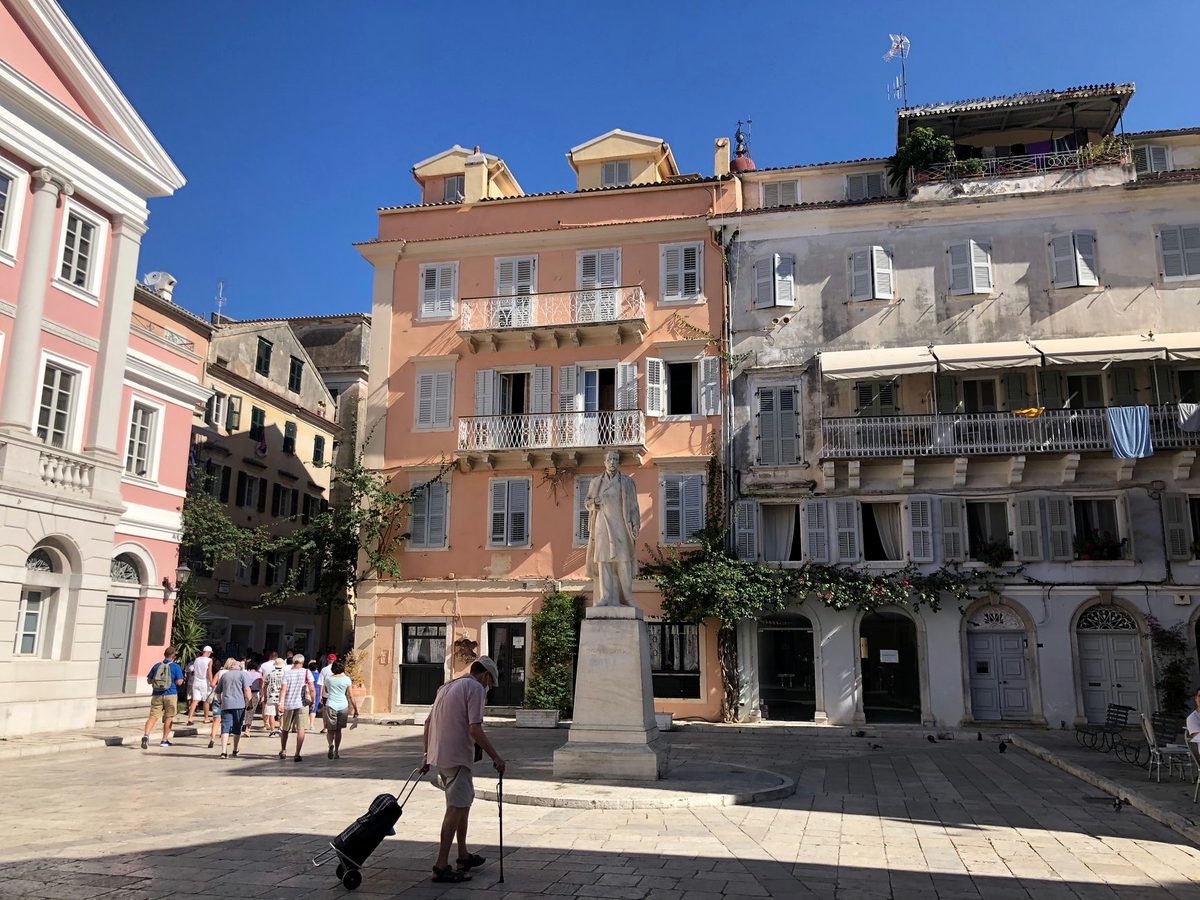
Corfu Town suits a slow morning. The Liston arcade and the Spianada esplanade are flat and pushchair-friendly, the wooden land train does a half-hour loop from near the Liston, and there's always a plane to watch landing low over the Kanoni causeway at the southern edge of town. The Old Fortress is the one to plan around: it's a stairs-and-ramparts site, so take a carrier rather than the buggy or admire it from a cafe table instead.
Eating out with children
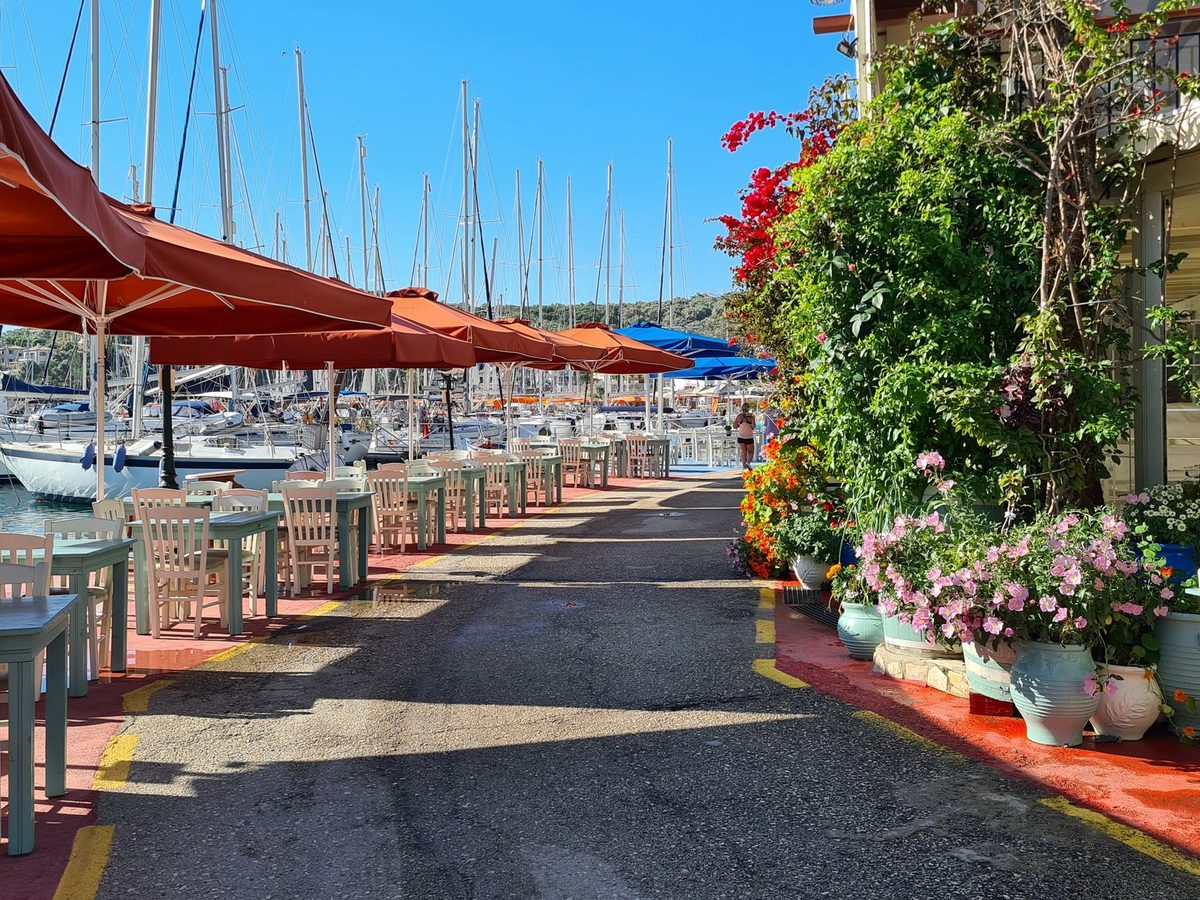
Greek tavernas are among the most child-welcoming places you'll eat anywhere. Children out late with their families are completely normal, staff tend to fuss over babies rather than tolerate them, and nobody minds a toddler doing laps between courses on a quiet terrace. Booking a table for half eight feels early rather than late here.
Highchairs exist but aren't guaranteed, especially at small village tavernas, so a folding clip-on seat is worth packing. Menus suit toddlers without trying: chicken souvlaki, plain pasta or rice, chips, tzatziki with bread, grilled fish, Greek yoghurt with honey and watermelon cover most evenings. In the resorts you'll also find the full international menu wherever you look.
Milk, nappies and mosquitoesSupplies, pharmacies and the mosquito kit
Every resort has minimarkets for the daily basics, and the bigger supermarkets, including Lidl near the airport and AB Vassilopoulos on the east coast, carry the full range at better prices. Nappies are easy: Pampers is everywhere, and the Greek brand Babylino is well made and often cheaper. For formula, Greece keeps much of the market in pharmacies rather than supermarkets. Aptamil is sold here under its Nutricia name, Almiron, alongside NAN and Frisolac, and it costs more than at home, so bring enough of your own brand for the trip and treat local stock as the backup. Baby food jars and pouches exist but the range is narrower than a UK supermarket, which is worth knowing if your baby has firm preferences.
Pharmacies, marked by the green cross, are the first stop for any small ailment and there's one in every resort. The children's paracetamol here is Depon syrup and children's Nurofen is stocked too, both dosed by weight. For the room, pick up a plug-in mosquito repellent in any supermarket on day one, since the mosquitoes are the one thing worth preparing for. A child-safe repellent for dusk, long sleeves near vegetation in the evening and air conditioning or closed windows before dark deal with most of it. Bites here are itchy rather than dangerous.
For bottles, use bottled water and whatever sterilising kit travels best for you; cold-water tablets and a tub, or microwave bags where your accommodation has a microwave, both work. A fridge for milk and medicines is worth requesting even in a hotel room.
Getting around, a real week and the admin
Transfers and hire cars, what a week actually looks like, the health and document checks and a list to pack against.
Getting there and around
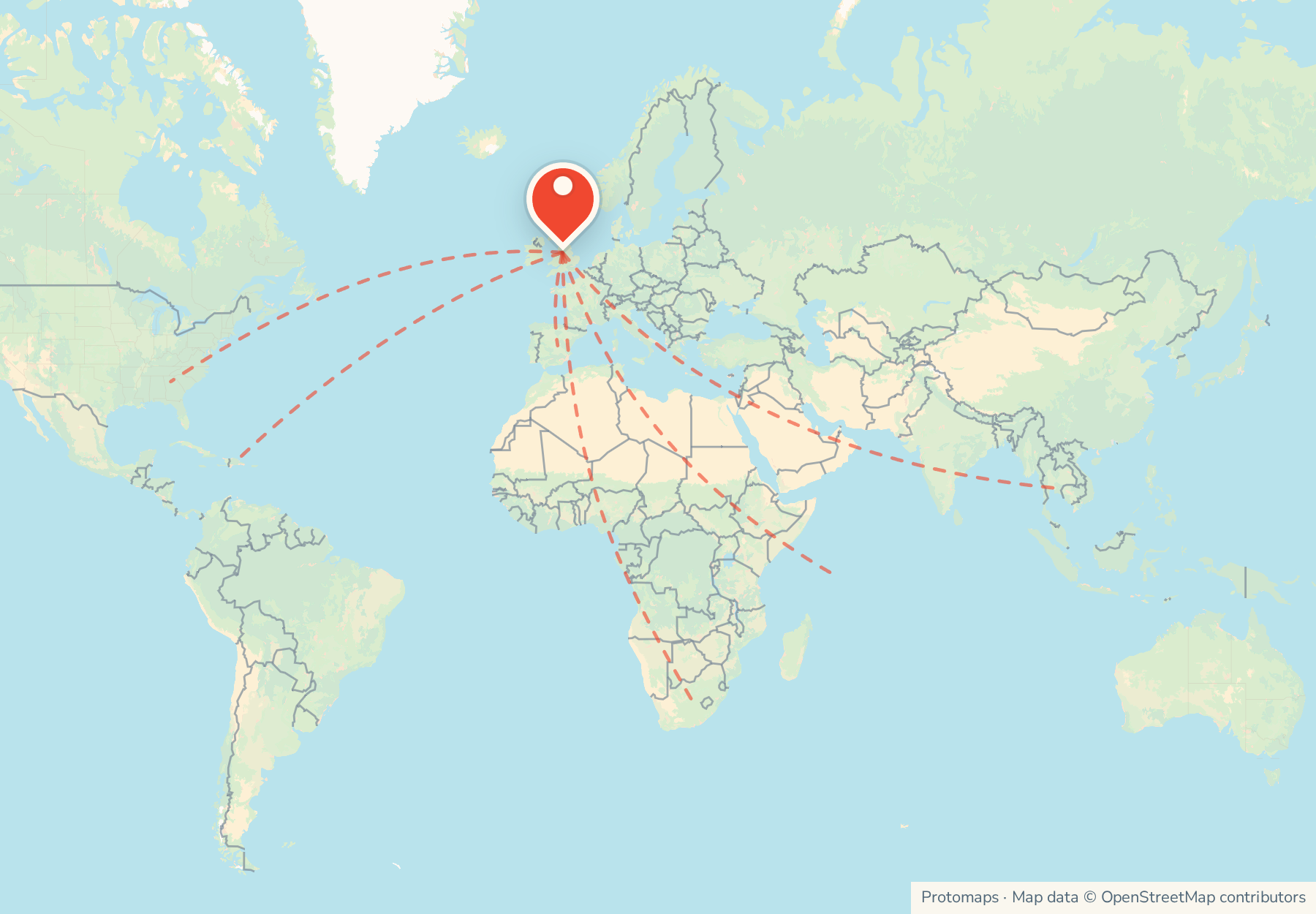
Corfu has one airport, right beside Corfu Town, so your transfer length depends entirely on where you stay. The east coast resorts are fifteen to twenty-five minutes away, while Sidari, the north-west villages and the far south run to an hour or more on winding roads, which is worth weighing with a child who hates the car. Direct flights from across the UK take about three and a quarter hours in season.
Book the transfer with a child seat ahead of time and confirm the seat type for your child's age and weight. Greek law requires proper child restraints in cars, but taxis are legally exempt, which means a rank taxi can legally carry your child unrestrained. A pre-booked transfer with the right seat is the better option after a flight. The local buses, blue for the town area and green for the rest of the island, are cheap and fine for a town day out, though limited for getting between resorts.
A hire car isn't needed for a beach week in one resort. It's useful in the quieter north-west and south-west, where it gets you to beaches and hill villages the buses don't reach. The roads are narrow, winding and slow through the villages, so distances take longer than they look on the map.
What a real week looks likeA realistic week with little ones
Land, transfer, a swim and an early taverna dinner. With the clocks two hours ahead, a late local bedtime lands at the usual time back home.
Beach or pool in the morning, lunch and a nap through the hottest hours, then a shaded taverna once the heat drops.
A short glass-bottom boat trip, the donkey rescue or a morning in Corfu Town all fit around a nap. Save the all-day cruises for a trip without toddlers.
A slow morning and a final swim. Most flights home land you back an hour or two earlier than your body expects, which helps with the first night home.
With young children, the beach, the pool, naps, tavernas and one short outing will comfortably fill a Corfu week.
The practical adminHealth, documents and admin
Check the latest GOV.UK travel advice for Greece before you book and again before you travel, since entry and health guidance changes. The passport rules are the standard European pair: issued less than ten years before the day you arrive and valid for at least three months after you plan to leave, including the children's passports, which expire sooner. The EU's new biometric border checks are rolling out and an online travel authorisation is expected to follow, so allow extra time at the border and check the current position as you plan. Carry GHIC cards for the whole family, one each including the baby, for state healthcare on the same terms as locals, and proper travel insurance on top, because the GHIC covers neither private clinics nor getting home.
The emergency number is 112, as across the EU. Day to day, watch the sun, heat and water. The summer sun is strong, so use hats, high-factor cream and shade through the middle of the day. Fewer beaches have lifeguards or flags than in Spain, so supervise as if nobody else is watching, and sea urchins on rocky entries are one more argument for the sea shoes. Resort medical centres handle the small stuff and the island's main hospital is by Corfu Town.
Before you payBooking checklist
- Check whether the beach is sand, shingle or pebble before you book.
- Weigh the transfer time from the airport against your child's patience.
- Book the transfer with the right child seat rather than relying on a taxi.
- Confirm the cot and the air conditioning with the hotel.
- Pack sea shoes for everyone and a clip-on highchair seat.
- Put a plug-in mosquito repellent and child-safe spray on the first-day shopping list.
- Bring enough of your own formula and any medicines your child relies on.
- Aim for June or September if you can travel outside school holidays.
- Confirm the cancellation terms and your travel insurance.
- Recheck the GOV.UK Greece advice and every passport before you go.
Resort guides in Corfu
We've researched these places to stay in Corfu for families with young children. Each guide covers what it's like, who it suits and what to check before you book.
Questions, links and the last word
The things families ask most, the official pages worth a bookmark and when this guide was last refreshed.
Common parent questions
Are Corfu's beaches sandy?
Some are, and it's worth choosing deliberately, because pebbles and shingle are the island default. The sandy beaches are the north coast around Sidari, Roda and Acharavi, the north-west villages of Arillas and San Stefanos, Glyfada on the west coast and Agios Georgios South with the Issos dunes. The north-east coves around Barbati and Kassiopi are pebble, so pack sea shoes wherever you stay.
When is Corfu open?
The holiday season runs from roughly May to October. Outside those months most resort hotels, beach bars and seasonal restaurants close and direct UK flights largely stop, so Corfu has no winter-sun option. Corfu Town itself stays open all year.
Is the time difference a problem with little ones?
Greece is two hours ahead, and the shift tends to help rather than hinder, since it nudges bedtimes later into the cooler evening. There's no real adjustment to manage on the way out. Coming home you gain those two hours back, so the first morning is early but it settles within a day.
Is Kavos suitable for families?
No. Kavos is the island's club strip, geared to young groups with music through the day and night. The beach is sandy, but with young children every other resort on this page is a better choice.
Do we need a hire car?
Not for a stay-put beach week in one resort plus a bus or taxi into Corfu Town. A car is worth having if you stay in the quieter north-west or south-west and want to explore, though the inland and coastal roads are narrow and winding, so allow extra time and book the child seat with the car.
What about mosquitoes?
They're part of summer on a green, humid island, worst at dusk near plants and standing water. They don't carry anything nasty here, just itchy bites. Plug-in repellents are sold in every supermarket, a child-safe spray covers ankles and arms at dusk, and air conditioning or closed windows before dark keeps the room clear.
Can we drink the tap water?
Treat it as fine for teeth and washing up but use bottled for drinking and for making up feeds. The supply varies around the island and can be brackish near some coasts, and bottled water is cheap in any supermarket.
Is the Paxos boat trip worth doing?
Not with under-fives. It's a full day on the water with limited shade and nowhere for a toddler to move around, and the blue caves stop is a swim rather than a paddle. Save it for a holiday without small children, or get your boat fix from a short trip out of Paleokastritsa instead.
See more Corfu photos
Open the Corfu photo gallery →Useful links
- GOV.UK Greece travel advice: passport rules, entry requirements and health updates before you travel.
- Aqualand Corfu: current opening dates, times and tickets before you promise a waterpark day.
- Corfu Donkey Rescue: visiting hours and how the sanctuary works.
Last updated 11 June 2026.