Gran Canaria with little ones
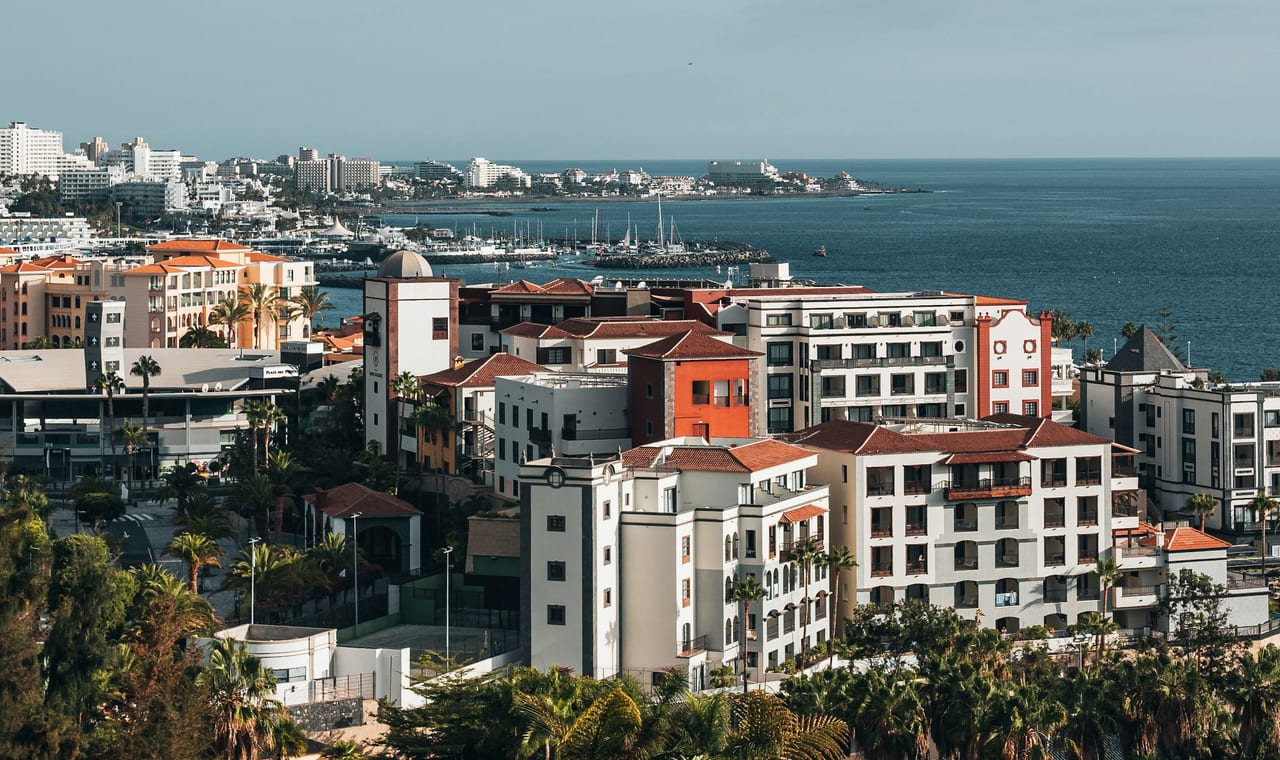
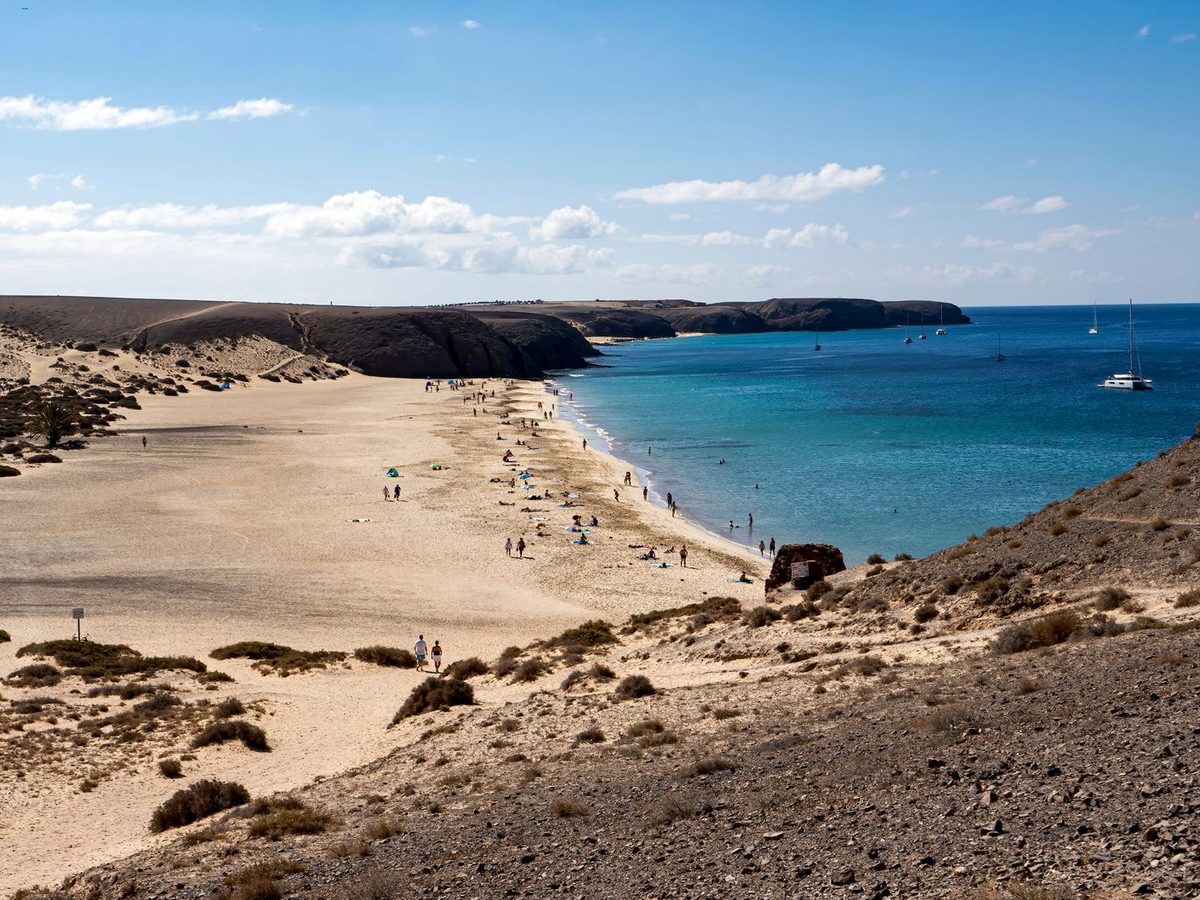
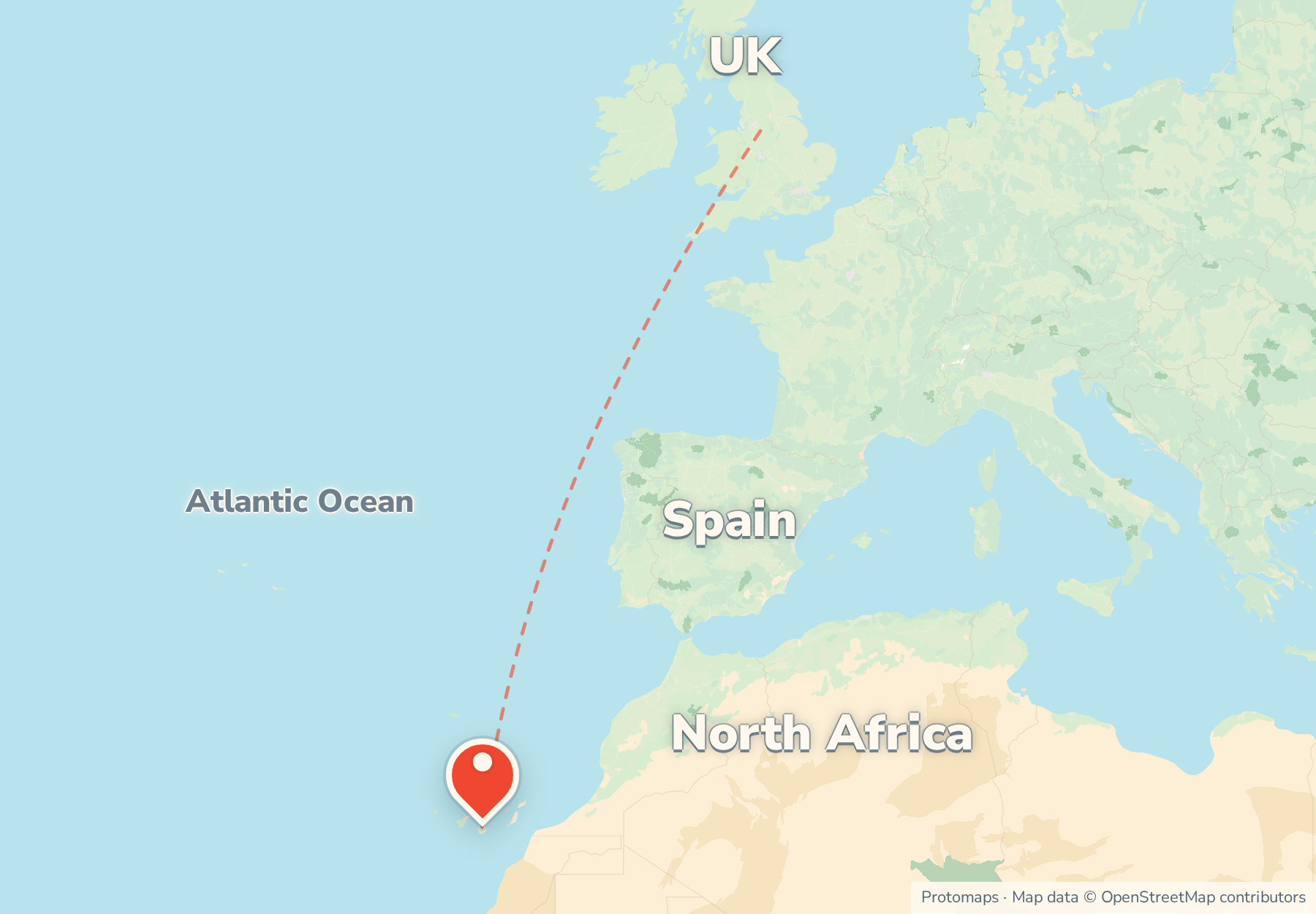
Gran Canaria is the round Canary between Tenerife and Fuerteventura, the same time as the UK all year. Its south coast holds the famous Maspalomas dunes, a Saharan dune field between two resorts, and it's often called a miniature continent because the mountains split it into a sunny, dry south and a greener, cloudier north. Families base in the south and day-trip the rest.
On this page
A family verdict at a glance
The quick read before the detail: who Gran Canaria suits, the season to aim for and what to nail down before you book.
Best for
Winter and shoulder-season sun with no jet lag, the dunes as a free giant sandpit and two beaches, Amadores and Las Canteras, where breakwaters and a reef keep the water flat.
Maybe not for
Anyone expecting a warm sea: it peaks at about 23 degrees in autumn and drops near 19 through the winter. For half the year the swimming happens in the pool, not the sea.
Best ages
Babies and toddlers do well year round, with October pairing the warmest sea with term-time quiet.
Best areas
Meloneras or the Maspalomas lighthouse end for the boardwalk, Amadores for the calmest water, Las Palmas for a city base.
Why families pick it
About 21 degree February days on UK time, the dunes and lighthouse costing nothing, and a children's hospital, an island-wide bus network and supermarkets near every resort.
Check before you book
That you're booking the sunny south rather than the cloudier north, a heated pool in winter and the street if you're considering Playa del Inglés.
Stay south, day-trip north
Gran Canaria's mountains split its weather in two. The trade winds push moist Atlantic air against the northern slopes, where it forms a low cloud sheet the locals call the donkey's belly, most stubborn in July and August, while the south is in the rain shadow and stays sunny. On the same August day Las Palmas can be grey and mild while Maspalomas is cloudless. Base yourselves on the south coast, from Maspalomas round to Mogán, and treat the green north and the mountain centre as day trips.
The winter-sun case is the shared Canary one: about 21 degrees by day in February and a few rainy days a month, with temperatures within a degree of Tenerife and Lanzarote. What Gran Canaria adds is the dunes, the breakwater-calmed west coast beaches and a city-beach base in Las Palmas.
A quick gut checkIs Gran Canaria right for your family?
Worth comparing if
You want warmth outside the school summer, a flat boardwalk by the dunes, and beaches walled off to stay calm in most weather.
Weigh it up if
You are mainly after a warm sea, or you've seen a cheap northern hotel without checking the cloud rule above.
To sort out before booking
A southern base, a heated pool for winter, the cot, the air conditioning and the transfer with a child seat.
The facts, the basics and the ages
Everything worth skimming first: the quick facts, the everyday practicalities and how Gran Canaria changes as children grow.
Quick facts for UK families
Money, plugs, language and the basics
- Gran Canaria is the third largest Canary, nearly circular and about 31 miles (50 km) across, with a near-2,000 metre peak in the middle.
- The currency is the euro and cards are accepted almost everywhere, including on the buses.
- Sockets are the round two-pin European type, so UK plugs need an adapter. The voltage matches the UK.
- The language is Spanish. English is spoken throughout the resorts.
- Tap water is mostly desalinated and officially safe, but it tastes flat and most people drink bottled. For feeds, use bottled water labelled "mineralización débil" and boil it as at home.
- Your GHIC card covers state healthcare here, and 112 is the emergency number.
- The Canaries sit outside the EU VAT area, with a local 7 per cent rate, so the supermarket shop runs a little cheaper than mainland Spain.
Gran Canaria by age and stage
Babies
No jet lag, winter warmth when UK days are dark and big hospitals on the island, including a dedicated children's one in Las Palmas.
Toddlers
Flat, sheltered water at Amadores, sand in every direction at the dunes and a level boardwalk for the evening circuit.
Preschoolers
Old enough for Aqualand's small slides, the glass-bottom dolphin boats and the aquarium's giant window.
Young children
The bigger waterslides, the submarine at Mogán and the mountain drives are options now. Roque Nublo stays a carrier walk.
Where to stay on the island
The resort areas side by side, an orientation map of the south coast and what the beaches are really like underfoot.
Where to stay with young children
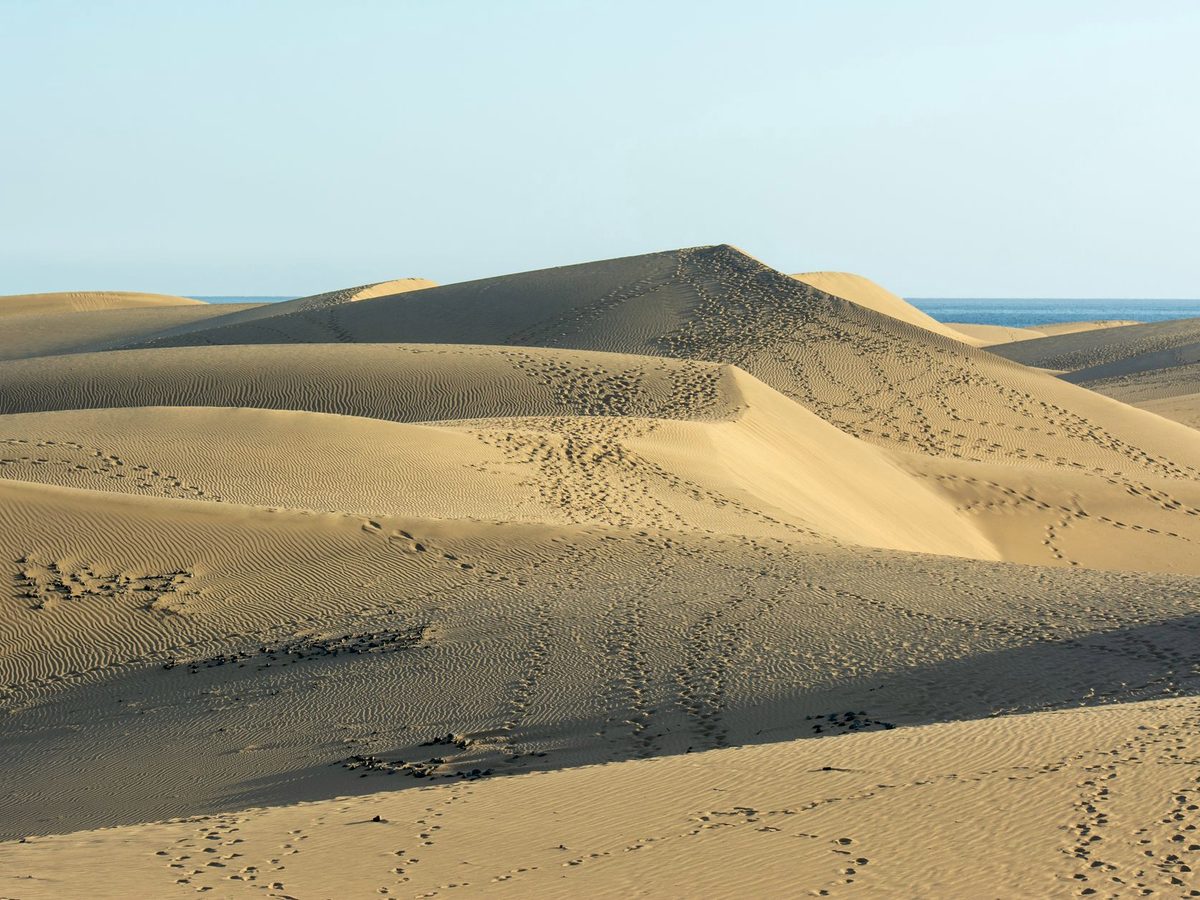
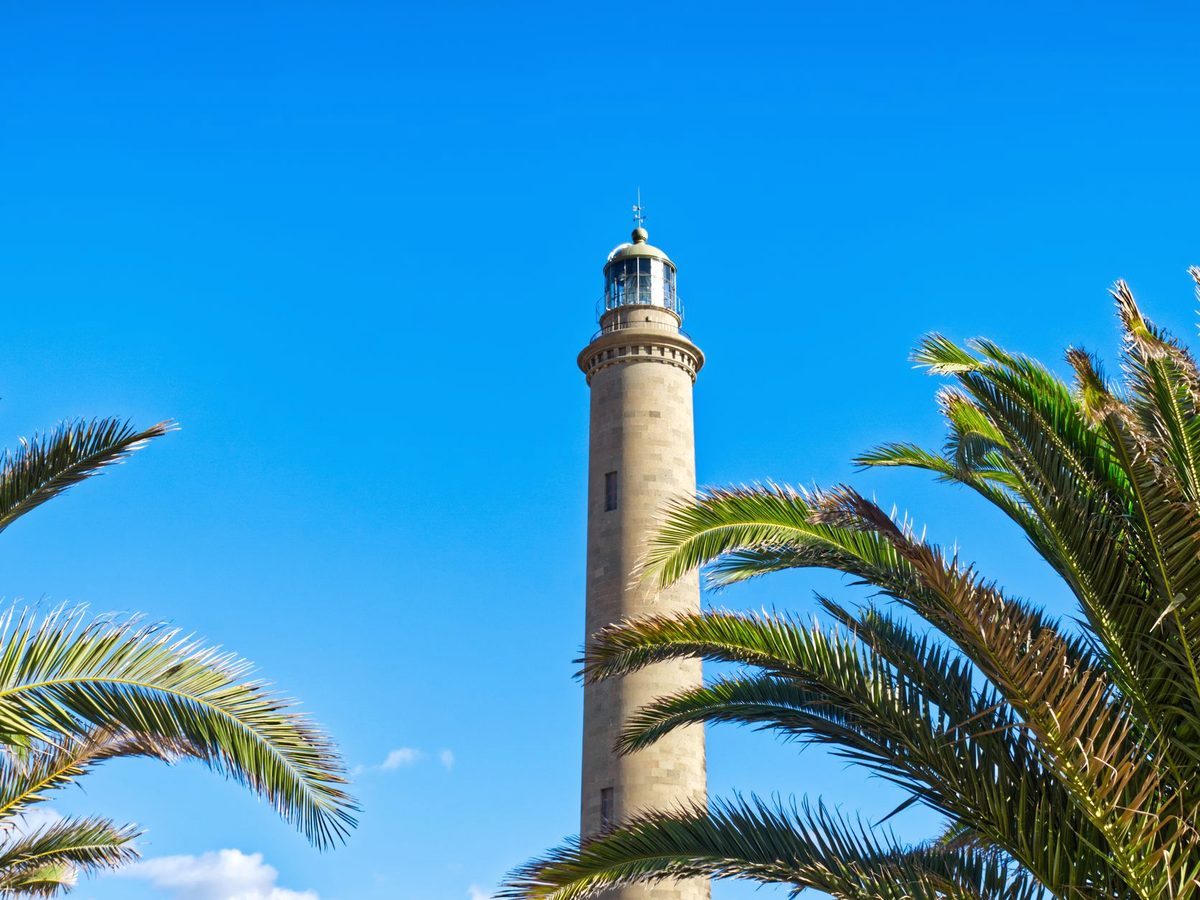
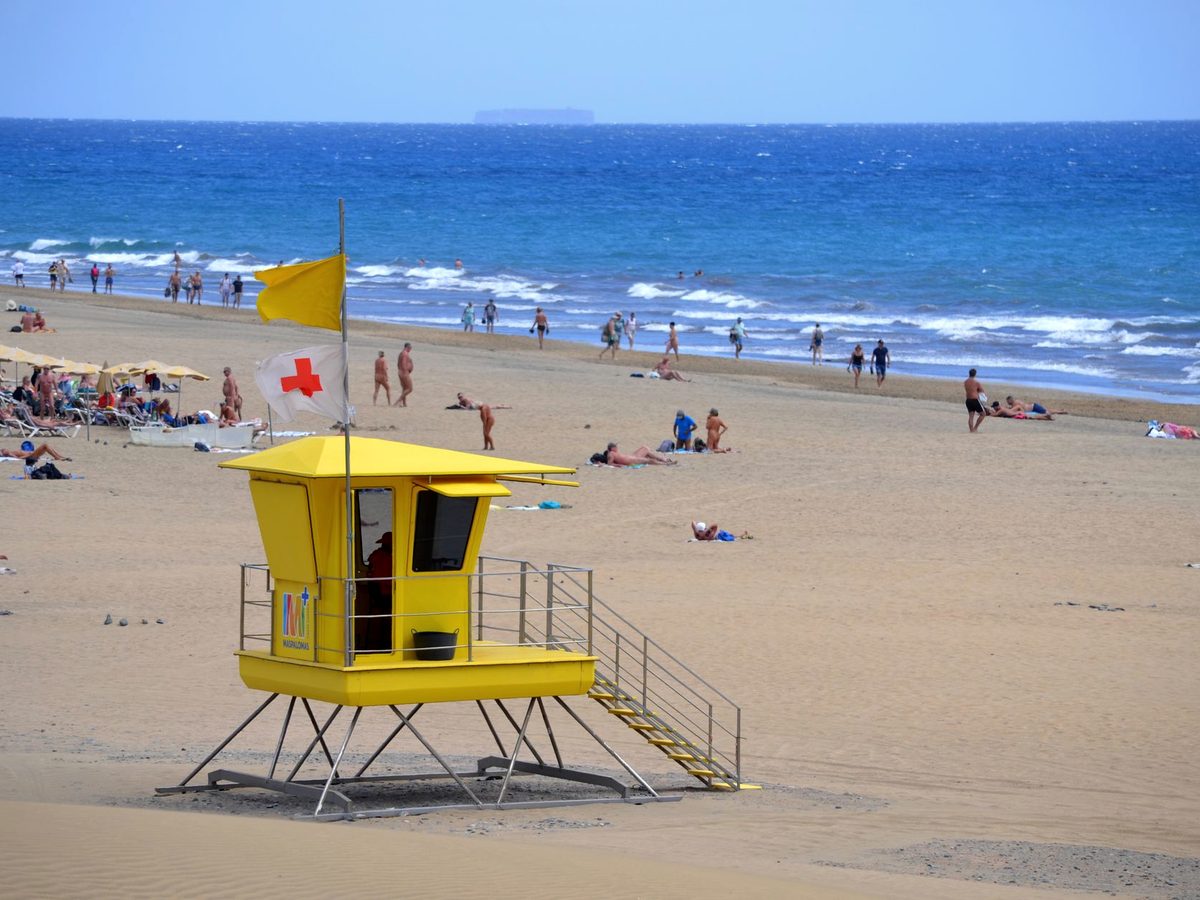
The southern tip is where most UK families land, and it divides neatly. Maspalomas and Meloneras share the dunes, the 19th-century lighthouse and a flat paved boardwalk running about 1.2 miles (2 km) between them, lined with restaurants and free to walk of an evening. The family stretch of Maspalomas beach is the end nearest the lighthouse, with sunbeds, kiosks and lifeguards; the open middle of the beach has naturist sections, so families stay by the Faro. Meloneras is the five-star, no-nightlife end. Playa del Inglés, on the dunes' other flank, is the island's biggest and cheapest resort with a vast Blue Flag beach; the streets around the Yumbo centre become the bar and club district at night, so choose a quiet street or stay next door. San Agustín, beyond it, is the quiet one: darker sand, calm water and a seafront walkway, popular with families and older couples who want none of the above.
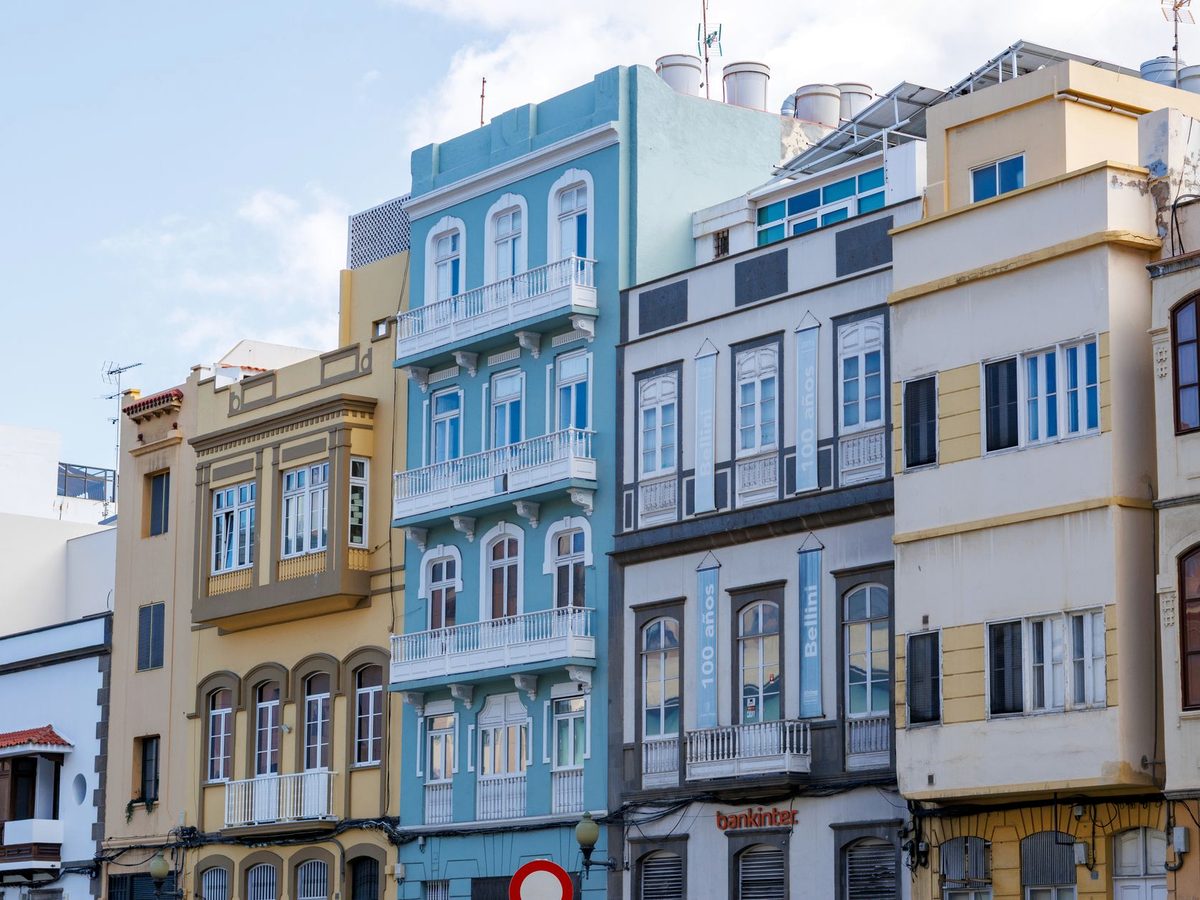
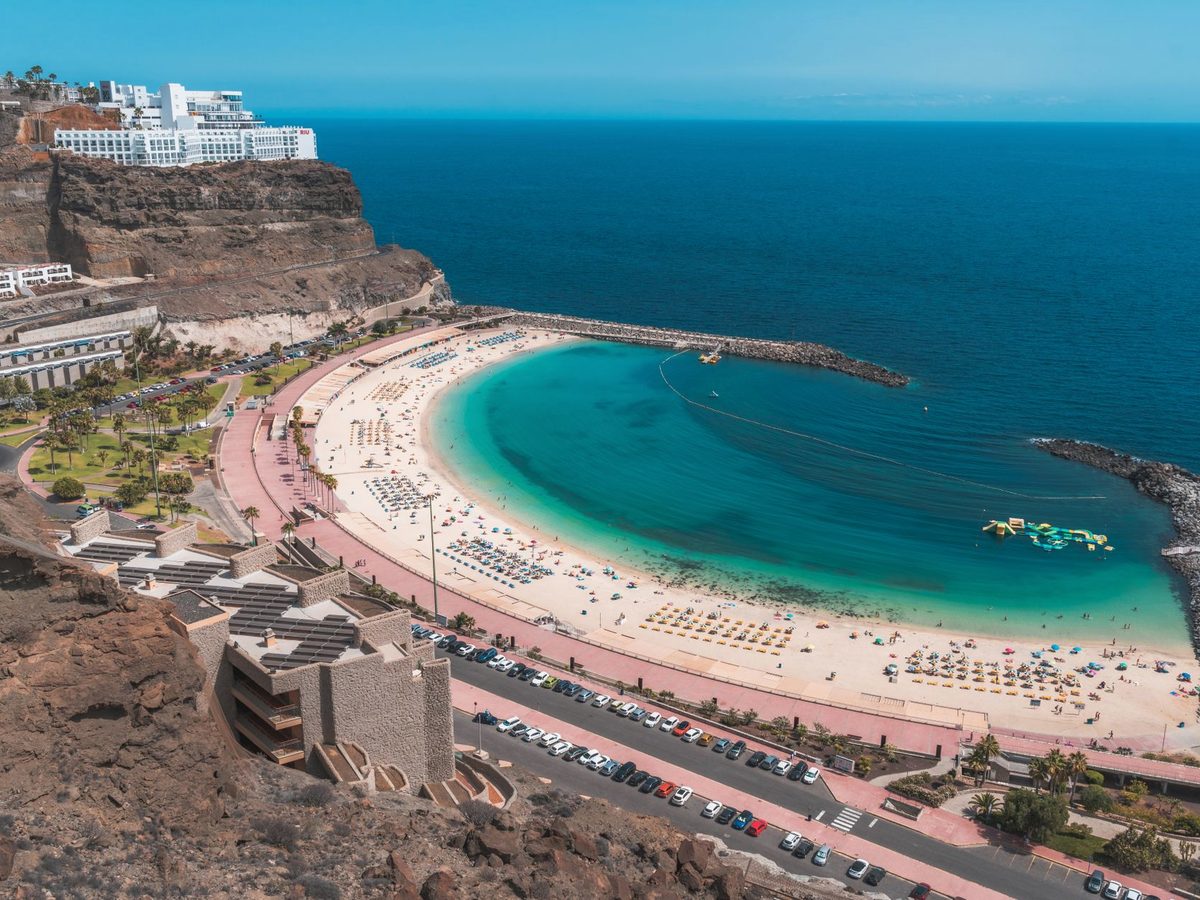
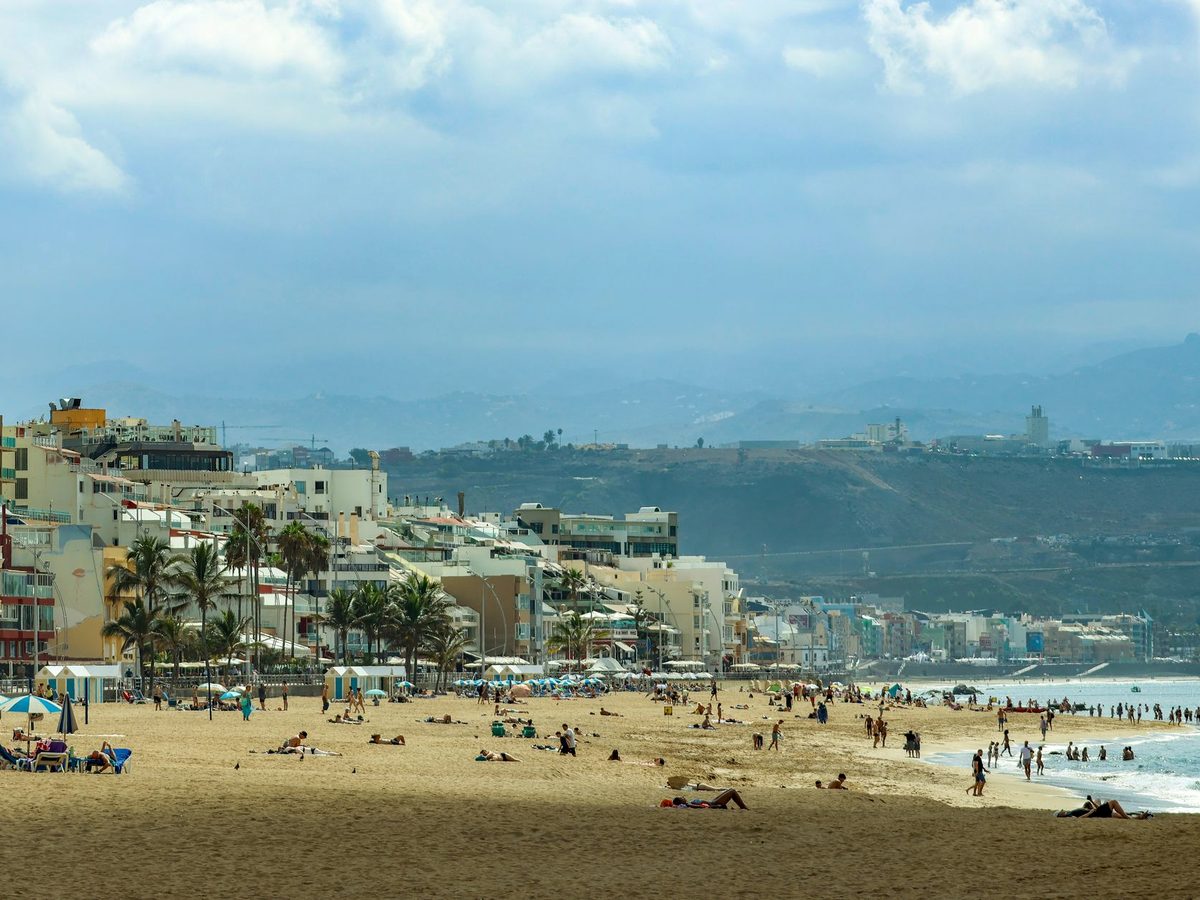
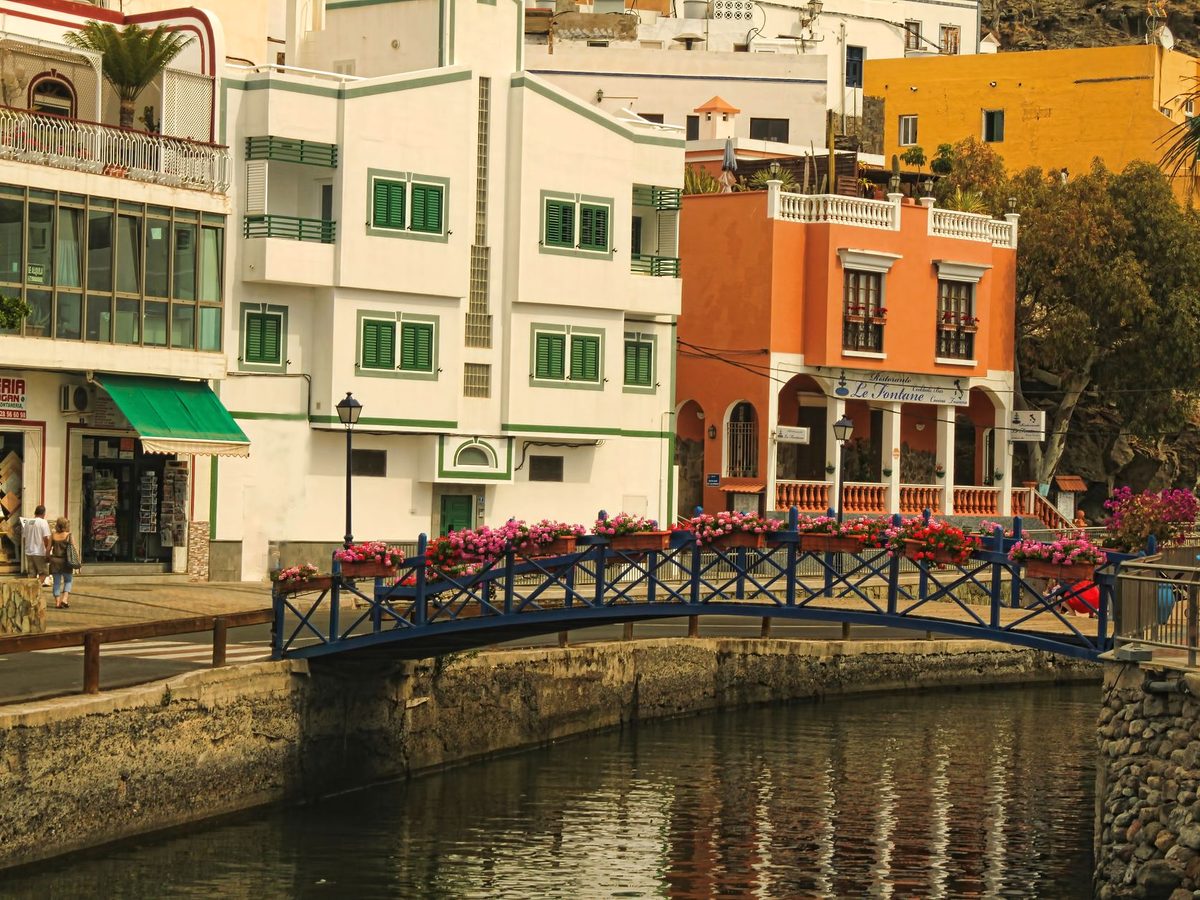
The west coast is the swimming coast. Puerto Rico is the boat-trip hub, stacked up a steep-sided valley that shelters it from the wind; it's steep, so with a buggy book at beach level rather than up the hillsides. Twenty minutes' walk along the coastal path is Amadores: man-made, pale imported sand, enclosed by two breakwaters so the water stays flat, with ball games banned and a promenade of restaurants behind. Further round, Puerto de Mogán is a low-rise fishing village of white houses, bougainvillea and canal bridges around a sheltered harbour beach; it's small, books out early and fills with day-trippers on Friday market mornings. The different option is Las Palmas, the capital, where Las Canteras beach runs for 2 miles (3 km) of reef-sheltered sand with playgrounds, a traffic-free promenade, and an aquarium and science museum a short buggy push away: a city holiday, with eating out cheaper than the resorts, at its sunniest from October to May.
| Area | Transfer | The beach | The feel |
|---|---|---|---|
| Maspalomas and Meloneras | About 30 min | A long Blue Flag arc; the family stretch is by the lighthouse | The dunes, the Faro and a flat paved boardwalk linking it all. Meloneras is the quiet five-star end. |
| Playa del Inglés | About 25 min | A huge open Blue Flag beach with real waves some days | Cheap, cheerful and built-up, with the island's club zone in the middle of it by night. |
| San Agustín | About 20 min | Dark golden sand, calm water and weak currents | The quiet end of the southern strip, with a coastal walkway and no nightlife to speak of. |
| Puerto Rico and Amadores | About 40 min | Two sheltered beaches; Amadores is breakwater-calmed and flat | The boat-trip hub stacked up a steep valley. With a buggy, book at beach level rather than up the hillsides. |
| Puerto de Mogán | About 45 min | A small sheltered harbour beach with clear, flat water | Low-rise white houses and canal bridges round the harbour. Small, popular and books out early. |
| Las Palmas | About 25 min | Las Canteras: 2 miles (3 km) of reef-sheltered sand with playgrounds | A real city base on the beach, with an aquarium and a science museum close by. Cloudier skies in high summer. |
| Tejeda and the centre | Day trip | No beach; mountain villages and viewpoints | The drive-up side of the island: miradors, almond pastries and cool air, best done by car around a nap. |
Map of the main family areas
An orientation map of the areas above, the airport and the mountain centre. The numbers match the key beneath.
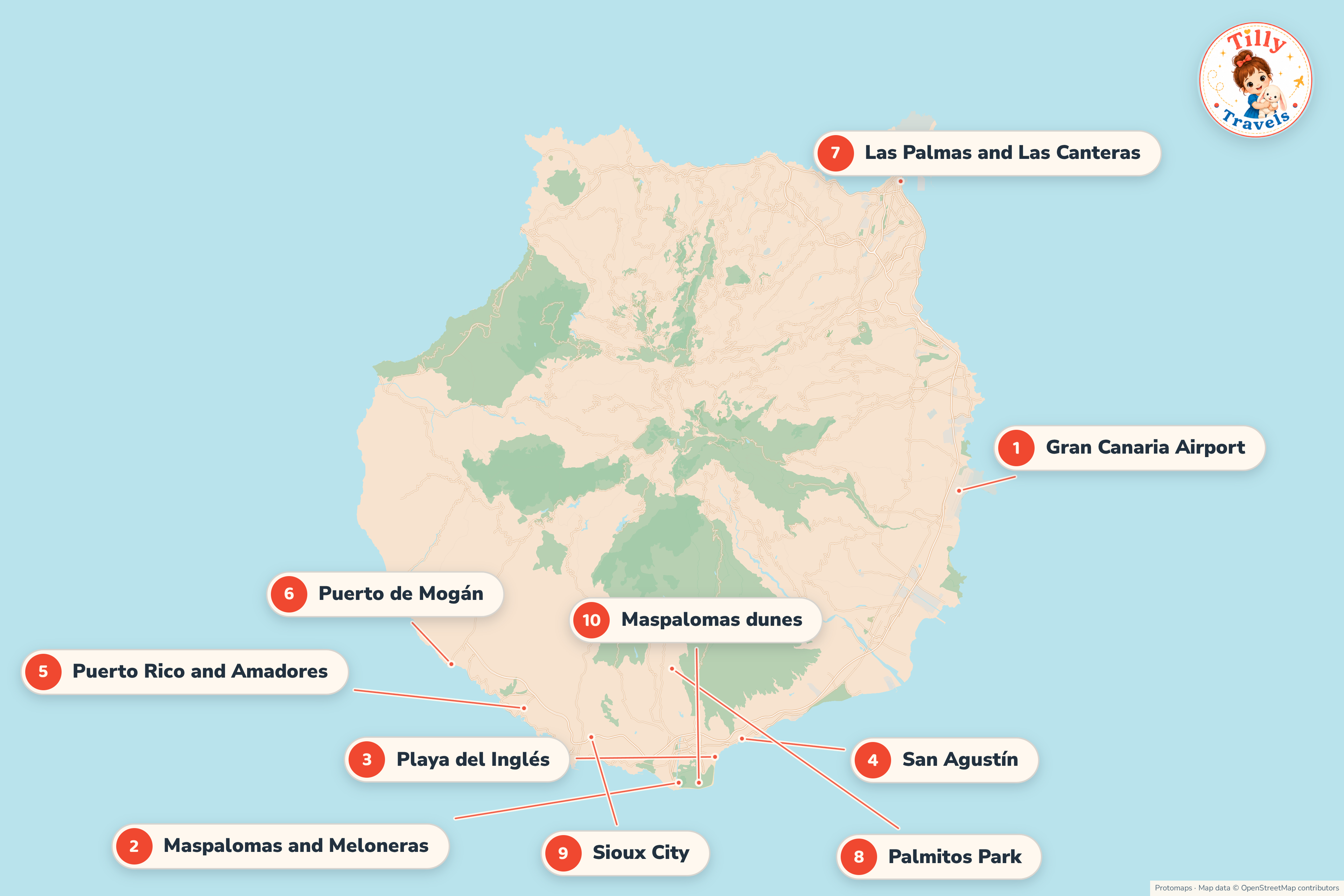
- 1Gran Canaria Airport Mid east coast
- 2Maspalomas and Meloneras Dunes, Faro and boardwalk
- 3Playa del Inglés Big beach, busy nights
- 4San Agustín The quiet end
- 5Puerto Rico and Amadores The calmest swimming
- 6Puerto de Mogán The pretty village
- 7Las Palmas and Las Canteras The city beach
- 8Palmitos Park Botanical and animal park
- 9Sioux City Wild-west stunt show
- 10Maspalomas dunes The desert-like dunes
Walled-off calm and open Atlantic
The calmest water on the island is mostly man-made. Amadores sits behind two breakwaters, Las Canteras behind a natural sandstone reef that flattens the swell at mid to high tide, and Puerto de Mogán behind its harbour wall: all three stay calm when the open coast doesn't. The big southern stretch from Playa del Inglés round to the lighthouse is open Atlantic, with shore-break and currents on windy days, so it's a lifeguards-and-flags beach rather than an all-conditions paddling pool. The water itself runs cooler than people expect: around 19 degrees through late winter and spring, peaking at 23 to 24 in October.
Fifteen of the island's beaches hold 2026 Blue Flags, the most in the Canaries, including all five along the San Bartolomé south coast. Two notes on reading the flags: Amadores currently doesn't hold one and Las Canteras never does, and neither fact says anything about toddler suitability, because the flag certifies facilities and water quality, not calmness. The Spanish flag system applies everywhere: green, yellow, red, and red is enforced.
Weather, days out and the daily shop
When to go month by month, the outings that suit small children, eating out and where to stock up.
Weather, month by month
The figures below are official long-term averages from the airport station on the breezy east coast; the Maspalomas corner generally does a little better and the north does worse, especially in high summer. It rains on about 22 days a year, so the sea temperature and which coast you're on matter more than the rain. A few times a year, mostly between January and March, a calima blows Saharan dust across the island for a few days; with a baby or an asthmatic child, that's an indoors-with-the-windows-shut spell.
| Month | Daytime high | Overnight low | Rain | Wet days | Sea temp |
|---|---|---|---|---|---|
| January | 21.5° | 15.5° | 20 mm | 3 | 20° |
| February | 21.5° | 15° | 27 mm | 3 | 19° |
| March | 22.5° | 15.5° | 10 mm | 2 | 19° |
| April | 23° | 16.5° | 4 mm | 1 | 20° |
| May | 24° | 18° | 3 mm | 0 | 21° |
| June | 25.5° | 19.5° | 0 mm | 0 | 22° |
| July | 27.5° | 21° | 0 mm | 0 | 22° |
| August | 28° | 22° | 1 mm | 0 | 23° |
| September | 27.5° | 21.5° | 4 mm | 1 | 24° |
| October | 26.5° | 20.5° | 16 mm | 2 | 23° |
| November | 24.5° | 18° | 17 mm | 3 | 22° |
| December | 23° | 16.5° | 19 mm | 4 | 21° |
Typical monthly averages from weather-station records. Sea temperature is the open-water figure, so a sheltered bay can feel a degree or two warmer.
The standout windows for young children are October and November, when the sea is at its warmest and the resorts at their quietest, and late winter for reliable half-term sun at a 4¼ hour flight. February matches Tenerife on temperature; what Gran Canaria adds is the dunes and the boardwalk.
Filling the daysThings to do with little ones
The dunes cost nothing and fill a morning. Walking is restricted to marked trails these days, with sensors on the closed zones, and the trails are loose sand, so with a baby the doable version is a barefoot scramble on the first ridges near a legal entrance with the baby in a carrier, then ice cream on the boardwalk. Behind the dunes beach the Charca de Maspalomas lagoon is free, pram-friendly and home to a couple of dozen migratory bird species, a flat ten-minute loop for a quiet hour. The camel rides at the dunes' edge run mornings only and carry a live welfare debate, with visitors reporting muzzled animals carrying two riders and no independent audit to settle it, so that's a choice to make knowingly. Aqualand Maspalomas is the waterpark, with a proper scaled-down zone for small children and free entry under 90 centimetres, and Holiday World next door is an evening funfair, opening from late afternoon into the night and closed early in the week, which suits the late-afternoon slot before a UK-time bedtime. Check the days and times the day before you promise it.
Palmitos Park, in a ravine above Maspalomas, is the island's big animal day: exotic birds, a butterfly house and an aquarium, plus a dolphinarium, which a growing number of families choose to avoid; the wild alternative is a glass-bottom dolphin-watching boat from Puerto Rico, about two hours among resident dolphins with a free repeat ticket if none show. The submarine at Puerto de Mogán dives to 20 metres for 40 minutes, takes children from age two and is cheaper than the Lanzarote equivalent. In Las Palmas, Poema del Mar is one of Europe's best modern aquariums, indoor, air-conditioned and buggy-friendly with a vast curved window, free under four, and the hands-on Elder science museum ten minutes away has "forbidden NOT to touch" as its house rule.
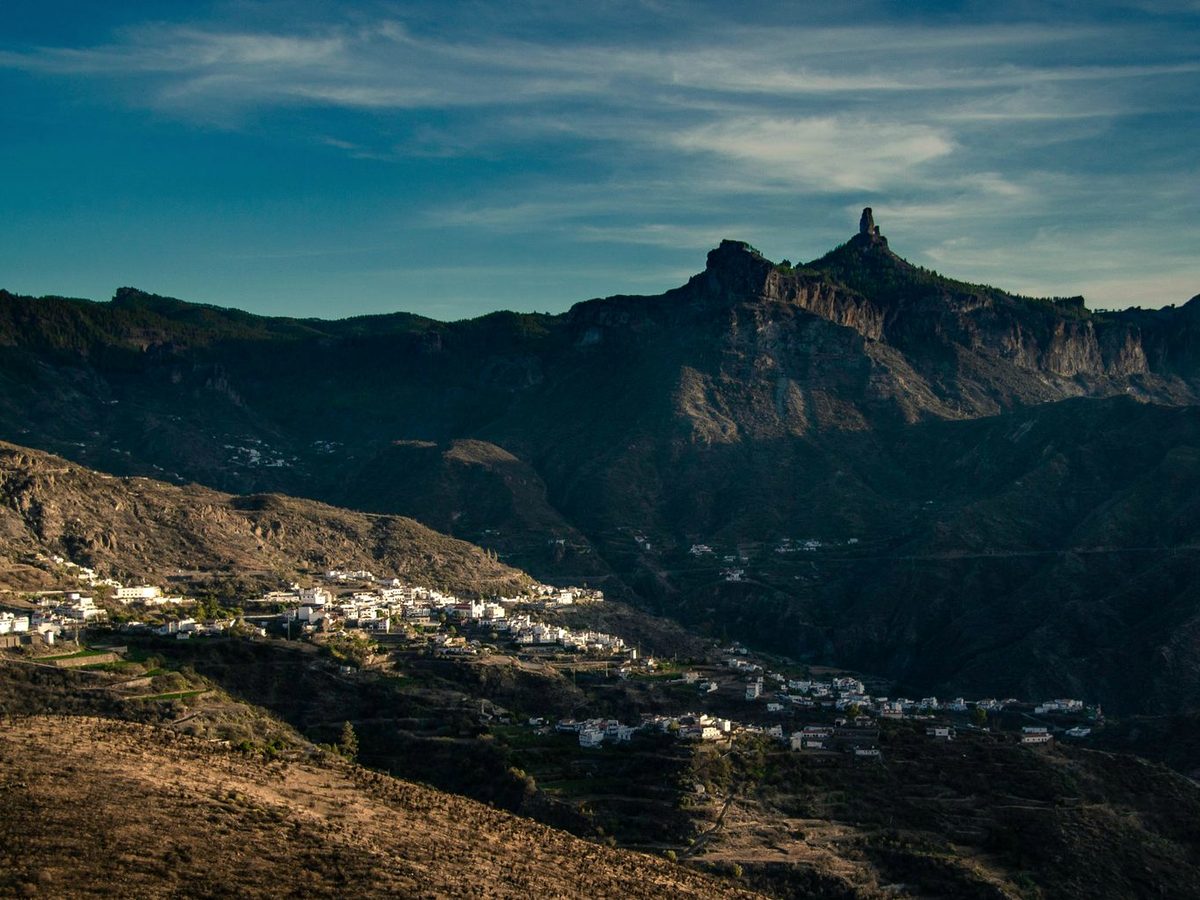
The mountain centre is a drive rather than a walk at this age. Teror has the island's oldest streets and a 200-year-old Sunday market, Tejeda is a whitewashed village with almond pastries and big views, and the roadside viewpoints give you the scenery without anyone leaving the car seat, which matters because the classic Roque Nublo walk lost its nearest car park in 2025 and is now a long hike, never a buggy outing. The Bandama caldera near Las Palmas is an easy one: a volcanic crater over half a mile (1 km) wide with a drive-up viewpoint, pram stays in the boot.

Eating out with children
The southern resorts run on an international clock, with kitchens open from about six, so a toddler-hour tea needs no planning, and highchairs and children's menus are standard along the boardwalk and the promenades. Las Palmas eats later and more Spanish, though the Las Canteras seafront cafés serve all day.
The local plate small children take to is papas arrugadas, the small salted potatoes, with the green mojo as the mild dip and the red one spicier. Grilled fish is everywhere and tortilla is a safe bet for a fussy day. Eat on the boardwalk between the lighthouse and Meloneras and the children can watch the world go by.
Milk, nappies and pharmaciesSupplies and the first-day shop
Self-catering is easy here. HiperDino, the local chain, is everywhere and opens long hours seven days, with Lidl, Mercadona and a Carrefour hypermarket within reach of the south; the one trap is that Mercadona closes on Sundays. Nappies are sold mainly as Dodot, the Spanish Pampers, with cheap own brands at the discounters. For formula, the Spanish equivalent of Aptamil is Almirón, similar staging but not an identical recipe, alongside NAN, Blemil and Nutribén; pharmacies carry the full range and can order overnight, so bring enough of your own for the trip and use local stock as the backup.
Pharmacies, marked by the green cross, are the only place to buy medicines, because Spanish supermarkets sell none. The children's paracetamol is Apiretal and the ibuprofen is Dalsy, both dosed by weight, with a duty rota posted in every window. Bring any medicine your child relies on rather than counting on a like-for-like swap.
Getting around, a real week and the admin
Transfers and buses, what a week actually looks like, the health and document checks and a list to pack against.
Getting there and around
The airport sits on the east coast with the motorway past the door, about 25 to 30 minutes from Maspalomas and 40 from Puerto Rico. Spanish law requires a proper child seat for anyone 135 centimetres or under, riding in the back, and rank taxis won't normally carry one, so pre-book the transfer with the seat specified or bring your own. If you hire a car, the local firm Cicar includes child seats, full insurance and a second driver free, and fuel is markedly cheaper than the UK.
A south-based family can skip the car entirely: the island-wide Global bus network takes contactless bank cards on every bus and links the airport, Las Palmas and the southern resorts directly. A car is worth having for the mountain interior and Teror, with the caveat that the inland roads wind enough to plan around travel sickness.
What a real week looks likeA realistic week with little ones
No time change, so the day you land is a normal day. A swim, an early dinner on the boardwalk and bedtime at the usual hour.
A sheltered beach in the morning, lunch and a nap, then the lighthouse boardwalk or the pool as the day cools.
The dunes at toddler pace, Aqualand or a glass-bottom dolphin boat from Puerto Rico all fit around a sleep.
A final swim and a slow pack before the afternoon flight home.
With young children, the sheltered beach, the pool, naps, the boardwalk and one dunes or boat day will comfortably fill the week.
The practical adminHealth, documents and the boring bits
Check the GOV.UK Spain advice before booking and travelling. Passports need to be issued within the last ten years and valid three months beyond departure, children's included. Carry a GHIC for each member of the family, which covers state healthcare including the big Las Palmas hospitals, one of which is a dedicated mothers' and children's hospital, plus travel insurance for the private clinics that sit minutes from the southern resorts.
The emergency number is 112. The sun is the main thing to watch year round: extreme at midday in summer and still strong enough to burn young skin in December, when the breeze makes it feel cooler than it is. Pack hats, UV suits, high-factor cream and plan for midday shade all year. On the water, use the breakwater-calmed beaches when the wind is up, follow the flags and treat the wild north coast as scenery.
Before you payBooking checklist
- Book the south coast for the reliable sun.
- Confirm a heated pool for any trip between November and April.
- Check the street, not just the resort, if you're considering Playa del Inglés.
- Book at beach level in Puerto Rico if a buggy is coming.
- Book the transfer with the right child seat, or bring your own.
- Confirm the cot and the air conditioning with the hotel.
- Pack layers for winter evenings and a carrier for the dunes.
- Bring enough formula and any medicines your child relies on.
- Confirm the cancellation terms and your travel insurance.
- Recheck the GOV.UK Spain advice and every passport before you go.
Resort guides in Gran Canaria
We've researched these places to stay in Gran Canaria for families with young children. Each guide covers what it's like, who it suits and what to check before you book.
Questions, links and the last word
The things families ask most, the official pages worth a bookmark and when this guide was last refreshed.
Common parent questions
Is it really warm in winter?
Yes: around 21 degrees by day in January and February with only a handful of rainy days. Evenings drop to about 15 degrees and unheated pools are cold, so pack layers and check for a heated pool.
Gran Canaria or Tenerife?
Winter temperatures are within a degree of each other, with Tenerife South marginally warmer at airport level. The difference for a family is what each offers beyond the weather: Gran Canaria has the dunes, Amadores and the city-beach base at Las Canteras, Tenerife the volcano.
Can we do the dunes with a buggy?
Not through the sand: the trails are loose underfoot and roaming is restricted anyway. Take a carrier, or stick to the flat paved boardwalk between the lighthouse and Meloneras, which runs right along the dunes' edge.
Is Playa del Inglés okay with small children?
By day, entirely: the beach is huge, lifeguarded and Blue Flagged, and the resort is full of families. The nightlife is concentrated, so check where your hotel sits before booking rather than ruling the resort out.
Which beach is best for a toddler?
Amadores, on the west coast: pale imported sand, sunbeds, showers and restaurants, and water that stays flat in almost any weather. There's little natural shade, so take the parasol money. Las Canteras in Las Palmas is nearly as good and adds playgrounds on the sand.
Is Las Palmas worth considering as a base?
It's the one city option, with a long sheltered beach, a traffic-free promenade, an aquarium and a science museum within a buggy push. The trade-off is high-summer cloud in July and August, so it suits a trip between October and May.
Can we buy our usual formula and nappies?
Yes, under Spanish names: Pampers is Dodot and the equivalent of Aptamil is Almirón. The Supplies section above lists the rest. Bring enough of your own for the trip and treat local stock as backup.
See more Gran Canaria photos
Open the photo gallery →Useful links
- GOV.UK Spain travel advice: passport rules, entry requirements and health updates before you travel.
- Gran Canaria tourism: the official site, including beaches, the dunes and the mirador network.
- Aqualand Maspalomas: season dates and tickets for the waterpark.
- Guaguas Global: routes and fares for the island-wide buses.
Last updated 12 June 2026.