Ibiza with little ones
Ibiza is the most misread island we cover. The clubbing is real but it sits in two small zones, while the rest of the island, the whole east coast, the north and the inland farmland, is much quieter. Santa Eulalia, the east-coast hub, has no superclubs and its evenings wind down early, and the island has a UNESCO listing that covers far more than the old walled town. Add the driest, warmest summer in the Balearics and a 25-minute transfer, and if you've written Ibiza off, it's worth a proper look before you book.
On this page
A family verdict at a glance
The quick read before the detail: who Ibiza suits, the season to aim for and what to nail down before you book.
Best for
Sheltered, shallow coves, short transfers, ferry days along the coast and a dependable summer.
Maybe not for
Anyone who books by price alone. Two zones of this island are exactly what its reputation says, so the wrong hotel lands you in one of them.
Best ages
Babies and toddlers do best of all here, for the calm shallow coves and short days out.
Best areas
Santa Eulalia as the hub, Cala Llonga and Es Canar as its quieter satellites, Portinatx for the quiet far north.
Why families pick it
Calm, clear water, a proper choice of quiet bases and an evening culture that suits early bedtimes.
Check before you book
Which end of Playa d'en Bossa a bargain hotel sits at, and whether your dates brush the club opening or closing weekends.
The other Ibiza
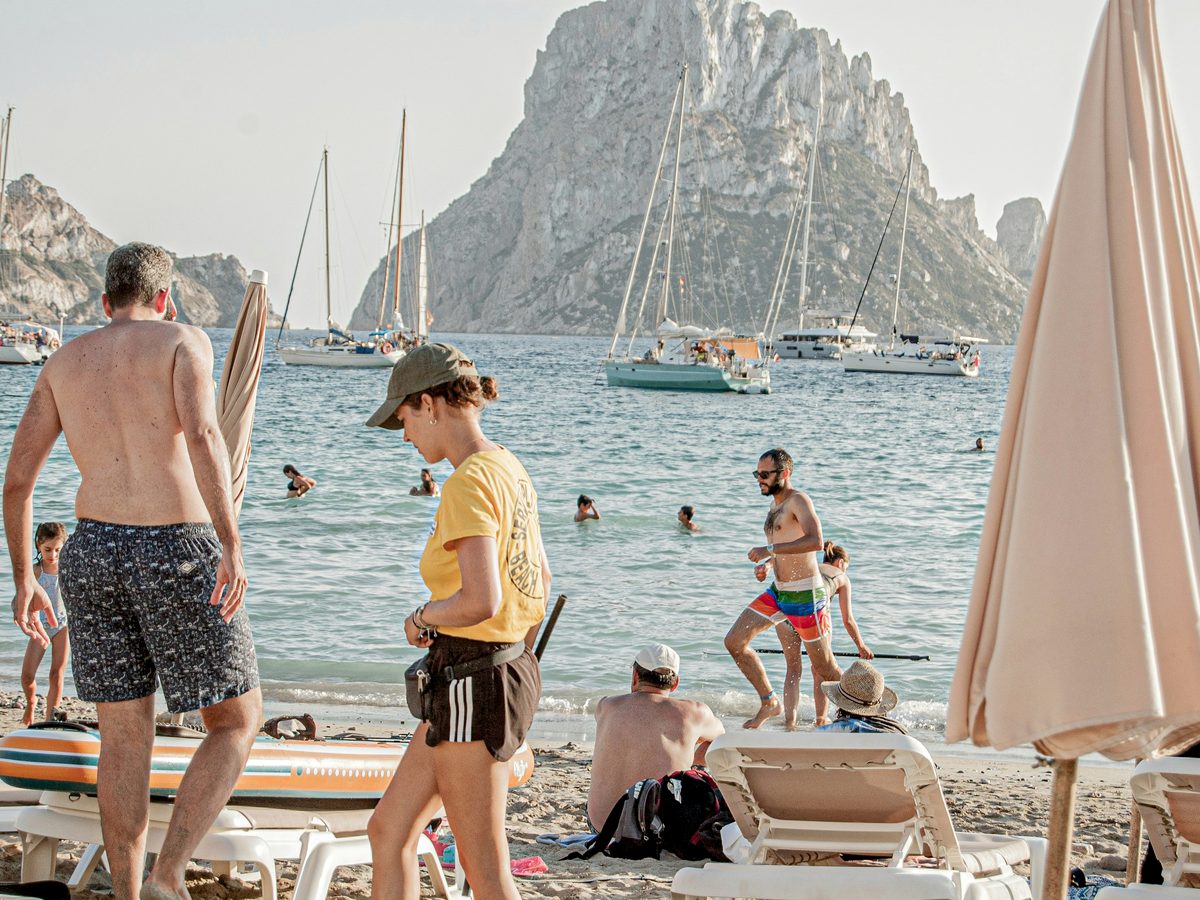
There are two club zones. Playa d'en Bossa has the superclubs along its middle stretch, and San Antonio's West End has the bar strip, and that's broadly the whole map of the reputation. The east coast around Santa Eulalia, the entire north and the farmland between them are about families, markets and early dinners, and every Blue Flag we could confirm sits on the east and north coasts.
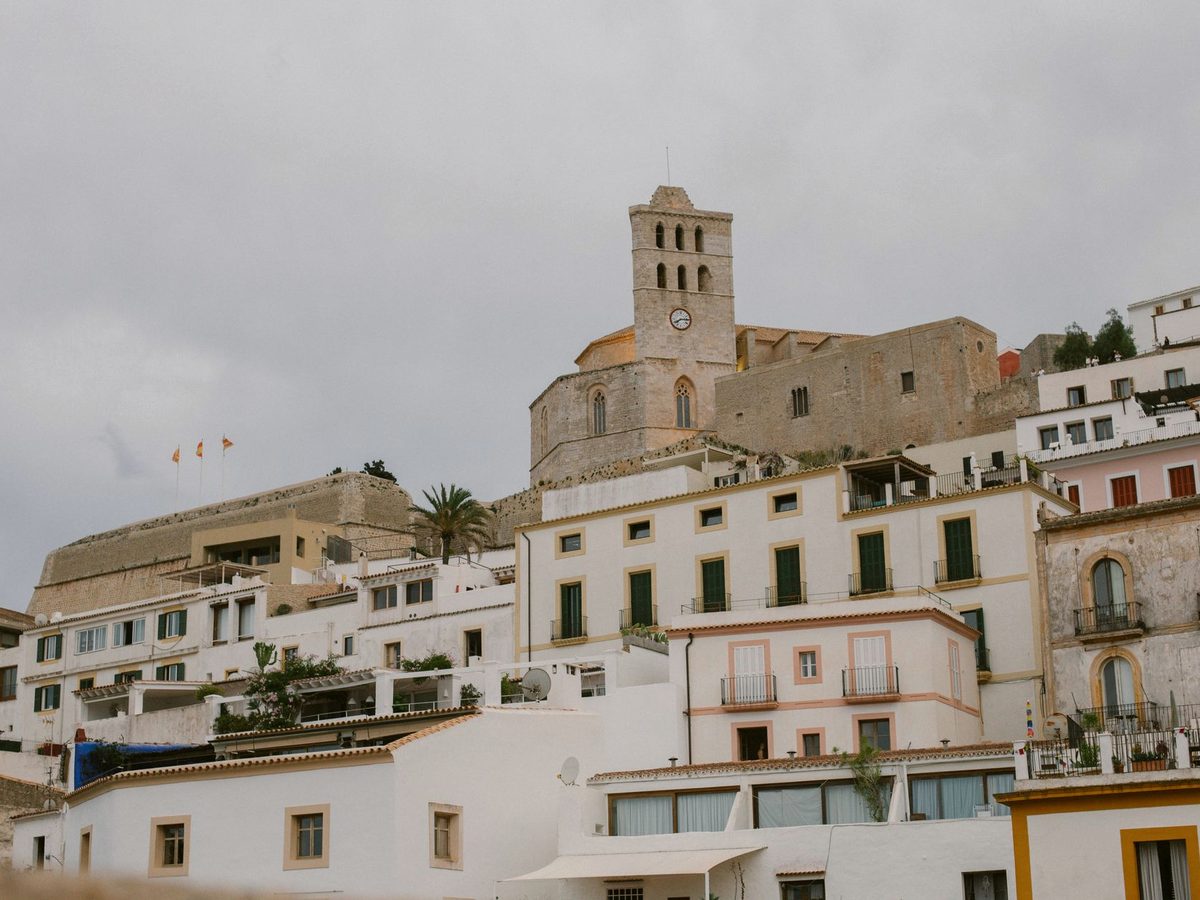
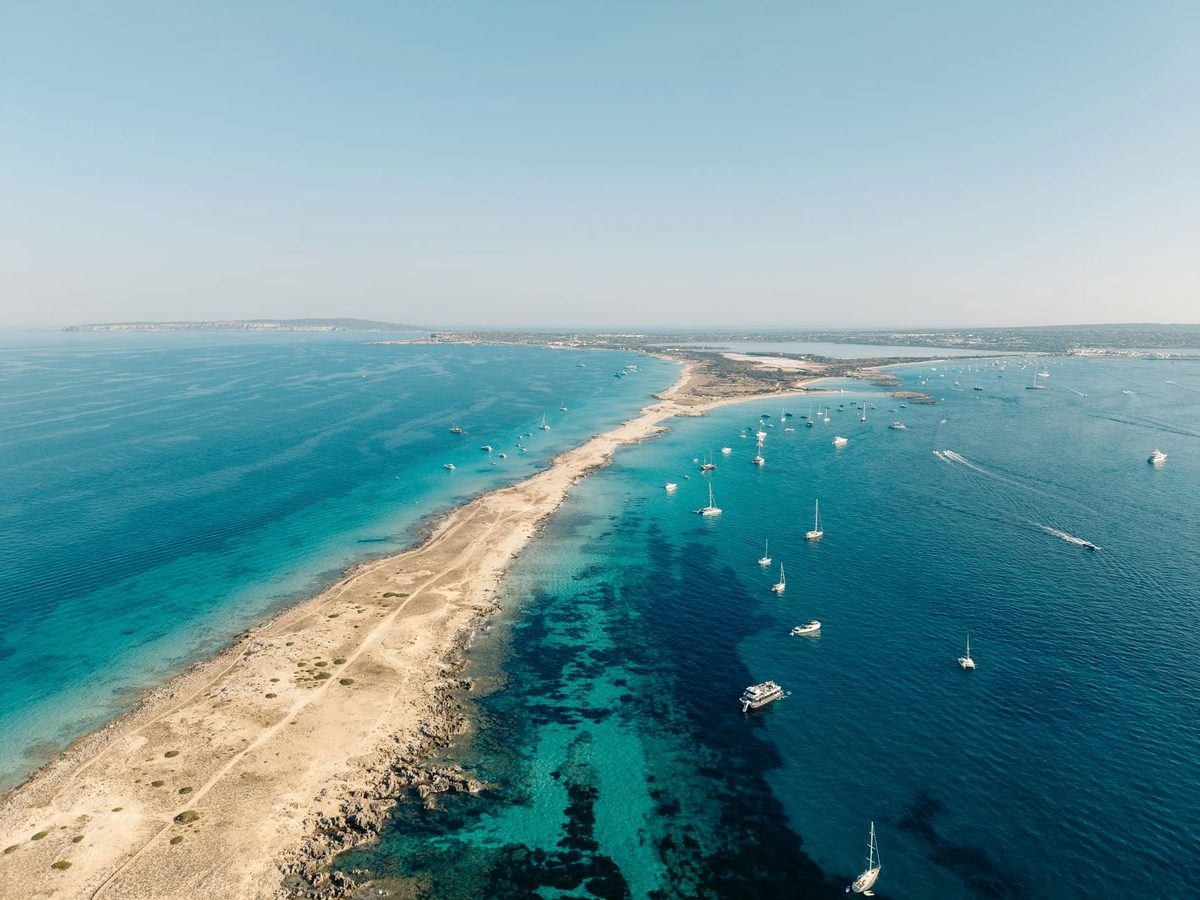
The water is the other surprise. The meadows of Posidonia seagrass around Ibiza and Formentera are the largest and best preserved in the Mediterranean, protected as part of the island's UNESCO listing, and they filter the sea to the clarity you see in photos. The same listing covers Dalt Vila, the walled old town above the harbour, under both natural and cultural criteria.
A quick gut checkIs Ibiza right for your family?
Worth comparing if
You want calm, clear-water coves and a quiet resort town with early dinners, within half an hour of the airport.
Weigh it up if
You need waterparks and big paid attractions to fill a week, or July-August prices decide the booking.
To sort out before booking
The base (east coast, north or San Antonio bay), the exact hotel location and whether you'll hire a car or rely on the coastal ferry.
The numbers, the basics and the ages
Everything you'd want to skim first: the quick facts, the everyday practicalities and how Ibiza changes as children grow.
Quick facts for UK families
Money, plugs, language and the basics
- Ibiza is the third-largest Balearic island, around 570 square kilometres, with five municipalities and most family resorts on the east coast.
- The currency is the euro and cards are accepted almost everywhere; coins help at beach kiosks and bus fares.
- Sockets are the round two-pin European type, so UK plugs need an adapter. The voltage matches the UK.
- Spanish and Catalan share the signs, and the island's Catalan name Eivissa appears on maps and buses interchangeably with Ibiza. English works fine in the resorts.
- The clocks run one hour ahead of the UK, which helps: an 8pm Spanish dinner is 7pm on a UK body clock.
- Tap water is treated but hard and chlorinated; locals drink bottled, and bottled water labelled mineralización débil is the one for making up formula.
- Your GHIC card covers Spain's state system; 112 is the general emergency number and 061 calls the Balearic medical line directly.
- The Balearic tourist tax is charged per adult night at the accommodation; under-16s are exempt and the rate halves from the ninth night.
Ibiza by age and stage
Babies
Short flight, short transfer and shaded coves like Cala Bassa. Midsummer UV is very high, so keep them in the shade through the middle of the day.
Toddlers
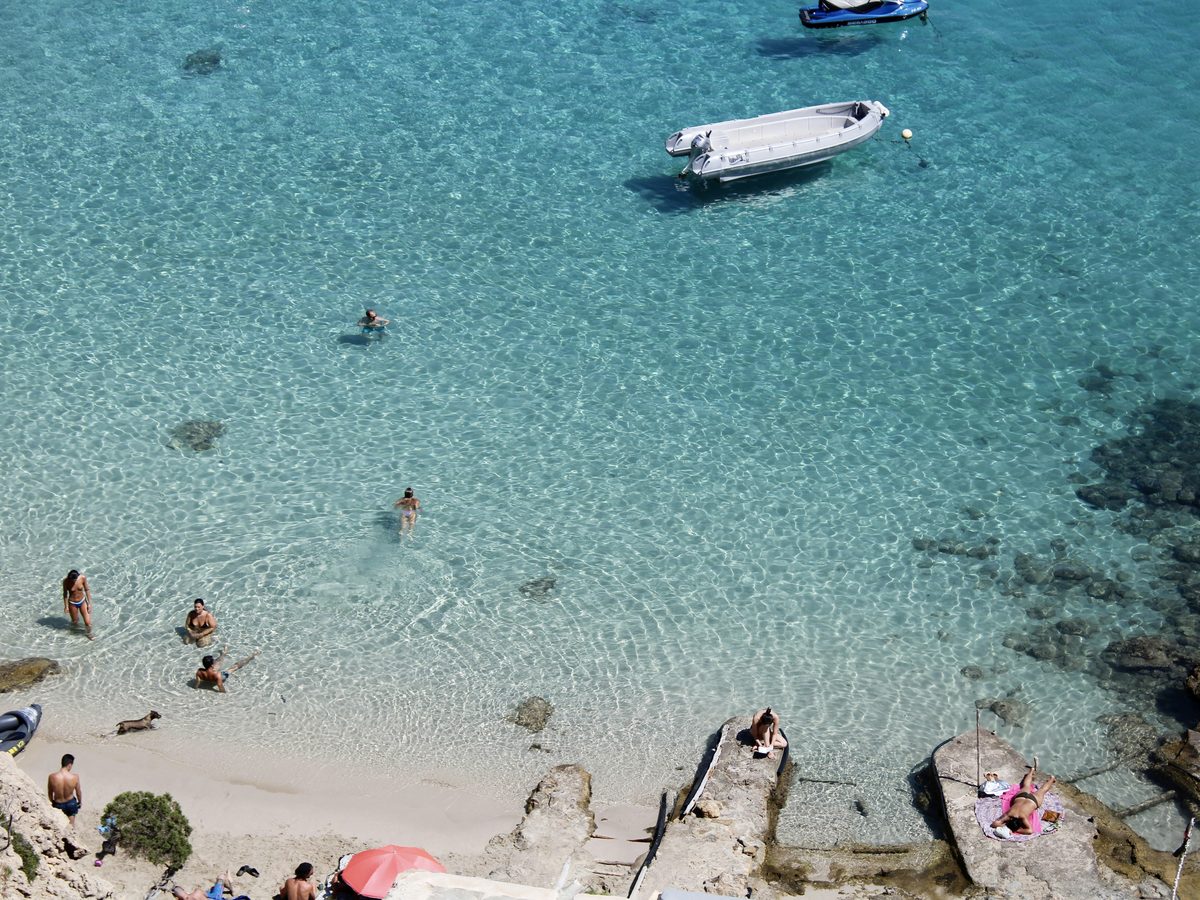
The sheltered east-coast coves shelve so gently that a toddler can paddle all afternoon, and the little ferries between them make an easy morning out.
Preschoolers
The cave aquarium, face painting at the Wednesday market, boat days and a treetop circuit built for ages three to five.
Young children
Snorkelling over seagrass, Dalt Vila's ramparts and the Formentera crossing, though there's less of the big paid-attraction stuff than on mainland Spain.
Where to base yourselves
The resort areas side by side, an orientation map of the island and which coves suit small swimmers.
Where to stay with young children
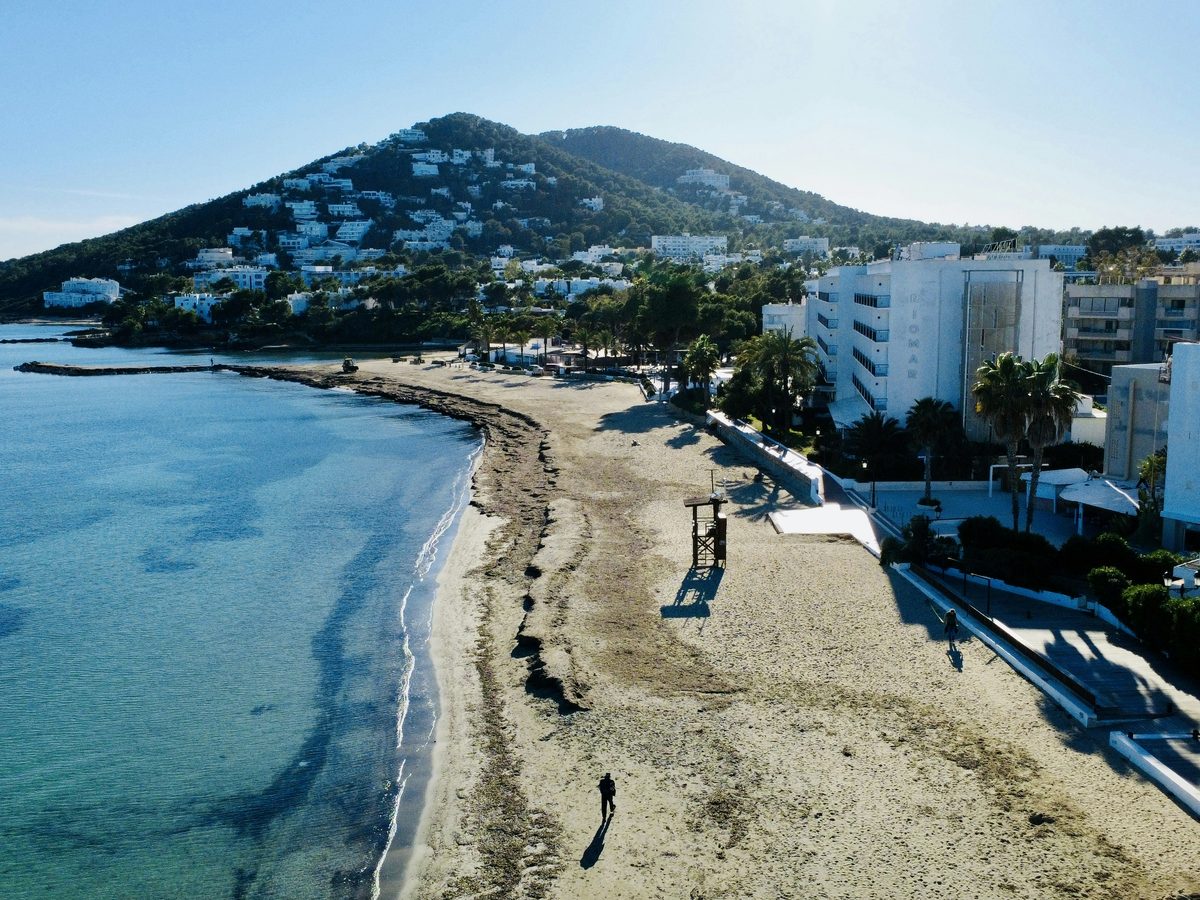
The east coast is the default, and Santa Eulalia is its capital. The town has a UNICEF child-friendly accreditation, a flat palm-lined promenade with a tourist train, a gentle Blue Flag town beach and the only river in the Balearics, with a signposted flat walking route along it. There are no superclubs and the evening is the marina, dinner and an ice cream rather than anything to plan around. Ferries link the town to Ibiza Town and the coves either side.
The two satellite resorts differ in feel. Es Canar, just north, is smaller and quieter with its own Blue Flag bay and the island's famous Wednesday hippy market on its doorstep. Cala Llonga, just south, is the most sheltered family bay on the coast, a horseshoe folded into pine hills where the shallows run out a long way and the playground stands on the sand itself. The far north around Portinatx is the longest transfer, 45 to 55 minutes on a winding road, in return for a cluster of three small shallow beaches and real quiet; nearby Cala San Vicente looks similar on the map but deepens faster underfoot and catches an onshore chop, so it suits confident paddlers more than crawlers. Inland, the agroturismos, converted farmhouses with pools, suit families happy to drive to every beach.
The two famous names need their small print. San Antonio splits in half: the West End strip is the package-party zone the headlines describe, while the bay curving south of the town is a chain of gently shelving family coves with apartments to match, and the two barely overlap. Playa d'en Bossa splits in thirds: superclubs and pool parties in the middle, calmer hotel stretches at the northern and southern ends, so a bargain there is only a bargain once you've checked which third it sits in.
If you want the easiest base for a pram, look at Talamanca just outside Ibiza Town. A boardwalk runs the length of its shallow bay, and a flat harbourside path leads from there into Ibiza Town itself, so you can walk in with the buggy rather than driving or parking. Ibiza Town proper works better as a day trip than a base.
| Area | Transfer | The swimming | The feel |
|---|---|---|---|
| Santa Eulalia | About 25 min | A gentle, shallow Blue Flag town beach off a flat palm-lined promenade | The family capital, with a marina, the only river in the Balearics and ferries to the nearby coves. |
| Es Canar | About 30 min | A calm, shallow Blue Flag bay with a quiet cove feel | Santa Eulalia's smaller satellite, home to the Wednesday hippy market. |
| Cala Llonga | 25 to 30 min | A sheltered horseshoe where toddlers can wade a long way out, playground on the sand | A compact resort folded into pine hills, quiet in the evenings. |
| Portinatx | 45 to 55 min | Three small, shallow beaches within a 15-minute walk of each other | The far-north cove cluster at the end of a winding road; the longest transfer, but the quietest. |
| San Antonio bay | 15 to 20 min | A chain of gently shelving sandy coves south of the town | Family apartments with the town's shops and transport nearby; the West End strip is the party zone, best avoided with children. |
| Playa d'en Bossa | 10 to 15 min | The island's longest beach, wide and gently sloping | Superclubs in the middle, calmer hotel zones at either end. |
Map of the main family areas
An orientation map of the areas above, the airport and the big days out. The numbers match the key beneath.
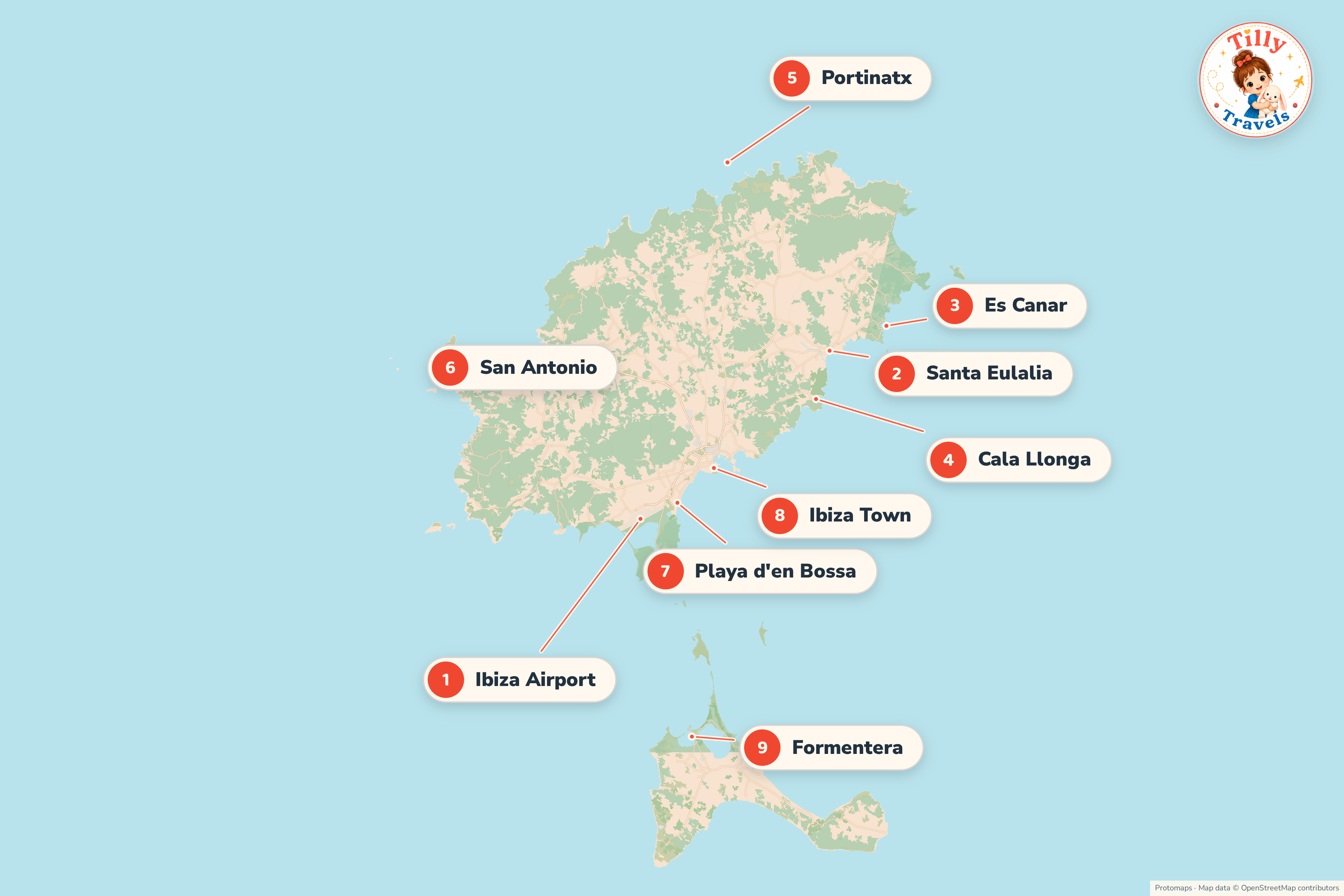
- 1Ibiza Airport 25 minutes from the east coast
- 2Santa Eulalia The family capital
- 3Es Canar The market satellite
- 4Cala Llonga The sheltered horseshoe
- 5Portinatx The quiet north
- 6San Antonio Family bay, party strip
- 7Playa d'en Bossa The club beach, ends excepted
- 8Ibiza Town Dalt Vila and the harbour
- 9Formentera The ferry day out
The beaches, sorted for small swimmers
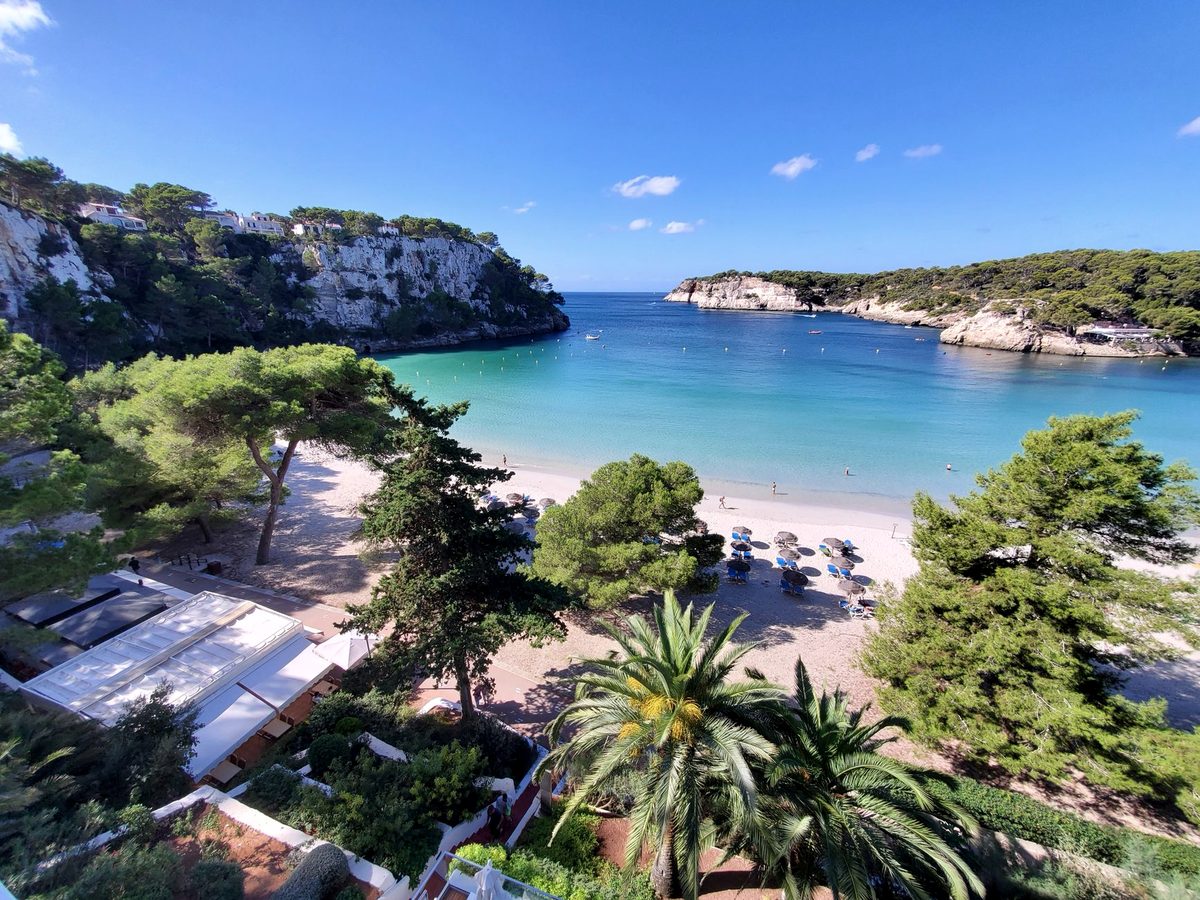
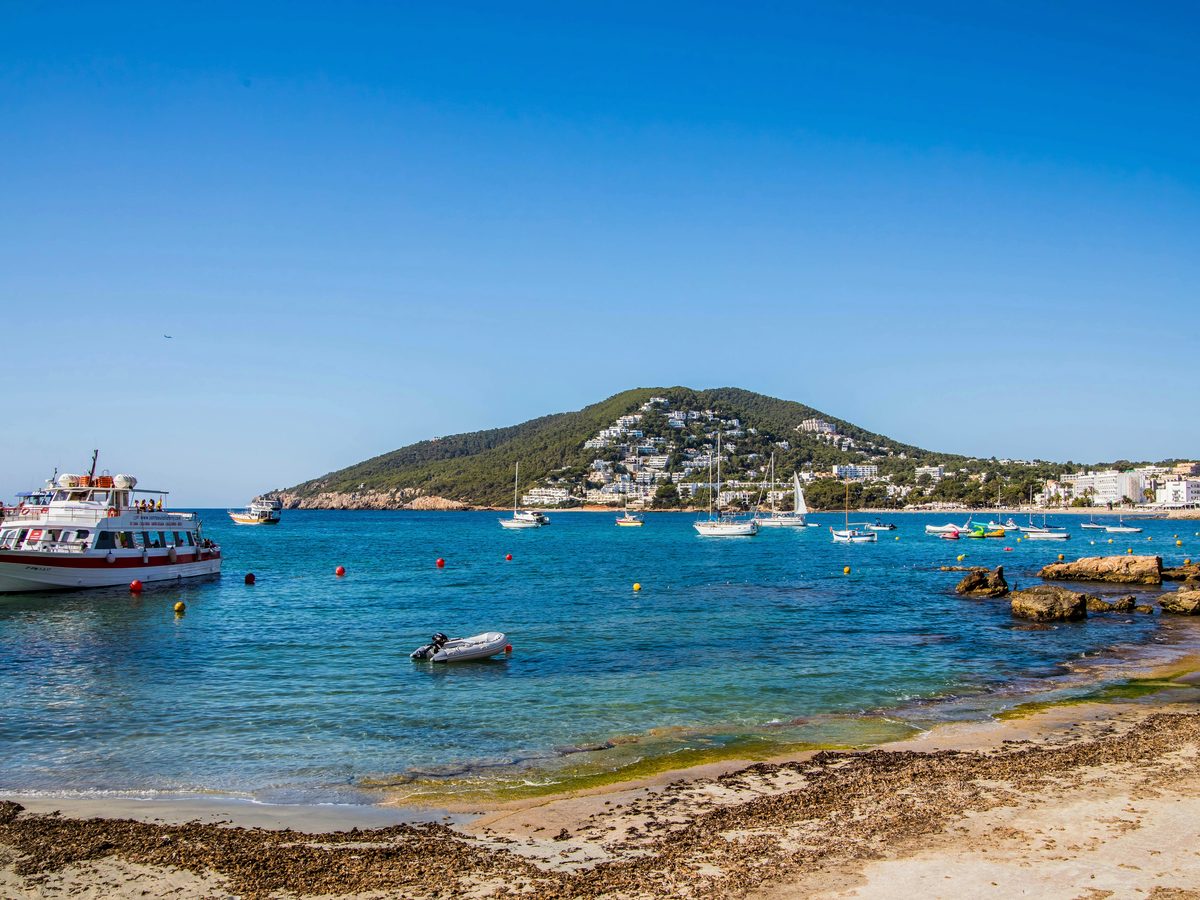
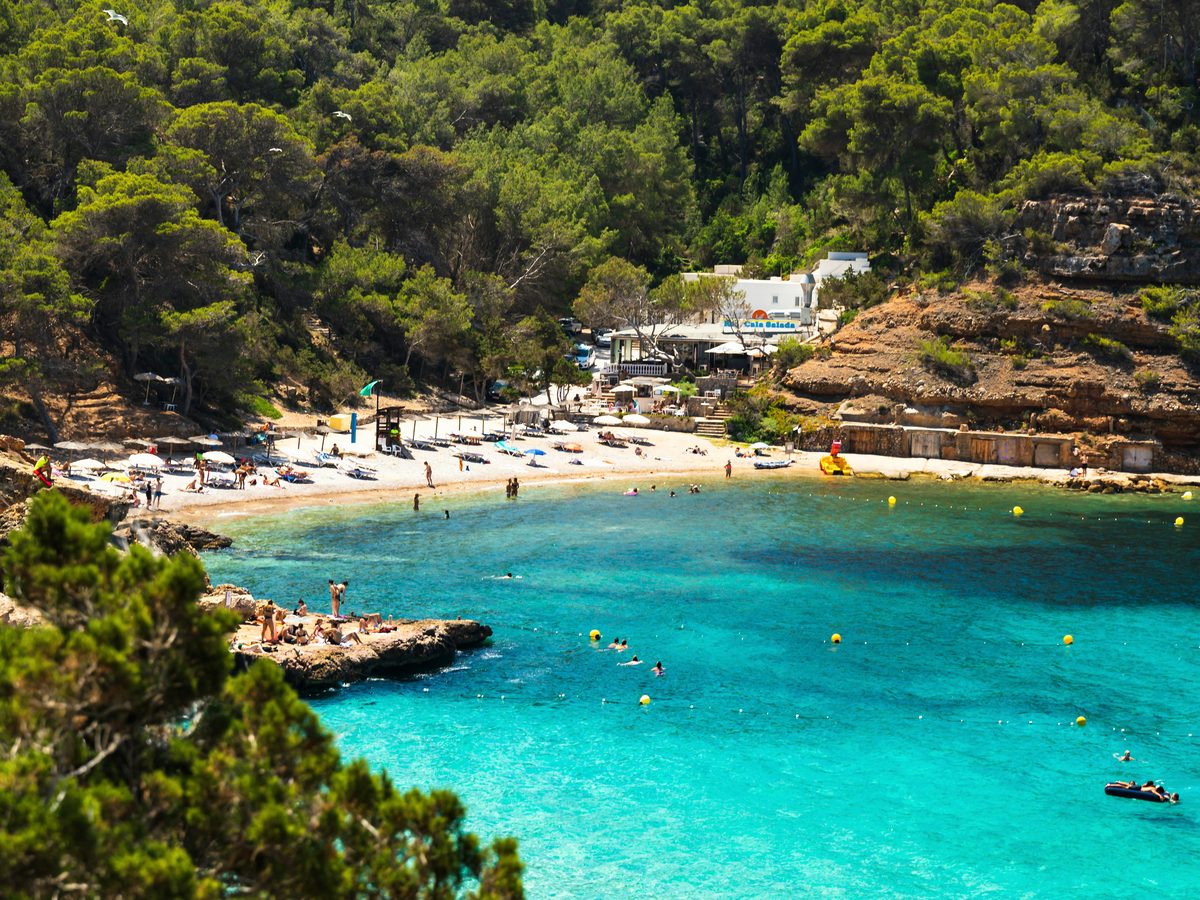
The toddler shortlist starts with shelter. Cala Llonga's pine-ringed horseshoe shelters the bay, so the water stays near-flat and shallow far out from the sand; Cala Bassa, fifteen minutes west of San Antonio by car or summer ferry, adds something rare on this coast, natural shade from a stand of old juniper trees, plus boardwalks from the car park and sand that stays shallow for fifty metres. Cala Llenya, near the east coast's San Carlos, is the quiet one: pine-shaded, shallow and Blue Flagged, with a Sunday market behind it. The town beaches at Santa Eulalia and Es Canar both shelve gently with lifeguards and full facilities, and Talamanca near Ibiza Town has a boardwalk the whole length of its shallow bay.
Two of them need a warning. Cala Conta's water is as clear as anywhere in the Balearics and fine for supervised paddling at the edge, but strong currents run between the offshore islets and swimming out is dangerous for anyone; it also fills with a sunset crowd from late afternoon. Cala Nova, north of Es Canar, is the island's surf beach, with real waves and no marked swim zone on windy days. Spain's beach flags carry legal force, with fines for swimming under a red, and the green-yellow-red system plus jellyfish signs are posted at every lifeguarded beach. The brown ribbons piled on quieter sands are dried Posidonia seagrass rather than anything wrong with the water.
Weather, days out and the daily shop
When to go through the season, the ferries and days out that suit small children, eating out and where to stock up.
Weather, May to October
The figures below are long-term averages from the airport weather station. Ibiza is the warmest and driest of the Balearics: a little over half Menorca's annual rain falls here, and without Menorca's Tramontana wind the shoulder months are noticeably calmer, which is exactly when young families tend to travel.
| Month | Daytime high | Overnight low | Rain | Wet days | Sea temp |
|---|---|---|---|---|---|
| January | 16° | 7.5° | 36 mm | 5 | 15° |
| February | 16° | 8° | 26 mm | 4 | 15° |
| March | 18° | 9.5° | 24 mm | 4 | 15° |
| April | 20° | 11.5° | 28 mm | 4 | 16° |
| May | 23° | 14.5° | 20 mm | 2 | 19° |
| June | 27.5° | 18.5° | 7 mm | 1 | 23° |
| July | 30° | 21.5° | 4 mm | 0 | 26° |
| August | 30.5° | 22.5° | 21 mm | 2 | 28° |
| September | 27.5° | 20° | 68 mm | 4 | 26° |
| October | 24.5° | 16.5° | 52 mm | 5 | 24° |
| November | 19.5° | 12° | 66 mm | 6 | 20° |
| December | 17° | 9° | 48 mm | 5 | 17° |
Typical monthly averages from weather-station records. Sea temperature is the open-water figure, so a sheltered bay can feel a degree or two warmer.
The family calendar runs against the island's famous one. Prices and crowds here follow the club season, which opens with party weekends in late April and closes with more in early October, so June lands after the opening surge and September after the school exodus, both with a sea warm enough for toddlers. From mid-September the first autumn storms arrive as short, loud cloudbursts off the warm sea rather than grey days, and a wet-hour plan covers them.
Filling the daysThings to do with little ones
Start with the coastal ferries. The ride itself is the outing: twenty minutes of harbours and coves from the deck is a complete toddler morning, and under-3s go free. The Santa Eulalia ferry runs scheduled boats between Ibiza Town, Cala Llonga, Santa Eulalia and Es Canar. On Wednesdays the Es Canar run doubles as the ride to Punta Arabí, the original Ibiza hippy market, over four hundred stalls on flat hotel grounds with a children's area and face painting; arrive before noon, ahead of the coach tours. Las Dalias, the artier Saturday market near San Carlos, runs year-round in a garden setting and draws enormous summer crowds, so it rewards an early start. Santa Eulalia adds its own Thursday market along the promenade.
The Formentera day trip is the headline outing, and a handful of smaller ones suit this age group well. The Cap Blanc aquarium near San Antonio fills a natural sea cave with rays, octopus and a turtle rehabilitation tank, small enough that a two-year-old sees everything before the wriggling starts, for a few euros each (under-fours aren't a listed ticket category, so check on arrival). The Es Vedrà viewpoint now works from the Cala d'Hort beach car park, a flat few steps to a full view of the 382-metre sea rock, after the old clifftop mirador was closed to the public; the beach below makes the second half of that outing. Acrobosc, the treetop park near Es Canar, runs a green circuit designed for ages three to five with a parent alongside on every obstacle. Dalt Vila itself is best with a carrier rather than a pram, for the cobbled climb.
Two outings need a warning. The Can Marçà caves above Port de Sant Miquel stage their underground waterfall and light show well, but the entrance is a long flight of steps cut into the cliff with no buggy route at all, which makes it a four-and-up trip in practice. Glass-bottomed boats run from San Antonio and Playa d'en Bossa towards Es Vedrà, two to three hours afloat; check the boat has shade and avoid anything marketed with a DJ. There's less big-attraction stuff here than on mainland Spain, so school-age children may run short of things to do.
Eating out with children
Resort restaurants cater for children easily: high chairs are near-universal, the menú infantil is a standard fixture and kitchens in the family zones open from about half past six, well before the Spanish dinner hour. An early resort dinner lands at a normal UK teatime. Santa Eulalia's marina strip has plenty of family-friendly restaurants with English menus; a street or two back from any waterfront, the same food costs less.
The local plate worth knowing is pa amb oli, bread rubbed with tomato and olive oil, a Balearic staple that doubles as toddler food. Beyond that you'll find more international food than on Menorca or Mallorca, with fresh fish near the harbours and plenty of gelato.
Milk, nappies and pharmaciesSupplies and the first-day shop
For the supermarkets: Mercadona in Ibiza Town, Santa Eulalia and San Antonio for the proper shop, Lidl near Ibiza Town and San Antonio, and the Eroski-affiliated SYP minimarkets filling the resort gaps at resort prices. Nappies are Dodot, Spain's name for Pampers, with good cheap own-brands beside them and swim nappies in the bigger stores. For formula, Almirón is the Spanish sister of Aptamil, stocked in pharmacies and larger supermarkets, while Mercadona's shelves carry Nidina and Hero Baby; stages don't map exactly onto UK tins, so bring enough to bridge and compare by age band. HiPP Organic is scarce enough to bring from home.
Medicines are pharmacy-only in Spain. The green-cross farmacia sells Apiretal, the children's paracetamol every Spanish parent knows, and Dalsy, the ibuprofen equivalent, with the out-of-hours rota posted in the window. For formula water, buy the bottles labelled mineralización débil; the hard, chlorinated tap water is fine for baths and washing up.
Getting around, a real week and the admin
Transfers and hire cars, what a week actually looks like, the health and document checks and a list to pack against.
Getting there and around
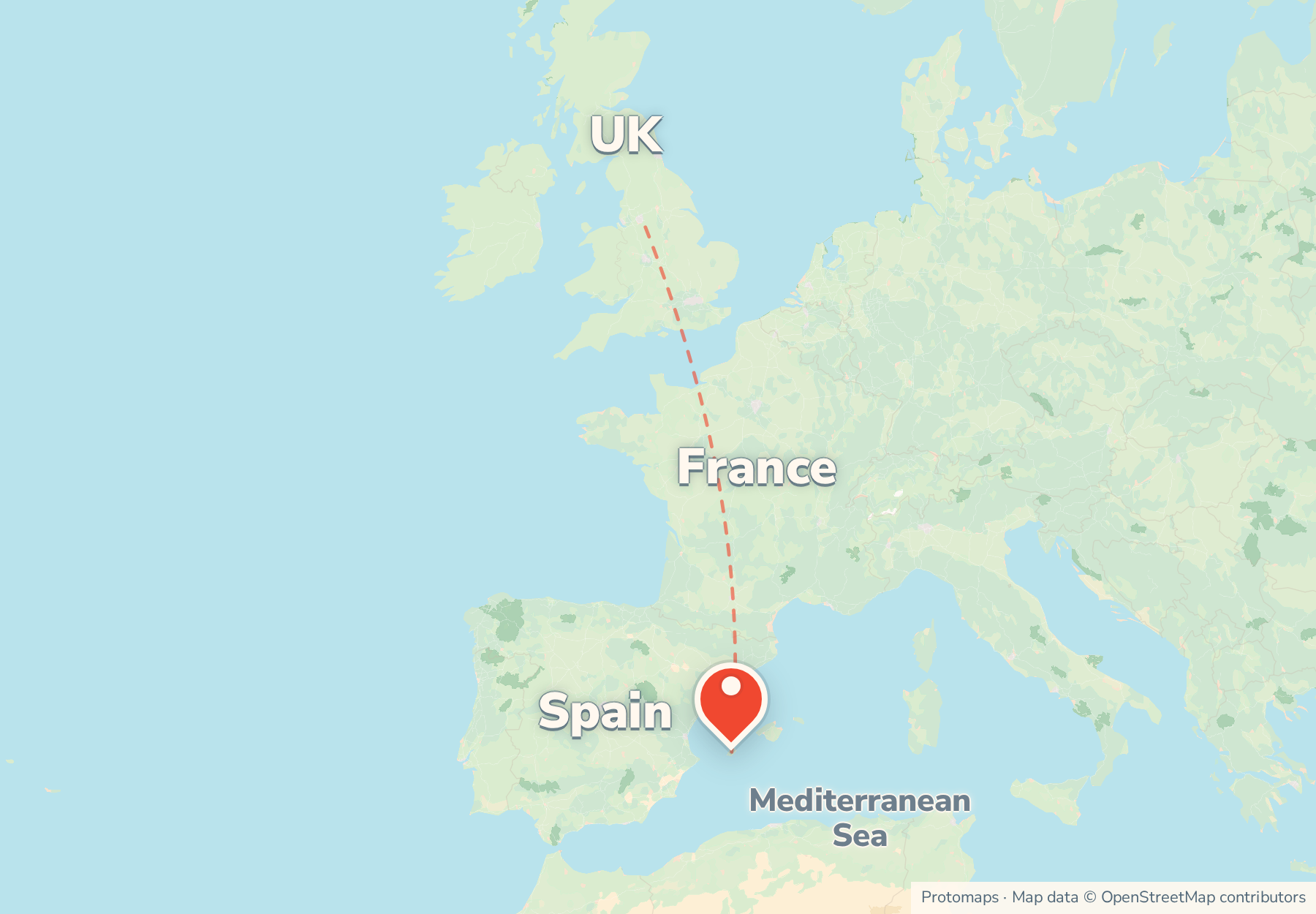
The airport sits just 4 miles (7 km) from Ibiza Town, which makes this one of the shortest door-to-beach runs in Spain: about 25 minutes to Santa Eulalia, under twenty to San Antonio and only the far north stretching towards an hour. BA, easyJet, Jet2, Ryanair, TUI and Vueling all fly in season from a wide spread of UK airports, a little over two hours from London. Pre-booked transfers with child seats are the comfortable arrival; Spanish law requires children 135 centimetres and under to ride in an appropriate seat in the back, and while a short urban taxi hop is legally exempt, the sensible plan is booking the seat anyway or bringing your own.
Once there, you can manage the east coast without a car: the coastal ferry links the family resorts, bus line 13 connects Ibiza Town and Santa Eulalia with summer lines adding the airport and Es Canar, and fares run a few euros. You'll want a car for Cala Bassa and the west, the Es Vedrà viewpoint, Portinatx and any farmhouse stay; the northern roads are winding but easy enough, and child seats from the hire desks sell out in peak weeks, so book them with the car. One thing to know about: the night buses labelled discobus are the club network, not a late ride home from dinner.
What a real week looks likeA realistic week with little ones
A short transfer to the east coast, a first paddle on the town beach and dinner on the promenade at six.
The cove in the morning, lunch and a nap, then the pool or the playground until an early dinner.
The little ferry to Es Canar for the Wednesday hippy market, face painting included, home by nap time.
The Formentera ferry in June or September, or the drive west for Cala Bassa and the Es Vedrà viewpoint.
A slow morning on the sand, a final ice cream on the promenade and a 25-minute run to the airport.
With young children, the cove, the pool, one market morning and one boat day fill an Ibiza week without the car ever leaving the space it parked in on day one.
The practical adminHealth, documents and the boring bits
Check the GOV.UK Spain advice before booking and travelling. Passports need to be issued within the last ten years and valid three months beyond departure, children's included. Carry a GHIC each plus travel insurance: the GHIC covers Spain's state system, with Can Misses in Ibiza Town the island's main public hospital and health centres in each resort town for the smaller stuff. The emergency numbers are 112 generally and 061 for the Balearic medical line.
The main thing to manage is the sun. Summer UV here runs very high, so shade between 11 and 4, UV suits and proper cream are the real safety kit. Jellyfish arrive episodically on some winds, flagged at lifeguarded beaches, painful rather than dangerous. Respect the legally enforceable flag system, keep paddlers at the edge at Cala Conta and Cala Nova, and the rest is ordinary supervision.
Before you payBooking checklist
- Check exactly where on its beach a Playa d'en Bossa or San Antonio hotel sits before paying; the quiet ends and the family bay are a world away from the middle and the strip.
- Price September: club-season demand drops, the sea stays warm and schools are back.
- Book the child seat with the hire car or transfer; peak-week supply runs out.
- Pack a parasol or sun tent for Formentera and the less developed coves.
- Ferry-first plan? Base in Santa Eulalia, Cala Llonga or Es Canar and check the seasonal timetable.
- Wednesday is Punta Arabí market day; build the week around it rather than discovering it on Thursday.
- Bring HiPP formula from home if that's your brand, and enough of anything staged to bridge the trip.
- Pack a carrier for Dalt Vila and any cave or viewpoint scrambling.
- Confirm the cot, the high chair and the cancellation terms with the accommodation.
- Recheck the GOV.UK Spain advice and every passport before you go.
Resort guides in Ibiza
We've researched these places to stay in Ibiza for families with young children. Each guide covers what it's like, who it suits and what to check before you book.
Questions, links and the last word
The things families ask most, the official pages worth a bookmark and when this guide was last refreshed.
Common parent questions
Will we hear the clubs from a family resort?
No. The family resorts sit a 25-minute drive away on a different coast, and around Santa Eulalia the evening is restaurants, the promenade and an early night.
Are the western beaches worth the drive from the east coast?
Cala Bassa is, for its rare natural shade and the shallow sand, though its beach club plays lounge music all day. Cala Conta nearby is the famous one for clear water, but currents make it edge-paddling only. Both are a fair drive from an east-coast base, so they suit a one-off outing rather than a daily beach.
Is Formentera doable with a baby?
Yes, with planning. The fast ferry from Ibiza Town takes about half an hour, children under 4 often travel free and the sea at Ses Illetes is shallow and clear. Shade is the problem: the sand spit has essentially none, so a parasol, water and an early start before the midday sun all matter. June or September mornings are best; August is crowded and very hot.
Will July and August be too hot for a baby?
They're manageable if you plan around the middle of the day. Highs sit at 30 degrees and the UV is very high, so a baby needs shade between roughly 11 and 4, with the beach kept to early morning and late afternoon. A hotel pool with shade matters more in those two months than in June or September.
Do we need a hire car?
Not for an east-coast week. The Santa Eulalia ferry links Ibiza Town, Cala Llonga, Santa Eulalia and Es Canar, under-3s ride free, and buses cover the main corridors. You'll want a car for the west-coast coves, the Es Vedrà viewpoint, the far north and any farmhouse stay. Spanish law puts children of 135 centimetres and under in a proper seat in the back, so pre-book the seat or bring your own.
Can we buy our usual formula and nappies?
Mostly, though brand names differ. Pampers sells as Dodot, Aptamil's sister is Almirón, and HiPP Organic is the one to bring from home.
What's the brown stuff piled on some beaches?
Dried seagrass, and it's nothing to worry about. The ribbons that wash up are cleared from the busy beaches in season and left on wilder ones, and the dark patches you see offshore are the living meadows, not rocks.
Is Dalt Vila worth it with a pram?
Go, but take a carrier instead. The walled old town is steep, smooth-worn cobble nearly all the way up, technically passable with a buggy through the main ramp gate and hard work beyond it. With a carrier the ramparts, the cathedral and the views over the harbour to Formentera are an easy morning, best before the heat. The harbour promenade below the walls is flat and pram-friendly if you'd rather skip the climb.
See more Ibiza photos
Open the photo gallery →Useful links
- GOV.UK Spain travel advice: passport rules, entry requirements and health updates before you travel.
- Ibiza Travel: the island's official tourism site.
- Santa Eulalia Ferry: timetables for the east-coast resort ferries.
- Baleària: Ibiza to Formentera ferry timetables and fares.
Last updated 12 June 2026.