Hurghada with little ones
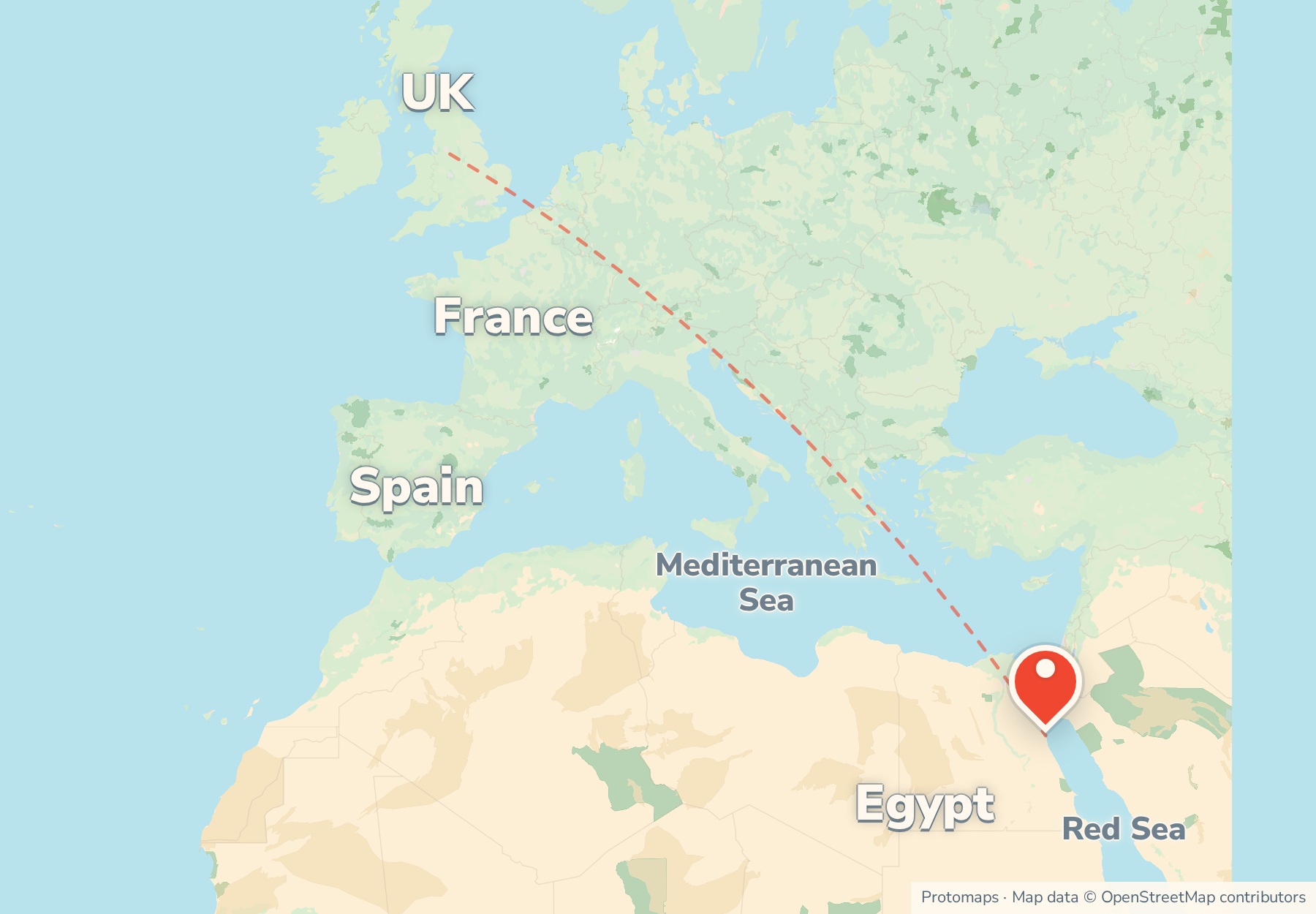
Hurghada is the first place we cover where a toddler can swim in the sea in January. Egypt's Red Sea coast is a winter-sun destination, with a sea in the low twenties even midwinter, more winter sunshine than the Canaries and next to no rain, sold mostly through all-inclusive resort zones built for families. The coral runs close to shore here, so some hotel beaches reach swimming water along a jetty rather than through sandy shallows, which makes the right hotel matter as much as the right zone.
On this page
A family verdict at a glance
The quick read before the detail: who Hurghada suits, the season to aim for and what to nail down before you book.
Best for
Winter warmth no European destination can match, all-inclusive resorts built for children and a reef on the doorstep.
Maybe not for
You want to wander beyond the resort gates freely, or you'd rather not run the bottled-water and insurance routine.
Best ages
Fine from babyhood with the right hotel; the reef has most to offer once children can snorkel.
Best areas
El Gouna for the lagoons, northern Makadi Bay for the package classic, Soma Bay for quiet.
Why come
October half term at 32 degrees and February at 24, while the UK does winter.
Check before you book
Your exact hotel's beach entry, sandy or jetty, and that the insurance properly covers Egypt.
Winter sun, and what it costs
The winter is the reason to come. Hurghada's sea sits around 22 degrees in late winter and rises to 29 in summer, the air gives 22-degree January days and eight hours of winter sun, and rain barely happens. The Canaries match the air temperature but not the warmer sea, the longer sunshine or the near-certainty of a dry week. What you pay for that is the admin around the trip: a flight near six hours, a visa for everyone including the baby, full travel insurance because no GHIC covers Egypt, and bottled water for drinking, bottle-making and teeth.
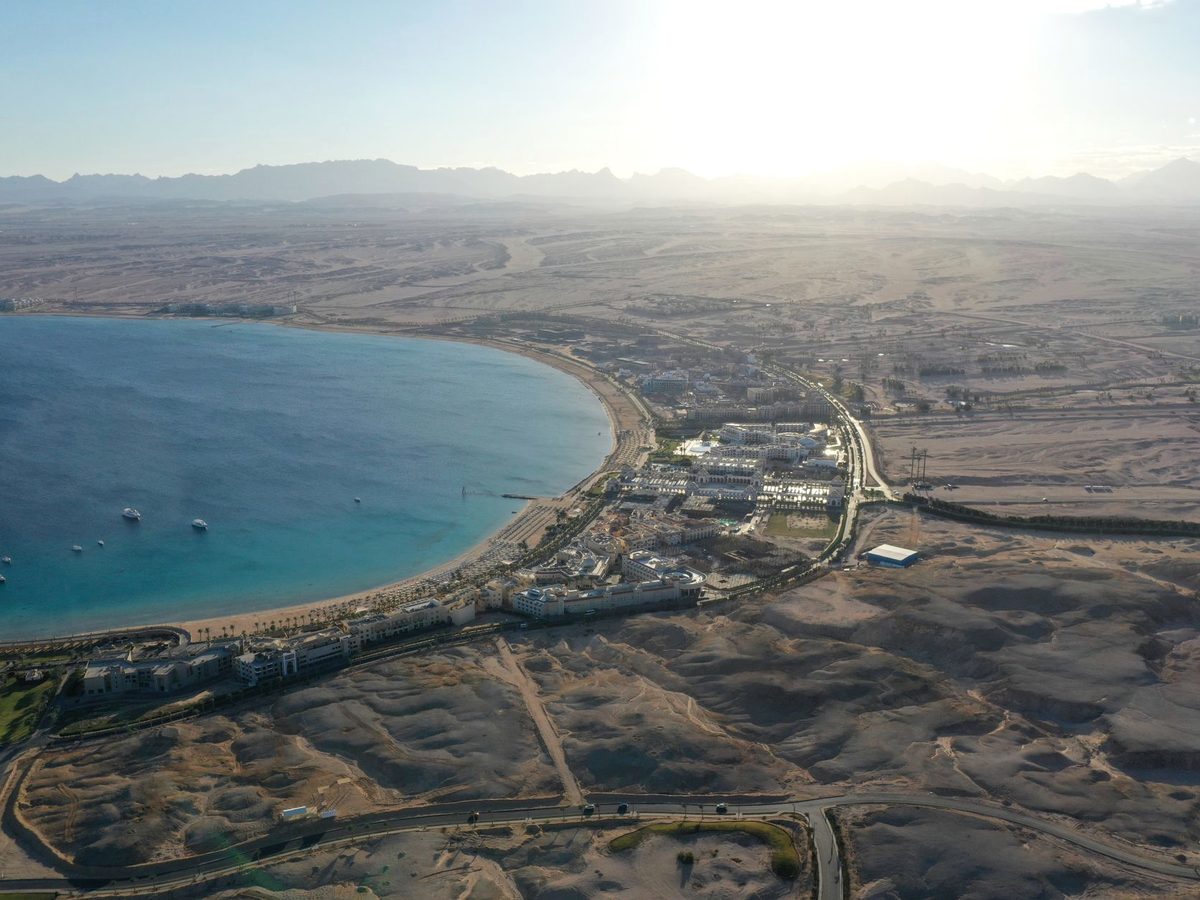
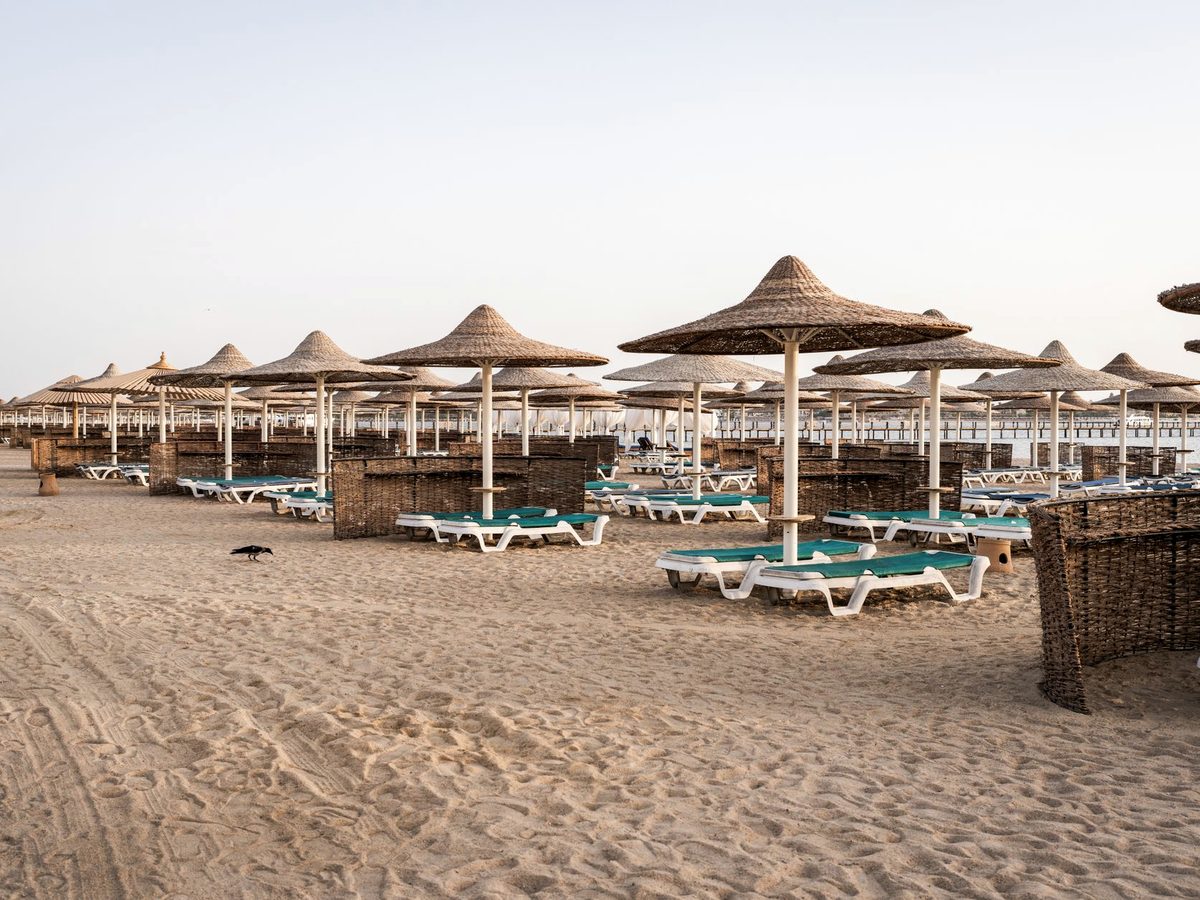
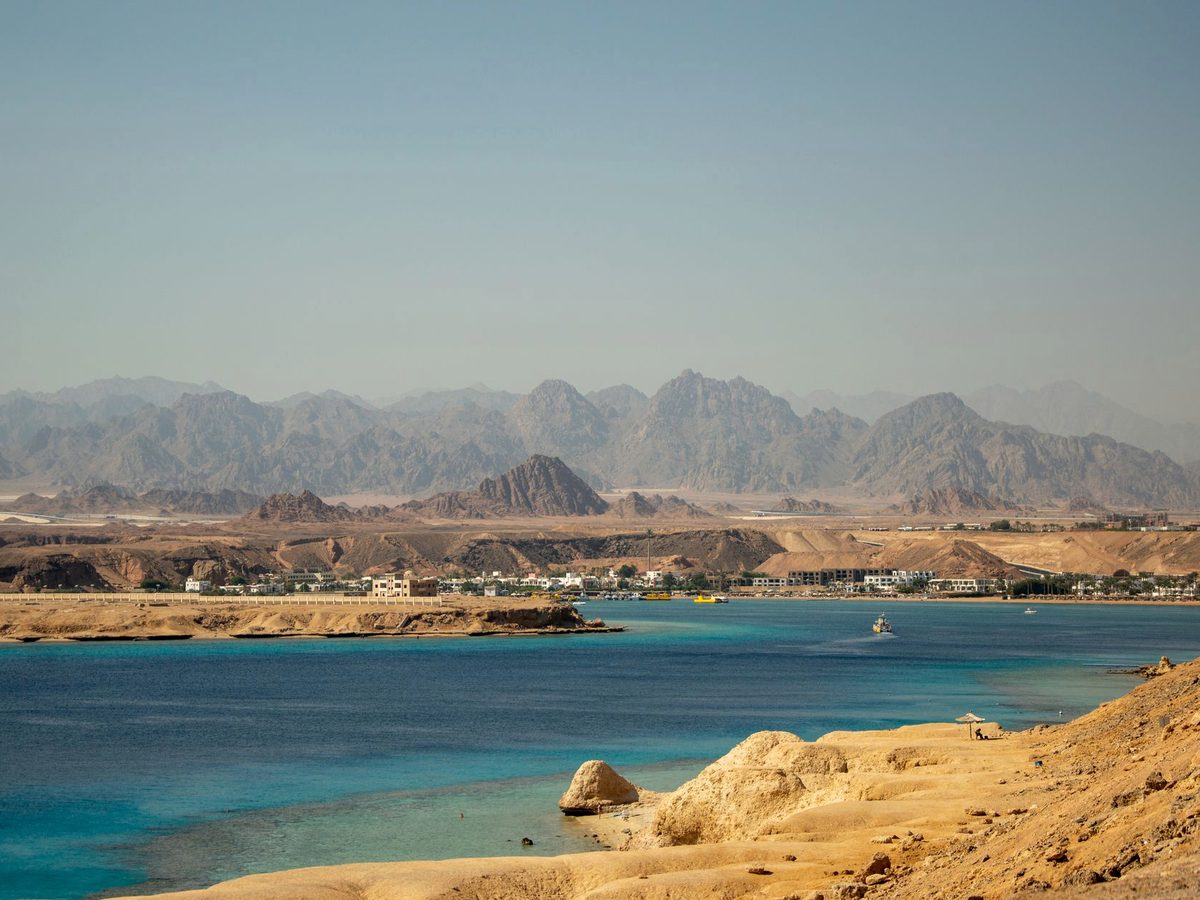
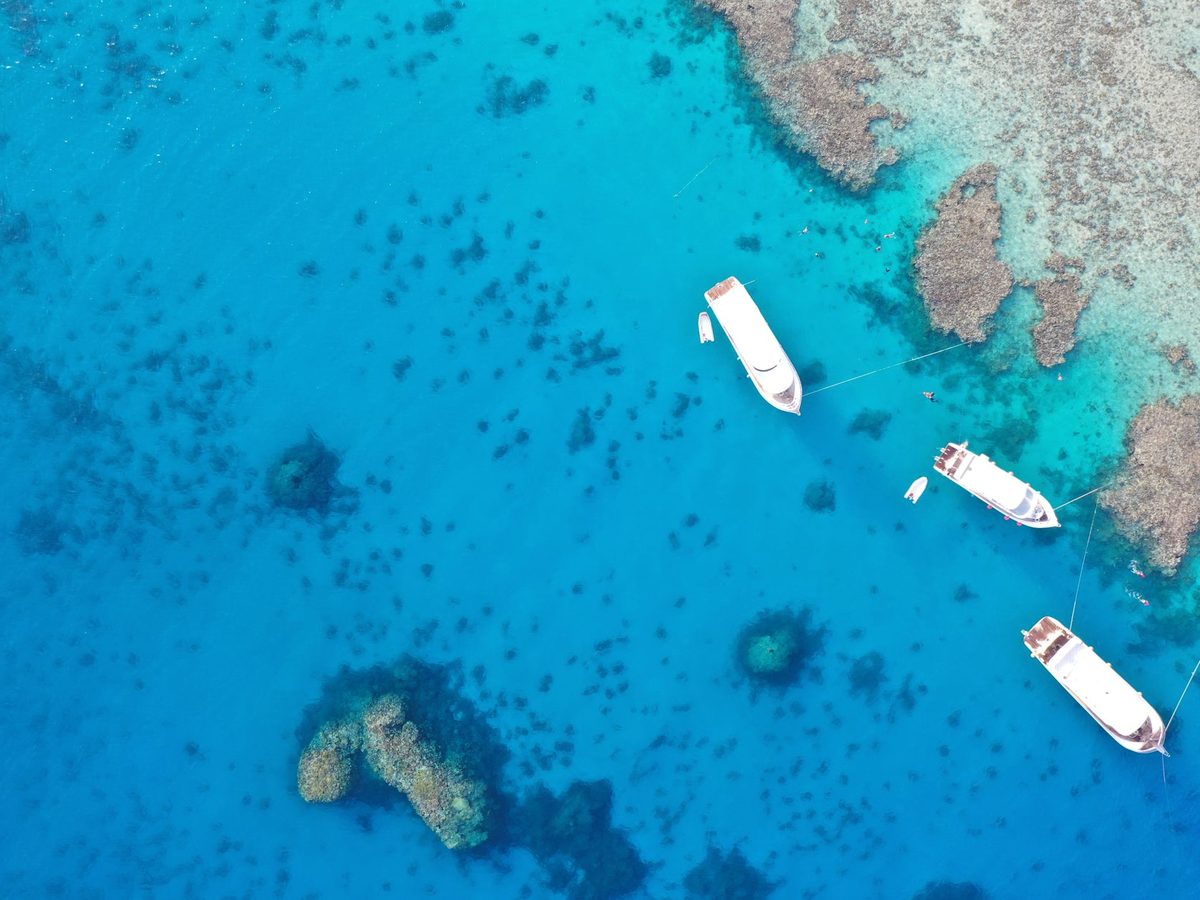
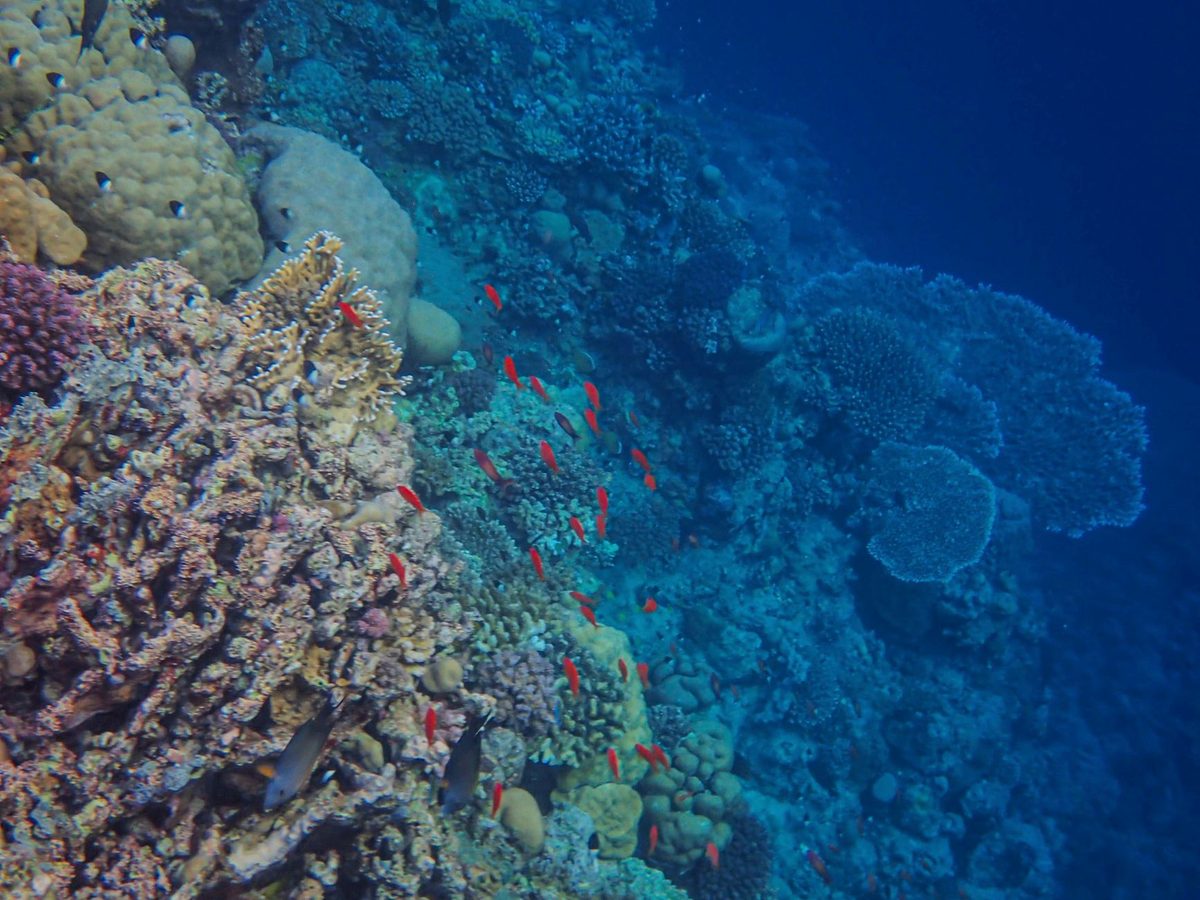
The coral that makes this coast famous for snorkelling often grows right up to the shoreline. At plenty of hotels the sea reaches swimming depth along a jetty over the reef flat rather than through a sandy paddle, which suits snorkellers and leaves a wading toddler nothing to do. So the zones split by water: El Gouna's sheltered lagoons and the sandy, gradual entries of northern Makadi Bay suit small children, while the long-jetty hotels further south make more sense once your children already swim.
A quick gut checkIs Hurghada right for your family?
Worth comparing if
You want real warmth in the depths of the UK winter and an all-inclusive week with everything on site.
Weigh it up if
The extra admin reads as stress rather than housekeeping, or July-August heat near 38 degrees is your only window.
To sort out before booking
The zone, the specific hotel's beach entry, the visas and an insurance policy worth the name.
The numbers, the basics and the ages
Everything you'd want to skim first: the quick facts, the everyday practicalities and how Hurghada changes as children grow.
Quick facts for UK families
Money, plugs, language and the basics
- Hurghada is the hub of Egypt's Red Sea coast, with the family resort zones, El Gouna, Sahl Hasheesh, Makadi Bay and Soma Bay, strung along the desert shore around it.
- The currency is the Egyptian pound, though resorts and excursions price in euros and dollars; carry small dollar or euro notes for tips, which are expected at every turn here.
- Sockets are the round two-pin European type, so UK plugs need an adapter. The voltage matches the UK.
- The language is Arabic, with easy English throughout the resorts and tourist services.
- The clocks run two hours ahead of the UK.
- Tap water is not for drinking, bottle-making or teeth; bottled water is cheap, everywhere and the rule for anything that goes in a mouth.
- There's no GHIC cover in Egypt: comprehensive travel insurance is essential, the private hospitals in resort areas are the ones to use and 123 calls a public ambulance, though the hotel and your insurer's line are usually the faster route.
- Every traveller needs a visa, babies included, at about 25 US dollars each (last checked June 2026) via the official e-visa portal or the airport kiosks.
Hurghada by age and stage
Babies
The winter warmth is a gift, but the long flight, the bottled-water drill and the bring-your-own formula rule make this an admin-heavy baby trip.
Toddlers
Lagoon shallows at the right hotels, shallow pools made for this age and a semi-submarine with fish at the windows.
Preschoolers
The aquarium's shark tunnel and feeding shows, camel walks at a Bedouin camp and glass-bottomed boats over the coral.
Young children
The Red Sea has most to offer this age: first snorkelling over a real reef, boat days to the islands and a wild-dolphin watch from the deck.
Where to base yourselves
The resort zones side by side, an orientation map of the coast and which beaches suit small swimmers.
Where to stay with young children
El Gouna has the best toddler water and the most town-like feel. It's purpose-built across a lagoon system linked by bridges, and its hotel beaches face sheltered, shallow water that stays calm even on a windy day, with tuk-tuks, boat taxis, restaurants and an air-conditioned soft-play centre behind them. It feels like somewhere rather than a compound, and it costs accordingly; the transfer is one of the longer ones, against the traffic to the north.
South of the airport, the zones differ a fair bit. Sahl Hasheesh is a quiet gated bay where the beach entry varies hotel by hotel, from sandy shallows to pier-and-ladder, so it pays to research the specific property. Makadi Bay is the classic British-package cluster, with kids' clubs and waterparks as standard, and it divides north from south: the northern end has sandy, gradual entries with managed swim channels for small children, while the southern hotels reach the sea down jetties two and three hundred metres long, fine for snorkelling parents and no good for paddlers. Soma Bay, furthest out, is the five-star peninsula with long private sandy fronts, the quietest of the zones and the breeziest.
Hurghada town swaps the resort feel for street life, with vendors at the gate and hotel beaches that range from sandy coves to rock-and-coral entries. Its family draw is the cluster of waterpark hotels, where the pool complexes give children more to do than the beach, which works for a winter week when most of the swimming happens in the pool anyway. Whichever zone you pick, check the named hotel's beach entry and recent family reviews before booking, not the brochure's beach photograph.
| Area | Transfer | The swimming | The feel |
|---|---|---|---|
| Hurghada town | 10 to 20 min | Hotel beaches that swing from sandy shallows to rock and coral; check yours | The real-city option, with vendor bustle outside the gate and the big waterpark hotels inside it. |
| El Gouna | 35 to 50 min | Sheltered lagoons, shallow a long way out and calm even in wind | The purpose-built lagoon town: tuk-tuks, boat taxis and the most town-like base on the coast. |
| Sahl Hasheesh | 20 to 30 min | Entry varies sharply by hotel, from real sandy shallows to pier-and-ladder | The quiet gated bay, upscale and self-contained. |
| Makadi Bay | 25 to 35 min | Sandy, gradual entries at the northern end; long jetties at the southern end | The all-inclusive family cluster with a British-package feel and waterparks on tap. |
| Soma Bay | 40 to 55 min | Long private sandy fronts with calm, shallow water reported | The quiet five-star peninsula; the wind here also brings the kitesurfers. |
Map of the main family areas
An orientation map of the areas above, the airport and the big days out. The numbers match the key beneath.
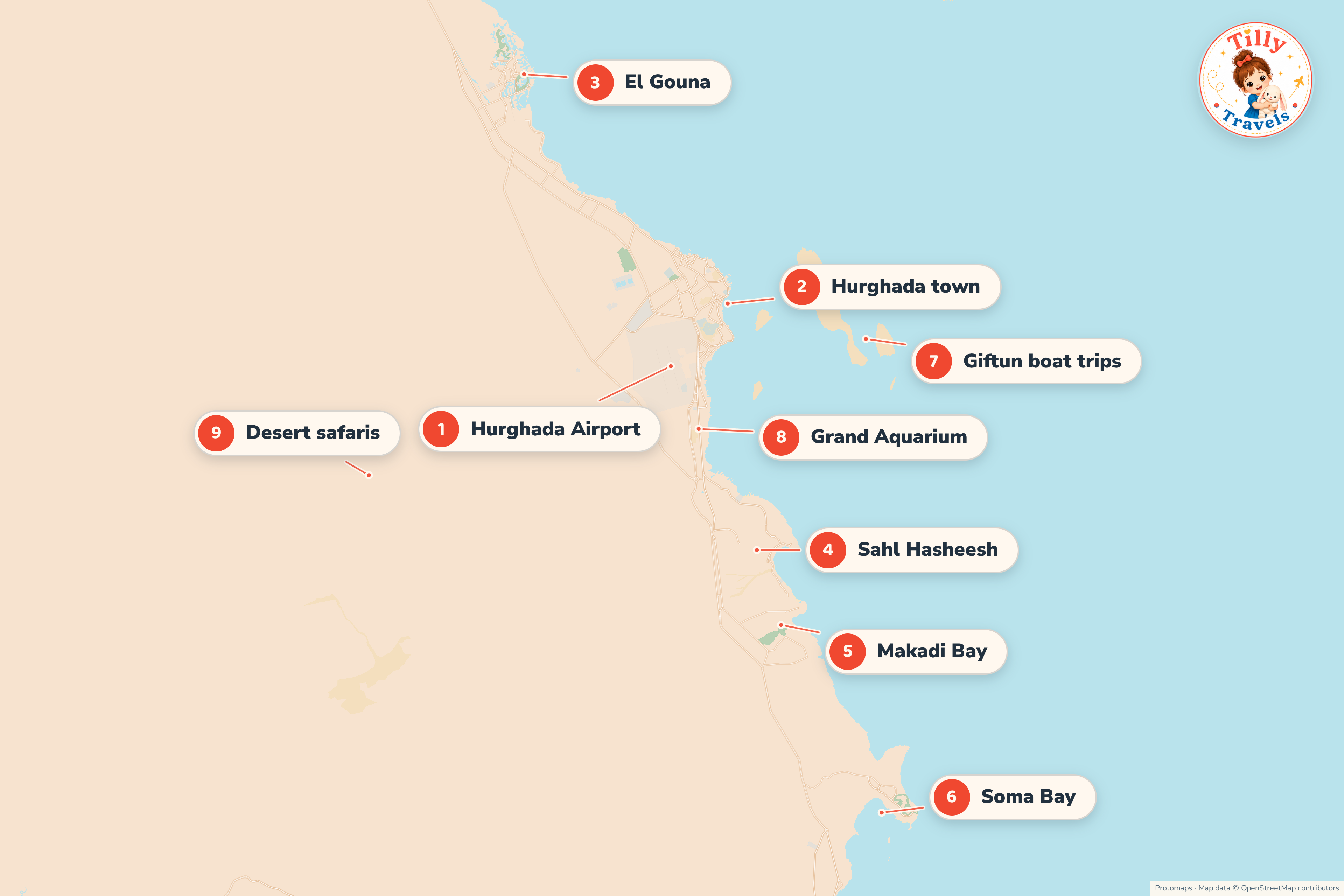
- 1Hurghada Airport Visas at the kiosk
- 2Hurghada town Street life and waterpark hotels
- 3El Gouna The lagoon town
- 4Sahl Hasheesh The quiet gated bay
- 5Makadi Bay The package cluster
- 6Soma Bay The five-star peninsula
- 7Giftun boat trips Reefs and islands
- 8Grand Aquarium The shark tunnel
- 9Desert safaris Jeeps and camels
The beaches, sorted for small swimmers
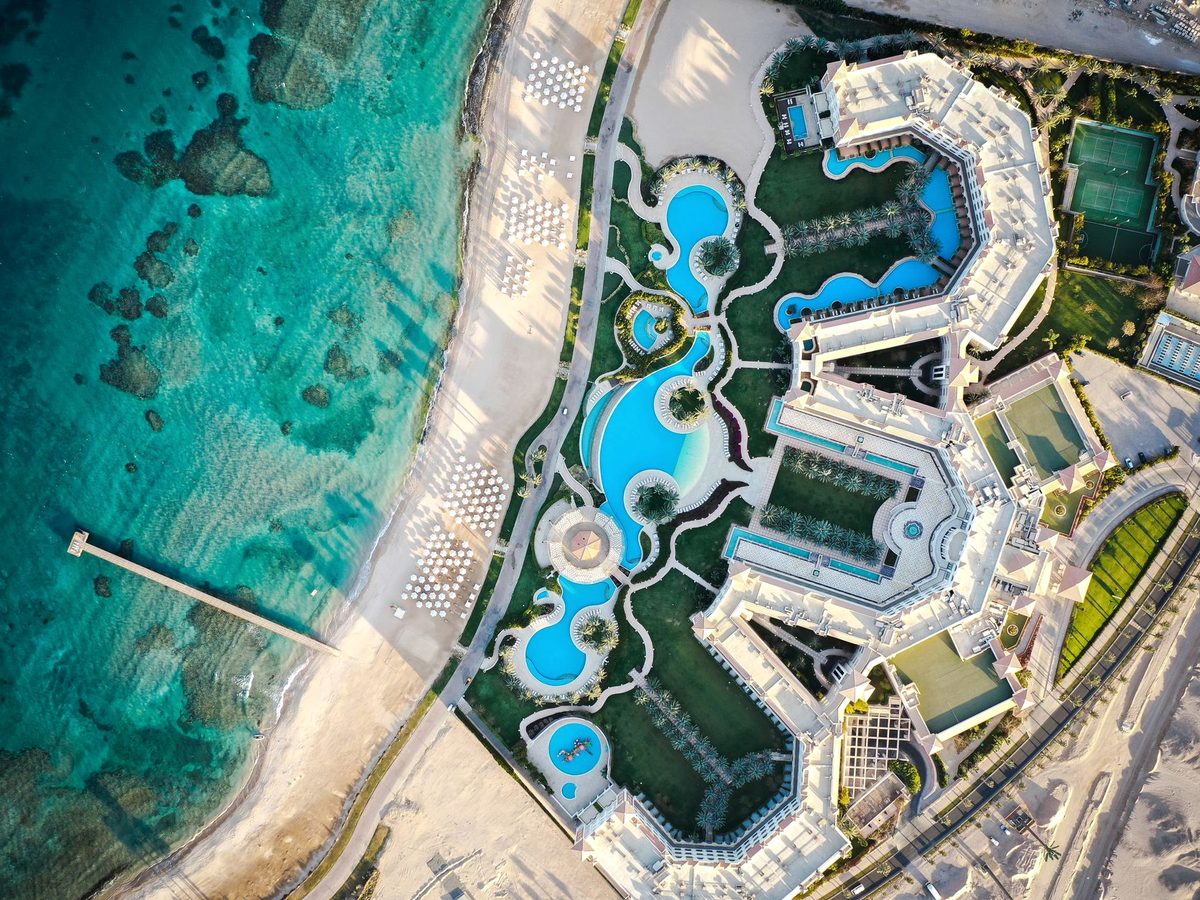
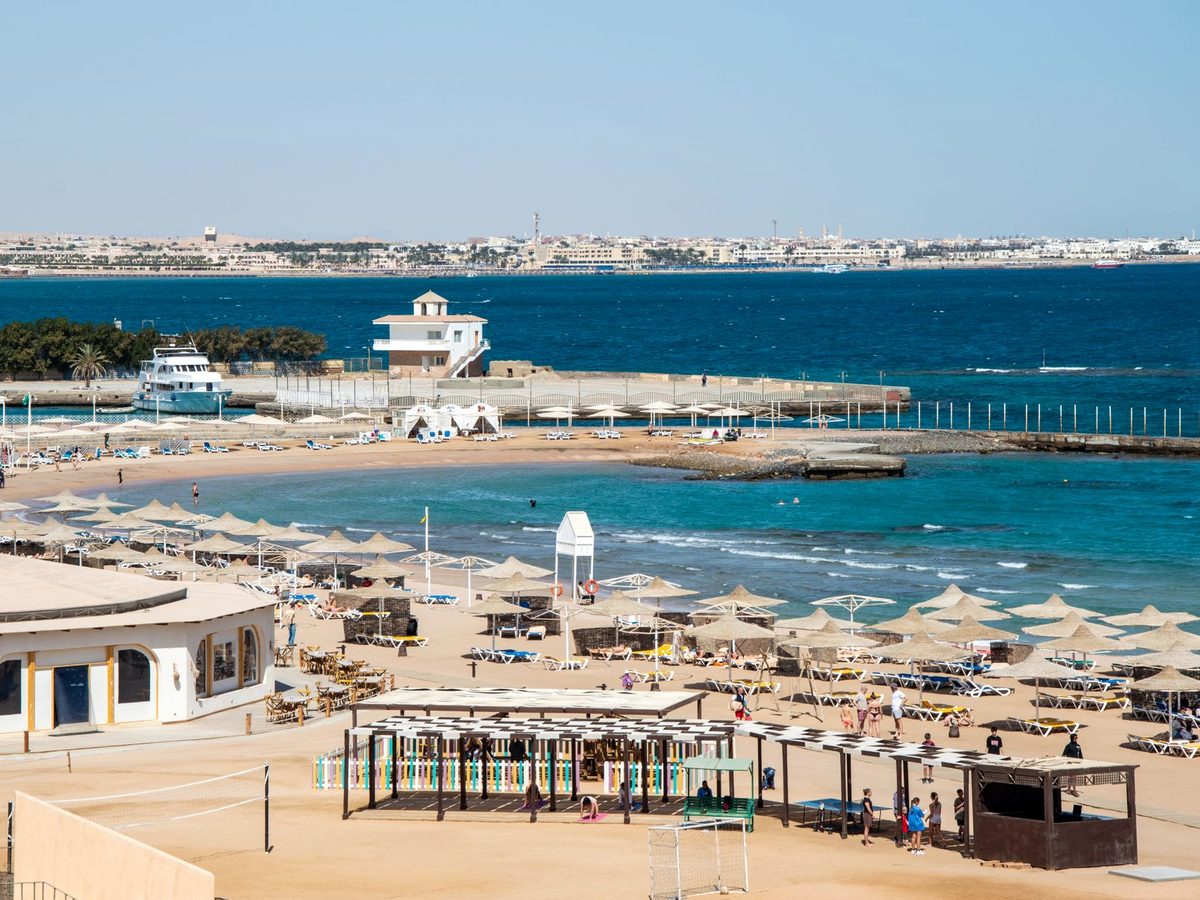
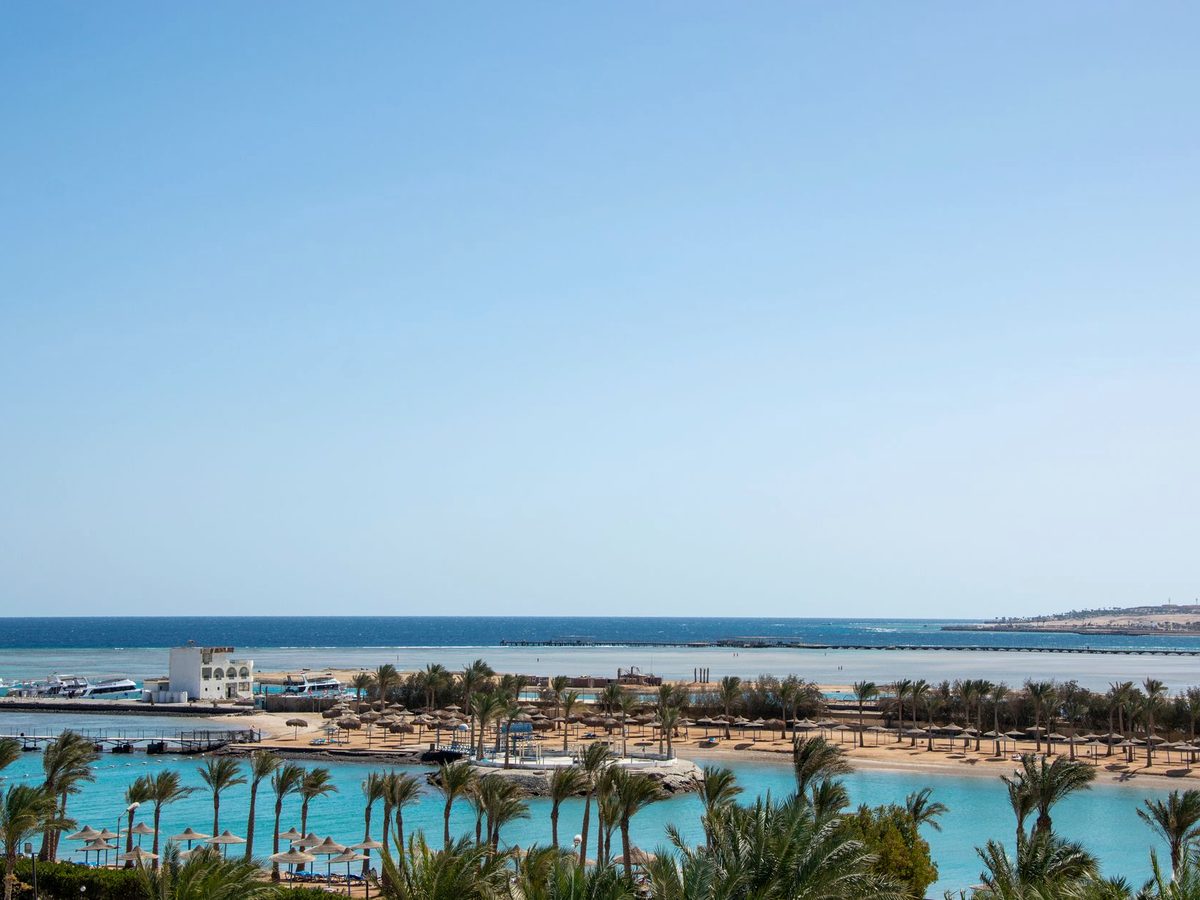
Beaches here come in two kinds. A sandy or lagoon entry deepens gradually, so small children can wade: El Gouna's sheltered lagoons are the shallowest, shallow enough to walk out a long way, with the sandy northern stretch of Makadi Bay and a few named sandy-entry hotels at Sahl Hasheesh and in town. The other kind is the jetty, a walkway out over the reef flat with ladder steps into deeper water, standard at the southern Makadi hotels and dotted everywhere else. Both are proper Red Sea beaches, but only the first suits a paddling toddler.
Pack reef shoes for everyone, because coral cuts run deep and infect quickly in the heat, and even sandy zones hide stony patches. A coastal breeze blows most days, milder in summer and brisker in midwinter, and it's the same wind the kitesurfers come for, so a pop-up windbreak is worth the luggage space. The water itself is clear, with visibility of tens of metres and fish coming into the shallows, so one parent can snorkel a reef while the other stays with a child in the shallows nearby.
Weather, days out and the daily shop
When to go through the season, the reef and desert outings that suit small children, eating out and where to stock up.
Weather, October to April
The figures below cover the October to April window most families come for. It barely rains here in any month, the sun shines more than anywhere else we cover, and the sea's whole annual range stays inside seven degrees.
| Month | Daytime high | Overnight low | Rain | Wet days | Sea temp |
|---|---|---|---|---|---|
| January | 22.5° | 11.5° | 0 mm | 0 | 23° |
| February | 23.5° | 12.5° | 0 mm | 0 | 22° |
| March | 26.5° | 15° | 1 mm | 0 | 22° |
| April | 30° | 18.5° | 0 mm | 0 | 23° |
| May | 34° | 23° | 0 mm | 0 | 25° |
| June | 36.5° | 26° | 0 mm | 0 | 27° |
| July | 37.5° | 28° | 0 mm | 0 | 28° |
| August | 37.5° | 28° | 0 mm | 0 | 29° |
| September | 35.5° | 26° | 0 mm | 0 | 28° |
| October | 32° | 22° | 5 mm | 0 | 27° |
| November | 28° | 17.5° | 6 mm | 0 | 26° |
| December | 24° | 13.5° | 0 mm | 0 | 25° |
Typical monthly averages from weather-station records. Sea temperature is the open-water figure, so a sheltered bay can feel a degree or two warmer.
October half term is the warmest of the comfortable months, with 32-degree days and a 27-degree sea, and November runs it close with the worst heat gone. Deep winter brings a cooler sea, low twenties, with the sunshine still reliable; you swim mostly in the heated pool, with the sea for short dips. The months to respect are May to September, when days run from 34 to nearly 38 degrees; resorts run on air conditioning and shaded pools, but the middle of an August day here is no place for a baby, and we'd point summer travellers back at Europe. Winter UV still burns; the cream-and-hat rules hold all year.
Filling the daysThings to do with little ones
Start with the reef, which has an easy version for small children: the semi-submarine from the marina, an air-conditioned cabin below the waterline with fish drifting past the windows, an outing of two to three hours that suits this age group better than anything else afloat. Glass-bottomed boats run the simpler, shorter version with the youngest usually free, and the full-day Giftun island trips work once at least one child can snorkel, with one parent in the water and a beach for the smallest; book licensed operators, ask for child life jackets before you sail and skip the cheapest crowded-deck options. The wild dolphin trips and their ethics are covered in the questions below.
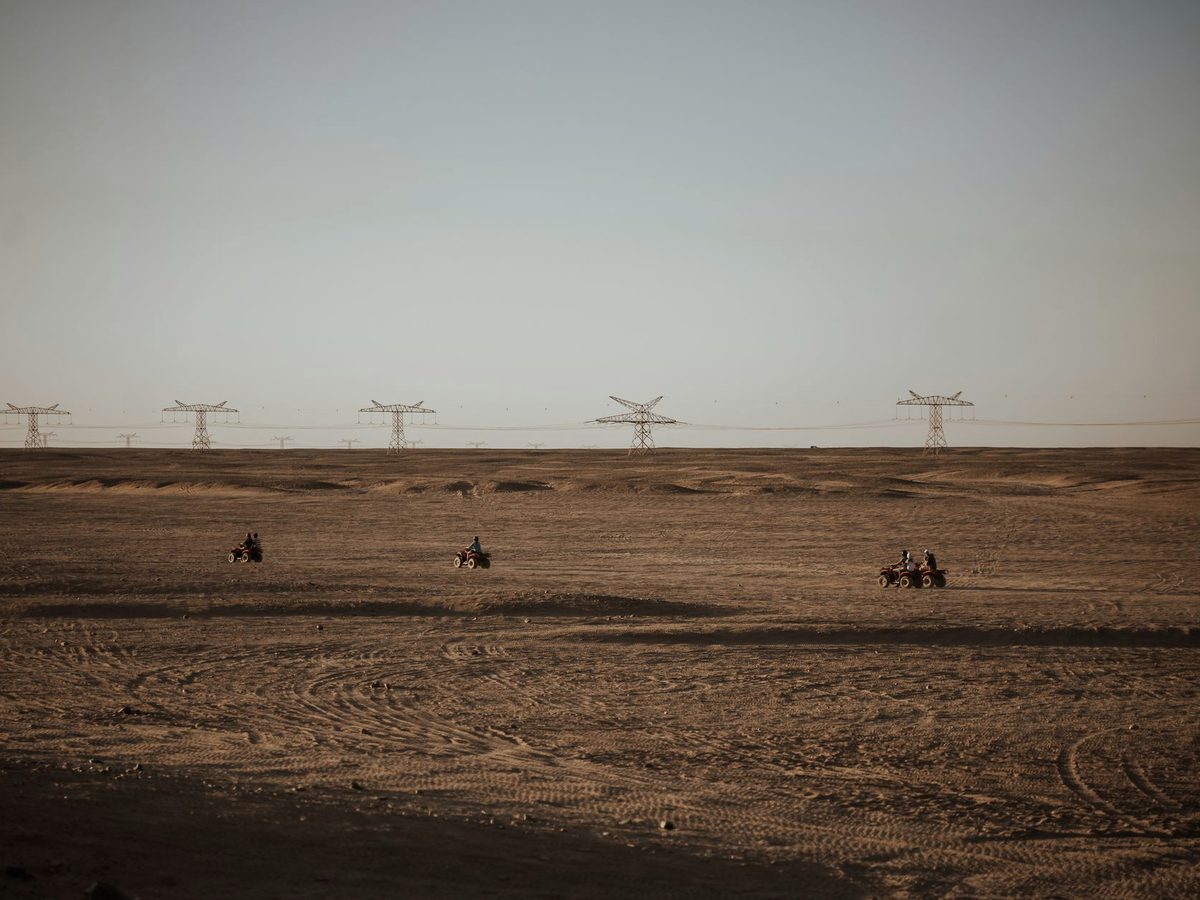
Off the water, the Grand Aquarium south of town is worth the entry: a walk-through shark tunnel, twice-daily feeding shows, a small zoo and air conditioning throughout, with under-fours free; leave the double buggy at the hotel, since twins-width prams are barred at the door. The other big day out is the desert, in the cooler months, a jeep run to a Bedouin camp with a short camel walk, bread from the fire and clear desert skies, best booked as the family-jeep version since quads are strictly for over-16s and the full evening shows run past toddler bedtime. El Gouna makes a fine day out from any other zone, soft play included, and the questions below cover Luxor and the Pyramids.
Eating out with children
Most families eat where they sleep: the all-inclusive buffets are set up for children, with pasta, rice, grilled chicken and chips on permanent rotation and high chairs standard. A few habits help: choose food freshly cooked and piping hot from busy stations, peel fruit yourself, drink bottled water at the table and judge salads case by case.
Beyond the buffet, El Gouna's marina restaurants and the better town spots serve familiar international menus, and Egyptian staples are worth trying: koshari, grilled meats and flatbreads suit small appetites better than their names suggest. Tipping is small and frequent here, so keep a pocket of small notes handy.
Milk, nappies and pharmaciesSupplies and the first-day shop
Get supplies right before you go. Formula is the big one: it's pharmacy-regulated here and the familiar brands and stages are not dependable, so the entire trip's supply flies out with you, split between bags against a lost case. Nappies are far easier, with Pampers in resort shops and the town's supermarkets, though at resort prices it can be cheaper to pack most of those too. Baby food jars and snacks from home cover the gaps the buffet can't.
Pharmacies are plentiful, English-speaking in the tourist zones and well-stocked: Cetal is Egypt's children's paracetamol, sold as syrup and infant drops, with Panadol's baby range alongside, and town has 24-hour cover. The two things to bring from home are rehydration sachets and your own Calpol for familiar dosing.
Getting around, a real week and the admin
Transfers and getting about, what a week actually looks like, the health and document checks and a list to pack against.
Getting there and around
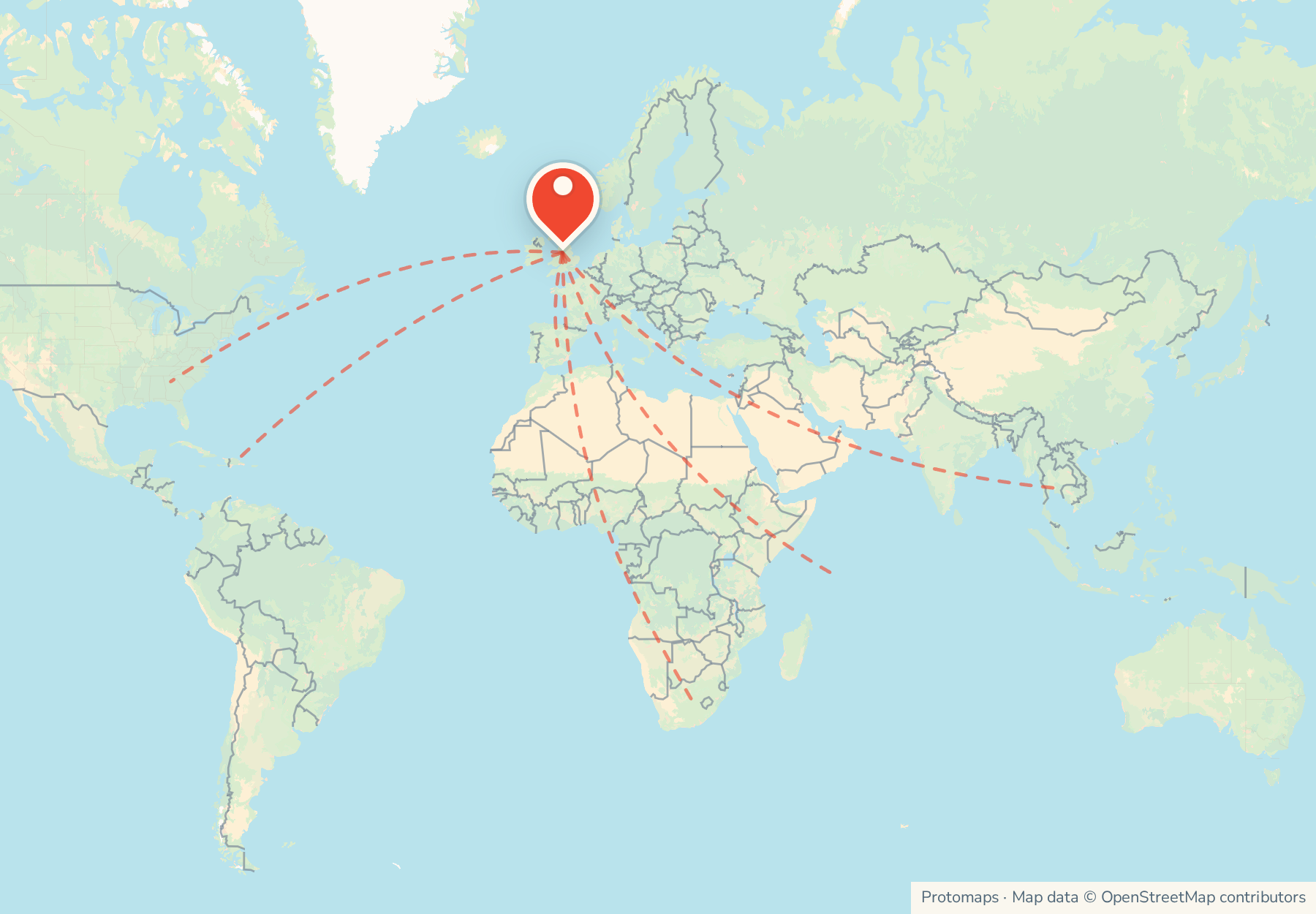
The flight is the longest on the site at around five and three-quarter hours, so plan it carefully: the snacks, the screen, the spare clothes. On landing, the visa kiosks sit before passport control, crisp US dollars in hand or e-visas done online weeks earlier, and busy charter arrivals can take the better part of an hour to clear. The resort zones then sit conveniently close, from ten minutes for the town hotels to under an hour for El Gouna and Soma Bay.
Around the coast, nobody hires a car and neither should you; this is pre-booked-transfer country. Street taxis run meterless on negotiation, and child seats are effectively unavailable in them, with working rear seatbelts far from guaranteed, so the family pattern is pre-booked transfers with a requested seat for the airport runs and any long excursion, and short hops judged on the belts in front of you. Within El Gouna, you get around by tuk-tuk and boat taxi, which the children tend to enjoy; everywhere else, the resort shuttle and the excursion bus cover the week.
What a real week looks likeA realistic week with little ones
The long flight, the visa kiosk before passport control and a short run down the coast to the resort.
The lagoon or the sandy shallows in the morning, an air-conditioned lunch and nap, then the pool until an early buffet.
The semi-submarine from the marina, fish at the windows from an air-conditioned cabin, back the same morning.
A jeep out to a Bedouin camp in the cooler months, a short camel walk, bread baking and home before it runs too late.
A final warm swim in the winter sun, then the trip back through the airport with no visa kiosk to clear.
With young children, the pool-and-lagoon days, one boat outing and one desert evening fill a Red Sea week, with the reef proper saved for the trip when everyone can snorkel.
The practical adminHealth, documents and the boring bits
Check the GOV.UK Egypt advice when you book and again before you fly: the FCDO doesn't advise against travel to the Red Sea resorts; the areas it does warn against lie elsewhere in the country, and its nationwide notes on security apply here as everywhere, so read the page itself rather than any guide's summary. Passports need six months' validity for Egypt, every traveller needs their visa, and travel insurance matters most of all, since no GHIC applies here; the private hospitals serving the resort areas are the ones your insurer will route you to, and the hotel front desk is the fastest first call with a sick child, ahead of the public 123 ambulance line.
Most of the day-to-day care here is about health: bottled water for everything, the buffet habits, rehydration sachets in the wash bag and a low threshold for seeing a doctor with a dehydrating toddler. Year-round UV needs the full cream-and-hat routine, reef shoes guard against coral, boat trips want licensed operators with the children's life jackets checked before you sail, and the desert evenings turn cold enough for proper layers between October and March.
Before you payBooking checklist
- Check your exact hotel's beach entry, sandy or jetty, in recent family reviews before paying anything.
- Sort visas for every passport, the baby's included, via the official e-visa portal or budget kiosk time on arrival.
- Buy comprehensive travel insurance that explicitly covers Egypt; there is no GHIC fallback.
- Pack the full holiday's formula split between bags, plus rehydration sachets and Calpol.
- Pre-book the airport transfer with a child seat requested; taxis won't have one.
- Pack reef shoes for everyone and a windbreak for the breeze.
- Book winter dates for the family version; pass on July and August with a baby.
- Choose boat operators who are licensed and show you children's life jackets before departure.
- Confirm the cot, the high chair situation and the cancellation terms with the resort.
- Recheck the GOV.UK Egypt advice and every passport's six-month validity and spare blank page before you go.
Resort guides in Hurghada
We've researched these places to stay in Hurghada for families with young children. Each guide covers what it's like, who it suits and what to check before you book.
Questions, links and the last word
The things families ask most, the official pages worth a bookmark and when this guide was last refreshed.
Common parent questions
Is it really warm enough in January?
Yes, for a winter trip. January runs around 22 degrees by day with the sea at 22 to 23, warmer than the Canaries manage in winter. A 22-degree sea suits short dips with a warm towel waiting rather than hours in the water, so most of the daily swimming happens in the heated pool. Evenings drop sharply, so pack proper layers.
What's this about jetties and reefs?
At many hotels the seabed near the shore is reef rather than sand, so you reach swimming depth by walking out along a jetty and down a ladder. That works for snorkellers and leaves a paddling toddler with nowhere to wade. The fix is to find a confirmed sandy or lagoon entry in recent family reviews before you pay, whatever the star rating says.
Do babies need visas too?
Yes. Every passenger needs an Egyptian visa on their own passport, babies included, at about 25 US dollars each (last checked June 2026). The official e-visa portal sorts it in advance, or the bank kiosks before passport control sell it on arrival for crisp dollar notes.
Can we make up bottles with the tap water?
No. Use bottled water for everything that goes in a mouth, including formula, rinsing the dummy and brushing teeth. Formula needs more thought, because it's sold only in pharmacies in Egypt and not reliably in the brands or stages a baby is settled on, so bring the full holiday supply from home, split between bags. Nappies are easier, with Pampers in the resort shops and town supermarkets.
What if someone gets a poorly tummy?
Plan for it rather than hope it skips you. Upset stomachs are common across Egypt and a toddler dehydrates fast, so pack rehydration sachets from home before anything else. The warning signs to act on are dry nappies for six hours or a child gone listless. If you see them, go straight to a private hospital and ring your insurer's assistance line, which is the protection here since no GHIC covers Egypt.
Are the dolphin trips okay to do?
One version is, one isn't. Wild boat trips run to a reef where resident dolphins live, and operators who follow the local conservation code, keeping their distance, never chasing and taking small groups, make for a fair outing, with sightings likely but never promised. The captive dolphinarium shows and swim-with sessions are a different matter, since the Red Sea's main conservation body campaigns against them, so we'd steer families away from those and towards watching wild dolphins from the deck.
Is Hurghada safe for a family holiday?
The UK government doesn't advise against travel to the Red Sea resorts, and the parts of Egypt it does warn against lie far from this coast. It keeps nationwide security notes in place, which is part of why the resorts are so visibly policed. Resort tourism here is large, gated and well run. Sensible practice means staying with reputable operators, pre-booking transfers rather than haggling kerbside with a baby, and reading the GOV.UK page when you book and again before you fly, because regional pictures change. On the water, use licensed boat operators and check the children's life jackets yourself before leaving the dock.
Can we do the Pyramids or Luxor from here?
Not realistically with young children. Luxor is four-plus hours each way by road, day tours run fifteen to sixteen hours with pre-dawn starts, and the sites are hot, shadeless and hard going with a buggy; the Pyramids are further still. The workable versions are an overnight stay in Luxor that splits the driving, or one parent going while the other stays at the pool. Otherwise leave ancient Egypt for the trip when the children can walk round a temple.
See more Hurghada photos
Open the photo gallery →Useful links
- GOV.UK Egypt travel advice: the security picture, entry requirements and health updates before you travel.
- Egypt e-visa portal: the official visa site; third-party sites charge heavy markups.
- TravelHealthPro Egypt: NHS-backed health guidance and vaccination notes.
- El Gouna: the lagoon town's official site.
Last updated 12 June 2026.