Rhodes with little ones
Rhodes is the easy way into Greek islands with small children: every UK operator flies here, the all-inclusive choice is wide and the competition keeps prices down. The sheltered east coast is where the family resorts sit, with warm shallow water from Faliraki's long sand to St Paul's Bay, the near-enclosed lagoon under the Lindos acropolis. The walled medieval town adds a third draw, and its best bits for a toddler are free.
On this page
A family verdict at a glance
The quick read before the detail: who Rhodes suits, the season to aim for and what to nail down before you book.
Best for
Sheltered east-coast swimming, all-inclusive value, a castle town that costs nothing with a toddler and a long season at both ends.
Maybe not for
Crowd-haters in August, west-coast sea swimming with small children or anyone expecting a sleepy island. It's a big, busy, mainstream resort island.
Best ages
All young children, with June and September the easiest months.
Best areas
Kolymbia or Pefkos for calm, Faliraki for everything on tap, the south for staying put on all-inclusive terms.
Why families pick it
Flight choice from a dozen UK airports, hot competition on price and warm, shallow water down the whole eastern shore.
Check before you book
Which coast your hotel is on, the transfer length to the south, air conditioning for July and August and the nightly climate fee.
The island's two coasts, and the wind that splits them
Rhodes is one of the most visited islands in Greece, its airport passing seven million passengers in 2025, with every UK operator running full programmes. That gives families flights from a dozen or more UK airports, deep all-inclusive stock and real price competition, and the cost is crowds at the headline sights. You route around them: the Old Town before ten, Lindos at eight, the beach while the coaches are queuing.
The meltemi is the dry northerly wind that blows across the Aegean for most of the summer. It reaches Rhodes from the west and north-west, which is why Ixia and Ialyssos are where the windsurfers go, while the island's mountainous spine shelters the east coast, so it stays calm. For families, book the east coast. On that side the wind takes the edge off the July heat but doesn't stir up the sea.
A quick gut checkIs Rhodes right for your family?
Worth comparing if
You want warm, shallow sea for a toddler, all-inclusive value with plenty of choice and a real castle to wander between beach days.
Weigh it up if
You want somewhere small and quiet or hate sharing your sights with cruise crowds and coach tours.
To sort out before booking
The coast, the transfer, the cot and a child seat for the journey.
The numbers, the basics and the ages
Everything you'd want to skim first: the quick facts, the everyday practicalities and how Rhodes changes as children grow.
Quick facts for UK families
Money, plugs, language and the basics
- Rhodes is the largest of the Dodecanese, about 50 miles (80 km) top to bottom, with the medieval Old Town a UNESCO World Heritage Site since 1988.
- The currency is the euro and cards are accepted widely, with cash still handy for buses, kiosks and small tavernas.
- Sockets are the round two-pin European type, so UK plugs need an adapter. The voltage matches the UK.
- The language is Greek. English is spoken everywhere tourists go, and pharmacists in resort areas speak it well.
- The clocks run two hours ahead of the UK, with the same change dates.
- Tap water in the resorts comes from the island's modern dam system and meets EU standards, but it tastes chlorinated and most people drink bottled. Use bottled low-sodium water for formula feeds.
- Your GHIC card covers state healthcare; 112 works for everything and 166 calls a Greek ambulance directly.
- Hotels add a nightly climate fee at check-in, up to €15 a night at five-star places in season, which packages rarely include.
Rhodes by age and stage
Babies
Warm shallow water, gradual sand at Faliraki and Tsambika and taverna staff who happily make a fuss of a baby. Watch the July heat.
Toddlers
St Paul's Bay, the moat walk, the glass-bottom boat and animal feeding at the farm park.
Preschoolers
Old enough for the waterpark's slide zone, the little red train around the walls and a knights-and-castles week that needs no screens.
Young children
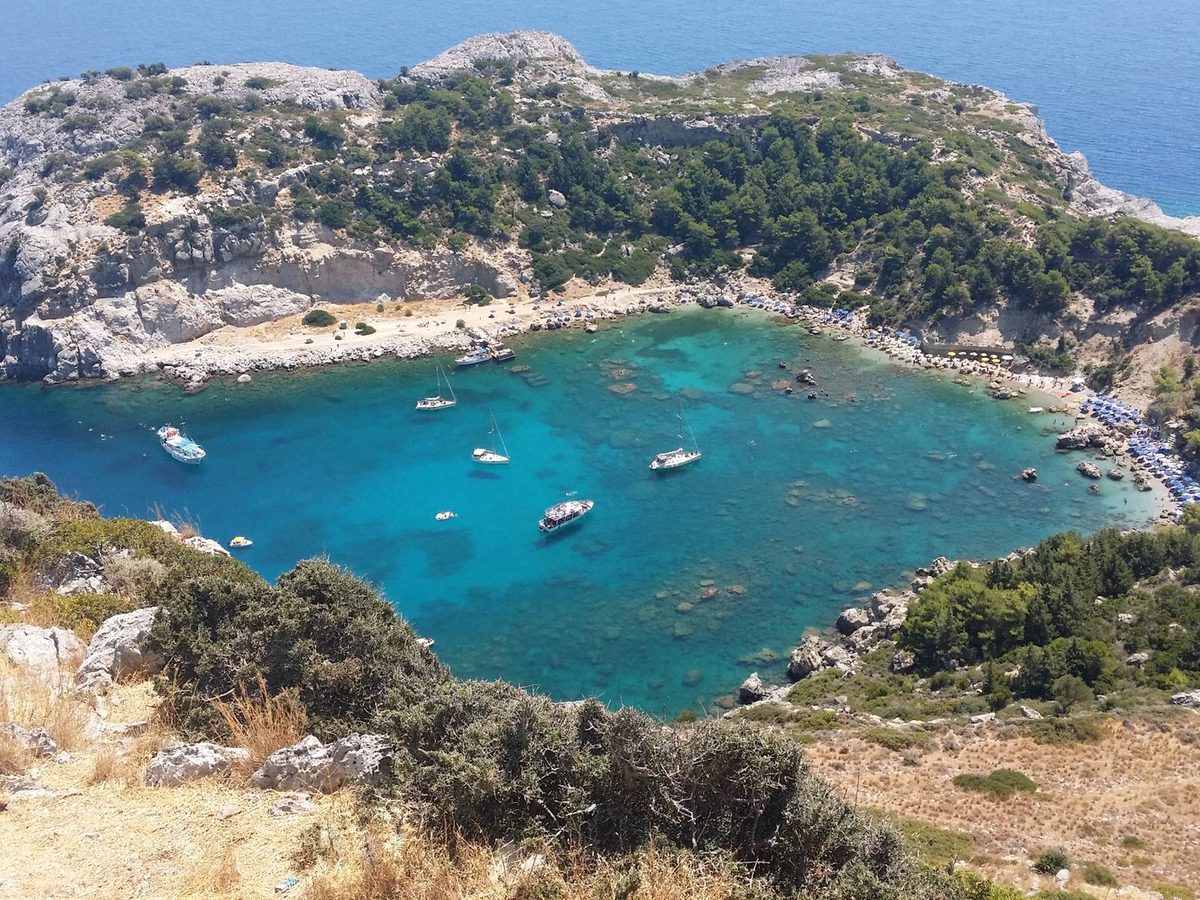
The Symi boat, snorkelling at Anthony Quinn Bay and the full castle in detail are doable once they've the stamina.
Where to base yourselves
The resort coasts side by side, an orientation map of the island and what the beaches are really like underfoot.
Where to stay with young children
Faliraki has the most of everything, and its old party reputation no longer fits, as the Faliraki question below explains. The beach is the biggest family beach on the island, around 3 miles (5 km) of gradual golden sand sheltered from the wind, behind a flat promenade with the waterpark, a soft-play centre (Skypark, for up to age ten or 1.5 metres) and frequent buses. The centre is the busy bit; the Kathara end to the south is where families settle. If you walk far south along the sand, the next cove, Mandomata, is the island's official naturist beach.
Kolymbia, ten minutes further on, is the quietest choice for young children. It's a purpose-built resort along a flat, eucalyptus-lined avenue that runs from the main road to a sheltered horseshoe bay, usually flat calm, with sand and pebbles underfoot. Evenings are quiet, there's no old town, and Tsambika's long shallow sand sits five minutes away below the monastery hill. Stegna, the low-key village under Archangelos, suits self-caterers who want fish tavernas on the sand and not much else. Down the coast, Lindos is whitewashed and pedestrianised and steep, and better as an outing than a base with a buggy; Pefkos, ten minutes on, is the quieter family alternative, small and flat at the core with a narrow, shallow beach that rarely sees a wave.
In the deep south, Kiotari and Gennadi, big modern all-inclusive hotels line long, quiet beaches 65 to 75 minutes from the plane, and you pick this end if you plan to stay put. This is also the stretch the 2023 fire crossed; the hotels reopened the following season and trade normally, with burned hillside scrub the visible reminder. On the other coast, Ixia and Ialyssos have big hotels, good pools and town ten minutes away, but the shingle sea here is deep and isn't for small children, so this end suits a pool holiday rather than a beach one. Rhodes Town itself works for a city break by the sea, though its own beach, Elli, shelves quickly into deep water.
| Area | Transfer | The beach | The feel |
|---|---|---|---|
| Faliraki | 25 to 30 min | About 3 miles (5 km) of gradual golden sand, calm in the meltemi's lee | The big resort: waterpark, soft play, promenade and frequent buses. Busy at the centre, calmer at the ends. |
| Kolymbia | About 35 min | A sheltered horseshoe of sand and pebble, usually flat calm | Purpose-built and quiet, along a flat eucalyptus avenue you can push a buggy down. Tsambika's sand is five minutes away. |
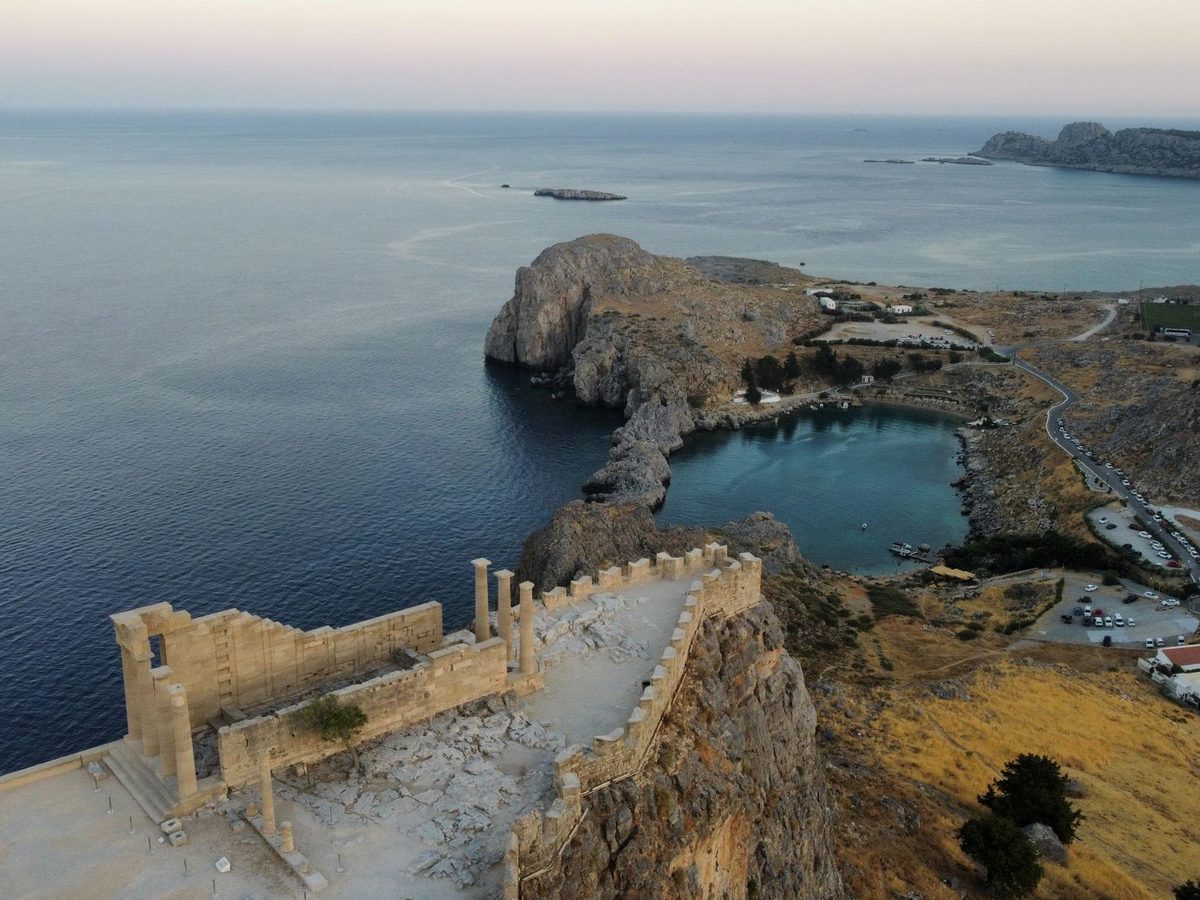
| Lindos | 50 to 55 min | Fine golden sand in a wide, sheltered bay, plus St Paul's lagoon next door | Whitewashed, pedestrianised and steep. Better as an outing than a base. |
| Pefkos | 55 to 60 min | A narrow, shallow village beach that rarely sees a wave | Small, low-key and family-run, ten minutes from Lindos without its crowds. |
| Kiotari and the south | 65 to 75 min | Long, quiet sand-and-pebble beaches with big hotels on them | All-inclusive hotels. Pick it to stay put, and accept the longer transfer. |
| Ixia and Ialyssos | 10 to 20 min | Narrow shingle and deep water, with the breeze that brings the windsurfers | Big hotels near town where the swimming happens in the pools, not the sea. The sea here isn't for small children. |
Map of the main family areas
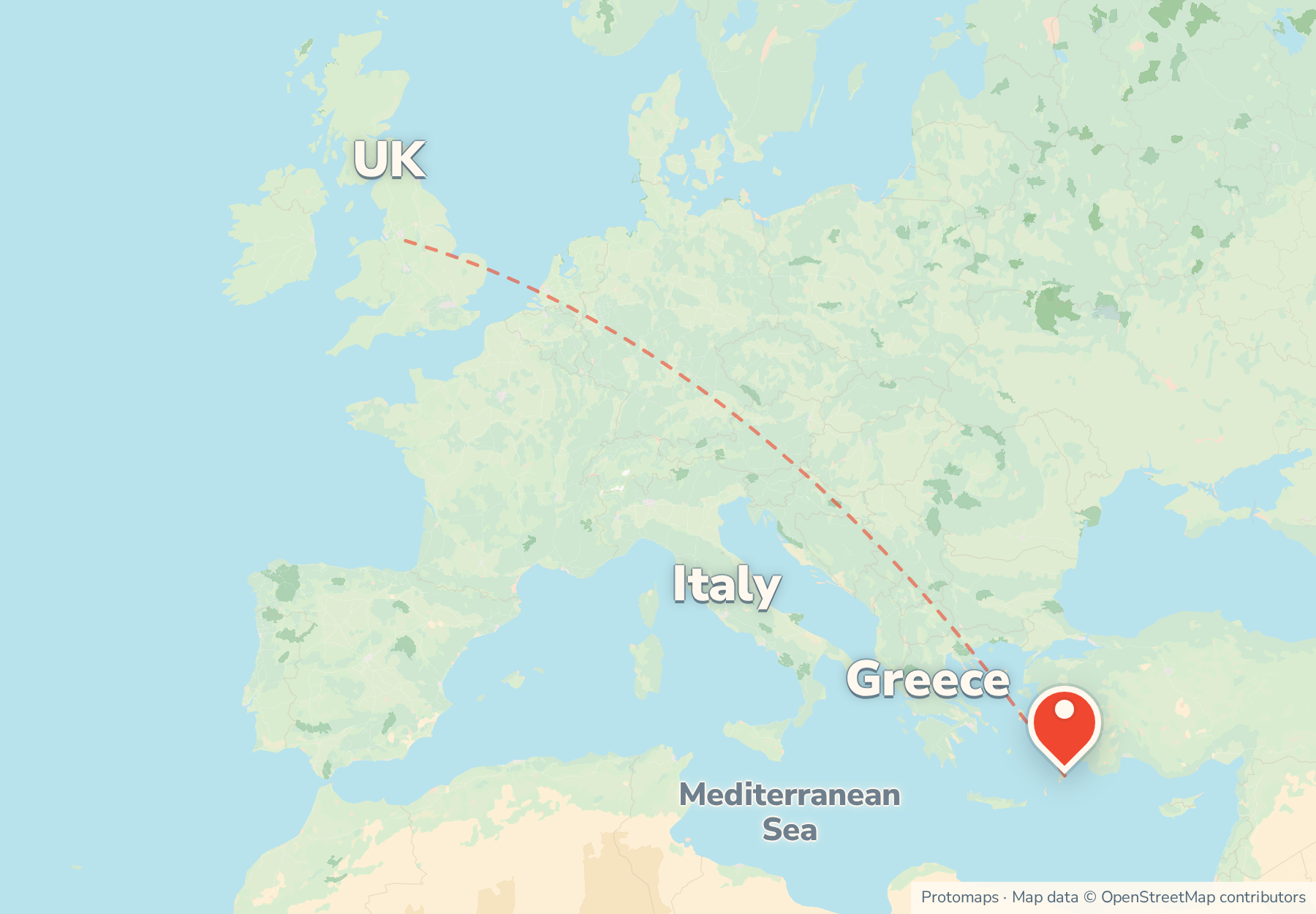
An orientation map of the areas above, the airport, the town, Tsambika beach and the kitesurfing point at Prasonisi. The numbers match the key beneath.
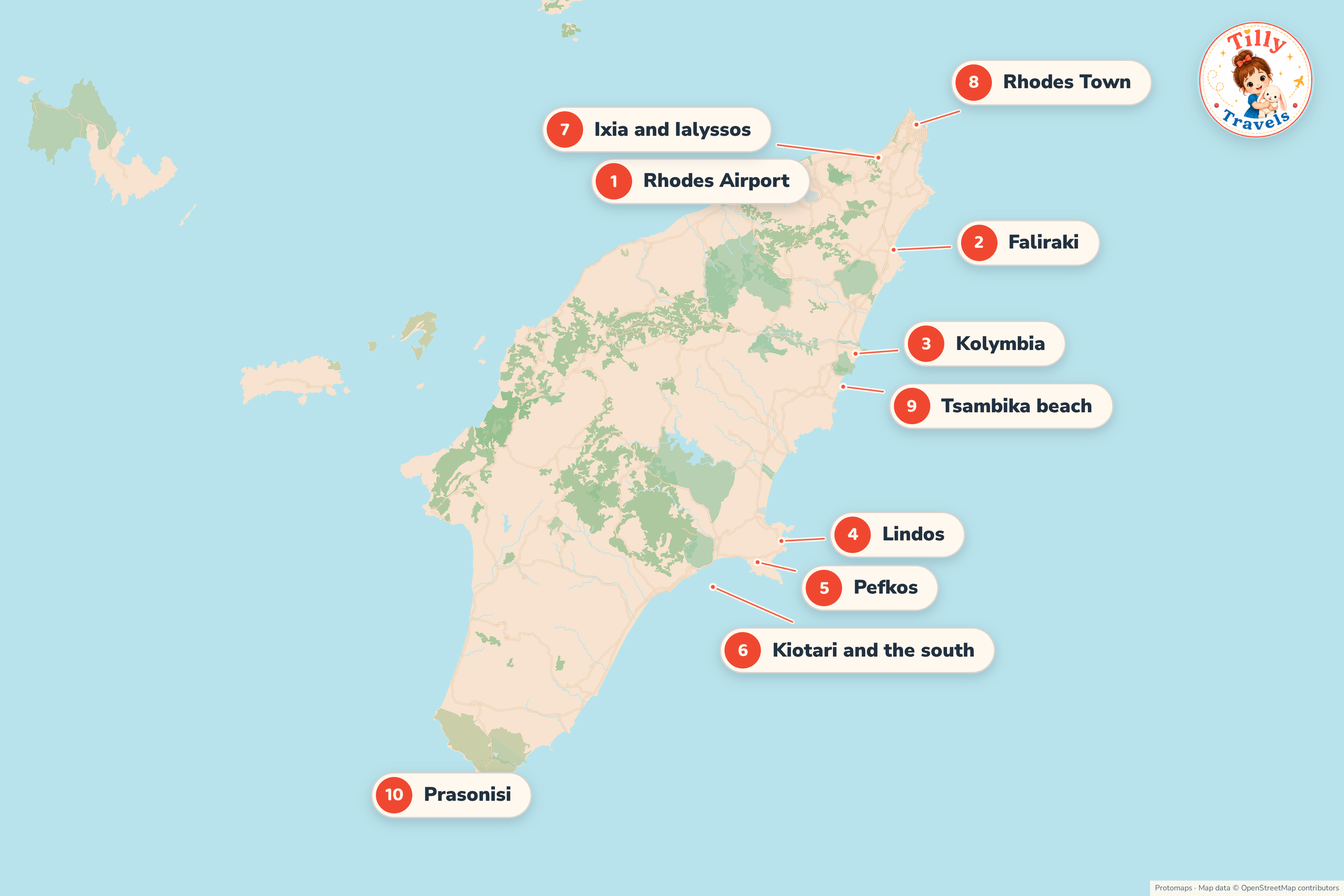
- 1Rhodes Airport West coast, at Paradisi
- 2Faliraki The big family resort
- 3Kolymbia The quietest choice for young children
- 4Lindos Whitewashed, steep, an outing
- 5Pefkos Lindos without the crowds
- 6Kiotari and the south Big hotels, long quiet sand
- 7Ixia and Ialyssos Pools, not sea swimming
- 8Rhodes Town The walled city
- 9Tsambika beach The shallow-sand day out
- 10Prasonisi Watch the kitesurfers
Beaches, with the shoes caveat
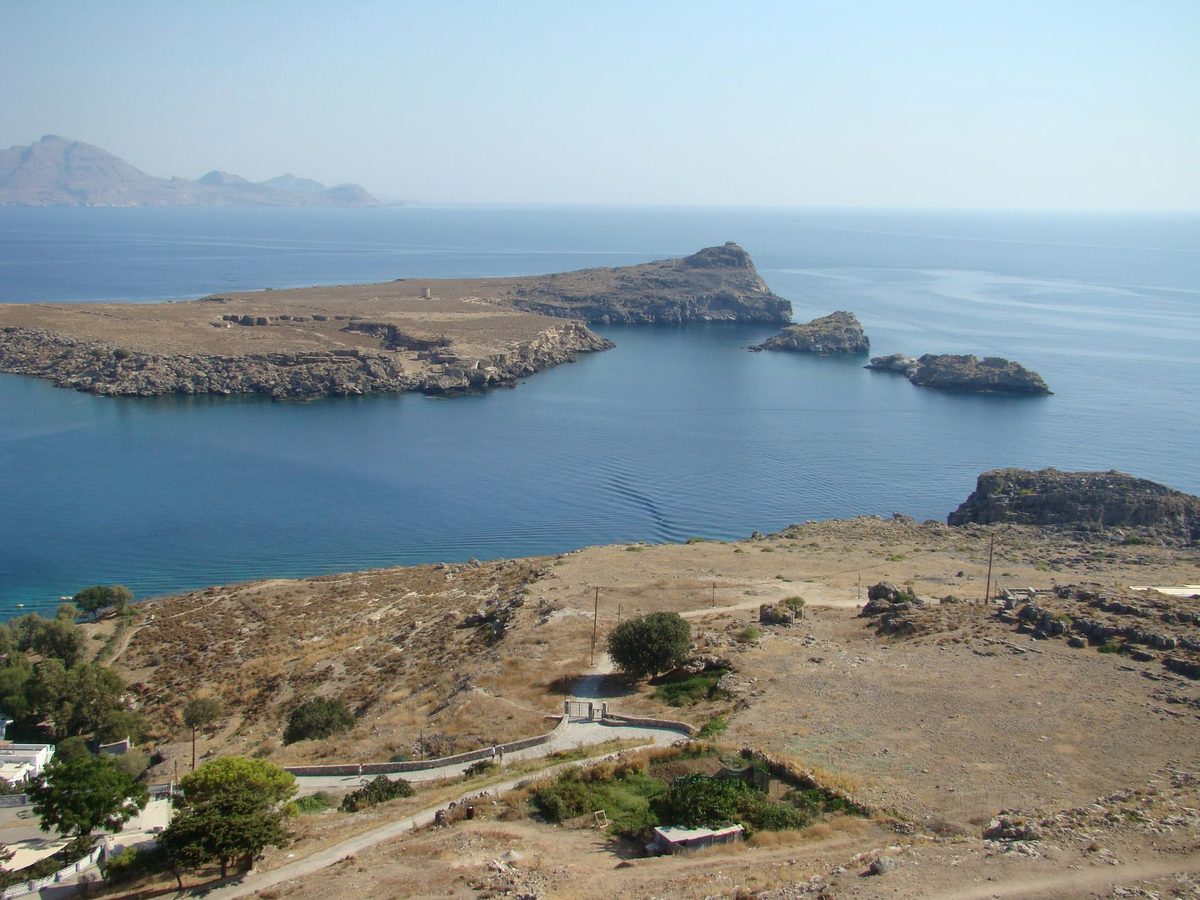
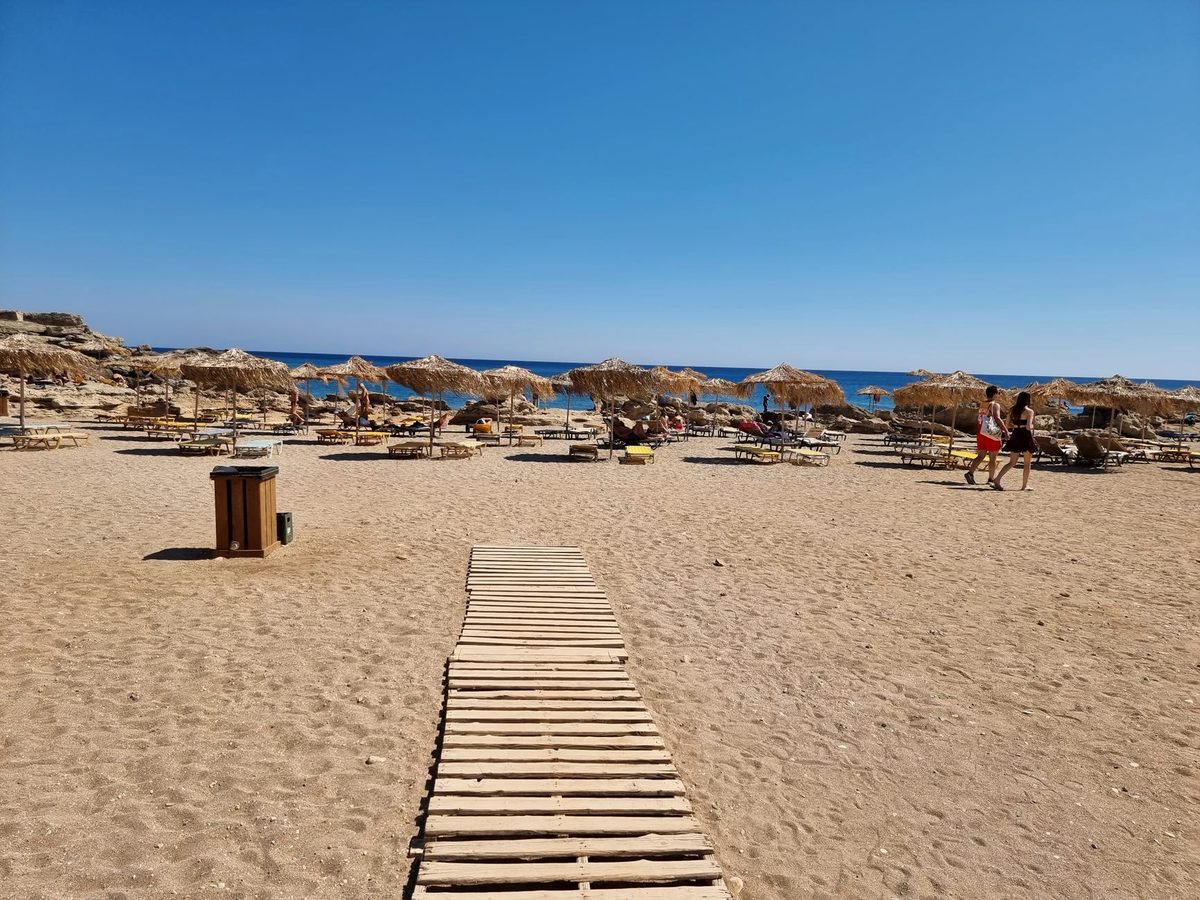
The best beaches for a toddler run down the east coast. St Paul's Bay at Lindos is the calmest swim for small children, a lagoon almost fully ringed by rock so waves rarely get in and the water stays shallow a long way out. Tsambika has the best sand, just under a mile (1.5 km) of shallow gold below the monastery, undeveloped apart from tavernas and sunbeds, with a big free car park and an in-water inflatable park that small children can use with an adult. Kolymbia's horseshoe is usually millpond calm, Pefkos rarely sees a wave and Faliraki shelves so gradually you can wade out a long way on a calm day. Pack beach shoes: half the island's beaches mix sand with pebbles, and even sandy St Paul's has stones at the waterline.
A few coves look inviting but need more care. Afandou shelves sharply within metres, Elli in town is deep pebble with a diving platform, while Anthony Quinn Bay and Ladiko are clear-water snorkelling coves with rocky entries and boat traffic. Lifeguards cover the big resort beaches from June to September under Greek law; quiet coves often have nobody, so you're the supervision. Greece's 2024 beach law keeps most of every beach free of rented sunbeds and the four metres nearest the water clear, which is exactly where the buckets and spades live.
On flags: Rhodes holds 28 Blue Flags in 2026, but the list is almost entirely hotel-managed beach sections, and well-known public stretches like Tsambika and Faliraki's main sand sit off it. The island's flag count has halved in three years through churn in who applies rather than what's in the water, so a beach without a flag here usually means nobody applied for one, not that the water is poor.
Weather, days out and the daily shop
When to go month by month, the outings that suit small children, eating out and where to stock up.
Weather, April to October
The figures below are official Greek met-service averages from the island's coastal station, and recent summers have run a touch warmer, so read July and August as low thirties by day. High summer is effectively rainless, with July and August together averaging under a millimetre. Nights stay hot.
| Month | Daytime high | Overnight low | Rain | Wet days | Sea temp |
|---|---|---|---|---|---|
| January | 15° | 10° | 152 mm | 16 | 18° |
| February | 16.5° | 11° | 102 mm | 13 | 17° |
| March | 17.5° | 12° | 69 mm | 10 | 17° |
| April | 20.5° | 14.5° | 29 mm | 8 | 18° |
| May | 24.5° | 18° | 16 mm | 5 | 20° |
| June | 28° | 22° | 2 mm | 1 | 23° |
| July | 30.5° | 24.5° | 0 mm | 0 | 26° |
| August | 31° | 25° | 0 mm | 0 | 28° |
| September | 29° | 23° | 6 mm | 2 | 27° |
| October | 25° | 19° | 57 mm | 7 | 25° |
| November | 21.5° | 15.5° | 90 mm | 10 | 23° |
| December | 17.5° | 12.5° | 153 mm | 15 | 20° |
Typical monthly averages from weather-station records. Sea temperature is the open-water figure, so a sheltered bay can feel a degree or two warmer.
June is the best month for families: 28-degree days, a 23-degree sea and the island not yet full. In high summer, do what you'd do in any hot country, beach early, shade or pool through the middle, out again at five, and put hats and suits on babies from May onwards for the high UV.
Filling the daysThings to do with little ones
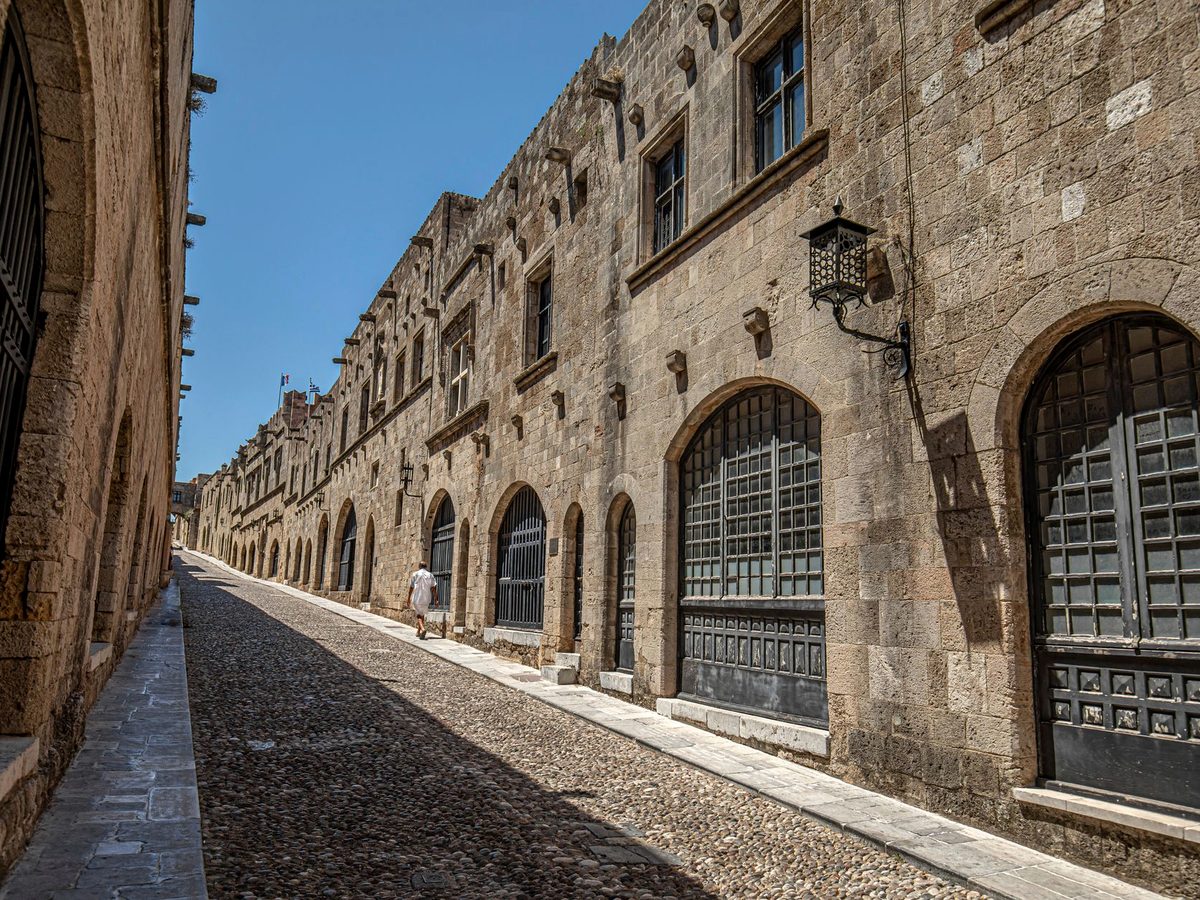
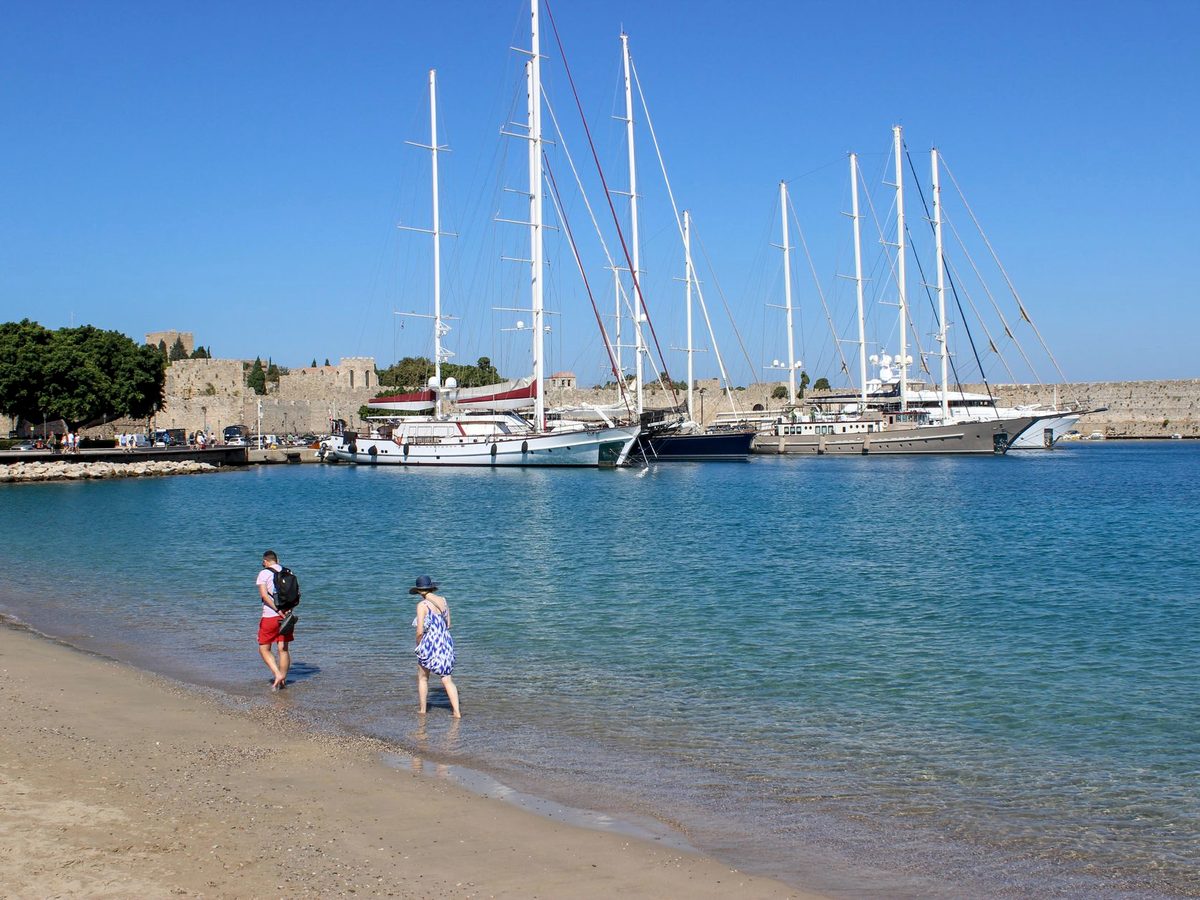
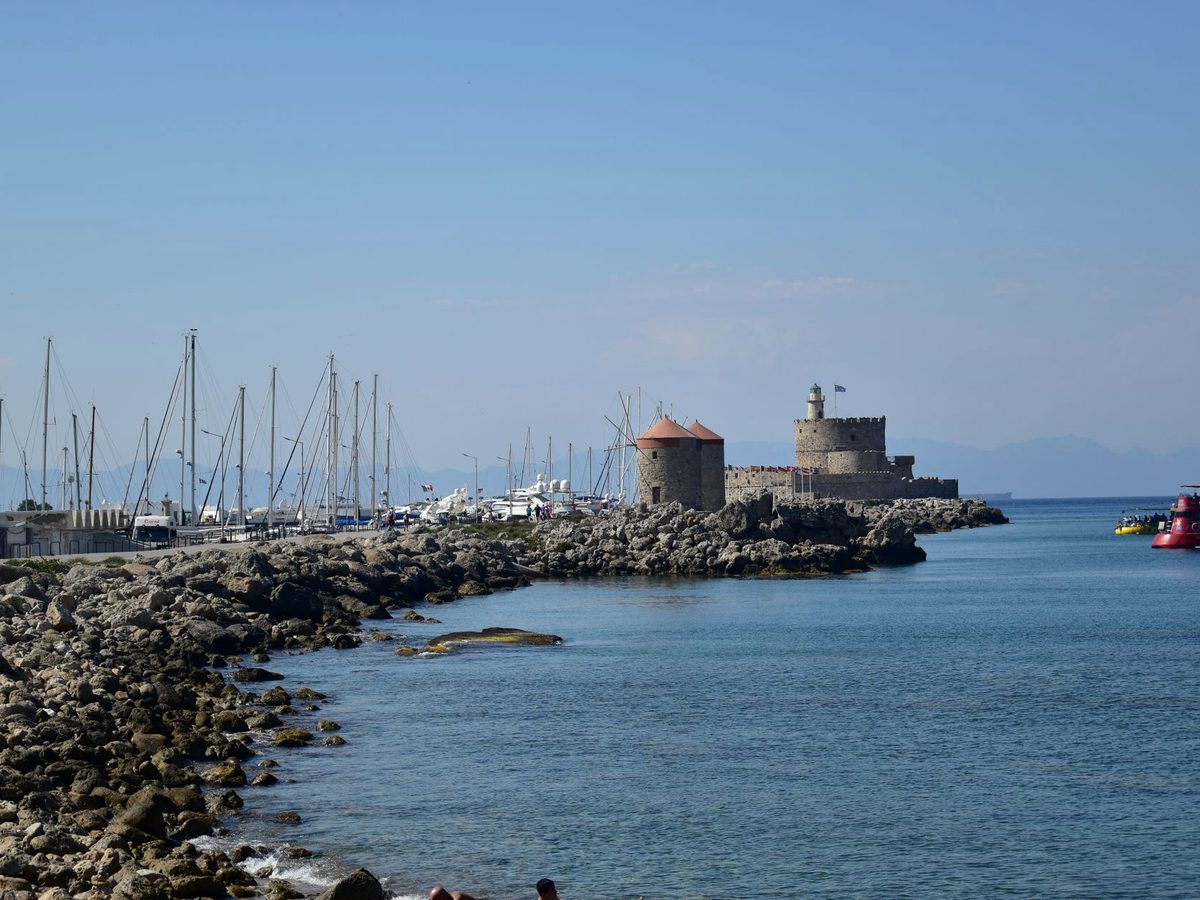
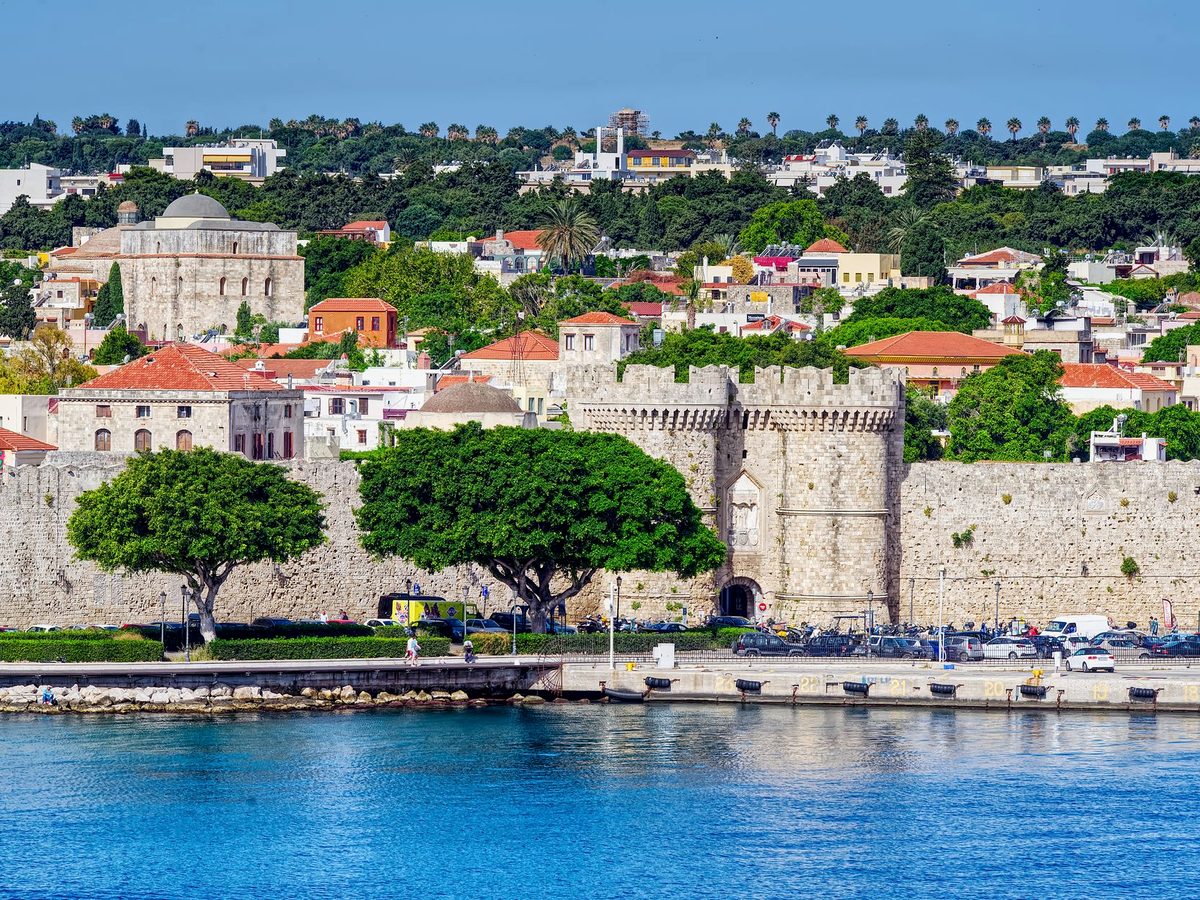
The parts of the castle a toddler will enjoy are free. The Old Town's dry moat is a 1.5-mile (2.5 km) landscaped park below the walls, shaded in the morning, with broad gravel paths; inside the walls, the Street of the Knights and the gates and lanes cost nothing either. The lanes are polished cobbles with steps, so bring a carrier, not the buggy, and carry the buggy in via the gate stairways. Greece moved its headline sites onto a top-tier €20 adult ticket in 2025, the Palace of the Grand Master and the Lindos acropolis included. Children go free at state sites and entry is free for everyone on the third Sunday of each month, so with a young child the free Old Town covers most of it and the palace is a judgement call. The little red tourist train from Mandraki does a forty-minute loop around the walls that suits flagging legs. Go before ten or after four, since the middle of the day is packed with cruise passengers.
Lindos is worth its own morning: arrive at eight with a carrier, walk up while the lanes are cool, and be eating ice cream by the time the coaches arrive. The Lindos donkey rides are a welfare problem, and our advice on them is below. Which paid trips are worth it depends on age. The Faliraki waterpark is the big one, with a real toddler zone and under-threes free; the petting farm at Paradeisi feeds ostriches and lemurs at toddler height and is probably the best paid morning for young children. The Valley of the Butterflies has a season to watch. The moths are only there from roughly mid-June to September, and the gorge is steps and roots; in May there are no butterflies at all.
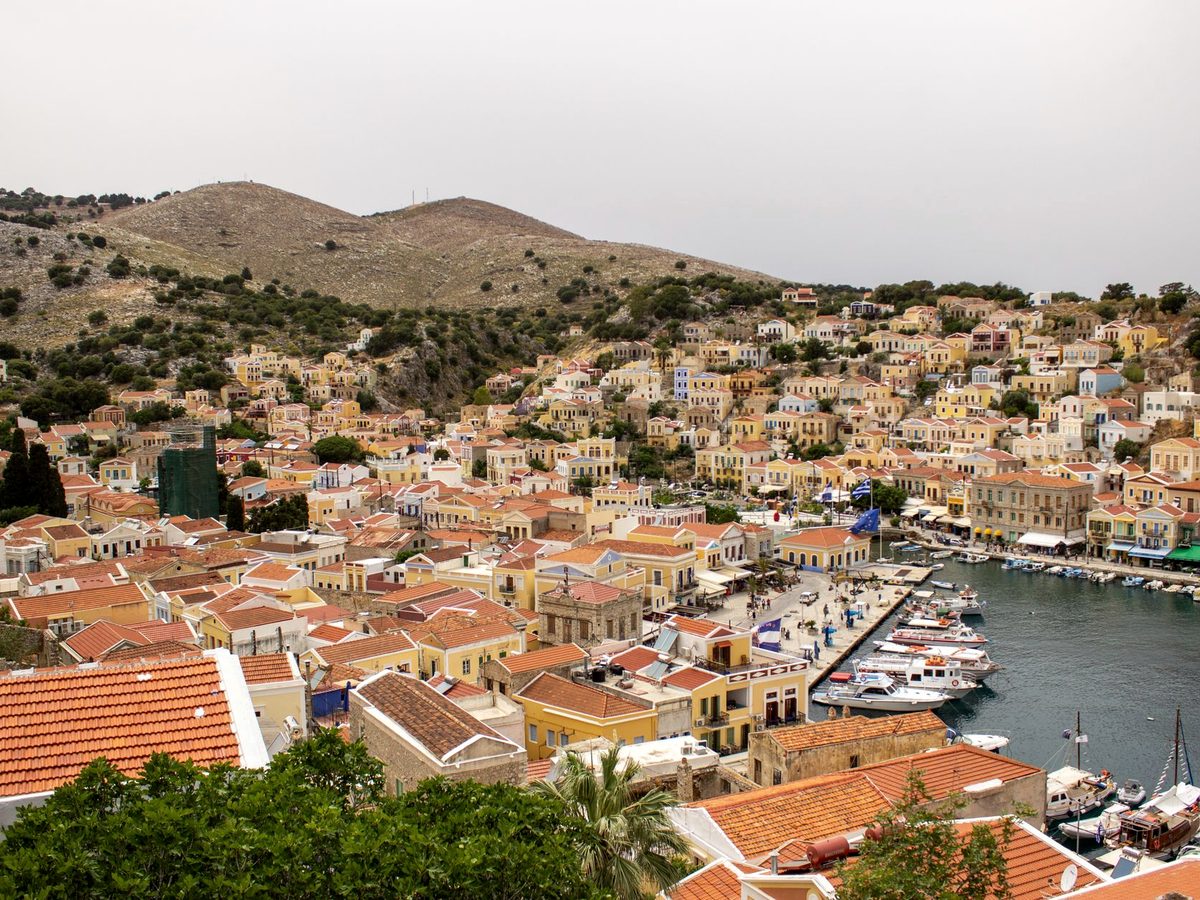
There's plenty that costs nothing. Seven Springs is a shaded streamside hour with peacocks and a taverna, with one firm rule: the tunnel is pitch dark with flowing water underfoot, so take the path over the top with small children. Kallithea Springs pairs 1920s Italian architecture with shoes-on paddling coves. Filerimos hill has free-roaming peacocks at the car park, Monolithos castle is a five-to-ten-minute scramble to big views with a café at the base, and Prasonisi at the southern tip is where the kitesurfers go: park by the sandbar, watch the kites and picnic. You watch from the beach rather than swim. The glass-bottom boats from Mandraki are 45-minute harbour trips with an underwater viewing cabin, short and cheap enough to risk on a two-year-old; Symi is the classic bigger day out, and there's more on it below.
Eating out with children
Greek tavernas are among the easiest places in Europe to eat with small children: nobody minds the noise, bread arrives early and a toddler can wander between the tables without anyone batting an eye. High chairs are common without being guaranteed, so a clip-on seat is worth its bag space. Greeks eat at nine, but everywhere tourists go serves from six, and the two-hour time difference means your child's usual bedtime already sits at Greek dinner hour.
Plenty on a taverna menu suits a toddler: tzatziki and bread, yoghurt with honey, giant baked beans, pastitsio, grilled chicken souvlaki and watermelon by the slab. A bottle of water you pay for usually arrives by default. Parents do well on the fish at Stegna and the harbour tavernas, and overall costs run close to Spain, with a gyros the cheapest decent lunch you'll find.
Milk, nappies and pharmaciesSupplies and the first-day shop
The big shops line the roads out of Rhodes Town: two Lidls on the eastern arterials, a large Sklavenitis on the Lindos road, plus AB Vassilopoulos and the island chain Kritikos. Resort minimarkets mark up steeply but open late and on Sundays, which matters because Greek supermarkets generally close on Sundays outside the designated tourist zones; do the big shop on a weekday. Nappies are Pampers or the excellent local Babylino, and fresh pasteurised milk is easy to find in the chains' chillers.
Formula takes more planning. Stage-one milk is in practice a pharmacy product in Greece, not a supermarket one, at around €13 to €14 a tin (last checked June 2026). The brands are Almiron, Aptamil's sister, often actual Aptamil tins, plus NAN and HiPP. Pharmacies are everywhere, Greece has more per head than anywhere else in the OECD, and they're the route to children's medicines too: Depon is the paracetamol syrup, Nurofen for children the ibuprofen, and the out-of-hours duty rota hangs on every closed pharmacy's door.
Getting around, a real week and the admin
Transfers and hire cars, what a week actually looks like, the health and document checks and a list to pack against.
Getting there and around
The airport is on the west coast, the family resorts are on the east, so every transfer crosses the island: half an hour to Faliraki, about an hour to Lindos, up to 75 minutes for the deep south. Greek law requires child seats for under-12s below 135 centimetres, rank taxis won't have one, and pre-booked transfer firms generally include them free if reserved ahead, which makes pre-booking the whole answer. The airport bus only runs into town, so it doesn't solve a resort transfer with a buggy and a car seat.
You don't need a car in Faliraki or town, where the KTEL buses along the east coast are cheap and frequent; Lindos and Pefkos manage without one; you'll want a car for the south and the inland hills. Hire is competitive, with majors in the terminal and cheaper local firms delivering to hotels, and child seats cost a few euros a day, booked ahead in peak weeks. Fuel is expensive, about 13 per cent above the EU average and higher still on the islands. The east-coast road is good and fast; the Lindos stretch winds enough to plan around travel sickness, and quad bikes, however many you see, are classed as an extreme sport by insurers, so they're not a family option. A UK photocard licence needs no extra permit.
What a real week looks likeA realistic week with little ones
Land, transfer, pool and an early taverna dinner, with the big supermarket shop saved for a weekday.
Sand in the morning, lunch and a nap through the heat, then back to the water or the playground until dinner at six.
The Old Town before the cruise passengers arrive: the moat, the Street of the Knights and a gelato, all free apart from the gelato.
The glass-bottom boat from Mandraki, or the petting farm at Paradeisi with the toddler-height animal feeding.
A final swim and a proper buffer for the transfer if you're based down south.
With young children, the beach, the pool, one castle morning and one boat or animal day fill a Rhodes week without ever opening the excursion brochure.
The practical adminHealth, documents and the boring bits
Check the GOV.UK Greece advice before booking and travelling. Passports need to be issued within the last ten years and valid three months beyond departure, children's included.
Carry a GHIC each and real travel insurance. The GHIC covers the state system, meaning the island's general hospital in town and the 24-hour health centre at Archangelos, which is the one to know for the Kolymbia stretch, while the resort clinics that hotels point you towards are private and bill your insurer. The Dodecanese's private hospital at Koskinou runs 24-hour emergency cover and a Lindos satellite clinic.
The emergency numbers are 112 for everything and 166 for a state ambulance. The everyday hazards are the usual hot-country ones, sun first: very high UV from late spring, so hats, suits, cream and midday shade for babies. Sea urchins live on the rocky entries. Wildfire risk is seasonal and managed; there's a daily risk map and 112 sends phone alerts, both covered in the wildfire question below. Taverna cats will find your toddler: look, don't grab, wash hands before chips.
Before you payBooking checklist
- Confirm the hotel is on the east coast if sea swimming with little ones is what you're after.
- Check the transfer time for your resort and book it with the right child seat.
- Confirm the cot and the air conditioning, especially for July and August.
- Budget the nightly climate fee, paid at the hotel and rarely in the package.
- Hiring a car? Reserve the child seat with it, not at the desk.
- Pack beach shoes for everyone and a carrier for Lindos and the Old Town.
- Travelling in October? Check the hotel pool is heated and what's still open in the resort.
- Bring formula to cover the trip; on Rhodes it's a pharmacy purchase, not a supermarket one.
- Confirm the cancellation terms and your travel insurance.
- Recheck the GOV.UK Greece advice and every passport before you go.
Resort guides in Rhodes
We've researched these places to stay in Rhodes for families with young children. Each guide covers what it's like, who it suits and what to check before you book.
Questions, links and the last word
The things families ask most, the official pages worth a bookmark and when this guide was last refreshed.
Common parent questions
Which coast should we book?
The east, if you want sea swimming with small children. A west-coast hotel at Ixia or Ialyssos isn't a write-off, the pools are good and town is ten minutes away, but you'll be swimming in the pool and driving to the east for a calm beach. Check the hotel address against the map before you pay; some hotels advertise "near Rhodes Town" without saying which side of it.
Can we do Lindos with a buggy?
Leave it in the car. A carrier is the only sensible way around the village and up to the acropolis. The beach is a separate decision: it's a steep walk down from the village, the car park fills before ten in the morning, and an electric shuttle runs the last stretch when the heat makes the walk back up a stretch too far with a tired toddler.
What about the donkey rides?
Our advice is to skip them. Weight limits and rest rules exist on paper, welfare groups document patchy enforcement, chafing and heat stress, and a 2025 rule change weakened the hot-weather protections. The climb is walkable for any reasonably fit adult and a carried toddler can't ride anyway, so walk early and leave the animals out of it.
Is October really warm enough?
For a half-term swim, usually yes, and UK families report swimmable late-October weeks. Two things to check before you book it, though: confirm the hotel pool is heated, because an unheated one runs cold by then, and check what's still open in your resort, since some bars, shops and the smaller restaurants start closing for the winter through the month.
Can we buy our usual formula and nappies?
Nappies are no trouble at all. Formula needs more thought, because in Greece it's sold in pharmacies rather than supermarkets and the stages don't map exactly onto the UK ones, so check with your HV or GP before you switch brand mid-trip. The simplest answer is to bring enough to cover the holiday and treat the pharmacy as backup. The supplies section above has the brands and a rough cost.
Is Faliraki still a party town?
Not in the way the old reputation suggests. If you arrive picturing the bar strip, what you'll actually find is a family resort built around the waterpark and the long beach, with restaurants where the clubs used to be. The old centre is still the liveliest part in the evening, so for a quieter base aim for the Kathara end of the sand or Kolymbia next door.
What about the 2023 wildfires?
Around 19,000 people were evacuated from the south-east that summer, no tourists died, the big Kiotari hotels reopened for the 2024 season and what's left to see is burned hillside scrub. Greece publishes a daily fire-risk map in English, and 112 sends a warning to every phone in an affected zone. Before you go, check your phone will roam onto a Greek network, and on arrival find out your hotel's assembly point, the same way you'd note the fire exits.
Is the Symi day trip doable with a toddler?
It's a nine-to-six day, so it depends on your toddler. The crossings are 45 to 90 minutes each way and work as nap slots, the harbour is flat, with cafés and ice cream, and the roughly 500 steps up to the old town are a firm no. Under-fours travel free on the main day boat. With a baby in a carrier it's easier than with a freshly walking 18-month-old; from about four it works well.
See more Rhodes photos
Open the photo gallery →Useful links
- GOV.UK Greece travel advice: passport rules, entry requirements and health updates before you travel.
- Hellenic Heritage e-tickets: official tickets and timed slots for the palace and the Lindos acropolis.
- KTEL Rodou: timetables and fares for the east-coast buses.
- Greek Civil Protection fire-risk map: the daily wildfire risk map, published in English.
Last updated 12 June 2026.