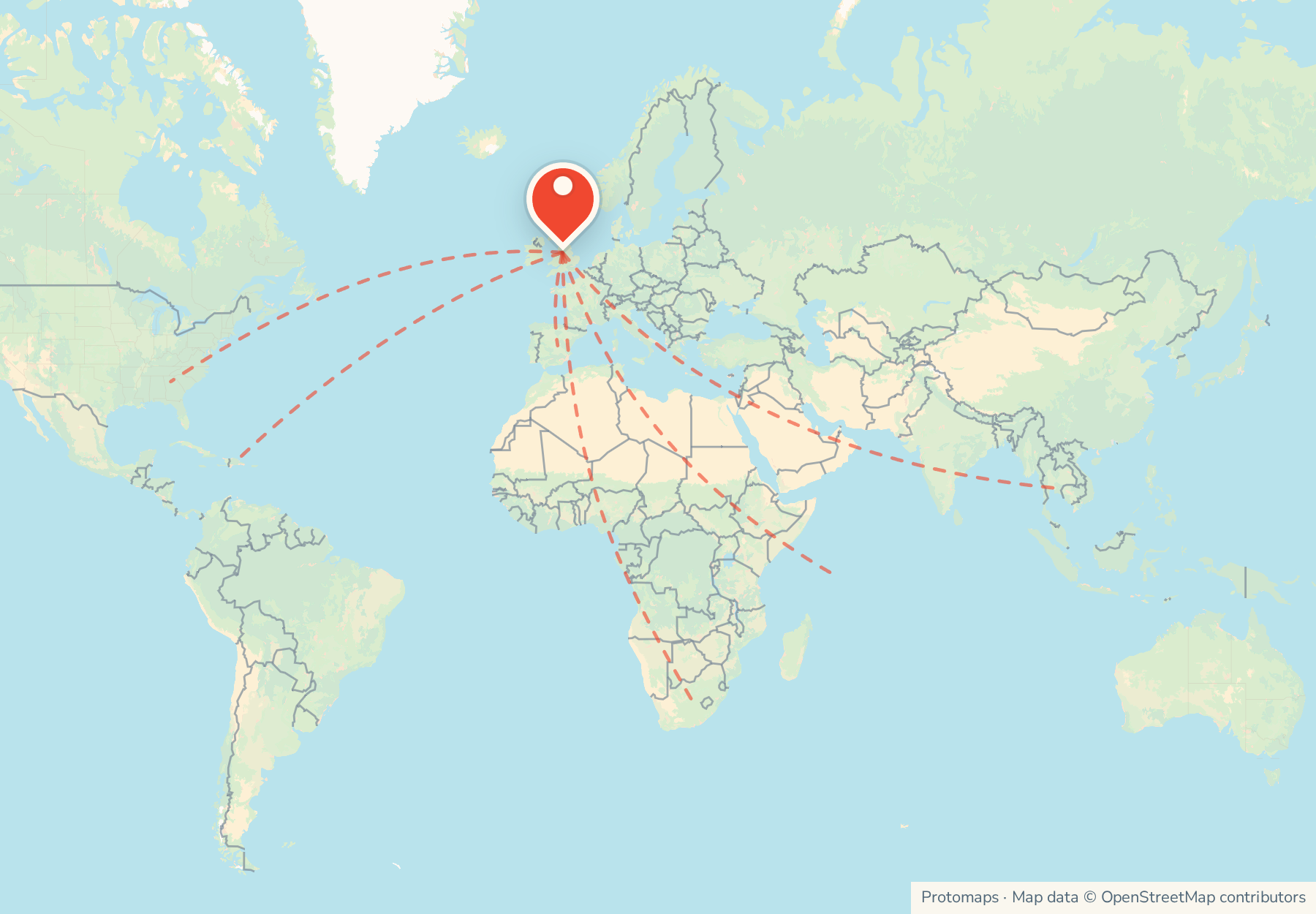
The Peak District with little ones
The Peak District is England's first national park and its most reachable, ringed by cities so you drive from suburbs into moorland in under an hour. With young children it works best as a series of day outings from a base in the limestone White Peak, where almost all the family attractions sit: the show caverns, Chatsworth's farmyard, a cable car and miles of flat, traffic-free trails a buggy can manage.
On this page
A family verdict at a glance
The quick read before the detail: who the Peak District suits, the season to aim for and what to nail down before you book.
Best for
An easy-to-reach countryside break with traffic-free trails for buggies, show caverns, a farmyard at Chatsworth and a cable car, no flight involved.
Maybe not for
If you want a beach or reliable sun. There's no coast, the uplands are wet, and the honeypots gridlock on sunny weekends.
Best ages
Toddlers and preschoolers, happy on the trails, at the farm parks and on the trams and trains. Babies do well in a carrier or trailer.
Best areas
Bakewell for a central town base, Matlock for paid attractions, Buxton for services, the Hope Valley for caverns and trains.
Why families pick it
Closer than the coast for much of England, flat trails a buggy can roll for miles, and a dense cluster of toddler-friendly days out.
Check before you book
A White Peak base for the family stuff, a wet-day plan, parking that fills early, and a cot at the cottage.
Easy to reach, and where to base
More people live within an hour of the Peak District than of any other national park, and you can drive from the suburbs into moorland in well under an hour, often with a toddler asleep in the car. That makes it a stack of day outings from one base rather than a grand expedition, with shops and grandparents never far away.
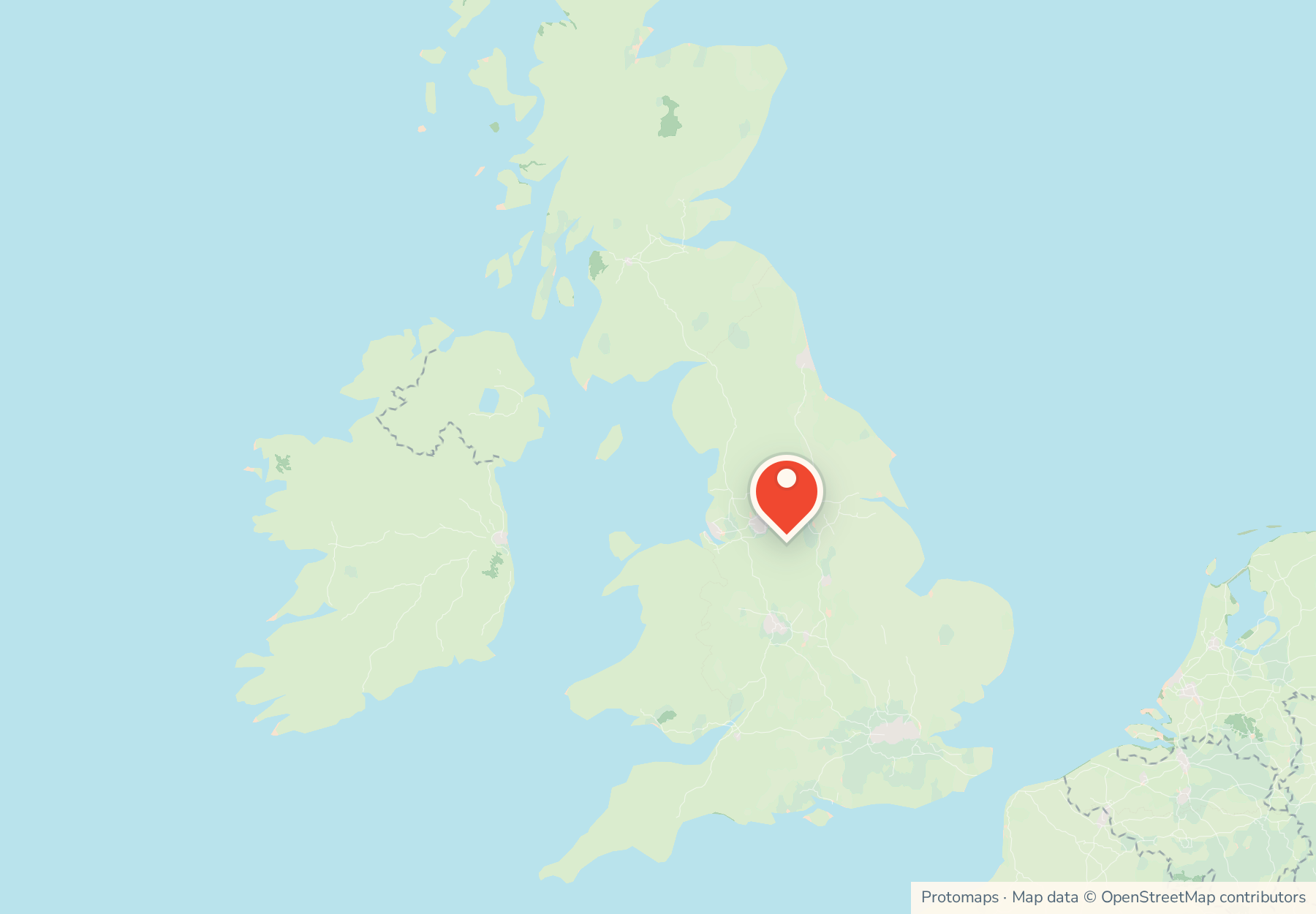
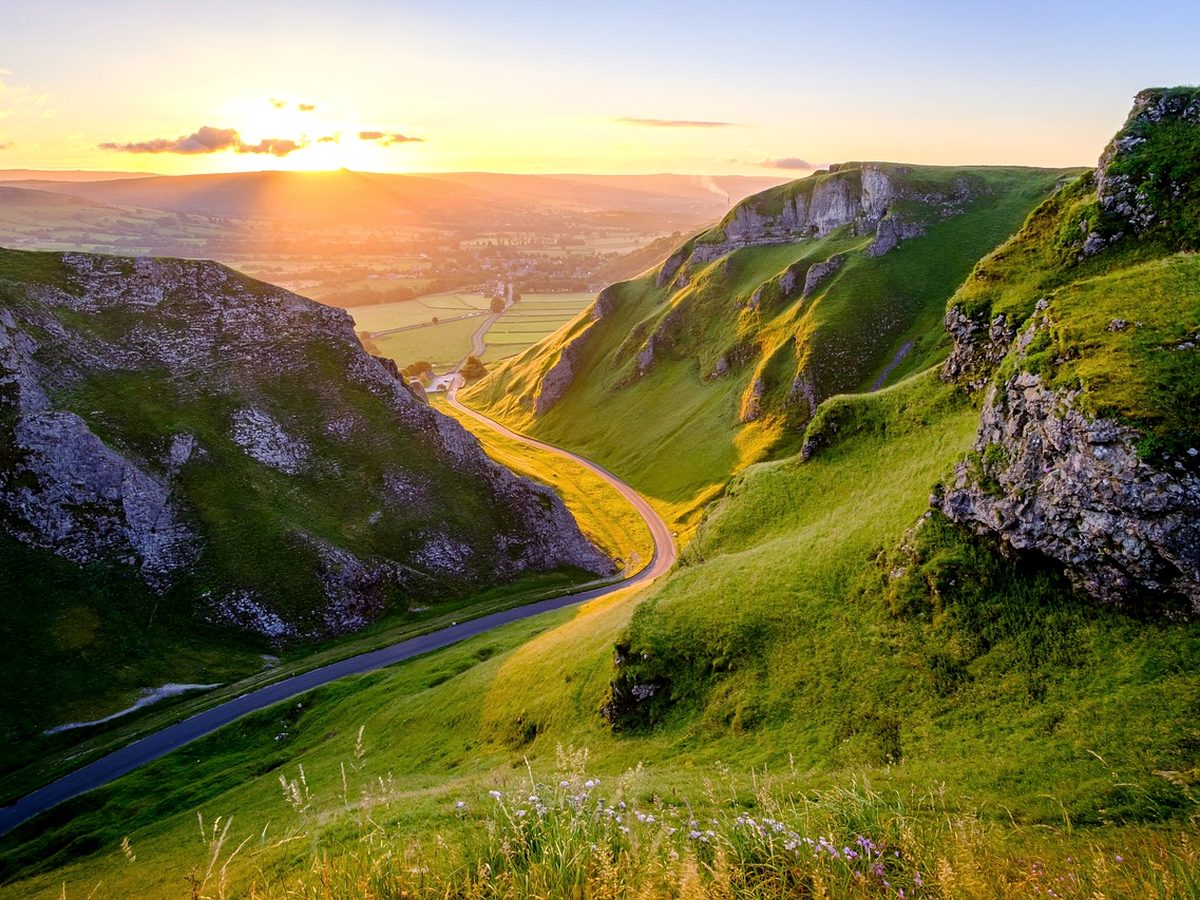
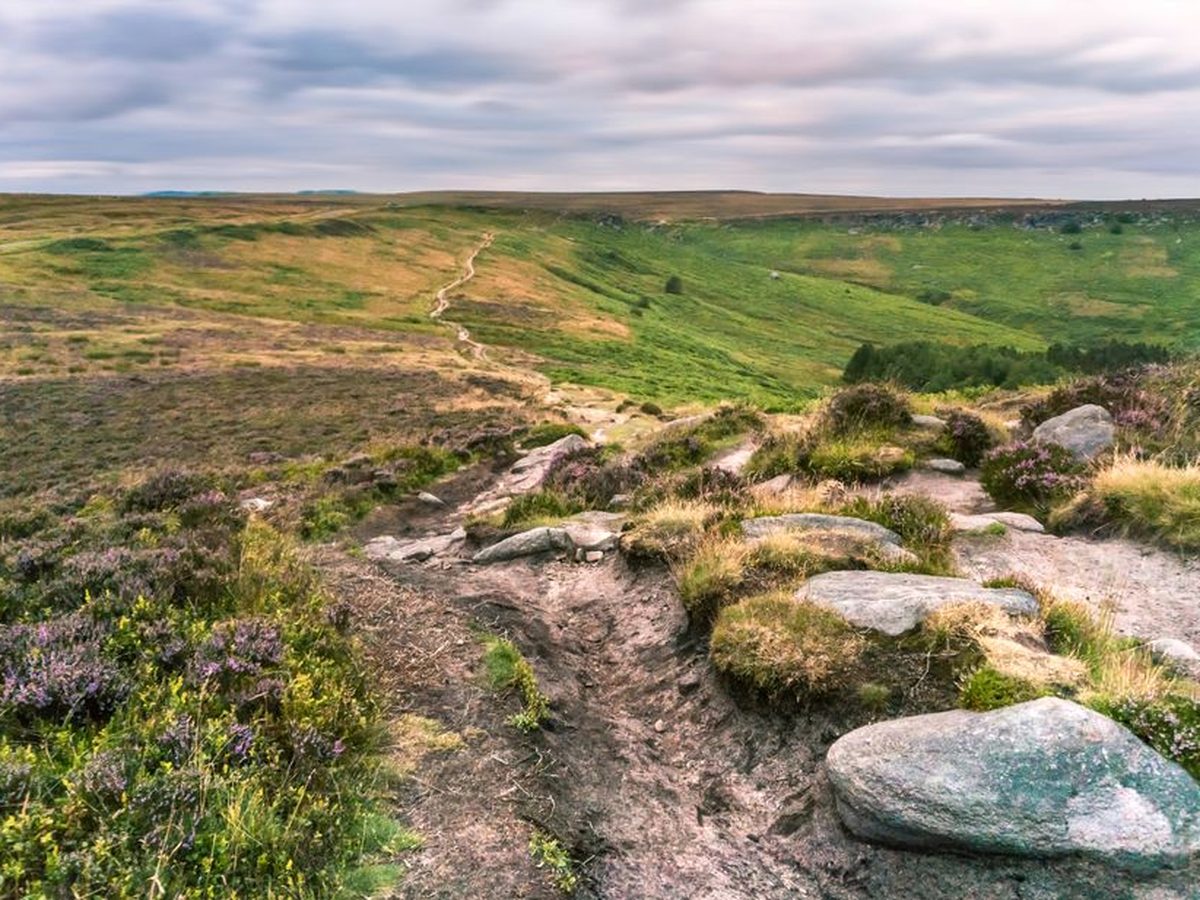
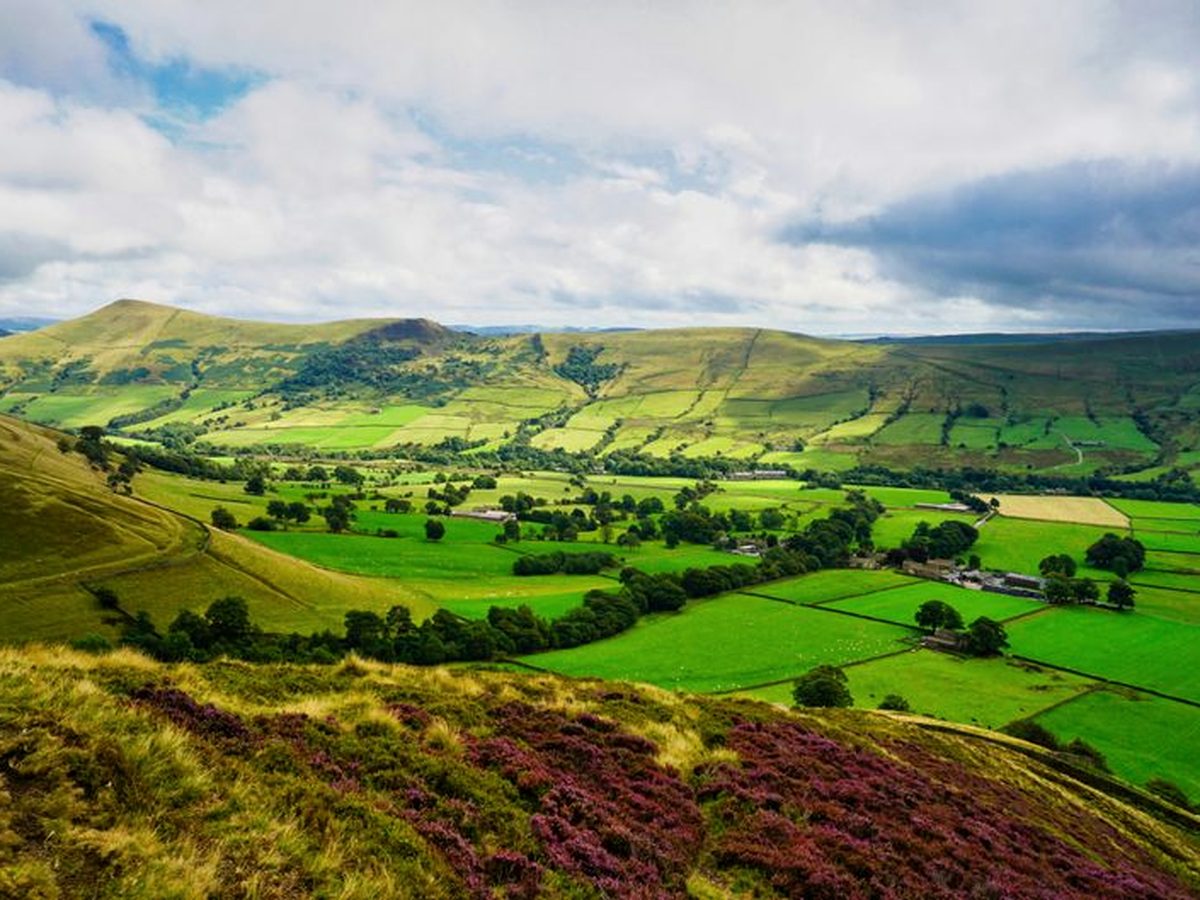
The other thing to get right is which half of the park you choose. The limestone White Peak in the centre and south, with its green dales, dry-stone walls, flat trails, the show caverns and Chatsworth, is where almost everything for a young family happens. The gritstone Dark Peak to the north and east is the high moorland, all heather, reservoirs and unfenced edges, and it is for scenic half-day trips rather than a toddler base. Book a White Peak town, around Bakewell, Matlock or Buxton, and treat a drive up to Castleton or Ladybower as a day out.
A quick gut checkIs the Peak District right for your family?
Worth comparing if
You want a close, no-flight countryside break with flat trails for the buggy, caverns and farm parks within easy reach of one base.
Weigh it up if
You need sun or sand, you can't face packing for rain, or you imagined wild moorland walks that don't really work with little ones.
To sort out before booking
A base in the White Peak, a wet-day plan, an early start for the honeypot car parks, a cot at the cottage and enough of any medicine.
The numbers, the basics and the ages
Everything you'd want to skim first: the quick facts, the everyday practicalities and how the Peak District changes as children grow.
Quick facts for UK families
The basics for a Peak District trip
- The Peak District was the UK's first national park, in upland Derbyshire in the middle of England, ringed by big cities.
- There's no coast. The family scenery is the limestone dales, the flat trails and the parkland, not the moorland tops.
- It's an upland park, wetter, windier and colder than lowland England, so pack waterproofs and warm layers even in summer.
- Buxton, Matlock and Ashbourne have full supermarkets; Bakewell has a small Co-op, so a big shop means a larger town.
- The honeypots (Castleton, Dovedale, Bakewell, Monsal Head) gridlock on sunny weekends, with car parks full by mid-morning.
- Most attractions run year-round, some on reduced winter hours, so check before a cold-season visit.

The Peak District by age and stage
Babies
A carrier or a trailer for the flat trails, a cottage checked for stairs and a cot, and warm layers. The indoor barn at Matlock Farm Park and the caverns stay dry whatever the weather.
Toddlers
Trams and steam trains, the Chatsworth farmyard, paddling at Wetton Mill and buggy miles on the trails. Short days, one outing at a time.
Preschoolers
The right age for the show caverns, Gulliver's Kingdom, the Heights of Abraham cable car and a first balance-bike run on a trail.
Young children
Old enough now for the Castleton caves, the Dovedale stepping stones, longer trail rides and the gritstone edges seen from a safe distance.
Where to base yourselves
The towns and bases side by side, an orientation map and the trails and water with little ones.
Where to stay with young children
Bakewell is the obvious central base: the largest town in the park, with shops, a Co-op, a riverside for feeding the ducks, the Monsal Trail a mile (1.6 km) out and Chatsworth ten minutes away. Town parking is tight, more so on summer weekends and Monday market days. Matlock and Matlock Bath, in the Derwent gorge, pack the most paid attractions into a small space, with the Heights of Abraham cable car, Gulliver's Kingdom, the arcades and a leisure pool all close together, and the Darwin Forest lodge resort between them. It's an arcades-and-attractions strip rather than a scenic one.
Buxton, just outside the park on the western edge, is the biggest town for supermarkets and services, with the Pavilion Gardens, Poole's Cavern and a Georgian centre, though it sits high so it's cooler and wetter. Ashbourne, at the southern gate, is the base for the Tissington Trail, Dovedale and Carsington Water, and handy from Birmingham and the East Midlands.
Castleton and the Hope Valley are the high moorland end, with the show caverns, Mam Tor and rail access along the valley, though Castleton sits well away from the southern White Peak. For a first trip with little ones, a White Peak town or a lodge park is the safer pick: a remote village cottage means driving for every meal, shop and rainy-day soft play.
| Area | Setting | The feel | Good for |
|---|---|---|---|
| Bakewell | The central market town, on the trails | The largest town in the park, with shops, a Co-op, the Monsal Trail at the edge and Chatsworth ten minutes away. Parking is tight in summer. | A town base with a trail on the doorstep |
| Matlock and Matlock Bath | The Derwent gorge resort strip | The densest cluster of paid attractions, with the Heights of Abraham cable car, Gulliver's Kingdom, the arcades and a leisure pool, and Darwin Forest lodges nearby. | Lots of paid attractions in one place |
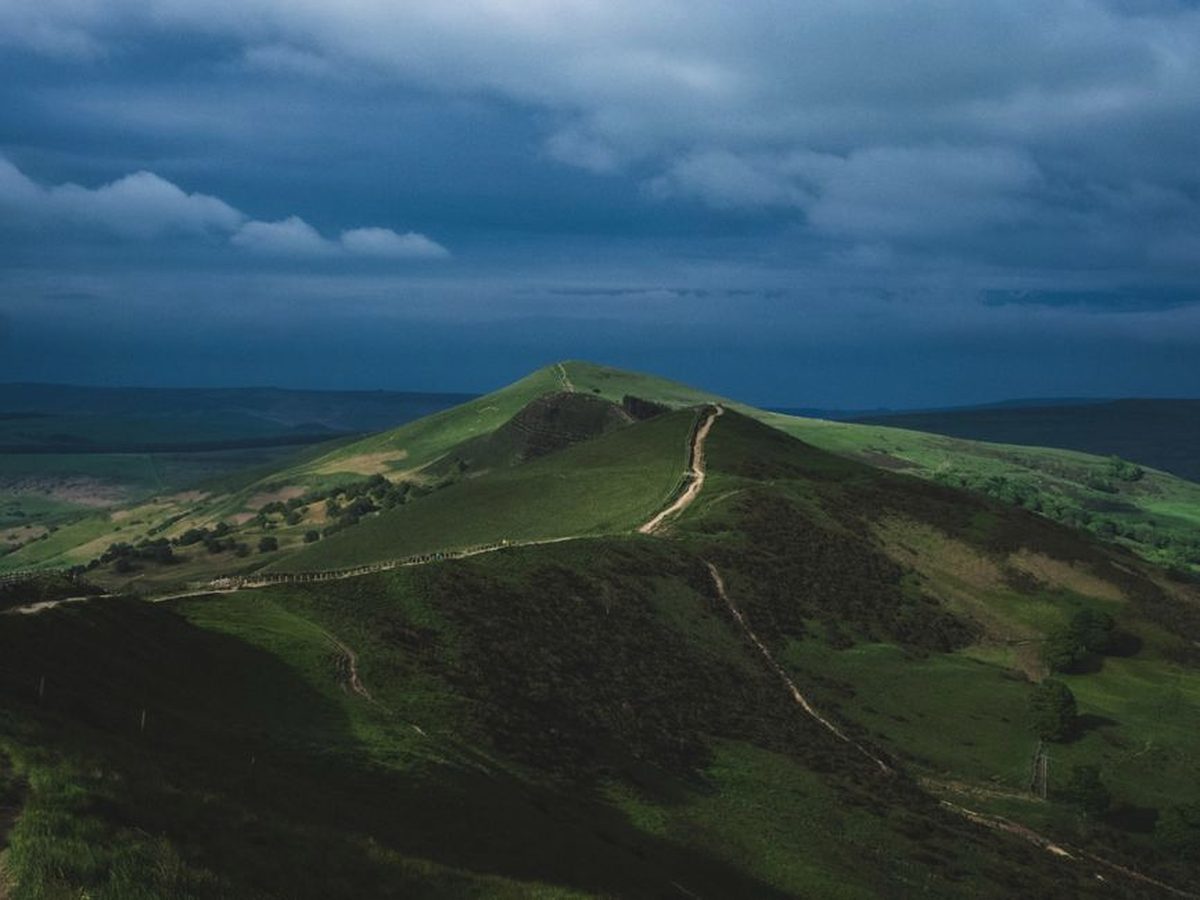
| Castleton and the Hope Valley | The high Dark Peak end | The show caverns, Mam Tor and the Great Ridge. The Hope Valley line serves the valley (Hope, Hathersage, Edale), with Castleton a walk or bus from Hope. A serious honeypot, gridlocked on sunny weekends. | Caverns, scenery and rail-served valley |
| Buxton | The spa-town gateway, just outside | The biggest town for supermarkets and services, with the Pavilion Gardens, Poole's Cavern and a solid town centre. Higher, so cooler and wetter. | Town services and the southern trails |
| Ashbourne | The southern gateway | The start of the Tissington Trail, near Dovedale and Carsington Water, with full shops. Handy from Birmingham and the East Midlands. | The southern trails and Dovedale |
Map of the main family areas
An orientation map of the towns and bases above, the trails and the bigger days out. The numbers match the key beneath.
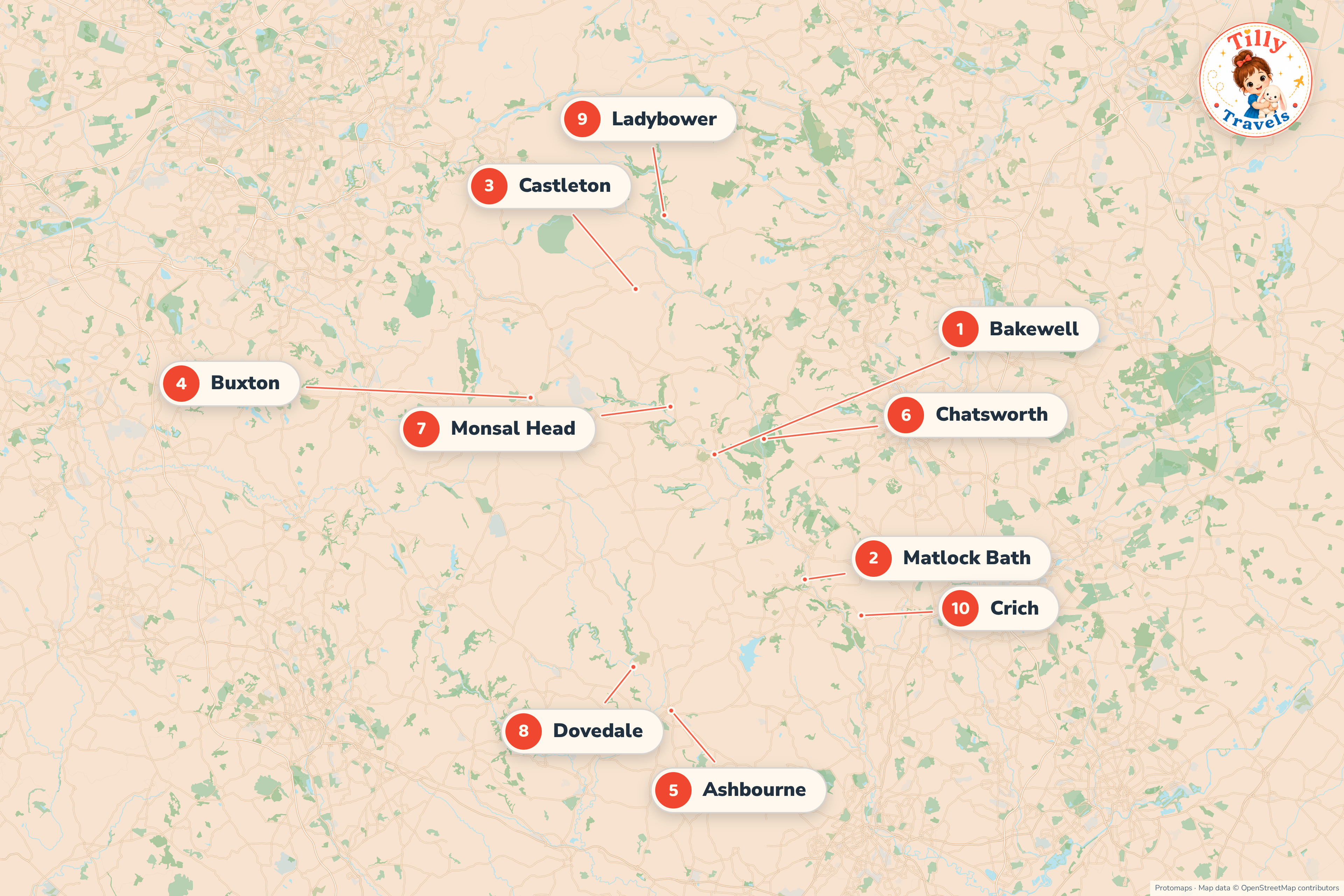
- 1Bakewell The central market town
- 2Matlock Bath Cable car and Gulliver's
- 3Castleton The show caverns
- 4Buxton Spa town and services
- 5Ashbourne Southern gateway
- 6Chatsworth House and farmyard
- 7Monsal Head The Monsal Trail
- 8Dovedale The stepping stones
- 9Ladybower Reservoir and the Dark Peak
- 10Crich The tramway village
Trails and water with little ones
A standard buggy rolls for miles on the traffic-free trails. The Monsal, Tissington and High Peak Trails are flat, surfaced former railways, strung with cafés, toilets and bike hire, with no traffic and barely a gradient. The Monsal Trail near Bakewell runs through limestone dales and lit tunnels to the viaduct at Monsal Head; the Tissington Trail from Ashbourne is quieter and runs through farmland; the Manifold Way down in Staffordshire has river paddling at Wetton Mill below Thor's Cave. You can hire trailers and child seats at Hassop Station on the Monsal Trail or at Parsley Hay for the Tissington and High Peak Trails. Chatsworth's riverside and the loop round Carsington Water are buggy-friendly too.
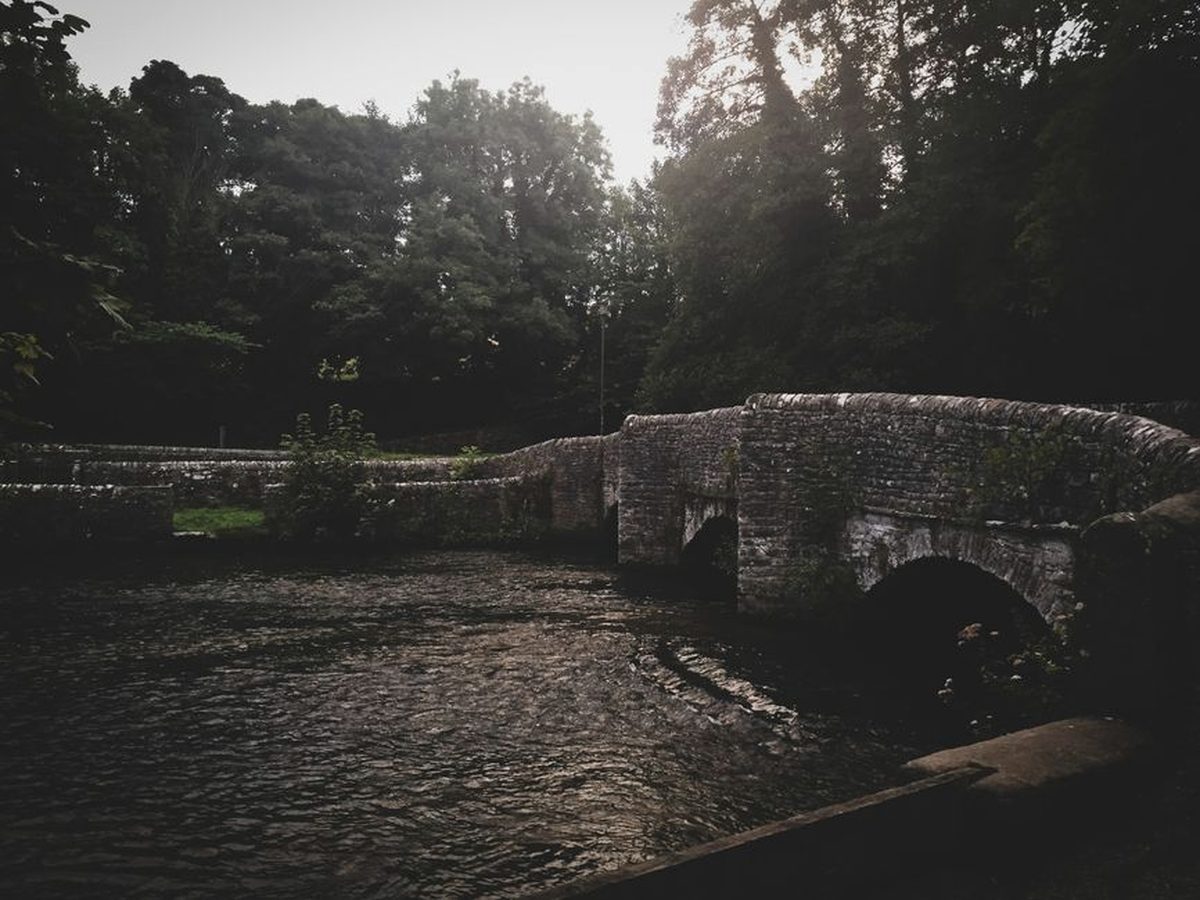
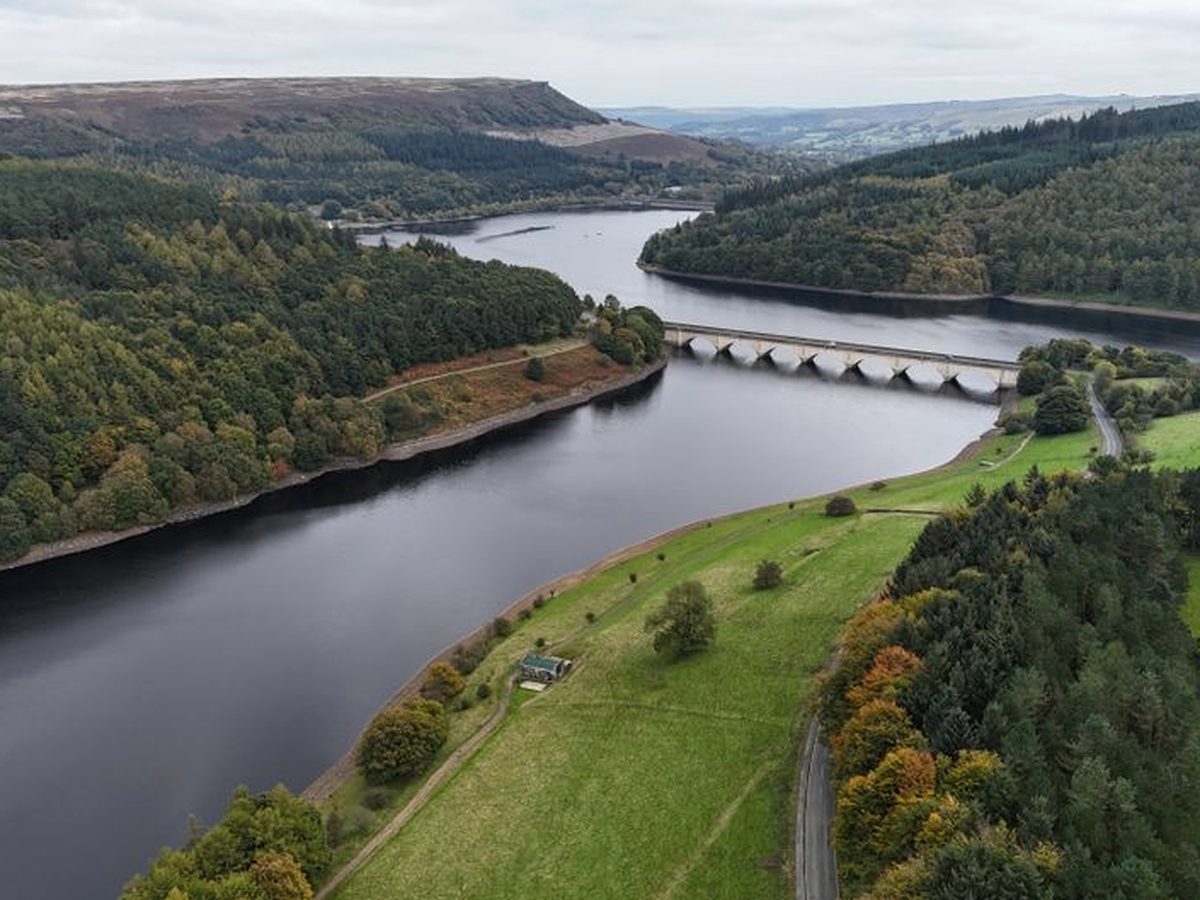
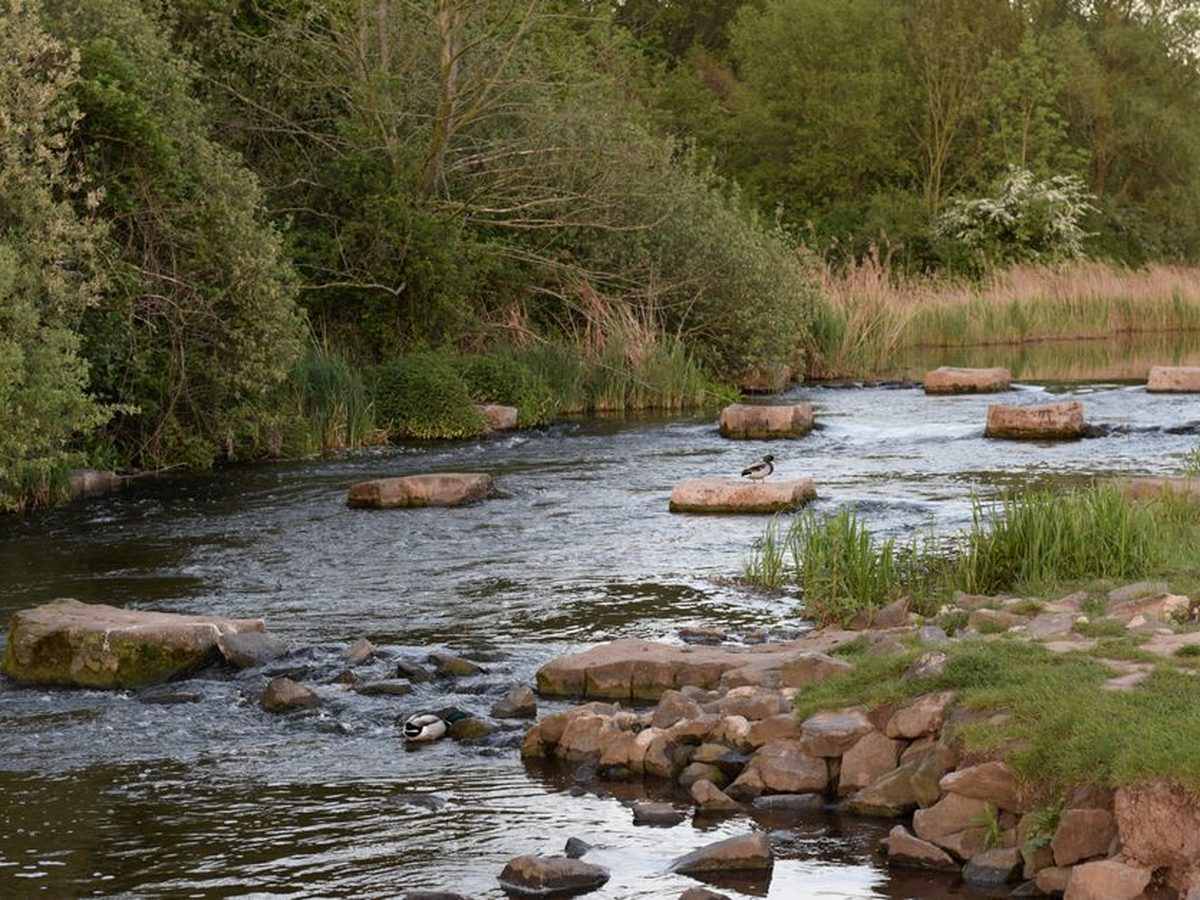
Water here is for paddling and looking at. The rivers have shallow safe spots like Wetton Mill in settled weather, though they rise fast after rain. The Dovedale stepping stones are worth the walk, and the easier approach is from Ilam Park rather than the main Dovedale car park: better parking, a café and a flat riverside path. Ladybower is the other family favourite, and on sunny weekends and bank holidays the upper Derwent road north of Fairholmes closes to cars, so you can push a buggy along the reservoir for miles without a single vehicle.
Weather, wet days and days out
When to go, the rainy-day plan, the days out that suit small children, eating out and where to stock up.
Weather, April to October
The figures below are approximate valley-level averages rather than a forecast, and the moorland tops are several degrees colder and a good deal wetter. The Peak District is an upland park, so it is wetter, windier and colder than the lowland England most families know, and a wet day or two in a week is normal. Showers blow through between brighter spells, and the dales are far more sheltered than the open moor.
| Month | Daytime high | Overnight low | Rain | Wet days |
|---|---|---|---|---|
| January | 6.5° | 1.5° | 81 mm | 13 |
| February | 7.5° | 1.5° | 71 mm | 12 |
| March | 10° | 2.5° | 61 mm | 11 |
| April | 13° | 4° | 66 mm | 10 |
| May | 16° | 7° | 61 mm | 10 |
| June | 19° | 9.5° | 80 mm | 10 |
| July | 21° | 12° | 66 mm | 10 |
| August | 20.5° | 11.5° | 72 mm | 10 |
| September | 17.5° | 9.5° | 70 mm | 10 |
| October | 13.5° | 7° | 90 mm | 13 |
| November | 9.5° | 4° | 94 mm | 14 |
| December | 7° | 2° | 96 mm | 14 |
Typical monthly averages from weather-station records.
Weekdays in May and September are the driest and quietest, with bluebells in spring and heather and autumn colour later. July and August are the warmest but the busiest for traffic and parking. Whenever you go, keep a wet-day plan ready.
The rainy-day planWhen it rains
A rainy-day plan is part of every Peak District week. The caverns are the obvious move, dry underground in any weather, with Poole's Cavern at Buxton the most manageable for the youngest and the Castleton caves better from four up. Crich Tramway Village near Matlock is largely undercover, with exhibition halls and roofed vintage trams to ride.
Beyond those, Matlock Farm Park has a big indoor play barn alongside its animals, the Heights of Abraham pairs a dry cavern with the cable car, and the Pavilion Gardens at Buxton has a soft play inside the café and a miniature train. There are soft-play centres in Matlock, Buxton and Ashbourne, and leisure pools at Matlock and Buxton. The lodge parks like Darwin Forest have their own pools and soft play for guests.
Filling the daysThings to do with little ones
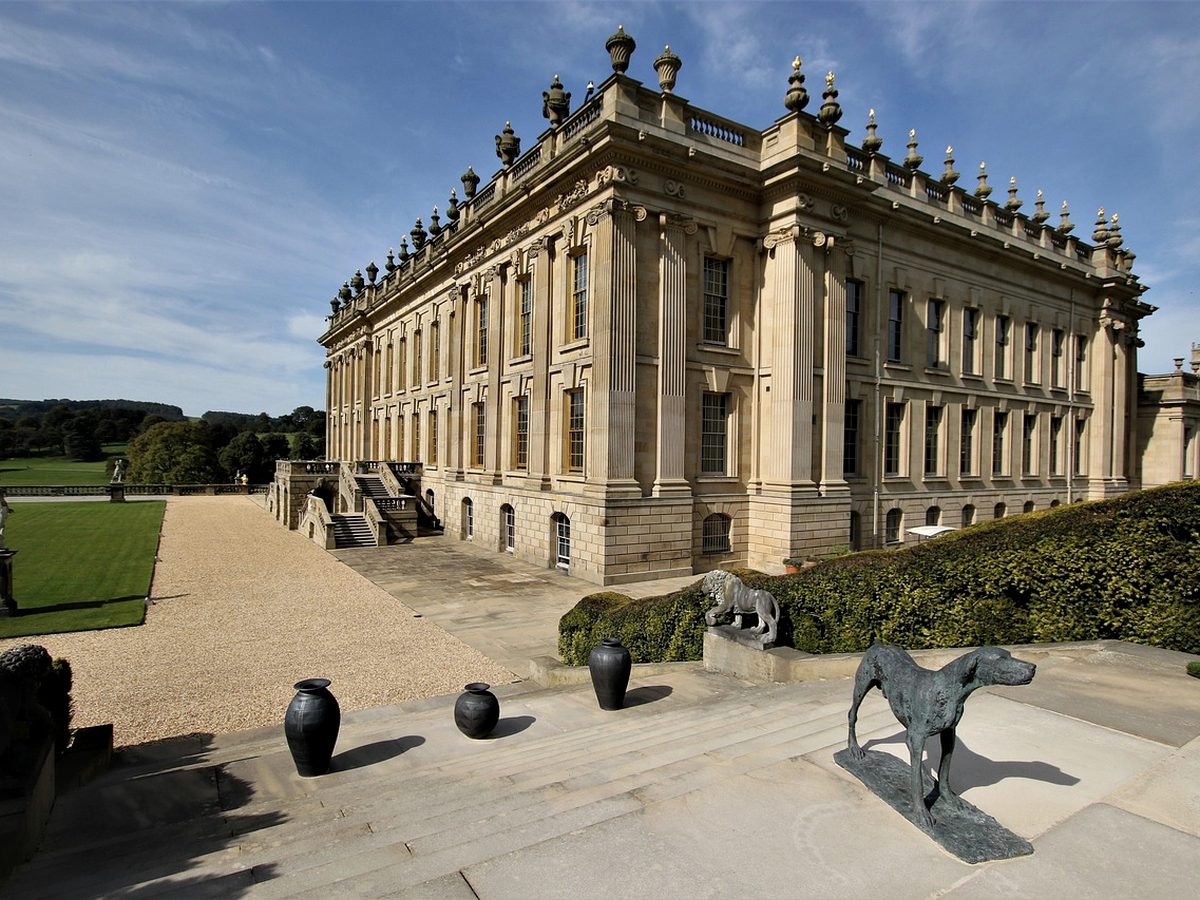
Chatsworth is the one to prioritise for this age. The farmyard and adventure playground, not the house, are what you come for: working farm animals, milking and handling sessions, water and sand play, and a playground built for under-sixes, with lift access for a buggy and three or four hours in it. The riverside parkland is a free, flat pushchair walk. The Heights of Abraham at Matlock Bath is a cable car up to a hilltop with two show caverns, two playgrounds and a café, and Gulliver's Kingdom next door is a small theme park built for ages two to thirteen, with a Toyland zone for the youngest.
The show caverns split by age: Poole's Cavern at Buxton is the first one for a toddler, and the four Castleton caves, with their Blue John stone and the huge Peak Cavern entrance, suit four-year-olds and up. Crich Tramway Village gives unlimited rides on vintage trams through a period street, and the heritage steam trains at Peak Rail and the Ecclesbourne Valley Railway are a hit with a train-loving toddler. Matlock Farm Park has animals and an indoor barn, and runs a parent-and-toddler morning in term time on weekdays, about £9.50 for an adult and two toddlers with a hot drink included (last checked June 2026). In summer there's the heated Hathersage lido for a swim.
Eating out with children
Self-catering is the norm, and when you eat out the dales are full of family pubs with gardens and cafés along the trails, with high chairs common in the towns and trail cafés set up for walkers with children. Booking ahead helps in the honeypots on a summer weekend.
The local treat is the Bakewell pudding, the original of the better-known Bakewell tart, sold by competing shops in the town, and a slice cut small does a toddler nicely. The trail cafés at Hassop Station, Parsley Hay and Wetton Mill are reliable mid-walk stops, and a fold-up seat that clamps onto the edge of a table is worth packing for the smaller places that have no high chair.
Nappies, milk and the big shopSupplies and pharmacies
Shopping is straightforward in the towns: Buxton has the widest choice with a Tesco and Aldi, and Matlock and Ashbourne have full supermarkets and a pharmacy. Bakewell has only a small Co-op, so the big weekly shop means a trip to a larger town.
The gap is the villages, where a small shop is the most you'll find, so the sensible move is to stock up in a town on the way to a remote cottage.
Getting around, a real week and the admin
Getting around, what a week actually looks like, the health and admin and a list to pack against.
Getting there and around
Most families drive, and the park is close: under an hour from Manchester, Sheffield, Derby or Nottingham, and about three from London. In summer the in-park lanes go single-track in places and honeypot car parks fill by mid-morning on sunny weekends, so an early start or a midweek visit pays off. The train is a real option for day trips: the Hope Valley line from Manchester and Sheffield stops at Hope, Hathersage and Edale, and the Derwent Valley line reaches Matlock, with heritage railways at Matlock and Wirksworth as days out in themselves.
On the ground a car is the practical choice for a week, as the village cottages are scattered and the buses are thin. The exceptions are the rail-served Hope Valley villages and Matlock Bath, which work for a car-free day or two.
Underfoot, a standard buggy or a bike trailer rolls for miles on the flat, surfaced trails. Off the trails the wheels don't get far: the limestone dales turn rough and stony, the moorland edges are carrier ground, and the caverns take no buggy at all, so a carrier is worth packing alongside the pushchair.
What a real week looks likeA realistic week with little ones
Settle in and shop in Bakewell, Matlock or Buxton; a short first stretch of a traffic-free trail near the base.
A morning on the Monsal or Tissington Trail with a buggy or a bike trailer, a café stop, and paddling at Wetton Mill if it's warm.
Chatsworth farmyard and playground, or the Heights of Abraham cable car, one a day with nothing demanding after.
Poole's Cavern and the Crich trams, or Matlock Farm Park's indoor barn, planned before the rain rather than after.
A slow morning, ducks and a Bakewell pudding by the river, then the drive home.
Alternate a flat trail day with a paid attraction, keep to one big outing at a time, and hold a cavern or a soft-play barn back for the wet day.
The practical adminHealth and admin
Buxton has a minor injuries unit for the smaller things, and the nearest full A&E depends on which side of the park you're on: Chesterfield Royal to the east, Stepping Hill in Stockport to the west and the Royal Derby to the south, each up to forty minutes from the middle. From the Hope Valley and the Dark Peak, Sheffield's Northern General is the nearest, about thirty-five to forty minutes. Mobile signal is patchy in the dales, so carry enough of any regular medicine and a basic first-aid kit.
Day to day the real hazards are up on the moors, not in the dales where you'll mostly be. The reservoirs are deep, cold and banned for swimming, so treat them as for looking at; rivers rise fast after rain. The gritstone edges in the Dark Peak have unfenced drops, the moor weather turns quickly, and old mine workings sit off the paths in places, so keep a running toddler back from edges, check the mountain forecast before any high walk, and stay on the marked routes. Ticks live in the bracken and long grass and can carry Lyme disease, so cover legs on grassy walks and check children afterwards, and give cattle on the paths a wide berth, especially with a dog. In the caverns, take a warm layer and pick the cave by your child's age.
Before you payBooking checklist
- Base in the White Peak (Bakewell, Matlock or Buxton) for the family attractions and trails.
- Build a wet-day plan in before you go: a cavern, the Crich trams, a soft-play barn.
- Pack waterproofs and warm layers for everyone, even in summer, and a buggy rain cover.
- Bring a carrier for the caverns and the rough dales, and a standard buggy for the trails.
- Aim for a weekday in May or September for the driest, quietest stretch.
- Plan early starts for the honeypot car parks, or go midweek.
- Confirm a cot, and ask a cottage about stairs and an enclosed garden.
- Do the big shop in Buxton, Matlock or Ashbourne, not Bakewell.
- Pack a tick tool and check children after grassy walks.
- Bring enough of any medicine your child relies on for the whole trip.
Resort guides in Peak District
We've researched these places to stay in Peak District for families with young children. Each guide covers what it's like, who it suits and what to check before you book.
Questions, links and the last word
The things families ask most, the official pages worth a bookmark and when this guide was last refreshed.
Common parent questions
Town, lodge park or village cottage?
A market town or a lodge park beats a village cottage for a first trip. From a town you can walk to a shop, a café and the ducks on a bad-weather afternoon without getting back in the car; Bakewell, Matlock and Buxton all manage that. Lodge parks like Darwin Forest add a pool and soft play on site. A remote cottage means driving for every meal and every wet-day plan.
Do we need a car?
For a week with a toddler, in practice yes. The buses are thin, the cottages are scattered, and most attractions are reached through their own car park. The train works for a day out, though: the Hope Valley line from Manchester or Sheffield reaches Hope (a 2-mile (3 km) walk or seasonal bus from Castleton), Hathersage and Edale, and Matlock Bath is walkable from its station. A residential holiday still wants a car.
Do we need a carrier as well as the buggy?
Yes, pack both. The trails, Chatsworth and the lakeside loops all roll fine on a standard pushchair, but the caverns take no buggy at all, and the limestone dales and gritstone edges turn stony and stepped. A carrier covers the bits the wheels can't. If you fancy cycling rather than pushing, you can hire trailers and child seats at Hassop Station on the Monsal Trail or Parsley Hay for the Tissington and High Peak Trails.
Which cave is best for a toddler?
Poole's Cavern at Buxton. Its paths are wide and even, the tour is short, and there are far fewer steps than the Castleton caves, which involve more stairs and stooping and land better with a confident four-year-old. Whichever you pick, the caves sit around 7 degrees year-round, so a jumper matters more than the weather outside, and a toddler who won't walk or be carried through tight stretches will struggle.
Does it matter which week we pick?
More than the month does. A term-time weekday is quiet at any time of year, while a sunny bank holiday or a school-holiday weekend brings the gridlock wherever the calendar sits. If you can only travel in the holidays, book attractions ahead and treat the first hour of the day as your parking window. The dry, quiet stretch most families aim for is a May or September weekday, before and after the summer crowds.
Where can the children get in the water?
For a proper swim, the heated Hathersage outdoor lido in the Hope Valley, warm enough to enjoy even on a cool day. For a free paddle, the rivers have shallow spots like Wetton Mill in settled weather, though they rise fast after rain so check the level first. The reservoirs are out: swimming is banned at Ladybower and the rest, which are deep, cold operational waters with hidden currents, however inviting they look on a hot afternoon.
Is it safe on the moors and edges?
With little ones you'll spend almost all your time on the valley trails and around the towns, which are about as safe as a day out gets. The hazards sit up on the high moors, so they only matter on the days you head up there: the gritstone edges like Stanage and Curbar drop away unfenced, and the marked paths keep you clear of the old mine shafts. If you do take a high walk, hold a running toddler in close and turn back if the cloud comes down rather than pressing on.
What if someone is ill or hurt?
Buxton has a minor injuries unit for the smaller things, but the nearest full A&E depends on which side of the park you are: Chesterfield Royal to the east, Stepping Hill in Stockport to the west, and the Royal Derby to the south, each up to 40 minutes from the middle. Mobile signal is patchy in the dales, so carry enough of any regular medicine and a basic first-aid kit.
See more Peak District photos
Open the photo gallery →Useful links
- Peak District National Park: planning, parking, trails and safety.
- Visit Peak District: areas, attractions and what's on while you're there.
- Chatsworth: the farmyard, playground, gardens and current tickets.
- MWIS Peak District: the mountain forecast before any high walk.
- Peak District by Train: the Hope Valley and Derwent Valley lines and family events.
Last updated 17 June 2026.