Kefalonia with little ones
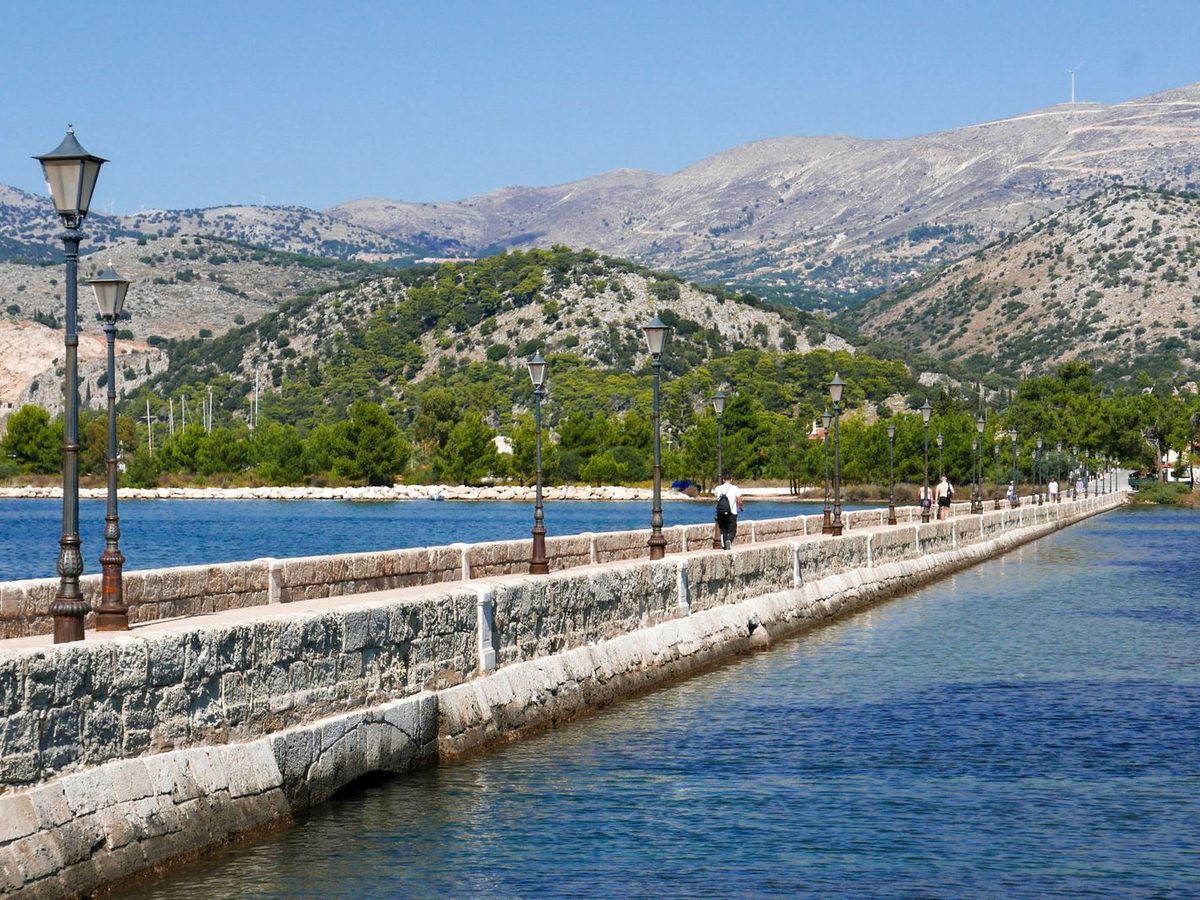
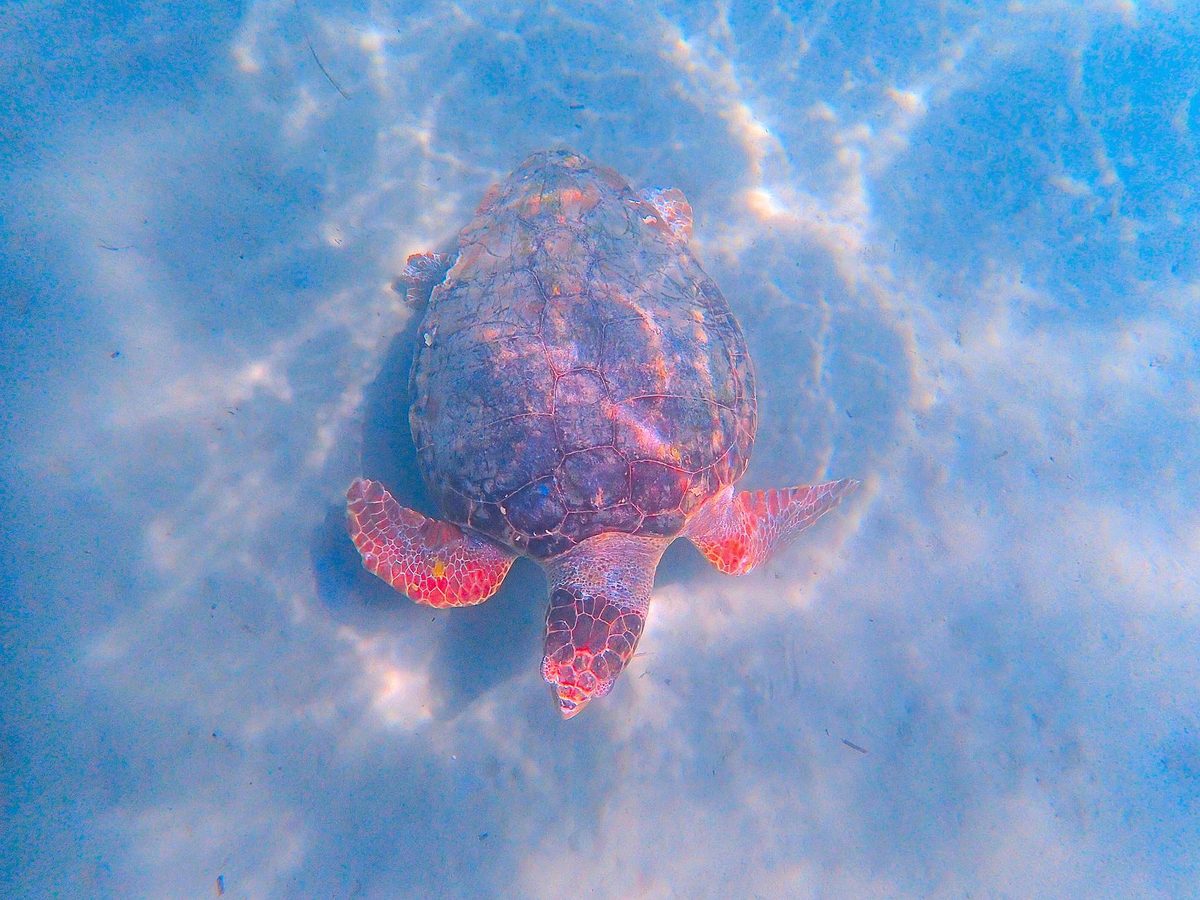
Kefalonia is the largest of the Ionian islands and one of the least crowded, a green, mountainous place where the good things sit at opposite ends of the island. Wild loggerhead turtles feed in the capital's harbour all summer, watchable from a stone bridge in the middle of town. The island's best toddler water sits across a cheap little car ferry, on a beach of red-brown sand that stays knee-deep further out than seems possible. The most photographed beach in Greece is here too, and it needs a safety warning, not a swim.
On this page
A family verdict at a glance
The quick read before the detail: who Kefalonia suits, the season to aim for and what to nail down before you book.
Best for
If you like exploring: shallow sandy bays, wild turtles in the harbour, cave mornings and villages that still feel Greek.
Maybe not for
If you want a self-contained resort with kids' clubs and waterparks, or you'd rather not leave the sunbed.
Best ages
Strong from babies up: calm water for the little ones, caves and castles for the ones who can walk.
Best areas
Lassi for convenience, Skala or Katelios in the south, Agia Efimia for the caves, Lixouri for the red sand.
Why families pick it
The quietest of the big Ionians: more space on the sand, fewer crowds and days out built around the landscape.
Check before you book
The transfer length to the southeast resorts, and that your week includes a car for at least a few days.
The big quiet island
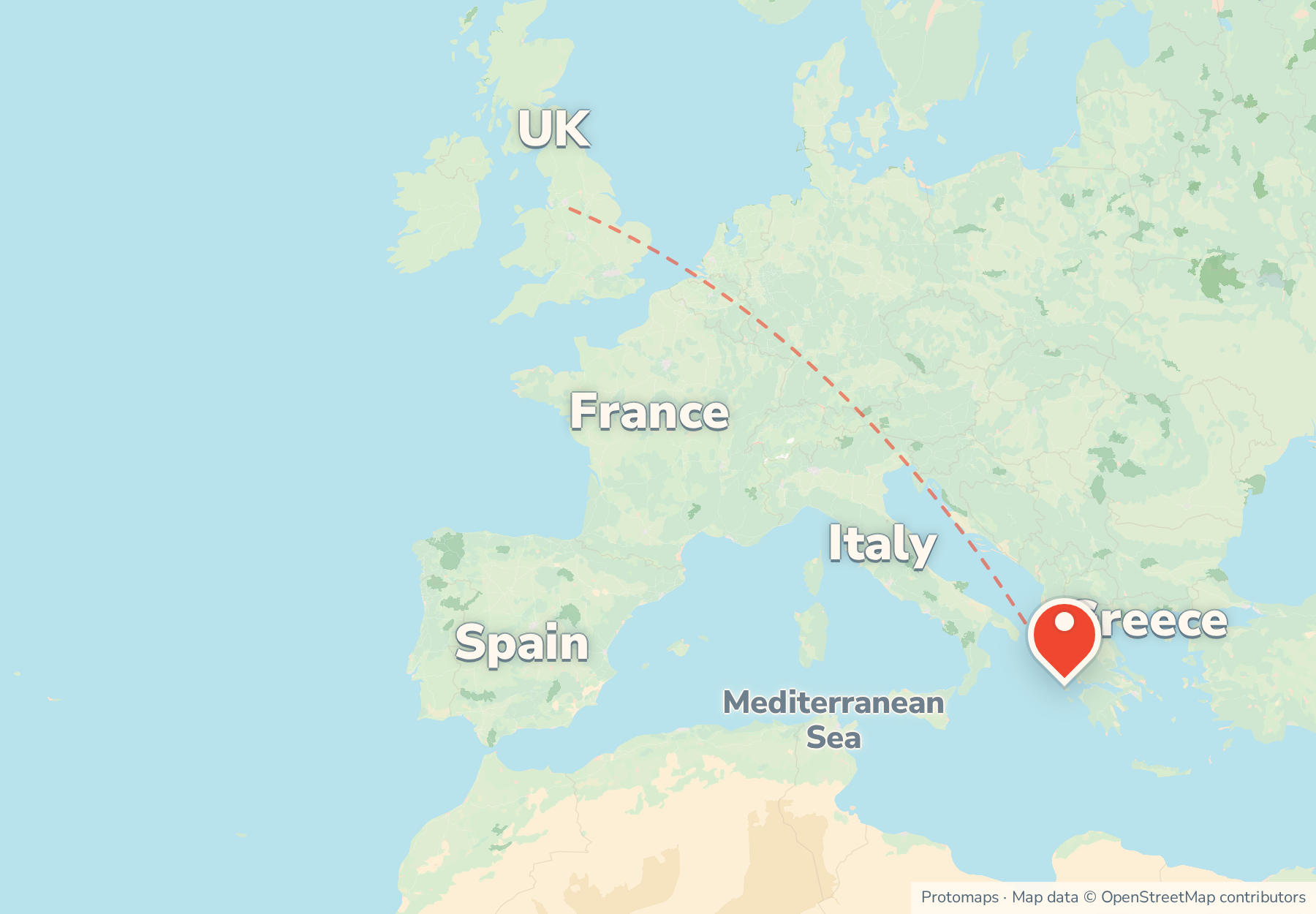
Kefalonia is bigger than Corfu and nearly double Zante, yet sees far fewer visitors than either, and the best places for children sit at opposite ends of mountainous roads: red-sand shallows on one peninsula, cave lakes on the east coast, a much-photographed village at the far northern tip. Plan on driving between them.
In August 1953 an earthquake flattened roughly nine in ten of the island's buildings, so the towns are modest, modern and built to strict codes rather than Venetian and grand; Fiskardo in the far north, which the quake spared, survives as the one postcard of what was lost. The same geology produced the caves and Mount Ainos, and small tremors are constant and almost all pass unfelt.
A quick gut checkIs Kefalonia right for your family?
Worth comparing if
You want a greener, emptier Greek island where the days out are wildlife, caves and villages rather than ticketed attractions.
Weigh it up if
You need everything walkable from the hotel door, or mountain driving with a baby on board sounds like a chore.
To sort out before booking
The base (airport-close Lassi or the southern sand), the hire car dates and which day gets the Xi ferry.
The numbers, the basics and the ages
Everything you'd want to skim first: the quick facts, the everyday practicalities and how Kefalonia changes as children grow.
Quick facts for UK families
Money, plugs, language and the basics
- Kefalonia is the largest Ionian island, green and mountainous, with its modest capital Argostoli on a sheltered bay and Ithaca twenty minutes by ferry from Sami.
- The currency is the euro and cards are accepted widely; small tavernas and beach kiosks still prefer cash.
- Sockets are the round two-pin European type, so UK plugs need an adapter. The voltage matches the UK.
- The language is Greek, with English spoken comfortably across the resorts and tourist tavernas.
- The clocks run two hours ahead of the UK, so a 7pm UK bedtime is 9pm here, exactly when Greek family dinners get going.
- Tap water is treated and safe but hard from the limestone; locals drink bottled, and low-mineral bottled water is the one for formula.
- Your GHIC card covers Greece's state system; 112 is the general emergency number, 166 calls an ambulance and the island's hospital is in Argostoli.
- Hotels add Greece's nightly climate fee per room, charged at the hotel and rarely included in package prices, scaled to the hotel's star rating, so budget for it.
Kefalonia by age and stage
Babies
Calm Ionian water without the Aegean wind, sandy bays to sit on and quiet everywhere.
Toddlers
Xi's red sand and water that barely deepens, turtles surfacing under the bridge and a short car-ferry crossing that's part of the day.
Preschoolers
A boat ride on an underground lake, a cavern full of dripping spires and a castle headland at Assos to charge around.
Young children
Snorkelling off the pebble coves, the Ithaca ferry and semi-wild ponies in the fir forest if luck cooperates.
Where to base yourselves
The areas side by side, an orientation map of the island and what the beaches are really like underfoot.
Where to stay with young children
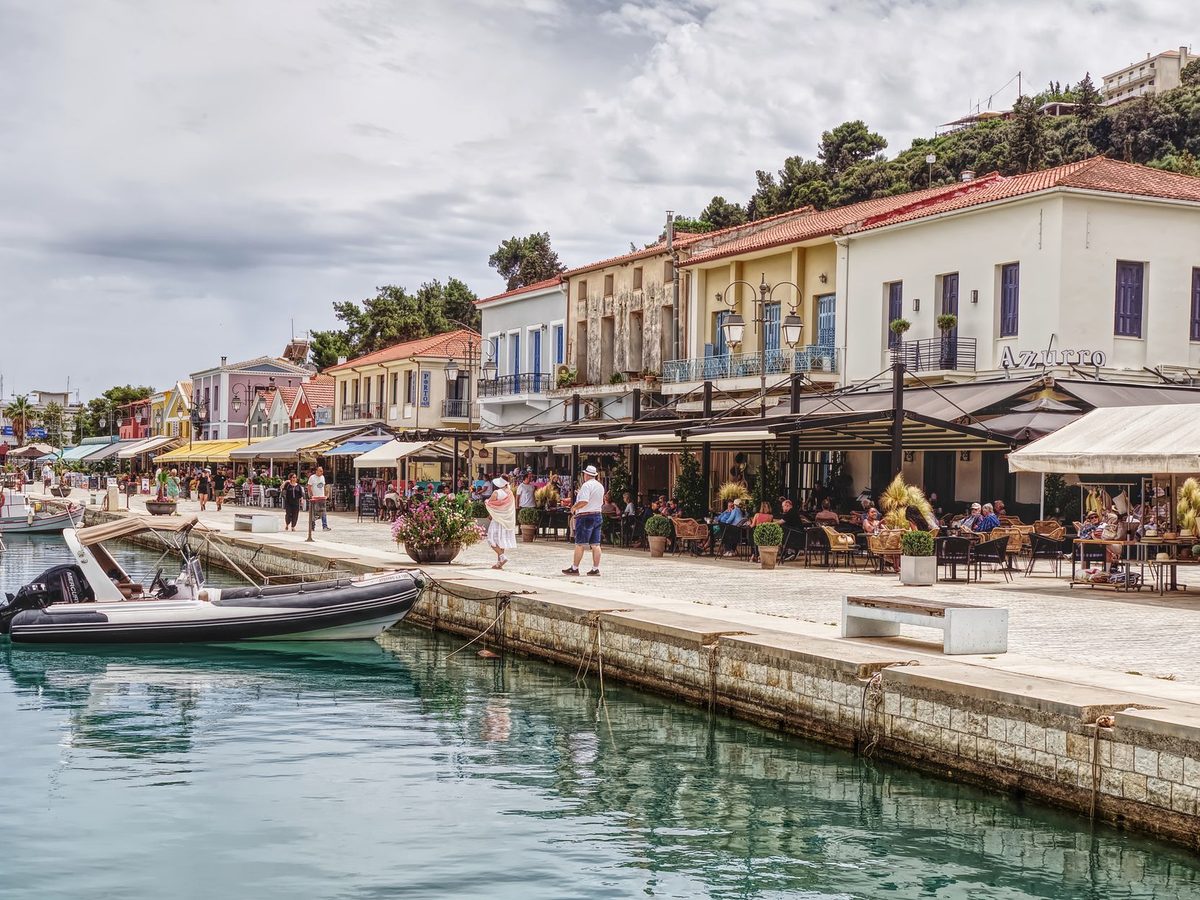
Lassi is the practical answer: a low-key strip of hotels and villas ten minutes from the airport, with two sandy Blue Flag beaches, Makris Gialos and its quieter neighbour Platis Gialos, both shelving gently enough for small swimmers. Avithos, a quieter sandy cove just south of the airport, is the easy alternative when Makris Gialos is busy. Argostoli's shops, harbour front and turtle bridge are walkable or a few minutes' drive, which makes Lassi the easiest base for a first visit and the shortest transfer on the island.
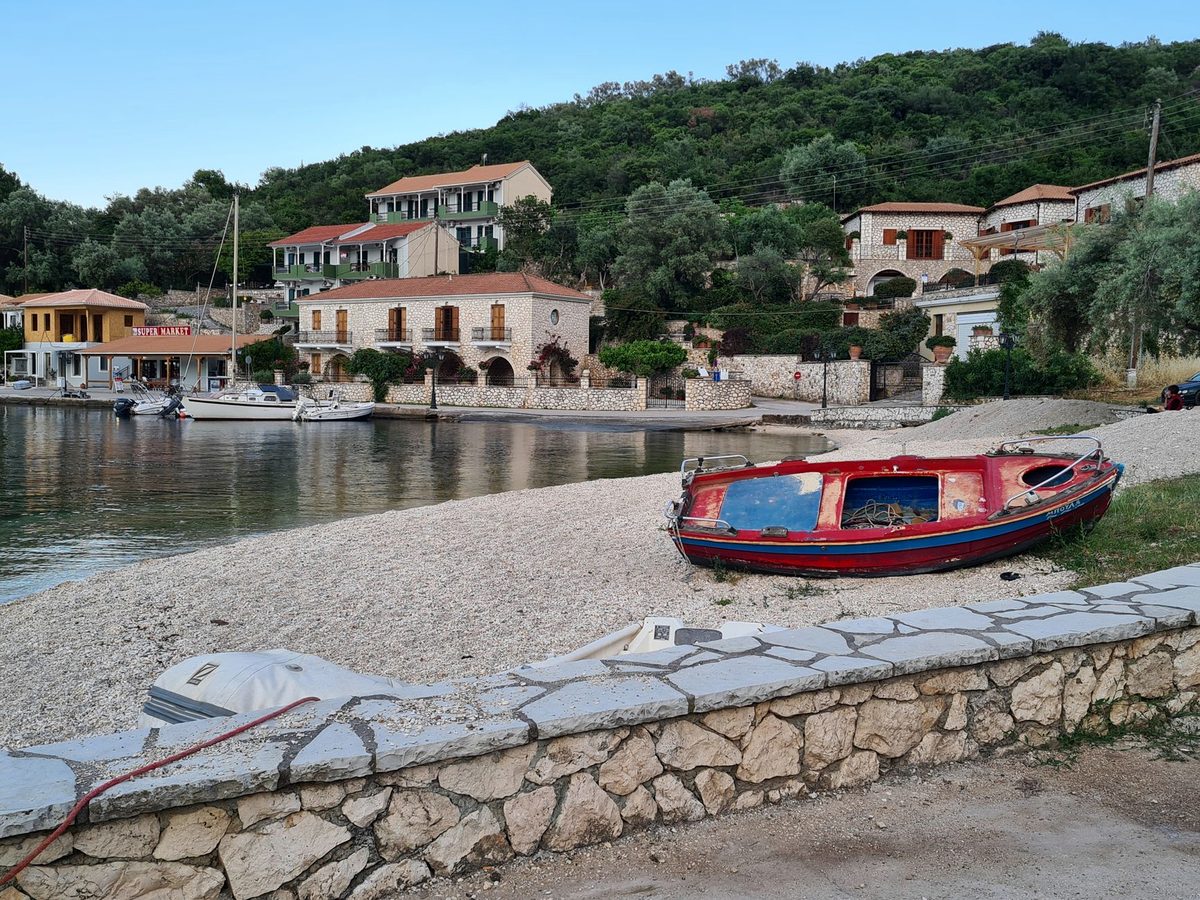
The southeast does the classic resort week at a gentler volume. Skala is the settled family choice, nearly 2 miles (3 km) of organised sand and shingle backed by pines, a proper village square and a preserved Roman mosaic floor a short walk inland; the cost is a transfer approaching the hour. Katelios, ten minutes along the coast, is the quiet version, a small fishing village whose sandy bay stays shallow an unusually long way out, and Lourdata between them offers a calm Blue Flag beach without much resort apparatus at all. On the east coast, Agia Efimia's pretty harbour suits families who plan cave mornings and boat days more than bucket-and-spade ones; its own beach is clear, calm pebble.
The interesting outlier is the Paliki peninsula across the bay. Base in or near Lixouri and the island's shallowest beach, red-sanded Xi, is minutes away, with the half-hour car ferry to Argostoli running from early morning to near midnight as your link to the rest of the island. Fiskardo, for all its pastel waterfront, works better as a half-day from anywhere than a base with small children: the beaches near it are limited pebble coves and the drive back from everything is long.
| Area | Transfer | The swimming | The feel |
|---|---|---|---|
| Lassi | 15 to 20 min | Two sandy Blue Flag beaches with gentle, gradual entries | The convenient base: minutes from the airport, walkable to Argostoli and its harbour turtles. |
| Skala | 40 to 50 min | Nearly 2 miles (3 km) of organised sand and shingle with pines behind | The settled family resort in the southeast, low-rise and unhurried, with a Roman mosaic up the road. |
| Katelios | 35 to 40 min | A small sandy bay that stays shallow a long way out | A quiet fishing village; the best of the south coast for pre-walkers. |
| Lourdata | Similar to Katelios | A sandy Blue Flag beach with a gentle slope and calm water | Quieter than Skala and Katelios either side of it, with little resort apparatus. |
| Agia Efimia | Just past Sami's 45 min | A clear, calm pebble harbour; sand is a drive away | The pretty east-coast harbour village, handiest base for the caves and boat trips. |
| Lixouri and Xi | Ferry from Argostoli | Red-brown sand and the shallowest organised water on the island | The peninsula across the bay, reached by a cheap half-hour car ferry that runs all day. |
Map of the main family areas
An orientation map of the areas above, the airport and the big days out. The numbers match the key beneath.
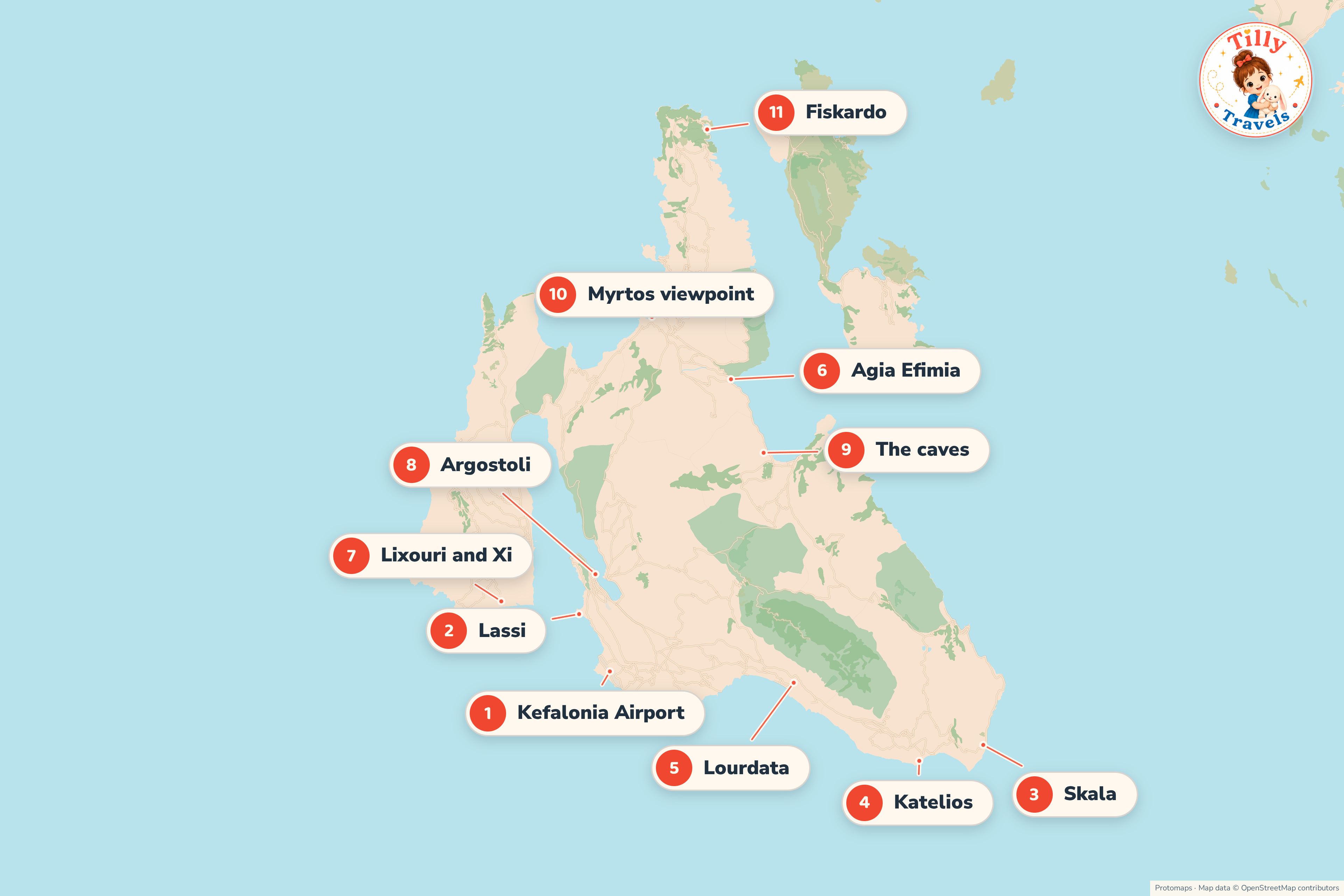
- 1Kefalonia Airport Small and seasonal
- 2Lassi The convenient base
- 3Skala The family resort
- 4Katelios The quiet shallows
- 5Lourdata The low-key beach
- 6Agia Efimia The harbour base
- 7Lixouri and Xi The red-sand peninsula
- 8Argostoli Turtles and the bridge
- 9The caves Melissani and Drogarati
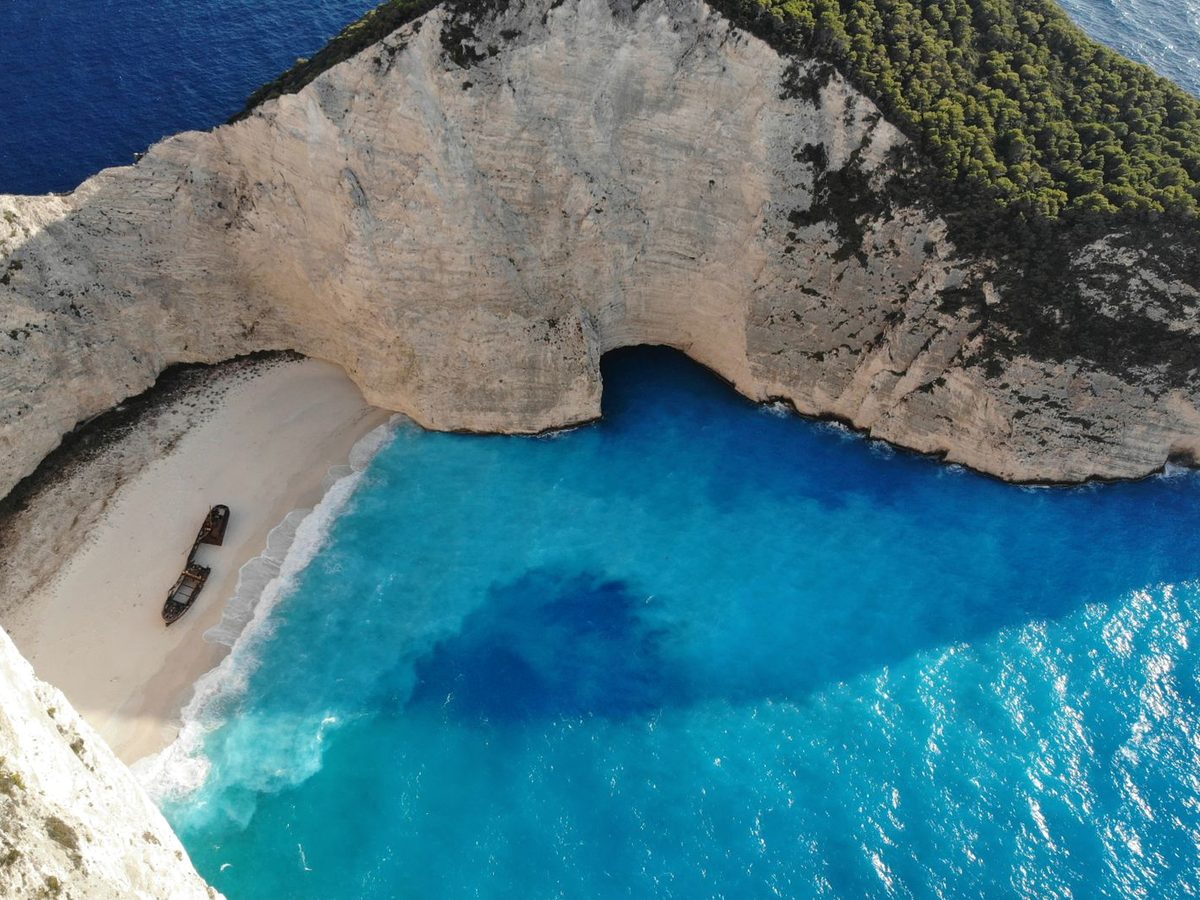
- 10Myrtos viewpoint Look, don't swim
- 11Fiskardo The village that survived
The beaches, sorted for small swimmers
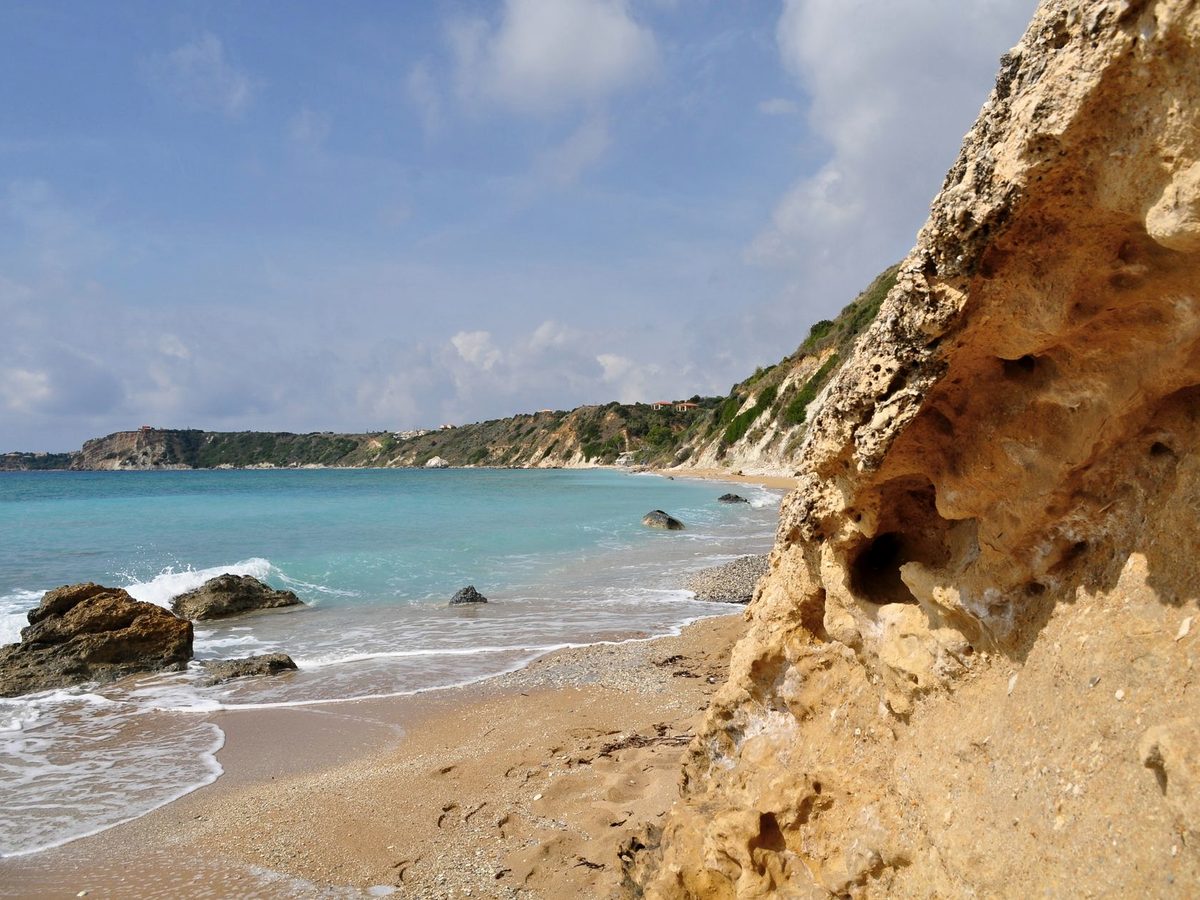
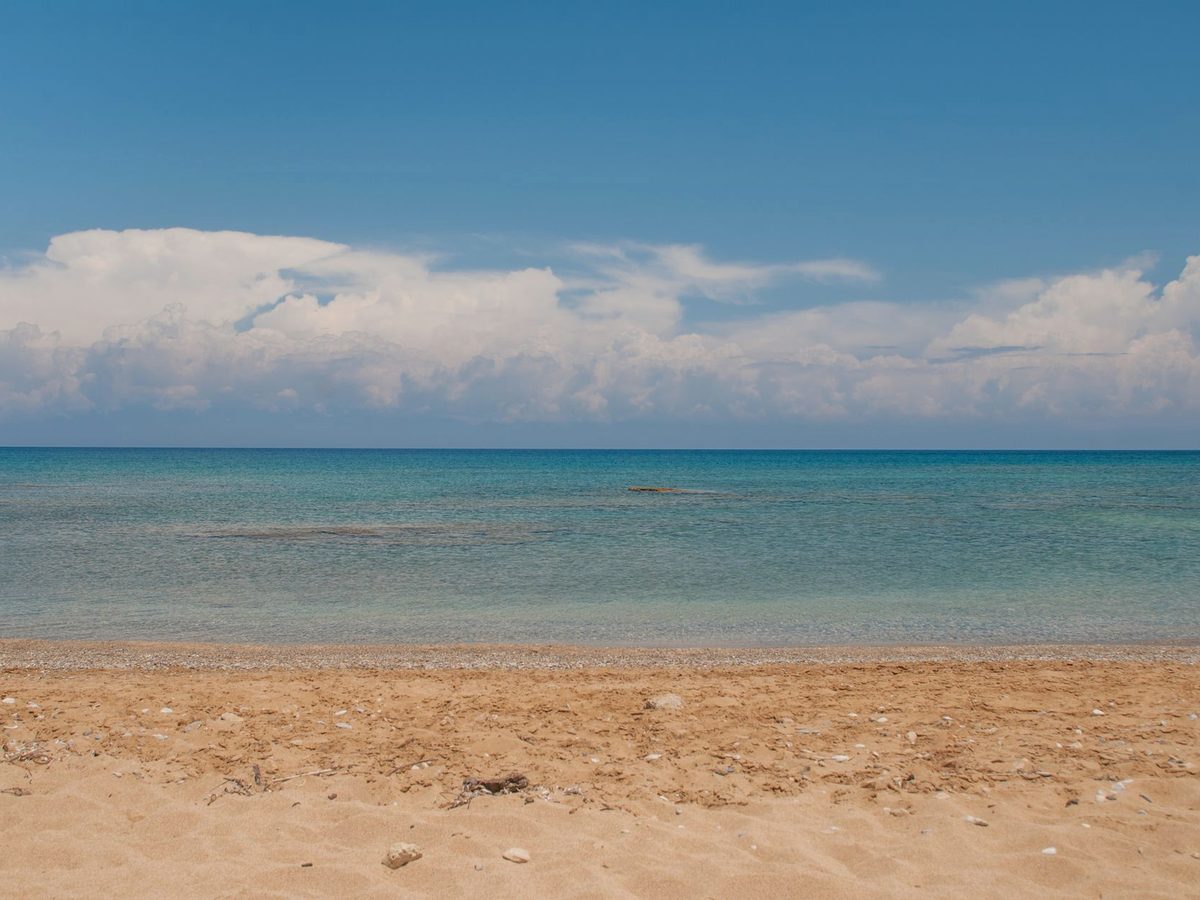
The toddler shortlist leads with Xi: red-brown sand under a seabed so gradual that wading stays knee-deep a remarkable distance out, organised with sunbeds and showers, sheltered by its bay and reached by the Lixouri ferry plus a short drive. Katelios runs it close on the south coast, sandy and calm with the water staying waist-deep some fifty metres offshore. Lassi's pair, Makris Gialos and Platis Gialos, and quiet Avithos just south of the airport all offer proper sand with gradual entries and lifeguards in season at the busy ones. Skala and Lourdata mix sand with shingle along the south coast, with the pines at Skala adding rare natural shade. The quiet toddler beaches such as Katelios and Xi are the ones least likely to be lifeguarded, so the shallows there are a watch-them-yourself situation.
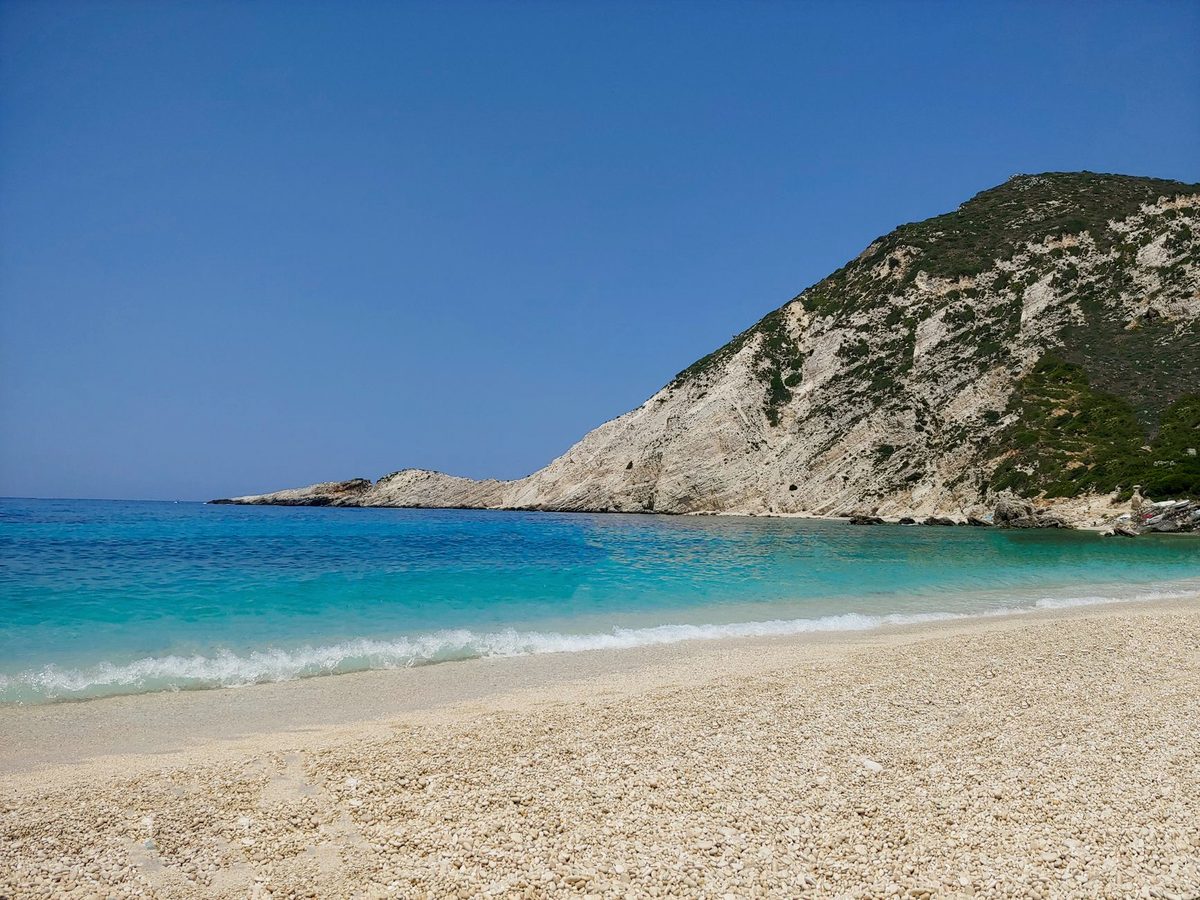
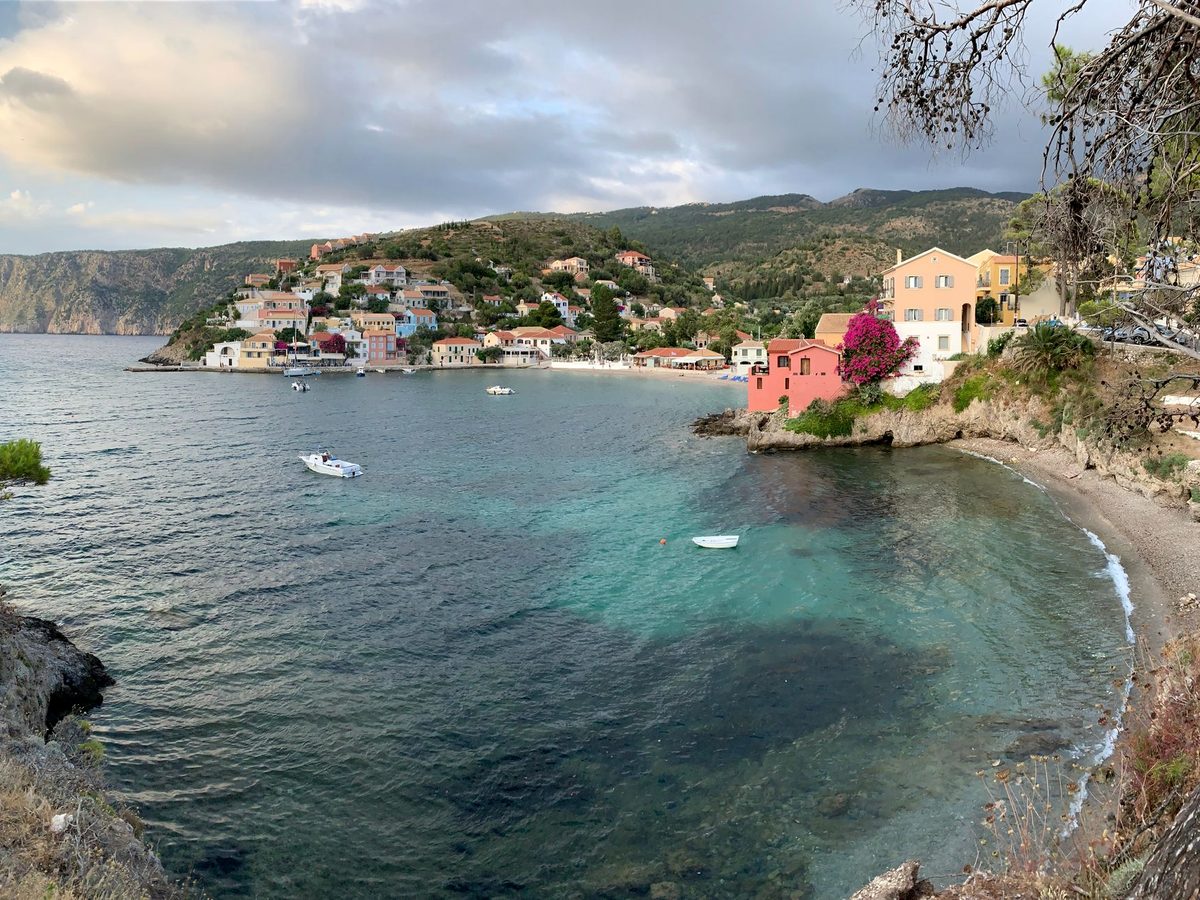
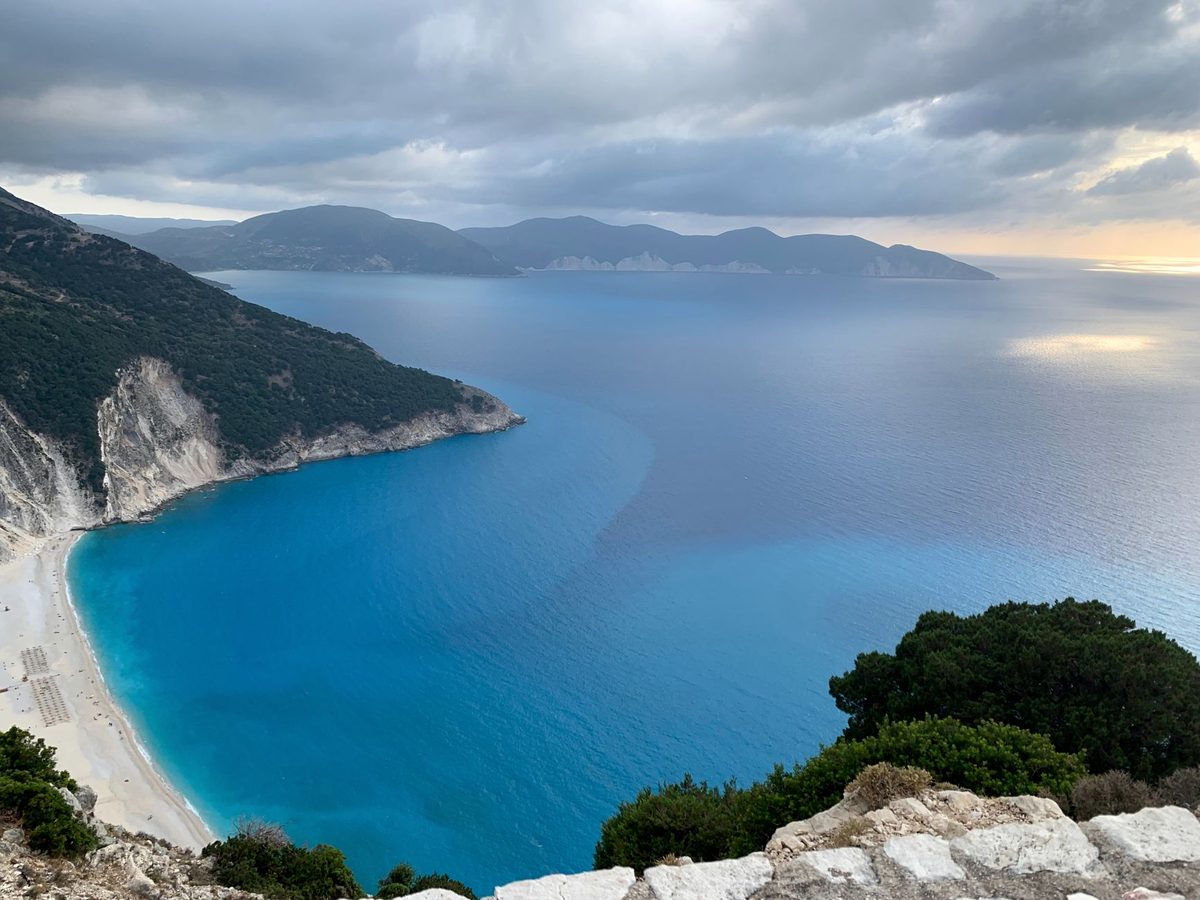
The scenic ones need sorting from the swimmable ones. Antisamos near Sami is a pebble bay that deepens quickly, better for confident swimmers than waders, and the coves around Fiskardo and Assos are scenic pebble rather than toddler ground. Myrtos, the white arc on every postcard, is a viewpoint not a swim, for the reasons in the questions below. Pack beach shoes for everyone island-wide, watch for sea urchins at rocky entries, and note the standard Greek beach rules: obey the beach flags, most of any beach must by law stay free of paid sunbeds, and the mauve stinger jellyfish makes patchy late-summer appearances.
Weather, days out and the daily shop
When to go month by month, the outings that suit small children, eating out and where to stock up.
Weather, May to October
The figures below are long-term averages for Argostoli. The Ionian runs greener and a touch more humid than the Aegean, fed by winter rain that has all but stopped by June, and the meltemi doesn't reach here, so afternoons bring a mild breeze rather than a sandblasting wind; boat trips rarely cancel and a beach tent won't blow over.
| Month | Daytime high | Overnight low | Rain | Wet days | Sea temp |
|---|---|---|---|---|---|
| January | 14.5° | 8° | 117 mm | 10 | 17° |
| February | 14.5° | 8° | 84 mm | 9 | 16° |
| March | 15.5° | 8.5° | 56 mm | 8 | 16° |
| April | 18.5° | 11° | 40 mm | 5 | 16° |
| May | 23.5° | 14.5° | 16 mm | 2 | 19° |
| June | 27.5° | 18° | 2 mm | 0 | 23° |
| July | 30° | 21° | 9 mm | 1 | 25° |
| August | 30.5° | 21.5° | 13 mm | 1 | 27° |
| September | 26.5° | 19° | 56 mm | 5 | 26° |
| October | 23.5° | 16° | 90 mm | 7 | 23° |
| November | 19.5° | 13° | 150 mm | 12 | 21° |
| December | 16° | 9.5° | 211 mm | 14 | 18° |
Typical monthly averages from weather-station records. Sea temperature is the open-water figure, so a sheltered bay can feel a degree or two warmer.
June and September are the family months, and September edges it: the sea holds around 26 degrees while the crowds thin and prices drop. High summer works on the usual rhythm, beach early, shade and air conditioning through the middle, beach again from five. Autumn arrives more gently here than on Zante, so early October remains a credible half-term gamble, with showers more likely as the month runs on. One greener-island footnote: pack the mosquito kit, plug-ins and infant-safe spray, for dusk near vegetation in July and August.
Filling the daysThings to do with little ones
The turtle morning costs nothing and is more reliable than most paid wildlife trips. Loggerheads feed in Argostoli's sheltered lagoon all summer, and from the stone De Bosset bridge, flat, wide and pram-friendly, you watch them surface in clear water a few metres below, most reliably mid-morning when the fishing boats land their catch. The conservation rules are easy to keep from up there: no touching, no feeding, no chasing, and a polite miss for any boat trip promising close encounters. Pair it with Argostoli's pedestrianised shopping street and the harbour front for an easy half day.
The cave pairing near Sami is the standout day out. Melissani is an underground lake reached by a short rowed boat; at midday the sun comes through the collapsed roof and turns the water bright blue. Drogarati is a vast chamber of stalactites kept cellar-cool all year. Both are steps-only, so prams stay in the car and you carry little ones, and both suit children old enough to be amazed for half an hour. The northern loop combines the Myrtos viewpoint, tiny Assos under its Venetian castle headland and lunch on Fiskardo's pastel waterfront, though it's a winding two hours of driving in total. Gentler options fill the gaps: the Lixouri ferry as an outing in itself, the fir forest of Mount Ainos where semi-wild ponies sometimes show themselves on the circular forest walk (check it's open in fire season, and treat the ponies as a bonus rather than the plan), and a twenty-minute ferry from Sami to Ithaca if you want to say you've been to Odysseus's island.
Eating out with children
Greek tavernas welcome children as a matter of culture, and the timing helps: resort tavernas in Lassi and Skala serve from half past six, just when local families sit down. High chairs aren't universal, so a clip-on travel seat is worth the luggage space. The reliable toddler orders are everywhere, souvlaki, chips, rice, yoghurt with honey and watermelon by the slab.
The local plate worth seeking out is the Kefalonian meat pie, spiced meat and rice baked deep in crisp pastry, with the island's own Robola white from the mountain slopes for the grown-ups.
Milk, nappies and pharmaciesSupplies and the first-day shop
The big shop happens around Argostoli, where AB Vassilopoulos and a Lidl sit on the main road, with further AB branches near Lixouri and on the Skala road; resort minimarkets cover the gaps at a markup, so stock up before heading to the villages north of Sami. Nappies are easy, with the Greek brand Babylino respected and cheap beside Pampers in every supermarket, and swim nappies in the bigger stores in season.
Formula works differently in Greece: it lives in pharmacies rather than supermarkets, with stage-1 tins handed over by the pharmacist, and Aptamil on the shelf under its European name Almiron. Ready-made cartons are scarce, so bring them if you rely on them. The green-cross pharmacy also sells Depon, the children's paracetamol every Greek parent knows, and Nurofen for Kids, with the out-of-hours rota in the window. For bottles, buy low-mineral bottled water; the hard tap water is fine for baths and washing up.
Getting around, a real week and the admin
Transfers and hire cars, what a week actually looks like, the health and document checks and a list to pack against.
Getting there and around
The airport is small, seasonal and conveniently placed in the island's southwest, fifteen minutes from Lassi and Argostoli; Skala and Katelios run 40 to 50 minutes on winding but decent roads, and Fiskardo is the long haul at an hour and a half. Jet2 leads the UK schedule from around ten airports, with easyJet and TUI alongside, at a little over three hours from the south. Greek law requires seats for children under 12 or under 135 centimetres in private cars; taxis rarely carry child seats and aren't reliably required to, so a pre-booked transfer with a fitted seat is the safer bet for a baby.
Once there, the good news on the car is that the first baby seat often comes free from local firms, booked ahead in peak weeks. The main cross-island road is good tarmac; the Myrtos cliff road and the far north are best driven slowly. The one everyday boat is the Argostoli-Lixouri ferry, every half hour through the day in season, a few euros with the car aboard, crossing sheltered water in under half an hour; it makes Xi beach a simple outing rather than a 90-minute drive round the bay. Buses work for the Argostoli corridor and little else.
What a real week looks likeA realistic week with little ones
A short hop to Lassi or the longer wind to Skala, a first swim and dinner at the taverna while the village comes out.
Sand in the morning, lunch and a nap through the heat, then back to the shallows or the pool until an early dinner.
Argostoli by nine, the De Bosset bridge walk, loggerheads round the fishing boats and a market stop on the way back.
The little car ferry across the bay, red sand and shallow water for hours, ice cream in Lixouri on the return.
The two caves in the morning with a carrier, lunch in Sami or Agia Efimia, and the Myrtos viewpoint on a northern loop.
With young children, the home beach, the pool, the turtle morning, the Xi ferry day and one cave-or-north outing fill a Kefalonia week with room to spare for doing nothing.
The practical adminHealth, documents and the boring bits
Check the GOV.UK Greece advice before booking and travelling. Passports need to be issued within the last ten years and valid three months beyond departure, children's included. Carry a GHIC each plus travel insurance: the island's general hospital with 24-hour A&E is in Argostoli, health centres cover Sami and the smaller towns, and pharmacists make a competent first stop for minor ailments. The emergency numbers are 112 generally and 166 for an ambulance.
There are few real hazards: very high summer UV handled by shade and sun cream, the odd sea urchin at rocky entries, and patchy late-summer jellyfish flagged at organised beaches. The island's frequent small tremors are covered in the questions below.
Before you payBooking checklist
- Book the hire car with the child seat at the same time as the flights; local firms often throw the first baby seat in free.
- Check the transfer time on southeast resorts; Skala sits 40 to 50 minutes from the airport.
- Plan the Xi beach day around the Lixouri ferry and put beach shoes on the packing list for everyone.
- Going in high summer? Confirm the air conditioning and pack the mosquito plug-ins.
- Pack a baby carrier; the caves and village lanes are no place for a pram.
- Bring a couple of days of formula and nappies to cover arrival, and ready-made cartons for the whole trip if you use them.
- Pack a clip-on high chair; tavernas here don't all have one.
- Budget for Greece's nightly climate fee, charged at the hotel rather than in the package price.
- Confirm the cot, the high chair situation and the cancellation terms with the accommodation.
- Recheck the GOV.UK Greece advice and every passport before you go.
Resort guides in Kefalonia
We've researched these places to stay in Kefalonia for families with young children. Each guide covers what it's like, who it suits and what to check before you book.
Questions, links and the last word
The things families ask most, the official pages worth a bookmark and when this guide was last refreshed.
Common parent questions
Is Myrtos safe for small children?
Treat it as a viewpoint, not a swim. The famous white arc is steep shingle rather than sand, the seabed drops away within a few metres and a shore break builds quickly whenever a northwest wind blows; there have been drownings here involving strong adult swimmers. Take the photograph from the cliff road, enjoy the view and do the swimming at Xi, Katelios or Lassi. If you do go down on a flat-calm green-flag day, stay at the water's edge with hands on small people throughout.
Where do we actually see the turtles?
In the capital, without a ticket. Aim for the stone bridge and the quayside between about eight and eleven in the morning, the window when sightings are most reliable. The etiquette comes from the local conservation group: watch from above, never touch, chase or feed, and skip any boat trip promising a close encounter, since crowding the animals is exactly what the guidance exists to prevent.
Which beach is best for a toddler?
Xi takes the top spot, with Katelios a close second on the south coast and the Lassi pair handy near the airport. The trade-off is access: the very shallowest water sits across the Lixouri ferry, while the closest sand at Lassi gets busy. A quieter middle option is Avithos, a sandy cove just south of the airport.
Do we need a hire car?
For more than a few days, yes. Without one you can still reach Argostoli, the turtle bridge and a couple of nearby beaches, but Xi, the caves, Fiskardo and the south coast all sit beyond easy reach. Book it with the flights and the first baby seat is often included, and children under 12 or under 135 centimetres need a proper seat. For the airport run before the car is in hand, a pre-booked transfer with a fitted seat is the safer option.
Are the caves doable with a buggy?
No: both have steps and no step-free route, so it's the carrier and the pram stays in the car. That aside they suit any child old enough to sit still for half an hour in a boat or stare up at stalactites. Two timing tips: aim for Melissani near midday for the blue water, and pack a jumper for Drogarati, which stays cool enough to feel underground even in August.
Can we buy our usual formula and nappies?
Mostly, once you know where to look. The one thing to plan around is formula, which you buy over the pharmacy counter rather than off a supermarket shelf, so don't expect to grab a tin with the weekly shop. Aptamil goes by Almiron here. Nappies, by contrast, are everywhere: Pampers plus the cheaper Babylino. The children's paracetamol is Depon syrup from the pharmacy (check the label or ask the pharmacist for dosing). Carry a day or two of everything for arrival.
When should we go?
If you can travel outside the school holidays, September is the one to chase, with June close behind. Tied to August, expect the hottest sea and the fullest beaches, and book a room with air conditioning. The shoulders either side trade a degree or two of warmth for fewer people and lower prices. Early October still swims, but the further into the month you go the more the weather becomes a gamble.
Should we worry about earthquakes?
Know about them rather than worry. This is one of Europe's most seismically active spots, which is why the island was rebuilt to strict codes after the 1953 disaster, and the constant small tremors almost all pass unfelt. Over a typical holiday week you won't feel anything. The sensible version of preparedness is the same as anywhere: know your accommodation's exits, and if shaking starts, drop, take cover and hold on.
See more Kefalonia photos
Open the photo gallery →Useful links
- GOV.UK Greece travel advice: passport rules, entry requirements and health updates before you travel.
- Visit Greece: the official national tourism site.
- Ionian Sea Ferries: the Argostoli to Lixouri ferry timetable.
- Wildlife Sense: the local turtle conservation group and its watching guidelines.
Last updated 12 June 2026.