Cyprus with little ones
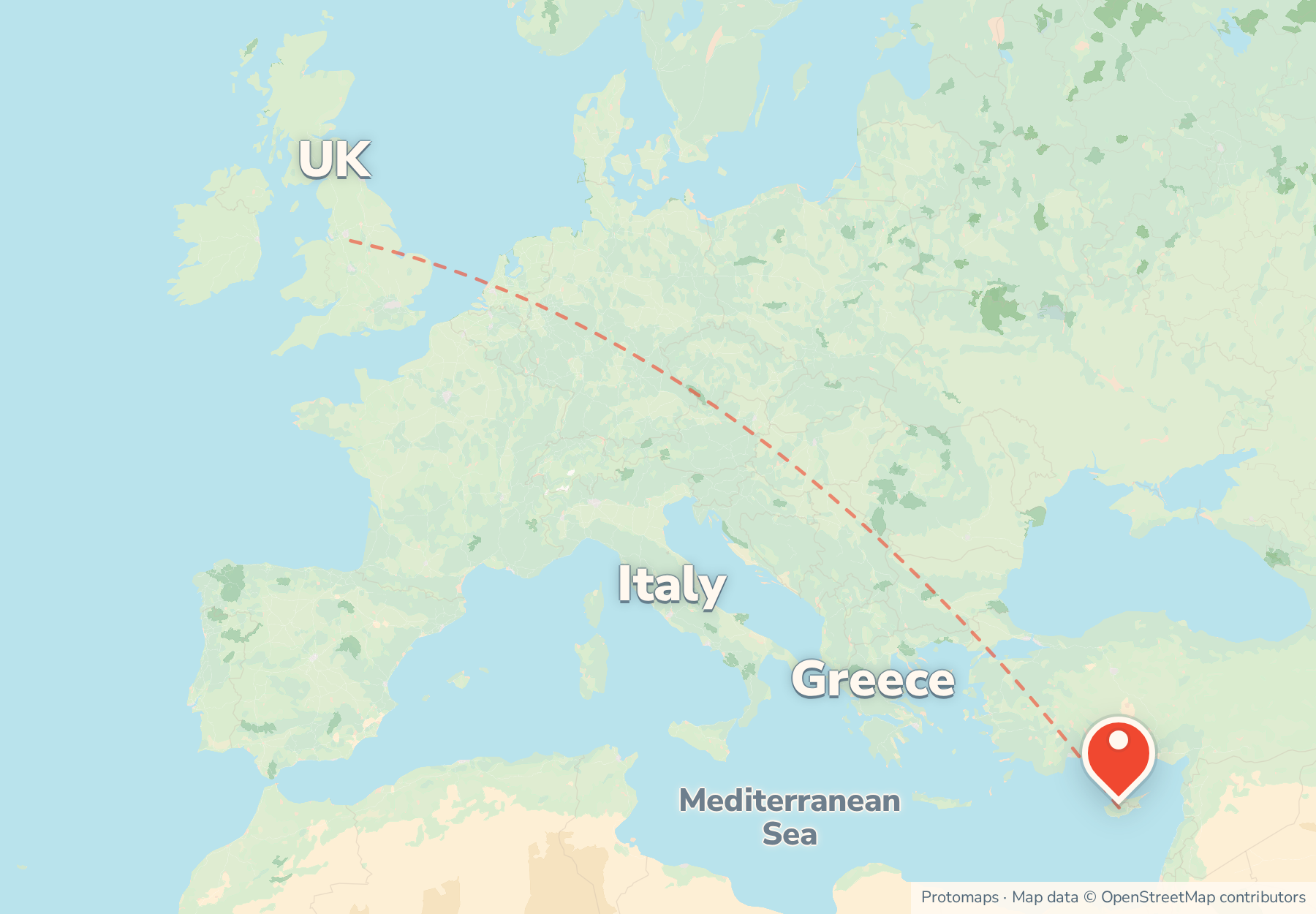
Cyprus sits at the far eastern end of the Mediterranean, so its sea stays above 22 degrees from June to November, weeks after Spain and Greece have cooled. It also drives on the left, puts UK plugs in the walls and sells Calpol in its pharmacies, a legacy of the British years that takes most of the friction out of the trip.
On this page
A family verdict at a glance
The quick read before the detail: who Cyprus suits, the season to aim for and what to nail down before you book.
Best for
Driving on the left, UK plugs, English everywhere and a sea warm enough to swim from June to early November.
Maybe not for
A July or August trip with a small baby unless the air conditioning is solid, because coastal days hit the low thirties and nights stay warm.
Best ages
Babies and toddlers do well outside high summer; June and October are the comfortable months.
Best areas
Protaras in the east, Coral Bay on the Paphos side, Larnaca town for a ten-minute transfer.
Why families pick it
Warm sea long after Spain and Greece cool down, no Aegean wind, familiar supermarket brands and flights that run all year.
Check before you book
Which airport pairs with your resort, the transfer with a child seat, the cot and air conditioning you can rely on in summer.
The softest landing abroad
Eighty years of British administration left Cyprus unusually easy for UK families. It drives on the left, so the hire car is a normal right-hand-drive car on toll-free motorways with signs you can read. The sockets take UK three-pin plugs, so the steriliser, the monitor and every charger work straight from the bag. English is spoken almost everywhere, menus come in English by default, and there are Marks and Spencer food halls in every resort district. Of the Mediterranean's beach destinations, only Malta shares the plugs-and-driving combination, and Malta is a fraction of the size with far fewer beach resorts.
Cyprus is also in the EU but not in Schengen, so the border is a simple passport stamp. Two airports serve the island, Paphos for the west and Larnaca for everything else, and the worst case for a mismatched flight is about an hour and a half of motorway.
A quick gut checkIs Cyprus right for your family?
Worth comparing if
You want the warmest possible sea outside high summer, driving and plugs that work like home and a destination that still functions in winter when the Greek islands have shut.
Weigh it up if
You're tied to high summer with a young baby and the heat, or you want guaranteed February warmth, which the Canaries do better.
To sort out before booking
The airport that pairs with your resort, the transfer with a child seat, the cot and summer air conditioning.
The numbers, the basics and the ages
Everything you'd want to skim first: the quick facts, the everyday practicalities and how Cyprus changes as children grow.
Quick facts for UK families
Money, plugs, language and the basics
- Cyprus is the Mediterranean's third largest island and its easternmost, which is why its sea runs so warm so late.
- The currency is the euro and cards are accepted almost everywhere.
- Sockets are UK-style three-pin, so no adapters are needed.
- The languages are Greek and Turkish, with English spoken by most people you'll meet.
- Cyprus is two hours ahead of the UK all year, with the clocks changing on the same dates.
- Tap water is safe in the towns but tastes flat from desalination, so most people drink cheap bottled water. Feeds are fine with boiled tap or low-sodium bottled water.
- Your GHIC card covers state healthcare here, and 112 is the emergency number.
- The island has been divided since 1974. The south, covered by this guide, is the EU member with both airports and all the resorts; fly into Larnaca or Paphos, never the north's Ercan airport.
Cyprus by age and stage
Babies
The pharmacies and supermarkets stock the formula and nappy brands you know. Aim for May, June or the autumn rather than the August heat.
Toddlers
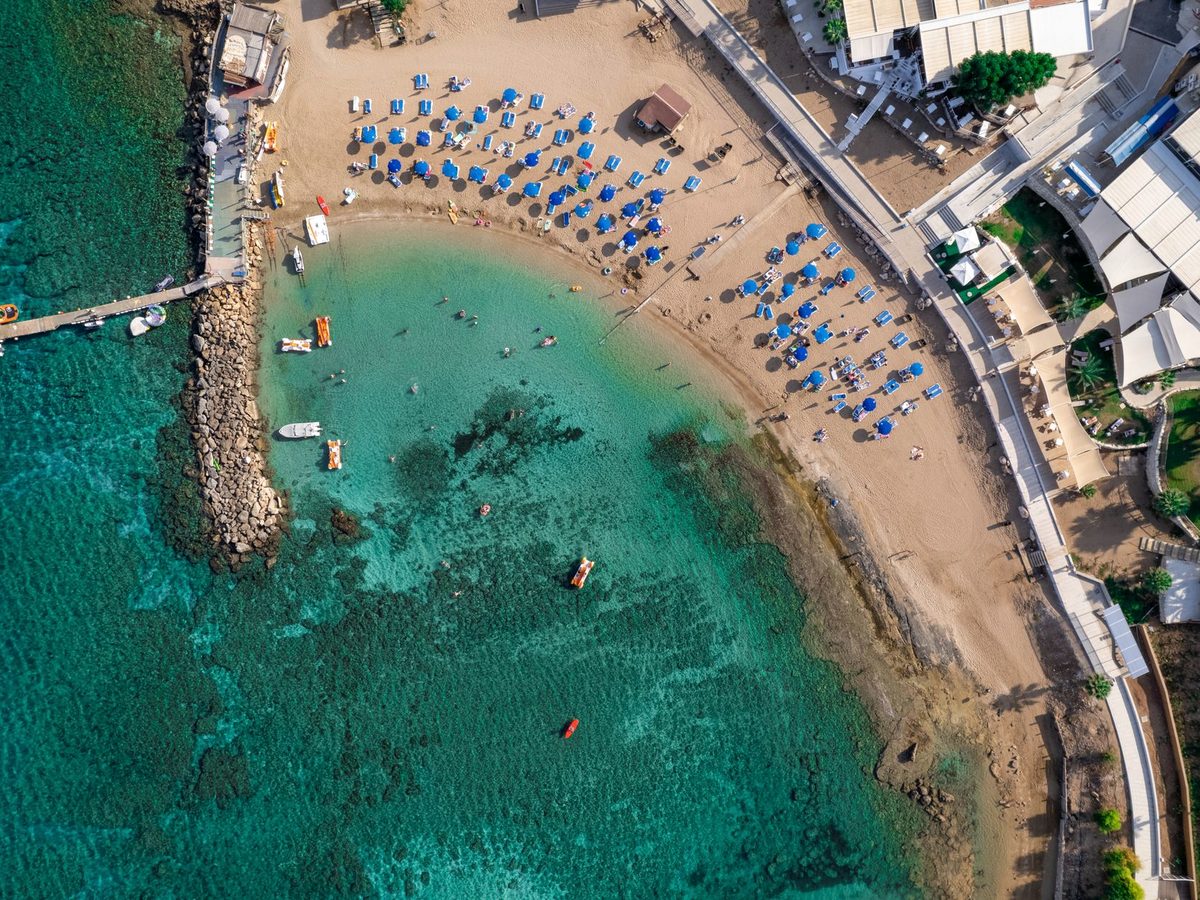
Fig Tree Bay and Coral Bay shelve so gradually that the water stays ankle-deep for ages, and the sea stays warm deep into autumn.
Preschoolers
Old enough for the waterparks' splash zones, camel and donkey farms and hunting for the animals in the Paphos mosaics.
Young children
The big waterslides, boat trips and a first proper castle come into range, and the Troodos adds snowmen to a February trip.
Where to base yourselves
The resort areas side by side, an orientation map of the island and what the beaches are really like underfoot.
Where to stay with young children
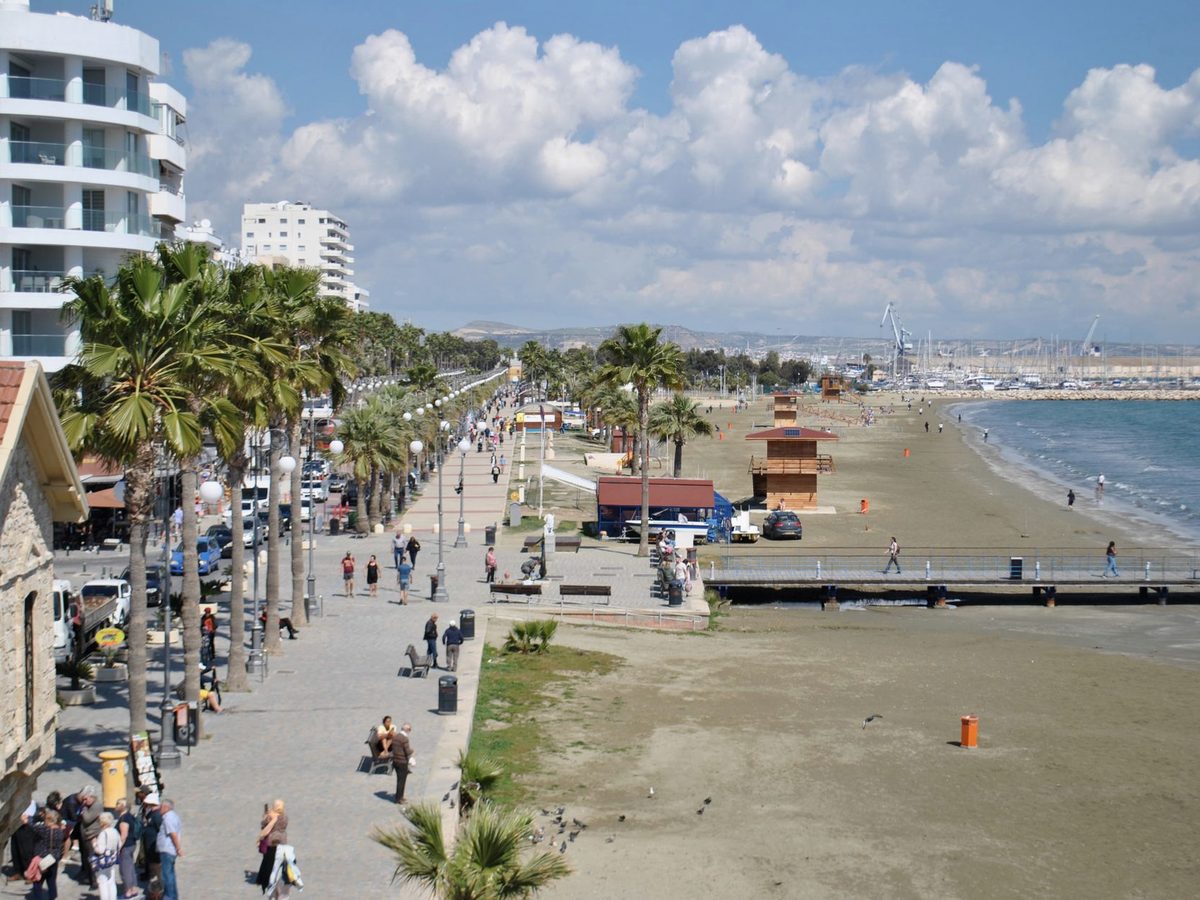
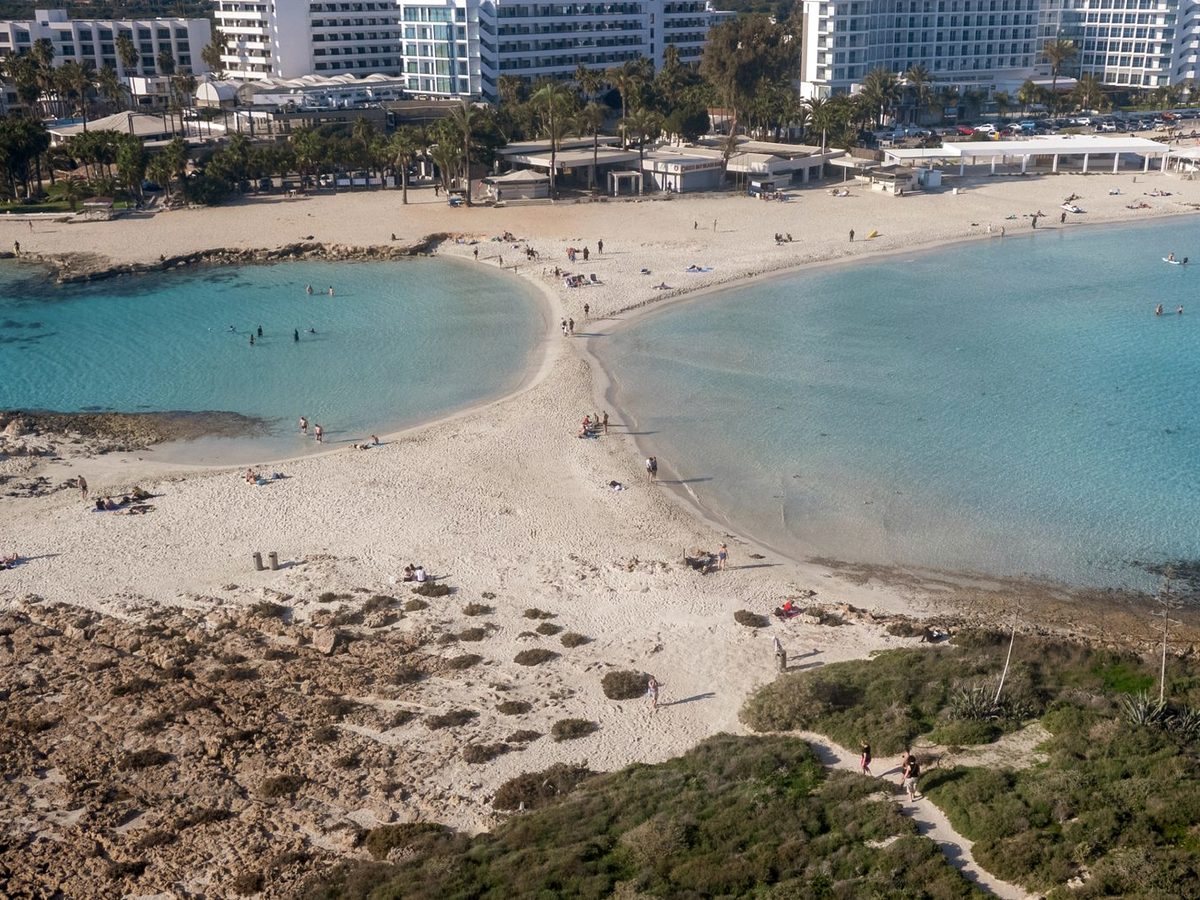
On the Larnaca side, Protaras is the island's gentlest family base. Fig Tree Bay shelves so gradually that the water stays shallow a long way out, it's sheltered enough to stay flat most days, and a traffic-free promenade runs behind it; the price of that reputation is peak-season crowds, so beach days start early in August. Ayia Napa next door is two places: its central strip is the clubbing zone after dark, while its beaches are some of the island's best, with the Makronissos end nearly 1.2 miles (2 km) of quiet shallow sand where the families settle. Larnaca town is the understated option, with calm grey-sand beaches off a palm-lined promenade and the airport ten minutes away, and at Mackenzie beach the landing aircraft pass low over the sand. Limassol is a working city rather than a beach resort, its sand grey and pebbly, but Dasoudi beach sits in a eucalyptus grove with the natural shade every other Cypriot beach lacks, and the flat Molos seafront park strings together three free playgrounds.
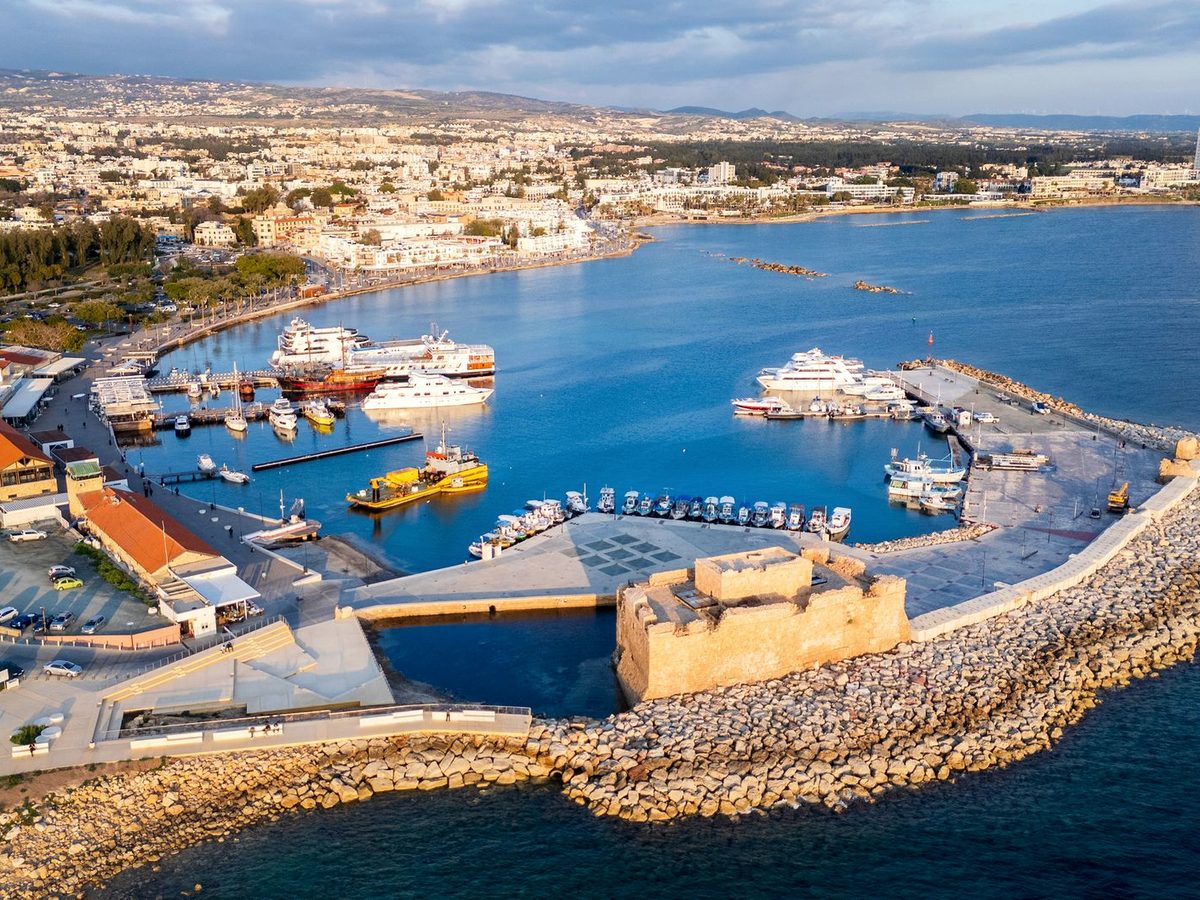
On the Paphos side, Kato Paphos pairs the harbour, the castle and the mosaics with a flat traffic-free promenade, and its town beaches are rocky underfoot; families based here take the frequent 615 bus or drive to the sand. Coral Bay has the sand: a golden bay between two headlands, calm with a gradual entry and family restaurants behind it. Geroskipou's municipal beach, fifteen minutes the other way, has a playground on the sand and far fewer people. Further north, Latchi and Polis sit by the wild Akamas peninsula: calm clear water over shingle and pebble, jelly shoes required, a hire car essential, and far fewer people on the sand even in August.
| Area | Airport and transfer | The beach | The feel |
|---|---|---|---|
| Protaras | Larnaca, 50 to 60 min | Fig Tree Bay: fine sand, very gradual entry, sheltered and usually flat | Beach-led and relaxed, with a traffic-free walk behind the sand. Arrive early in peak weeks. |
| Ayia Napa | Larnaca, about 45 min | Some of the island's best sand; Makronissos at the quiet western end suits small children | The clubbing strip is in the centre at night; families settle at the Makronissos end or pick Protaras. |
| Larnaca town | Larnaca, 10 to 15 min | Calm, shallow town beaches along the seafront | The tiny-transfer option, low-key and walkable, with planes landing low over Mackenzie beach. |
| Limassol | Larnaca, 45 to 50 min | Grey sand and pebble; Dasoudi has rare natural shade under eucalyptus | A working city with big family hotels, the flat Molos seafront park and three free playgrounds along it. |
| Paphos and Kato Paphos | Paphos, 15 to 20 min | Town beaches are rocky underfoot; the sand is at Coral Bay and Geroskipou | Harbour, castle and a flat seafront walk. Stay here for the evenings and culture, drive or bus to the beach. |
| Coral Bay | Paphos, 30 to 40 min | Golden sand between two sheltered headlands, with a shallow entry | The west's family beach, with a purpose-built strip of family restaurants behind it. |
| Latchi and Polis | Paphos, 50 to 60 min | Shingle and pebble mixed with sand; calm, clear water | A quiet harbour village by the Akamas peninsula. Pack jelly shoes, and plan on a hire car. |
Map of the main family areas
An orientation map of the areas above, both airports and the bigger days out. The numbers match the key beneath.
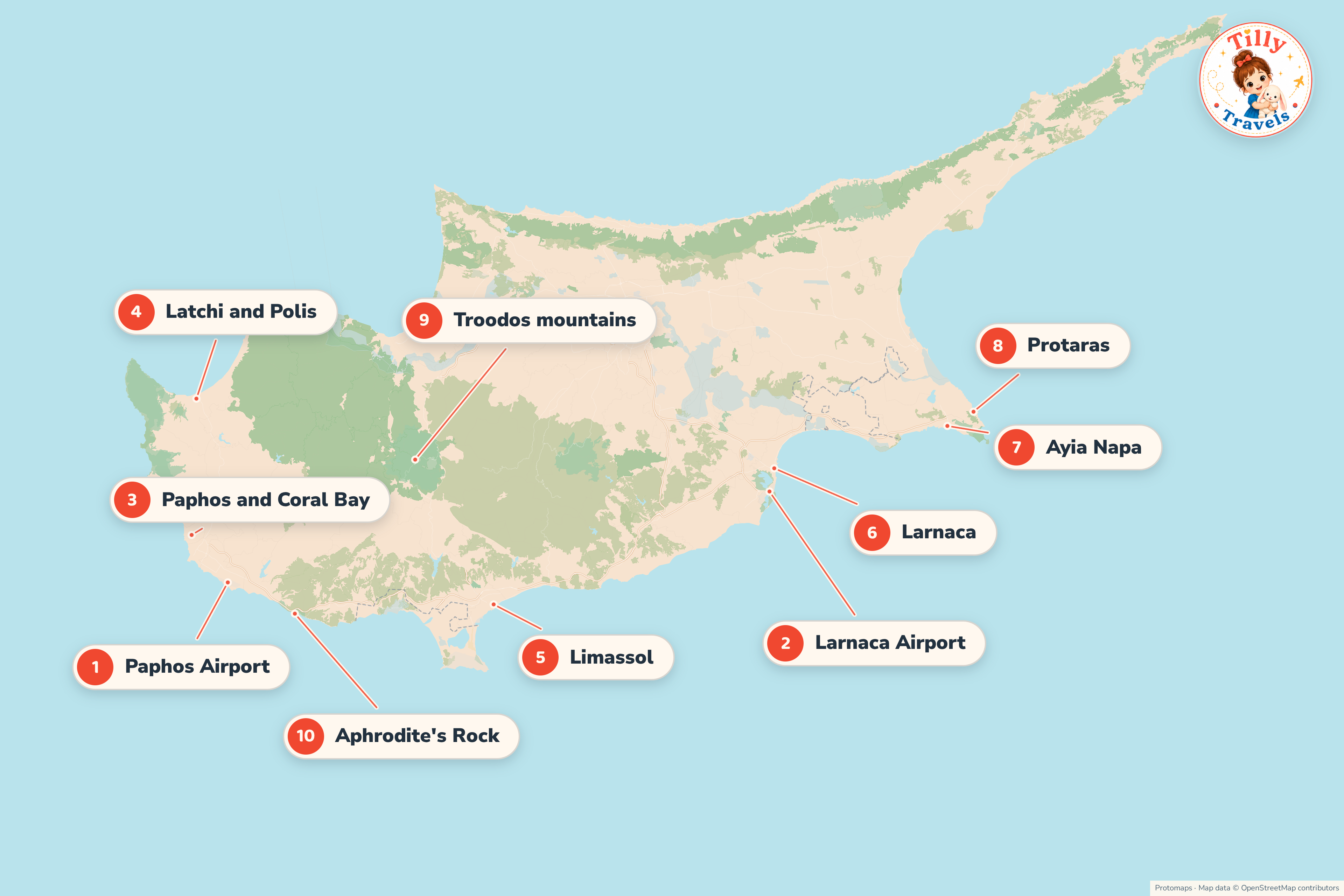
- 1Paphos Airport For the west
- 2Larnaca Airport For everywhere else
- 3Paphos and Coral Bay Harbour, mosaics and the west's sand
- 4Latchi and Polis The quiet north-west
- 5Limassol City, marina and big hotels
- 6Larnaca The ten-minute transfer
- 7Ayia Napa Great sand, party centre
- 8Protaras Fig Tree Bay
- 9Troodos mountains Cool air and winter snow
- 10Aphrodite's Rock A photo stop, not a swim
A warm sea without the wind
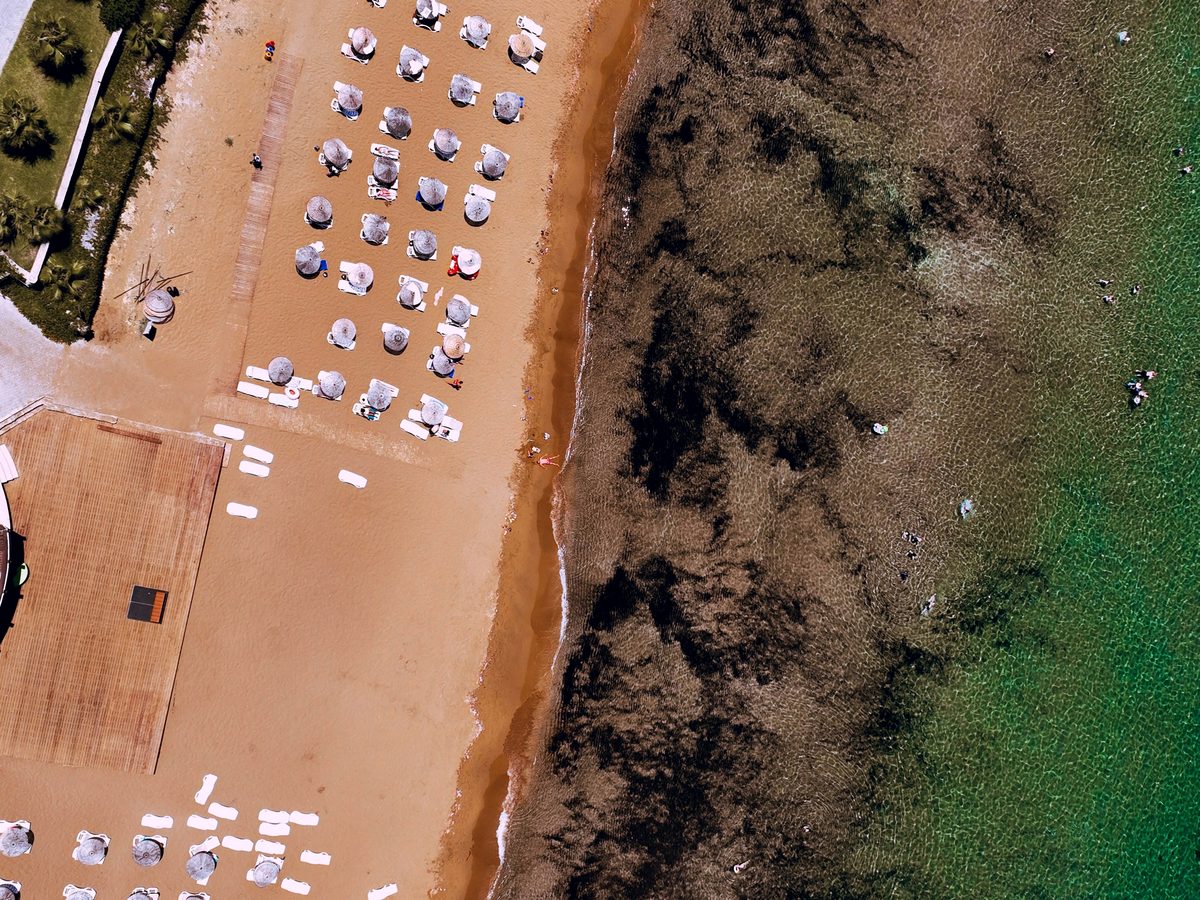
The eastern Mediterranean holds its heat, so the sea here is around 24 degrees in June, peaks near 28 in August and is still 25 through October, among the warmest anywhere in the Med well into autumn. The meltemi, the wind that chops up Greek beaches and cancels Aegean boat trips through July and August, doesn't reach this far east. Summer winds here are gentle afternoon sea breezes, which mostly means the west-facing Paphos coast picks up a little chop by mid-afternoon while the sheltered Protaras corner stays flat.
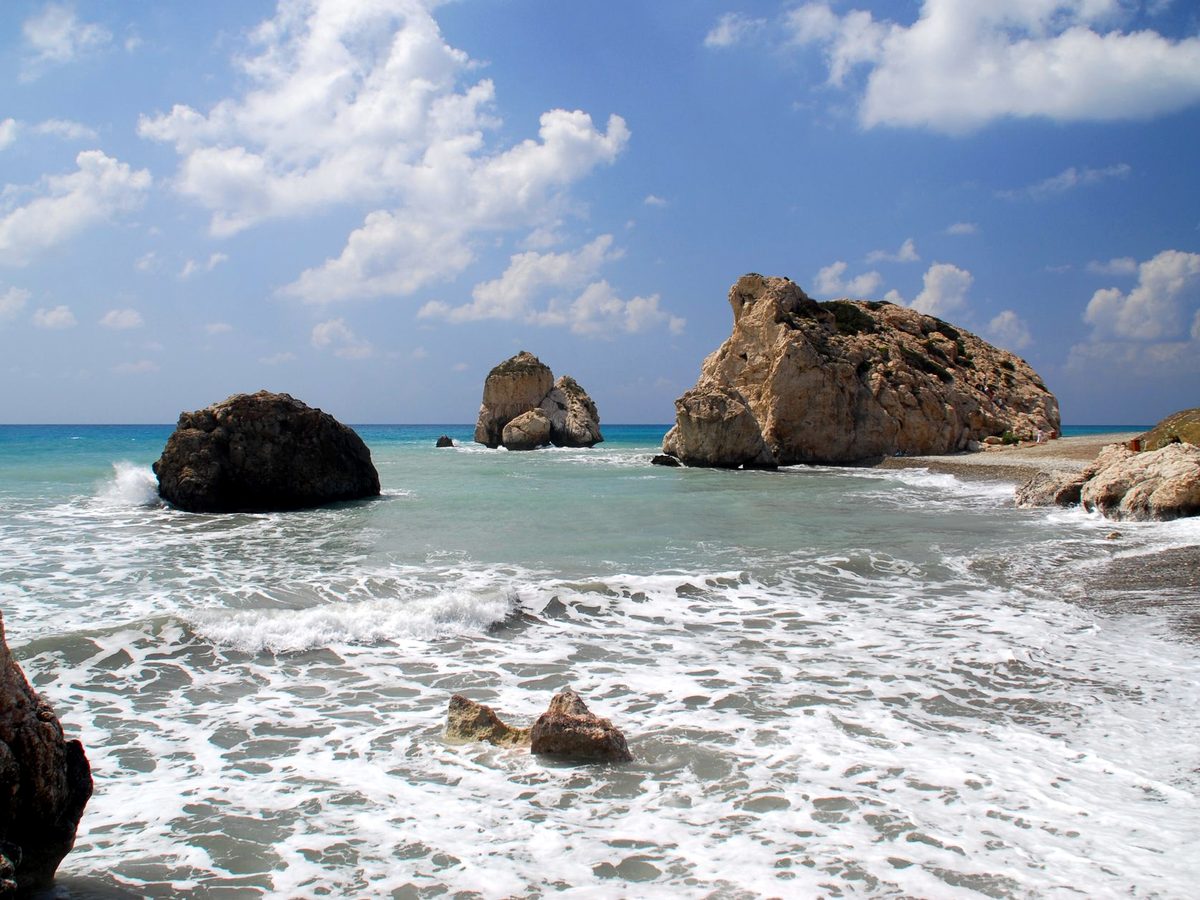
Cyprus has topped the EU's bathing-water quality rankings three years running and carries one of the densest concentrations of Blue Flag beaches anywhere, with lifeguards on the official beaches roughly April to October. The flags are the standard system, red for stay out, and the famous beauty spot to respect is Aphrodite's Rock: a pebble beach with sharp rocks, rough water and no lifeguards, made for a photo and a pebble-throw rather than a swim.
Weather, days out and the daily shop
When to go month by month, the outings that suit small children, eating out and where to stock up.
Weather, April to November
The figures below are typical coastal averages rather than a forecast, with Larnaca's side running two or three degrees hotter than Paphos in midsummer and the inland plain hotter still. July and August need saying plainly: low-thirties days, humid coasts, nights that stay above 21 degrees and extreme midday UV. Plenty of families do it happily, but with a baby it works only with reliable air conditioning, a pool and an indoor siesta through the middle of the day.
| Month | Daytime high | Overnight low | Rain | Wet days | Sea temp |
|---|---|---|---|---|---|
| January | 17.5° | 9.5° | 90 mm | 9 | 18° |
| February | 18° | 9° | 60 mm | 7 | 17° |
| March | 19.5° | 10.5° | 34 mm | 6 | 17° |
| April | 22° | 12.5° | 15 mm | 3 | 18° |
| May | 25° | 16° | 11 mm | 1 | 20° |
| June | 28° | 19.5° | 2 mm | 0 | 24° |
| July | 31° | 22° | 0 mm | 0 | 27° |
| August | 31.5° | 23° | 0 mm | 0 | 28° |
| September | 30° | 21° | 4 mm | 0 | 28° |
| October | 27° | 18° | 26 mm | 3 | 26° |
| November | 23° | 13.5° | 57 mm | 5 | 24° |
| December | 19.5° | 10.5° | 91 mm | 8 | 21° |
Typical monthly averages from weather-station records. Sea temperature is the open-water figure, so a sheltered bay can feel a degree or two warmer.
October is the month to circle with a toddler: around 26 degree days, a 25 degree sea, falling prices and beaches with room to dig. May, June and September are the other comfortable windows. Winter is mild at 16 to 18 degrees with real rain between sunny spells; it's about level with the Algarve at February half term and clearly cooler than the Canaries, traded against more to actually do, from Salt Lake flamingos to Troodos snow.
Filling the daysThings to do with little ones
The island runs to three waterparks, and proximity should pick yours, because with a two-year-old each amounts to a kiddies' pool, a splash zone and a lazy river. Fasouri Watermania near Limassol has the most toddler pools and the lowest prices, Aphrodite Waterpark is the Paphos-side option and WaterWorld at Ayia Napa is the biggest and dearest, softened by a free second visit in the shoulder months. Children under three go free at all of them. Paphos Zoo near Coral Bay fills a flat, mostly shaded morning with parrot shows and animals at toddler height, the Camel Park at Mazotos near Larnaca bundles camel rides with a swimming pool and playgrounds, and the Golden Donkeys Farm at Skarinou, just off the motorway midway between Larnaca and Limassol, lets small children feed carobs to about 170 donkeys. One correction to older guides: the famous donkey sanctuary at Vouni has moved and no longer takes visitors.
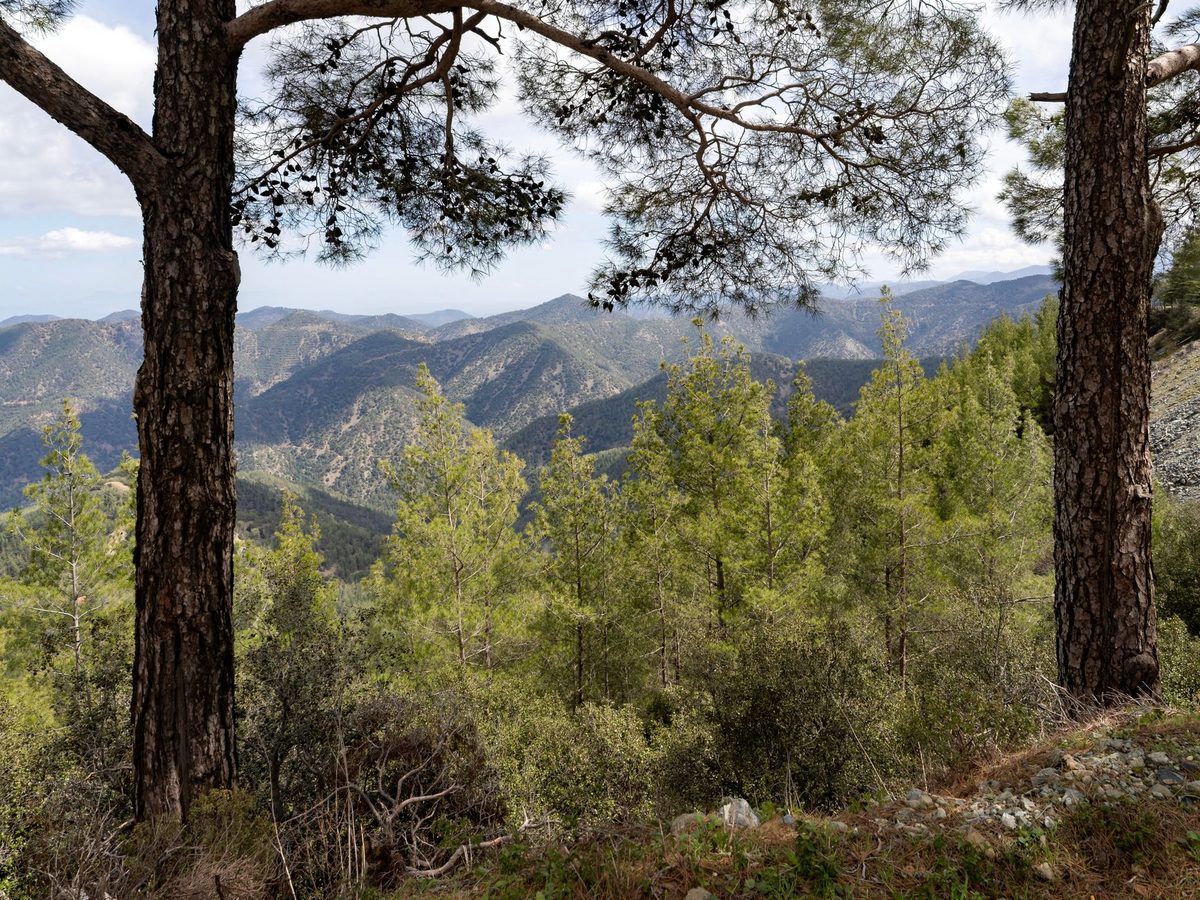
The cultural sights work if you pitch them right. The Paphos Archaeological Park holds some of the Mediterranean's best Roman mosaics for a few euros, on uneven gravel paths with little shade, so go at opening, head for the covered Dionysos house and turn it into a game of spotting the lions and peacocks in the floors. The harbour castle next door is one chamber and a roof view, exactly a four-year-old's attention span. Glass-bottom boats run short trips from Paphos, Latchi and the Protaras corner, the right length at this age, while the Blue Lagoon cruises from Latchi anchor in deep water for the swim stop, which suits confident swimmers rather than toddlers. The Troodos mountains are a hire-car day that runs eight to ten degrees cooler than the coast, better with a four-year-old than a two-year-old given the hairpins, and in winter the tops turn white: a snowman in the morning, a beach walk in the afternoon. On wet or fierce days, every city has a mall with soft play, and in winter the Larnaca Salt Lake fills with flamingos on a flat trail right by the airport.
Eating out with children
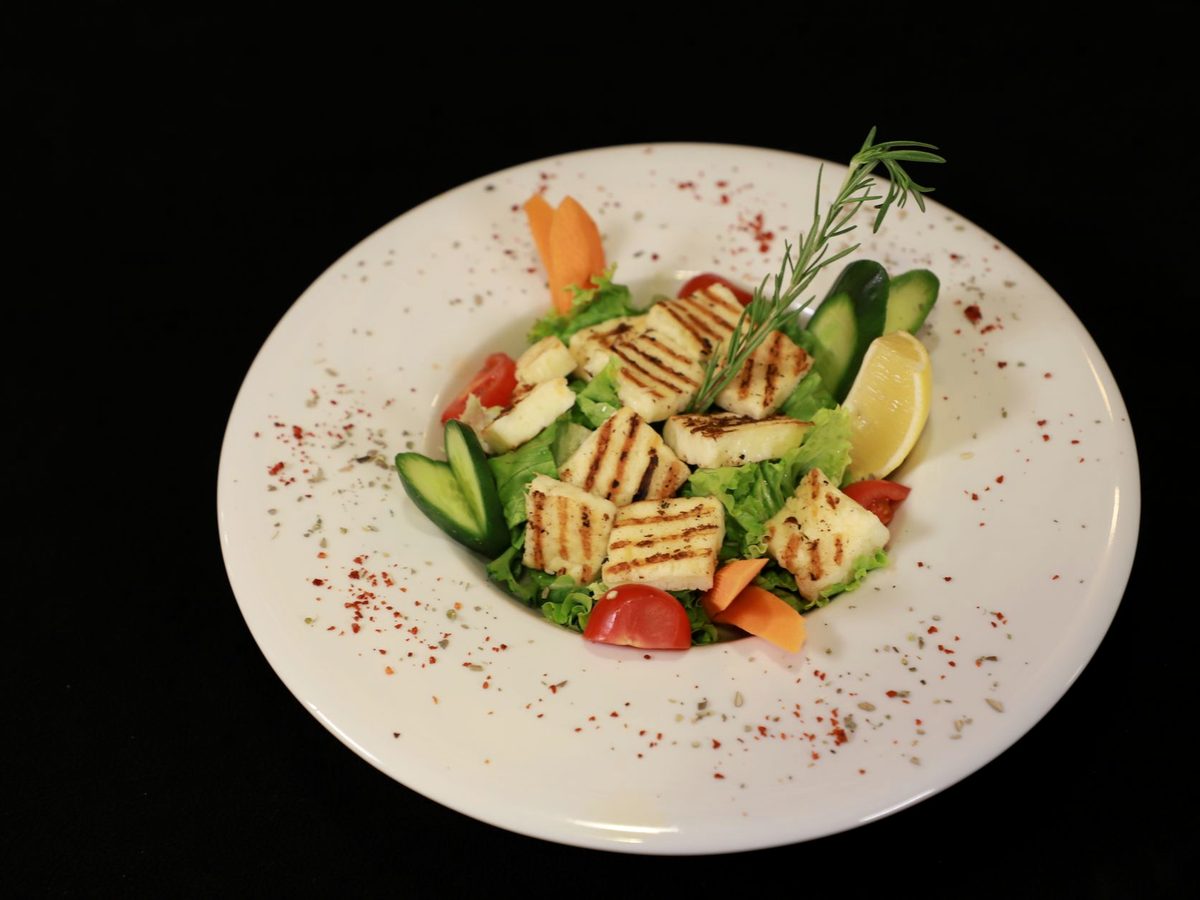
Sunday lunch with three generations is a national institution here, children are expected everywhere and the meze format suits small appetites perfectly: a procession of little shared dishes where a toddler can pick at grilled halloumi, soft pitta, keftedes and chips while the adults work through the rest. Highchairs and kids' menus are standard in the resorts.
The timing is easy too. Locals eat late, but resort kitchens serve continuously, so a half-five toddler tea needs no planning, and English menus are effectively universal. Souvla off the charcoal, kleftiko that falls apart on a fork and yoghurt with honey cover the rest of a small person's week.
Milk, nappies and pharmaciesSupplies and the first-day shop
The supermarkets will feel familiar: Alphamega, the big Cypriot chain, runs its whole shop in English, with Lidl, Sklavenitis and Metro alongside, and Marks and Spencer food halls in every resort district. Pampers and Huggies swim nappies are on the shelves, and the formula aisle needs no translation at all, because Aptamil is sold here as Aptamil, with NAN, HiPP and others beside it. Two caveats: the recipe is the European version, so fussy feeders may want a familiar tin for the first days, and ready-made cartons are scarce, so pack them if your routine depends on them.
Medicines work differently from home: every medicine, even paracetamol, is pharmacy-only, and pharmacies run a posted duty rota for nights and Sundays. The familiar names are there though, Calpol included, alongside Panadol Baby and children's Nurofen. Bring the holiday's supply of children's sunscreen.
Getting around, a real week and the admin
Transfers and hire cars, what a week actually looks like, the health and document checks and a list to pack against.
Getting there and around
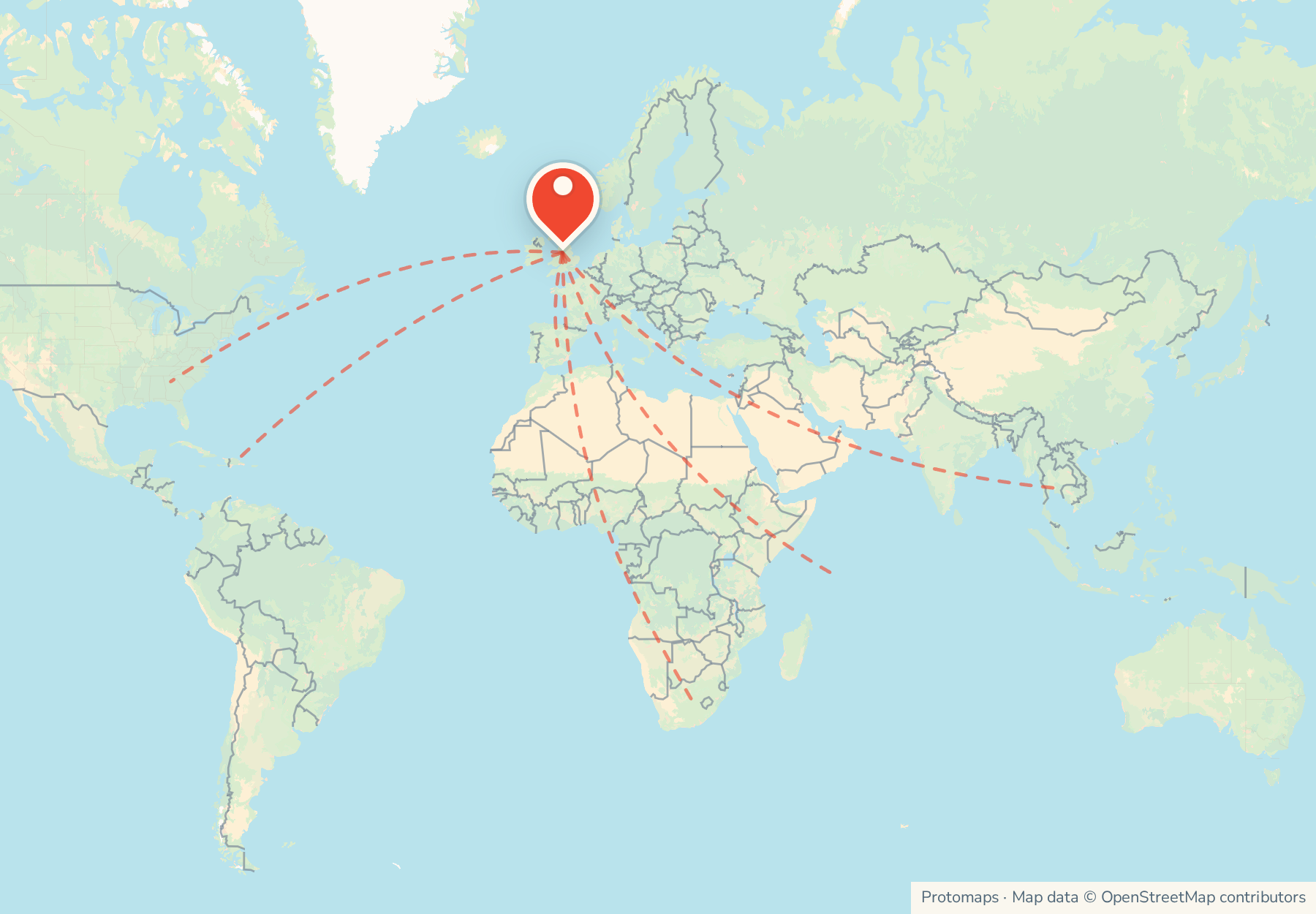
Both airports take direct UK flights all year round, with Larnaca the bigger of the two; the Greek islands largely lose their UK routes from November to April. Transfers are short: ten minutes into Larnaca town, about 45 minutes to Ayia Napa or Limassol, under an hour to Protaras, and on the Paphos side 20 minutes to town and 35 to Coral Bay. The child-seat rules are strict: a proper restraint is required for small children, under-fives can't ride in the front at all, and the law's fine print on taxis is murky, so pre-book a transfer with the seat specified or bring your own.
Hiring a car here is about as easy as driving abroad gets: right-hand drive, left-hand traffic, toll-free motorways linking every town and signs in Greek and English. Hire cars traditionally wear red plates, which locals treat with patience. Official advice rates local driving standards below the UK's, so stay alert even though the car and the roads feel like home. Buses are usable along the coasts, with the frequent 615 linking Paphos harbour to Coral Bay, and there are no trains at all; the island's railway closed in 1951.
What a real week looks likeA realistic week with little ones
Land, transfer and unpack, with everything plugging straight in. A swim before dinner finishes the day.
The sand in the morning, lunch and a nap through the heat, then the promenade or the pool. In high summer the beach works again after five.
A waterpark, the camel park or a morning at the donkey farm all fit around a sleep.
A final swim and a slow pack. The flight home is about four and a half hours.
With young children, the beach, the pool, naps and one waterpark or animal day will comfortably fill a Cyprus week.
The practical adminHealth, documents and the boring bits
Check the GOV.UK Cyprus advice before booking and travelling. Passports follow the familiar rules, issued within ten years and valid three months beyond departure, and the border is currently simpler than the rest of Europe: Cyprus sits outside Schengen, so there's no EES biometric registration, just a stamp, though the EU's online travel authorisation will apply here from late 2026 and Cyprus hopes to join Schengen, so check before you book. Carry a GHIC for each of you, which plugs into GESY, the state health system, with small fixed co-payments, plus travel insurance for everything else, including the private clinics hotels call first. One regional note: the GHIC doesn't work in the north, and hire cars from the south often aren't insured there.
The emergency number is 112. The sun is the everyday risk to manage, reaching extreme UV in midsummer, with babies under six months kept out of it entirely and shade non-negotiable for everyone between eleven and three. Mosquitoes are a summer-evening nuisance worth a plug-in and a child-safe spray, the stray cats every child wants to stroke are better admired than handled, and no vaccinations beyond the UK routine are needed.
Before you payBooking checklist
- Match the airport to your resort, Paphos for the west, Larnaca for the rest.
- Book the transfer with the right child seat, or bring your own.
- Confirm the cot and, for summer, air conditioning you can rely on.
- For July or August, make sure there's a pool and a coolable room for the siesta.
- Pack ready-made formula cartons if you rely on them; powder is easy to buy.
- Bring the holiday's sunscreen and any medicines your child relies on.
- Consider October if you can travel in term time.
- Leave the travel adapters at home and pack the UK plugs as they are.
- Confirm the cancellation terms and your travel insurance.
- Recheck the GOV.UK Cyprus advice and every passport before you go.
Resort guides in Cyprus
We've researched these places to stay in Cyprus for families with young children. Each guide covers what it's like, who it suits and what to check before you book.
Questions, links and the last word
The things families ask most, the official pages worth a bookmark and when this guide was last refreshed.
Common parent questions
Is driving really like at home?
Closer than almost anywhere. Cyprus drives on the left, hire cars are right-hand drive, the motorways are toll free and signs are in Greek and English. The one balance to that: official advice notes local driving standards are poorer than the UK's, so drive defensively and book child seats with the car.
Which airport should we choose?
Paphos for the west, Larnaca for everywhere else, but the penalty for the wrong one is mild: about an hour and a half of motorway. If the cheaper flight lands at the wrong end, it's an inconvenience rather than a disaster.
When's the sea warm enough for little ones?
From June through to early November. August peaks at about 28 degrees, and October holds 25 with the crowds gone, among the warmest seas in the Mediterranean that late in the year.
Is July or August too hot for a baby?
It's the hardest time. Coastal days run 30 to 33 degrees with nights above 21, and the midday UV is extreme, so a trip then needs air conditioning you trust, a pool and an indoor siesta from late morning to late afternoon. With a baby, May, June, September or October give you the same island with the heat turned down.
What about February half term?
Cyprus in February is 16 to 18 degrees by day, with a fair chance of rain between sunny spells. The difference from the Greek islands is that everything stays open: the cities work year round, the malls have soft play and the restaurants don't shut. For guaranteed warmth the Canaries still win.
Is Ayia Napa off the list with children?
No. The clubbing happens on the central strip at night, the beaches are among the island's best and the Makronissos end is quiet and family-filled. If you'd rather not think about it at all, Protaras along the coast is the family resort.
Can we buy our usual formula and medicines?
Yes, with less hunting than most places. Aptamil is sold as Aptamil here, and Calpol is a real Cypriot pharmacy brand, alongside Panadol Baby and children's Nurofen. Two things to know: all medicines are pharmacy-only, even paracetamol, and ready-made formula cartons are scarce, so pack those if you rely on them.
Does the divided island affect a beach holiday?
Barely. The south, where all of this guide happens, is the EU member with the resorts and both airports. Fly into Larnaca or Paphos, never the north's Ercan airport, which the Republic treats as illegal entry. Crossing the line for a day is possible but your GHIC and often your hire car insurance don't work there.
See more Cyprus photos
Open the photo gallery →Useful links
- GOV.UK Cyprus travel advice: passport rules, entry requirements and health updates before you travel.
- Visit Cyprus: the official tourism site, including the current Blue Flag beach list.
- Cyprus duty pharmacies: the official rota of night and Sunday pharmacies by district.
- GOV.UK healthcare in Cyprus: how the GHIC works with the GESY state system.
Last updated 11 June 2026.