Amilla Maldives
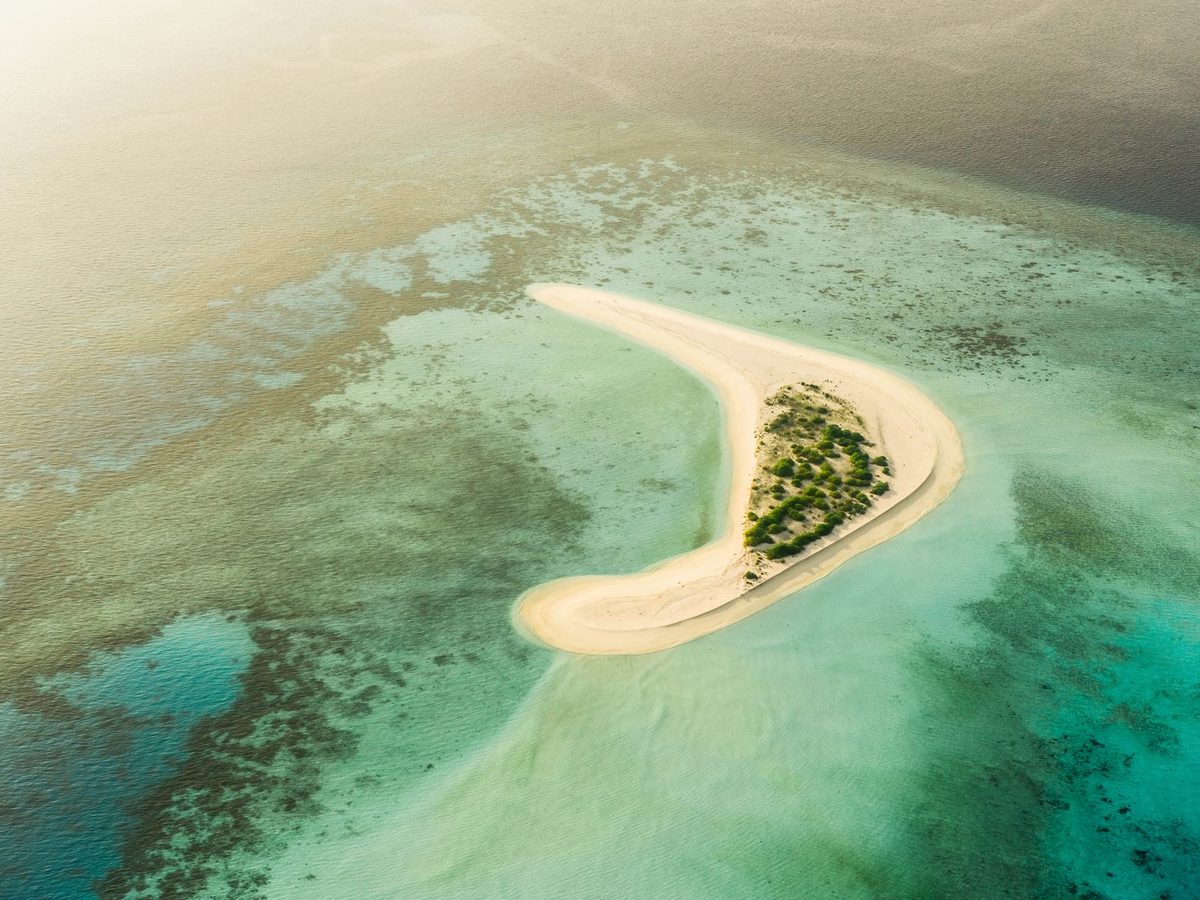
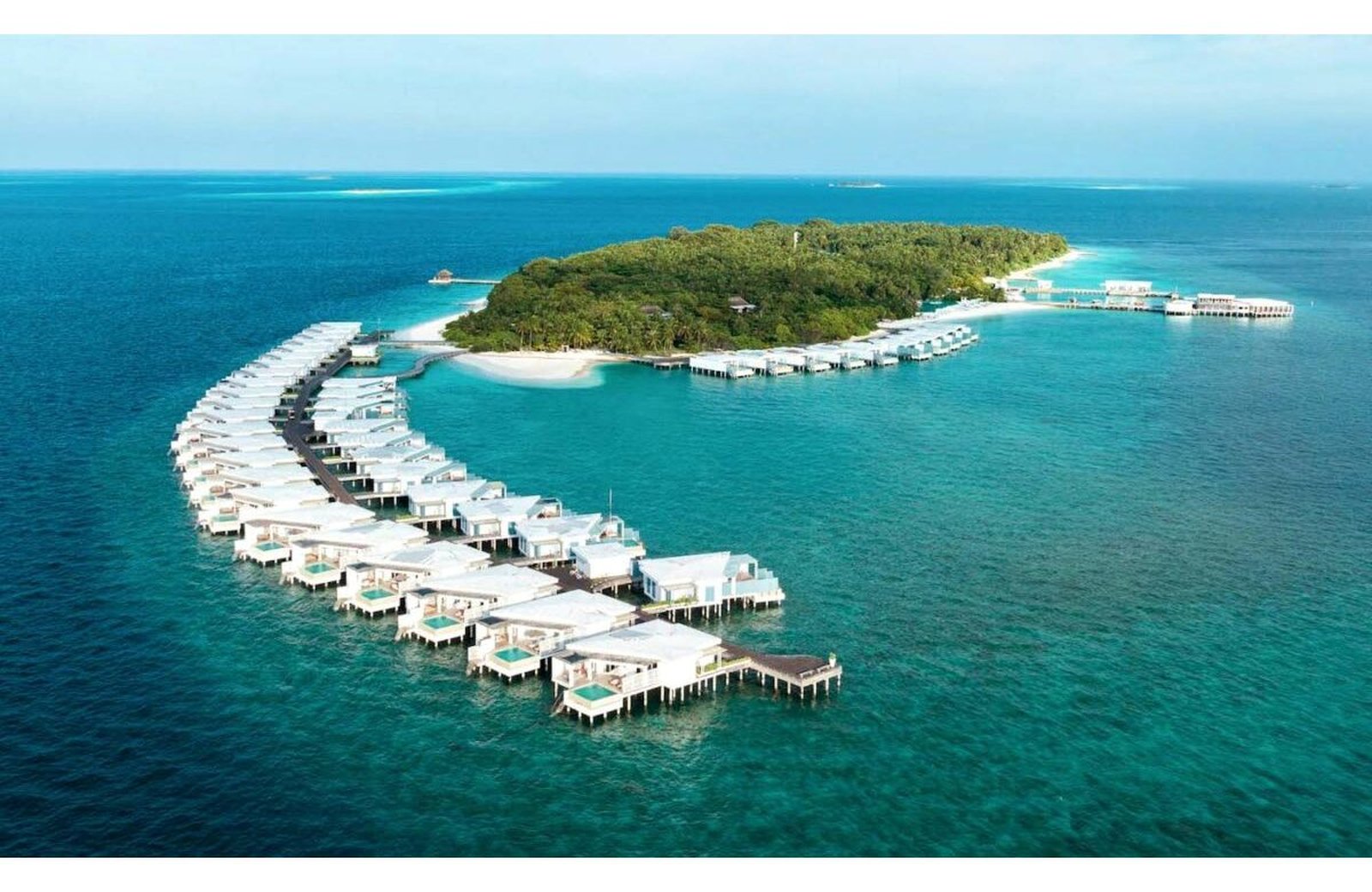
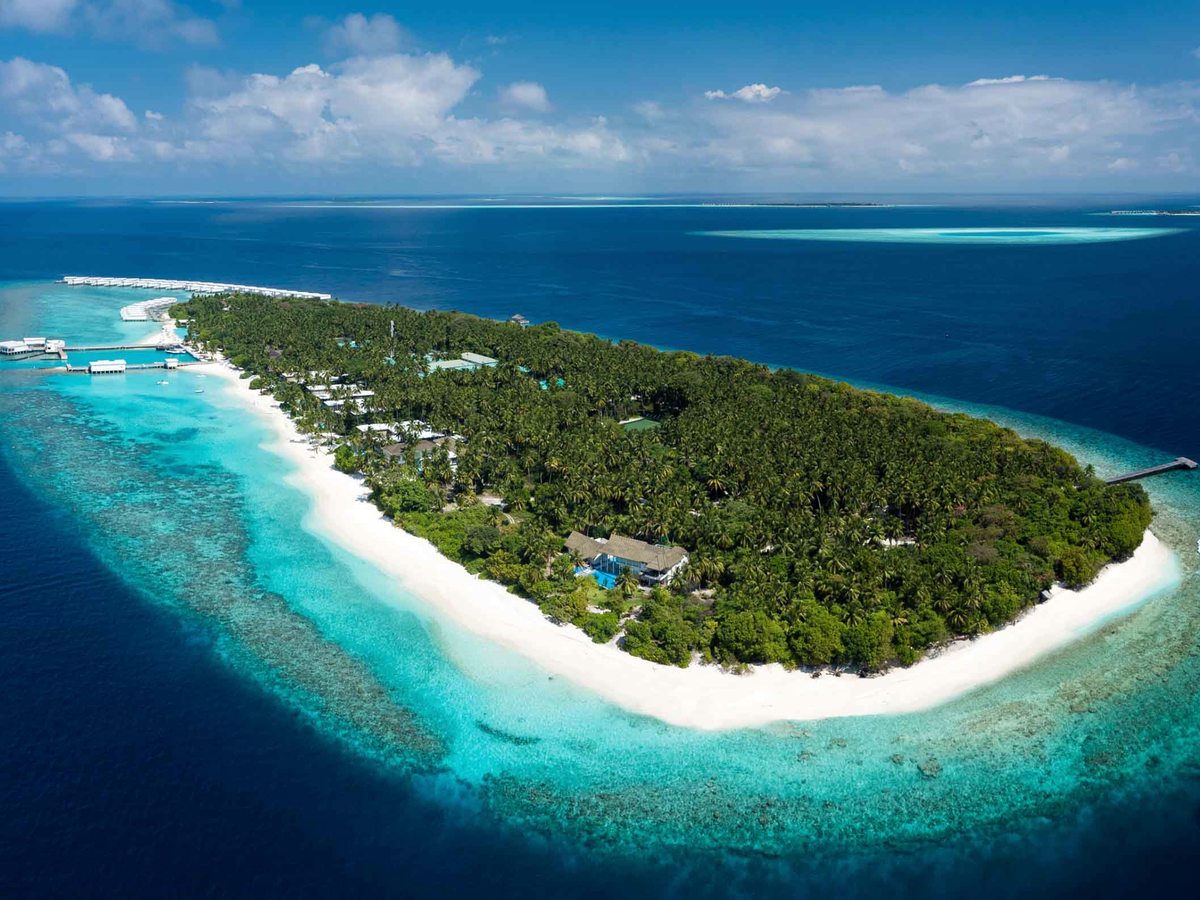
Amilla Maldives sits on its own jungle island in Baa Atoll, in the northern Maldives, inside a UNESCO-listed biosphere reserve. It's a big, green, 1.2km island of coconut palms and sandy tracks, with 67 villas and residences that each come with a private pool, a top-ten house reef a few steps offshore and the manta rays of Hanifaru Bay a short boat ride away. Families get a lot of space, warm water and a kids' club, reached by a 35-minute seaplane from Malé.
On this page
Is it worth it?
The quick read before the detail: who Amilla suits, what a week here is like and the facts to skim first.
Amilla is one of the larger, greener islands in the Maldives. Instead of a single strip of sand you get a 1.2km jungle island with a track right around it, seven restaurants and three bars, a spa and enough room that it rarely feels crowded. Every villa and residence has its own freshwater pool, the house reef is a short swim from the sand and the manta rays of Hanifaru Bay are about fifteen minutes away by boat in season. It's a Maldivian-owned resort in Small Luxury Hotels' Considerate Collection, and it isn't cheap: the nightly rate is high and the seaplane from Malé is charged on top. You'll get the most from it if you want the space, the reef and the wildlife more than the shortest, simplest trip.
Best for
You want a big, green island with lots of space, snorkelling straight off the beach, mantas in season and villa living with your own pool. Under-fives eat free on your plan.
Maybe not for
You want the cheapest way to do the Maldives, a short easy journey or a supervised club for a child under four.
Best ages
Babies and toddlers upwards. The free kids' club takes children on their own from four, with paid babysitting for younger ones.
What stands out
A rare large, green island, a house reef reachable from the sand, Hanifaru mantas nearby and unusually strong accessibility.
What to check
The seaplane cost and how young children manage it, and that a child under four needs you or a paid babysitter at the kids' club.
Where is it?
On its own island in Baa Atoll, in the northern Maldives, about 35 minutes by seaplane from Malé.
Quick facts for families
What the resort is like
The island, how it's laid out and the people who look after your stay.
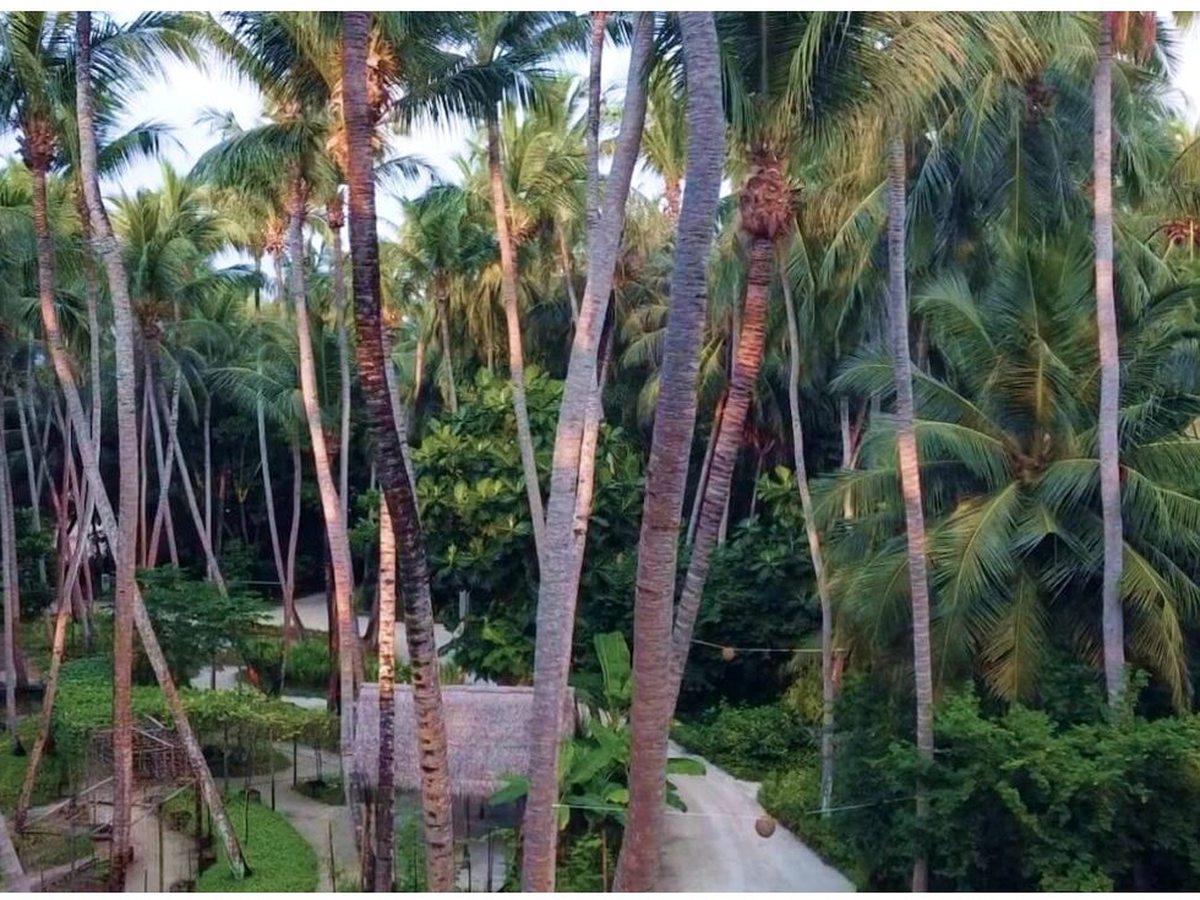
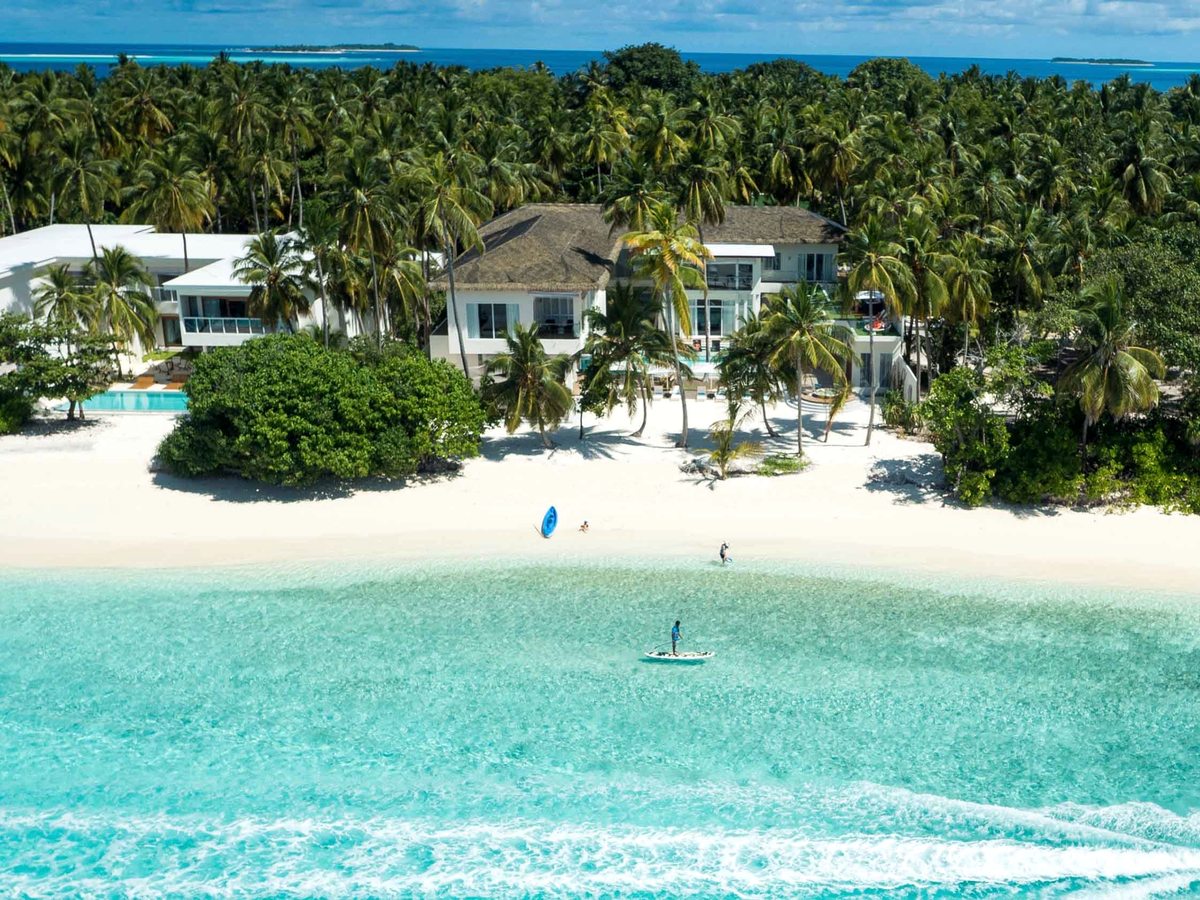
Amilla's island is 1.2km long and 800m wide, most of it undeveloped jungle rather than buildings, with more than 2,500 coconut palms, banyan trees, birds, butterflies and a 3km track running right around it under the canopy. The 67 villas and residences are spread out rather than packed together, so it keeps the feel of a proper island. It's flat, with hard-packed sandy paths and no hills or slopes, which makes it easier than most Maldives resorts with a pushchair. The resort is Maldivian-owned and part of Small Luxury Hotels' Considerate Collection, was known as Amilla Fushi before a rebrand and its own site is amilla.com. For the wider picture of a Maldives holiday with young children, our Maldives guide covers the basics.
Every villa and residence has a dedicated Katheeb, a personal guest liaison who is your point of contact through the stay and drops snorkelling kit and yoga mats round to the villa. It's the touch families single out most, and it's part of why the service gets consistent praise. How you get around the island, the accessibility set-up and the everyday practicalities are covered further down.
The villas and residences
Every villa type with its official size and pool, the three big residences and which suit young children.
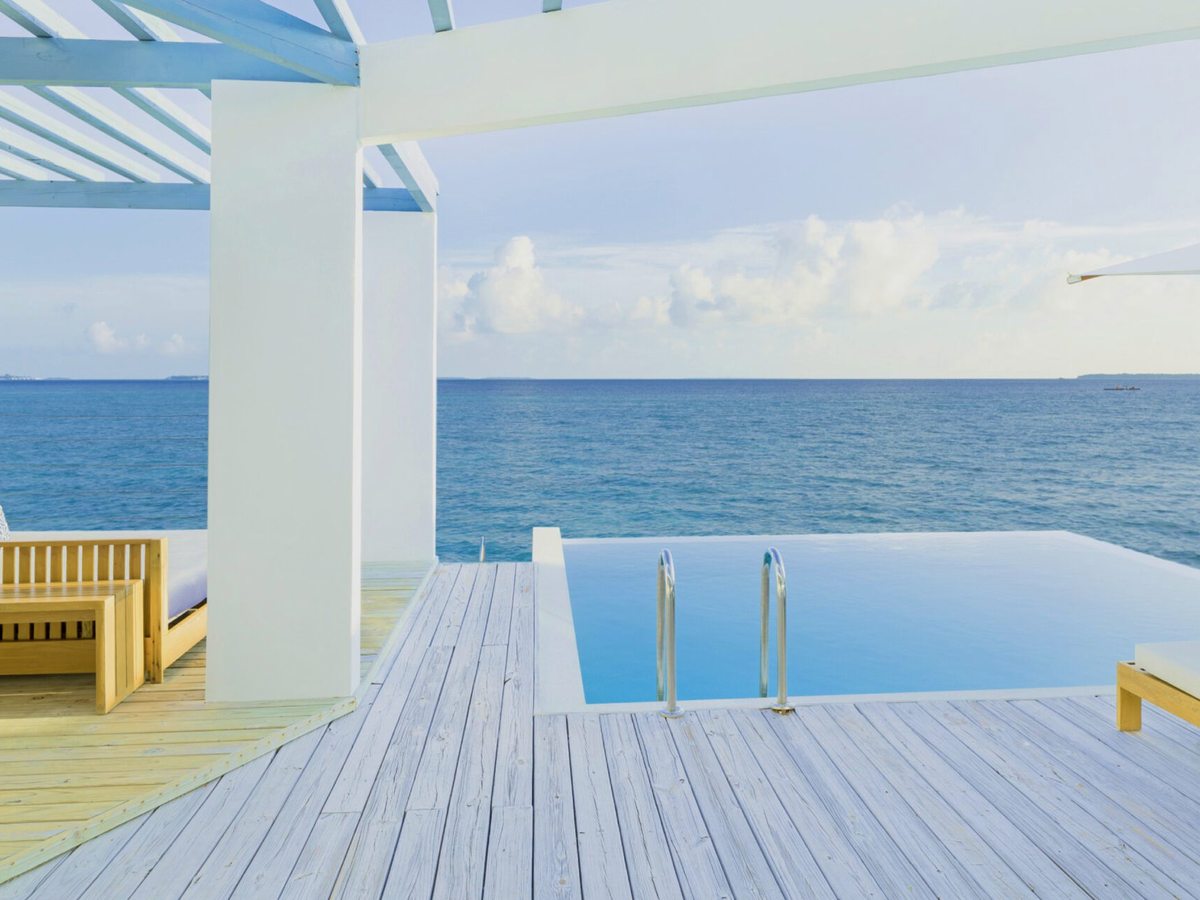
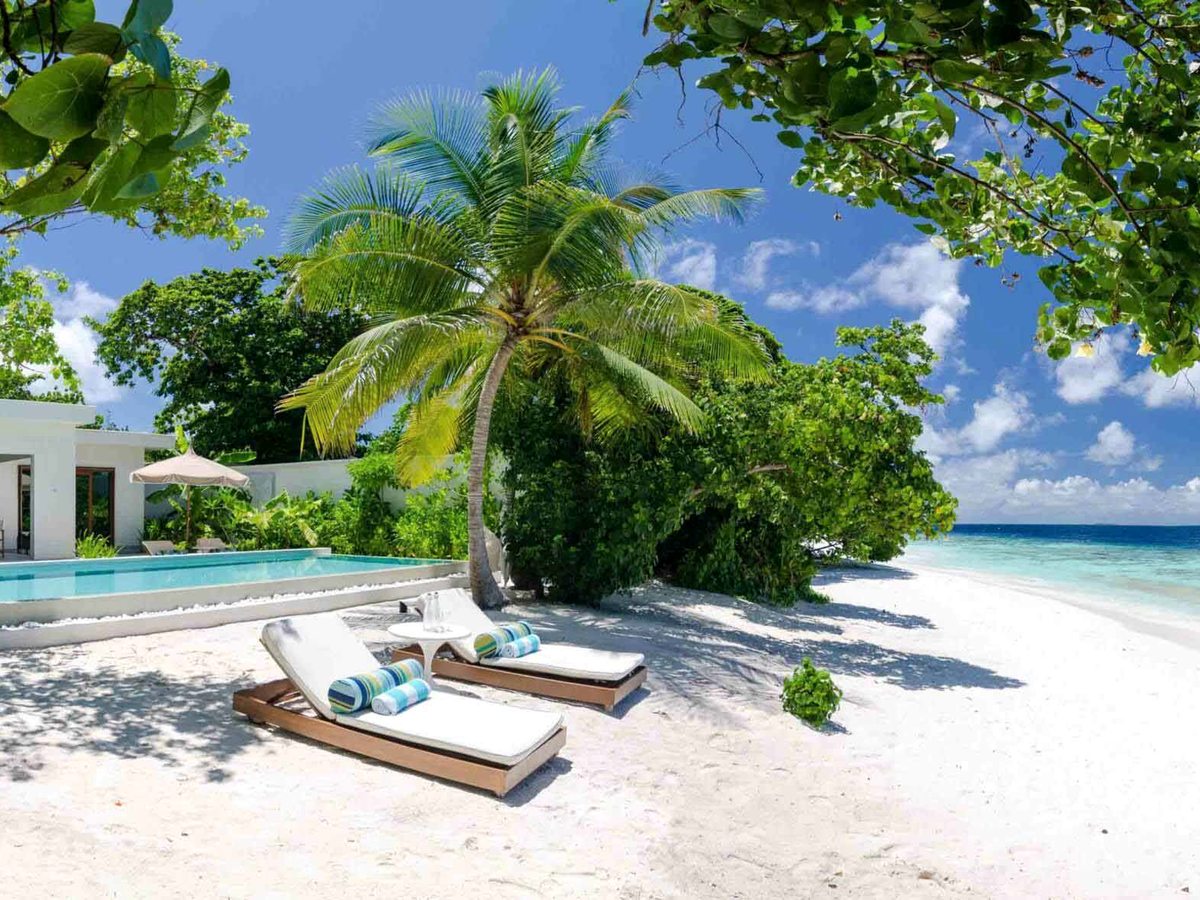
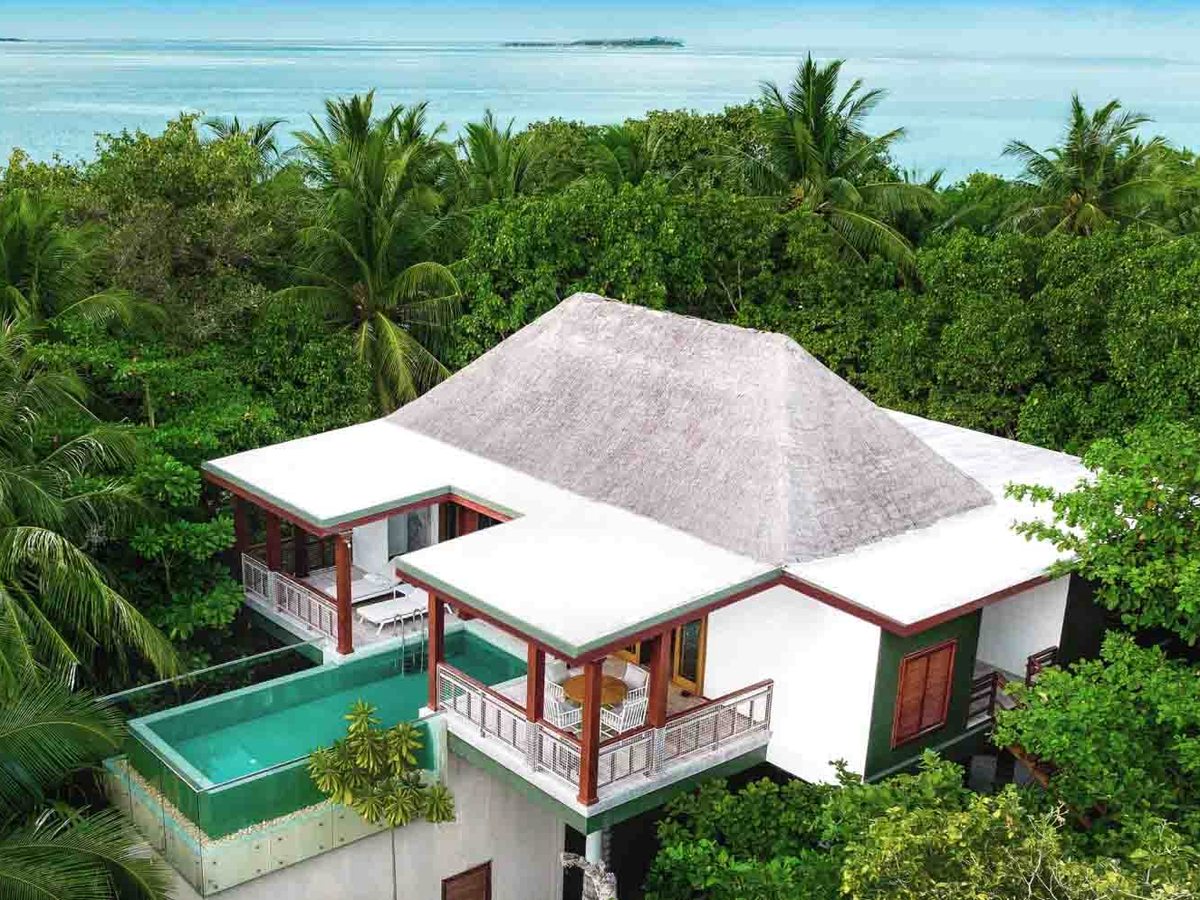
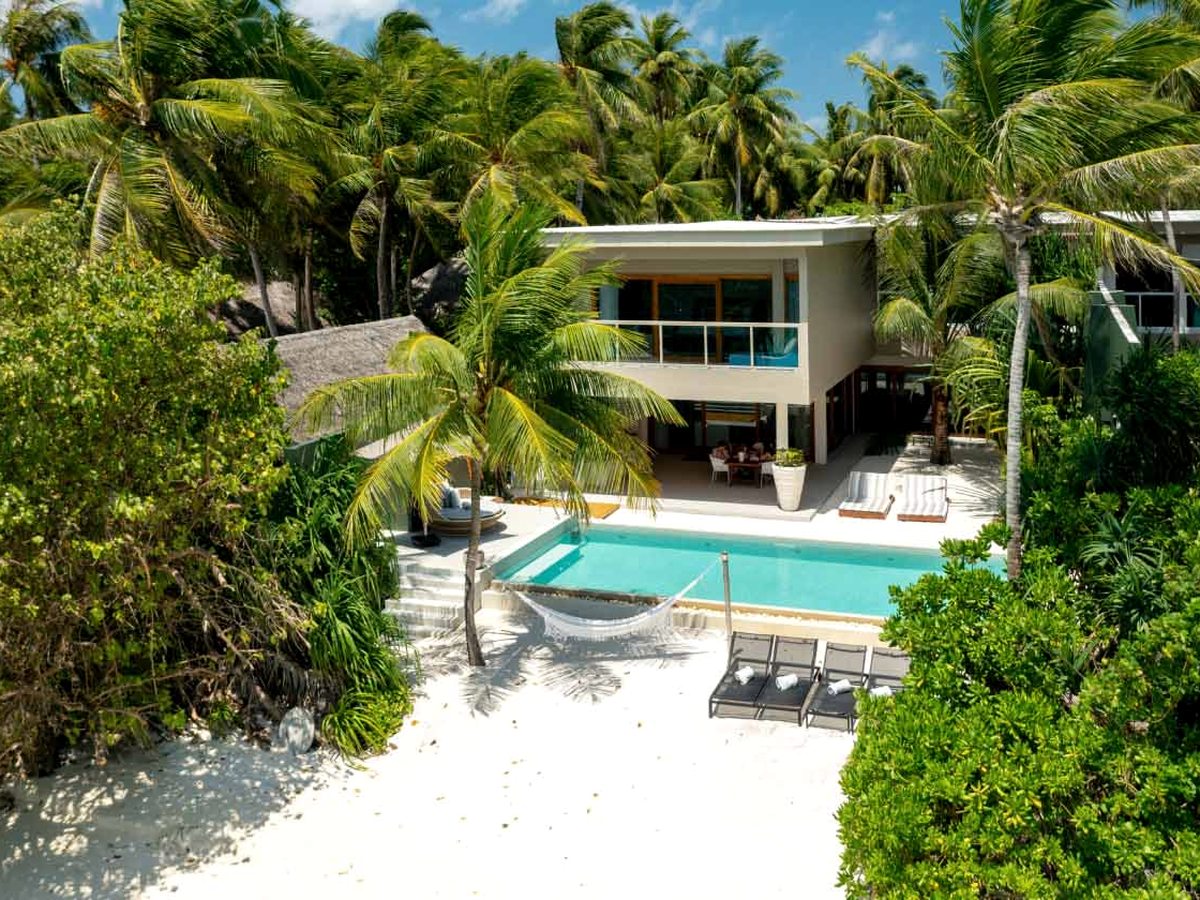
Amilla has seven villa types and three residence types, 67 in all, and they come in two shapes. Overwater villas stand on stilts over the lagoon, with steps from the deck straight into the water. Beach villas sit back among the trees with their own stretch of sand. Every villa and residence has a private freshwater pool. The table lists each villa with its official size, how many it sleeps and the length of its pool.
| Villa | Position | Size | Sleeps | Private pool |
|---|---|---|---|---|
| Water Pool Villa | Overwater, ocean view | 220 m² | 2 adults | 4.7m |
| Lagoon Pool Villa | Overwater, lagoon view | 220 m² | 3 adults, 2 children | 4.7m |
| Reef Water Pool Villa | Overwater, reef access | 220 m² | 2 adults | Private |
| Beach Pool Villa | Beachfront | 470 m² | 2 adults, 1 child | 9.5m |
| Two-Bedroom Treetop Pool Villa | Treetop, jungle canopy | 250 m² | 4 adults, 4 children | 7.5m |
| Two-Bedroom Family Water Pool Villa | Overwater, lagoon and ocean | 350 m² | 4 adults, 4 children | 4.7m |
| Two-Bedroom Beach Pool Villa | Beachfront | 530 m² | 4 adults, 2 to 4 children | 10.3m |
For a family with young children the choice is mainly about bedrooms and how you reach the water. The two-bedroom villas give you a door to close on a sleeping child. The Two-Bedroom Beach Pool Villa at 530 m² and the Two-Bedroom Family Water Pool Villa at 350 m² are the ones the resort points young families towards: the first sits on the sand with direct beach access, the second is an overwater villa with lagoon access on one side and the open sea on the other. The Two-Bedroom Treetop Pool Villa has bunk beds that older children tend to love, but its upper floor is reached by an outdoor staircase and isn't suited to very young walkers, so it works better once children are steadier on their feet.
Every villa has a cot or a rollaway bed, and the family villas add twins, singles or a sofa bed, with bunk beds in the Treetop. Among the one-bedroom villas, the Lagoon Pool Villa takes a child or two and the beachfront Beach Pool Villa one, while the Water Pool and Reef Water Pool villas are set up for two adults. Every villa except the Treetop is on a single level, which helps with a pushchair.
Above the villas sit three residences for larger groups. The Four-Bedroom Beach Residence, of which there are six, runs to 920 m² with an 11m pool, a full kitchen, a PlayStation 5 and its own golf buggy, sleeps ten adults and two children and comes with a complimentary beach barbecue on stays of seven nights or more and a private chef on request. There's a single Great Beach Residence, an eight-bedroom, 2,400 m² house with two pools and two separate wings for families travelling together, and a single Amilla Estate, six bedrooms across 2,550 m² with a 20m pool, a rooftop bar and its own spa.
Every restaurant and bar
Each dining room and bar, how booking works and the meal plans with free under-five dining.
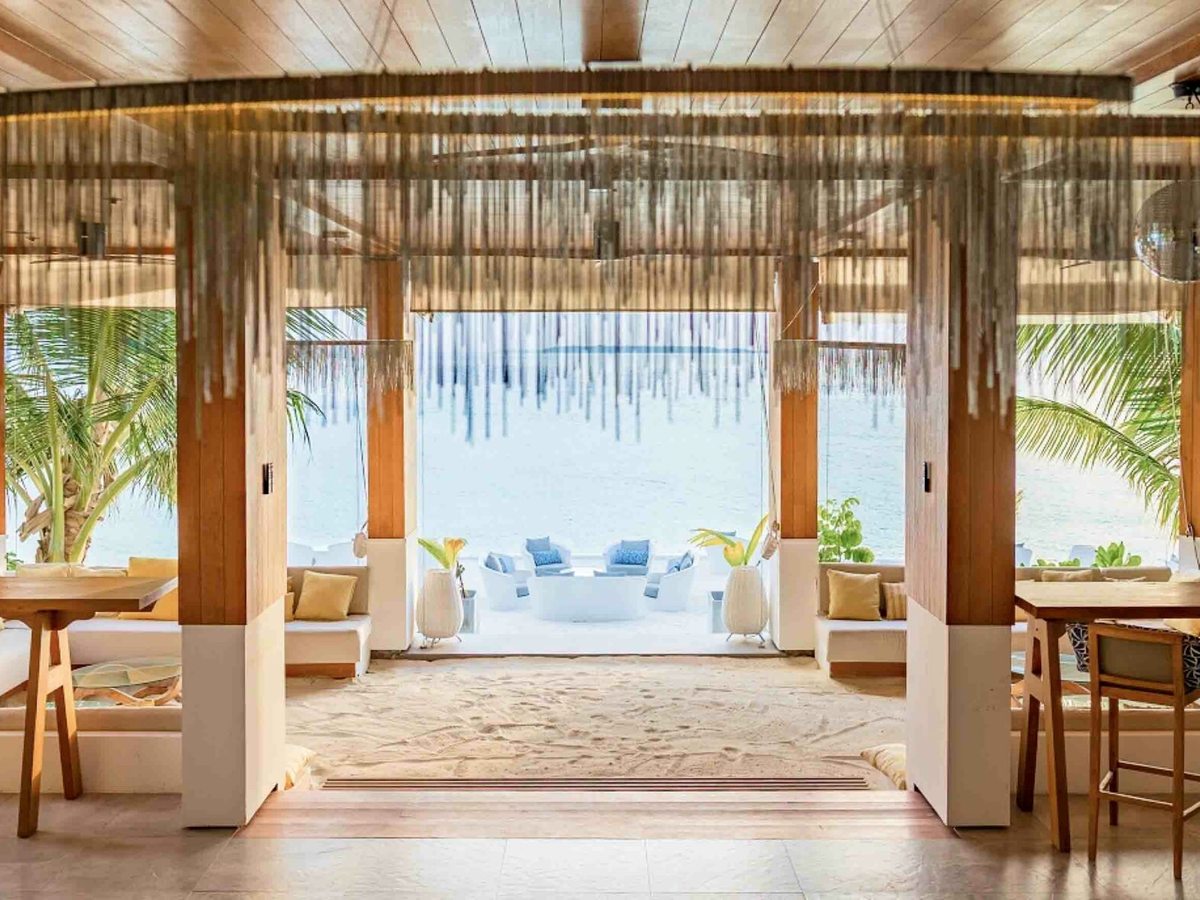
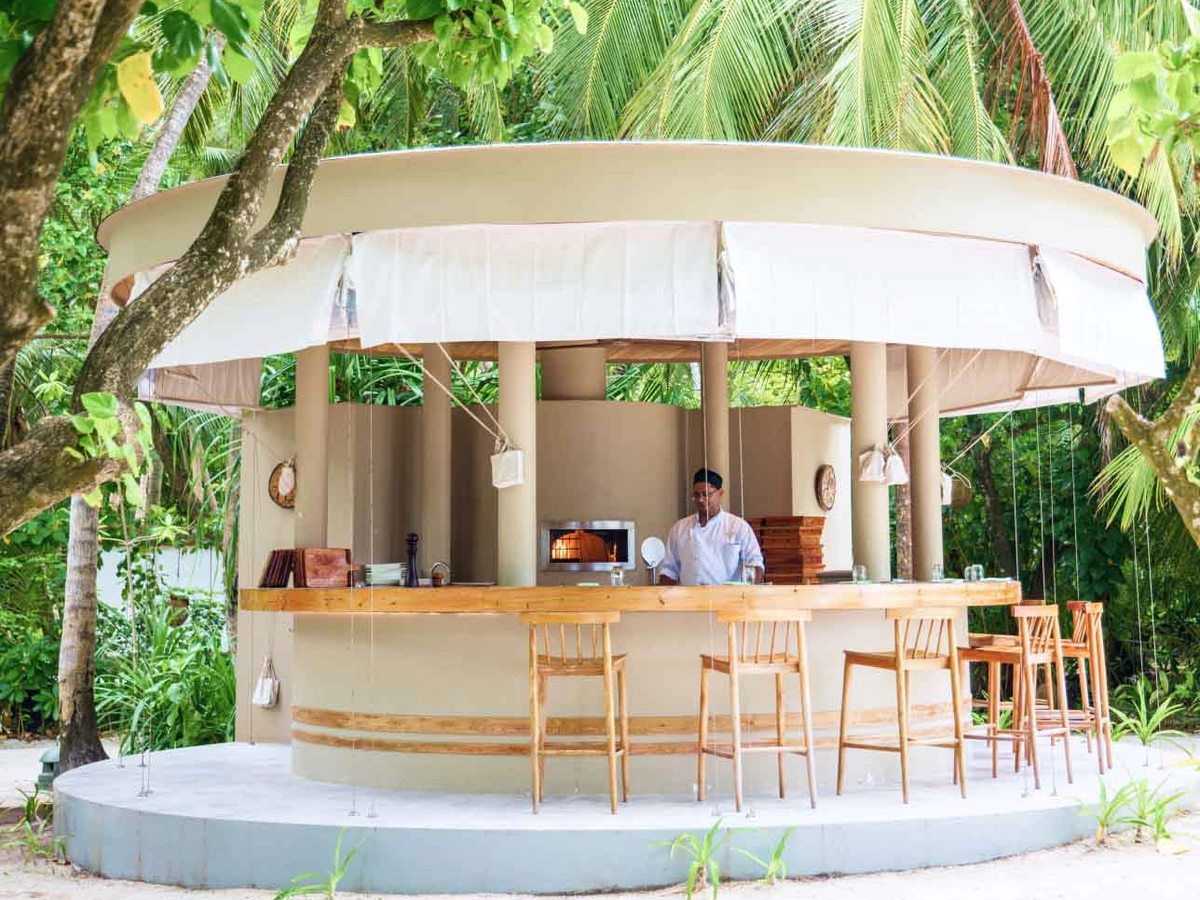
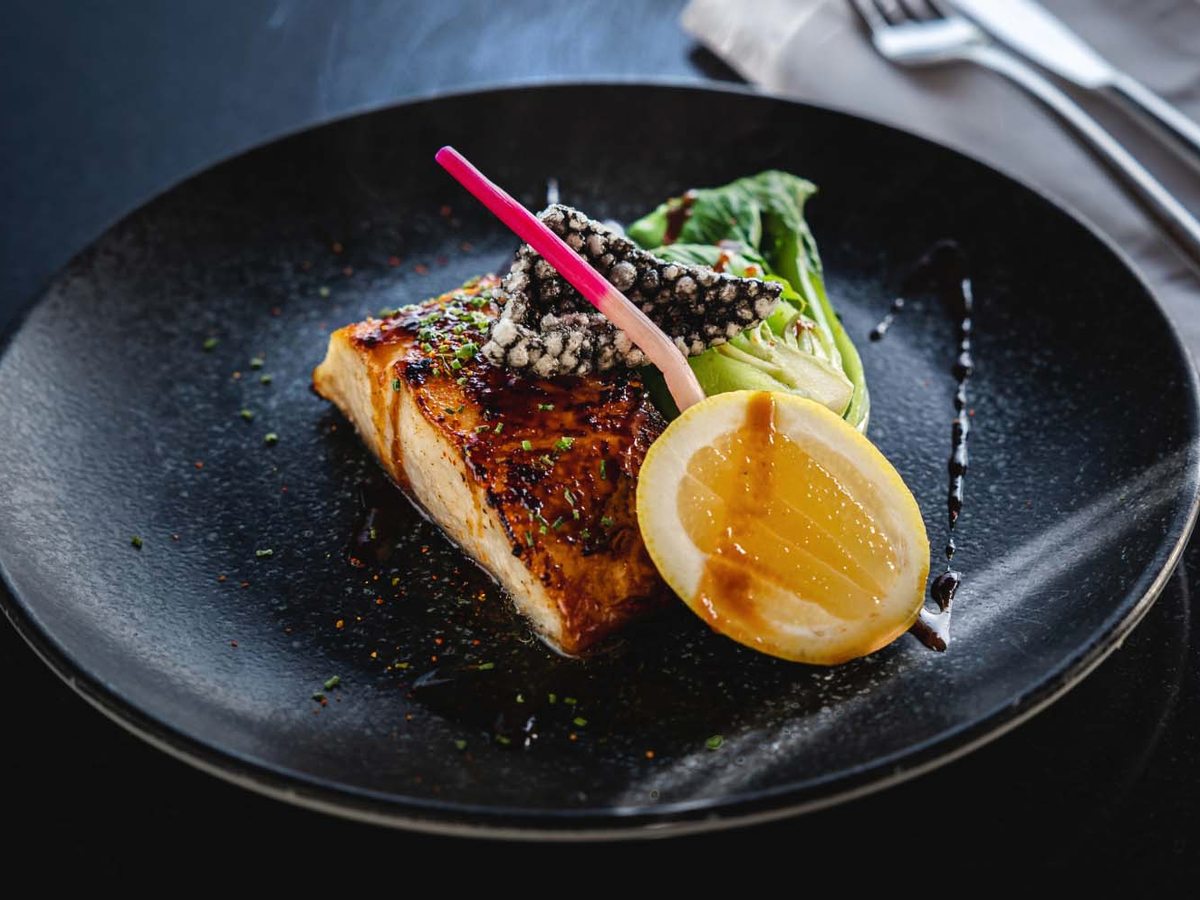
There are seven restaurants across the island. Feeling Koi is the Japanese restaurant, serving sushi and sashimi from an overwater deck, and it's the fine-dining room of the seven. Barolo is the Italian, with homemade pasta and vegetables and herbs from the island's own garden, looking out over the water. Tessera serves Arabian and wider Middle Eastern food built around shared dishes, and East is the pan-Asian kitchen, with an Indian tandoor alongside Chinese and Thai cooking. Joe's Pizza is a make-to-order pizza bar and the most relaxed room for a family meal. Fresh is the à la carte breakfast restaurant. The Emperor Beach Club serves casual meals, cocktails and mocktails on the sand, next to the beach volleyball court, the Island Breeze shop, the wine-tasting area and the Wellness Lab.
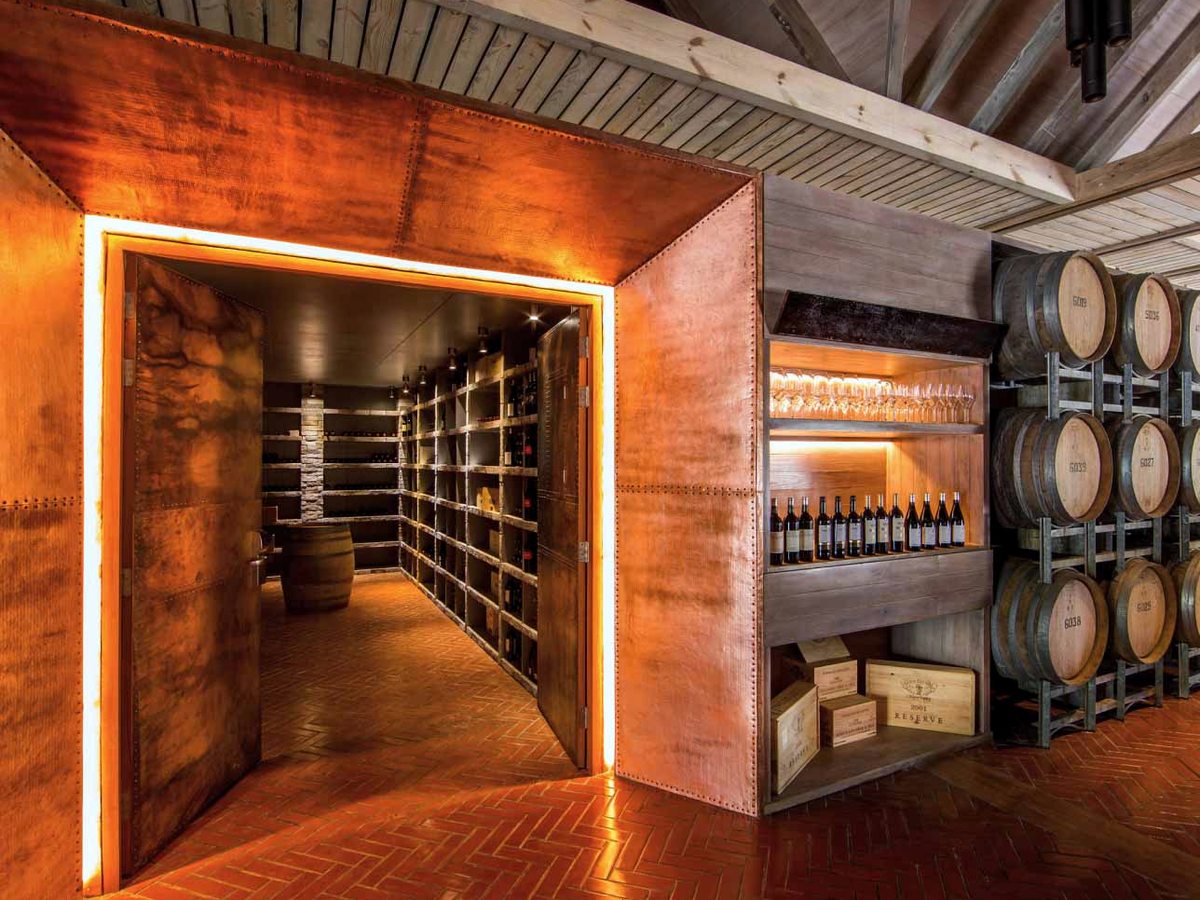
There are three bars. The Sunset Bar pours champagne and gin with homemade tonics, with live music and a DJ. The Baa Bar is a sandy beach bar serving crafted cocktails, wine and chilled beer alongside spirits infused with island-grown ingredients, with a DJ at golden hour. The Cellar Door is a private wine cellar where you can book a tasting. The Mystique Garden runs foraging and cooking sessions among the island's herbs, fruit and vegetables. All seven restaurants carry dietary lifestyle menus, vegan and vegetarian, gluten-free, dairy-free, keto and paleo, at no extra charge on any plan, and the kitchens will make ice cream to suit them too.
How dining and booking work
You book restaurants and activities through the guest app, Eleanor, or by emailing [email protected], and the resort recommends booking ahead. Meals run from breakfast until about 10:30, lunch until 18:00 and dinner until 21:30, and room service runs around the clock, so an early or late meal in the villa is always an option. Individual restaurant opening hours aren't published in advance.
Meal plans and children's dining
You can book Amilla on half-board, full-board or its Dine Around All Inclusive plan, and every plan lets you eat across the different restaurants rather than being tied to one. The table shows what each covers.
| Meal plan | What it covers |
|---|---|
| Half-board | Breakfast and dinner, with dinner ordered from the à la carte menus across the restaurants. Feeling Koi carries a supplement on the current Half-Board offer. |
| Full-board | Breakfast, lunch and dinner, again with the run of the different restaurants. |
| Dine Around All Inclusive | All meals plus selected drinks, the Sunset, Baa and Cellar Door bars and an in-villa minibar of soft drinks, beer, wine, spirits, water, snacks and milk. |
Children up to the age of four eat free, up to three meals a day, on the same plan as you. From five to twelve there's a reduced-rate children's plan, which you arrange with the resort. Ice cream is part of the restaurants' dining offer, including under Dine Around All Inclusive, rather than a separate all-day service. Much of the food is grown or made on the island, from the organic garden and banana plantation to in-house yoghurt, jams and plant-based milk. Organic baby food isn't listed as a standing service, so it's worth asking about before you arrive if you'd like it.
Pools
Where you swim on the island, and the reef and lagoon around it.
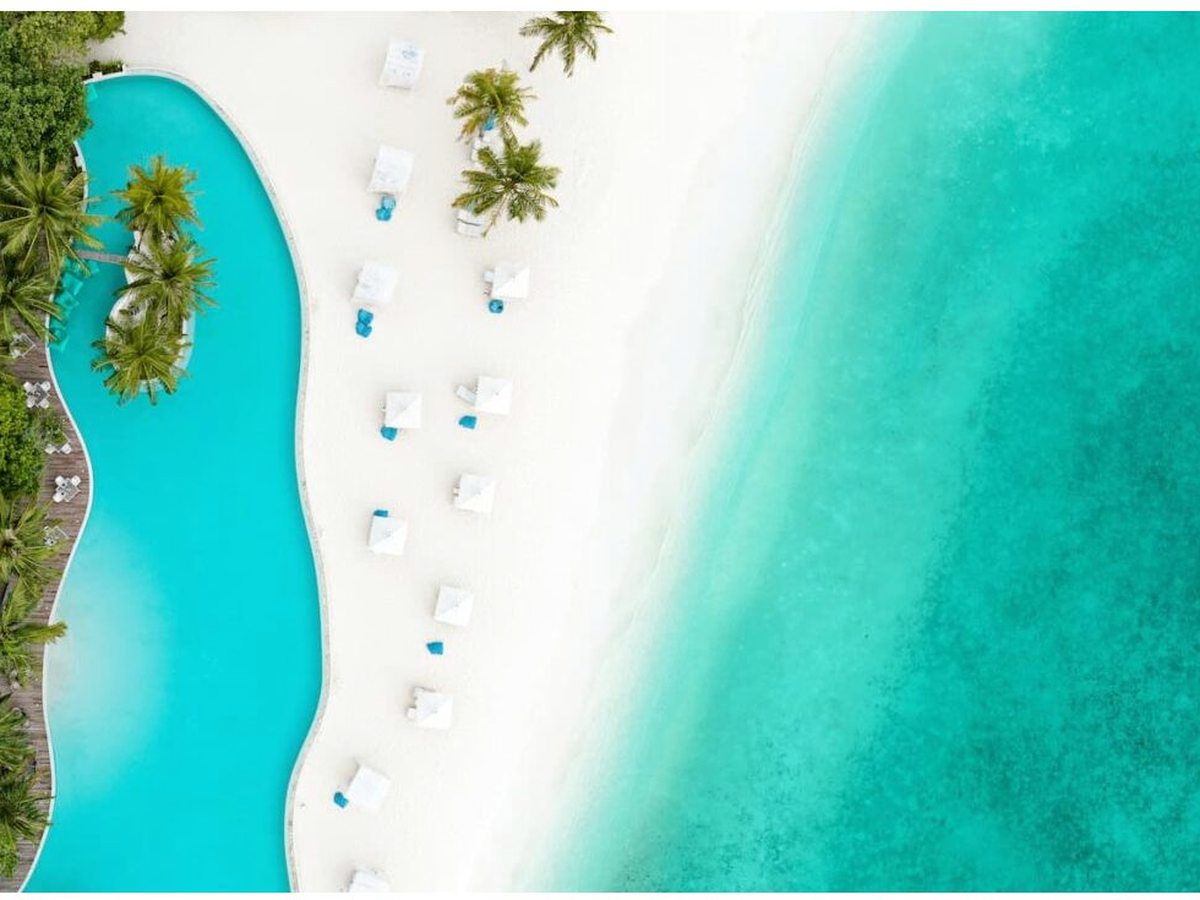
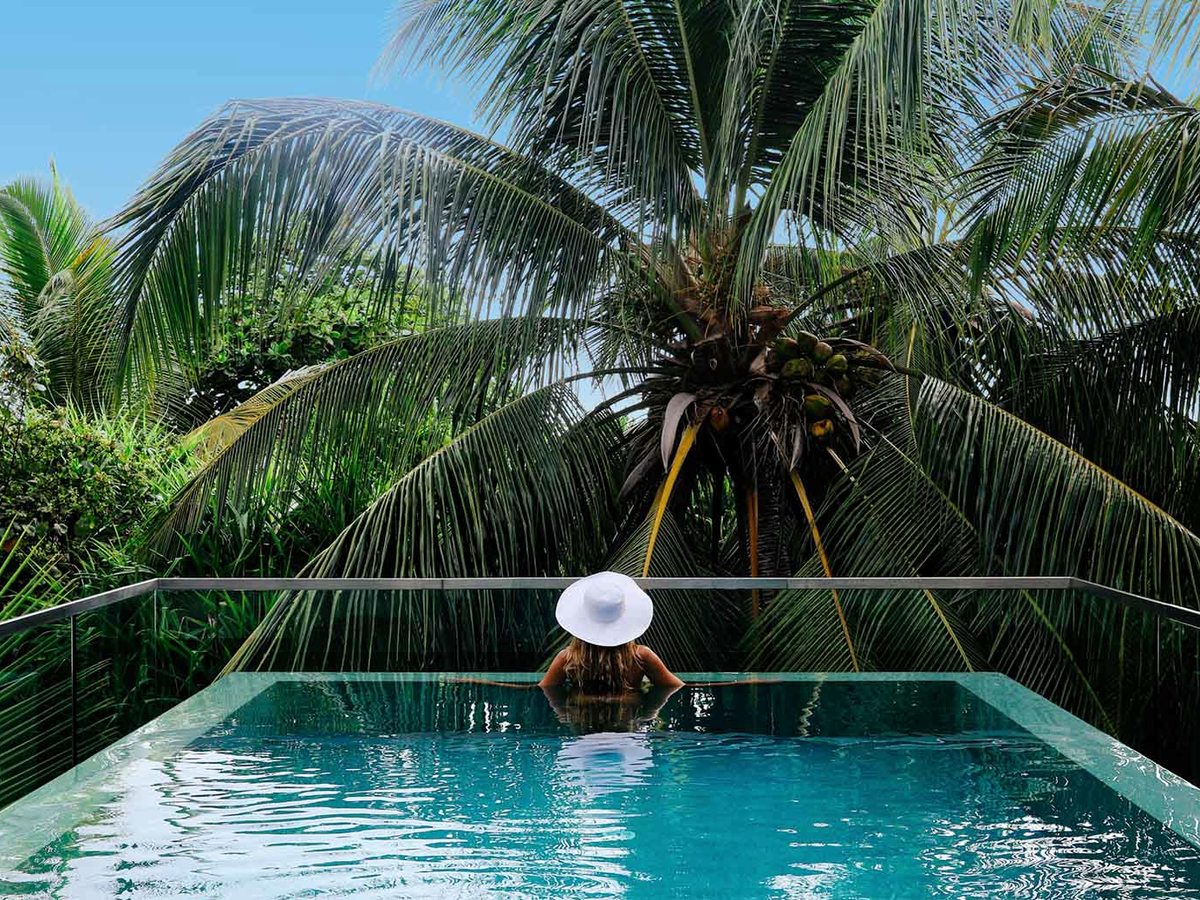
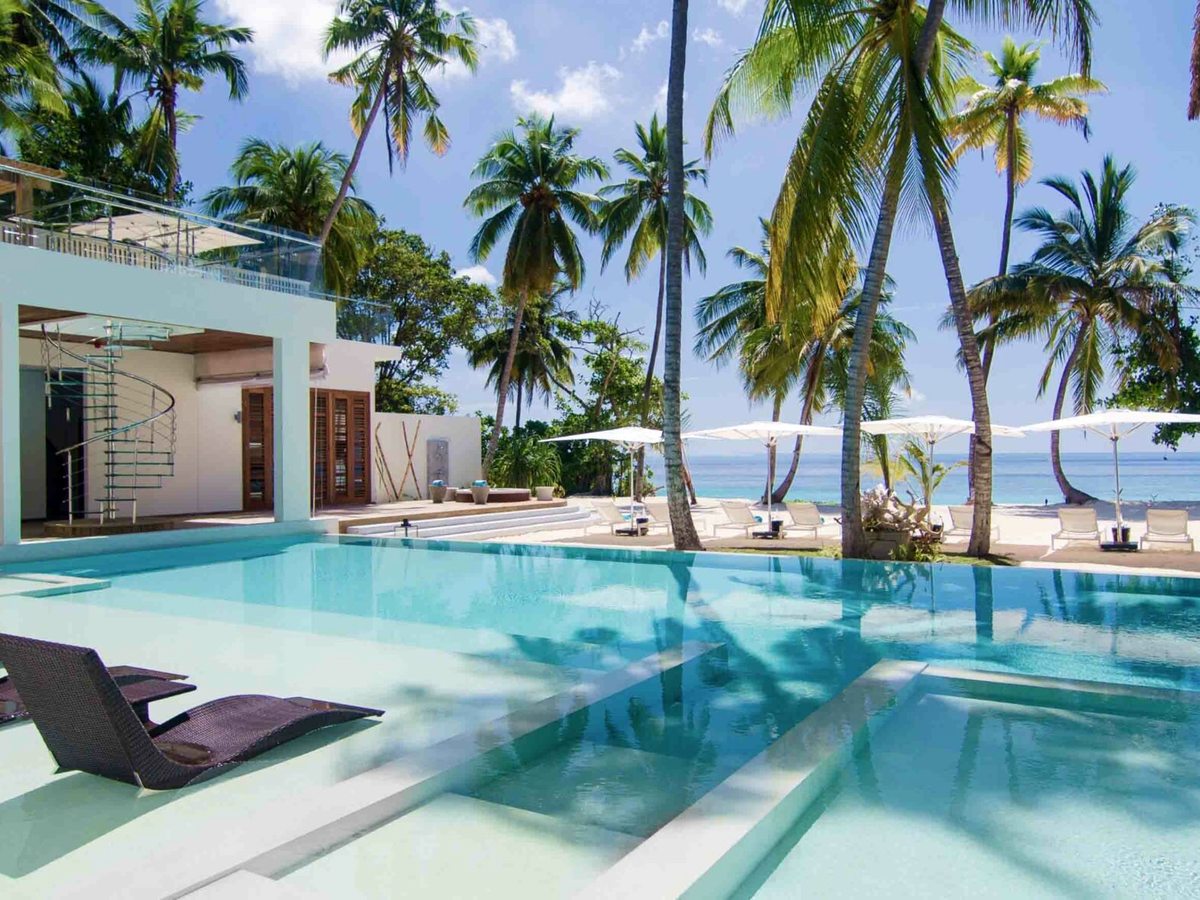
There's a main resort pool with ramp access and a mobile pool hoist on request. Beyond it, every villa and residence has its own freshwater pool, from 4.7m up to the 20m pool at the Amilla Estate, so much of your swimming is likely to be in private. The kids' club has a fenced open-air playground with a splash area and a sun canopy, and there's a plunge pool beside the Javvu spa, on the edge of the ocean, that any guest can use. There's no separate baby pool. There's also no lifeguard anywhere on the resort, and staff give a safety briefing before any swim or snorkel, so under-fives need an adult within reach at the water's edge. Life vests are provided, night swimming isn't allowed and the kids' club lends Safety Turtle wristbands that raise an alarm if a young child gets into the water.
The beach, house reef and lagoon
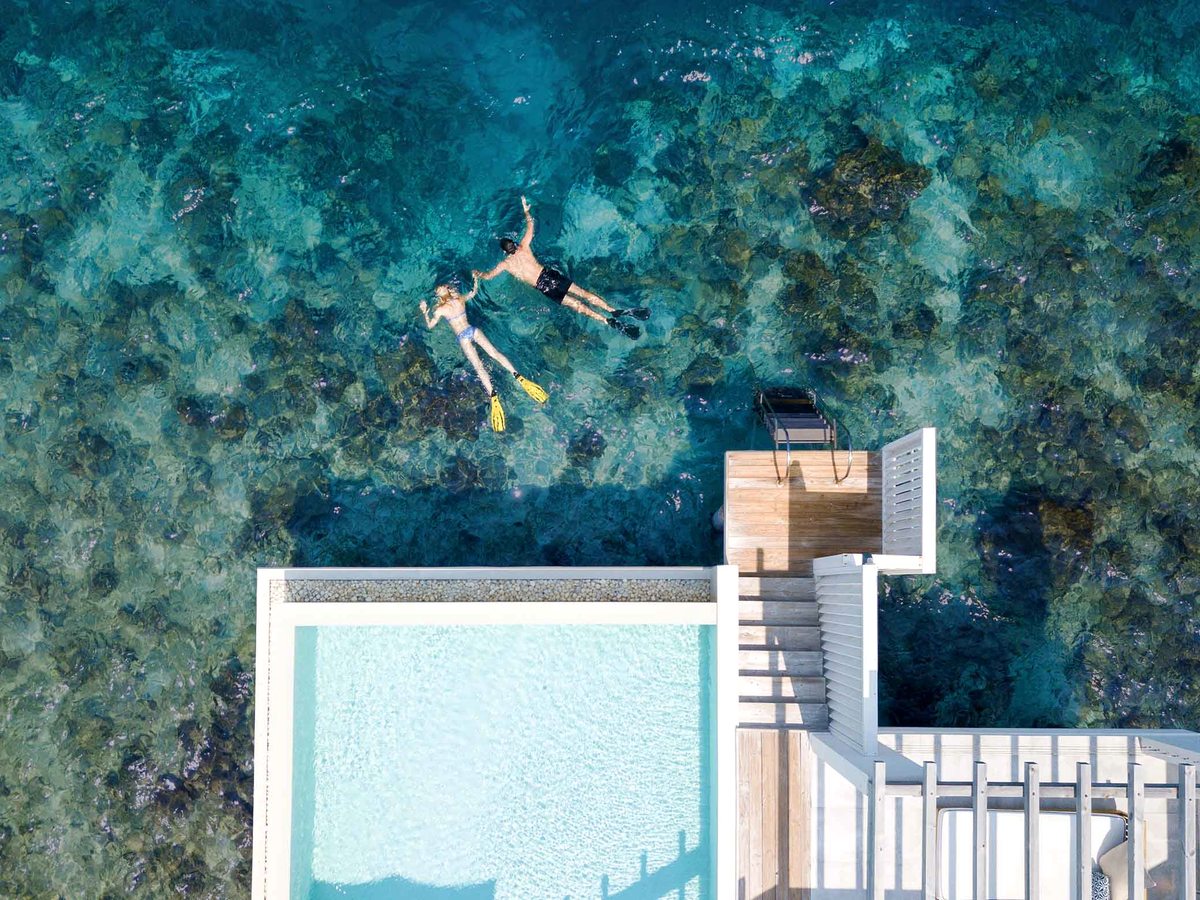
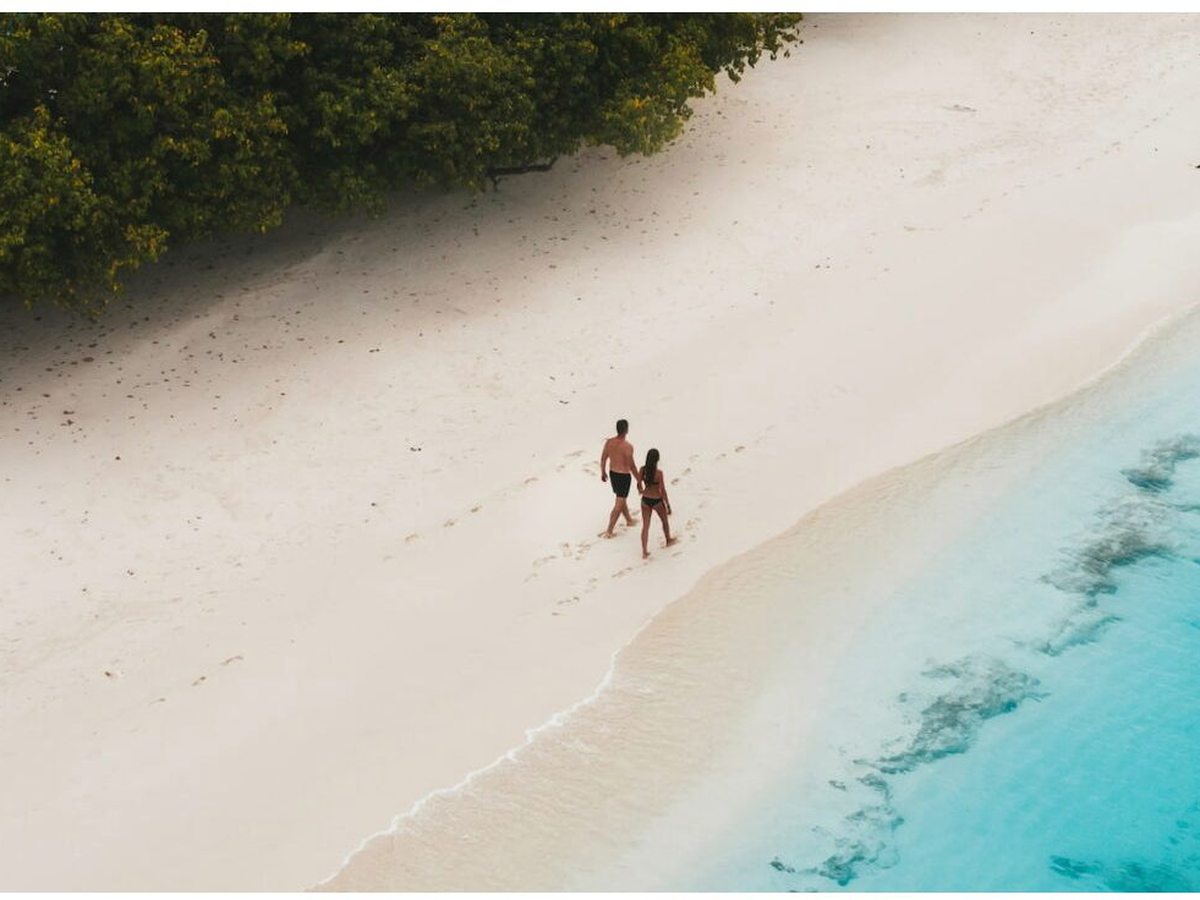
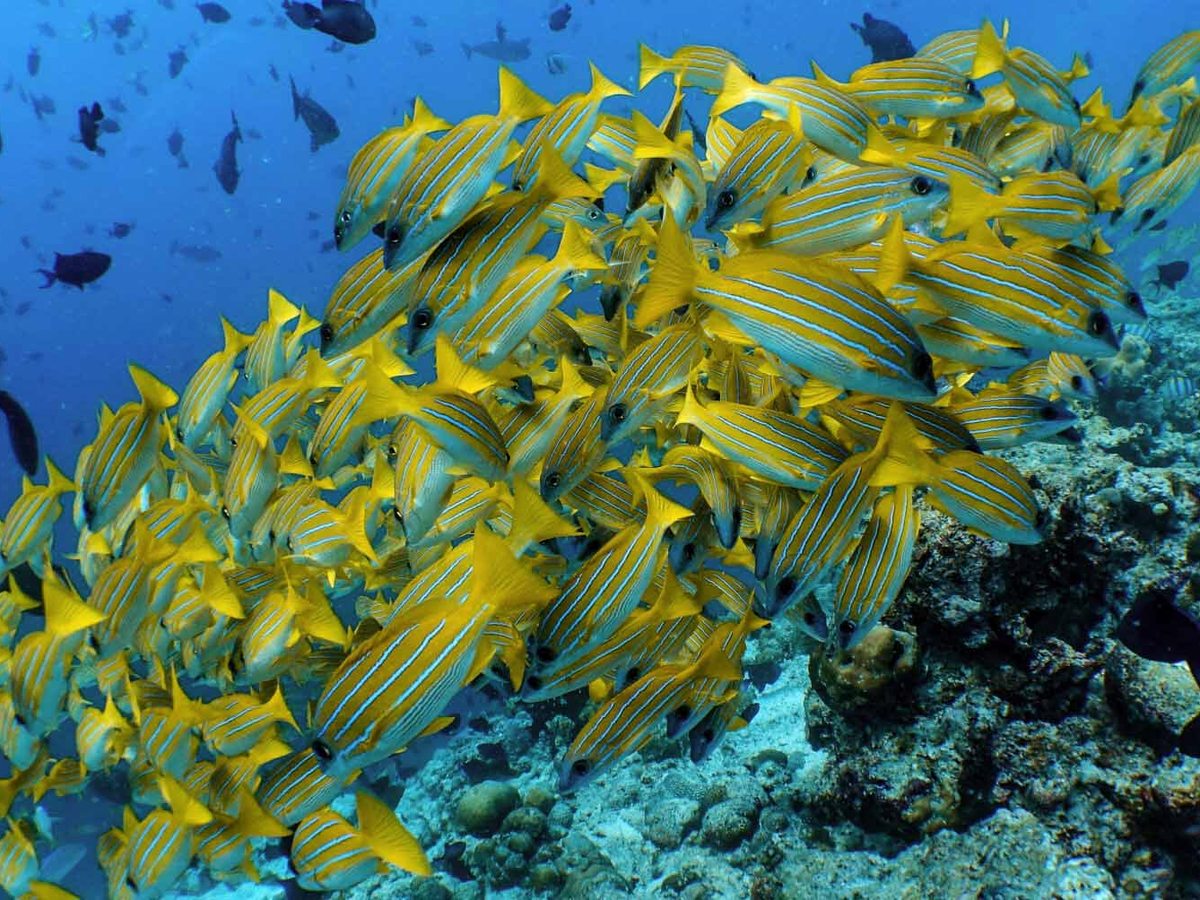
The beachfront villas open straight onto the sand, the Treetop villa has a reserved strip of beach about 20m down a private path and the overwater villas have steps from the deck into the lagoon. The lagoon is warm and turquoise, though its depth isn't published and the currents can be strong, which is another reason for the safety briefing and for keeping young children close. The house reef is rated one of the top ten in the Maldives by Travel and Leisure Southeast Asia, and you can reach it by swimming out from the island. Above it lies the resort's own blue hole, a deep pool in the reef visited on a snorkelling trip. Fishing and crabbing on the house reef aren't allowed, to protect the ecosystem. The 3km track around the island runs under the jungle canopy, for a walk, a run or a cycle.
Babies and toddlers
The kids' club and babysitting, everything there is to do and the spa.
The kids' club is free and open to children from four to twelve on their own, with a daily programme of activities, kids' bikes, snorkelling kit, some water sports, table tennis, tennis, badminton and PADI Bubblemaker sessions in the pool. Children of three and under are welcome too, but only with a parent, a guardian or a paid babysitter alongside them, so a supervised session with a toddler means booking babysitting. Babysitting is available, charged by the hour, from around US$20 per child when last checked in July 2026, and the resort doesn't publish a youngest age it will take, so contact them to confirm if you're travelling with a small baby. There's a children's spa menu with treatments for the whole family, and Safety Turtle water-alarm wristbands are on hand at the club.
On and around the islandThings to do
Plenty is included. Guided snorkelling on the house reef comes with a safety briefing and kit delivered to your villa by your Katheeb, and there's night snorkelling too. The non-motorised water sports, stand-up paddleboarding, windsurfing and kayaking, are free, as are the two floodlit tennis courts with a resident coach, football, pickleball, badminton, table tennis, bocce and giant chess. Daily yoga runs at the Movement Pavilion, and the Wellness Lab at the Emperor Beach Club runs kombucha and bitters workshops.
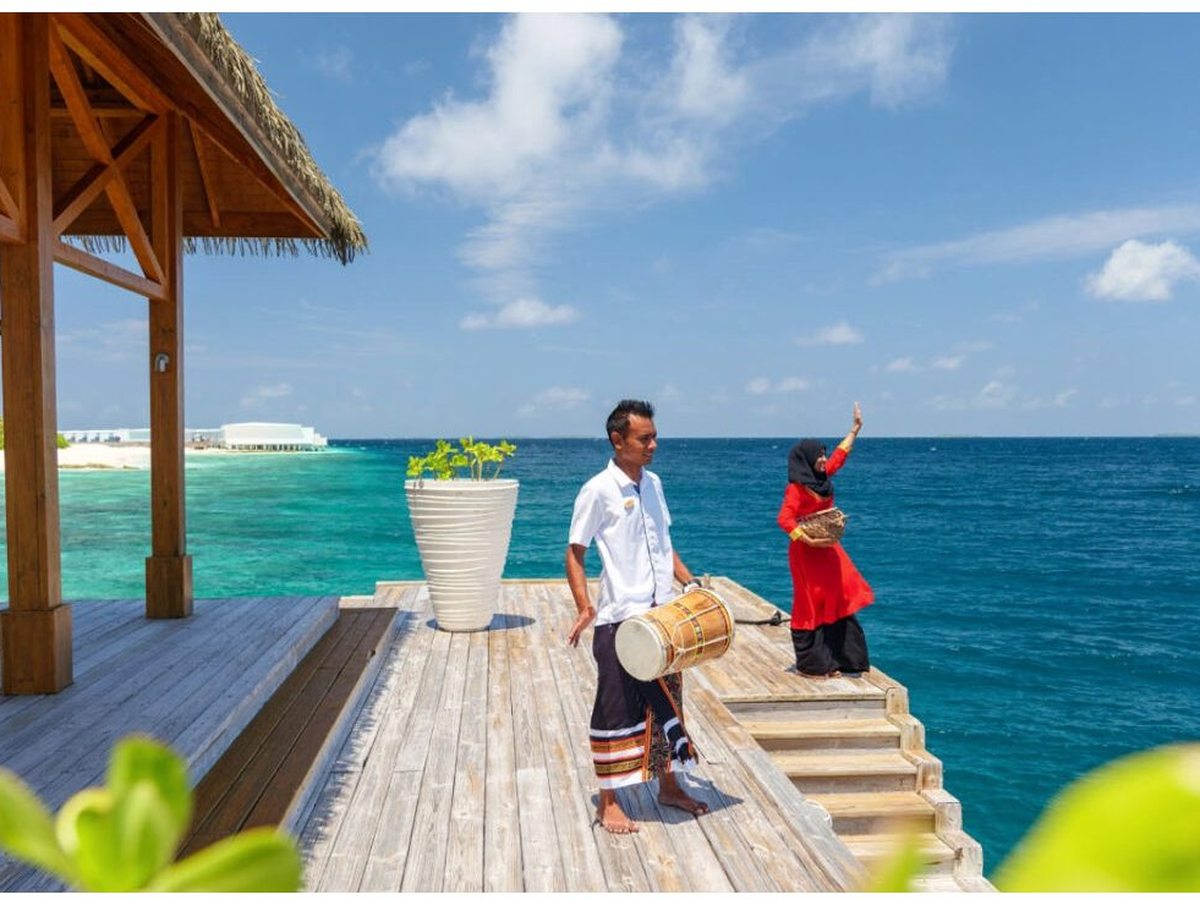
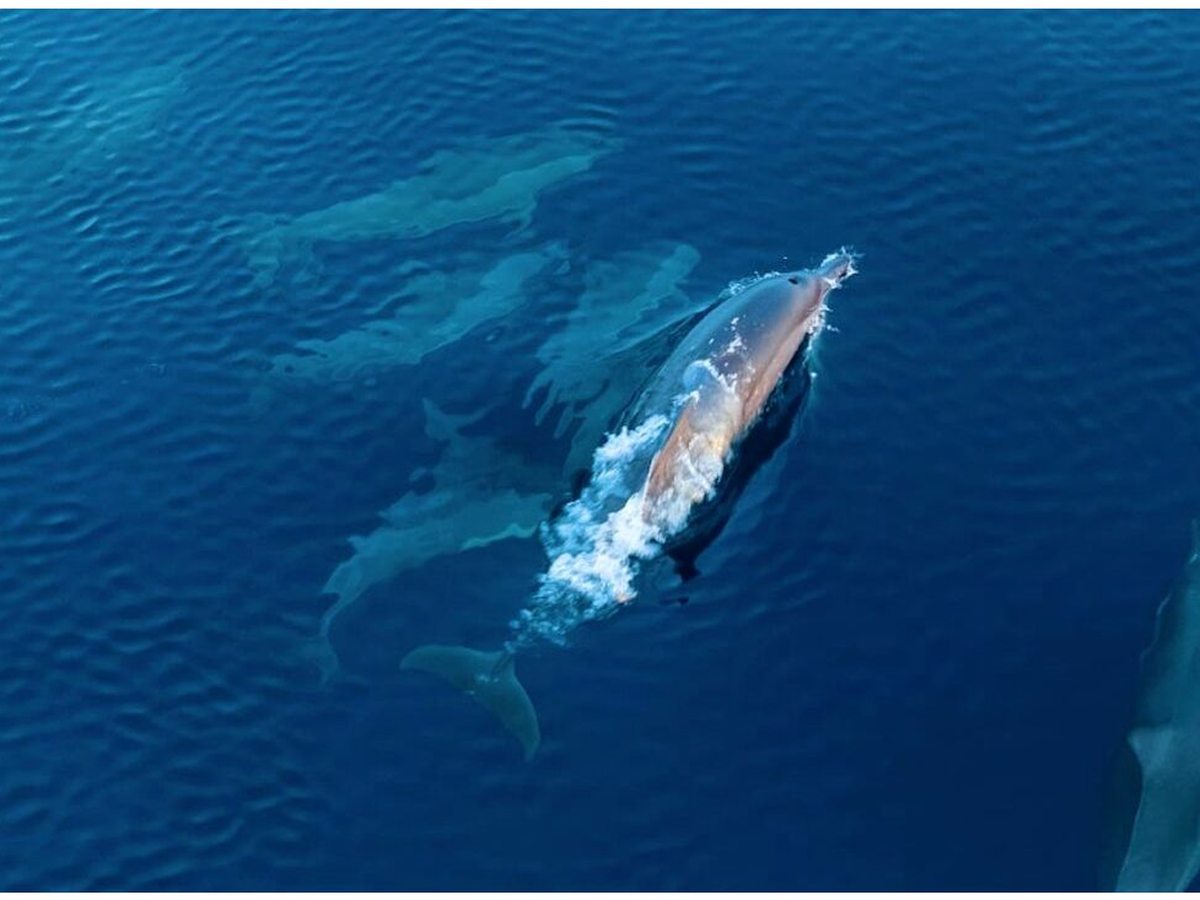
Some activities cost extra. Scuba diving runs through Dive Butler International, a five-star PADI centre based on the island, with Bubblemaker sessions for children, and private coaching with the resident tennis pro is a paid extra. Motorised water sports include wakeboarding, the seabob, a jetpack and fun-tubing, and there are traditional, night and big-game fishing trips. A sunset dolphin cruise, out among spinner and bottlenose dolphins, is a favourite with children. For a special meal there are sandbank picnics, private jungle or beach dinners through Dine by Design and cooking masterclasses, plus a private outdoor cinema, a clay studio, in-house photography and three to five-day or seven-day wellness programmes with visiting practitioners. Guests can sponsor a coral frame for reef restoration or watch a Bodu Beru drumming show, and the Island Breeze shop sells gifts, resort clothing and jewellery.
Wellness by the oceanThe Javvu spa and wellness
The Javvu spa was named one of Travel and Leisure's top ten spas in Asia and won a Wellness Travel Award in 2023. It has ten treatment pods for Balinese, Thai and hot-stone massage and facials that use Dhivehi Beys, traditional Maldivian herbal medicine grown in the island's gardens, and it's open from 9:00 to 20:00 with the last appointment at 19:00. There's a Sensora light and sound therapy room and an Alchemy Bar making plant-based soaps and balms. The wider wellness side is free to use: an open-air Jungle Gym under a banyan tree, indoor cardio and strength studios, a steam room and sauna and a meditation labyrinth. There's a nail salon too, and the children's spa menu means younger guests can join in.
Getting around and accessibility
Moving about the island, the accessibility set-up and the everyday practical basics.
The island is flat, with hard-packed sandy paths and no hills or slopes. Every villa comes with bicycles, and golf buggies, the small open electric carts, run across the island on call, so you rarely walk far with bags or tired children. Wide-wheeled beach strollers for the sand are available at the resort.
Amilla is unusually strong on accessibility for a Maldives resort. It was the first resort in the world to be certified by Inclucare, it belongs to the Hidden Disabilities scheme and the Telegraph named it Best for Accessibility in 2024. Every villa except the Treetop is on one level, showers are walk-in and a bed lift or mobile pool hoist can be arranged with notice; the Two-Bedroom Beach Pool Villa has lowered mirrors, sinks and counters. There are beach and floating wheelchairs, hearing loops and subtitled televisions and adaptive yoga and PADI scuba courses for guests with movement disabilities. If a wheelchair or pushchair matters to your journey, note that the seaplane aisle is too narrow for either and Dharavandhoo's domestic airport has stairs only, though the seaplane carries an evacuation chair for anyone who can't use the aisle.
A few practical basics. Wi-Fi is free across the resort, prices are in US dollars and staff speak English along with Dhivehi, Russian, French, Arabic, Italian and Thai between them. Dress is resort-casual throughout. The tap water is desalinated and safe for brushing teeth, with complimentary bottled water for drinking. A resident doctor is on call around the clock, the nearest hospital is 20 minutes away by speedboat and vaccinations are only needed for guests arriving from yellow fever or cholera endemic regions, so standard UK travellers need none.
Growing, making and protectingSustainability and the island's ecology
Amilla sits inside a UNESCO biosphere reserve and takes the setting seriously. It holds EarthCheck Gold certification, grows much of its own food in organic gardens, a banana plantation and a hydroponic garden, processes its own coconuts and makes its own kombucha, yoghurt, jams and plant-based milk. It runs largely plastic-free, desalinates and re-mineralises its own drinking water and sorts its waste on the island, crushing glass for cement and composting food. On the marine side it works with the Atoll Marine Centre on turtle nesting, rescue and rehabilitation, and with Maldives Resilient Reefs on reef restoration, which is why guests are asked not to touch the coral, some of which stings, and not to fish the house reef.
Beyond the islandThe area and days out
Amilla is on its own island in Baa Atoll, one of the most ecologically rich atolls in the country and a UNESCO biosphere reserve. Like most Maldives resorts it's self-contained: there are no day trips to the capital or the mainland, and the week is meant to be spent on and around the island.
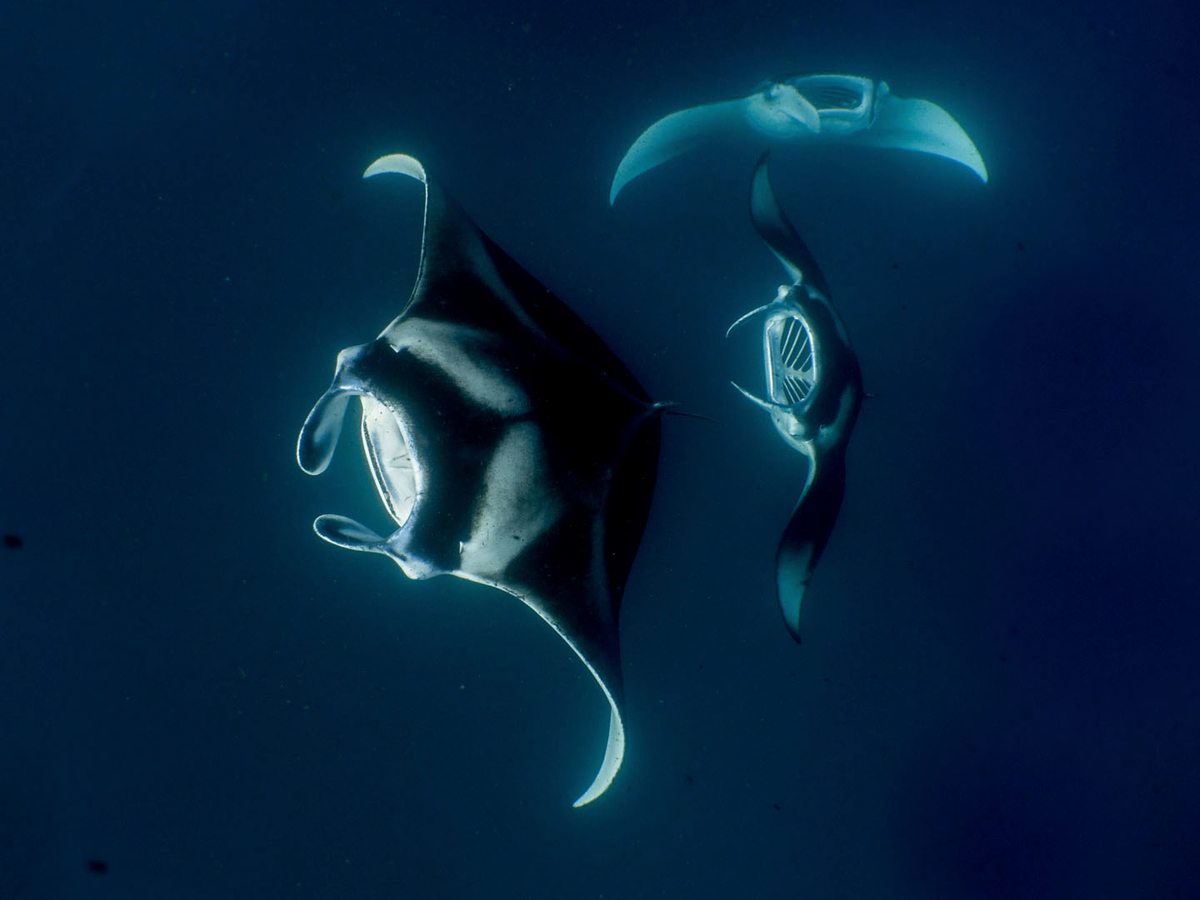
The headline day out is Hanifaru Bay, a protected marine area about 5 miles (8 km) away, roughly fifteen minutes by speedboat. From June to November, and especially July to October around the full and new moon, reef manta rays and the occasional whale shark gather there to feed, and it's one of the best places in the world to snorkel with them. Numbers are limited, diving isn't allowed, it's snorkelling only and the wildlife is never guaranteed, but in season it's the reason many families choose Baa Atoll. The resort also runs a trip to two local Maldivian islands, a chance to see everyday island life, and the nearest of these, Dharavandhoo, ten minutes away by speedboat, is where the domestic airport sits.
Loves and gripes
What families rate and what they flag, how it compares, the journey in and the weather.
What families love
- The warm, personal service, with each villa given its own Katheeb.
- Spacious villas, each with a private pool.
- A house reef rated among the ten best in the Maldives, right off the island.
- Manta rays at Hanifaru Bay in season, a short boat ride away.
- The sustainability and the organic, island-grown food.
- Accessibility that's rare in the Maldives.
- A large, green island rather than a small sandbar.
Common gripes
- The seaplane can be hard work with very young children.
- The kids' club only takes children on their own from four, so a three-year-old needs you or a paid babysitter.
- It's an expensive holiday.
- There's no lifeguard anywhere on the resort.
- Motorised water sports cost extra.
- Feeling Koi carries a supplement on the Half-Board offer.
The awards support the family billing: TripAdvisor gave Amilla a Travellers' Choice award in 2025 and ranked it the number two resort for families in the Maldives that year, it was Target Taste's Family-Friendly Resort of the Year in 2024 and Forbes Travel Guide gave it a Star Award in 2025. It's a number two rather than a number one, and other Maldives resorts, Niyama Private Islands among them, rate just as highly for families, so treat the ranking as a strong signal rather than a settled verdict.
Against the other Baa Atoll resortsHow it compares
Within Baa Atoll, Amilla's closest comparisons are other five-star islands such as Vakkaru, also a Small Luxury Hotels member, and Dusit Thani, whose kids' club takes children from three rather than four. What sets Amilla apart is its size and greenery, its accessibility, the house reef and the Hanifaru mantas on the doorstep. Against the wider field of family resorts in the Maldives it's consistently well rated without being the single top-ranked choice, so if a supervised club for a toddler or the lowest price is your priority, it's worth comparing it directly with a resort built around those things.
Flights, the seaplane and entryGetting there and when to go
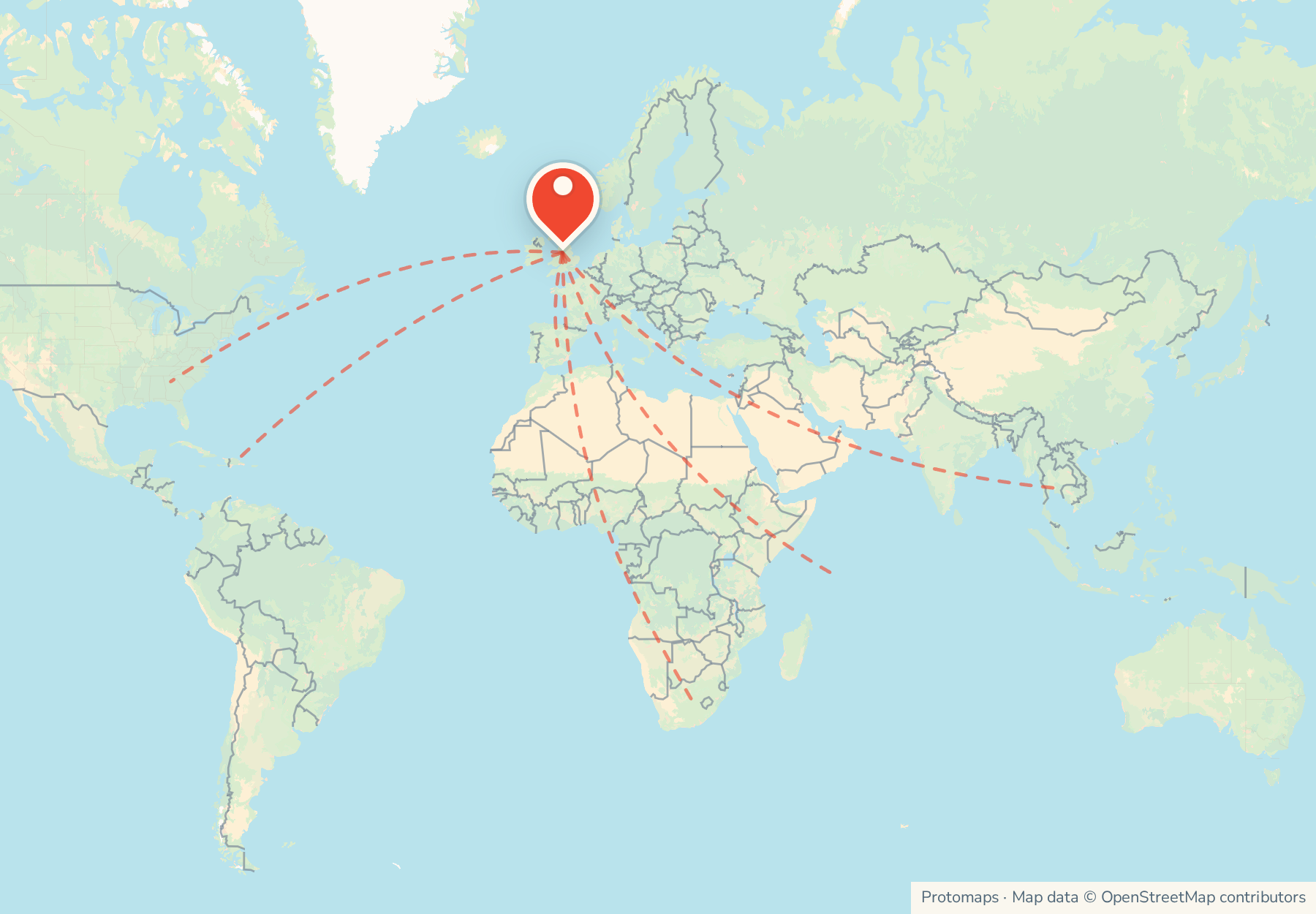
Most families fly into Velana International Airport at Malé, about ten and a half hours non-stop from London with British Airways, Qatar Airways or Emirates. From there it's a 35-minute seaplane to Amilla, flown by Manta Air and arranged by the resort's reservations team. The seaplane is charged on top of the room, at around US$850 return per adult and US$450 per child excluding taxes when last checked in July 2026, and it only flies in daylight, so it's a real cost and a real constraint to factor in when you compare the nightly rate. Infants under two travel free without their own seat, held on your lap, and the checked luggage allowance is 20kg plus 5kg of hand luggage each, with excess charged at about US$5 a kilo plus 17% tax (last checked July 2026). There's an Amilla seaplane lounge at the airport, and an optional VIP arrival service.
The seaplanes are small, with three narrow seats to a row and an aisle too tight for a pushchair, so prams are stowed and under-twos are carried. If you land after 3pm, or you'd rather not fly in a small aircraft, the alternative is a short domestic flight of around 15 to 20 minutes to Dharavandhoo followed by a ten-minute speedboat, which the resort suggests for late arrivals.
UK visitors get a free 30-day visa on arrival, and you need a passport valid for at least six months and an onward or return ticket; no Covid test is required. The Maldives runs five hours ahead of the UK. Amilla is open all year, so when to go comes down to what you want: November to April for the driest, sunniest weather, or June to November if the Hanifaru mantas are the main reason for the trip.
Hot all yearWeather
The Maldives is hot and humid all year, with days around 30°C, nights around 25°C and no cool season to speak of. The drier, sunnier stretch runs from November to April, with the clearest skies and eight to nine hours of sun a day. From May to October it's wetter and more humid, though the rain tends to come in short heavy bursts and sunny days still outnumber grey ones; this is also manta season at Hanifaru Bay, from June to November. May and October are the most changeable months. Cyclones are possible but usually mild here, and no real reason to stay away.
| Month | Daytime high | Overnight low | Rain | Wet days | Sea temp |
|---|---|---|---|---|---|
| January | 30.5° | 26° | 8 mm | 2 | 28° |
| February | 31° | 26.5° | 38 mm | 3 | 29° |
| March | 31.5° | 27° | 14 mm | 3 | 29° |
| April | 32° | 27.5° | 18 mm | 3 | 30° |
| May | 31.5° | 26.5° | 39 mm | 8 | 30° |
| June | 31.5° | 27° | 14 mm | 4 | 29° |
| July | 31° | 26° | 23 mm | 6 | 29° |
| August | 31° | 26° | 36 mm | 7 | 29° |
| September | 30.5° | 26° | 23 mm | 6 | 29° |
| October | 30.5° | 25.5° | 32 mm | 8 | 29° |
| November | 30.5° | 25.5° | 24 mm | 8 | 29° |
| December | 30.5° | 25.5° | 28 mm | 6 | 29° |
Typical monthly averages from weather-station records. Sea temperature is the open-water figure, so a sheltered bay can feel a degree or two warmer. Amilla is open all year.
Questions
The things families ask most, the official pages worth a bookmark and when this guide was last refreshed.
Is the seaplane manageable with a baby or toddler?
Yes, though there's no room for a pushchair on board, so your baby travels on your lap for the 35 minutes across. If small planes are hard for your child, or you land after 3pm, ask the resort to switch you to the domestic flight and speedboat instead.
How much does getting to the island add to the cost?
The seaplane is billed on top of the room, more for adults than children, with under-twos free. Because it's a sizeable extra, add it in when you compare the nightly rate, and ask whether your package already includes the transfer.
Can a three-year-old use the kids’ club?
Only with you or a paid babysitter alongside; children join sessions on their own from four. If you want supervised time with a younger child, budget for babysitting rather than counting on the club.
Do you pay for children’s meals?
Not for under-fives, who eat free on your own plan. Children from five to twelve go on a reduced-rate plan, so ask the resort to add it when you book.
Is there anywhere safe for a baby to paddle?
The kids' club has a fenced splash area and every villa has its own pool, but there's no dedicated baby pool and no lifeguard anywhere, so an adult needs to be within reach at the water.
When is the best time to see the manta rays?
They gather at Hanifaru Bay from June to November, peaking July to October around the full and new moon. That falls in the wetter half of the year, so if the mantas are your reason for going, expect a little more cloud and rain.
What baby supplies should we bring from home?
Bring nappies, sun cream and any medicines from home rather than counting on buying them once you're there; the island shop stocks gifts and clothing, and baby supplies aren't something to rely on finding. A cot or rollaway is already in every villa, so that's one less thing to carry.
See more Amilla Maldives photos
Open the Amilla Maldives photo gallery →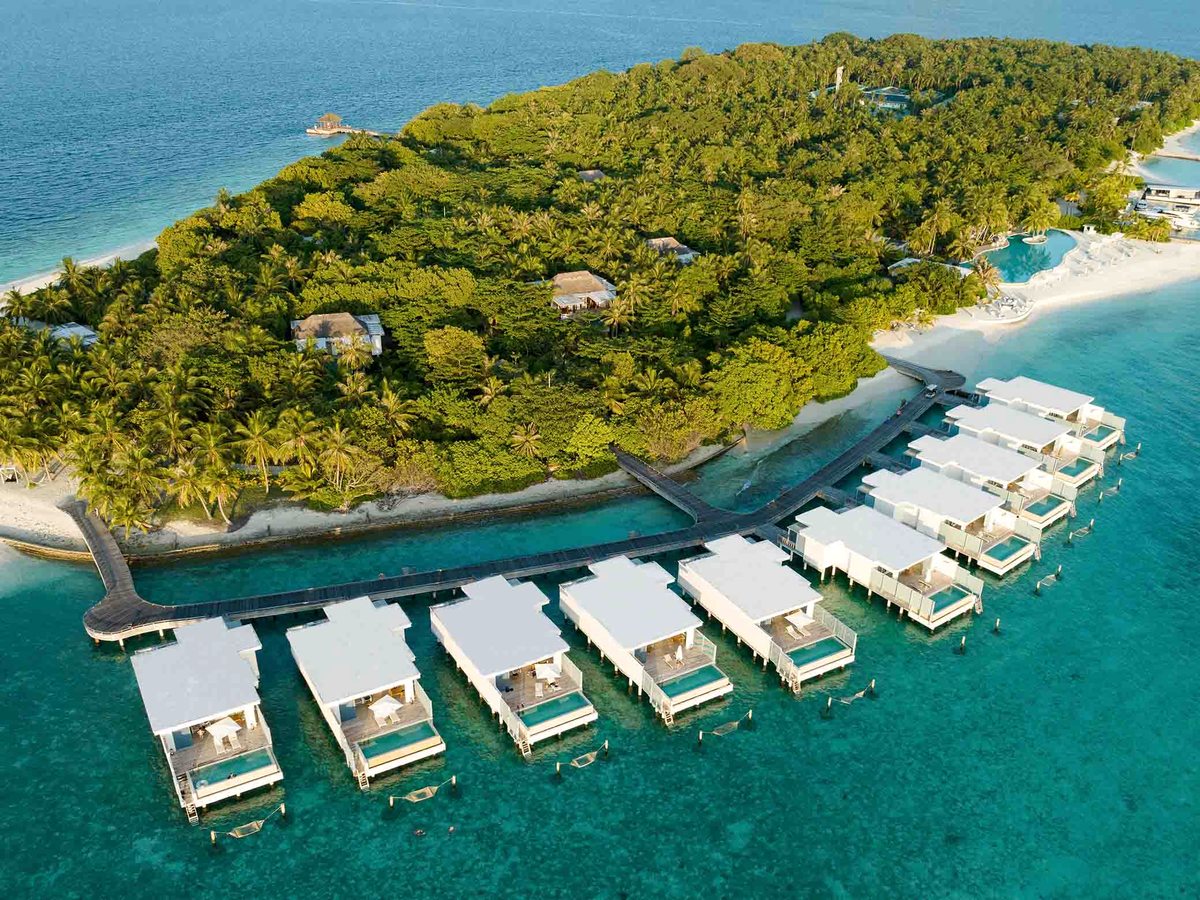
Useful links
- Amilla Maldives: the resort's own site for villas, dining, the seaplane transfer and the children's club.
- GOV.UK Maldives travel advice: entry rules and safety updates before you travel.
- The Maldives with little ones: our guide to a Maldives holiday with babies and toddlers.
Last updated 12 July 2026.