Anantara Dhigu Maldives
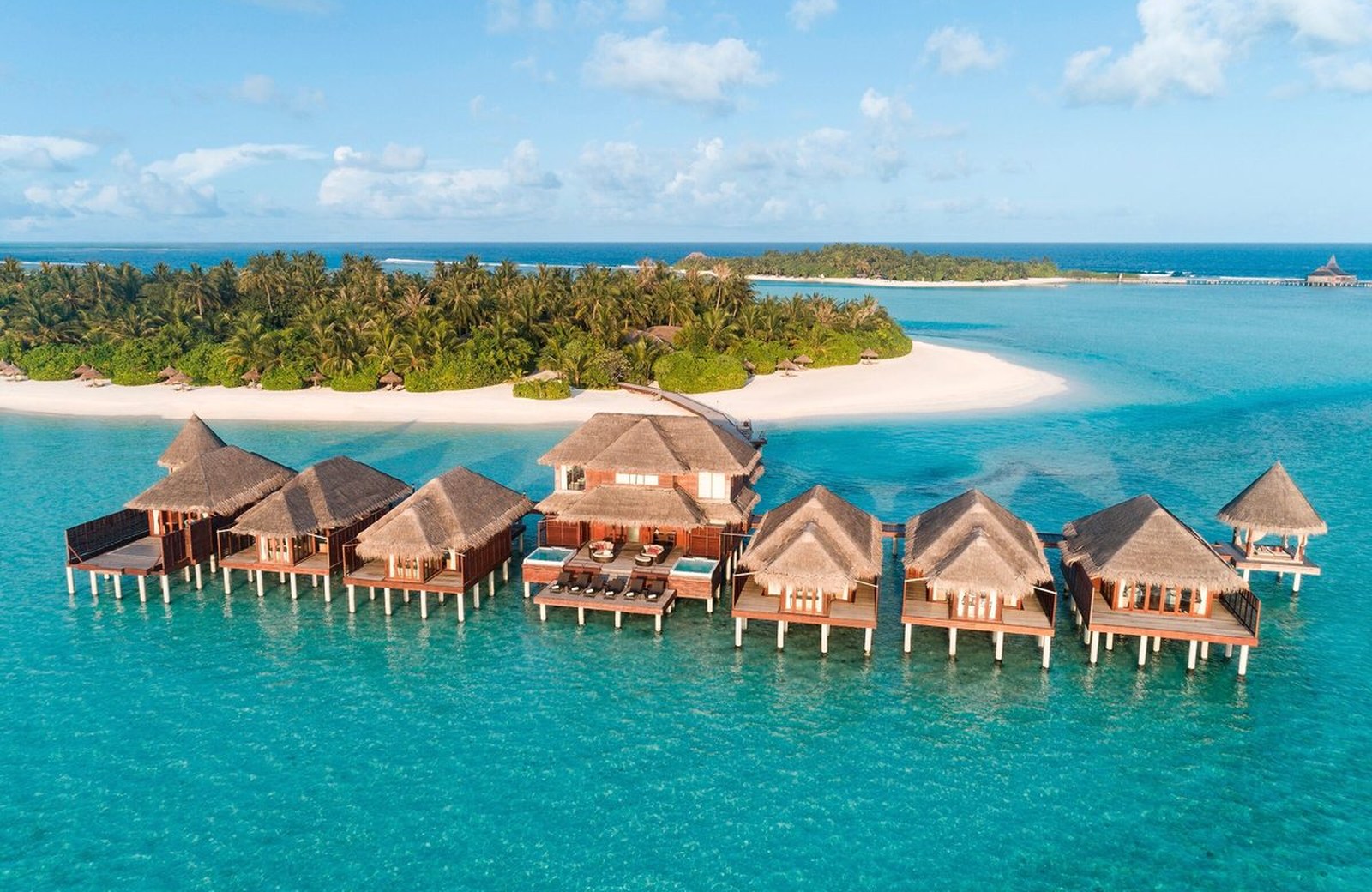
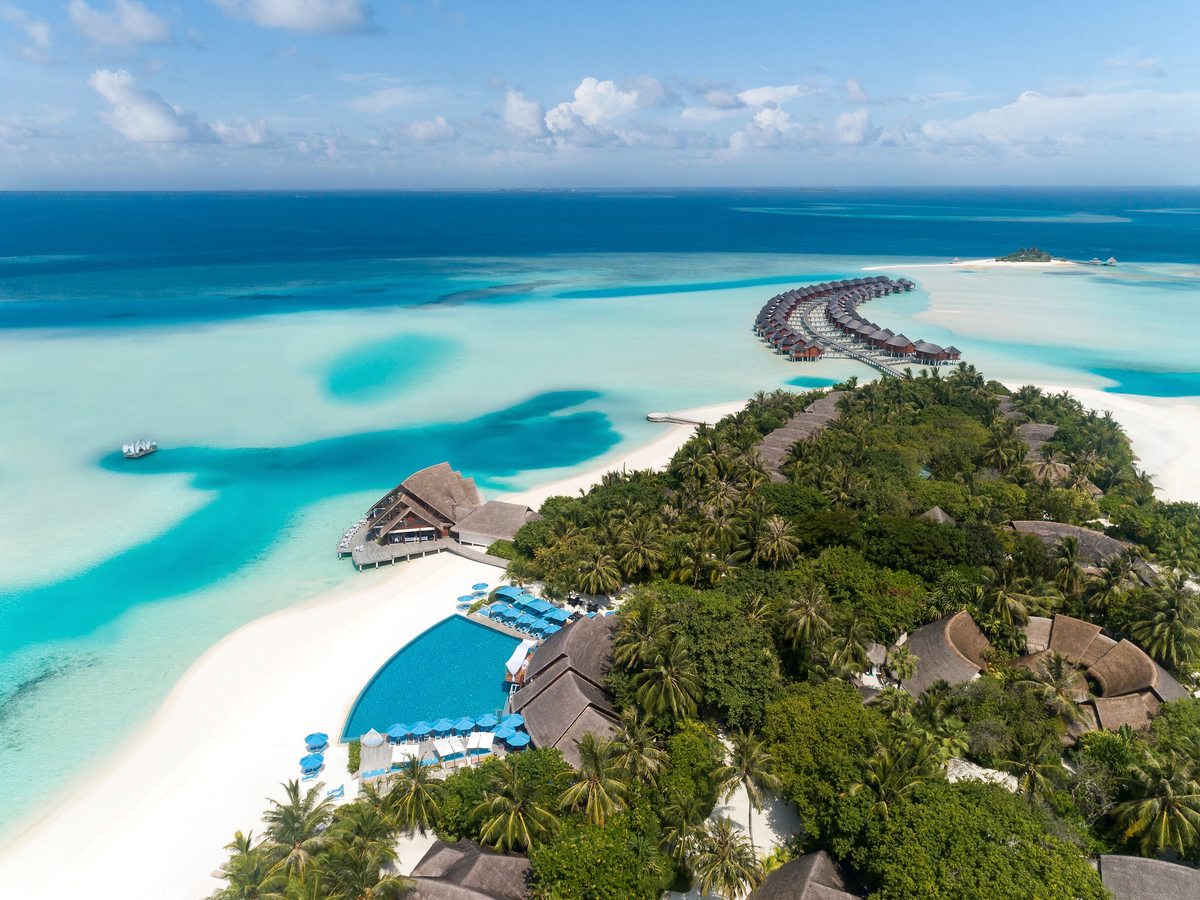
Anantara Dhigu is a five-star resort on its own island in the South Malé Atoll, the family member of three Anantara islands that share one huge, shallow lagoon in the Maldives. Beach and overwater villas run along both shores of a compact sandy island you can cycle end to end in under ten minutes. Families come for water warm and shallow enough that a toddler can stand a long way from shore, a speedboat transfer instead of a seaplane and a children's club in two boat-shaped buildings.
On this page
Is it worth it?
The quick read: who Dhigu suits, and the facts to skim first.
Anantara Dhigu is one of the easier Maldives resorts to reach with young children. A covered speedboat runs the 30 minutes from the airport at any hour, so there's no seaplane to catch in daylight and no infant to hold on a small aircraft. The lagoon it sits in is unusually wide and shallow, warm and calm, so young children can paddle and wade well out with their feet still on the sand. That huge lagoon comes in place of a house reef, so snorkelling means a boat trip rather than a swim from the sand. It suits a mix of ages best, a toddler on the beach and an older child in the club or out on a surf boat, and it's less of a fit if your children are under four and you were counting on a club they can join without you.
Best for
You want a toddler-safe lagoon and an easy speedboat transfer, and you'd use a dive centre, a surf break and a kids' club in the same week.
Maybe not for
Your children are under four and you're relying on a club they can join alone, or you want to snorkel a reef straight off the beach.
Best ages
Babies and toddlers for the lagoon and beach, older children once they can join the club alone from four, then strong through school age.
What stands out
One of the shallowest lagoons in the Maldives, a 30-minute speedboat instead of a seaplane, babysitting from three months and a doctor on site.
What to check
The kids' club age floor for a young child, and that there's no house reef for snorkelling from the beach.
Where is it?
Dhigufinolhu Island in the South Malé Atoll, 13 miles (21 km) south of Malé airport, reached by a 30-minute speedboat.
Quick facts for families
What the resort is like
Where it sits, how it's laid out and how you get around.
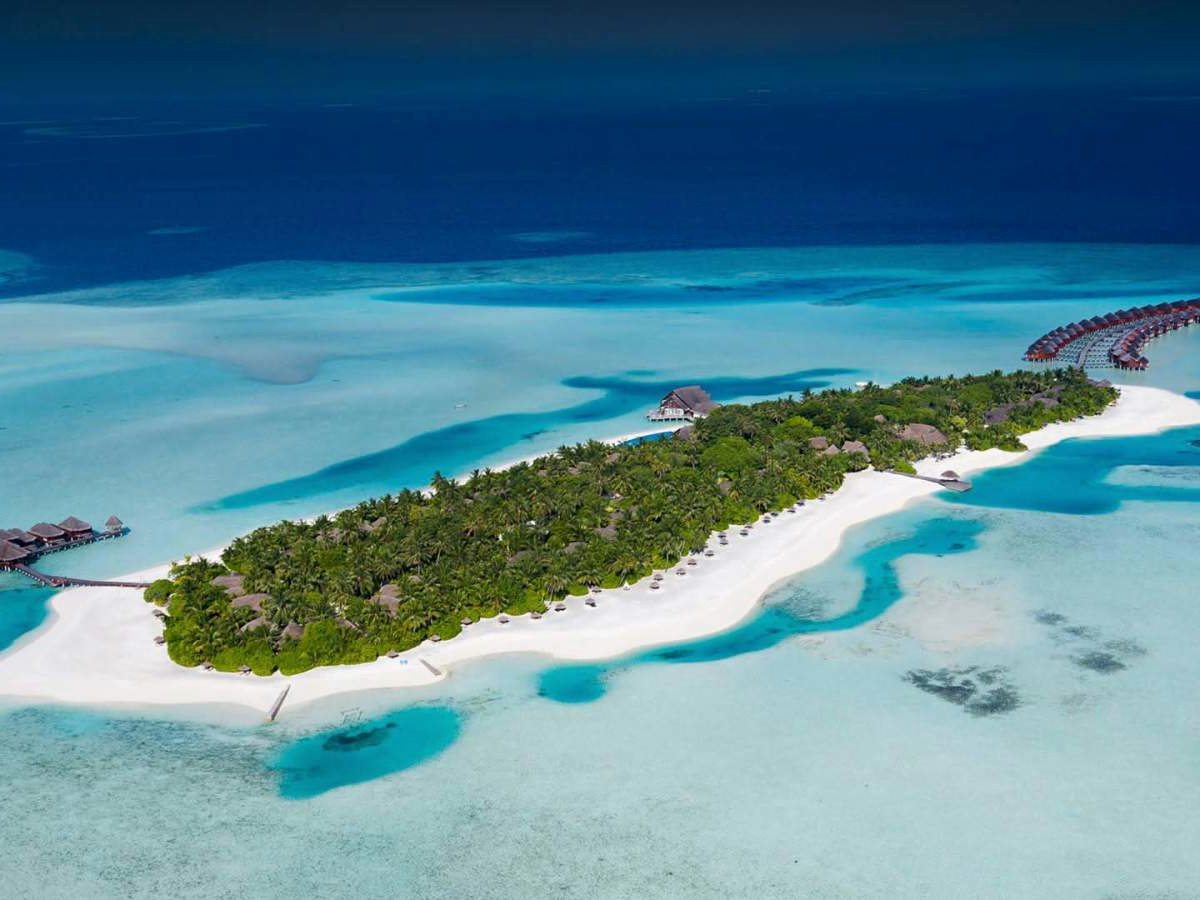
Anantara Dhigu opened in 2006 on Dhigufinolhu Island in the South Malé Atoll. It's run under the Anantara Hotels, Resorts & Spas brand, owned by Minor Hotels, and is the five-star family island of three Anantara resorts that share the same lagoon. Next door is Anantara Veli, which is adults-only, and Naladhu Private Island, a tiny ultra-private retreat; a fourth island in the lagoon, Gulhifushi, is the resort's own picnic and snorkelling spot. Guests staying on Dhigu can eat at the Veli and Naladhu restaurants as well as their own.
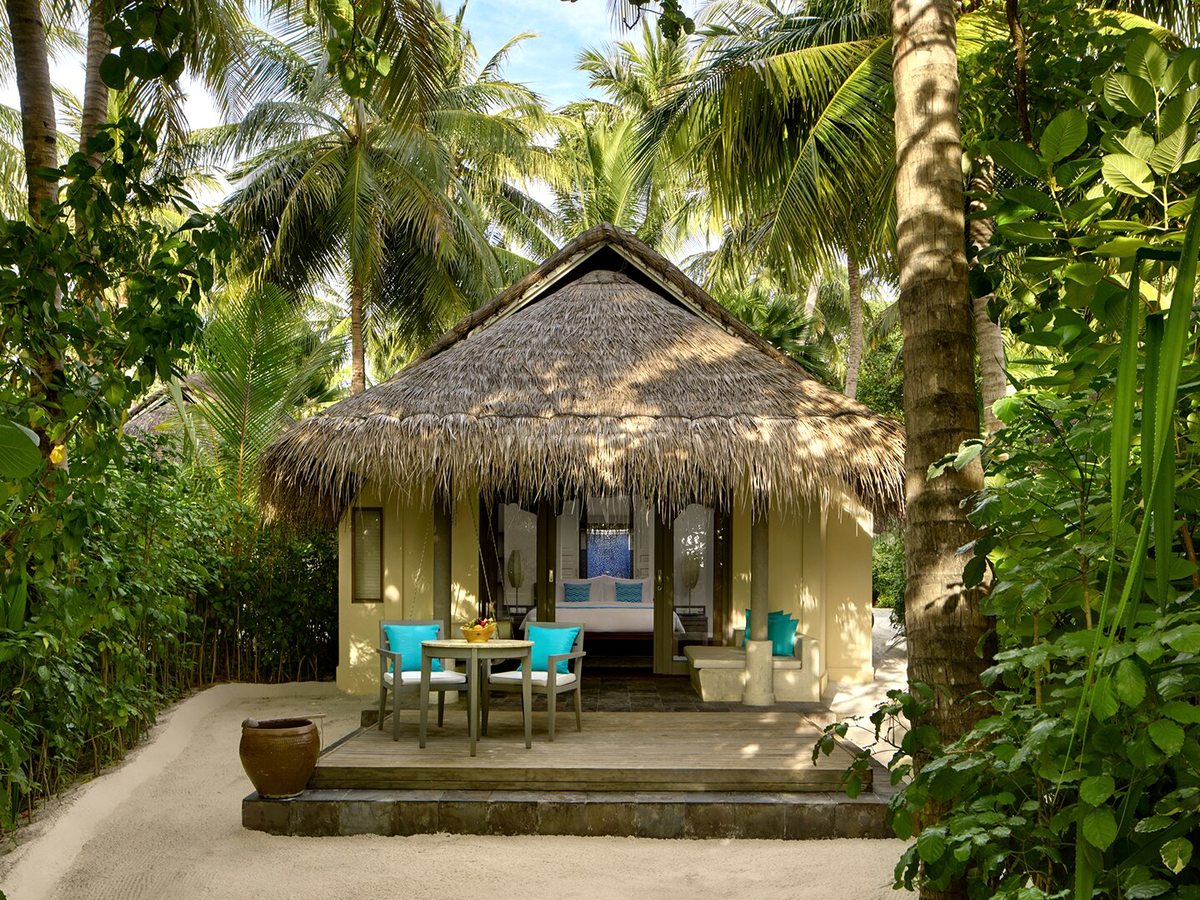
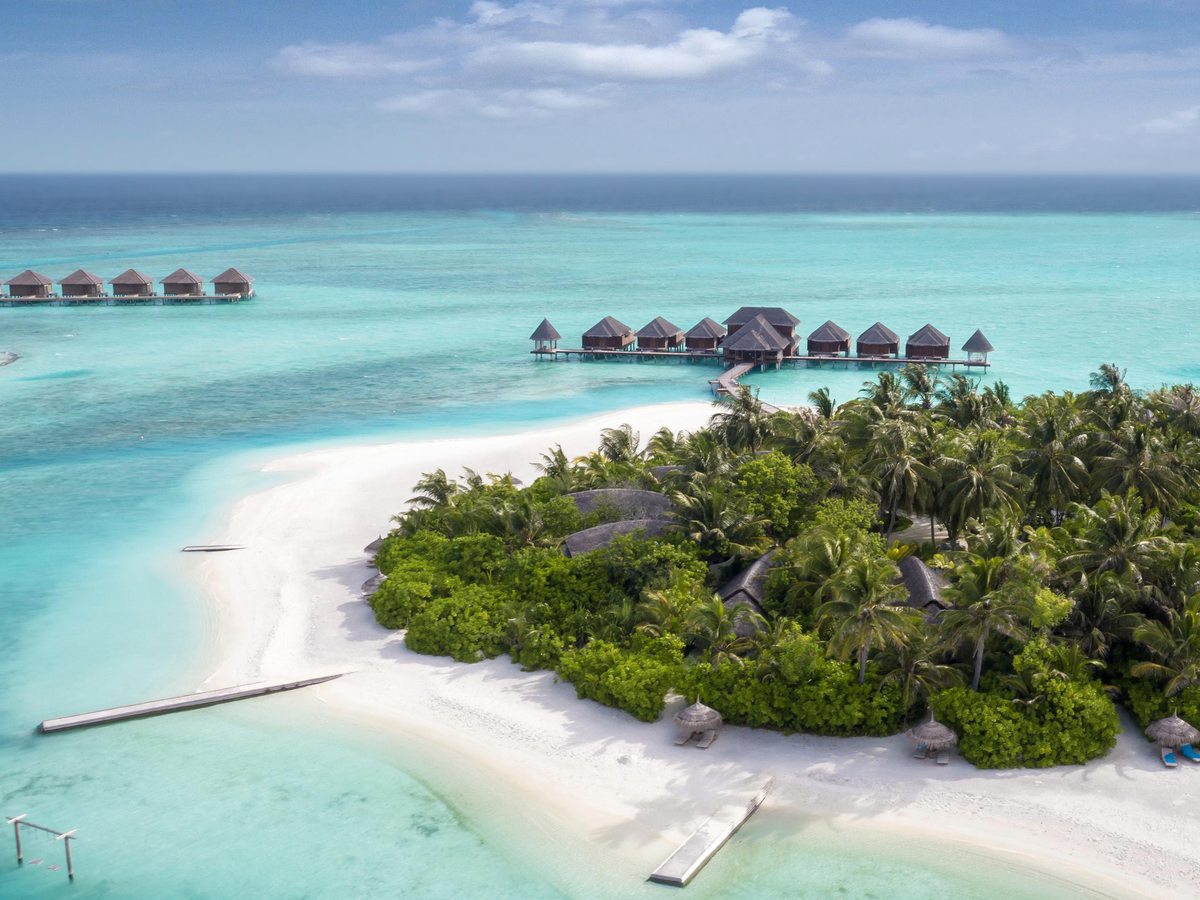
The island is compact, around 16 hectares and roughly 120m by 480m, flat and laced with soft sand paths, small enough to cycle end to end in under ten minutes. Every villa comes with bikes, and electric golf buggies, the little carts that shuttle guests around, run on call, starting with a tour of the island when you arrive. There are no steps or roads to cross, so a pushchair moves around easily and nothing is a long walk from anything else. Beach villas line both the sunrise and sunset shores, and overwater villas reach out over the lagoon at each end.
There are 110 villas in total. The resort doesn't have rooms set aside as wheelchair-accessible, but it can fit a wooden ramp at a villa entrance if you ask in advance. For the country as a whole, its atolls and its seasons, see our Maldives guide.
The villas
Every category with its official size, and which ones suit a family.
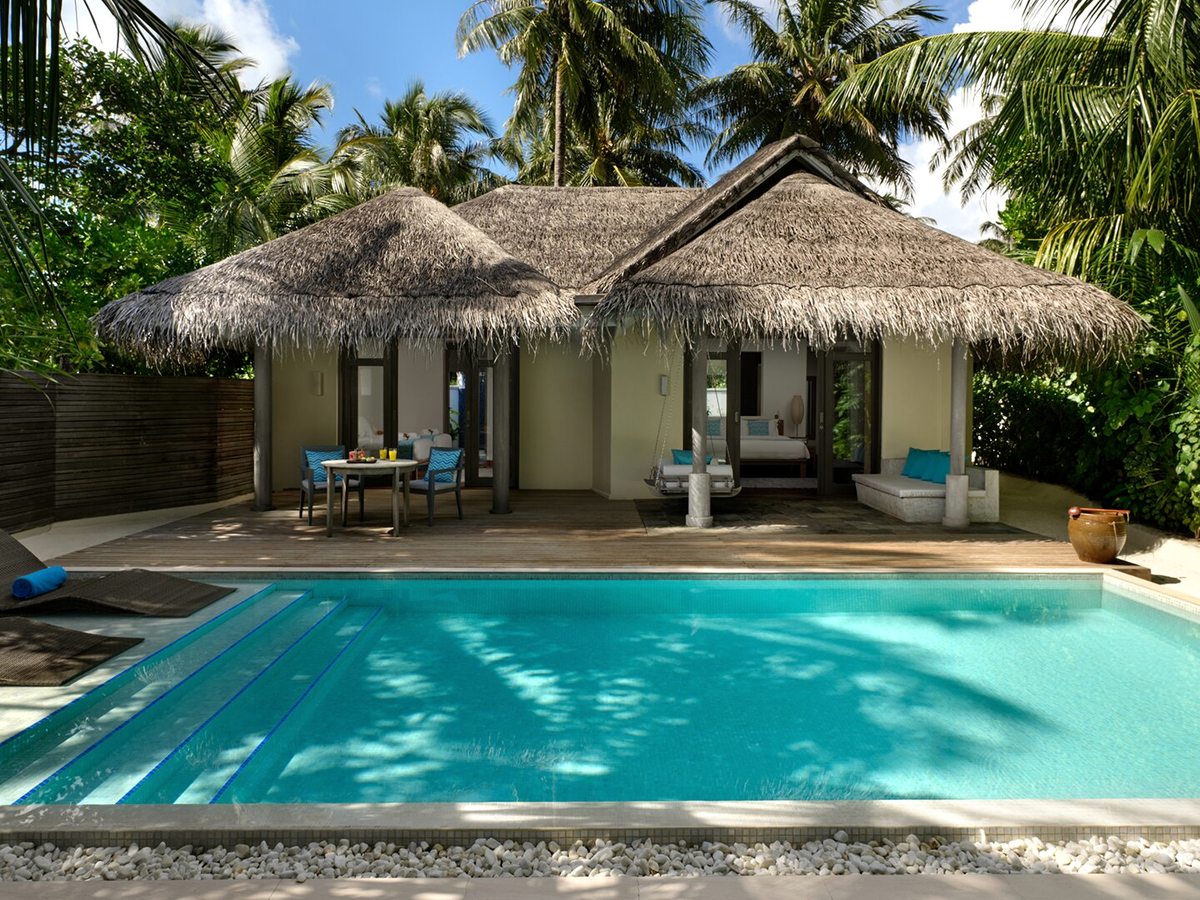
There are ten villa categories, on the beach and over the water. The table below carries the official sizes, how many units of each there are and how many each sleeps; the guidance after it is which suit a family with a baby or toddler, and why.
| Villa | Size | Units | Sleeps | Pool |
|---|---|---|---|---|
| Sunrise Beach Villa | 125 m² | 29 | 2 adults + 2 children | No pool |
| Sunset Beach Villa | 125 m² | 15 | 2 adults + 2 children | No pool |
| Sunrise Beach Pool Villa | Around 150–180 m² | 7 | 2 adults + 2 children | 5.8m private pool |
| Sunset Beach Pool Villa | Around 150–180 m² | 16 | 2 adults + 2 children | 5.8m private pool |
| Two Bedroom Family Beach Pool Villa | 237 m² | 3 | 4 adults + 2 children | 9m private pool |
| Two Bedroom Anantara Beach Pool Villa | 321 m² | 5 | 4 adults + 2 children | Private pool |
| Sunrise Over Water Suite | 119 m² | 19 | 2 adults + 2 children | No pool |
| Sunset Over Water Suite | 119 m² | 11 | 2 adults + 2 children | No pool |
| Sunset Over Water Pool Suite | 129 m² | 6 | 2 adults + 2 children | Private infinity pool |
| Deluxe Sunset Over Water Pool Villa | 129 m² | 4 | 2 adults + 2 children | Private infinity pool |
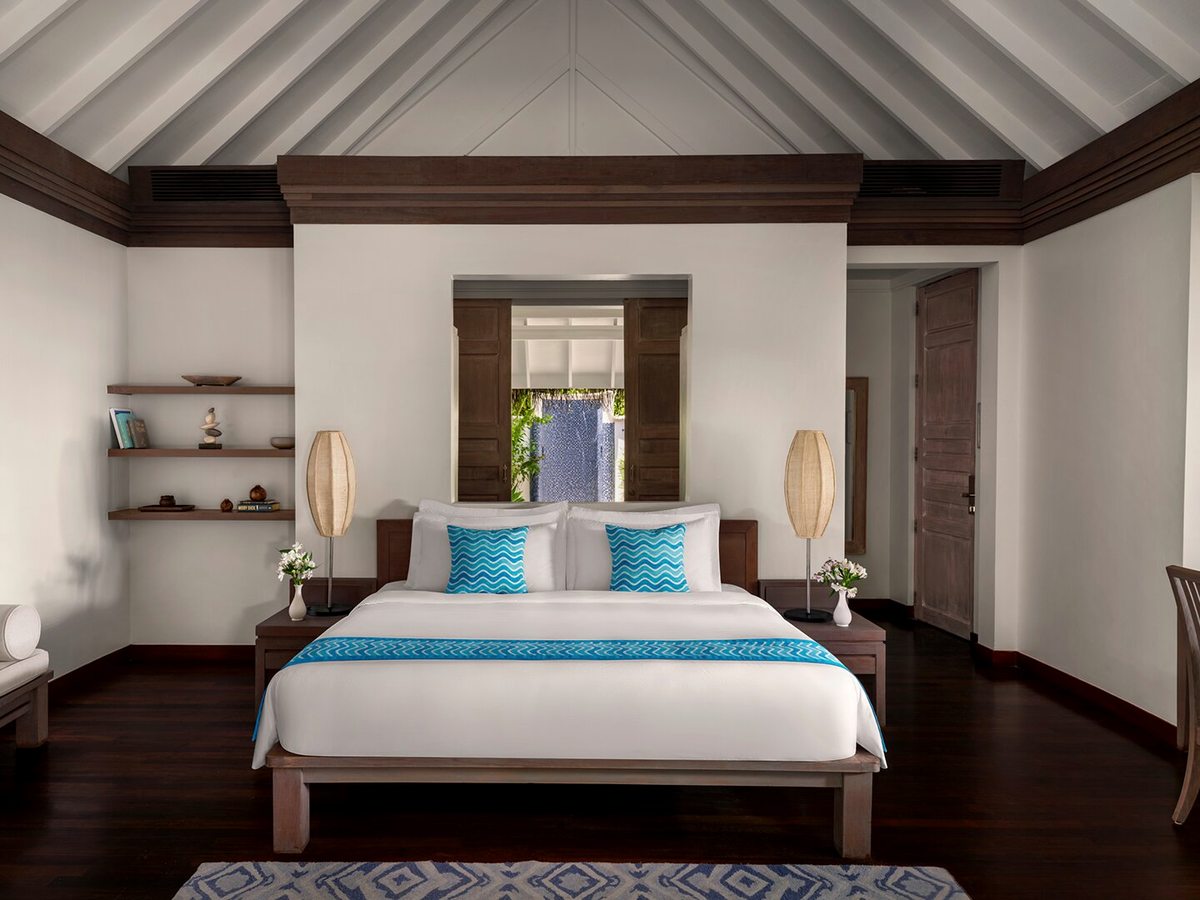
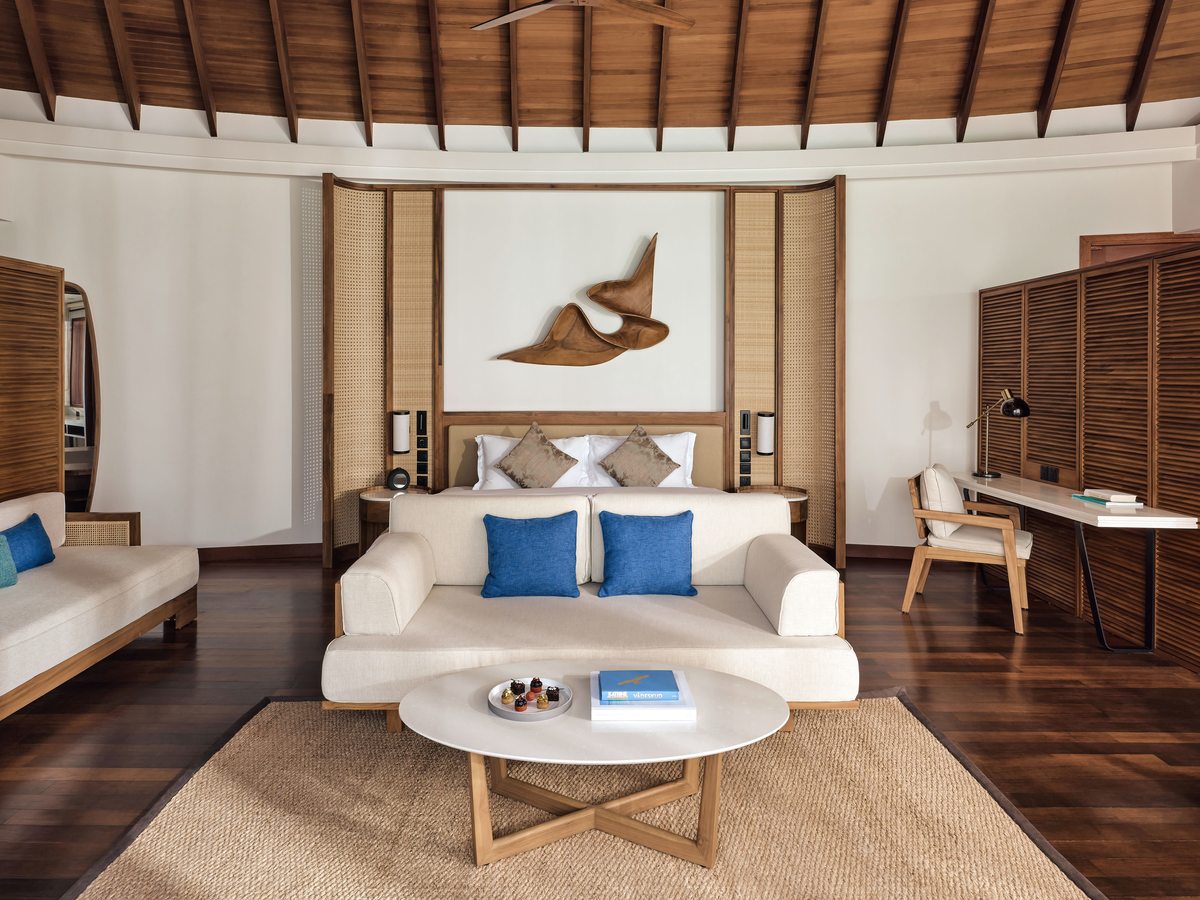
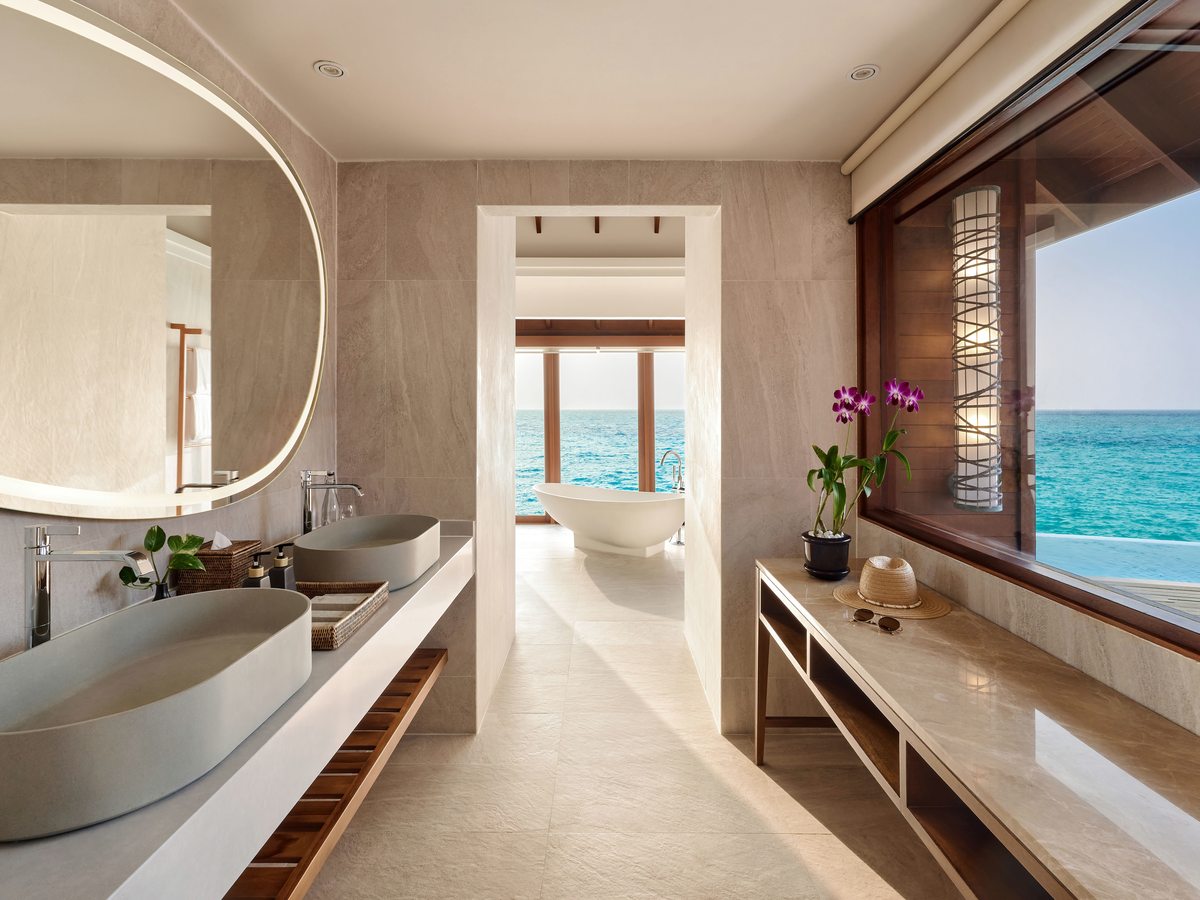
Every villa has a king bed and a day bed, a terrace with sun loungers, air conditioning, a flat-screen TV, a minibar, a Nespresso machine and a wine fridge, yoga mats, life jackets, beach footwear, bikes and a separate bath and shower with robes and slippers; WiFi is included. The villas with a private pool, both beach pool categories, both two-bedroom villas and the two overwater pool categories, also come with a Villa Host, a member of staff who handles your bookings and requests through the stay.
For a family, the layout matters more than the view. The one villa built around children is the Two Bedroom Family Beach Pool Villa at 237 m², 145 m² indoors plus a 92 m² sundeck: a king room and a separate twin room off a shared garden, a 9m pool big enough to actually swim in, and sand off the terrace with no step down to water. There are only three of them, so they go early. The larger Two Bedroom Anantara Beach Pool Villa at 321 m² has two king rooms and its own pool, and takes up to six adults, or four adults and two children, which suits two couples or grandparents coming along.
Every other category, the beach villas, the beach pool villas and all the overwater suites and pool suites, takes a maximum of two adults and two children, or three adults. So a couple with two children fits the cheaper one-bedroom villas, but a larger group needs one of the eight two-bedroom villas. The beach villas can add an extra bed.
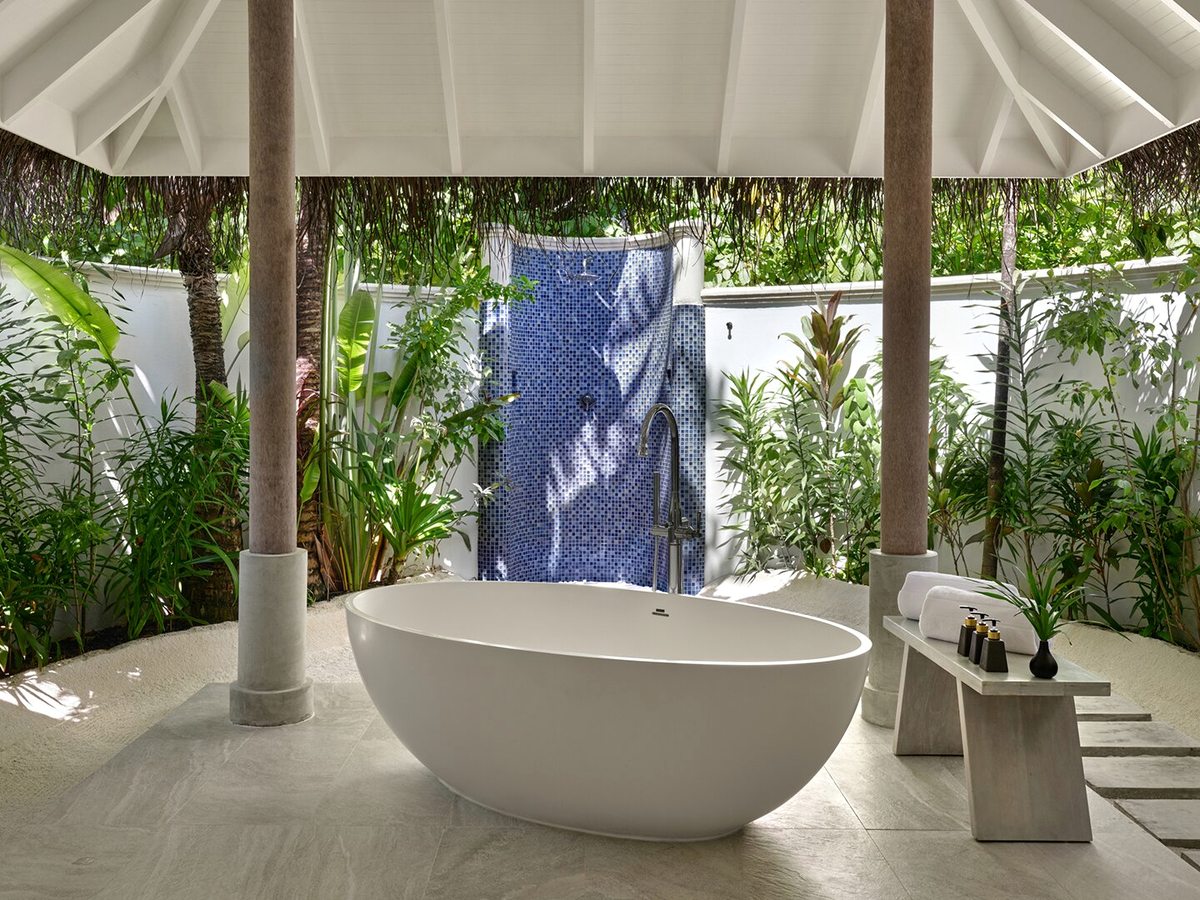
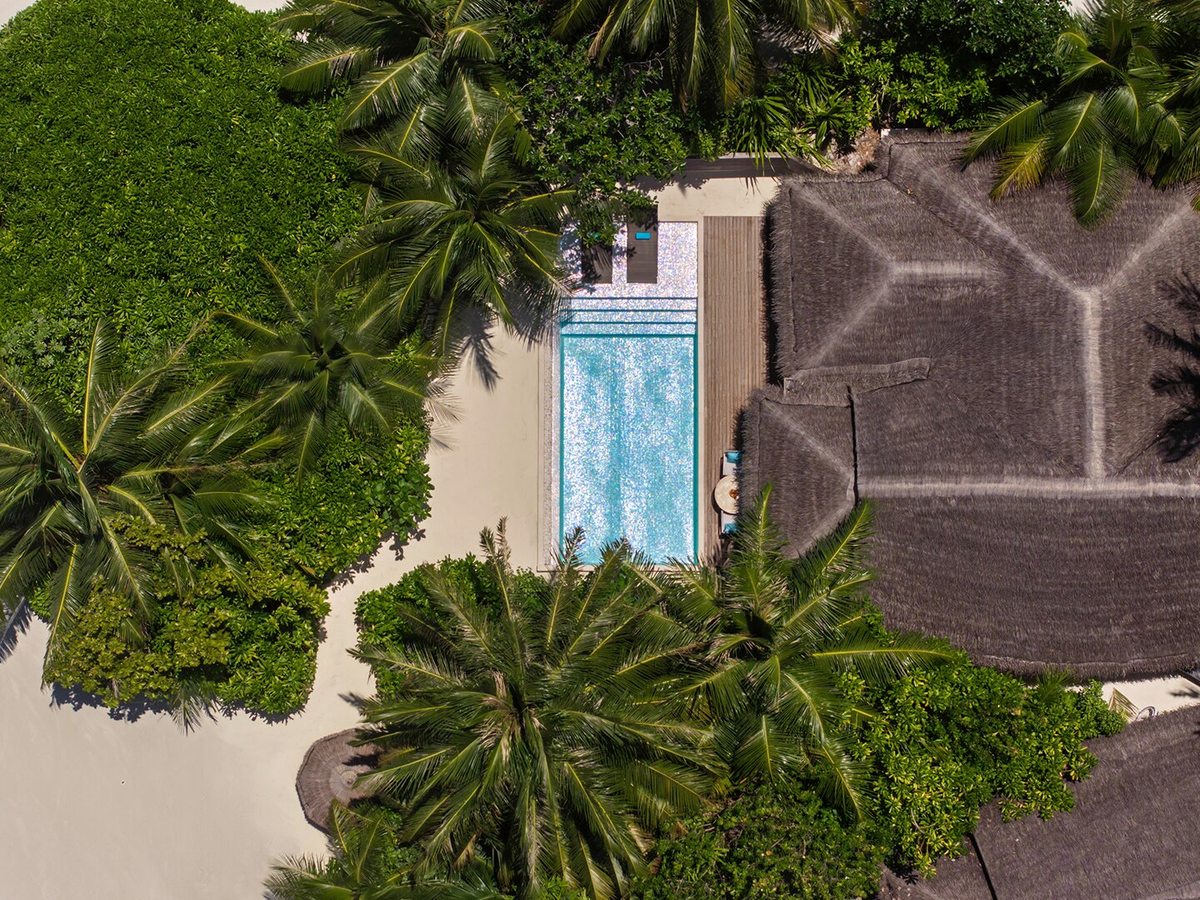
The cheapest way in is a Sunrise or Sunset Beach Villa at 125 m², with direct beach access and the lagoon a few steps away, but no private pool. The Sunrise villas have a terrazzo outdoor bathtub under a thatched roof; the Sunset villas have their own private garden deck. A Beach Pool Villa, around 150 to 180 m², adds a 5.8m private pool and the Villa Host. These beach categories come with a king bed and a day bed rather than a cot as standard, so if you're travelling with a baby, ask for a cot in advance.
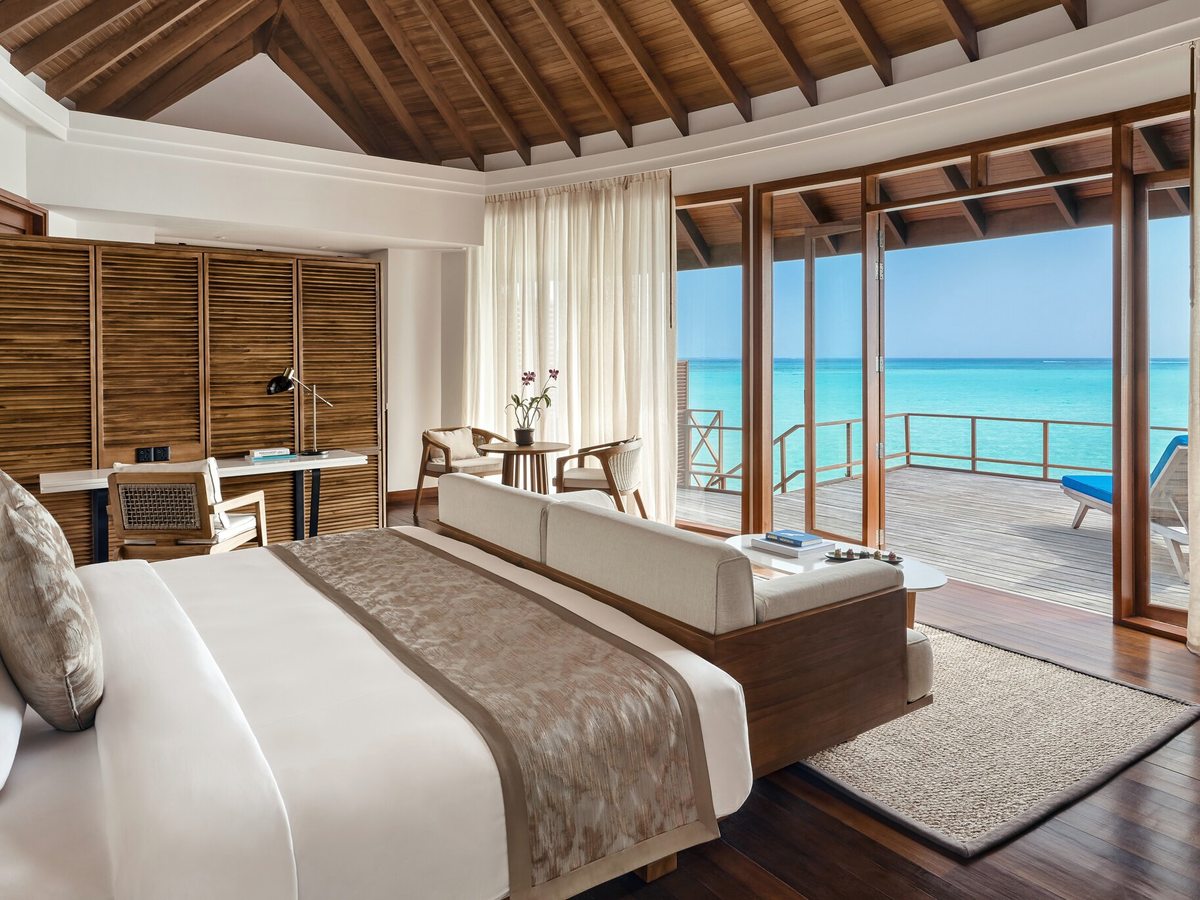
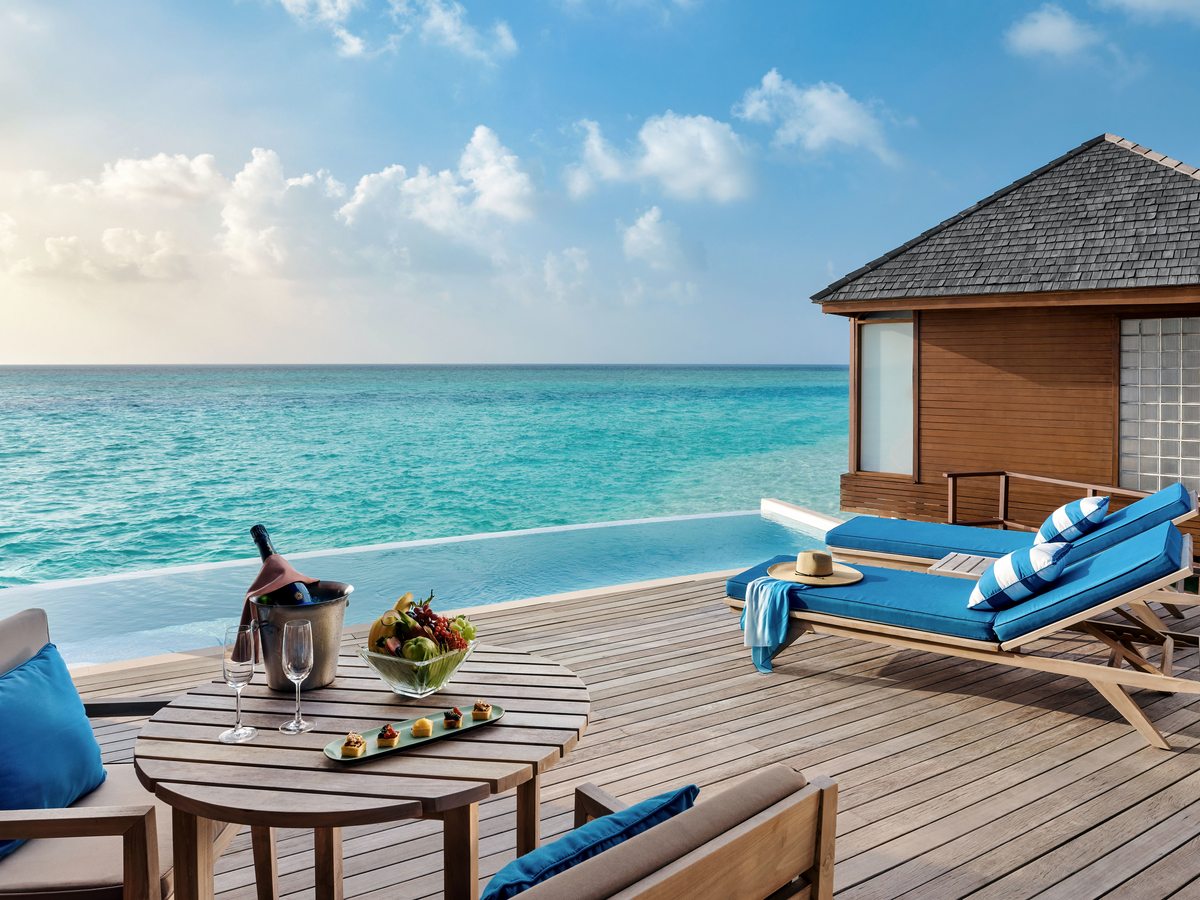
The overwater suites and villas are the quieter, more grown-up choice. The Sunrise Over Water Suite has glass floor panels in the bathroom so you can watch the lagoon below, and both it and the Sunset Over Water Suite have steps down into the water from the deck; both are 119 m². The Sunset Over Water Pool Suite adds a private infinity pool, and the Deluxe Sunset Over Water Pool Villa, new in June 2024 as part of a renovation styled 'Sailboat Serenity', has the largest pools of any overwater category and its own overwater hammocks; both pool categories are 129 m². With a walking baby or toddler, the deck needs care: the step down into the lagoon has limited barriers and means constant supervision. For that reason most families with little ones are better on the beach, where there's no drop to the water.
Every restaurant and bar
Six places to eat on Dhigu, more on Veli next door, and how the board plans work.
Staying on Dhigu, you can eat across two islands. Your board plan covers the restaurants on Dhigu and, through the dine-around arrangement, the restaurants on adults-only Anantara Veli next door, though not its adult bars. Board runs from bed and breakfast through half board, full board and all-inclusive, with an all-inclusive option that keeps the drinks non-alcoholic. Children twelve and under eat free when they're with the family, though the exact terms vary by board plan, so check when you book.
Fushi Café is the main restaurant on Dhigu, a thatched pavilion facing the lagoon that seats around 150. It runs the buffet breakfast, with live cooking stations, and the themed dinner buffets, and it's the everyday family room: high chairs, no booking and food out whenever a toddler is hungry. Breakfast is roughly 7 to 10:30, dinner from about 6.
Sea.Fire.Salt is the overwater grill, seating around 80, à la carte, for seafood, reef fish, lobster and aged beef, with a wine list that won a 2018 World's Best Wine Lists Award. It's an evening booking, best made ahead, rather than a children's venue, though every restaurant has high chairs and a children's menu.
Aqua is the casual Italian bar and restaurant by the main pool, seating around 90, with drinks from 10am to midnight and lunch and dinner served to the loungers and the beach. It's the most relaxed spot for a family lunch. Terrazzo, upstairs and dinner only, is the smarter Italian, with lagoon views and a longer wine list.
The Yellow Fin Club is a poolside cocktail bar that opened in 2024. It's adults-only from 5pm, so it's an evening spot for parents rather than the children.
Gulhifushi is the resort's own picnic island, reached by kayak, paddleboard or a pontoon boat, with a Tiki Bar seating around 160 for burgers, grilled fish and salads, and a natural ocean pool that shifts with the tide.
Over on Veli, the dine-around brings in more restaurants. Baan Huraa, a Thai kitchen in a teak house on stilts over the lagoon, seats 60 and is regularly called one of the best Thai restaurants in the Maldives. It's dinner only, from about 6:30 to 10, and children are welcome at that dinner service. Origami is Japanese, with sushi, robatayaki skewers and a teppanyaki counter where the chef cooks at the table, which tends to go down well with children; it seats 38 indoors and 40 more on the terrace, dinner only, and the teppanyaki slots need booking ahead. Cumin is the South Asian one, Indian and Sri Lankan spicing and Maldivian tuna curry, in a beach setting that seats 70, with dinner from about 6:30 to 10. Veli also has a seafood buffet, 73 Degrees.
Beyond the restaurants, the Spice Spoons cooking school runs private Maldivian or Thai sessions with a chef, and Dining by Design sets up private meals on the beach or a sandbank for an extra charge. High chairs and children's menus are on hand across the restaurants. One consistent note from guests is that alcohol is expensive, even by Maldives five-star standards, so if you drink, factor it in.
Where children can and can't go on Veli
Dhigu guests can eat at the Veli restaurants at dinner, but Veli is an adults-only island, so children can't use its beach, pools or other facilities, and the Dhoni Bar there is adults-only too. On Dhigu itself, the only adults-only spot is the Yellow Fin Club after 5pm.
Pools and water features
The main pool, the private villa pools, the beach and the lagoon that stands in for a reef.
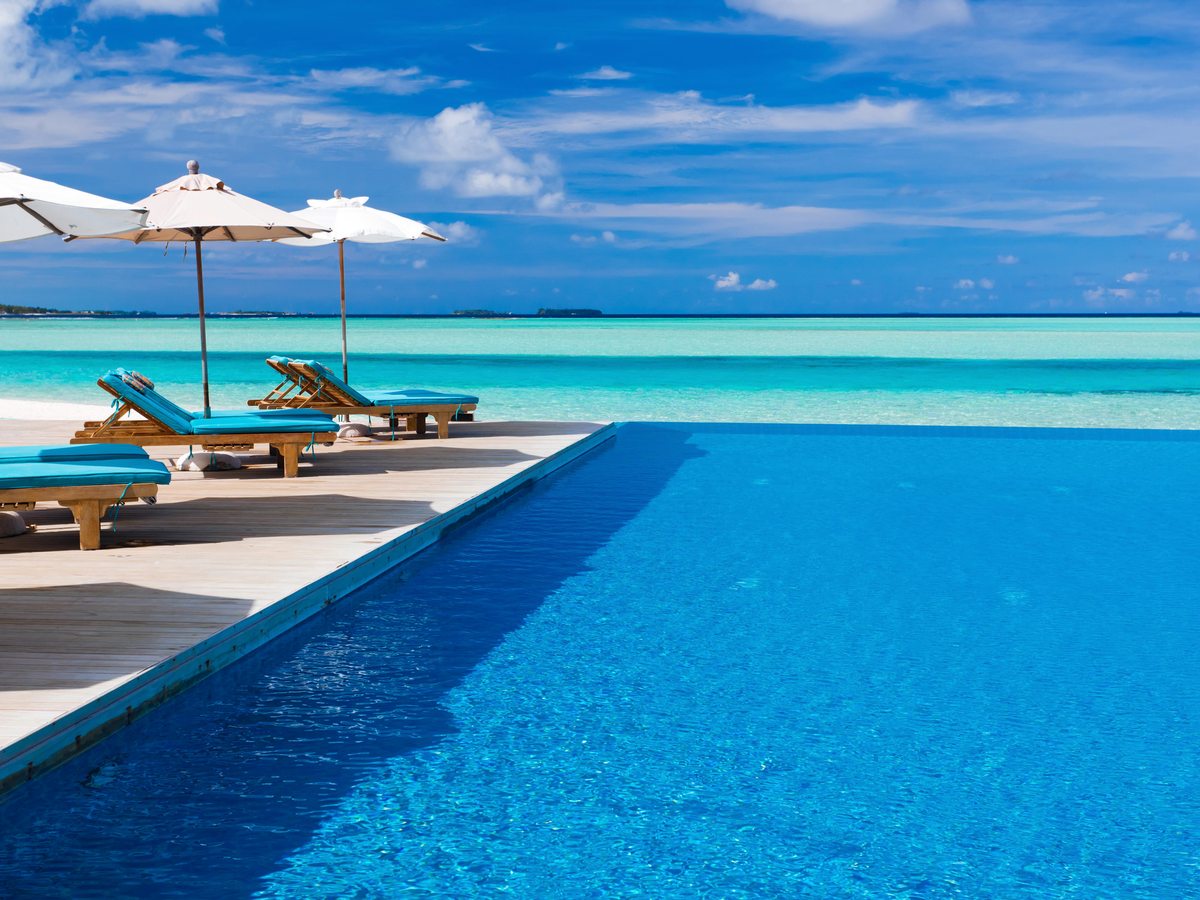
The main pool is a large beachfront infinity pool on the sunset side, next to the Aqua bar and restaurant, with drinks brought to the loungers. It's for all ages. There's no separate children's pool anywhere on the resort, including at the kids' club, so for swimming with little ones it's the main pool, a private villa pool or the lagoon. The private pools run from the 5.8m pools in the beach pool villas to the 9m pool in the Two Bedroom Family Villa and the infinity pools of the overwater categories; none is heated, but the water stays warm all year. The overwater spa has hot and cold plunge pools on its relaxation deck, for adults using the spa.
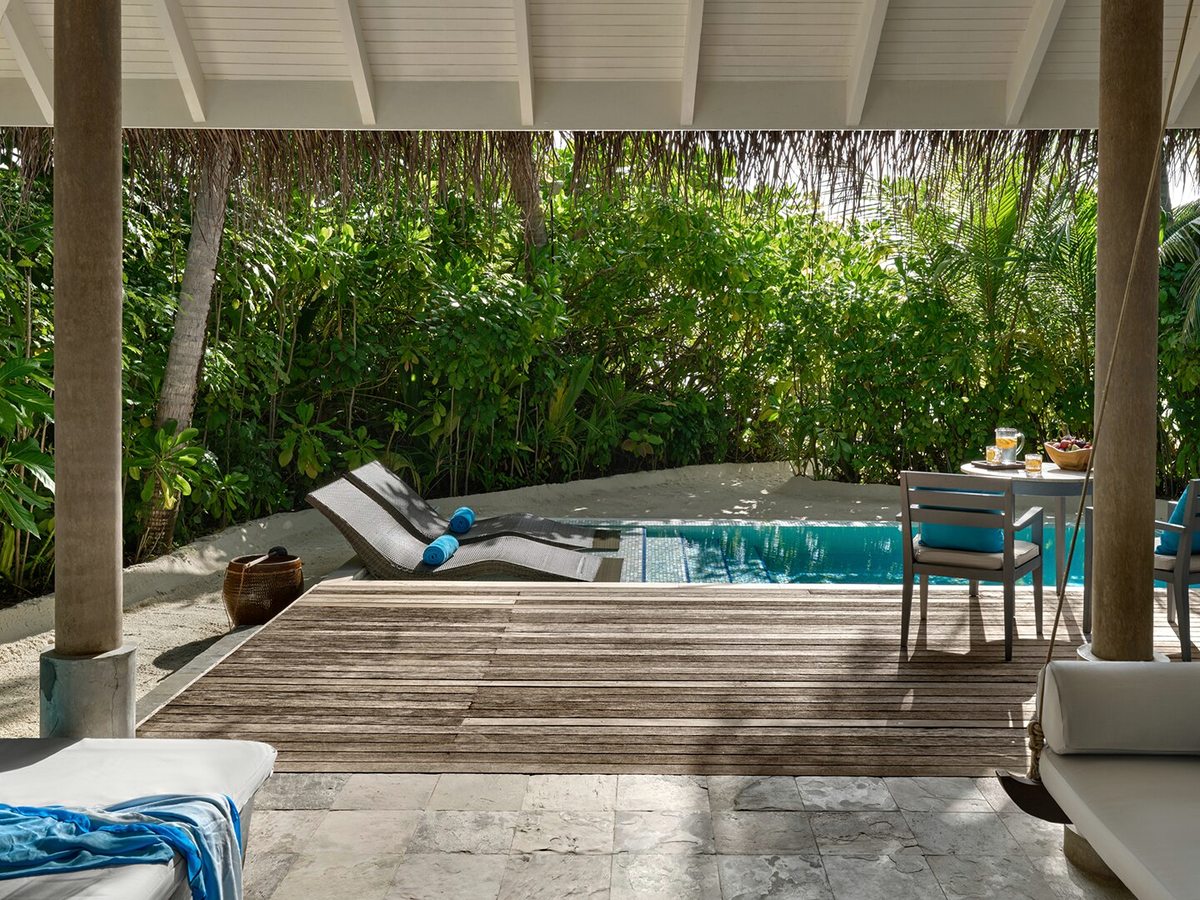
The beach, the lagoon and no house reef
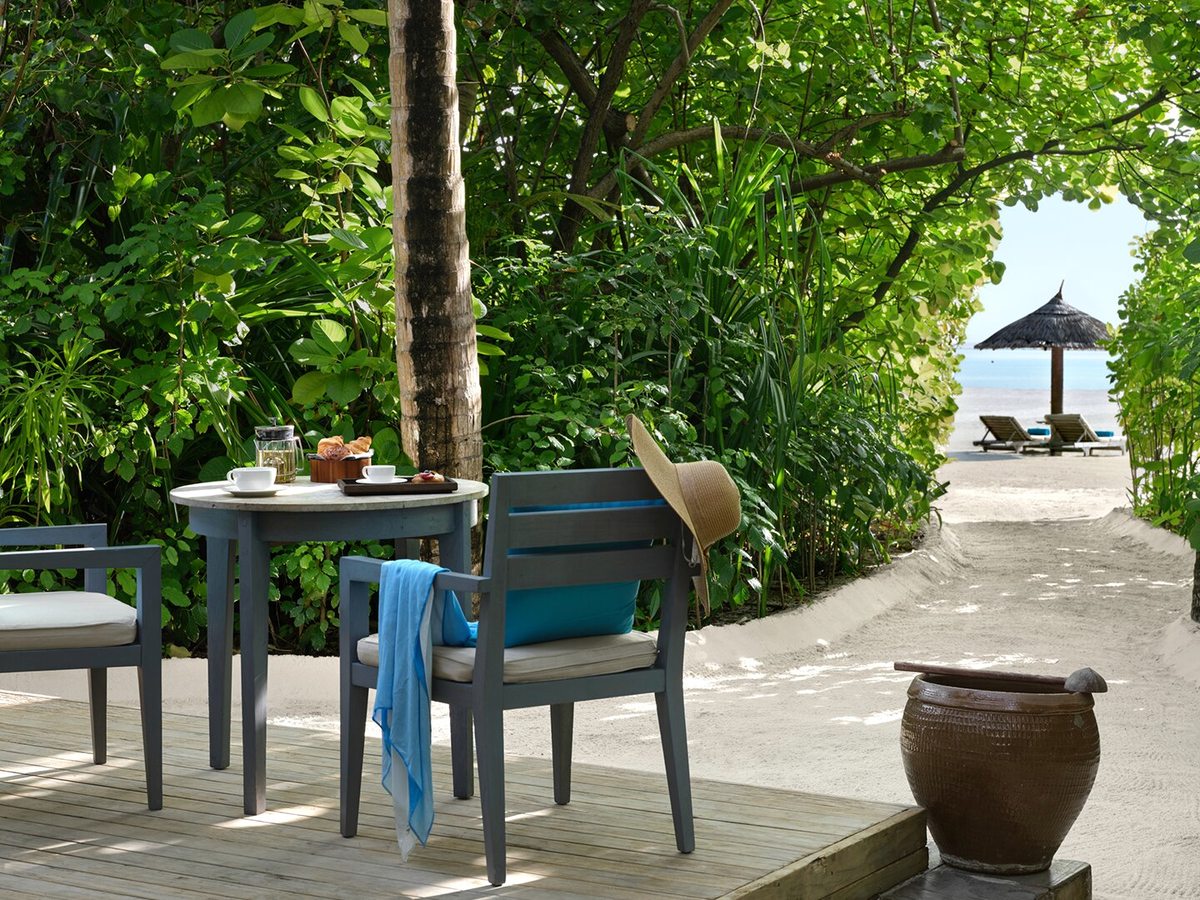
Both shores of the island are white powder sand, the fine, soft kind, with clear turquoise water and a very gentle slope, so it stays shallow a long way out. Sunbeds line the beach on both sides. There's no road, cliff or steep path to reach it: the sand is simply there off the villas and the paths. The Maldives doesn't take part in the Blue Flag scheme, so the beach carries no Blue Flag rating, the same as every other resort in the country.
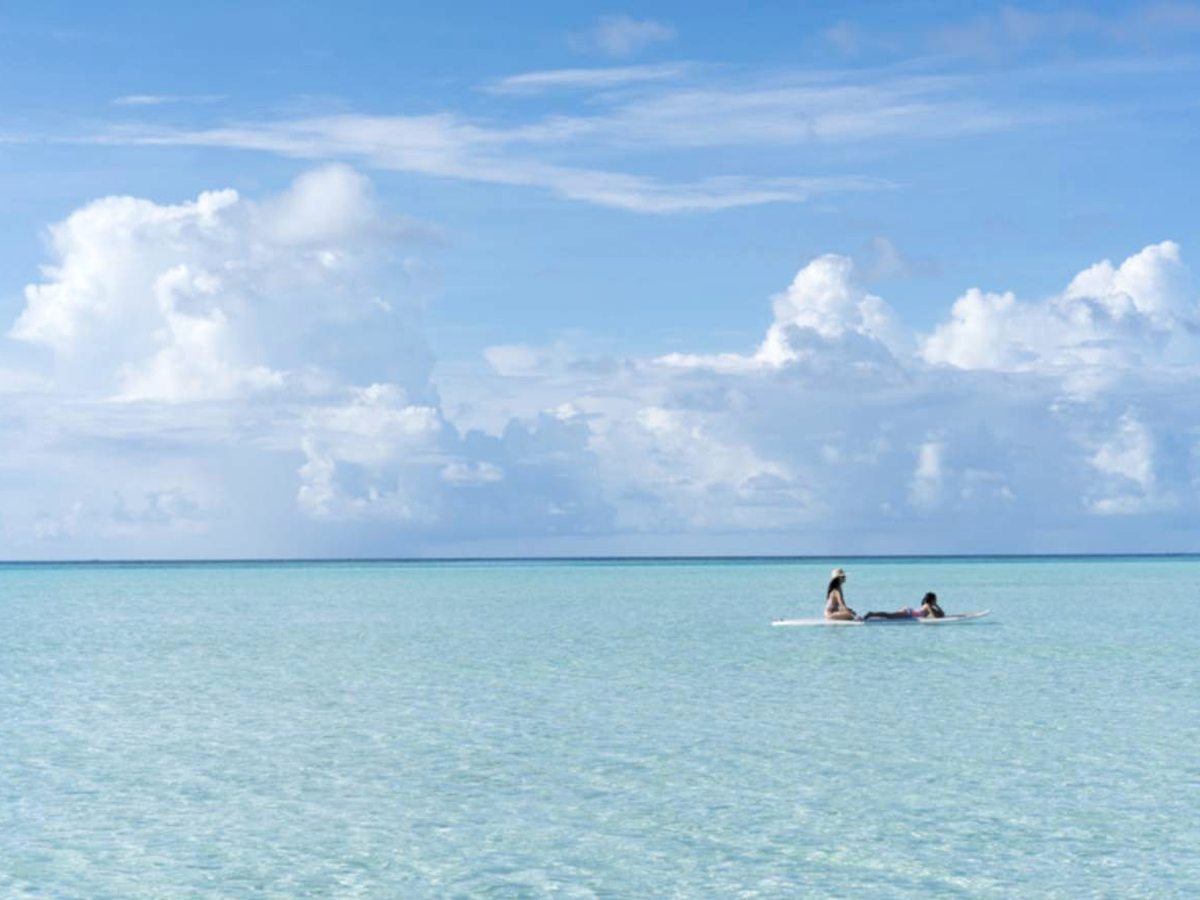
The lagoon is the resort's headline feature for families, and one of the largest and shallowest in the Maldives. Guests describe walking out for twenty minutes and still standing with their head above water, warm, calm and clear over a sandy bottom. For a toddler learning to paddle, it's about as safe and easy as Maldives swimming gets, and its width is ideal for windsurfing, paddleboarding and kitesurfing.
The one thing that lagoon replaces is a house reef. There's no reef fringing the island to snorkel from the beach, so snorkelling means a boat trip out to the reefs and dive sites nearby, which is charged. It follows from how the island sits in such a big lagoon rather than being a fault, but if shore snorkelling matters to you, that's worth weighing before you book.
Babies and toddlers
The kids' club, babysitting, the doctor and what to bring.
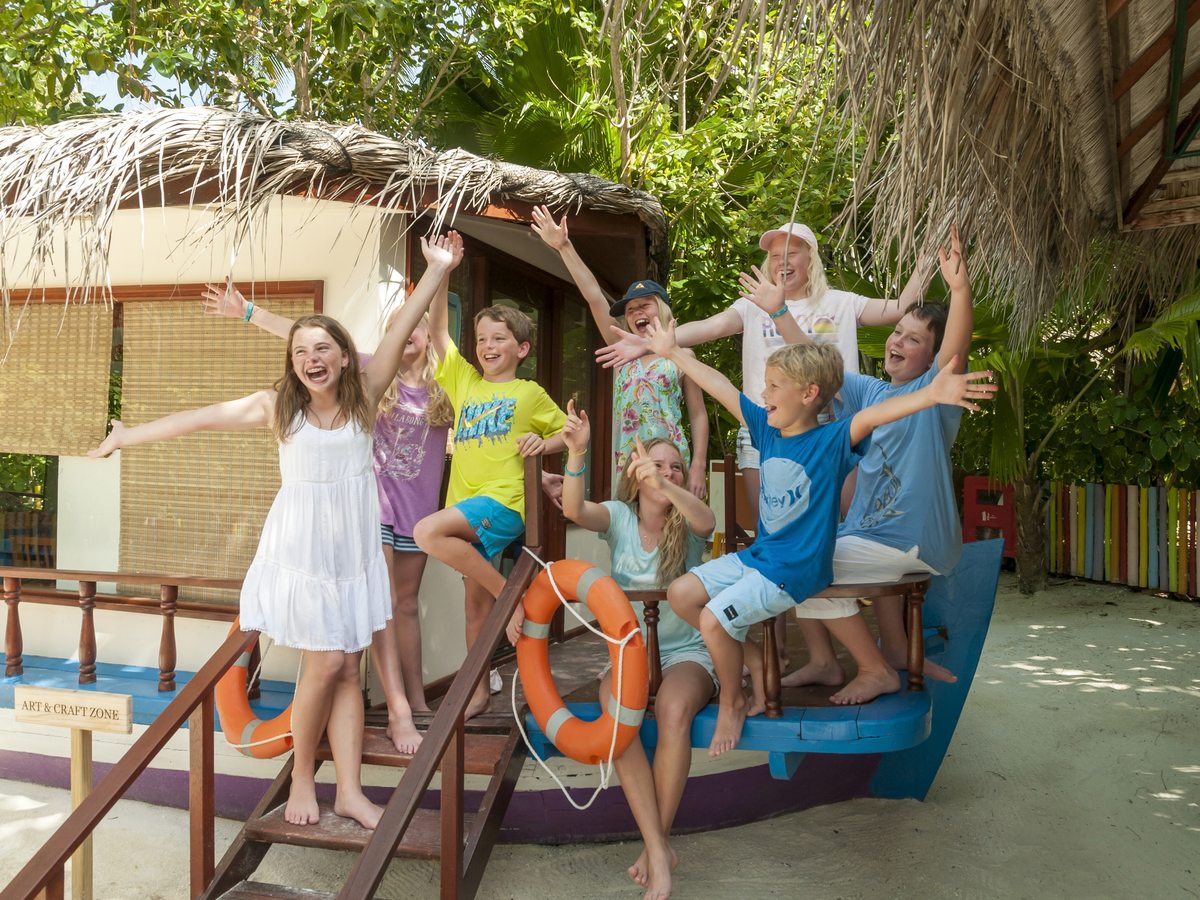
The Dhoni Kids' Club is built as two traditional Maldivian fishing boats, with a climbing wall, a treehouse, a playground and sandy play areas around them, and it's staffed by qualified childcare workers. Children can use it on their own from age four to eleven, which is the club's own stated range, and there's no minimum age to come along with a parent or a babysitter, so babies and toddlers are welcome too. It's free apart from the cooking classes. Children arrive to a friendship bracelet and leave with a little hermit-crab toy.
It's open 9 to 7 on Monday, Wednesday, Friday and Sunday, and 9 to 9 on Tuesday, Thursday and Saturday, with a quiet, unstructured stretch in the early afternoon rather than a full lunchtime close. The programme fills the day, morning and afternoon activities from crafts and science to marine-life sessions and beach games, and evening events until nine such as a kids' cinema, a disco, stargazing, camping and karaoke on set nights. It all depends a little on the weather and how many children are there. The paid cooking classes, sushi, pizza, spring rolls and cupcakes, run at lunchtime and need at least two children and a booking ahead.
Older children can add watersports through the Aquafanatics centre, charged separately: a junior waterski trainer from age three, a Bubble Maker pool dive at eight to nine and Discover Scuba from ten, along with a Seabob and kids' waterski and knee-board rides.
Babysitting is available from three months old, with a day's notice, one sitter to a maximum of two children. It's charged by the hour and the rate varies with the time of night, so confirm the current rates with the resort when you book. There's a doctor on the island around the clock, with a nurse as well; the nearest hospital is in Malé, about 30 minutes away by speedboat.
A lot of the baby kit is on request rather than guaranteed. Cots are available on request rather than provided as standard, and it's worth arranging one in advance, especially in the one-bedroom villas without a separate twin room. Kids' bathrobes and slippers come as standard, but a pram or buggy doesn't, so bring your own if you'll need one; the island is compact and flat, so a normal travel buggy is easy to manage on the sand paths. If you'll need a bottle warmer or a steriliser, bring your own or ask the resort in advance; the island has only a small boutique for essentials and souvenirs. High chairs and children's menus are in the restaurants.
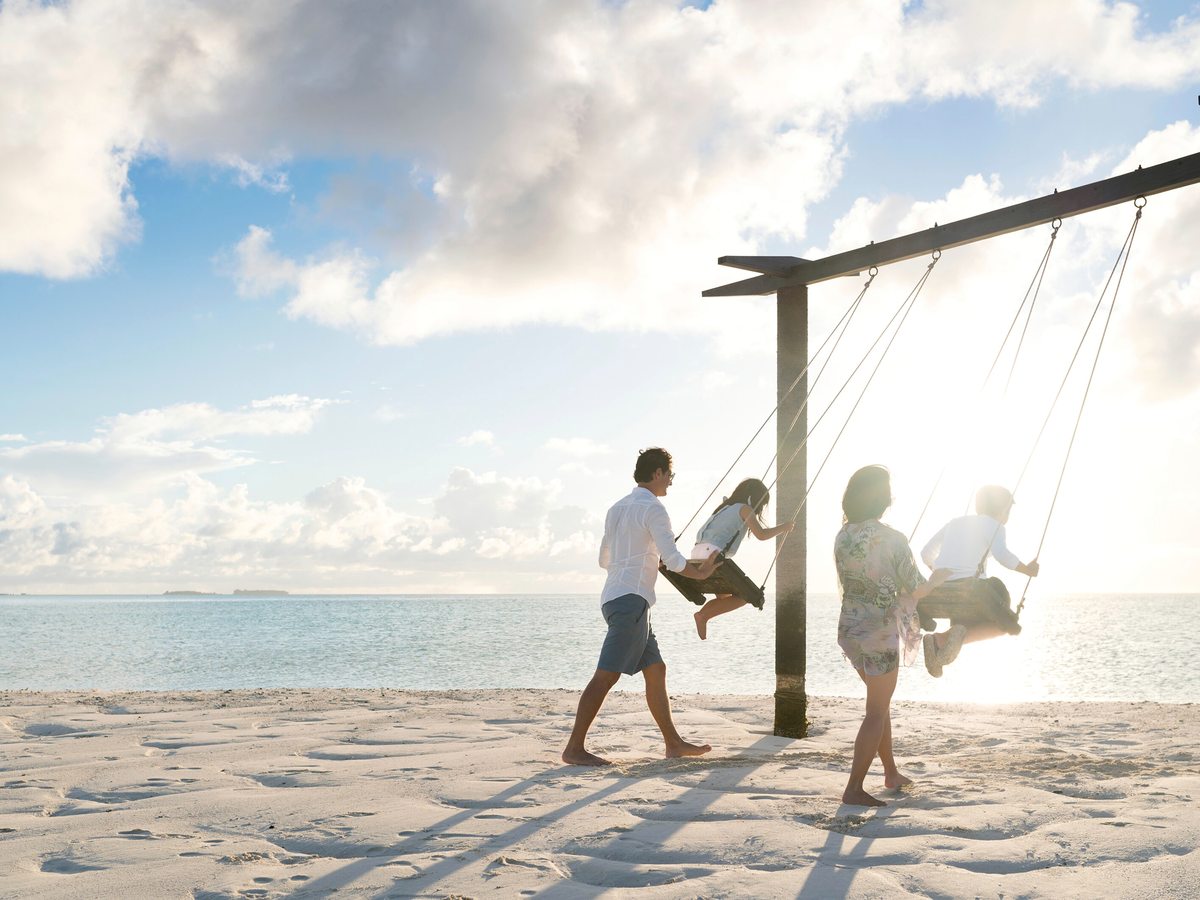
For a child too young for the club, the draw is the water: the shallow lagoon, the beach and, if your villa has one, the pool, plus babysitting from three months if you want an evening out.
Surfing and watersports
The dive centre, the surf breaks, the excursions and the spa.
The watersports are a big part of what draws people here. Aquafanatics is a PADI five-star dive centre, with more than 35 dive sites in reach, among them Kandooma Thila, Cocoa Thila and the Kuda Giri wreck, plus PADI courses running from a first Discover Scuba session through Open Water, Advanced and Rescue Diver and freediving; equipment hire is charged if you don't bring your own gear. Snorkelling gear is free for all guests, though child sizes aren't guaranteed, so bring your own if a good fit matters.
Surfing is a real draw here, run with Tropicsurf. The main break, Nonyas, also called Quarters, is off the resort's staff island, a long right-hander about five minutes away by boat that suits all levels including beginners, so it's the family-friendly wave; more advanced breaks such as Boatyards and the high-quality Veli Left are close by too. The surf is best from April to October, and boards and paddleboards can be hired.
Because there's no house reef, snorkelling trips go out by boat to a nurse shark site, the coral gardens and turtle reef, and in season to manta rays in September and October and dolphins from October to April; whale-shark trips run further out to Ari Atoll. Some trips need a confident swimmer rather than a paddler, and they're all charged. On the water off the beach there's windsurfing, from twelve, and kitesurfing, catamaran sailing, glass-bottom kayaks and a free stand-up paddleboard, plus the motorised side, jet skis, an e-jetski, a flyboard, jet surf, a seabob, parasailing, water-skiing and family fun rides, all charged. Jet skis need a driver of sixteen or over, the e-jetski is open from twelve, and some of the other powered kit has its own age limits.
On land and out on the lagoonThings to do
Away from the water there's a tennis court, an air-conditioned gym with ocean views, beach volleyball, beach soccer, badminton, table tennis, chess and pétanque, sunrise and sunset yoga and meditation, plus a weekly film night on the beach. Guests can adopt coral through the resort's HARP reef-protection programme and visit the coral nursery with a marine biologist, and there's a holiday photoshoot service and a private yacht, the Nirvana, for charter.
Out on the lagoon the excursions run from a private sandbank drop-off to sunset and dolphin cruises, a glass-bottom boat trip and sunset or big-game fishing; the Gulhifushi picnic island is free to reach under your own paddle power. All the excursions are charged.
The Anantara Spa sits over the water: six treatment rooms with glass floor panels so you can watch the lagoon below, two open-air salas for Thai massage, a hair and beauty salon and a sauna, steam room and plunge pools. Signature treatments include the Anantara Signature Massage and the Dhigu Healing Massage, and couples can book the Romantic Indulgence or the open-air Couples Sunset Ritual. Treatments are charged. For dedicated Ayurvedic programmes, Balance Wellness by Anantara is on Veli, reached by pontoon.
Beyond the islandThe area and days out
The resort isn't sealed off from the country around it. Malé, the capital, is about 13 miles (21 km) away and roughly 30 minutes by speedboat, a busy city that makes a good outing for older children or curious adults if you book the charged half-day city tour. Guraidhoo, an inhabited fishing island, is a charged excursion from 2 to 5pm to a real Maldivian village with souvenir shops and everyday island life. The South Malé Atoll around the resort has more than 35 dive sites and is quieter than the busier North Malé.
The wildlife around the atoll is seasonal: manta rays in September and October, whale sharks from August to December, dolphins all year with organised trips from October to April and nurse sharks and turtles on the local reefs throughout. Within the lagoon, the sister islands add to the stay: adults-only Veli and ultra-private Naladhu for the dine-around, and Gulhifushi for picnics and snorkelling.
There are no shops beyond the resort's own boutique, which covers essentials and souvenirs, so bring anything specific for a baby with you; Malé is the only alternative.
Loves and gripes
A fair read of the praise and the gripes, and how it stacks up against its rivals.
What families love
- The shallow lagoon, the most toddler-safe swimming many reviewers have found in the Maldives.
- The service, with villa hosts and restaurant staff singled out by name.
- The kids' club team, who guests say keep children properly engaged rather than just minded.
- The dining variety across the two islands, Baan Huraa's Thai in particular.
- The speedboat transfer, and a doctor on site around the clock.
- The breadth of watersports, from surfing to diving, and the space in even the entry villas.
- The 2024 overwater renovation, rated fresh and high-quality.
Common gripes
- No house reef, so snorkelling means a charged boat trip.
- Alcohol prices that guests find high even for the Maldives.
- The kids' club taking children alone only from four, which limits its use for two- and three-year-olds.
- Beach villas that some find close together, more of a privacy point for couples than families.
- Complimentary bikes that a few reviews say need better upkeep.
- The odd scripted management exchange and a rare billing slip to check.
- A breakfast some feel is less varied than at rivals, and a small island that can feel confined after several days.
Across the review sites the resort rates highly, with TripAdvisor around 4 out of 5 from more than 4,000 reviews, Google around 4.7 from close to 900 reviews and Booking.com around 9.2 out of 10 from over 200 reviews, as of mid-2026. It's been named the Maldives' Leading Family Resort at the World Travel Awards several times, and Sea.Fire.Salt's wine list won an award in 2018.
Against the other Maldives family resortsHow it compares
Set against the other Maldives family resorts, Dhigu's edge is ease and safety underfoot: the speedboat instead of a seaplane, the exceptionally shallow lagoon, babysitting from three months, a doctor on site and the dine-around across two islands. Where others do better is on the club and the reef. Soneva and Niyama have far bigger kids' clubs, and Niyama and Heritance Aarah take younger children into the club alone, from twelve months and from age two; resorts with a house reef, such as Vakkaru, give you snorkelling straight off the beach, and Amilla goes further still for under-twos, with baby food on request, babysitting from six months and buggies provided. For a family with a mix of ages, a toddler for the lagoon and an older child for the club and the surf, and travel kept simple, Dhigu is a strong pick; for the very youngest going into a club alone, for shore snorkelling or for a baby under two specifically, one of the others may suit better.
Getting there and when to go
The journey in, the best months and the entry and health basics.
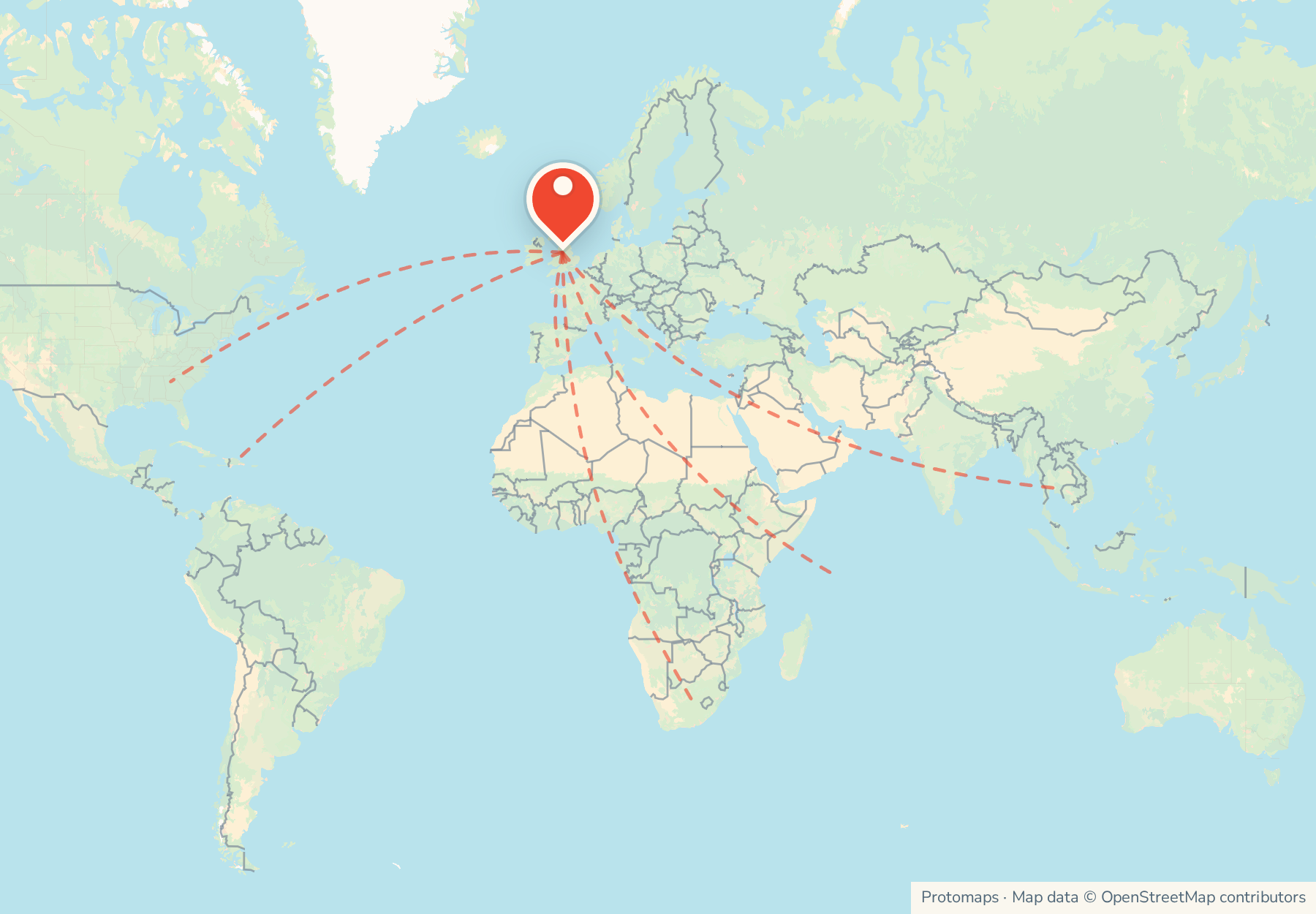
There are no direct flights from the UK to Malé; you change at a Gulf hub such as Dubai, Doha or Abu Dhabi, or at Colombo, for a total journey of around ten to twelve hours. From Malé's Velana airport it's a 30-minute speedboat to the island, covered and air-conditioned, running at any hour, so a night landing or an infant is no problem and there's no seaplane to wait for in daylight. A resort host meets you at customs and takes you to an air-conditioned airport lounge with WiFi and refreshments while your luggage is brought over separately, then you board the boat. The transfer is a separate charge on most bookings, though there are promotions with complimentary transfers on certain stays, so confirm it when you book.
There's no minimum stay set as a hotel policy, so check the terms when you book.
The dry season runs from November to April, with January and February the sunniest and driest; the wet season, May to October, brings more rain, but usually in short heavy bursts rather than all-day grey, and the lagoon and villa pools are just as warm and swimmable. For value, the shoulder months of May and June or September and October are cheaper, with surf from May and mantas in September and October. Within the dry season, December, February half term and Easter fall in the school holidays and price accordingly. The island stays open all year.
Month by monthWeather
Days sit around 30 to 32°C all year and the sea holds 28 to 30°C, warm enough for a baby in the lagoon in any month; what changes through the year is the rain and the sunshine hours.
| Month | Daytime high | Overnight low | Rain | Wet days | Sea temp |
|---|---|---|---|---|---|
| January | 30.5° | 26° | 8 mm | 2 | 28° |
| February | 31° | 26.5° | 38 mm | 3 | 29° |
| March | 31.5° | 27° | 14 mm | 3 | 29° |
| April | 32° | 27.5° | 18 mm | 3 | 30° |
| May | 31.5° | 26.5° | 39 mm | 8 | 30° |
| June | 31.5° | 27° | 14 mm | 4 | 29° |
| July | 31° | 26° | 23 mm | 6 | 29° |
| August | 31° | 26° | 36 mm | 7 | 29° |
| September | 30.5° | 26° | 23 mm | 6 | 29° |
| October | 30.5° | 25.5° | 32 mm | 8 | 29° |
| November | 30.5° | 25.5° | 24 mm | 8 | 29° |
| December | 30.5° | 25.5° | 28 mm | 6 | 29° |
Typical monthly averages from weather-station records. Sea temperature is the open-water figure, so a sheltered bay can feel a degree or two warmer. The resort is open all year.
Health, entry and the practical bits
The FCDO has no advice against travel to the Maldives, and rates the risk of terrorism as low. Its warning about strong tidal currents, and the drownings since 2021, is about open-sea swimming rather than the flat, calm resort lagoon, but it's worth knowing if anyone swims off a boat trip. UK visitors get a 30-day visa on arrival and fill in the online IMUGA travel declaration within 96 hours of arriving, with a passport valid for at least a month beyond arrival. A yellow fever certificate is only needed if you're arriving from a country where the disease is present.
Prices are in US dollars, with pounds and cards accepted; the power is 220 to 240 volts and the time is GMT+5, so four to five hours ahead of the UK depending on British Summer Time. The Maldives is a Muslim country and alcohol is served only on the resort islands. Reef-safe sunscreen is recommended and sold at the resort.
Questions
Straight answers to the things families check before booking, then the photos.
Can our two- or three-year-old use the kids’ club?
Not on their own; the Dhoni Kids' Club takes children into its programme alone from four. Younger ones are welcome the whole time with a parent or a babysitter, and babysitting starts at three months, so an under-four is fine at the resort, just not left at the club. If you have a three-year-old you'd like settled in, email the club before you travel to ask what they'll take them into.
Is there snorkelling straight off the beach?
No. The lagoon is so large that there's no house reef to snorkel, so you book a boat trip out to the reefs instead. If shore snorkelling is a must, budget for the excursions or look at a resort with its own reef.
How much is the speedboat transfer?
It's usually a separate charge on top of the room, priced per person and changing with the season and any offer running, so get the current figure from the resort or your operator when you book. Some stays include it free on promotion.
Which villa is best with a baby or toddler?
The Two Bedroom Family Beach Pool Villa is the natural pick, with its own twin bedroom and a proper swimming pool rather than a plunge pool, though there are only three so book early. If they're gone, any of the beach or beach pool villas keeps you at ground level on the sand rather than out over the water. Whichever you choose, ask for a cot at the time of booking, since it isn't standard, and flag it especially for the one-bedroom villas without a separate twin room.
Do children eat free?
Yes, up to age twelve, as long as they're eating alongside you. What that covers in practice hangs on the board plan you book, so it's worth pinning down with the resort or your operator whether it runs across every restaurant and every meal before you count on it.
Is there a minimum stay?
No minimum is set as a hotel policy. Older mentions of a five-night minimum were about a transfer package rather than the room, so check the current terms when you book.
See more Anantara Dhigu photos
Open the Anantara Dhigu photo gallery →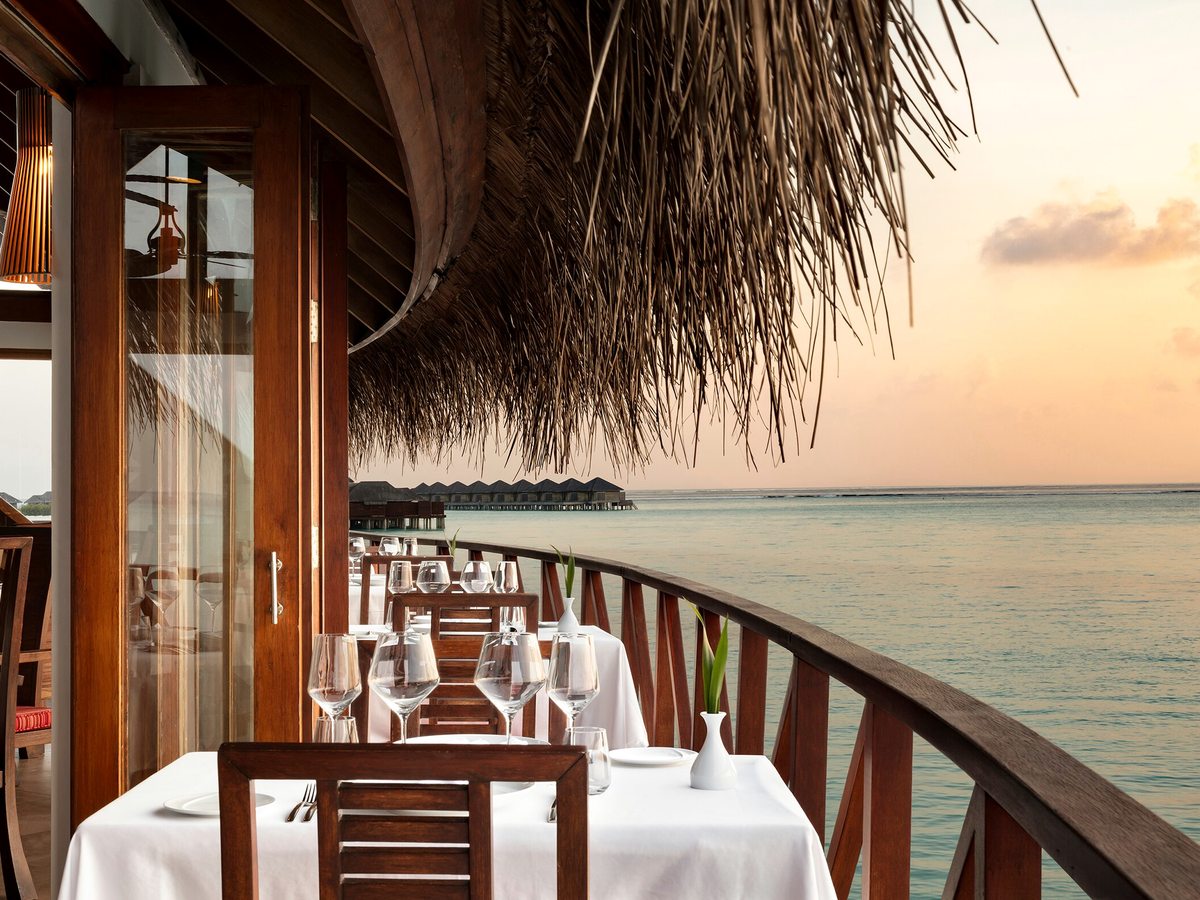
Useful links
- Anantara Dhigu Maldives: the resort's own site for villas, dining and the children's club.
- GOV.UK Maldives travel advice: entry rules and safety updates before you travel.
- The Maldives with little ones: our guide to the country, its atolls and when to go.
Last updated 12 July 2026.