H10 Tindaya
H10 Tindaya is a 4-star hotel built on Sotavento beach at the southern end of Costa Calma, a quiet purpose-built resort on the south-west coast of Fuerteventura in the Canary Islands. H10 sells it as an all-inclusive, and UK operators also package it on other boards including half board. Families come for the sand at the bottom of the gardens, a shallow lagoon that forms on it at low tide, heated children's pools and a tiered splash park.
On this page
- Is it worth it?
- Quick facts
- What the resort is like
- Every restaurant and bar
- Rooms and suites
- The Privilege package
- Pools and water features
- The beach
- The wind
- Babies and toddlers
- The Daisy Club
- Things to do
- The area and days out
- Loves and gripes
- How it compares
- Getting there
- Weather
- Before you go
- Questions
- Photo gallery
Is it worth it?
Who the hotel suits, the two things that shape a week here and the facts to skim before the detail.
H10 Tindaya is a 4-star hotel at Punta del Roquito in Costa Calma, run by H10 Hotels, a Spanish chain based in Barcelona. The hotel brochure gives it 354 rooms, which makes it one of the larger hotels in the resort. The thing it has that most of its rivals on this island don't is the beach: Sotavento starts at the bottom of the gardens, and the brochure puts the distance to sand at 0m.
Two things here matter most to a family with young children. Both children's pools are heated all year, and the splash park is built in zones so the youngest get gentle floor jets while older children get the tipping bucket. Together they mean a week here in February works in a way it wouldn't where the sea is the only water, and that is what puts the quiet, cheaper months in play.
The two things to weigh against that are the wind and the childcare. Sotavento faces the trade wind and the beach is exposed, which is what makes it Fuerteventura's premier windsurfing beach and also what a lot of guests grumble about. There's no childcare for children under 4, since the Daisy Club starts there, so a baby or toddler is with you all week. The airport is 55 to 60 minutes away, the longest transfer of the island's family hotels we've compared.
Best for
You want to walk out of the gardens onto a famous beach, you're travelling outside high summer and heated children's pools are what makes that work.
Maybe not for
You need childcare for a baby or toddler, you want a sheltered beach on a breezy afternoon, or a long transfer at the end of a flight is the thing you dread.
Best ages
Four and up, when the Daisy Club opens. Younger children have the heated pools, the splash park's gentlest zone and the lagoon, all with you alongside.
What stands out
Sotavento itself, and the shallow lagoon that forms on it at low tide. Children's pools heated through the winter run it close.
What to check
What your board actually covers if you booked through an operator, and how you'll get a pram down to the beach.
Where is it?
On Sotavento beach at the south end of Costa Calma, on the south-west coast of Fuerteventura, about an hour from the airport.
Quick facts for families
What the resort is like
The setting, the levels you'll move between every day and what they mean with a pram.
Costa Calma is a purpose-built resort on the south-west coast, made up of hotels, a strip of shops and supermarkets and a handful of restaurants. The hotel sits at its southern end, on the beach and about 1 km from the centre of town. There isn't much nightlife or old-town character here, which is the reason some families pick it and the reason others go elsewhere on the island.
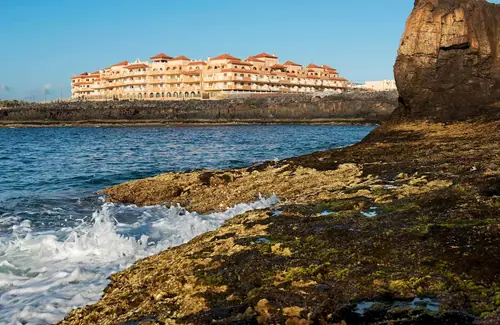
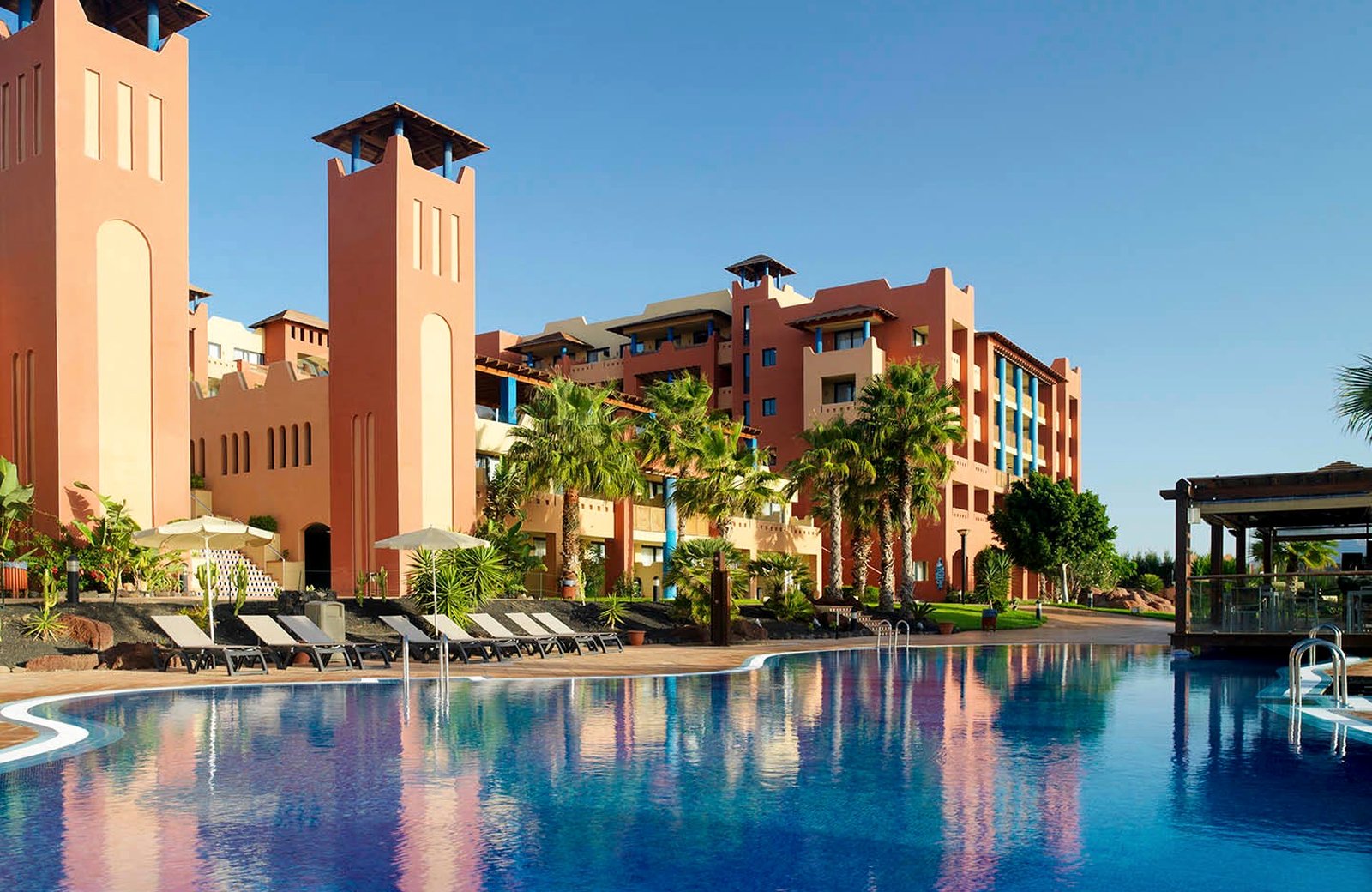
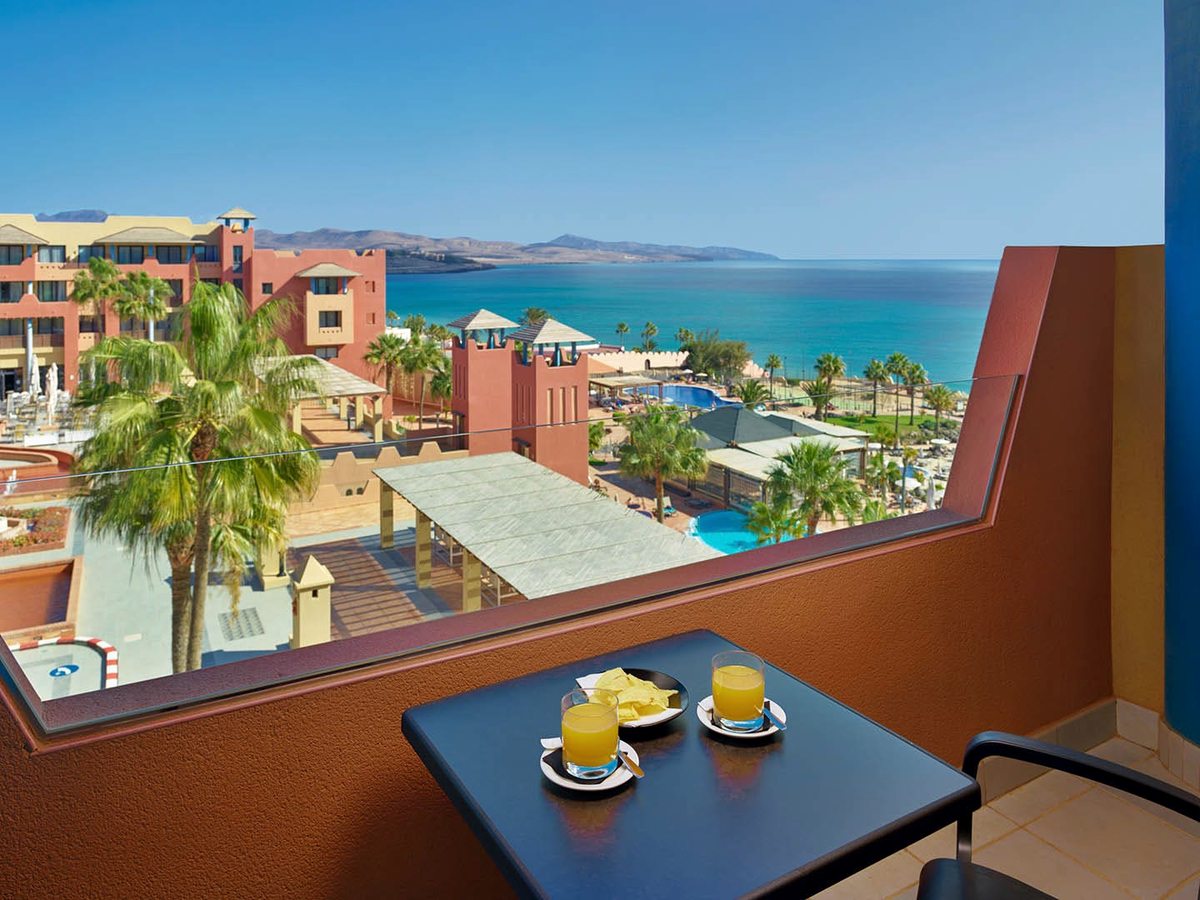
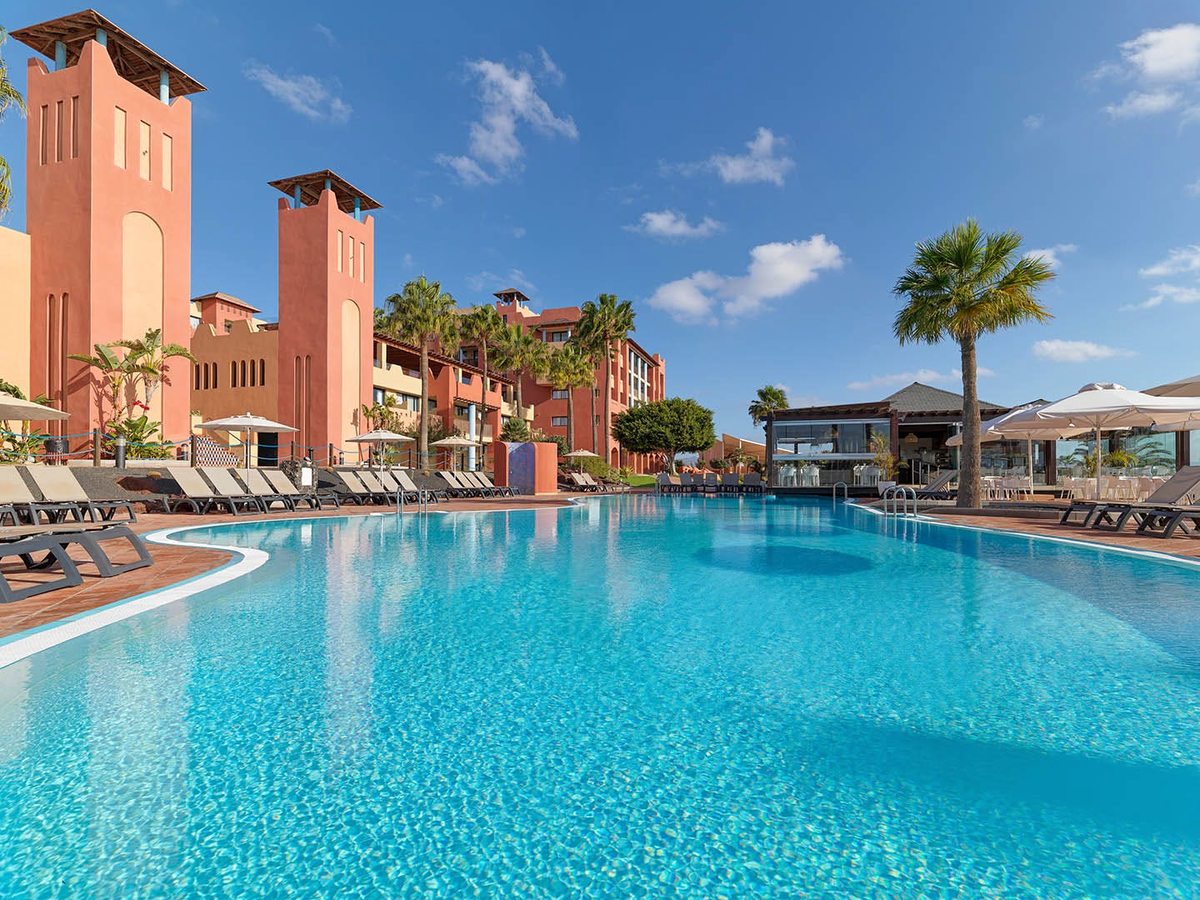
The site works on levels. Reception and the lobby sit above the pools, and you walk down through terraced gardens to the pool decks, then further down again to the beach. The gardens are the nicest part of the walk: palms and tropical planting, well kept, with a rock-lined stream running down through them towards the sea. The buildings are modern and multi-storey, tiled and painted in blue and white, and the lobby is a big glass-fronted room with a mural across the ceiling. Rooms on the higher floors look straight out to sea.
Lifts and ramps run through the hotel and the site is described as accessible for wheelchairs and mobility devices, so the descent through the terraces is not a stairs-only proposition. The beach gate is the part that isn't covered by that, and it's dealt with in the beach section below. If you'll be pushing a pram between the room, the pools and the sand all week, the route down to the beach is the one thing worth putting to the hotel before you book.
For the rest of the island, which coast suits which sort of week and how Costa Calma compares with the other resort towns, see our Fuerteventura guide.
Every restaurant and bar
Each restaurant and bar one by one, how the booking works and the board question to settle before you go.
Guests get tangled in the board question here more than anything else. H10 markets the hotel primarily as all-inclusive, and that's the version described below. UK operators also sell stays here on other bases including half board, and some guests on those rates report confusion about what they're actually covered for. If you booked through Jet2, TUI or a similar operator, check your own confirmation rather than reading H10's inclusions and assuming they're yours.
Under all-inclusive the meal times run breakfast 07:30 to 10:30, lunch 13:00 to 15:00 and dinner 18:30 to 21:30, with snacks from 12:00 to 18:00 at the pool. Times move, so treat those as the shape of the day rather than a timetable. Drinks at dinner are included. There's a dress code at dinner across all the restaurants: men in a shirt or polo and long trousers, women in smart clothes, which is worth a thought when you pack.
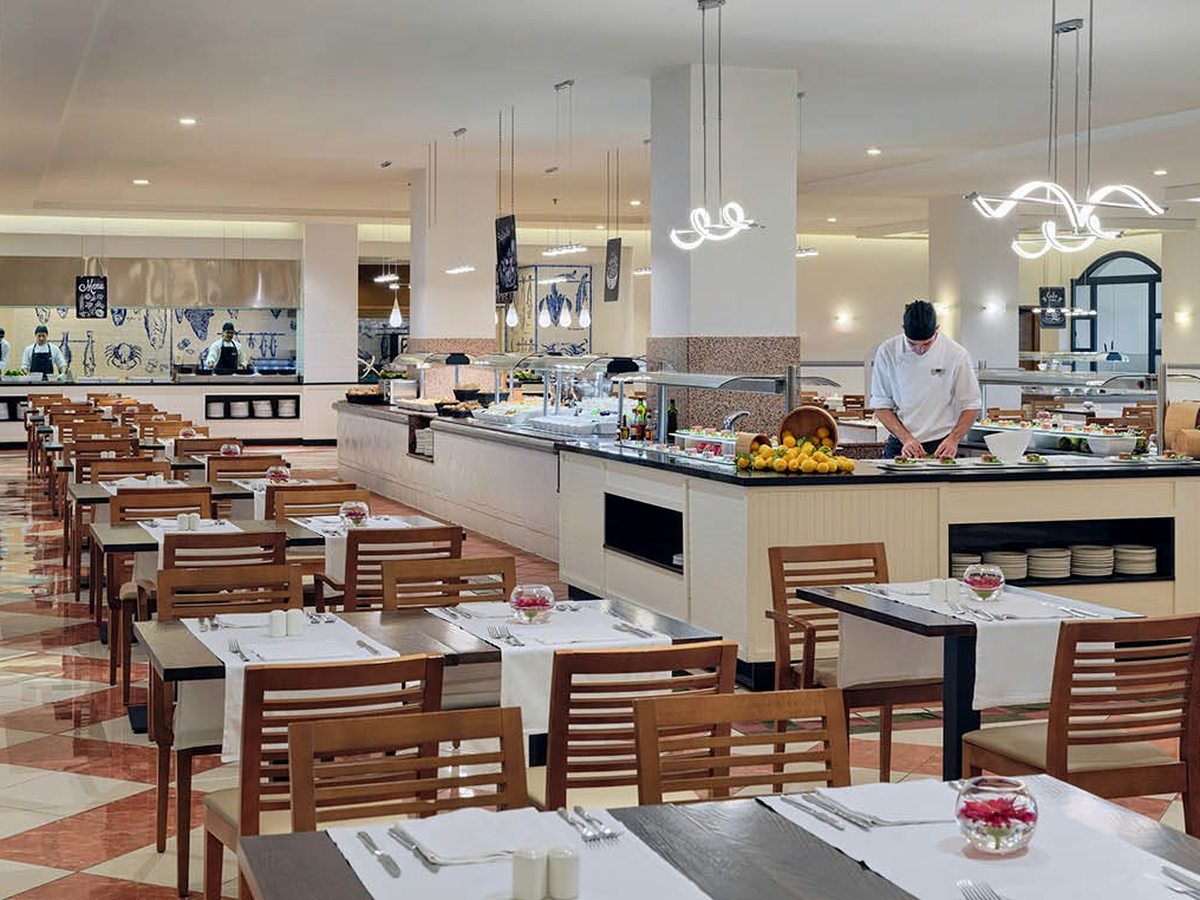
Betancuria is the main buffet and where you'll eat most meals, open for breakfast, lunch and dinner. It has show-cooking stations, meaning food cooked in front of you, covering pasta, a wok, a carvery and a grill, plus a themed corner that changes, and a large roofed outdoor terrace. Guests rate it well for variety and freshness. The meat counter comes up again and again, and the Friday buffet was singled out in a recent review. Guests also describe it running on timed sittings, where you pick a slot rather than queue, which spares you standing in a line with a hungry three-year-old.
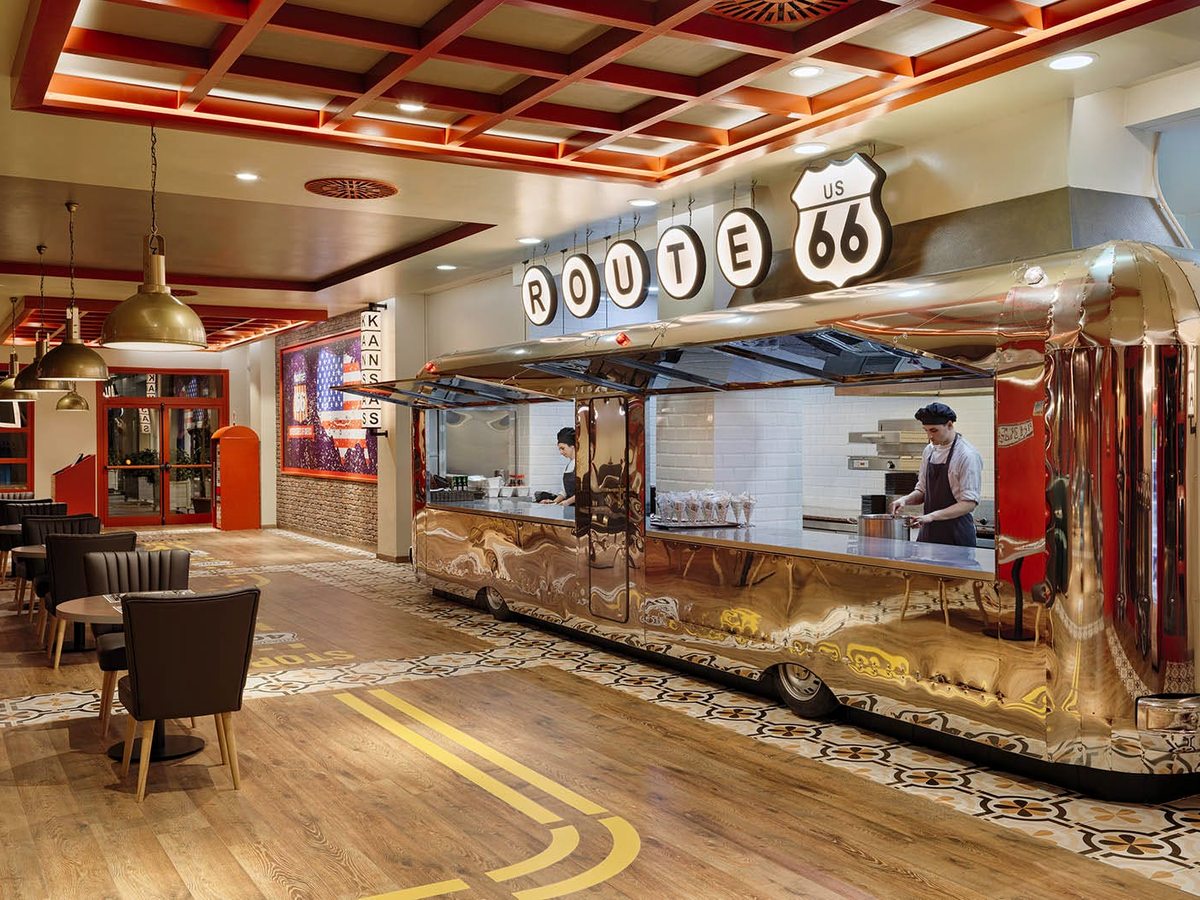
Route 66 is the à la carte, done out as a 1950s and 60s American diner and built around meat and barbecue. Under all-inclusive you get one dinner here per six nights of your stay, and any extra visits are charged. It has to be booked ahead, either through the hotel app or at the restaurant itself. Families treat it as a fun night out rather than a second dining room, and children who are bored of a buffet by day four tend to like the diner fit-out.
Alisios is the other à la carte, serving breakfast and dinner from a traditional and seasonal menu with an outdoor terrace. It's for Privilege guests only, and for them it replaces Betancuria at those two meals. Guests who've eaten there rate it noticeably above the buffet, which is one of the more concrete arguments for the Privilege upgrade.
The bars and the snack points
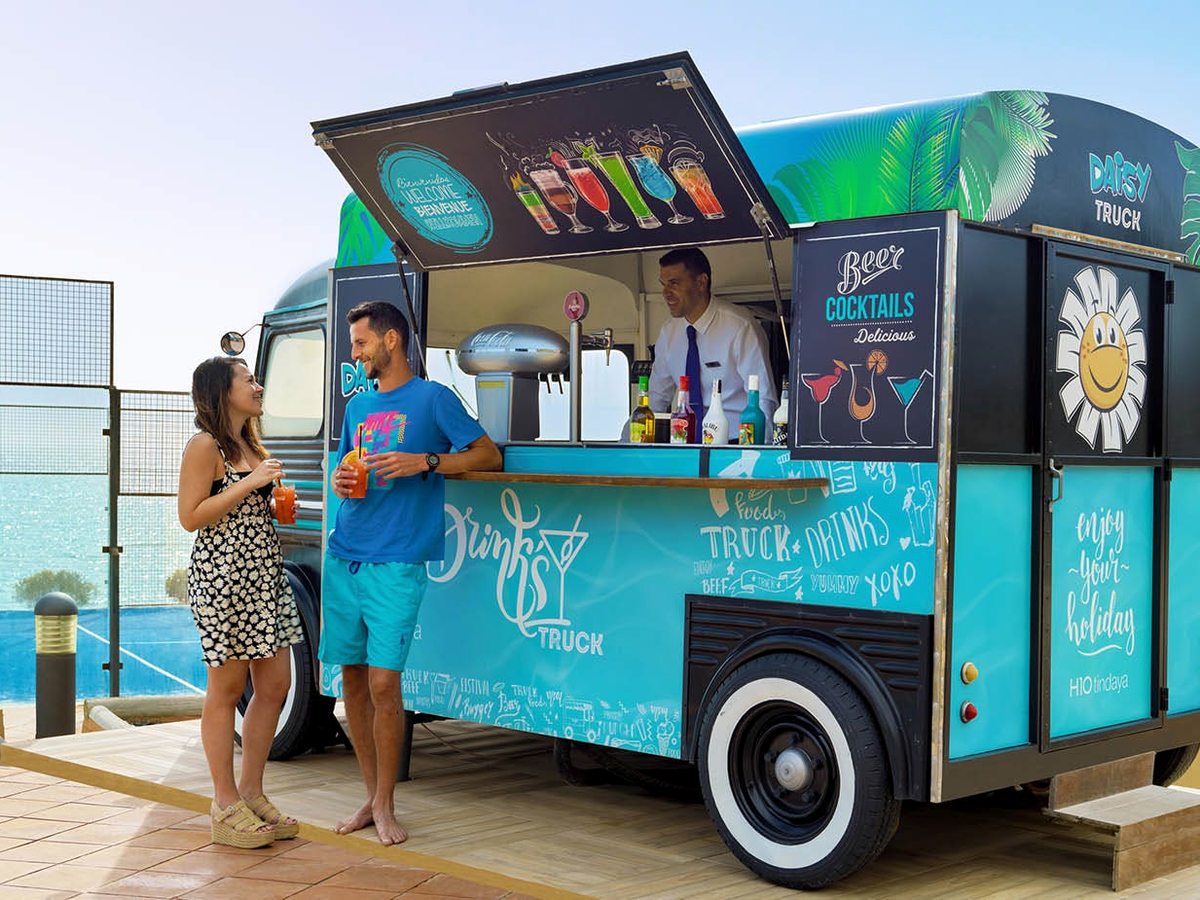
The Pool Side bar, also called La Choza, handles the poolside snacks and drinks between 12:00 and 18:00 on the all-inclusive schedule, with the snacks and pastries covered. The Daisy Truck is a separate snack and drinks point in truck form, parked near the splash park and aimed at children, and it's included too. Between the two, the gap between lunch and dinner is covered without walking back up to the restaurant.
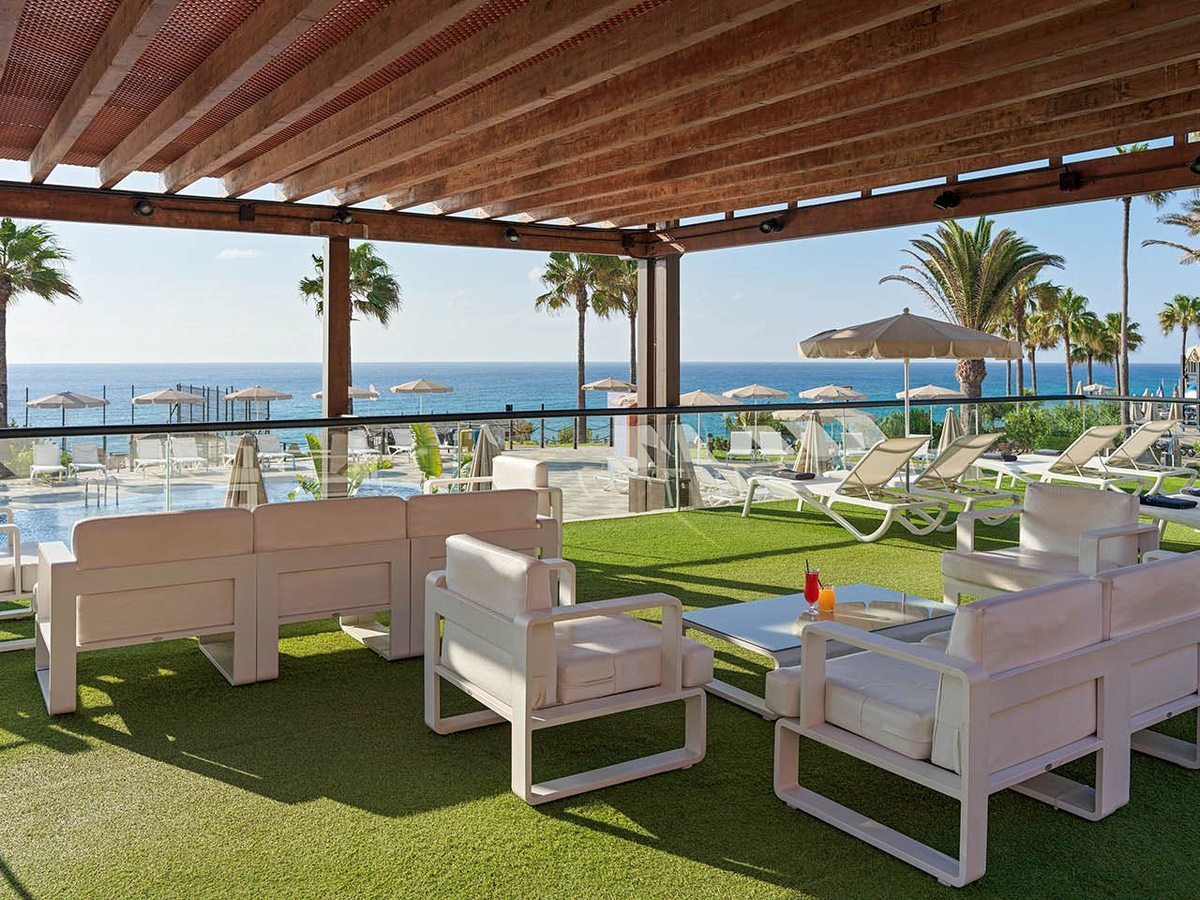
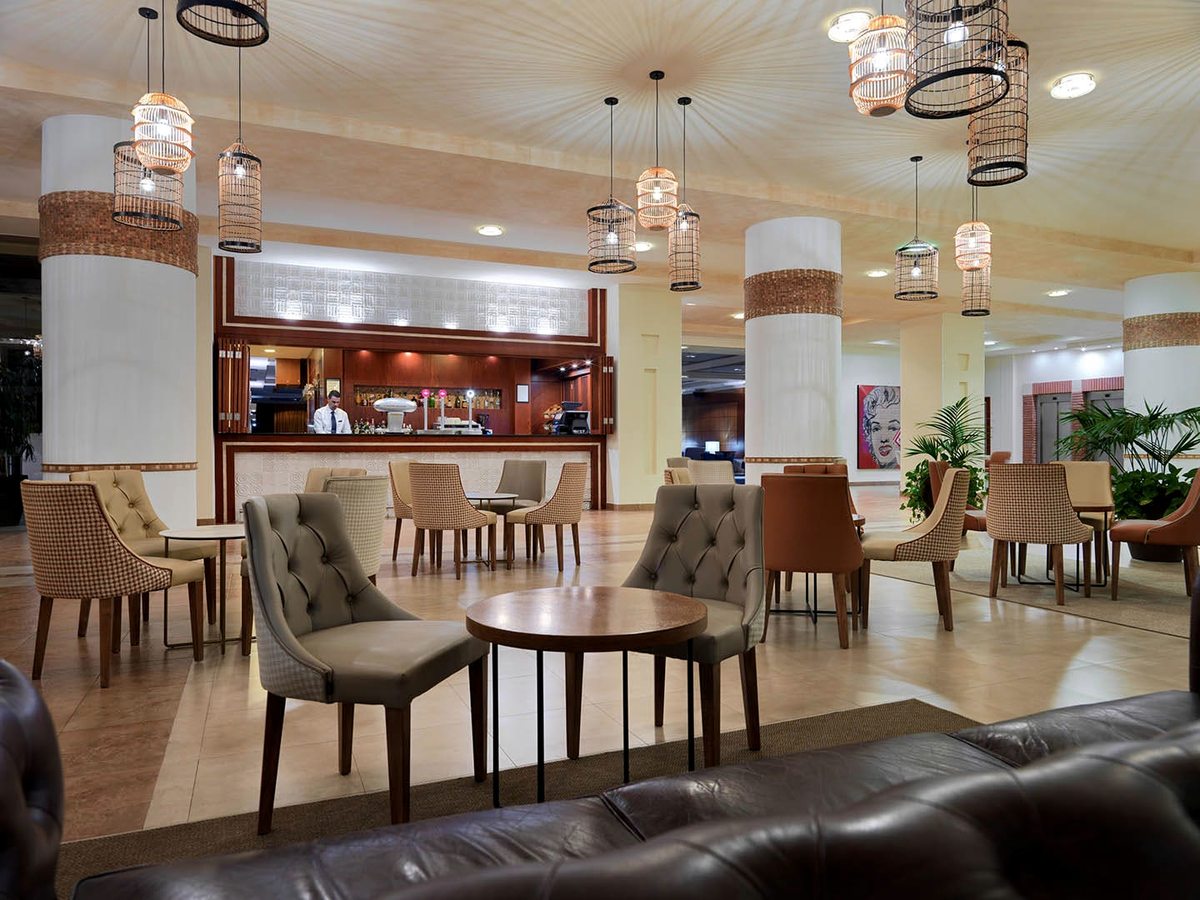
Mike's Coffee is the coffee shop, open daily, doing coffee, homemade pastries and cakes, teas, smoothies and milkshakes, all of it included. It's the useful one outside meal hours, and the milkshakes go down well with children in the gap before dinner. Herbania Bar is the lobby cocktail bar, with a wide drinks list and an outdoor terrace looking out to sea; drinks there run 10:00 to midnight and are included. The Tarajal Ballroom is the bar, disco and show venue, with a different live show every night and the Daisy Minidisco for children each evening, also included.
How the booking works
Route 66 is the only restaurant you have to book, and you do it on the hotel's web app or by walking in and asking. The app also carries the real-time menus. Betancuria takes no booking, though guests describe choosing a sitting time. Alisios needs nothing separate if you're on Privilege, since the package is your access. So the whole job on arrival is picking your Route 66 night, and picking it early rather than on day five.
Rooms and suites
Every category with its official size, which ones work with a baby or toddler, and what the Privilege tier is really selling.
There are nine room categories across two tiers, six standard and three under the Privilege package. The table is the full line-up with the official sizes and occupancy; the guidance after it is which suit a family with young children.
| Room | Size | Sleeps | View |
|---|---|---|---|
| Double Room | 23m² | 2 adults + 1 baby | Garden or interior patio |
| Double Room Sea View | 23m² | 2 adults + 1 baby | Lateral sea view |
| Sunset Double Room | 23m² | 2 adults + 1 baby | Lateral sea view, facing the sunset |
| Superior Room | 26m² | Up to 3 people | Garden |
| Superior Room Sea View | 26m² | Up to 3 people | Sea, and the pools or gardens |
| Junior Suite Sea View | 42m² plus a 9m² terrace | 3 adults + 1 child, or 2 adults + 2 children | Direct sea view |
| Privilege Room | 26m² | 3 adults | Higher floors, direct sea view |
| Privilege Junior Suite | 42m² | 3 adults + 1 child, or 2 adults + 2 children | Direct sea view |
| Privilege Junior Suite Terrace | 42m² plus a 32m² terrace | 3 adults + 1 child, or 2 adults + 2 children | Highest floors, ocean view |
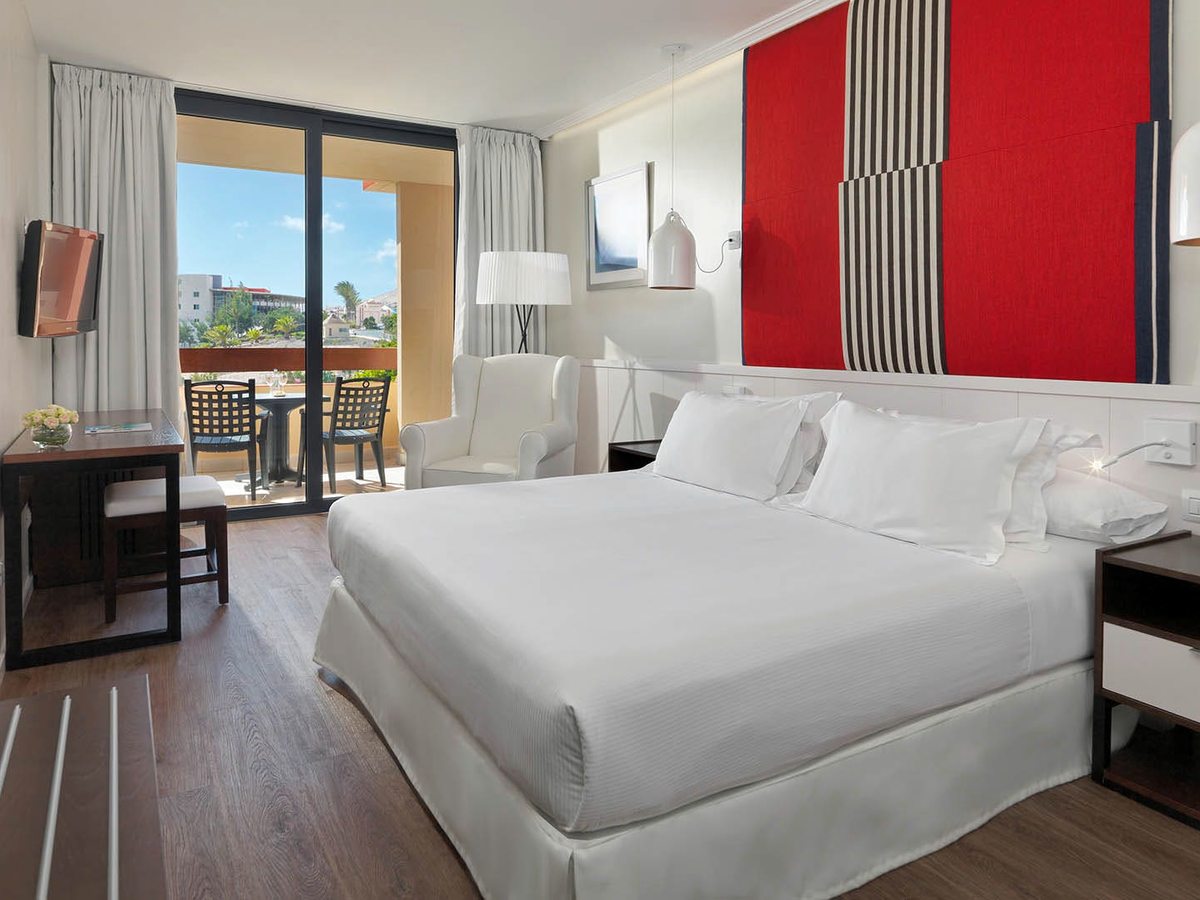
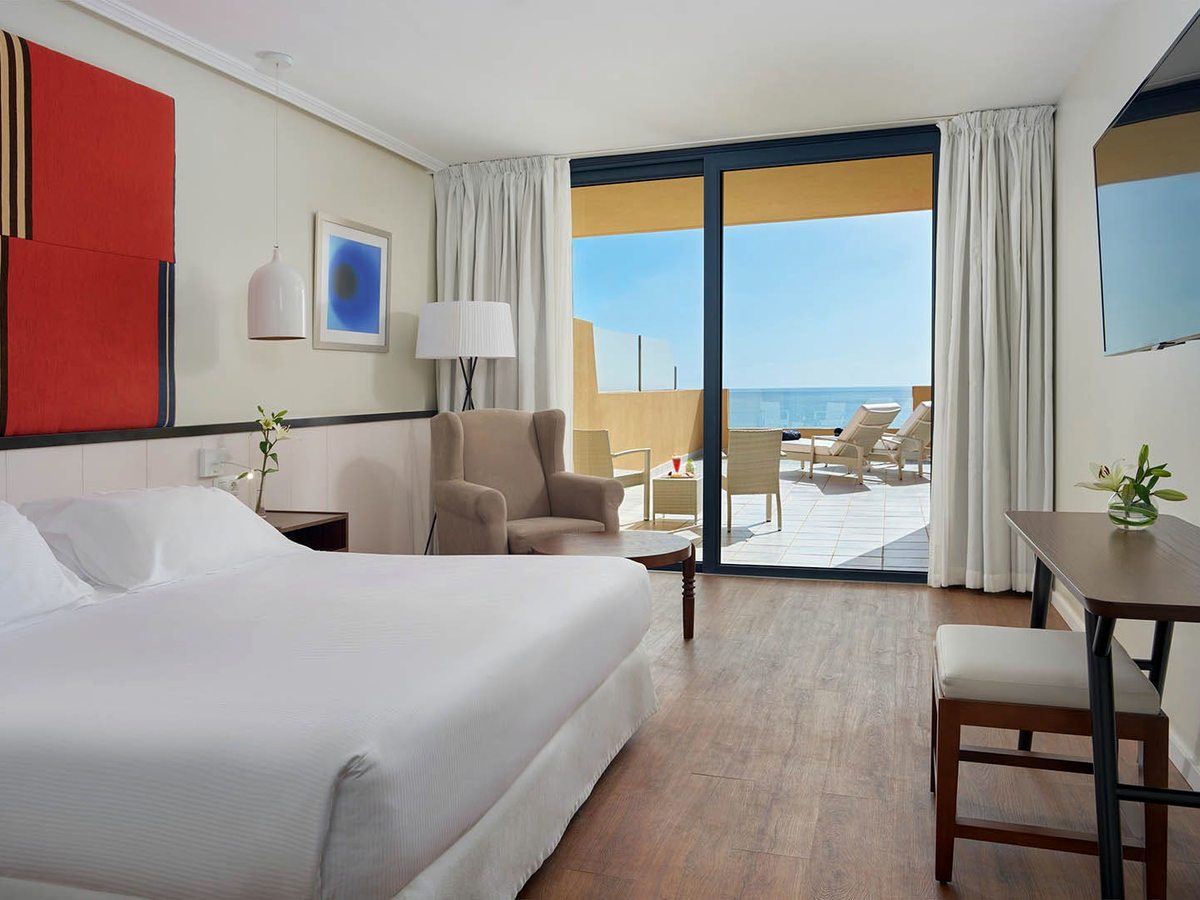
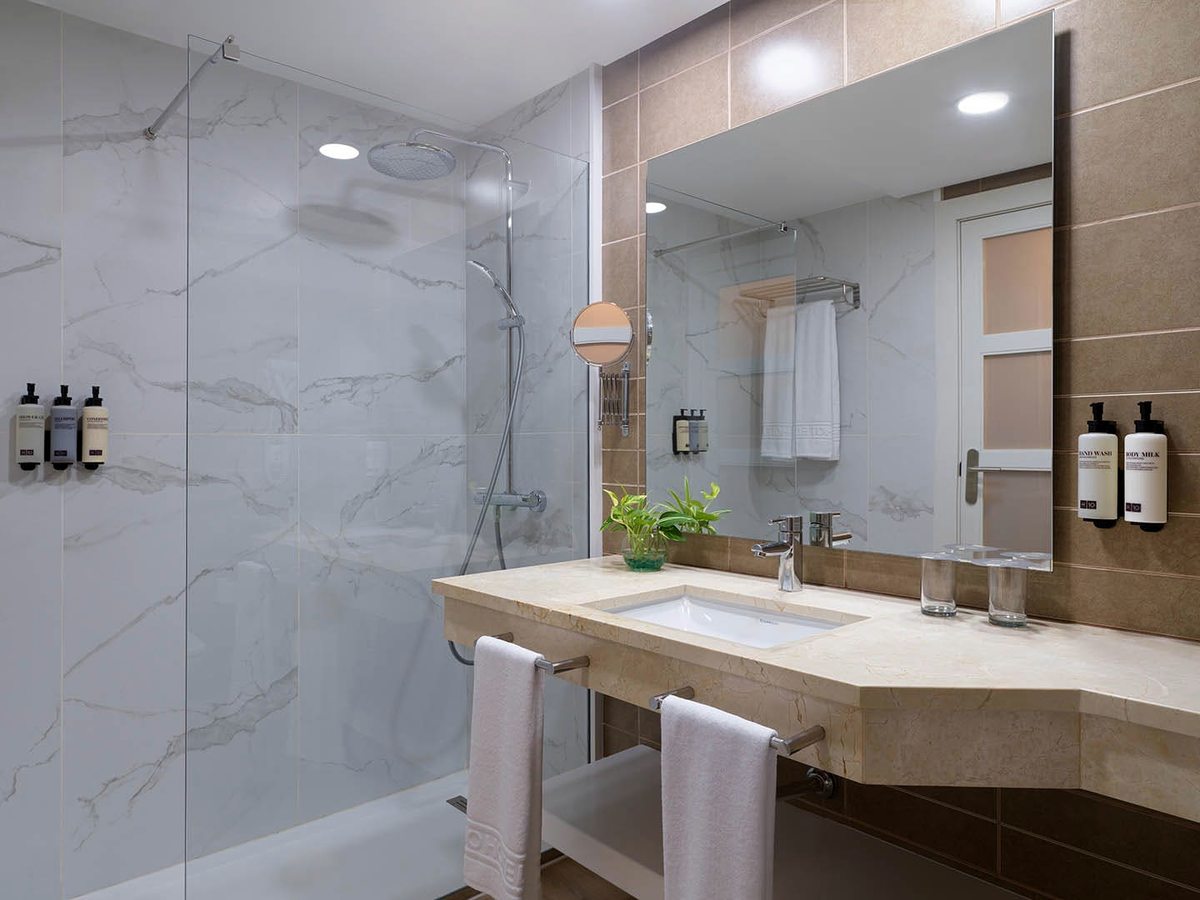
Every room has a furnished balcony or terrace, an LCD television with international channels, air conditioning, double glazing and a fully equipped bathroom with a hairdryer. Décor is bright blue and white, with tiled floors, striped fabrics and contemporary furniture, and the bathrooms have a shower and tub combination.
Three things in the room are chargeable extras rather than standard, and two of them matter with a baby. The kettle and the minibar are available on request at extra cost, so if you're making up bottles or warming a pouch, that's a cost to price in rather than something waiting for you. The safe is charged too. Wi-Fi is free throughout the hotel, though it's the one thing guests rate poorly, so don't plan a week of working or streaming around it.
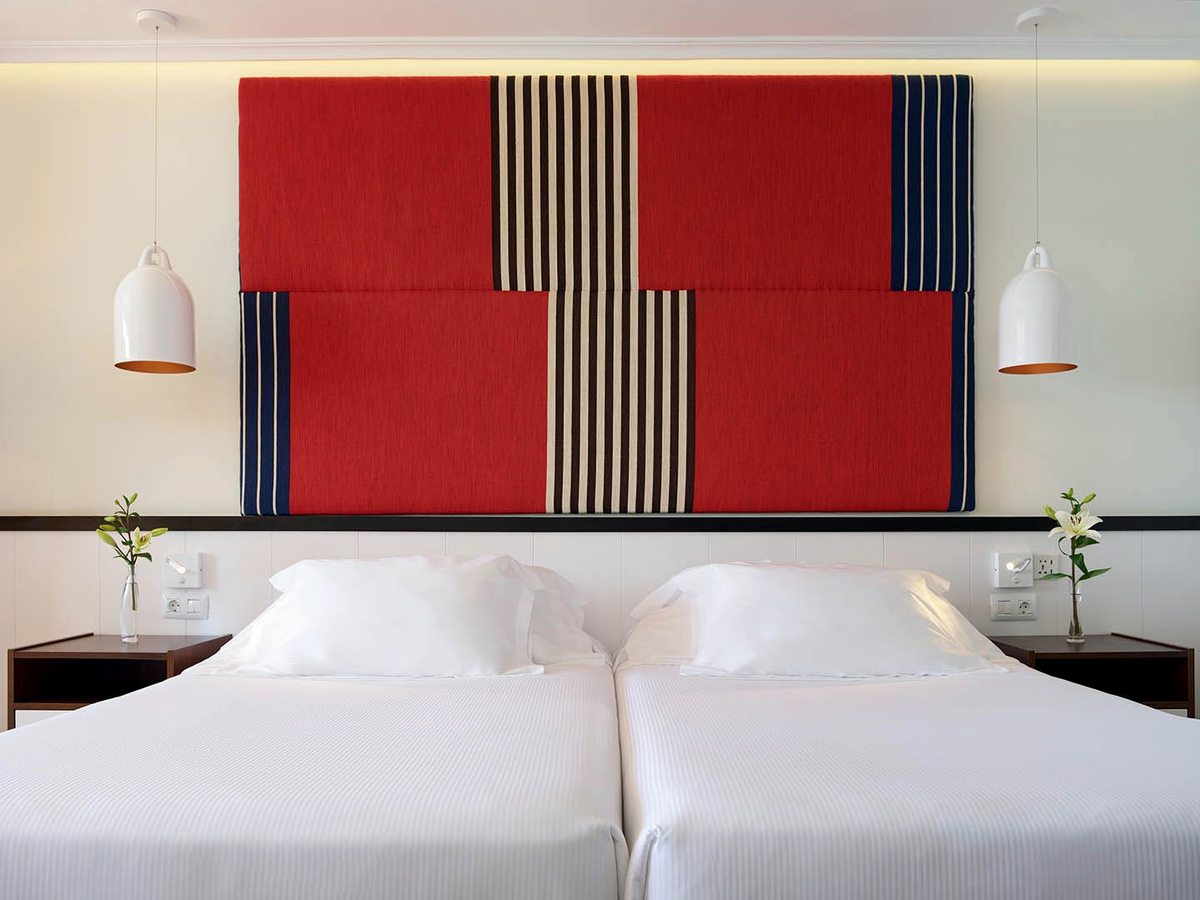
For the sleeping arrangements, the three 23m² doubles all have a queen bed at 180 by 200cm and are listed for two adults and a baby, which confirms a cot comes with them. They're compact, and once a travel cot is up in a 23m² room with a pram in the corner, floor space goes fast. They differ only in outlook: the standard Double faces the garden or an interior patio, the Sea View gets a lateral sea view, and the Sunset Double faces the sunset.
The Superior Rooms at 26m² have two twin beds at 120 by 200cm plus a sofa bed at 90 by 200cm, and H10 lists them for up to three people without saying how that splits between adults and children. The layout would suit a family of three. Confirm the exact configuration when you book rather than assuming it from the bed list.
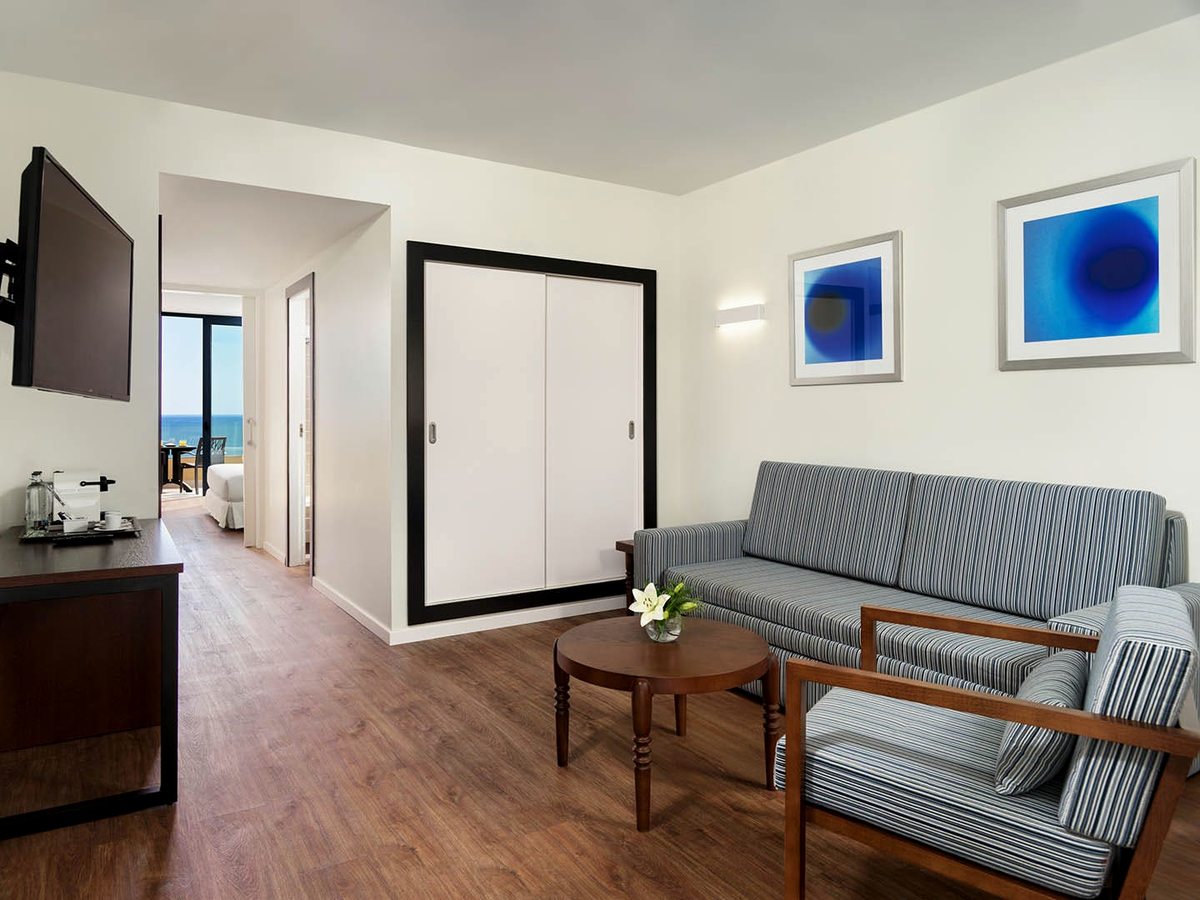
The Junior Suite Sea View at 42m² is the one to price if you want a door you can shut. It has a separate bedroom with a queen bed, a sofa bed in the living room and a 9m² terrace, listed for three adults and a child or two adults and two children. A separate bedroom is what buys you a nap in the day and an evening of your own afterwards, and in a hotel with no childcare for under-4s that's worth more here than it is in a lot of places.
On condition, a few recent reviews mention signs of age and small maintenance points, one noting unpainted columns and bird droppings on a balcony. Set against that, cleanliness is one of the highest-scoring things about the hotel and the great majority of reviews are positive on how the rooms feel, so treat those as the odd bad room rather than the standard.
The Privilege package, and whether it's worth the premium
Privilege is H10's paid upgrade, and it's worth understanding that it isn't simply a bigger room. It's a parallel set of rooms and facilities running alongside the main hotel, so what you're buying is a different version of the week rather than more square metres.
The rooms are the Privilege Room at 26m² with two twins and a sofa bed for three adults, the Privilege Junior Suite at 42m², and the Privilege Junior Suite Terrace, the same 42m² with a 32m² terrace on the highest floors, sold only on H10's own website. Both Junior Suite categories share the same layout as the standard Junior Suite Sea View: a separate bedroom with a queen bed and a sofa bed in the living room. Privilege rooms sit on the higher floors with direct sea views. On top of the room, breakfast and dinner move to Alisios instead of the buffet, and you get the Privilege solarium, an elevated area of its own with sea views, dedicated loungers, sunshades, a self-service bar and access to a swimming pool. There's a Privilege Lounge as well. If you take a Privilege Junior Suite, unlimited access to the Despacio Thalasso spa is included, which is otherwise a paid extra.
Guest opinion on whether it's worth the money is properly split, and both camps are easy to follow. The people who rate it point at the suite, the spa access and the Alisios food, which guests who've eaten there consistently put above the buffet. The people who don't tend to be underwhelmed by the lounge itself. With young children, most of what you're paying for lands in the parts of the day children aren't in: a quiet solarium, an adults-only spa, a table-service dinner at the hour a toddler is melting down. The exception is the suite itself, and if the separate bedroom is what you're after, compare a Privilege Junior Suite against the standard Junior Suite Sea View on price before you decide the package is what you want.
Pools and water features
Each pool named, the splash park zone by zone, the beach below and the wind that blows across it.
There are five outdoor pools and a splash park. There's no indoor pool for swimming: the Despacio Thalasso has a therapy pool with jets, cannons and waterfalls, and that's a paid spa circuit that doesn't admit under-16s, so it isn't a wet-weather option for a family.
Three of the pools are the adult ones. The main pool is the large central one and the busiest. The second adult pool is heated over the winter. The third is salt water and unheated, which is an unusual thing to find at this end of the market. The picture on how warm the adult water is depends who you ask: the heating is what H10 states, and a fair number of guests describe the adult pools as cold outside summer, with one recent guest disputing the heated claim outright. If long swims for you are part of the holiday, factor that in.
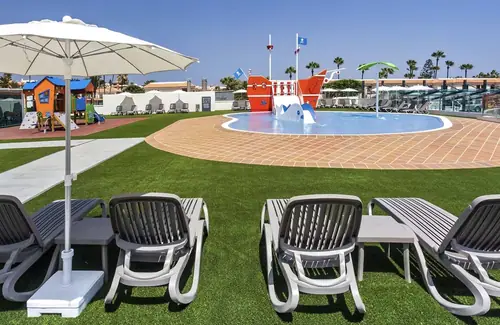
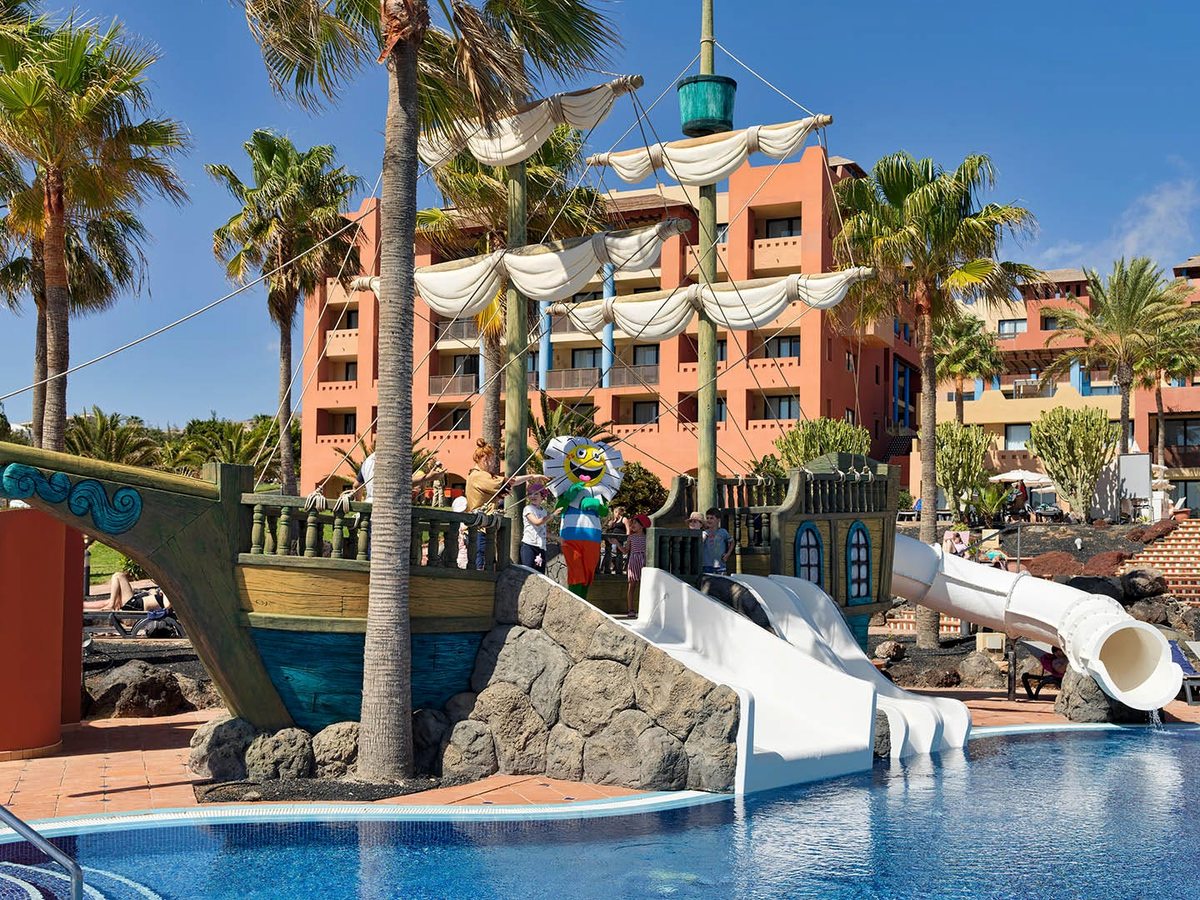
The children's water is the more dependable half. Daisy Adventure is the main children's pool, built around a pirate ship with water slides, including one H10 calls the Twister, and animal figures with water jets. The second children's pool is smaller and better suited to younger ones. Both are heated all year round, and that single fact is what makes the hotel work in January or February, when the sea drops to 18 or 19°C and is out of the question for a small child.
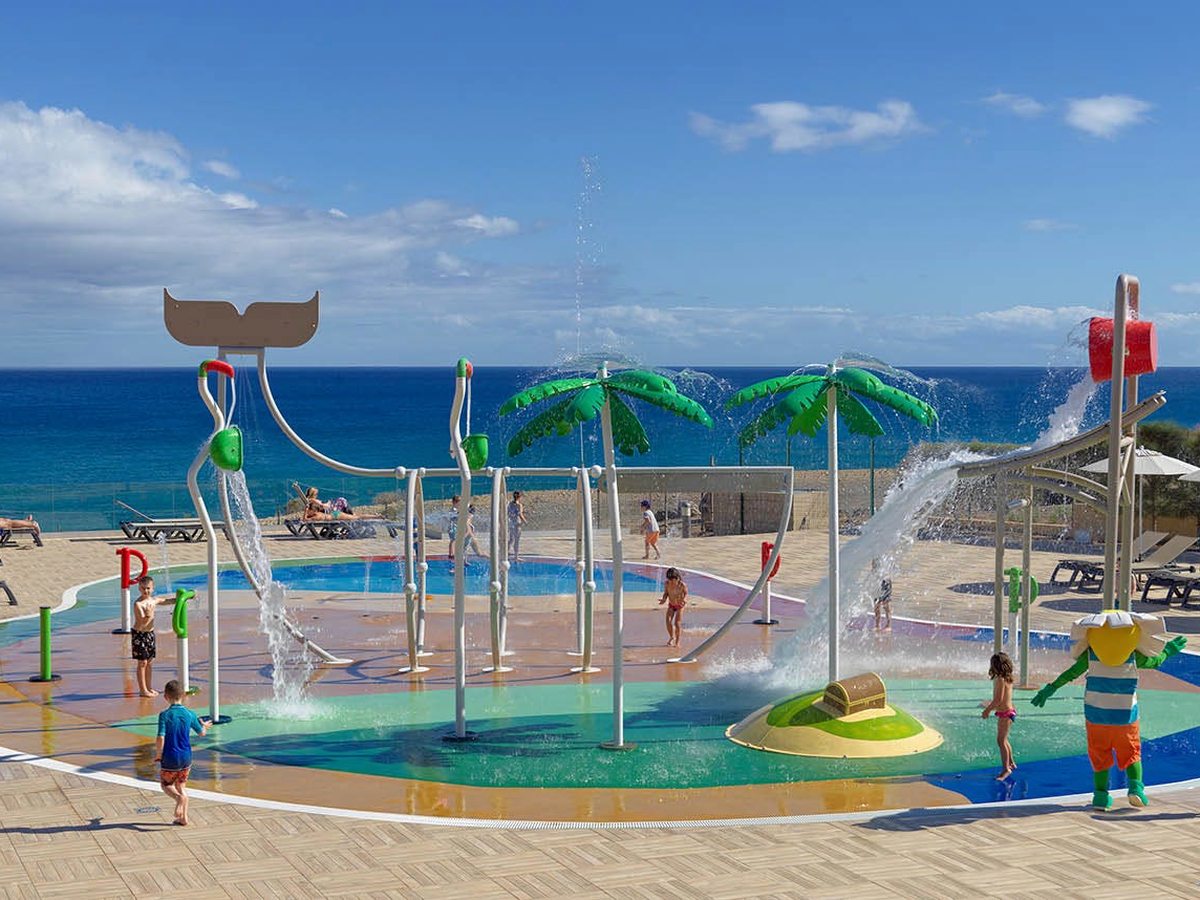
The splash park is split into zones by age, which helps if you're there with a two-year-old and a seven-year-old at once. The Sea Zone is gentle floor jets, designed for the youngest. The Shore Zone steps up to larger elements and a higher flow. The Beach and Island Zone is the loud one, with large structures, multiple outlets and a giant tipping bucket. The water runs on a manual activator, so someone presses to start it going. Around all of it are big sun terraces with loungers, parasols and Balinese beds, and the poolside bar. The pool terraces also sit lower and more sheltered than the shore, which is where families end up on the windier afternoons.
The beach
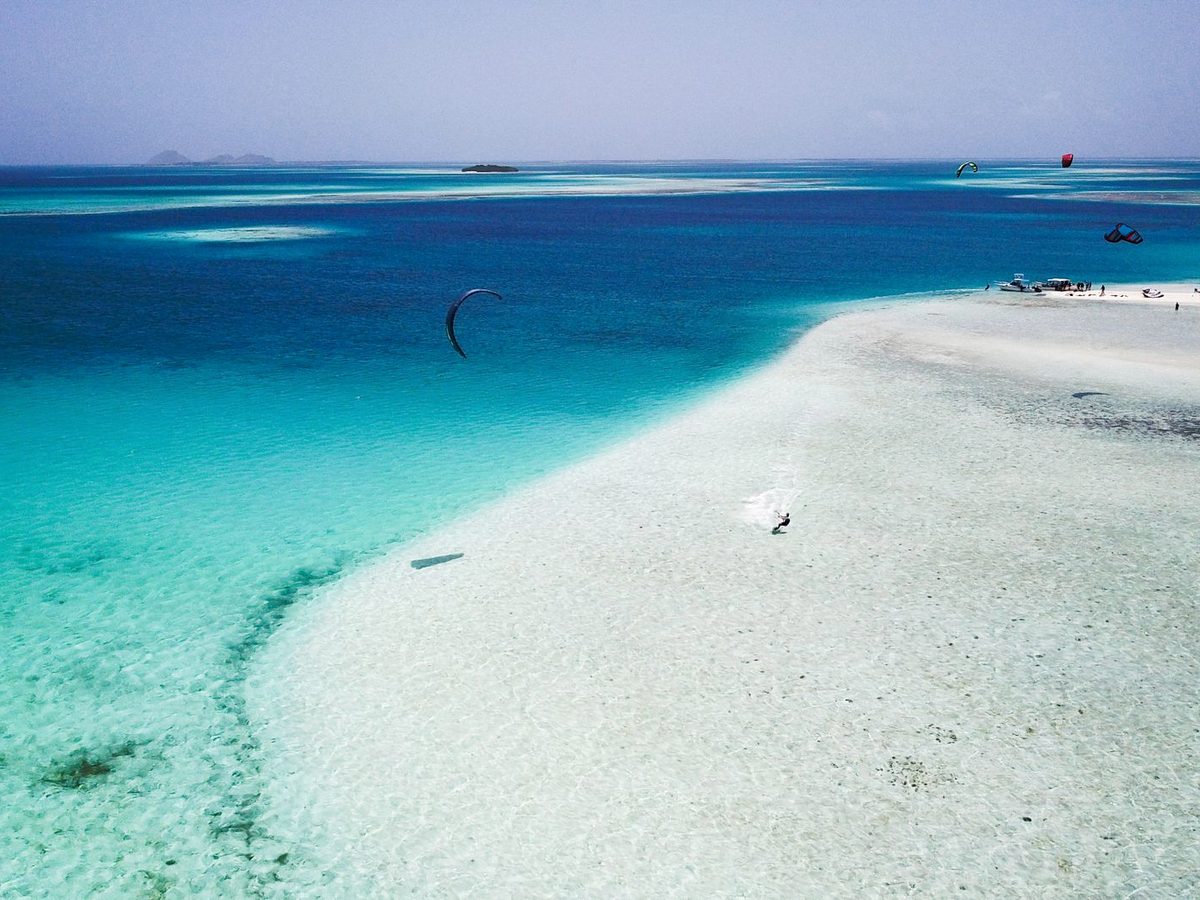
Sotavento runs directly behind the hotel, and the official brochure states 0m to the beach. It's pale golden, fine sand, part of a 9 km stretch that takes in five named sections: La Barca, Risco del Paso, Mirador, Malnombre and Los Canarios. Looking south you can see the Sotavento Natural Park and the Jandía Peninsula, and Costa Calma's promenade is a short walk north.
The thing families come for is the lagoon. At low tide a sand barrier surfaces and traps a shallow, calm body of water behind it, and that lagoon is the standout for paddling with young children on an Atlantic coast that otherwise wouldn't offer it. It isn't there all day, so the tide times decide when the beach morning happens. Beyond the lagoon, the western shore shelves gently and the Atlantic swell is generally light close in, and there's a lifeguard on Sotavento.
Three practical points. Getting to the sand means going down steps and unlocking a security gate with your room key, which is straightforward on foot and the reason to ask H10 about the route if a pram is how you travel. Sun loungers and umbrellas on the beach are charged separately and aren't part of the all-inclusive, unlike the ones round the pools. Part of the sand next to the hotel is used for naturist bathing: most families don't seem troubled by it, and with 9 km to choose from there's plenty of room to sit elsewhere, though it's better known now than at the gate. The Costa Calma section of beach is regularly awarded Blue Flag status, the annual mark for water quality, safety and facilities. The beach itself is listed as not wheelchair accessible.
Sotavento is also Fuerteventura's premier wind-sport beach, and the windsurfing and kitesurfing world championships are held on Playa de la Barca every year, usually in July. Sections of the beach are busier with competitors and spectators through that period, which is worth knowing if you're booking a July fortnight.
The island's defining conditionThe wind, and what it means with young children
Fuerteventura is a windy island, and Sotavento faces the prevailing trade wind head-on. Consistent north-east trades blow across it through the year, which is exactly why the championships are held here and why the wind is the most-flagged downside in guest reviews of this hotel. It isn't a fault in the place, it's the condition the place exists in, and it's the single thing most likely to decide whether this hotel suits your family.
The part that catches people out is the timing. The wind is strongest from roughly May to September, so the hottest months are also the windiest ones on this beach, which inverts the usual reasoning about when to go. In July the sea has warmed up and the beach is at its most exposed at the same time.
With a baby or toddler, that means blown sand at eye level and a parasol you'll spend the afternoon rescuing. What you have instead is somewhere else to be: the gardens and the pool terraces are noticeably more sheltered than the shore, and they're where families move to when the beach gets tiring. If a still beach matters more to you than a warm sea, the quieter winter months are the ones to look at, and the sea being cold then is the trade you're making.
Babies and toddlers
The gap below four and what fills it, the Daisy Club for those old enough, and everything else there is to do.
The gap comes first, because it decides this hotel for a lot of families. There's no crèche and no structured childcare for under-4s, and nothing runs beneath the Daisy Club's age floor, so a younger child is with you from breakfast to bedtime. If a couple of child-free hours is part of what you're buying when you book a resort, this isn't the hotel that sells it, and some of the other family hotels on the island are. Babysitting isn't mentioned anywhere on H10's own site, so it isn't something to assume is on offer. For an evening out on your own, ask H10 direct what it can arrange rather than counting on it in advance.
What the hotel has for a baby or toddler is space and water. The heated children's pools mean a February morning in the pool is on. The splash park's Sea Zone is built for the youngest, with gentle jets rather than anything that will knock a toddler over. The lagoon on the beach is the calmest paddling on this coast when the tide is right. The gardens are big and shaded in places. There's plenty here to fill a small child's day, as long as you're the one filling it.
On the kit, a cot is available on request, with the doubles listed for two adults and a baby. The kettle is a paid request, as noted in the rooms section. If a high chair is essential to your week, ask H10 to confirm one when you book. Baby equipment hire isn't something this hotel offers, which is a real difference from a couple of its competitors on the island, so plan to bring or buy what you need.
Buying it is easy enough. A supermarket is about ten minutes' walk away and sells nappies, formula, baby food and sun cream, with the centre of Costa Calma about 1 km off. That's a week of nappies you don't have to fit in the baggage allowance.
Four to twelveThe Daisy Club and children's programme
The Daisy Club is the children's club and it takes 4 to 12 year olds. It's run by H10's Blue Team, a team of entertainers, with a mascot called Daisy, and the activities cover painting, arts and crafts, board games, team games and sports. It has a dedicated playhouse building for the indoor sessions, and a sandy outdoor playground next to the beach. The Daisy Minidisco runs every evening in the Tarajal Ballroom, and the Daisy Truck near the splash park is its own snack and drinks point for children, included under all-inclusive.
Families are consistently positive about it. The staff come in for specific praise for being good with children, the pirate ship pool and the minidisco come up again and again, and one reviewer's 11-year-old was still happily going along, which is a decent sign for the top end of the age range. What the hotel doesn't publish is the club's hours or how the sessions are staffed, and those are the two things worth asking H10 to confirm when you book, along with what it costs against your rate. The age range of 4 to 12 is the one part that's firmly stated.
Around the siteThings to do
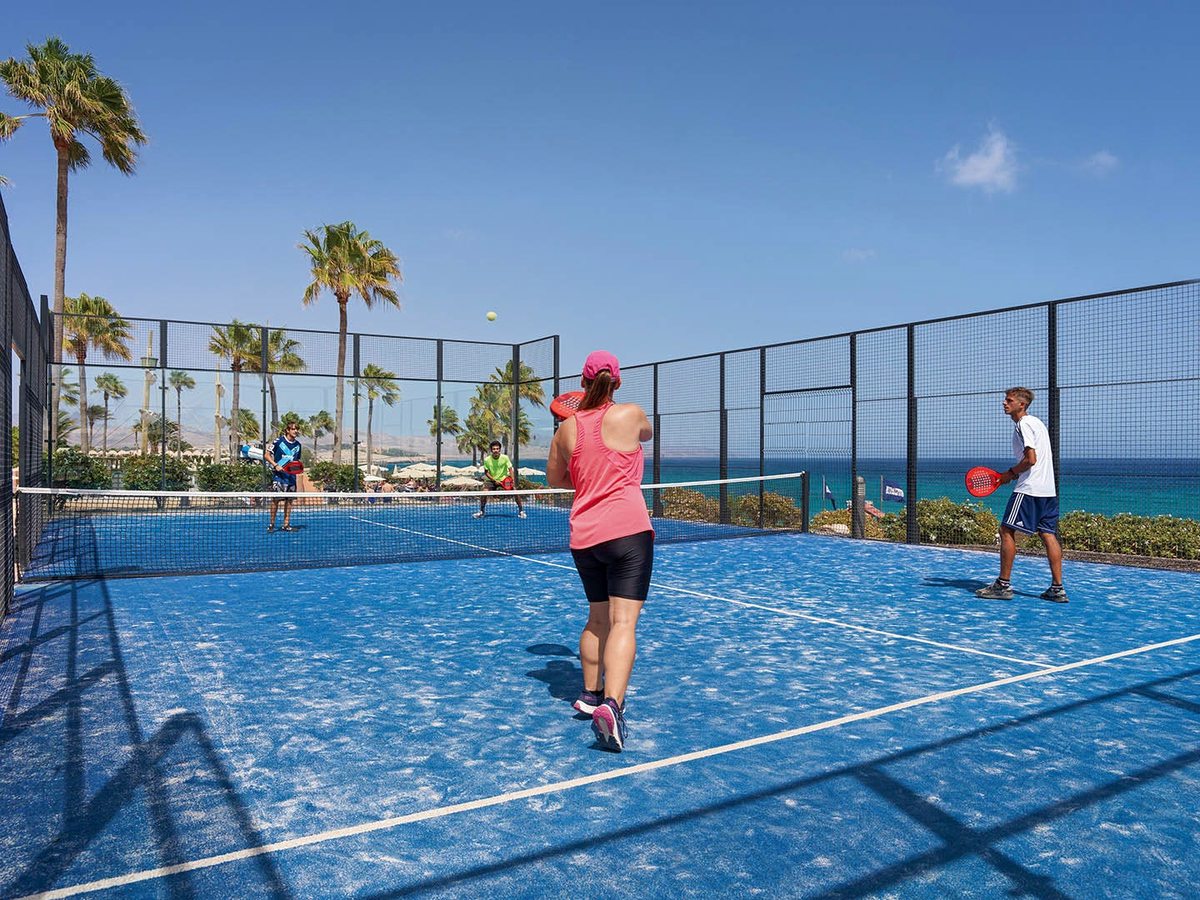
The sports facilities are a padel tennis court, a mini-football pitch, a minigolf course, a beach volleyball court and a multi-sports court. The gym is complimentary, which makes it the only part of the wellness offer you don't pay for.
The Blue Team runs an organised programme through the day: giant chess, table tennis, boules, rifle and pistol shooting, darts, aquagym, stretching, yoga, card and board games. Gaming machines and the pool table carry an extra charge. Evenings are the Tarajal Ballroom, with a different live show each night, the format changing between music and performances, and the children's minidisco in the same room.
The Despacio Thalasso Centre is the spa, and everything in it is paid apart from the gym. Inside there's the therapy dynamic pool with its jets, cannons and waterfalls, a bithermal shower that alternates hot and cold, a Jacuzzi, a sauna, a Turkish bath and an outdoor terrace with sea views, plus treatment booths for body treatments, facials, wraps, massages and beauty, with hairdressing by appointment. The thing for families to know is that under-16s aren't admitted, apart from what H10 calls the Thalasso Family programme, and the hotel is the place to ask what that involves and when it runs. So with children in tow, the spa is a take-turns proposition.
On the beach, the wind sports are run by independent providers rather than the hotel. Kitesurfing, windsurfing and other water sports operate from the sand, with lessons available at the beach-based centres. For a family with older children or teenagers, that's the most interesting thing within walking distance of the room.
The hotel also has its own boutiques, hairdressers and a medical service, all at extra charge.
The area and days out
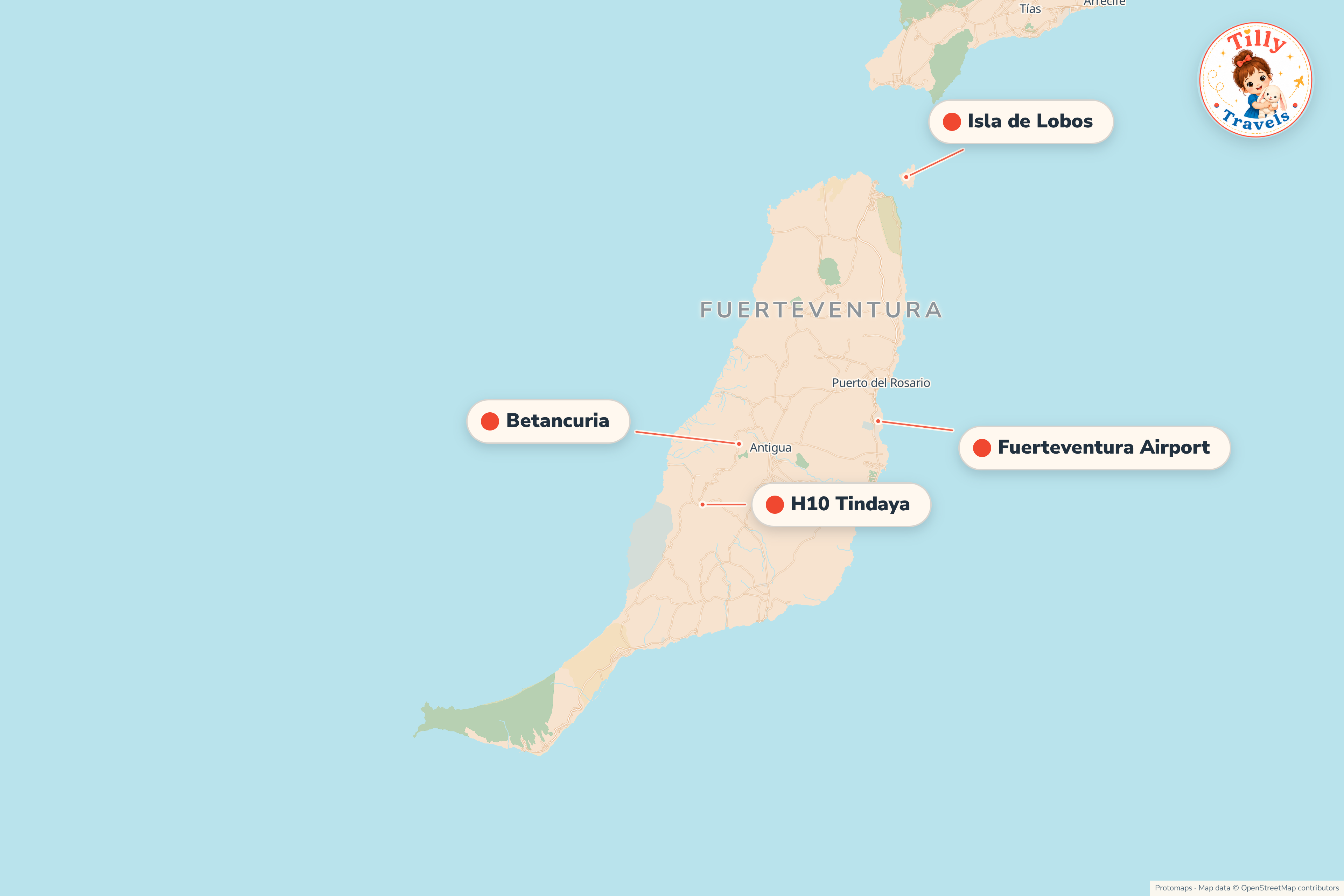
Costa Calma on foot, the one big day out that works with little ones and how far the rest of the island really is.
Costa Calma itself is about 1 km from the hotel: hotels, shops, supermarkets and a handful of restaurants along the main strip. It's quiet, with little nightlife and not much in the way of cultural interest, and that's the appeal for a chunk of the families who stay here. For a wider range of shops you're driving south to Jandía and Morro Jable, about 12 miles (20 km).
Oasis Park Fuerteventura at La Lajita is the day out that lands best with young children, about 15 minutes' drive and 6 miles (10 km) away. It's an animal park and botanical garden covering 780,000m² with around 3,000 animals. The parts that work at this age are the children's zoo, with goats, ponies, tortoises, rabbits and guinea pigs, plus camel rides, sea lion and bird shows and feeding the giraffes. Shuttle buses run there from Costa Calma, so it's doable without a car.
South of you, the Jandía Natural Park is about 12 miles (20 km): a protected, windswept peninsula of volcanic scenery and unspoilt beaches, which is a scenic drive rather than a children's day. Morro Jable and Jandía beach are the same distance, Jandía being one of the island's best-known resort beaches, and the port at Morro Jable runs ferries across to Gran Canaria and Tenerife.
North of you the distances get longer. Betancuria Natural Park is about 28 miles (45 km), taking in the island's historic capital and the park around it, and it's a half-day out with some scenery and history in it. Corralejo is about 53 miles (85 km), which is a full day from here rather than a morning: it's the lively resort in the north, with the Acua Water Park, better for older children than toddlers, the natural dune park and ferries to Isla de Lobos and Lanzarote. For golf, Las Playitas is about 19 miles (30 km) and Caleta de Fuste about 35 miles (57 km), and the island has less of it than Tenerife or Gran Canaria.
On transport, a hire car is what makes the island reachable from Costa Calma, and parking is in the surrounding streets, reported as free and not difficult. The alternative is the Tiadhe bus, line 1, which runs from Puerto del Rosario to Morro Jable through Costa Calma, though only every few hours. That's fine for a planned trip to one place and hard work as your way of getting around.
Loves and gripes
What guests rate and what frustrates them, and how the hotel sits against the rest of the island's family field.
What families love
- The beach, by a distance the most mentioned thing, with the low-tide lagoon giving the calm shallow water families with young children rate most.
- The heated children's pools and the tiered splash park.
- The Daisy Club and the entertainment team, described as enthusiastic and good with children.
- The location and the grounds, with well-kept gardens and sea views from a lot of the rooms.
- Staff friendliness across reception, the restaurants and housekeeping, which comes up repeatedly.
- The variety at the Betancuria buffet, the meat counter especially, with Route 66 treated as a fun bonus.
- Cleanliness, which scores highly throughout.
- That it works outside peak season, which matters if you're dodging August prices.
Common gripes
- The wind, the most-flagged thing about the place and strongest in the hottest months.
- Paying for beach loungers when the pool ones are included, the naturist stretch coming as a surprise and the steps down to the sand.
- No structured childcare for under-4s, where some competitors on the island do have it.
- Wi-Fi, the clear outlier in how guests score the hotel.
- Slow check-in on busy arrival days, with 3pm meaning 3pm in practice.
- A minority mention limited English among some restaurant and bar staff, though most reviews don't raise it.
The numbers behind that are consistent wherever you look. As of June 2026 H10's own site shows 4.3 out of 5 from around 6,200 reviews, Booking.com has it at 8.5 out of 10 from 194 English-language reviews, and it's highly rated on TripAdvisor. Booking.com's sub-scores are the useful part, because they show where the strength is: location 9.0, cleanliness 8.9, staff 8.9, comfort 8.8, facilities 8.7 and value 8.4, with Wi-Fi at 6.2. Everything guests rate except the Wi-Fi sits at 8.4 or above, and the 6.2 is a long way below the rest. One guest at the end of a ten-night stay put it as well as anyone: it does not exceed in every aspect, but it does not let you down in any aspect either. Scores move, so treat these as a rough steer and check the current ones before you book.
Against the island's family fieldHow it compares
Fuerteventura's family hotels split by coast, and the coast is most of the decision.
On the east, Caleta de Fuste is the sheltered option, and it's the direct answer to the two things this hotel can't fix. Its beach sits in a man-made bay, so the water is calmer for a toddler than an Atlantic shore facing the trade wind, and the airport is 4 miles away rather than 40. Elba Castillo is the one to price against this hotel if your children are under 3: it has bottle warmers, microwaves and baby baths, sits 300m from the beach and lands in a similar price band. Barceló Fuerteventura Castillo is on the same bay with a pirate splash complex, and the Sheraton Fuerteventura is the 5-star and pricier version of the same idea, with the Yambaland indoor playroom.
In the south, Iberostar Waves Gaviotas Park at Jandía is the closest thing to a like-for-like rival: directly on Jandía beach, renovated in 2024, rating higher than this hotel at 9.0 on Booking.com, with a 4 to 12 kids' club like the Daisy Club and, unlike here, actual baby equipment hire. The transfer is similar. TUI MAGIC LIFE at Jandía is a club and village format with apartment-style rooms, and its kids' club starts at 3 rather than 4, which is a year that matters to some families. In the north, Barceló Corralejo Sands puts you in a livelier town with a pirate ship splash area and a shorter transfer, with the beach a five-minute walk instead of behind the hotel. Costa Calma has an H10 sister too, H10 Ocean Suites, which is smaller and pairs an adults-only section with a family area.
Where H10 Tindaya leads that field is the beach and the water: Sotavento at the bottom of the gardens, the lagoon, the heated children's pools, the splash park, the Despacio spa and a large volume of positive recent reviews behind it. Where it trails is childcare, since there's no crèche; the beach, which is windier than the sheltered bay at Caleta de Fuste; the transfer, which is the longest on the shortlist; and baby equipment hire, which it doesn't have and two rivals do.
Getting there and when to go
The journey in, the months that suit young children, the weather behind that and the paperwork to have in your hand.
Fuerteventura airport, FUE, is about 40 miles (65 km) from Costa Calma, which works out at 55 to 60 minutes by private transfer.
Whichever way you do it, book it ahead. A transfer has to be requested and arranged in advance, it isn't laid on because you've booked a room, so you don't want to be sorting it out at FUE with tired children. A taxi takes about an hour, and private and shared transfers are the usual alternative. The Tiadhe line 1 bus is the budget option and runs roughly every four hours, which makes it slow going with young children and their luggage. Once you're there, a hire car is what opens up the island.
H10 states no minimum stay, and tour operators commonly package the hotel as seven nights.
On timing, the reasoning here is not the usual one, because the hottest months are also the windiest. October to May, outside the school holidays, gives you the best value and the fewest people, still warm at 20 to 25°C, with the heated children's pools carrying the swimming. June and September sit at 24 to 26°C with the sea warming and less wind than July or August, and prices are reasonable outside the UK holidays. July and August are the hottest, windiest, busiest and most expensive weeks, with the sea at 21 to 22°C and the championships making Sotavento very busy in late July. November to February is the quietest and cheapest, mild at 20 to 23°C, with the wind often lower and a sea between 18 and 22°C, cold enough by mid-winter that swimming means the heated children's pools.
Month by monthWeather
Fuerteventura is a hot desert climate, which in practice means warm sunshine all year and very little variation between the seasons. Rain barely happens: around 80 mm falls in a whole year, and effectively none of it between April and September. Sunshine runs from six or seven hours a day in midwinter to nine or ten at the height of summer. The one weather event worth knowing is the calima, when Saharan dust blows across the islands, cutting visibility and making the air feel hotter and heavier; it happens five to ten times a year, most often between May and August.
| Month | Daytime high | Overnight low | Rain | Wet days | Sea temp |
|---|---|---|---|---|---|
| January | 20.5° | 16° | 14 mm | 2 | 19° |
| February | 20.5° | 15.5° | 16 mm | 2 | 18° |
| March | 21.5° | 16° | 12 mm | 2 | 18° |
| April | 22.5° | 17° | 5 mm | 1 | 19° |
| May | 24.5° | 18.5° | 1 mm | 0 | 20° |
| June | 25.5° | 20° | 0 mm | 0 | 21° |
| July | 27° | 21.5° | 0 mm | 0 | 22° |
| August | 27.5° | 22.5° | 0 mm | 0 | 23° |
| September | 26.5° | 22° | 2 mm | 0 | 23° |
| October | 26° | 21° | 8 mm | 2 | 23° |
| November | 23.5° | 19° | 13 mm | 2 | 22° |
| December | 21.5° | 17° | 26 mm | 3 | 21° |
Typical monthly averages from weather-station records. Sea temperature is the open-water figure, so a sheltered bay can feel a degree or two warmer.
Supplies, health and the paperwork before you go
For supplies, a supermarket is about ten minutes' walk from the hotel and Costa Calma's centre is about 1 km off, with a pharmacy there. Between them they cover nappies, formula, baby food and sun cream, so the week's supplies don't have to come out of your baggage allowance. The hotel has a medical service of its own at extra charge.
On paperwork at check-in, this is the one that surprises UK families. Since December 2024 Spanish hotels have had to record each guest's document details for a national register, covering the passport or ID number, nationality and date of birth, and for a child travelling with an adult, that child's relationship to them. Staff read the document rather than photocopy it. The practical version is simple: have passports or ID out for everyone in the room, children included, when you get to the desk.
On entry, Spain and the Canaries are in the Schengen Area, and UK passport holders need no visa for tourist stays of up to 90 days in any 180. Get a UK Global Health Insurance Card before you travel, the GHIC, which covers emergency healthcare in Spain, and keep travel insurance alongside it rather than instead of it.
The last two are small. Sockets are the European type C and F, two round pins at 220 to 240V, so pack an adaptor. The currency is the euro, and the Canaries sit in the EU customs union but outside its VAT area, so duty-free allowances apply on the way home.
Questions
The things families ask most, and where to see the photos.
Can we leave a two-year-old anywhere for an hour?
No. Nothing runs below the Daisy Club's age of 4, so for a two-year-old there's no drop-off option here at all. If a couple of hours to yourselves is something you need rather than a nice-to-have, that's a reason to weigh the other island hotels against this one before you settle on it.
Is the lagoon always there?
No, it comes and goes with the tide. The calm shallow water forms behind a sand barrier that surfaces at low tide, so it's a few hours of the day rather than all of it. Look up the day's tides when you arrive and put the beach mornings where they fall.
How do we get a pram down to the sand?
The route guests describe is a flight of steps and a security gate you open with your room key. Put the question to H10 before you book rather than at the desk on arrival, since the answer decides whether the beach is a carry or a walk, and that's worth knowing while you can still choose a different hotel.
Will we end up next to the naturist section?
Only if you choose to. Part of the sand next to the hotel is used for naturist bathing, which surprises families who arrive not knowing. Sotavento runs for around 9 km across five named sections, so there's room to walk along and sit somewhere else.
Do we need to book dinner?
Route 66 yes, through the hotel app or at the restaurant itself, and your all-inclusive covers one dinner there per six nights with any extra visits charged. Guests describe the Betancuria buffet running on timed sittings, so you pick a slot instead of queueing. Book the Route 66 night early in the week, since the app is where the tables go.
Will the pools be warm in November?
The two children's pools are heated all year, so yes for the children. The adult pools are a different picture. One is heated over the winter, though plenty of guests still describe the adult water as cold outside summer, so don't count on lengths for yourself.
Can we take turns in the spa?
Not with children in tow. The Despacio Thalasso Centre doesn't admit under-16s, apart from something H10 calls the Thalasso Family programme, so one of you goes while the other is on. If that programme is the reason you're interested, ask the hotel what it involves and when it runs before you count on it.
What will the Daisy Club cost us?
H10 doesn't publish a price for it, and on an all-inclusive rate it's understood to be included rather than charged separately, though it's worth confirming when you book. If you booked through an operator on another board, check it's covered by your rate. While you're asking, get the hours and how the sessions are staffed, since those decide whether the club is somewhere your child spends a morning or drops into for twenty minutes.
What do we need at check-in?
Passports or ID for everyone in the room, children included. Spanish hotels have to record each guest's document details for a national register, and staff read the document rather than photocopy it, so it's a five-minute job at the desk if you have them to hand and a scramble through the bags if you don't.
Is it too windy for a baby on the beach?
Some days, yes, and the odd part is that the hottest months are the windiest ones here. If the sand is blowing, the gardens and the pool terraces sit lower and more sheltered than the shore. November to February is the calmer stretch if a still beach matters more to you than a warm sea.
See H10 Tindaya photos
Open the H10 Tindaya photo gallery →Useful links
- H10 Tindaya: the hotel's own site for the rooms, the all-inclusive terms, the Daisy Club and the Privilege package.
- Address and contact: C/ Punta del Roquito s/n, 35627 Costa Calma, Pájara, Fuerteventura. Phone +34 928 54 70 20, email [email protected].
- GOV.UK Spain travel advice: entry rules and safety updates before you travel.
- Fuerteventura with little ones: our guide to the island, its coasts and when to go.
Last updated 16 July 2026.