Vakkaru Maldives
Vakkaru Maldives is a private-island resort in Baa Atoll, a UNESCO-protected reef area in the northern Maldives, set on a former coconut plantation still shaded by more than 2,300 palms. Families come for villas with their own pools, a house reef you can snorkel straight off the sand, a children's club and a rare teen hangout that stays open around the clock.
On this page
Is it worth it?
The quick read before the detail: who Vakkaru suits, what sits on top of the room rate, and the facts to skim first.
Vakkaru is a private-island resort at the top end of the Maldives, and one of its more characterful islands, a former coconut plantation left dense with palms rather than landscaped smooth. You come for the setting, the house reef straight off the sand and villas with their own pools, and for a rare set of facilities that suit teenagers as well as little ones. It isn't all-inclusive, so dinners, trips and wine build up on your bill, and getting here means a seaplane or a domestic flight and boat rather than a short transfer. You'll get the most from it if you want a real island with wildlife and a reef on the doorstep, you have children across a range of ages, and the extra spending doesn't put you off.
Best for
You want a private island with real character, a house reef off the sand, a proper teen hangout and a villa with a pool, and you are happy to book good dining and trips as you go.
Maybe not for
You are on a set budget, you want everything included, or you are travelling with a baby and would find the seaplane and the lap-held flight hard work.
Best ages
Strong for teenagers and school-age children, with the club running ages 3 to 12. Under-3s are welcome but need a parent or babysitter alongside, and the overwater villas suit older children.
What stands out
The 24-hour Coconut Club for teenagers, a jungle island of more than 2,300 palms, and a house reef with a natural blue hole you snorkel straight off the beach.
What to check
How you will manage the seaplane with a baby, whether you want a beach villa rather than overwater, and the dining and transfer costs that sit on top of the room.
Where is it?
On its own island in Baa Atoll, a UNESCO-protected reef area in the northern Maldives, about a 30-minute seaplane from Malé.
Quick facts for families
A private island under 2,300 palms
What Vakkaru is like to be on, how you get around, and the long way in from Malé.
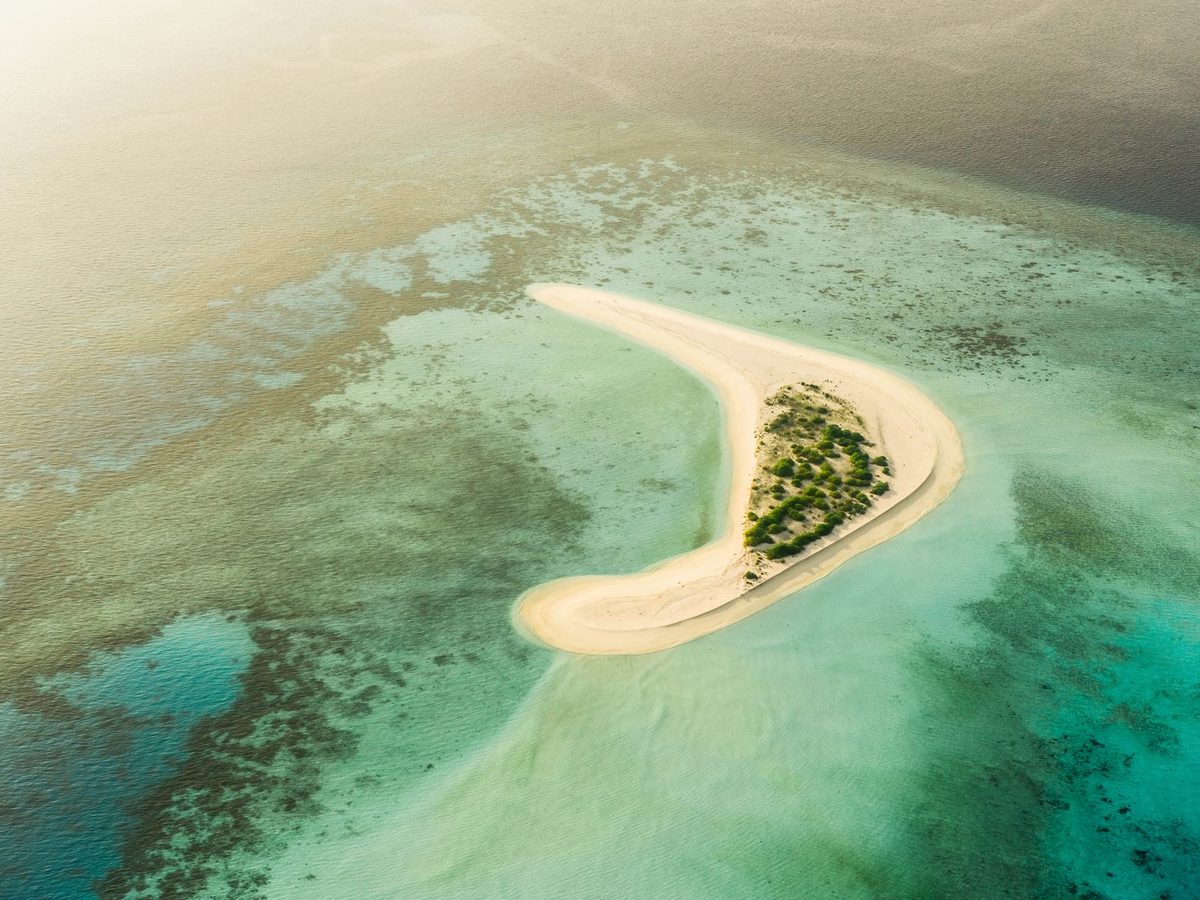
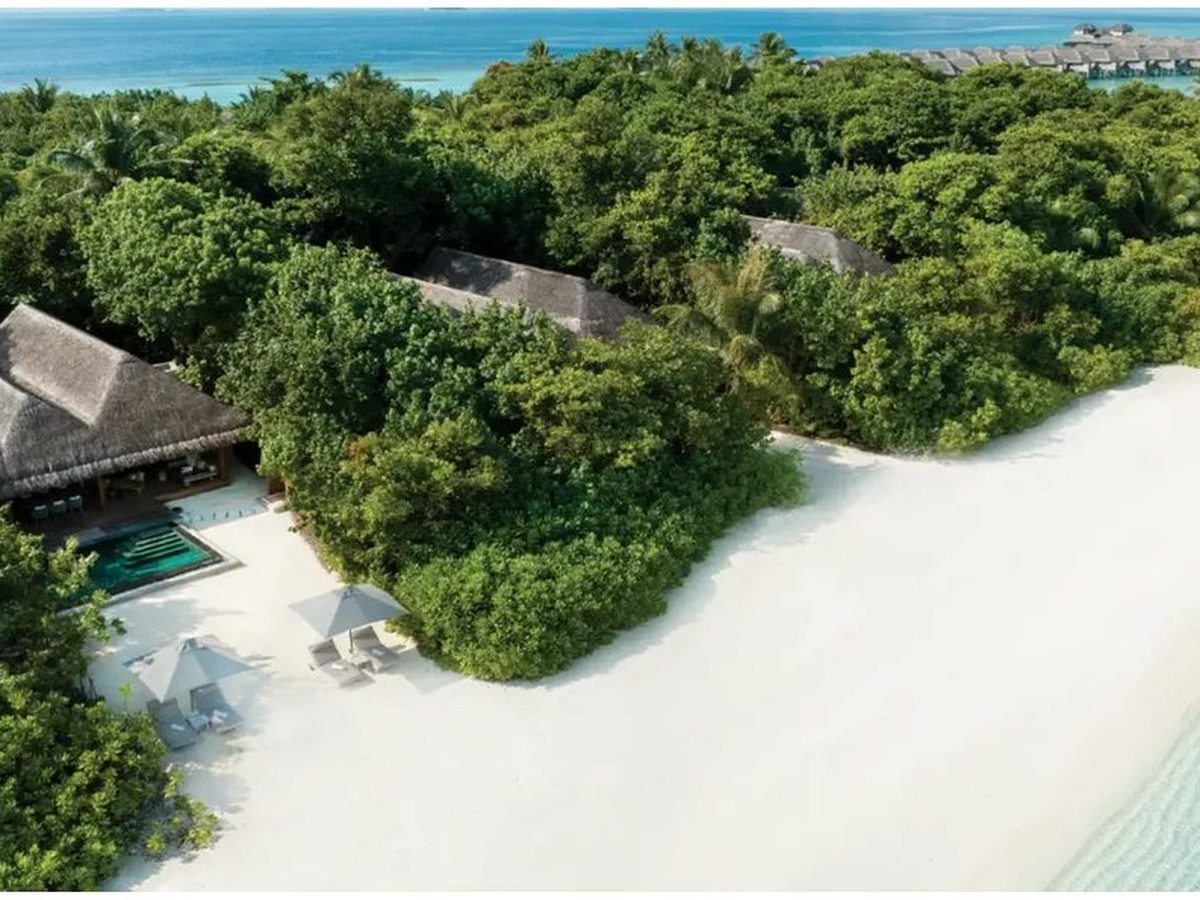
Vakkaru is a single island with a single resort on it, so you won't share it with a village or another hotel. It was a coconut plantation before it opened as a resort in December 2017, and more than 2,300 palms still stand, which gives it a dense, jungle-like feel that the newer, more manicured Maldives islands don't have. The name itself means coconut timber. Days here are lived between your villa, the beach and the reef, with the wider atoll reached by boat.
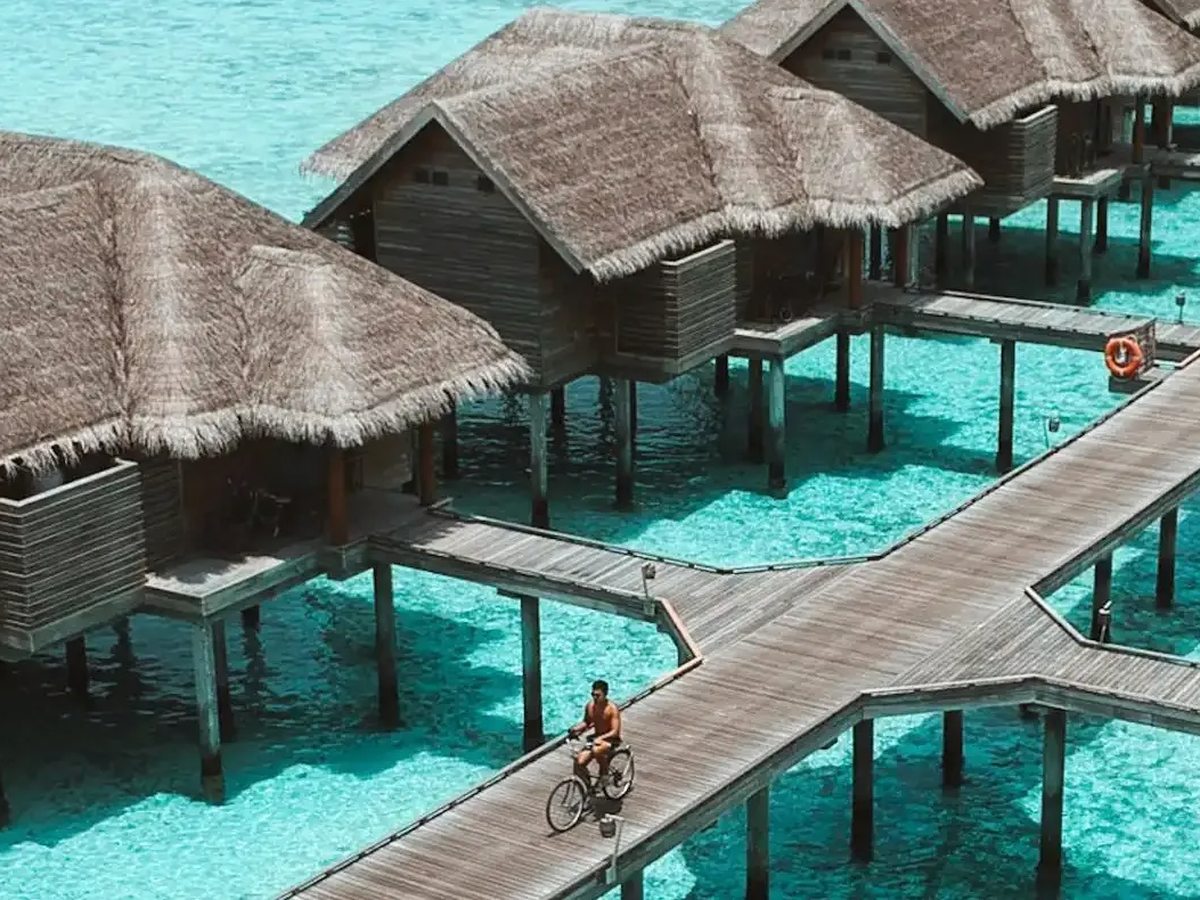
You get around on foot or by bike, with complimentary bicycles to borrow and a jogging path circling the island. There are no golf buggies, the little electric carts that bigger resorts use to shuttle guests about, because the island is small enough to walk. Sand underfoot means it isn't well suited to guests with reduced mobility, though the restaurants and communal areas are reachable step-free.
The island keeps its own clock, an hour ahead of the capital Malé, to stretch the daylight. Your phone may still show Malé time, so it's worth setting a watch to the resort's time when you land. Vakkaru makes its own drinking water from seawater with a reverse-osmosis plant and serves it still or sparkling in glass bottles, runs without single-use plastic, and grows fruit, vegetables and herbs on an organic farm for its kitchens. There's free WiFi across the island.
Getting there
There's no road, bridge or walkway to Vakkaru, so you arrive from Malé by air. The usual way is a shared seaplane, up to fifteen passengers, that takes about thirty minutes and lands right at the island. Seaplanes fly in daylight only, so an inbound flight has to arrive between 6:00am and 3:30pm, and a departing flight can only be scheduled from 9:00am. If your international flight lands later than 3:30pm, the alternative is a twenty-minute domestic flight to Dharavandhoo airport in Baa Atoll followed by a speedboat of around half an hour, and that route runs whatever the hour.
The transfers are charged per person round trip: $960 for an adult, $480 for a child aged two to eleven, and free for an infant under two on a parent's lap (all last checked June 2026), and booking direct can take up to a quarter off. While you wait at the seaplane terminal in Malé there's a private resort lounge with drinks, snacks and WiFi. Your baggage allowance is 20kg checked and 5kg cabin, with excess charged by the kilo, and it's worth knowing the hold on a seaplane isn't reachable in flight, so anything you'll want on the way stays in the cabin with you. Check-in is from 2:00pm and check-out is noon, with a later check-out possible for a charge if the villa is free. The resort asks for your flight details at least 72 hours before arrival and your transfer details at least 96 hours before, so it can slot your transfer in. Current fares and the transfer schedule are on the official site, vakkarumaldives.com.
The villas and residences
Every category with its official size, what all of them include, and which ones suit a family with young children.
There are eleven categories, split into four villas and seven larger residences. All have a 24-hour butler and, apart from the plain Overwater Villa, their own private pool. The table below is the full line-up with the official sizes; the guidance after it is which suit a family.
| Villa or residence | Size | Sleeps | Private pool | View |
|---|---|---|---|---|
| Beach Villa with Plunge Pool | 115 m² | 2 adults + 1 child | 12 m² plunge pool + Jacuzzi | Island / beach |
| Overwater Villa | 140 m² | 2 adults | None | Lagoon |
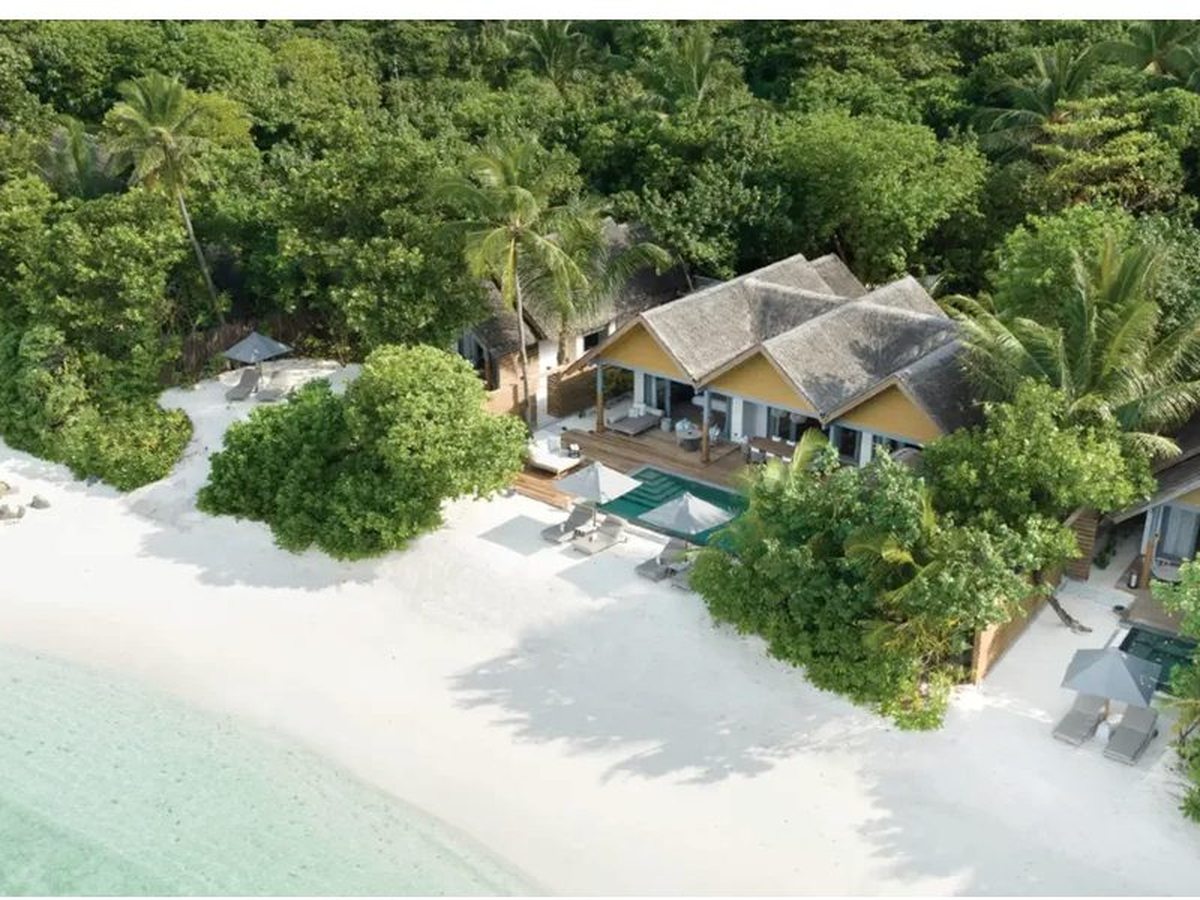
| Beach Pool Villa | 250 m² (105 m² interior) | 2 adults + 2 children (max 3 adults) | 34 m² pool, newly built | Island / beach |
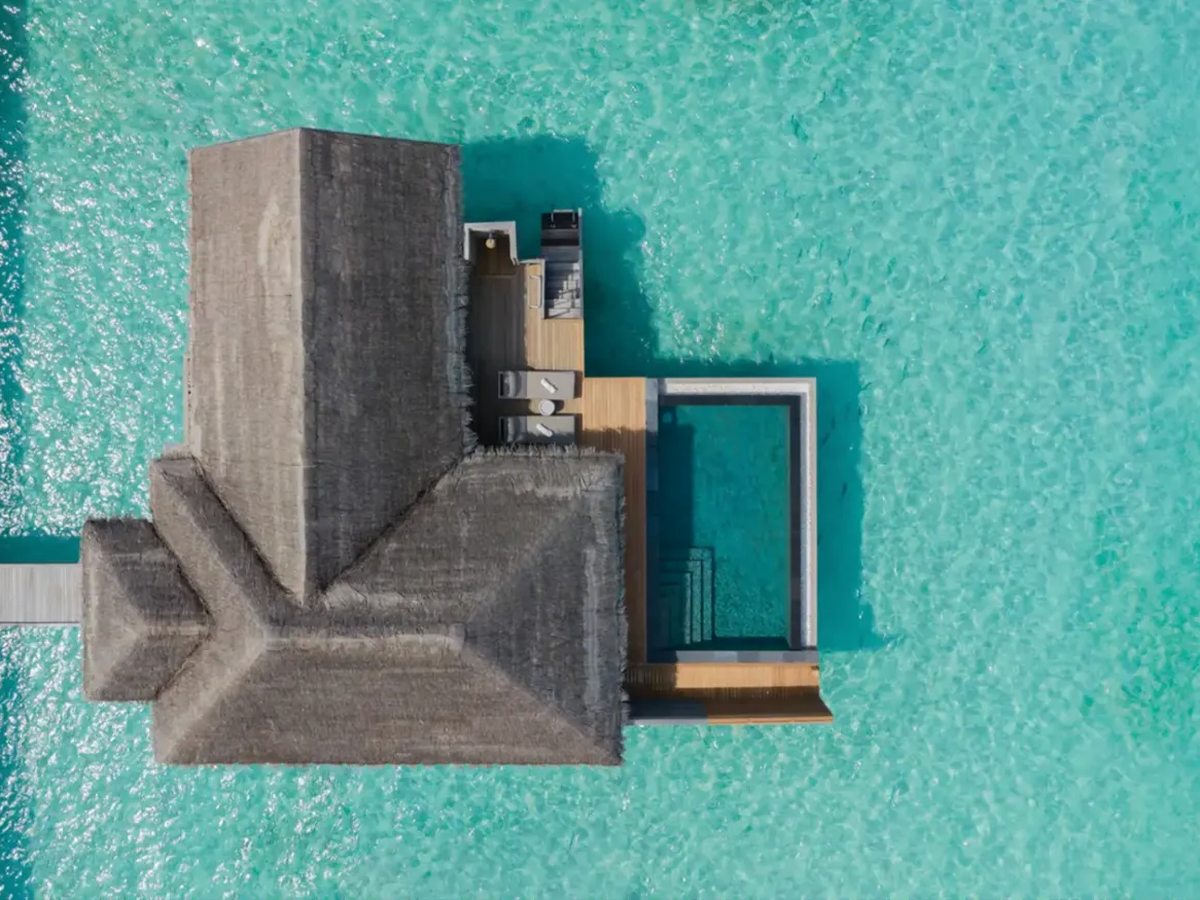
| Overwater Pool Villa | 165 m² | 2 adults + 1 child | 24 m² pool | Lagoon |
| 1 Bed Beach Pool Residence | 285 m² | 2 adults + 2 children | 35 m² pool | Island |
| 1 Bed Deluxe Beach Pool Residence | 245 m² | 2 adults + 2 children | 35 m² pool | Island |
| 1 Bed Overwater Pool Residence | 310 m² | 2 adults + 2 children | 50 m² pool | Lagoon |
| 2 Bed Beach Pool Residence | 500 m² (200 m² interior) | 4 adults + 2 children | 38 m² pool | Island |
| 3 Bed Beach Pool Residence | 700 m² (270 m² interior) | 6 adults + 3 children | 55 m² pool + 12 m² whirlpool | Island |
| 4 Bed Beach Pool Residence | 900 m² (390 m² interior) | 8 adults + 4 children | 68 m² pool + 2 x 12 m² whirlpools | Island |
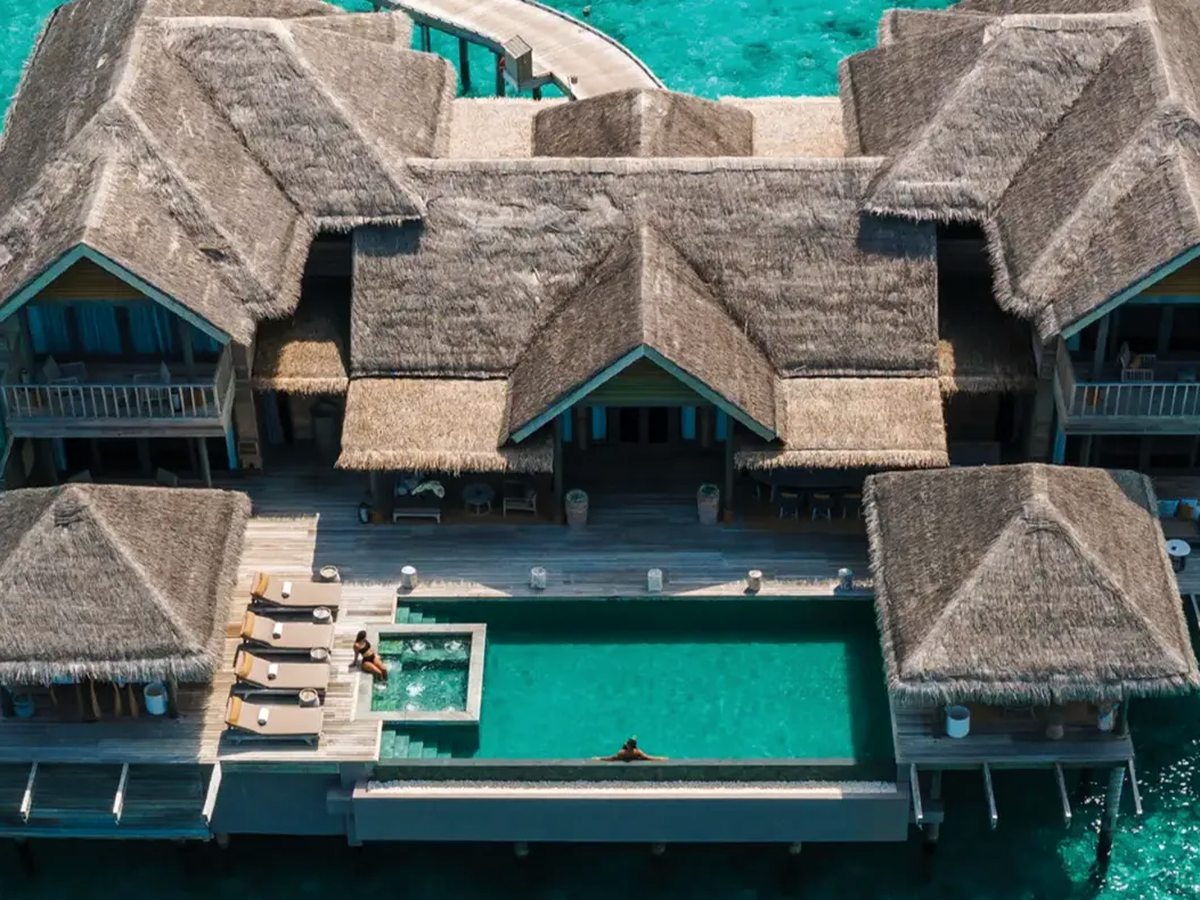
| Vakkaru Overwater Residence | 4-bed, 2-storey | 8 adults, or 4 + 4 children | Infinity pool | Lagoon |
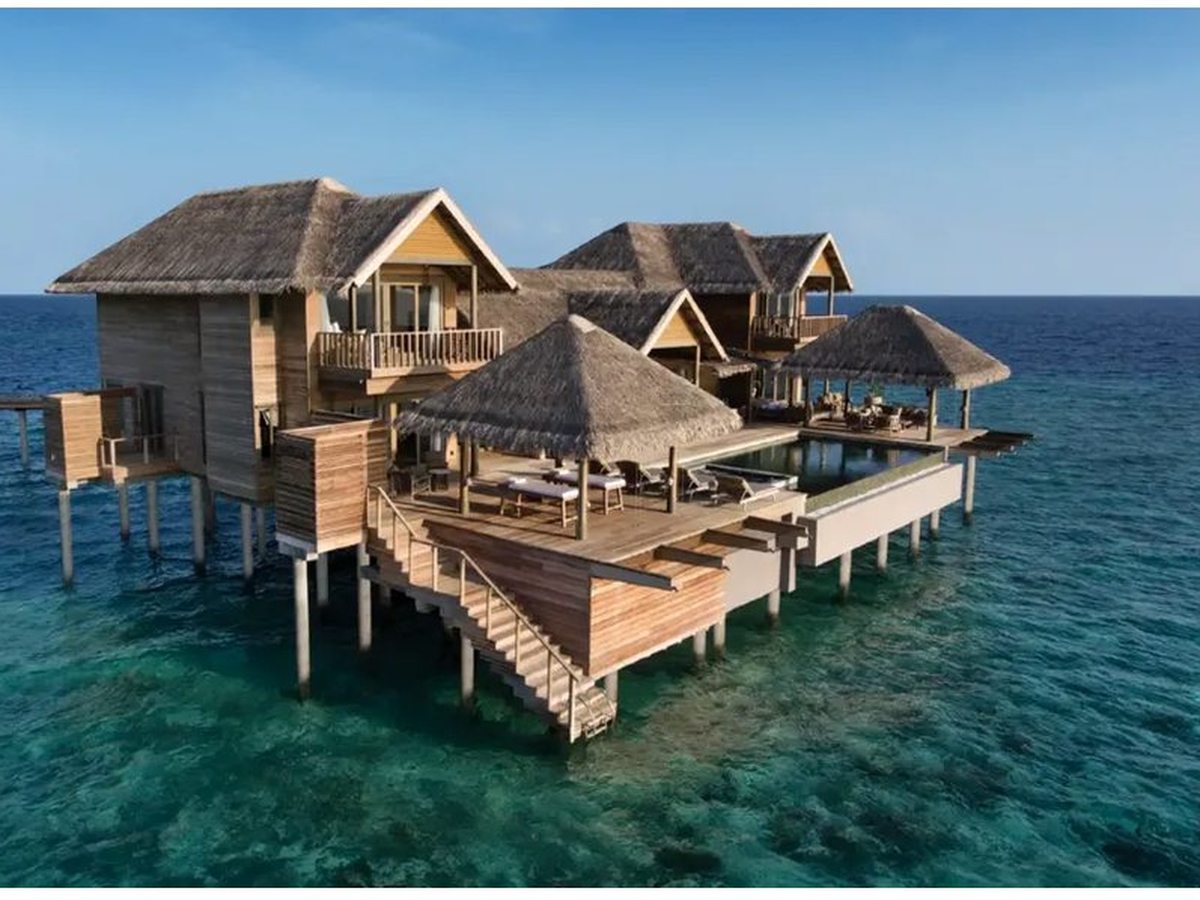
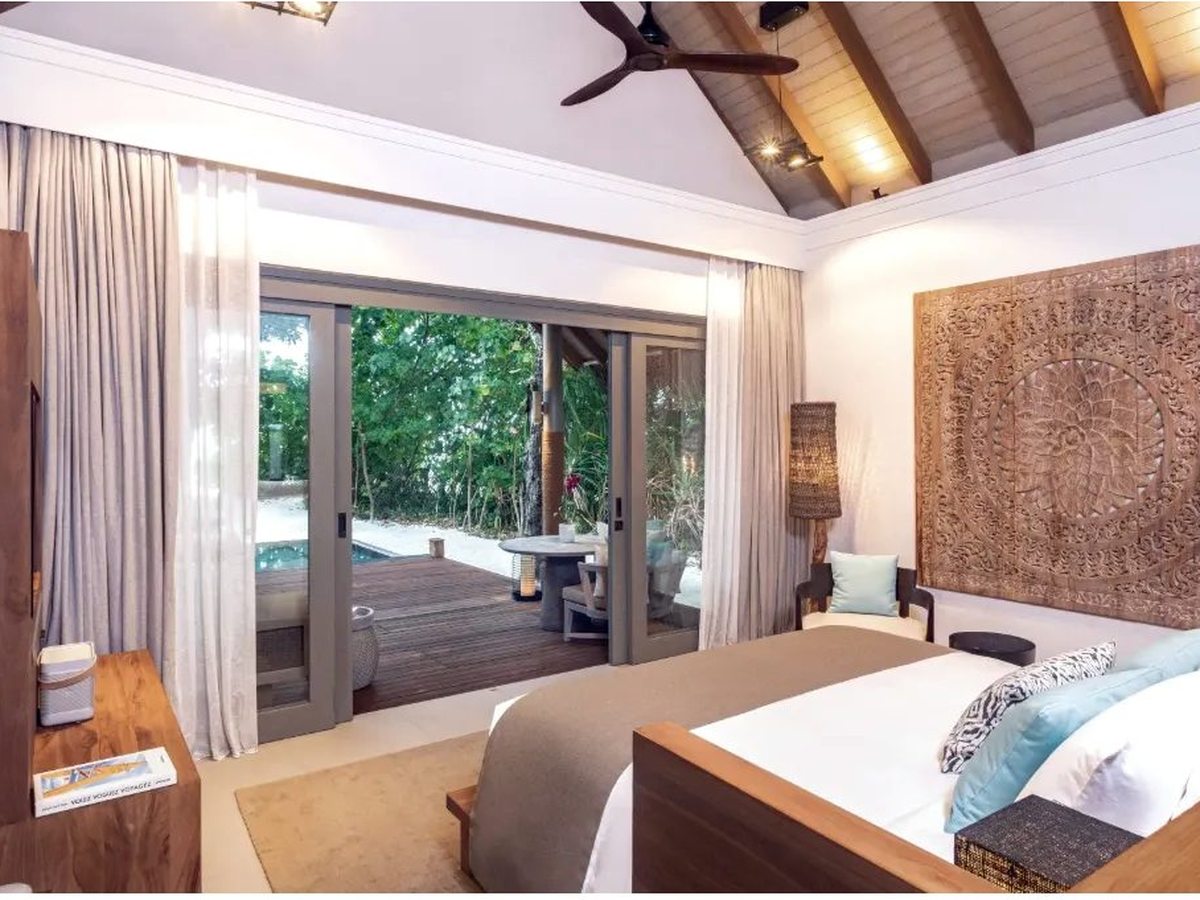
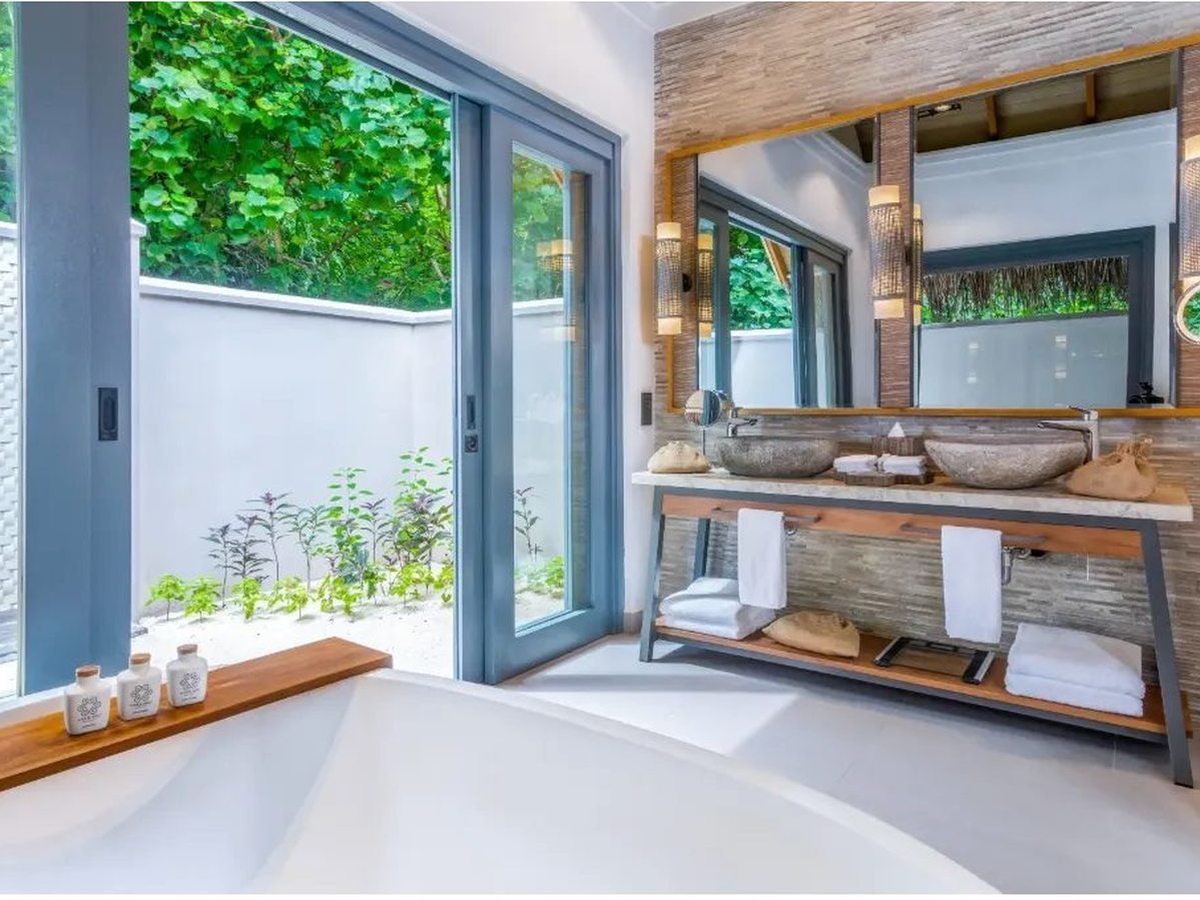
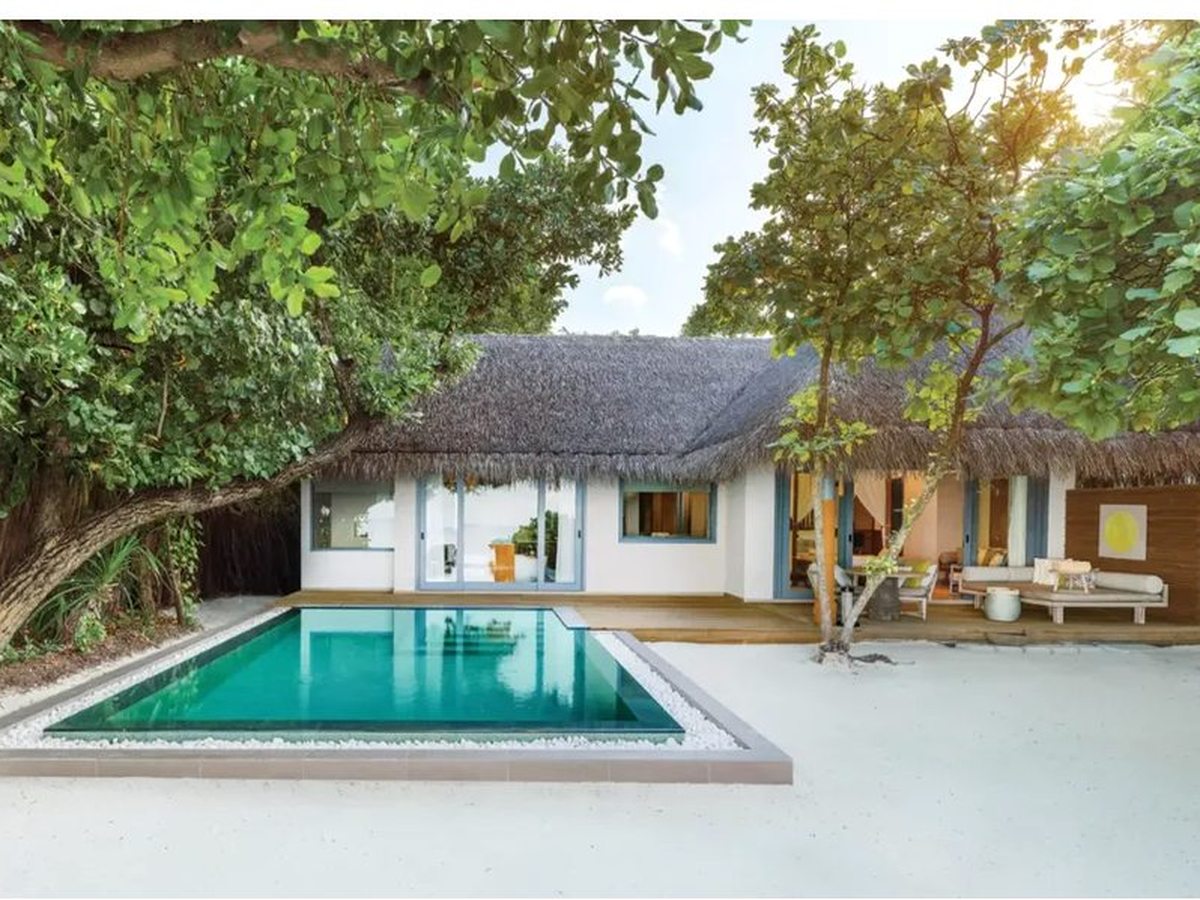
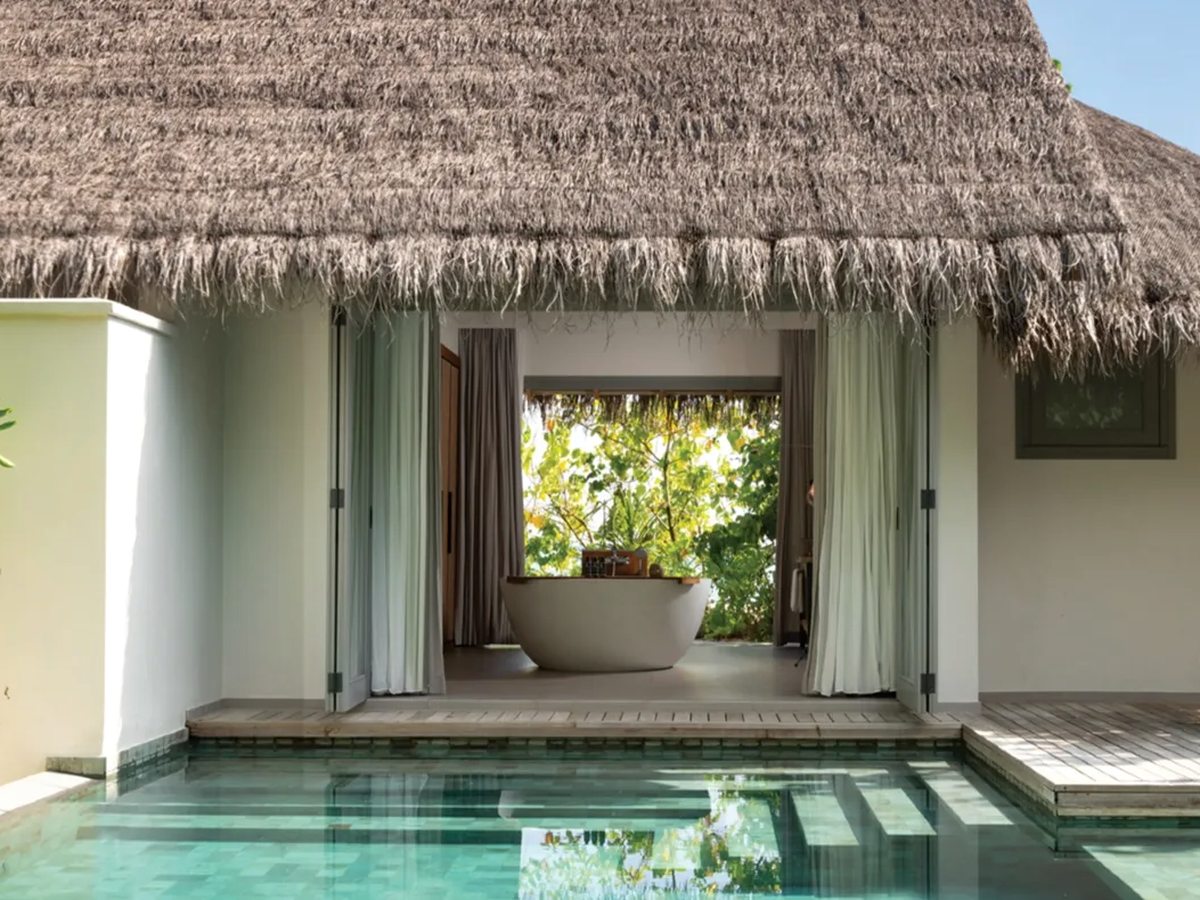
For a family, the entry-level choice is the Beach Pool Villa at 250 m² (105 m² of that indoors), where the indoor lounge converts into a sleeping space for children and a newly built 34 m² pool sits in a private garden. The smallest category, the Beach Villa with Plunge Pool at 115 m², has its own 12 m² plunge pool and Jacuzzi and takes only two adults and one child, so it suits a couple with a baby. The 1 Bed Overwater Pool Residence is the largest of the one-bed categories at 310 m², with a 50 m² infinity pool and a glass floor window looking straight down into the lagoon.
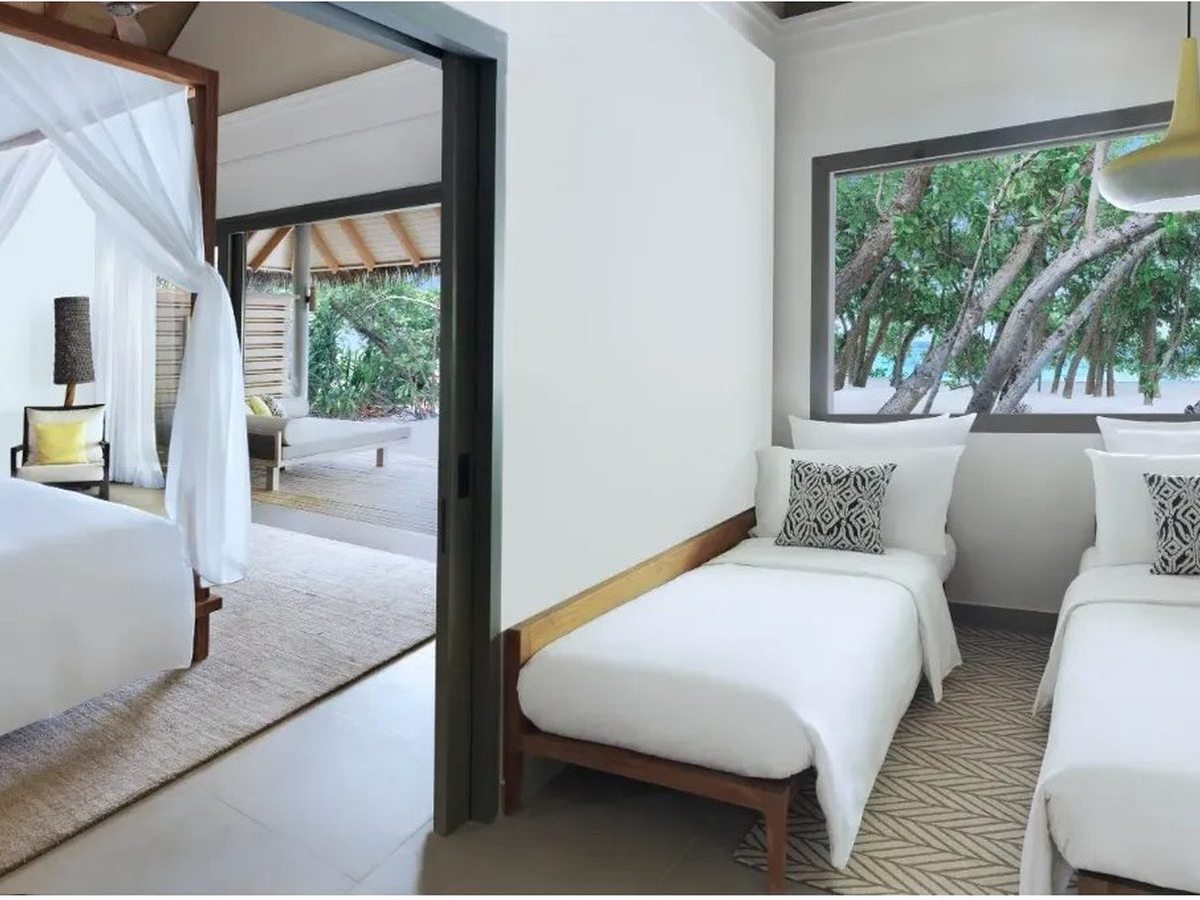
If you need two proper bedrooms and more room to spread out, the 2 Bed Beach Pool Residence at 500 m² (200 m² indoors) is the main family option, sleeping four adults and two children across a king bed, two twins and two daybeds, with a separate living room. The residences scale up from there through three and four bedrooms for larger or multi-family groups, and the 4 Bed Beach Pool Residence at 900 m² (390 m² indoors), with a 68 m² pool and two 12 m² whirlpools, is built for a large multi-family stay. The Vakkaru Overwater Residence is the showpiece, a four-bedroom, two-storey suite over the water with its own pool and a private chef, and it was named the Maldives and Indian Ocean's Leading Hotel Suite at the World Travel Awards in 2023.
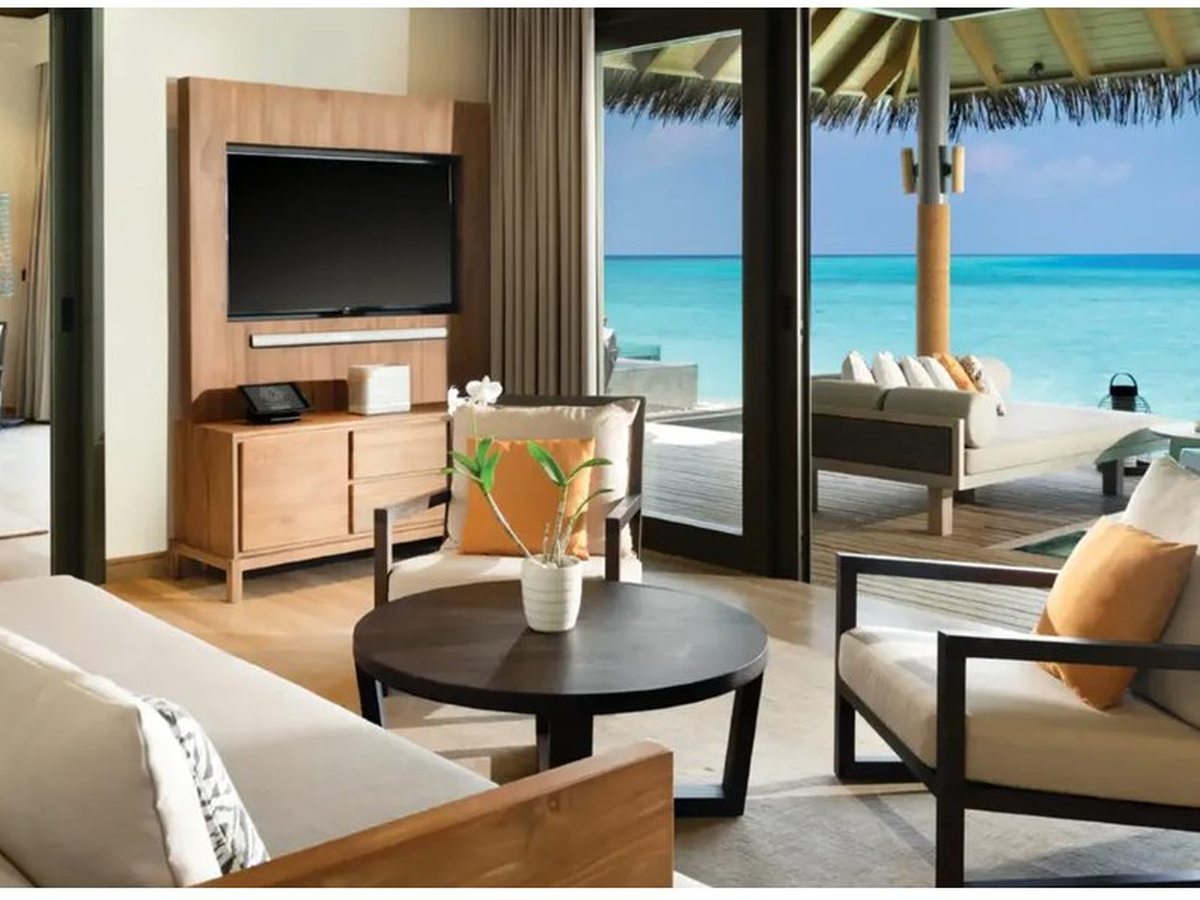
Every villa and residence comes with a 24-hour butler, your point of contact for anything from booking dinner to arranging a sitter, along with iPad-controlled air conditioning, curtains and lights, a Bang and Olufsen speaker, a 43-inch TV in the villas (65-inch in the larger residences), tea and coffee, a minibar, free still and sparkling water made on the island, a yoga mat, bathrobes, organic toiletries and free WiFi.
Families who've stayed describe the villas as carefully set up for small children, and one who travelled with a two-year-old was given a potty, toddler bath products and a pot of sweets on arrival. None of that is guaranteed, so ask ahead for anything you'll need. Cots and extra beds can be arranged subject to availability, with a supplement for extra guests. For accessibility, one Beach Pool Villa and one two-bedroom residence have ramped access and a step-free bathroom.
Beach villa or overwater?
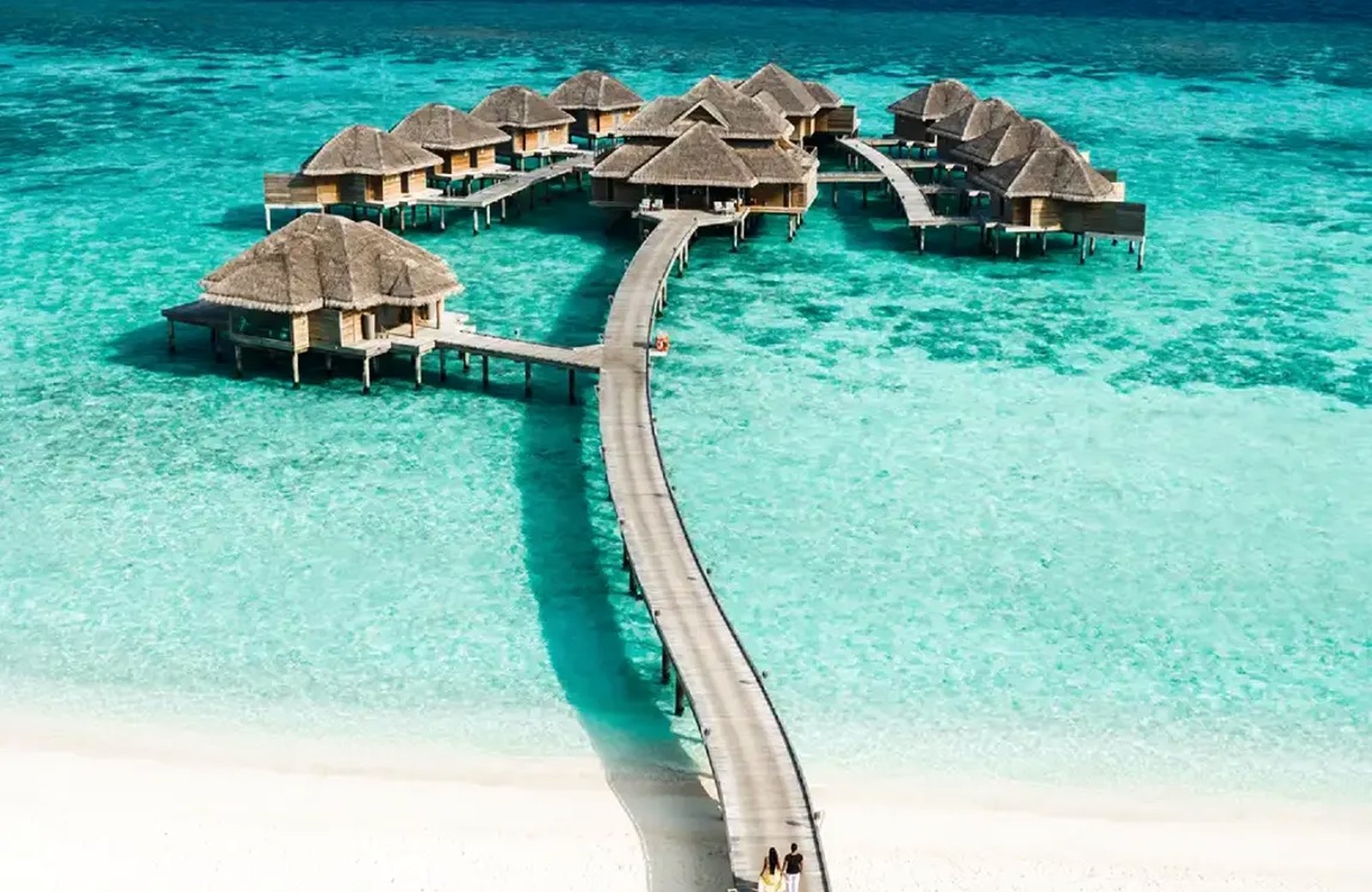
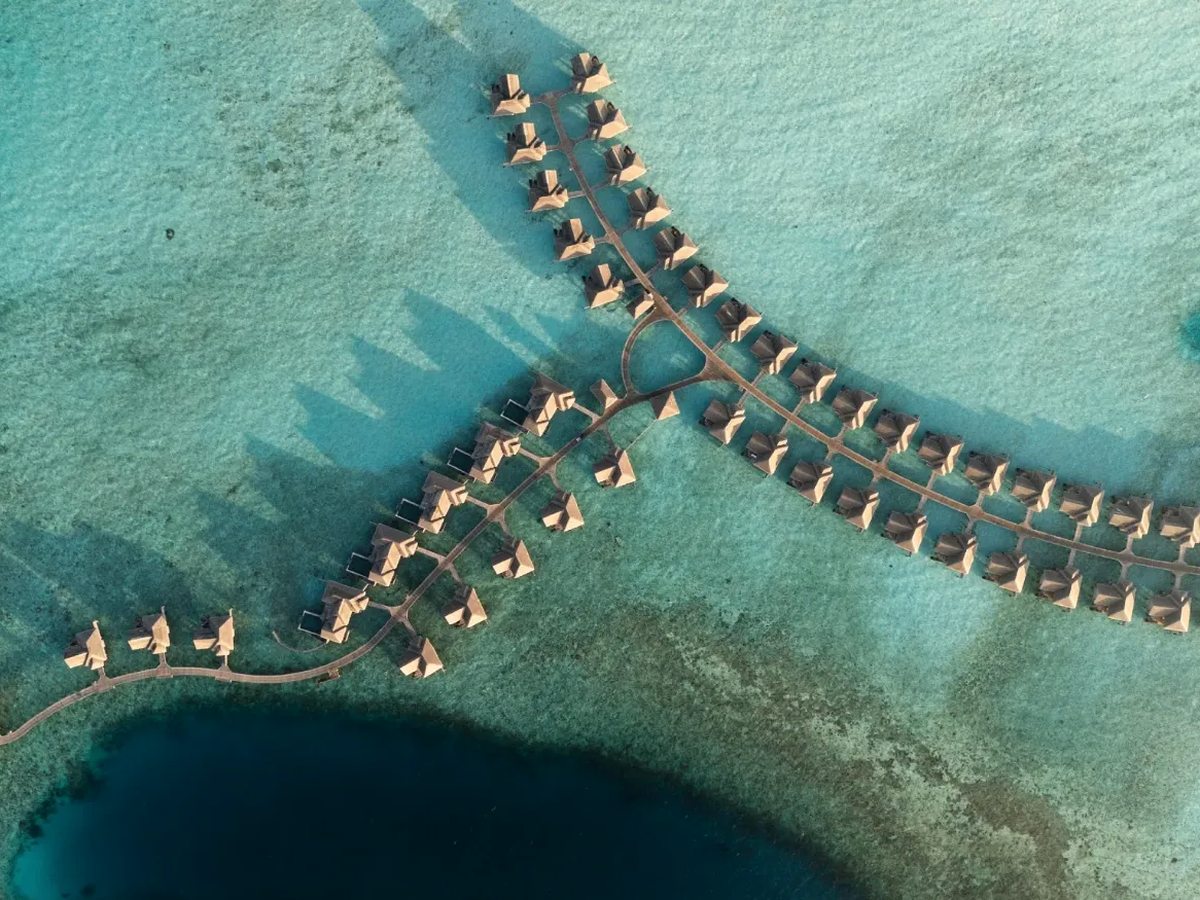
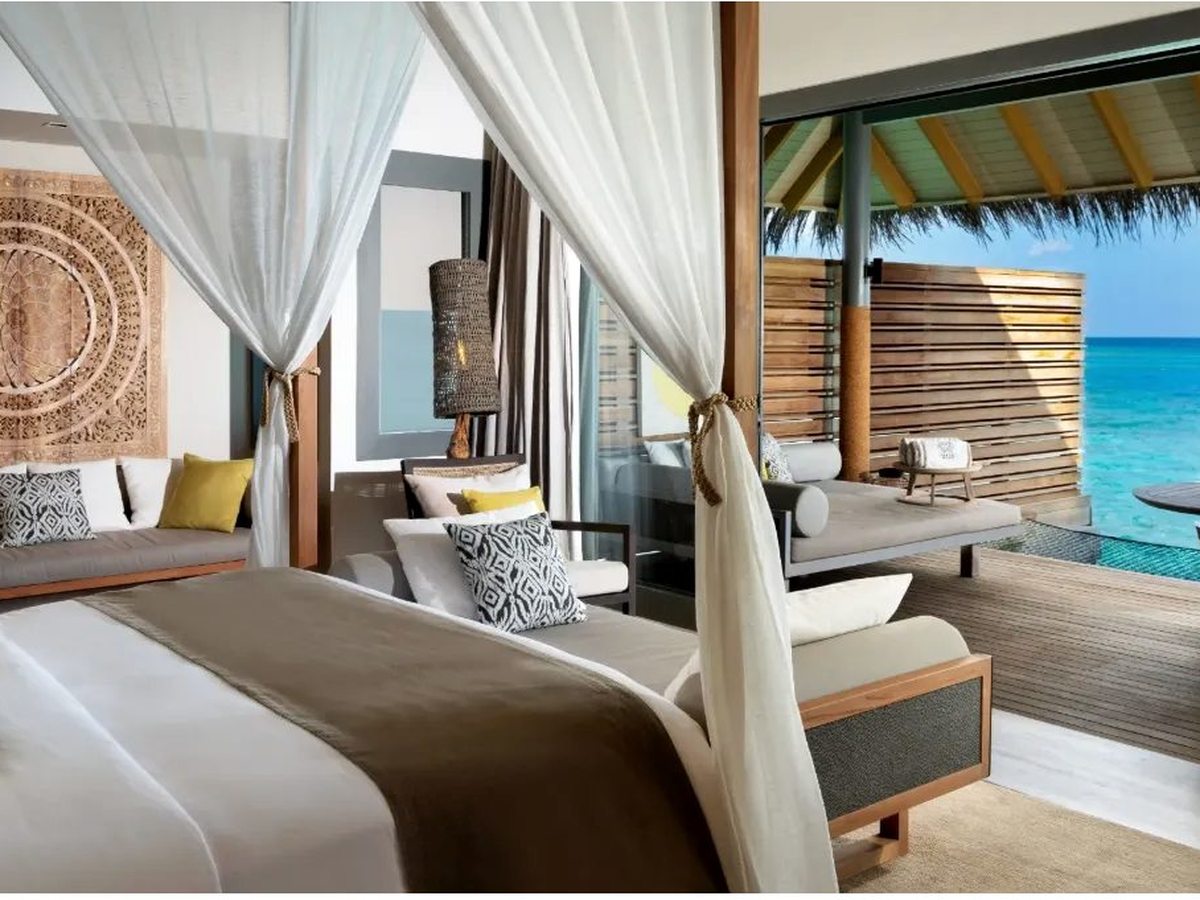
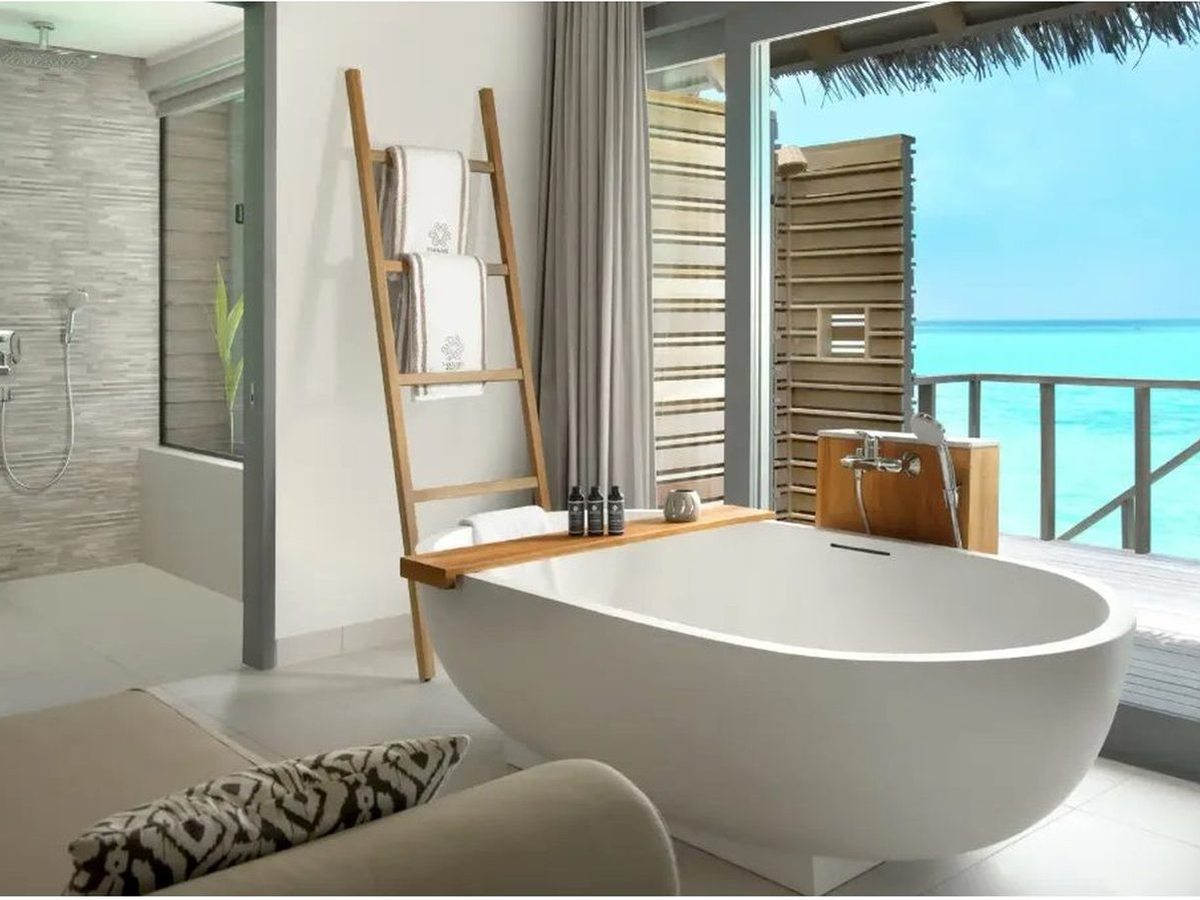
The big villa decision for a family is beach or overwater. Beach villas open onto sand and the lagoon, most with the house reef a few steps away, and the Beach Pool Villa's pool sits in its own garden. Overwater villas stand on stilts above the lagoon, reached by boardwalk, with steps down into the water and, in the case of the plain Overwater Villa, no pool at all.
Reviewers are consistent that the overwater villas suit older children better. The open steps down into the lagoon mean an under-5 needs watching closely, and the plain Overwater Villa has no pool to swim in instead. With a baby or toddler, a beach villa with its own garden and pool, or the two-bedroom residence, is the easier and safer base.
Every restaurant and bar
Each venue in turn, which work best with children, and how booking dinner actually goes.
Dining isn't included beyond breakfast, and there's no all-inclusive plan, so you choose and pay for dinners as you go. There are five restaurants, two bars and a wine cellar.
Amaany is the international buffet on the beachfront, and the main family room. Breakfast runs 7:00am to 10:30am with live cooking stations, and it's included with most packages; on selected evenings it opens again from 6:30pm to 10:00pm for themed buffet dinners. Breakfast needs no booking.
Isoletta is the Italian, a trattoria beside the main pool, and the most flexible for families: lunch runs 12:30pm to 4:00pm, pool snacks 4:00pm to 6:00pm and dinner 6:30pm to 10:00pm, and you can eat straight from the pool without changing. Vakku is the beachside grill, open-air with your feet in the sand, serving grilled meat and seafood at dinner. Onu is the Asian restaurant, with Thai, Vietnamese, Indonesian and Malaysian cooking in a bamboo pavilion, dinner only from 6:30pm to 10:00pm; reviewers single out the lobster curry with mango and pea aubergine. Anguru is a Japanese teppanyaki counter that seats just ten around the grill, à la carte at lunch and a set menu at dinner; the theatre of the chef at the hotplate tends to hold older children, and dinner needs booking ahead.
Cabana is the casual poolside bar for the day, with direct pool access and drinks running 9:00am to 11:00pm, snacks 4:00pm to 6:00pm and poolside service 9:00am to 6:00pm, making it an easy stop between swims. Lagoon Bar sits out over the water on stilts, with sand underfoot, day beds and hammocks, sushi and sashimi and Asian tapas, and it's a fine spot for a family sundowner. Vakkaru Reserve is the wine cellar, an adults-only room with private tastings led by a sommelier and a collection that has taken a Wine Spectator award five times; it suits an evening when the children are at the club or with a sitter.
Beyond the restaurants, you can arrange private meals away from them. A Sandbank Escape is a candlelit dinner or barbecue on a secluded sandbank, and Organic Garden Dining is a walk through the farm to pick ingredients that a chef then cooks for you in an outdoor kitchen. Both are by arrangement and cost extra. Room service runs 24 hours through your butler.
How restaurant booking works
Breakfast at Amaany needs no booking. Dinners are arranged through the resort's reservation system once you're there, and two want planning: Anguru's dinner and the Vakkaru Reserve both need advance notice, the cellar at least a few hours ahead. Since nothing beyond breakfast is included, it's worth keeping an eye on what dinners, trips and drinks are adding up to across the week.
The pools and water features
Where families swim, from the main pool and the children's pool to the water off your own villa.
The main pool sits in the middle of the island next to the Italian restaurant Isoletta and the Cabana bar, shaded by palms and lined with sunloungers, and you can order food to the poolside. The Parrotfish Club has its own small children's pool ringed with mini sun loungers. Beyond those, most villas and residences have a private pool, from a 12 m² plunge pool up to 68 m² at the largest residence, so a lot of family swimming happens at your own villa; the exception is the Overwater Villa, which has none.
There's no splash pad or water park here. The spa's warm Jacuzzi, sauna, steam room and cold plunge are part of an adults' hydrotherapy area rather than a children's water feature, and its relaxation deck is for over-16s only.
The beach, lagoon and house reef
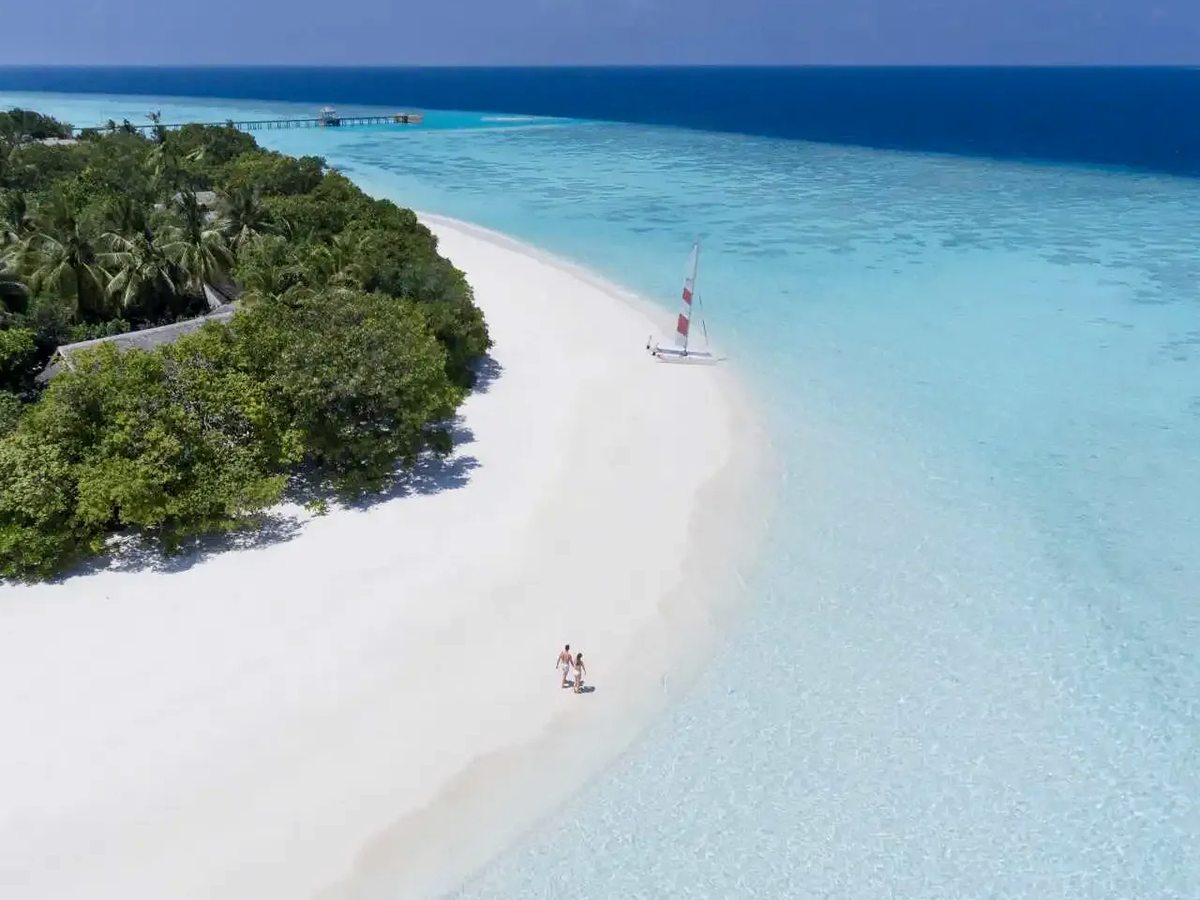
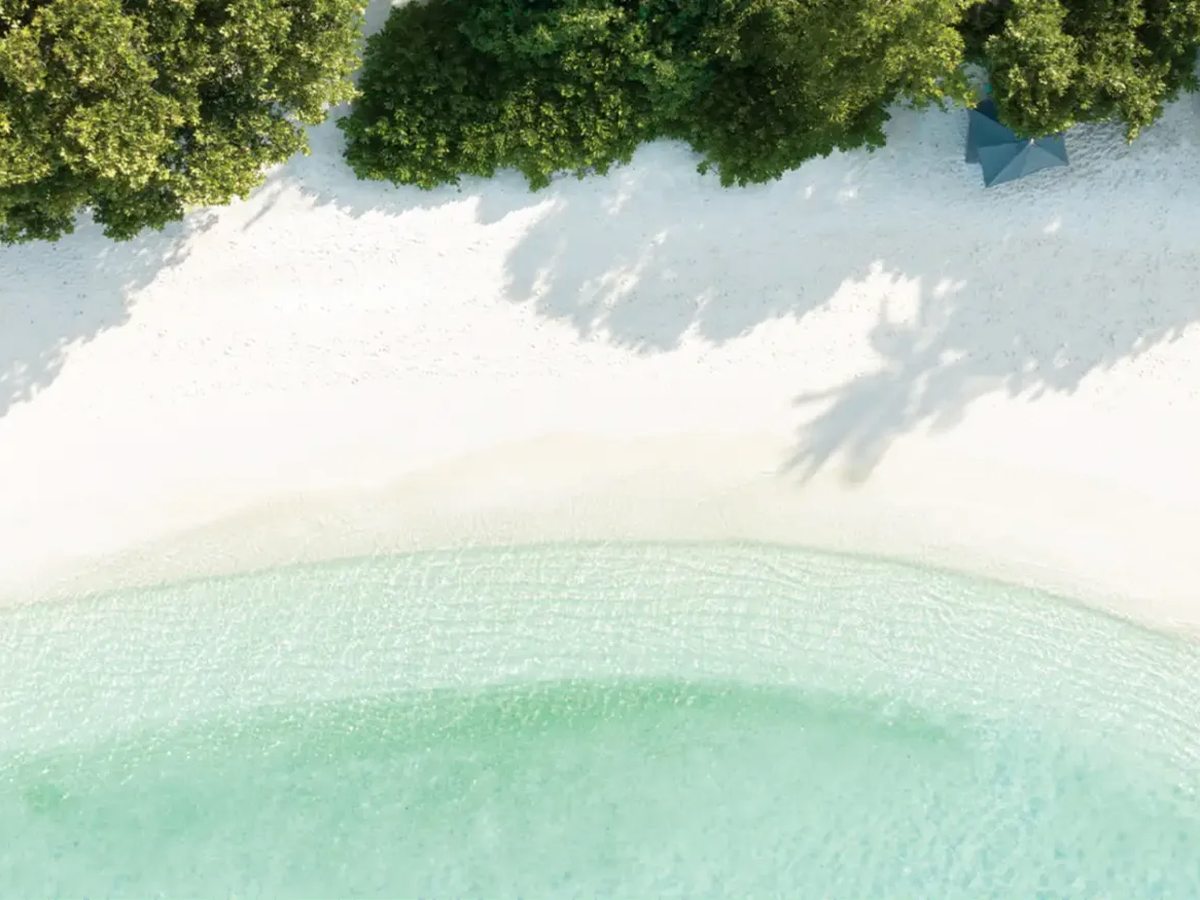
White coral sand wraps the whole island, and the beach villas open straight onto it with no road to cross. The lagoon around the island is warm and turquoise, and families who've stayed find it calm enough for small children to paddle under an eye.
The real draw is the house reef, the coral reef that lies right off the island, alive with reef fish and sea turtles and reachable from the sand at most beach villas, so you can snorkel without taking a boat. Within the lagoon there's a natural blue hole, a deep round pocket in the reef that you can snorkel over, which not many resorts can offer. There's no Blue Flag award here, because the Maldives doesn't take part in that beach-award scheme, so its absence tells you nothing about the sand.
Babies and toddlers
The children's club, what young children need a grown-up for, babysitting and the baby practicalities.
The Parrotfish Club is the children's club, for ages three to twelve, open 8:30am to 6:00pm, and the supervised group care is complimentary. It runs arts and crafts, cooking sessions like a Junior Master Chef programme and cookie and pizza making, pirate themes and obstacle games, with a trampoline, an outdoor playground and beach football area, a stage for playtime performances, a foosball table, air-conditioned indoor play rooms, a video-game lounge and its own small children's pool with mini sun loungers. Children under three are welcome too, but only with a parent or babysitter alongside; they can't be left in the group care. That matters for families with a toddler: real time to yourselves means booking a babysitter.
Babysitting is available at extra charge, either at the club or in your villa, arranged through your butler with as much notice as you can give. There's no confirmed baby-food or purée service, but the island's organic farm and 24-hour room service through your butler mean the kitchen has some flexibility, so it's worth asking ahead about simple meals for a little one. Under-2s fly the seaplane free but on a lap rather than in their own seat. Older children and teenagers, meanwhile, have the Coconut Club, which is the part of Vakkaru that suits them best.
Things to do
Most of what a family does here is in or on the water. The Splash dive and watersports centre runs guided dives and PADI courses, and snorkelling trips to the house reef, the coral gardens, the sea turtles and the blue hole, plus the seasonal manta ray excursion to Hanifaru Bay. Motorised watersports cover jet skis, parasailing, wakeboarding, kite surfing and big game fishing, and the calmer, non-motorised side has kayaking, sailing and paddleboards. Out on the water there are sunset dolphin cruises, traditional Maldivian sunset fishing, private yacht charters and a dhoni cruise on a wooden Maldivian boat.
On land there's the Sports Fields set-up, open 7:00am to 10:00pm with equipment provided, covering a football pitch, beach volleyball, badminton and floodlit tennis courts for all ages, and a professional padel court with lessons from the resort's tennis pro. The Coconut Club is the resort's standout for older children and teenagers, and the thing reviewers pick out most. It's open around the clock, staffed through the day, with billiards, table tennis, foosball, darts, board games, a library, coffee and a screen showing live sport, plus a video-game area that younger ones can use with a parent's say-so. It gives teenagers somewhere of their own without a grown-up hovering, which is rare at a resort of this kind.
The island's nature is an activity in itself. A resident marine biologist runs coral planting and reef education that children can join, there are monthly reef clean-ups, and the organic farm offers a guided walk, a harvest and the chance to plant a tree with a named plaque. Flying foxes hang in the canopy, hermit crabs scuttle on the sand and sea turtles nest on the beach. There's a weekly sunset beach party with a hermit crab race, a jungle cinema you can hire for a private film and dinner among the palms, plus complimentary bikes to explore on. At the Parrotfish Club, staff will lay on a birthday party or a movie night if you ask.
The overwater Merana Spa has treatment rooms with glass floors above the lagoon, offering Balinese and Maldivian massages, facials and body scrubs, Natura Bissé skincare rituals, couples' journeys and Ayurvedic treatments prescribed after a consultation with the resident Ayurvedic doctor. There's a hydrotherapy suite, a yoga pavilion, a Technogym fitness centre with personal training and a salon, and treatments can come to your villa. Children's treatments can be arranged, though the spa is mostly an adult space and its relaxation deck is for over-16s.
The area and days out
What lies beyond the private island, from the manta rays of Hanifaru Bay to a local craft village.
Vakkaru is a one-island, one-resort place, so there's no village, no shops and no other hotel to share the island with; the world beyond the beach is the reef and the wider atoll. It sits in the Baa Atoll UNESCO Biosphere Reserve, a stretch of the northern Maldives at roughly 5°N and about 68 nautical miles north of Malé, protected for its marine life. The headline trip is Hanifaru Bay, one of the world's great manta ray feeding sites, a short boat ride away, where the rays gather to feed in season. For a taste of local life, Thulhaadhoo is a short boat trip off, the last place the traditional Maldivian lacquerwork craft is still practised, and it makes a cultural half-day depending on your group's ages. Other well-known resorts share the same protected atoll, including Soneva Fushi, but Vakkaru's own island stays entirely private.
Board, price and what costs extra
Vakkaru sits at the very top end of Maldives family resorts, alongside the likes of Soneva Fushi, and it's above most family budgets. Rooms come either room-only or with breakfast, depending on the offer. Booking direct with the resort is the version worth looking at for a family: it adds daily breakfast at Amaany, a dine-around allowance, a butler, morning wellness sessions and a welcome of champagne and fruit, and on stays of five nights or more children under twelve stay free.
There's no all-inclusive option here. Dinners at the restaurants, the private dining on the sandbank or in the garden, watersports, excursions and the wine all land on your bill unless you're careful, so the final cost climbs well beyond the room. Half board, breakfast and dinner, isn't something you add to any rate; it comes built into particular booking offers such as the Wellness Your Way and Vakkaru Dream Getaway packages, so if you want dinner included, choose one of those rather than assuming you can bolt it on.
The seaplane and domestic transfers are charged per person round trip (see Getting there for the current fares), and booking direct can take up to a quarter off. On top of every rate comes a 17% Tourism Goods and Services Tax (from July 2025), a 10% service charge and a USD 12 per person per night Green Tax (from January 2025). Cancellation terms tighten as arrival nears. In high season (January to April and October to December) you lose the full villa charge if you cancel within 21 days of arrival; over the festive period, 24 December to 10 January, that window stretches to 60 days and half the deposit is non-refundable from the moment you book; in the shoulder months (May to September) it's 14 days. Read the terms for your dates before you book.
Loves and gripes
What families consistently praise and what they flag, then how it stacks up against other Maldives resorts.
What families love
- The island itself, dense with palms, and the wildlife on it: flying foxes, hermit crabs and nesting turtles that leave an impression on children.
- The Coconut Club, singled out as the differentiator for teenagers.
- The Parrotfish Club and its little children's pool.
- The service, with mostly Maldivian staff and a butler who anticipates what you need.
- The house reef and its blue hole, snorkelled straight off the sand with no boat.
- The wine cellar and the farm-to-table garden dining.
- Villas set up with small children in mind.
Common gripes
- The seaplane with an infant, held on a lap with the hold luggage out of reach.
- Overwater villas that aren't right for young children.
- The high price, and no all-inclusive, so dining and extras mount up.
- Under-3s needing a paid babysitter for any real adult time.
How it compares
We've weighed Vakkaru against the resorts families most often consider alongside it. Soneva Fushi, also in Baa Atoll, is bigger, with a huge children's centre and villas that run to nine bedrooms, and it sits above Vakkaru on price; Vakkaru is the more intimate island, with a similar jungle character, and it costs less. Anantara Dhigu, nearer Malé, is reached by speedboat rather than seaplane, which is far easier with a very young baby, and it takes babysitting from a few months old; Vakkaru's island has more character and a stronger wine and dining side, plus the Coconut Club for teenagers. Heritance Aarah is a genuine all-inclusive and takes children into its club from two, where Vakkaru is neither, though Vakkaru's Baa Atoll setting is the better one for marine wildlife. Niyama, in Dhaalu Atoll, has a splash park and lets children eat free to twelve, while Vakkaru has the mantas of Hanifaru Bay on its doorstep. Across all of these, what you're paying for at Vakkaru is the island, the reef and the teen club, not an all-in price.
When to go and the weather
A climate that barely changes in temperature, so the real question is rain, and the mantas.
Vakkaru is open all year, and the temperature barely moves: days sit around 31°C and nights around 25°C month in, month out, with a warm sea of 28 to 30°C that needs no wetsuit. What changes is the rain. January to April is the dry, sunny season and the best stretch for young children, with January to March the calmest of all. May to October is the southwest monsoon, when heavier showers and some wind arrive, though it stays hot and the resort runs as normal through the school summer holidays. November and December sit in between. If seeing the manta rays at Hanifaru Bay is your reason for coming, they gather most from about July to November, so you'd be trading drier weather for the wildlife.
| Month | Daytime high | Overnight low | Rain | Wet days | Sea temp |
|---|---|---|---|---|---|
| January | 30.5° | 26° | 8 mm | 2 | 28° |
| February | 31° | 26.5° | 38 mm | 3 | 29° |
| March | 31.5° | 27° | 14 mm | 3 | 29° |
| April | 32° | 27.5° | 18 mm | 3 | 30° |
| May | 31.5° | 26.5° | 39 mm | 8 | 30° |
| June | 31.5° | 27° | 14 mm | 4 | 29° |
| July | 31° | 26° | 23 mm | 6 | 29° |
| August | 31° | 26° | 36 mm | 7 | 29° |
| September | 30.5° | 26° | 23 mm | 6 | 29° |
| October | 30.5° | 25.5° | 32 mm | 8 | 29° |
| November | 30.5° | 25.5° | 24 mm | 8 | 29° |
| December | 30.5° | 25.5° | 28 mm | 6 | 29° |
Typical monthly averages from weather-station records. Sea temperature is the open-water figure, so a sheltered bay can feel a degree or two warmer. The resort is open year round; the dry, sunniest months are January to April.
Shop, medical and entry
The island has one shop, the Sand Boutique, selling resort wear, swimwear, beach basics and Maldivian crafts. If medical cover matters for your family, ask the resort directly what's on hand and how the nearest hospital is reached before you book. For entry rules, check the current Maldives guidance on GOV.UK before you travel, since they can change. Vakkaru is consistently praised across the trade press. It has picked up the World Travel Awards' World's Leading Resort (Indian Ocean) title more than once and was named World's Leading Luxury Honeymoon Resort in 2023, and its wine cellar has now taken a Wine Spectator award five times. It also carries Mr & Mrs Smith's Smith Seal of editorial approval, and Condé Nast Traveller has named it one of the best family hotels in the Maldives.
Questions
The things families ask most, the official pages worth a bookmark and when this guide was last refreshed.
Can we fly the seaplane with a baby?
Yes. Under-2s fly free on a lap with no separate seat, for about half an hour, so keep the baby's essentials in your cabin bag. If a lap-held seaplane feels like too much, the domestic flight to Dharavandhoo and a speedboat is the calmer route in, and the only option if you land after 3:30pm.
Is there anything for children under three?
Not the supervised club care, which runs from three up. Under-threes are welcome at the Parrotfish Club only with a parent or babysitter alongside, so a child-free evening with a toddler means booking a sitter.
How do we arrange a babysitter?
Ask your butler, giving as much notice as you can. It is a paid extra with no fixed published rate, so check the current price when you arrange it.
Can we get half board or all-inclusive?
No all-inclusive at all, and half board is not a bolt-on. Dinner is only included through specific packages like Wellness Your Way or the Vakkaru Dream Getaway, so pick one of those at booking if you want it.
Are the overwater villas alright for young children?
They suit older children better. The plain Overwater Villa has open steps down into the lagoon and no pool, so with an under-5 a beach villa with its own garden and pool is the easier and safer choice.
When can we see the manta rays?
Hanifaru Bay is busiest for mantas from about July to November, which overlaps the wetter months. If that is the reason you are going, aim for that window and accept more rain. For reliable sun with young children, January to March is calmer, if quieter for mantas.
Do we need a visa?
Check the current Maldives entry rules on GOV.UK before you book, as they can change. Your resort or travel agent will confirm exactly what you need for the trip.
Why is the resort an hour ahead of my phone?
Vakkaru runs on its own clock, an hour ahead of the capital, Malé, to give longer daylight. Your phone may still show Malé time, so set a watch to the resort's time when you arrive so you don't miss a boat or a booking.
See more Vakkaru Maldives photos
Open the Vakkaru Maldives photo gallery →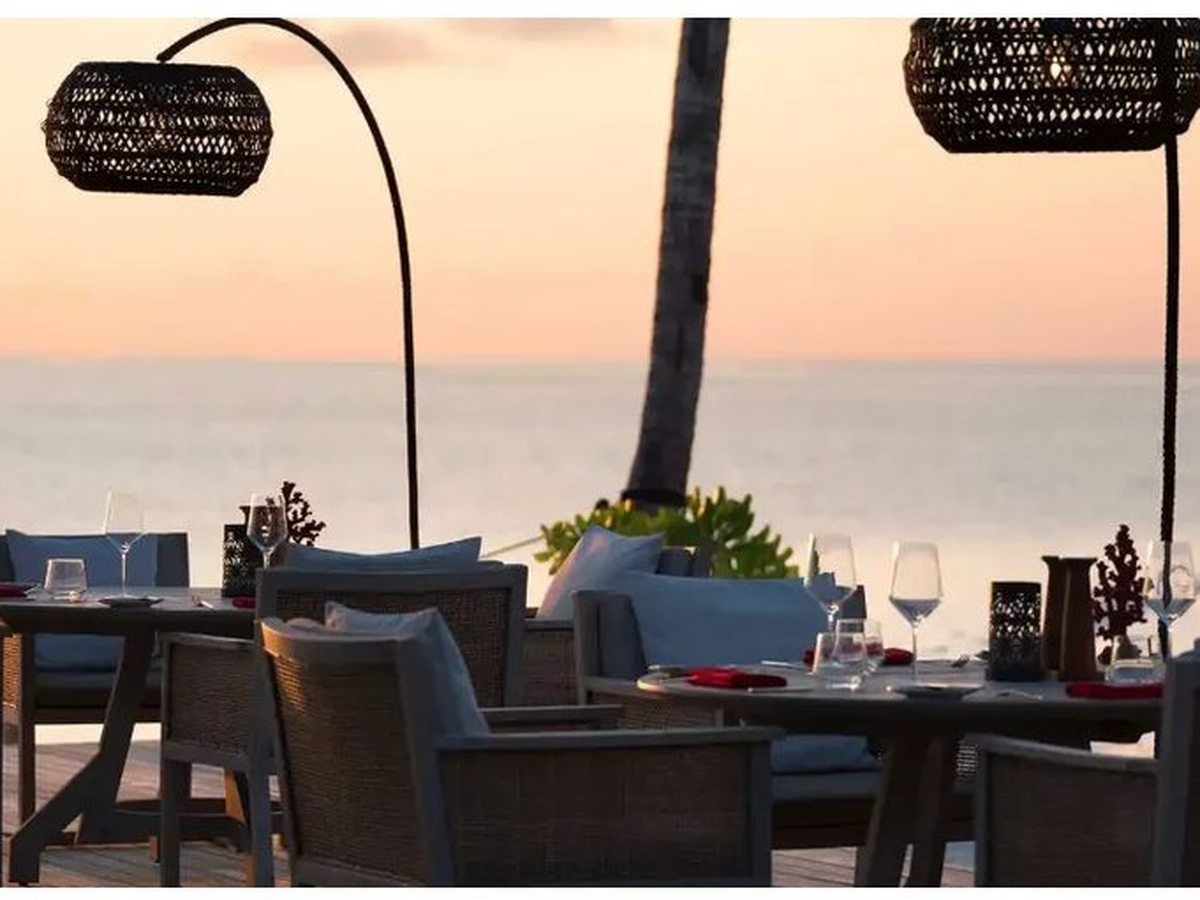
Useful links
- Vakkaru Maldives: the resort's own site for villas, dining, the children's clubs and what's included.
- GOV.UK Maldives travel advice: entry rules and safety updates before you travel.
- The Maldives with little ones: our guide to the islands, transfers and when to go.
Last updated 17 July 2026.