
On this page
- Record heat, then wildfires in four countries
- The Foreign Office isn’t telling anyone to stay away
- Hotter summers are the pattern now
- Why heat is harder on young children
- The signs of heat exhaustion, and what to do
- Keeping little ones cool, watered and out of the sun
- Smoke and young lungs
- Planning around it, not cancelling
Parts of southern Europe are having a hot, difficult summer. After the hottest June on record for western Europe, wildfires broke out in Greece, Spain, Portugal and France within a few days of each other in early July, and some areas were evacuated. Almost all holidays are still going ahead as normal, so for a family this is about planning a little differently, not cancelling.
Record heat, then wildfires in four countries
June 2026 was the hottest June on record for western Europe, running more than 3°C above the recent norm, according to the Copernicus Climate Change Service, the EU’s climate monitoring body. Spain had the worst of it, with 45.1°C at Andújar in Andalucía on 22 June, the country’s hottest June day in more than 70 years. Researchers at World Weather Attribution, who study the link between individual heatwaves and a warming climate, found a June this hot would have been virtually impossible without it.
The heat carries a health cost that’s easy to overlook next to the fires. The World Health Organization estimated nearly 10,000 excess deaths across Europe by mid-July, most of them older people or those already unwell. That figure has risen through the summer as more data has come in, and it varies by the day, so it’s best read as a moving estimate rather than a final count.
On the fires, early July was a busy week across four countries at once. In Spain, a wildfire near La Bisbal d’Empordà on the Costa Brava, which started on 3 July, led to around 12,000 people across eight inland municipalities being told to stay indoors while it was brought under control; the Costa Brava’s main beach resorts weren’t affected and stayed open throughout. In France, a larger fire in the Pyrénées-Orientales near Perpignan, from around 4 July, burned roughly 5,000 hectares and forced evacuations that grew over several days, from about 10,000 people to more as it went on. Reports of the exact number differ because the evacuation kept expanding, which is normal for a moving fire. In Portugal, a fire in the north burned a large area and was roughly 80% under control by the time it was reported. In Greece, an industrial fire on the edge of Thessaloniki on 4 July sent thick smoke across the city, and residents in its path were told to stay inside with the windows shut, while smaller scrubland fires on Rhodes and Corfu were brought under control quickly.
None of this happened without a response. The EU sent hundreds of firefighters from more than a dozen countries to the worst-hit areas under its shared civil protection arrangements. Several of the fires above were contained within days, so by the time you read this some will already be out. Fires flare and move between regions through a hot summer rather than settling in one place, which is why the advice is to check the situation where you’re going close to the time, not to write off a whole country.
The Foreign Office isn’t telling anyone to stay away
None of the travel advice for Greece, Spain, Portugal or France says avoid the country or do not travel. What the Foreign Office does say, for all four, is more useful than a yes or no. Check the advice for the specific country and region you’re heading to, since these are large countries where conditions vary a lot from one area to the next. Register your phone to receive the local emergency alerts, so you’re warned about a fire near you. If you see a fire, report it on 112, the emergency number across the EU and the equivalent of 999. Starting a wildfire, even by accident, is a criminal offence in all four countries. If you’re in an area that’s actually affected, follow the local authorities and contact your airline or tour operator, who have procedures for exactly this.
The message, in short, is check before you go and check again once you’re there, rather than is it safe to visit Spain.

Hotter summers are the pattern now
This isn’t a freak one-off. Europe has warmed by around 2°C over the past 50 years, faster than any other continent, and hotter, drier Junes and Julys leave vegetation that catches and spreads fire more easily. The wildfire season now starts earlier and burns more than it used to. That’s the backdrop. The other half of it is how well the emergency response works when a fire does reach a tourist area.
The clearest recent example is Rhodes in July 2023. Around 19,000 people were moved out of a dozen villages and several hotels over six days, the largest wildfire evacuation Greece had ever run. There were no deaths in the evacuation itself, tour operators moved their customers out, and Rhodes was welcoming holidaymakers again the following season. A serious fire near a resort is frightening, but the response to it is well practised.
Why heat is harder on young children
Small children heat up faster than adults and cool down less easily. They have more skin surface for their body size, so they take on heat from a hot room or a hot car more quickly, and their sweating, the body’s main way of shedding heat, is less effective, especially in the youngest. A baby can’t do anything about it alone either. They can’t take off a layer, move into the shade or tell you they’re too hot, so it falls to you to notice and act. Children also breathe faster for their size, which matters when there’s smoke around as well as heat, because they take in more air, and more of anything in it, than an adult standing in the same spot.
The signs of heat exhaustion, and what to do
The NHS says the signs of heat exhaustion are much the same in children as in adults: tiredness, dizziness, a headache, feeling or being sick, heavy sweating with pale, clammy skin, cramp in the arms, legs or stomach, fast breathing or a fast pulse, a high temperature and strong thirst. A younger child may also just go quiet or irritable and not seem themselves.
If you spot it, the NHS advice is to cool the child down over about half an hour. Move them somewhere cool, take off any extra clothing, give them plenty to drink, either water or an oral rehydration sachet to replace lost salts, and cool their skin by sponging or spraying them with cool water and fanning them, or by putting cold packs wrapped in a cloth under the arms or on the neck. Most children start to feel better within 30 minutes.
Heat exhaustion tips into heatstroke, which is a medical emergency, if the child doesn’t improve after that half hour of cooling, or if their skin is hot but no longer sweating, they’re confused, they’re breathing fast, they have a seizure or they lose consciousness. Call the emergency services straight away if any of that happens, on 112 anywhere in the EU.
A baby needs a lower threshold, because they can’t report any of it. If a baby is unusually floppy or hard to wake, won’t feed and has a high temperature, treat it with the same urgency and get medical help rather than waiting to see how it goes.
Keeping little ones cool, watered and out of the sun
Sleep is where heat matters most with a baby. The Lullaby Trust, the UK’s safer-sleep charity, puts the ideal room for a baby at 16°C to 20°C, which is hard to reach in a heatwave, so its hot-weather advice is to strip things back instead, with lighter bedding and clothing, a nappy and a vest or even just a nappy on a hot night, no hat indoors and the curtains closed during the day to stop the room heating up. A fan can help if it isn’t pointed straight at the baby. Feel the baby’s chest or the back of the neck to check they’re not too hot, rather than their hands or feet, which run cooler anyway. Overheating is linked to a higher risk of sudden infant death, which is why this is a safety point and not only about comfort, and it’s the reason to make sure a room actually has air conditioning before you book, not assume it. Plenty of older or self-catering places across southern Europe, and some campsites, don’t have it as standard.
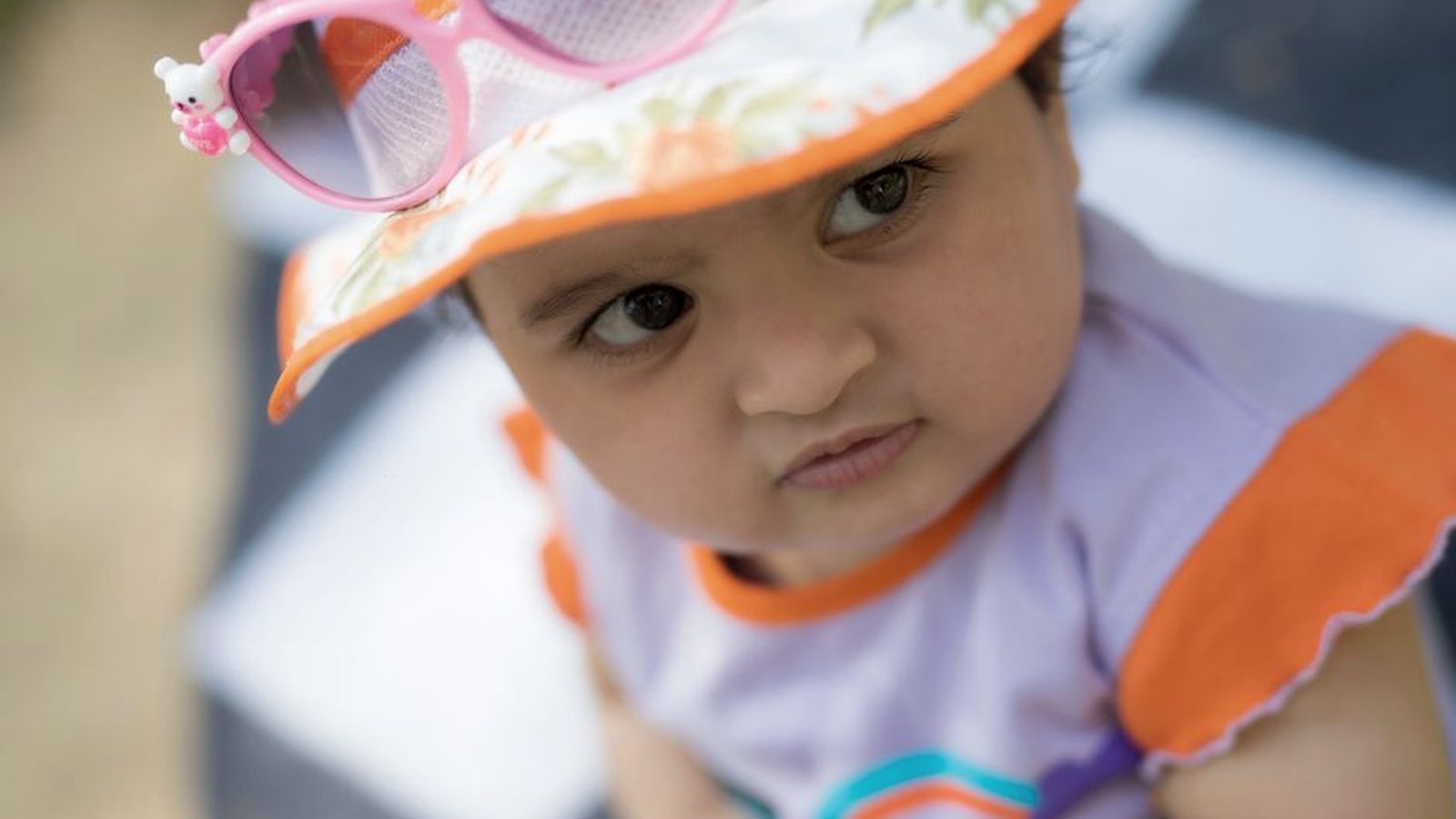
In the day, the NHS advice on sun is straightforward. Keep babies under six months out of direct sunlight altogether, using a parasol or sunshade on the pushchair and light clothing that covers them rather than sunscreen, which isn’t recommended below six months. From six months, use a sunscreen of SPF 30 or higher that protects against both UVA and UVB, and reapply it every couple of hours and after any swimming. Keep everyone out of the strongest sun between 11am and 3pm, in a hat with a brim and, for older children, sunglasses.
For drinks, a breastfed baby under six months doesn’t need water even in the heat, though they may want to feed more often, which is normal. A formula-fed baby can have small amounts of cooled boiled water between feeds, and a baby over six months who has started solids can have a little water too. Older babies and toddlers should be offered water often, more than you might think.
Smoke and young lungs
Wildfire smoke is worth taking seriously for a child even when the fire is some way off. Young lungs and airways are still developing, and smoke carries fine particles that reach deep into small airways, which can bring on coughing, wheezing or breathlessness, and can trigger a flare-up in a child with asthma. If the air looks hazy or smells of burning, or a local alert says the air quality is poor, take it indoors. Close the windows and doors, run the air conditioning or a fan on recirculate rather than pulling in outside air and keep a reliever inhaler to hand for an asthmatic child. A standard fabric mask isn’t real protection for a small child, so staying inside is the better plan. It’s worth acting even at moderate air-quality levels, which are set with healthy adults in mind rather than children.
Planning around it, not cancelling
Almost all trips to Greece, Spain, Portugal and France this summer are going ahead as they always would. The Costa Brava’s resorts stayed open through the Girona fire, Corfu had no active fire in the most recent reports, and even Rhodes in 2023, the biggest evacuation of its kind, ended with everyone moved out safely and tourism back the next year. This is a year to plan with a bit more care, not to change your plans.
A short list for travelling with young children in the heat:
- Check the gov.uk travel advice for the specific country and region, and check it again a day or two before you fly.
- Register for the local emergency alerts. Greece’s civil protection posts on 112, Spain uses AEMET and its regional systems, France uses the Météo France vigilance map and Portugal uses IPMA.
- Confirm the room has air conditioning before you book, especially for a baby or toddler’s naps and nights.
- Keep young children out of the sun from late morning to mid-afternoon, and out in the cooler early morning and evening instead.
- Offer water often. Use shade and cover-up clothing for babies, SPF 30 or higher from six months and a sun hat with a brim.
- Learn the signs of heat exhaustion and the cooling steps above, and remember 112 reaches the emergency services across the EU.
- If there’s smoke, go inside and close up. If a fire is confirmed near you, follow the local authorities and your tour operator rather than your own read of it.
One more practical point. Travel insurance doesn’t automatically cover cancelling because of a wildfire risk that was already known when you bought the policy, so if you’re heading somewhere with a fire already burning, check what your policy actually says before you travel rather than after. For everywhere else, the sensible approach for any hot-country trip with young children covers most of it, taken with a bit more care this particular summer.
We do our best to get this right. If something here looks wrong, tell us and we'll check it.