Getting to Disneyland Paris from the UK
Disneyland Paris sits just east of Paris, an hour ahead of the UK and close enough for a long weekend rather than a big expedition. Three routes make sense from home: the Eurostar with one change at Lille, the drive on from a Channel crossing or a short flight into Paris. Which one suits you comes down mostly to where in the UK you're starting and how much you're travelling with.
On this page
- The short version
- Quick facts
- Eurostar via Lille
- The Paris route
- On board with children
- Passports and timing
- The resort station
- Disney Express luggage
- The Channel crossing
- The drive from Calais
- French road rules
- Child car seats
- Flying to Paris
- Flights from the UK
- Airport to the resort
- Which route suits you
- The routes compared
- Cost and packages
- Questions
- Photos
Three ways to reach Disneyland Paris
Where you live and how much you're bringing decide this more than anything else.
There are three practical ways to get a UK family to Disneyland Paris. By train it's the Eurostar to Lille and a change onto a high-speed train that runs into the resort's own station. By road it's the Channel Tunnel or a ferry, then the drive on from Calais. By air it's a short flight into a Paris airport and a transfer out to the parks. None is best for everyone.
The one-hour time difference and the short hop across the Channel mean the resort works as a weekend or a few days away, with no jet lag and no long-haul day to recover from. A family landing at Charles de Gaulle after a 90-minute flight from Manchester can be in the park the same afternoon.
From London and the South East
The Eurostar with a change at Lille, around 4 to 4.5 hours door to door.
From the Midlands, the North and Scotland
A short flight to Charles de Gaulle, then the high-speed train, the airport coach or a transfer out to the resort.
Bringing car seats, a cot and a full boot
Drive via LeShuttle or a ferry. There's no baggage limit, and you'll have a car at the resort too.
At the border
Passport control now takes a photo and fingerprints under the EU's Entry/Exit System, so leave extra time. On the Eurostar it's done at St Pancras.
If you drive
France requires a warning triangle, a hi-vis vest for every passenger and a proper car seat for every child under 10.
Adding a Paris stopover
Take the train to Gare du Nord or fly in, and build in a day or two in the city on the way through.
Quick facts for UK families
The Eurostar and the change at Lille
The route most South East families choose, and why the Lille change is easier than it looks on paper.
There's no longer a direct train from London to the resort; the service that ran to the park gates stopped in 2023. The route now is the Eurostar from St Pancras to Lille Europe, then a high-speed train on to the resort. The quickest published end-to-end time is just under three hours, and once you add check-in at St Pancras and the connection at Lille, most South East families are looking at 4 to 4.5 hours door to door.
The Lille change is easier than it looks. Lille Europe is a small station with four platforms on one level, all clearly signed, and the connection is usually a short walk to another platform rather than any underground maze. Booked connection times run around 20 to 30 minutes, which families with a pushchair describe as comfortable. The Lille train is run by SNCF as either a full-service TGV inOui or its budget OUIGO version; both are high-speed, take about an hour and carry under-4s free on a lap. The difference that matters for a family is luggage: the OUIGO fare covers a single suitcase each and charges for extra bags, where the TGV allows two, so with a lot of kit the TGV is usually the easier booking.
If you book the whole journey through Eurostar as one transaction, a delay to the Eurostar leg is covered and you're put on the next available train at no charge. Booking the Lille train separately can be cheaper and gives you more choice of times, but that protection doesn't apply, so leave more time at Lille if you go that way. Whichever you choose, book as early as you can: the best combinations of price and timing tend to go around six months out.
Through Paris insteadThe Paris route, and when it suits
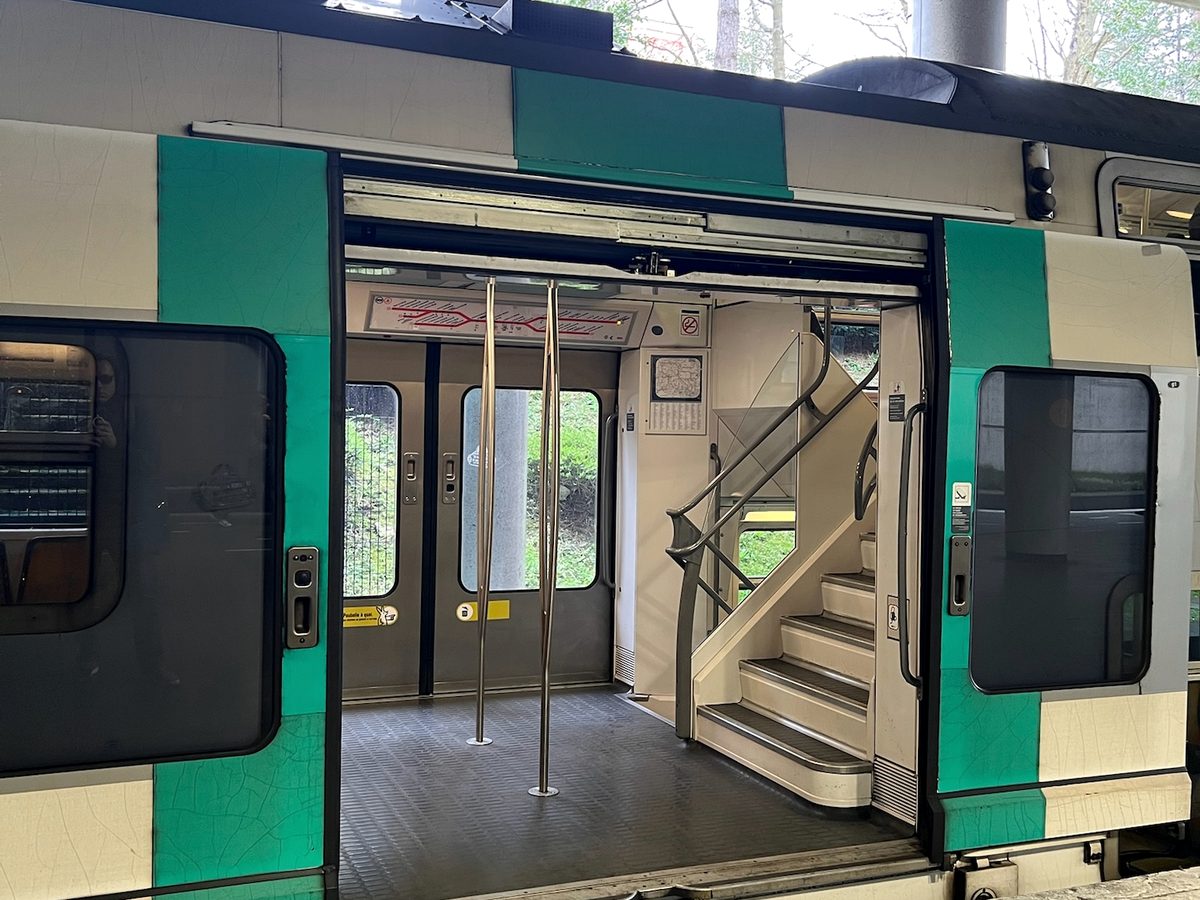
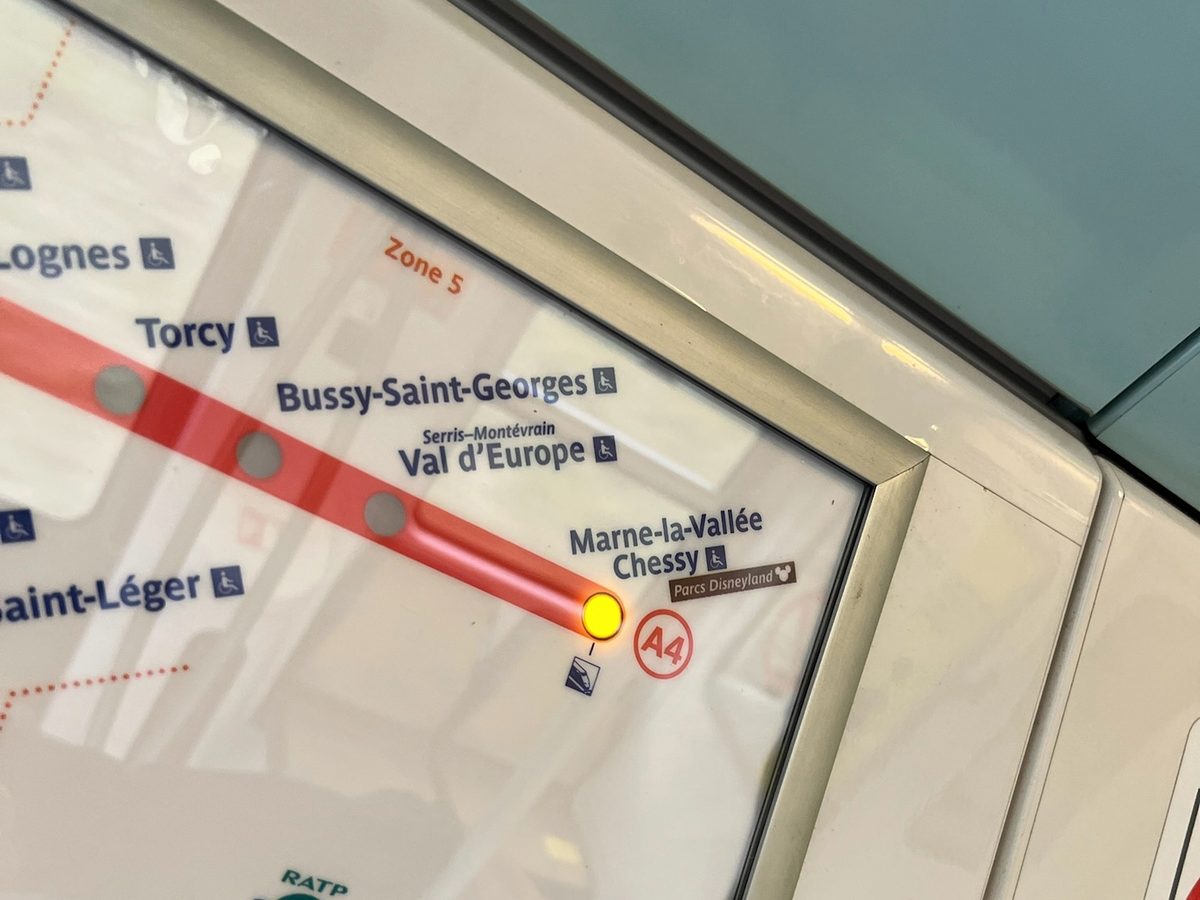
The other way in is the Eurostar to Paris Gare du Nord, then the RER commuter trains out to the resort: the RER B to Châtelet-Les Halles, then the RER A to the resort station, about an hour in all from Gare du Nord. It suits you if you want to fold in a day or two in Paris, if the Lille connections don't fit your times or if the Paris fare is much cheaper. With young children and a pushchair it's harder work than Lille. Châtelet-Les Halles is one of the busiest interchanges anywhere, the lifts aren't always working and the RER carries more pickpocket risk than the other options, so it's worth avoiding the Paris rush hours if you go this way. If you're basing yourselves in Paris for the whole trip and just want a day at the parks, there's an official same-day return coach, the Disneyland Paris Express, from several city-centre points including Gare du Nord and the Eiffel Tower area; you book it alongside your park tickets.
Once you're on boardOn board with young children
For families the train itself is the easy part. There are no liquid restrictions, so formula, milk, water and snacks all travel without decanting or binning, which for a bottle-feeding family is reason enough on its own. Book a table seat, a bay of four facing each other, for room to spread out colouring and snacks; the family coaches sit at each end of the train and the table bays go early, so book ahead. There's baby changing on board, roomier than a plane's, and staff at the café car will warm a bottle.
Pushchairs travel free on top of the luggage allowance and fold into the racks at the ends of the carriage; for a large double buggy, tell Eurostar in advance. Under-4s travel free on a lap, though they don't get their own seat unless you pay a child fare, and children roughly 4 to 11 travel at a reduced fare. There's no separate baggage check and nothing to reclaim at the far end, and the luggage racks fill fast in Standard, so board early and claim your space.
Before you boardPassports, the border and timing at St Pancras
Give yourselves more time at St Pancras than the 30 minutes Eurostar asks for: 45 minutes to an hour with children, and longer in the school holidays. Part of that is the EU's Entry/Exit System, in force since April 2026, which records a photo and fingerprints for adults at kiosks before you board. Children under 12 are photographed but don't give fingerprints, and the registration lasts three years. For the Eurostar this all happens at St Pancras on the UK side, so it adds nothing at the other end, unlike flying. A separate EU travel permit, ETIAS, isn't in force yet; check GOV.UK for where it stands before you travel. There's a step up onto the train at St Pancras, awkward with a toddler and bags at once, so a sling for a baby frees your hands.
The resort's own station
The train sets you down inside the resort, and Disney can take your bags on from there.
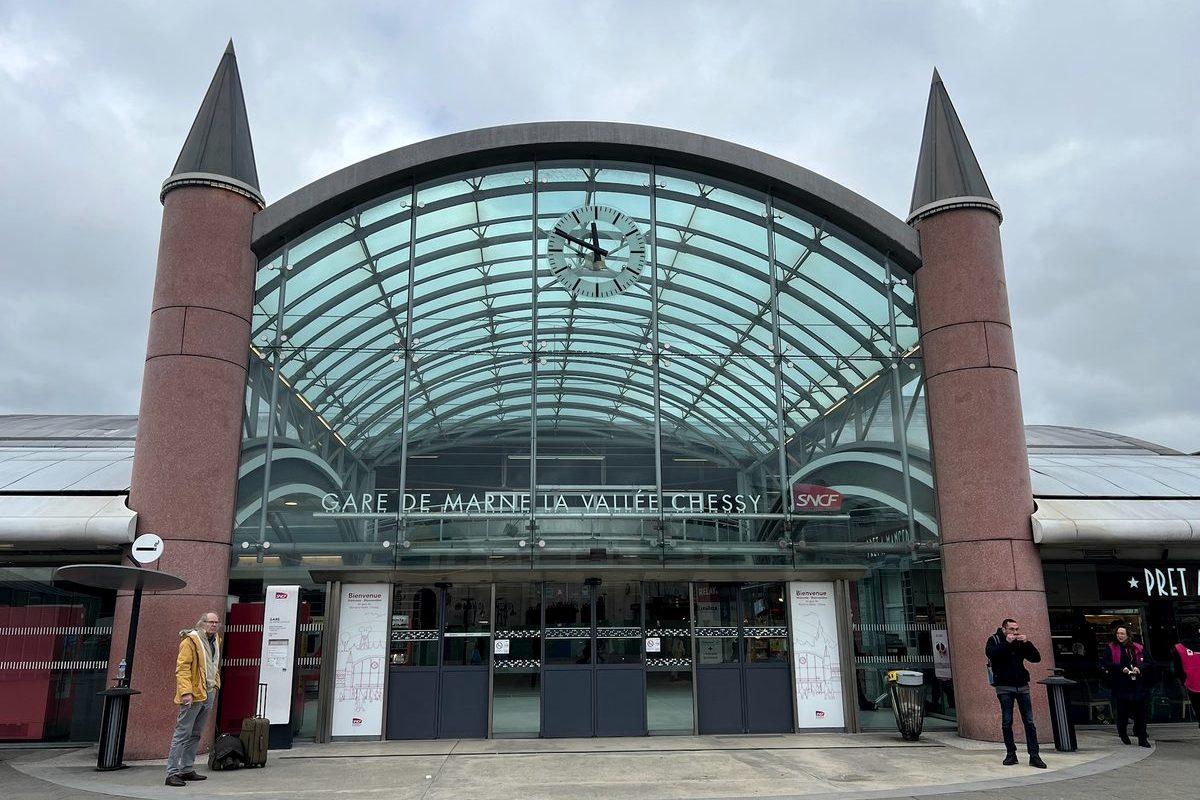
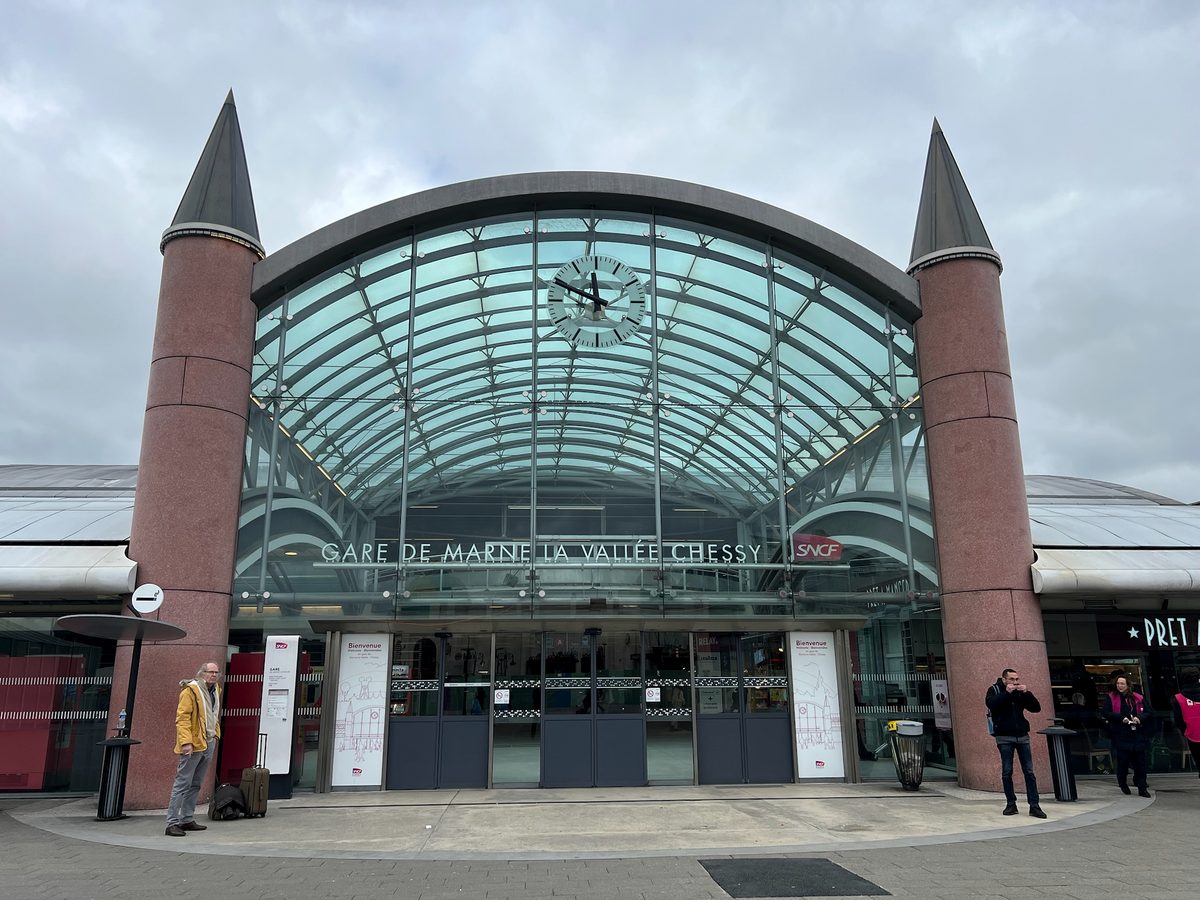
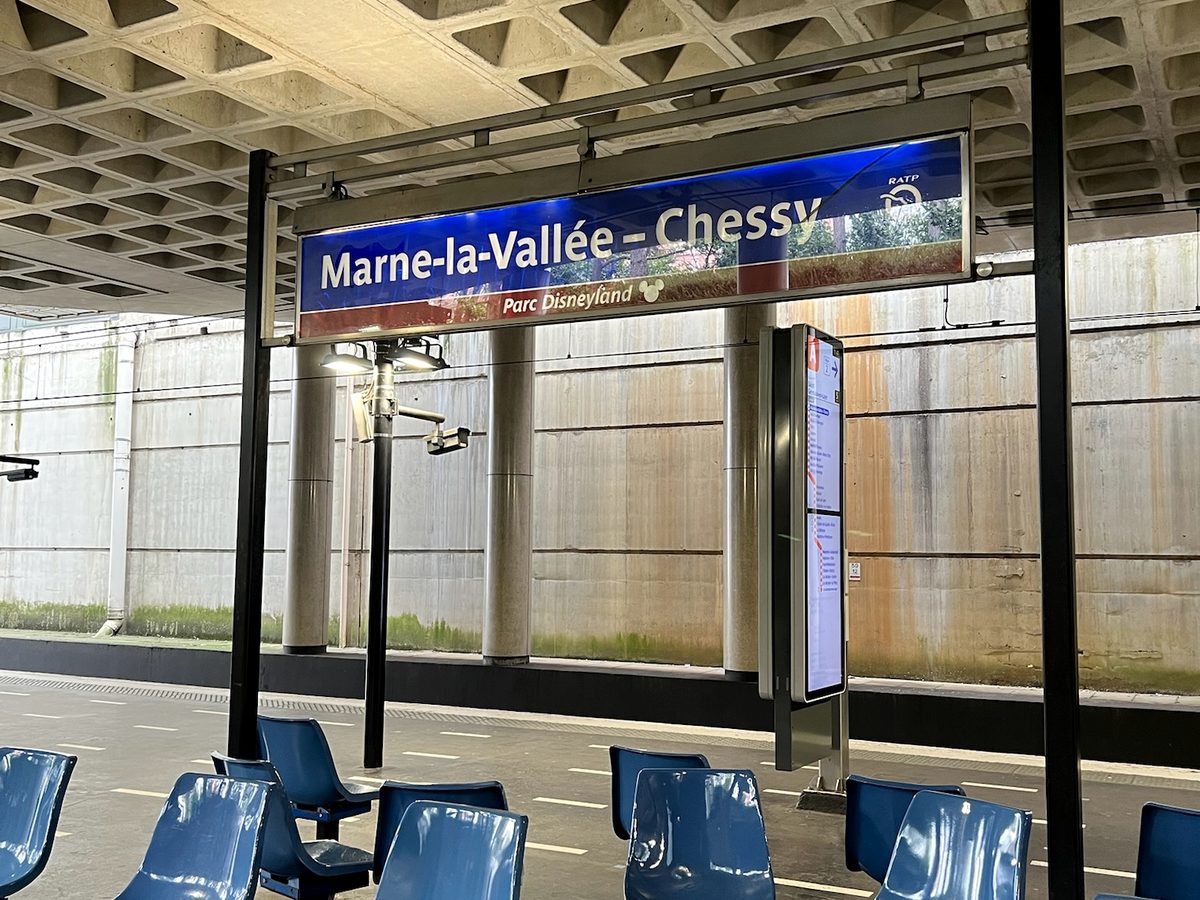
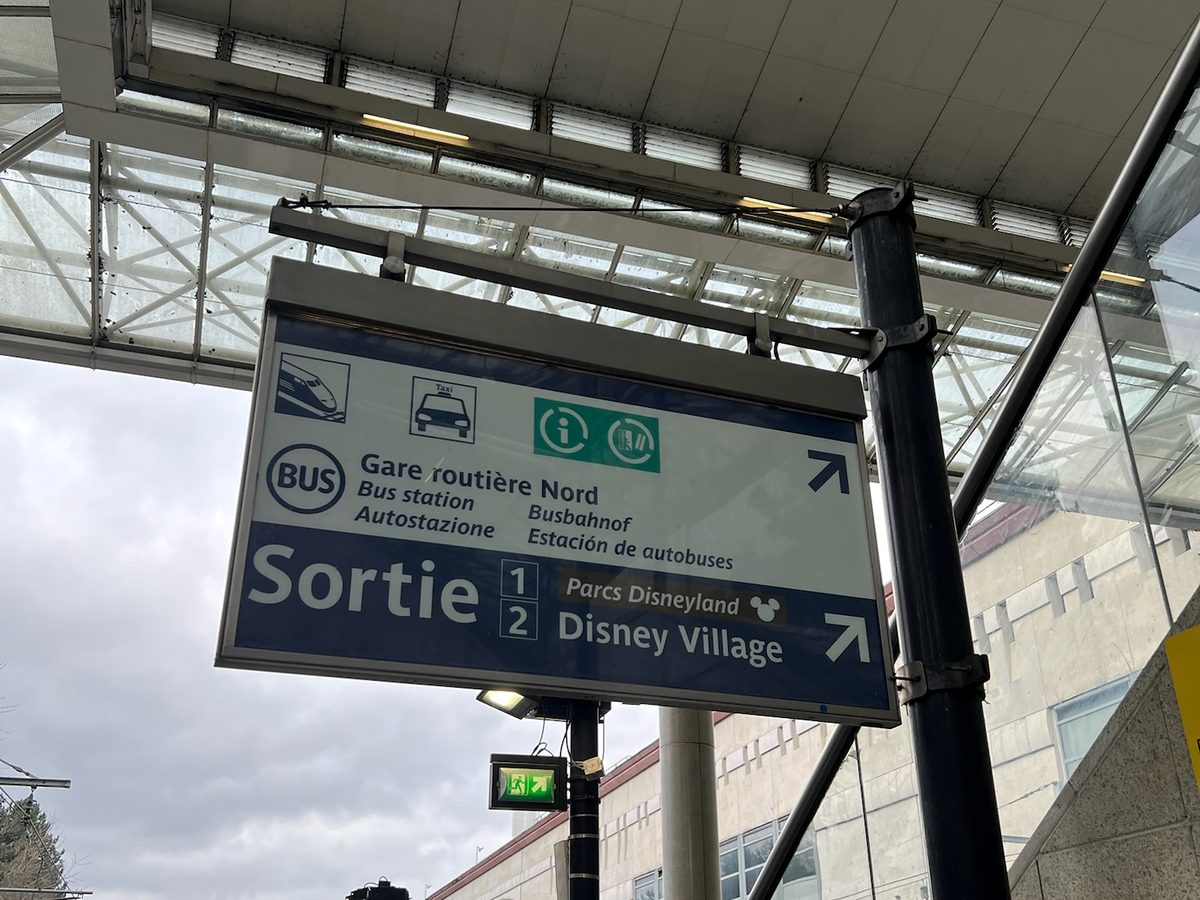
The high-speed and RER trains both come into Marne-la-Vallée-Chessy, the station built into the resort at the entrance to Disney Village. The park security gates are about a two-minute walk from the station doors, with Disneyland Park and Disney Adventure World on either side. High-speed trains use the lower level and the RER the upper one, and lifts serve both, so it's step-free with a pushchair. It's a full working station with left luggage, toilets, food outlets and a ticket office, and it's busiest on Sunday arrivals and Friday departures.
Bags to your roomDisney Express luggage
If you're staying at a Disney hotel or most of the official partner hotels, Disney Express lets you hand your bags in at the station counter on arrival and pick up your room documents and park tickets there, then walk straight into the parks while your luggage is taken to your room for the afternoon. It's a paid service, charged per bag with a lower rate if you book it both ways, and you add it to your hotel booking. It doesn't carry pushchairs or valuables such as laptops and cameras, and it isn't offered at Davy Crockett Ranch or Les Villages Nature. On the first day with young children it's a real help, since there's no dragging cases round while you find your feet.
The Channel crossing by LeShuttle or ferry
The Channel Tunnel or a Dover to Calais ferry, with the boot as your baggage allowance.
Driving splits into two parts: the Channel crossing and the drive on through France. For the crossing you're choosing between LeShuttle through the Channel Tunnel and a Dover to Calais ferry. LeShuttle takes about 35 minutes from Folkestone to Calais, and you stay in the car on the train with nothing to load or unload. The crossing is short enough that young children often barely notice it. The Dover to Calais ferry takes around 90 minutes, longer but with room to walk about, and the P&O and DFDS boats have children's play areas that older siblings enjoy.
LeShuttle is quicker and carries no seasickness risk; the ferry is often cheaper and turns the crossing into part of the day out. Whichever you pick, fares are highest on peak summer weekends and in the school holidays and lowest in the early morning and late evening, so check the operator's site for your dates. Arrive at least an hour before your booked crossing, more in the holidays, and fill in the passenger details online beforehand.
On the autorouteThe drive from Calais
From Calais it's roughly 180 to 200 miles (290 to 320 km) to the resort, which the official Disney site puts at about three and a half hours; with young children and a stop or two, allow four. The route keeps to motorways and skirts Paris altogether: the A26 and A1 down towards the capital, then the A104 ring road east onto the A4 and off at junction 14, which is signed for the parks with Mickey. The stretch down from Calais is a toll road, so keep a contactless card handy for the booths and use the card lanes rather than the cash ones, which saves leaning across from a right-hand-drive car to reach the machine. The roads on from Paris and from the airports are toll-free, so it's only this Calais corridor you pay for. Motorway service areas come roughly every 40 miles (60 km) with full facilities and often a playground, and a proper stop around the halfway mark is the usual plan with children. At the fuel pumps unleaded is labelled SP95-E10 and diesel is Gazole.
Set your sat-nav to the specific hotel address rather than "Disneyland Paris", because the hotels are spread across the resort and the general postcode can leave you in the wrong place. Speed-camera warning apps and sat-nav alerts are illegal in France and carry a heavy fine, so switch them off before you cross. When you arrive, Disney hotel and official partner-hotel guests booked through DLP, and Villages Nature guests, park free by showing the check-in card; day visitors and guests of third-party off-site hotels use the paid car park by the entrance, reached in 10 to 15 minutes along the moving walkways. Note your zone and row when you park and photograph the sign, because the car park is huge and easy to lose your car in after a long day.
The legal bitsFrench road rules and car seats
A few things are compulsory in France that aren't at home. You must carry a warning triangle and a high-visibility vest for every person in the car, kept inside the cabin where you can reach it without getting out first, not in the boot. You'll need headlamp beam deflectors so your lights don't dazzle oncoming traffic, and a UK sticker on the back unless your number plate already shows "UK" with the Union flag. Carry your driving licence, passport, the V5C logbook and your insurance certificate; a green card is no longer needed for France, though it's worth checking your policy covers you abroad. A breathalyser and a fire extinguisher aren't required.
Motorway limits are 130 km/h in the dry and 110 in the wet, dropping to 110 and 100 on dual carriageways and to 50 in towns. The drink-drive limit is lower than the UK's, and lower again for drivers who've held a licence under three years. At unmarked junctions in towns, traffic joining from your right can have priority, which catches UK drivers out. On the direct route to the resort you won't pass through any of France's clean-air zones, so you don't need a Crit'Air sticker unless you're detouring into Paris or another city that runs one.
Safety-criticalChild car seats in France
France requires every child under 10 to travel in an approved car seat or booster, and under-10s ride in the back except in a few narrow cases. Babies must be rear-facing until at least 15 months, which is the legal minimum; many seats keep them rear-facing for longer and French safety advice is to do so. Both the older R44 weight-based seats and the newer R129 i-Size seats are accepted, so a seat you already own is fine to bring. A child can move to an adult belt on their own once they turn 10 or reach 1.50 m in height, whichever comes first.
If you're driving your own car this is simply the seats you already use, carried in the boot with no airline complications. If you're hiring a car at the airport or the station, book the child seats with the car well ahead and don't count on them being there on spec. Taxis and Ubers from the airport rarely carry them, so a family with a baby or toddler is better booking a private transfer that fits the seats for you. Coaches, the Magical Shuttle included, don't legally need child seats and don't provide them.
Flying, and which Paris airport
Usually the quickest way in from the Midlands northward, with Charles de Gaulle the airport that suits families.
For most of the UK away from the South East, flying is the quickest way in, and the flight itself is short, from about an hour to a little under two. Three Paris airports can come up, and the choice matters. Charles de Gaulle has the widest range of UK routes and the best onward links, including a high-speed train to the resort from a station inside the terminal, so it's the one most families choose. It sits about 27 miles (44 km) north-east of the resort. Orly is smaller with fewer UK flights and no train straight to the resort; it's about 30 miles (50 km) away and fine if it works from your home airport. Beauvais, roughly 65 miles (105 km) out, is a budget-airline base a long way north of Paris, and once you add the long transfer it rarely saves a family with young children much, so it's seldom worth it.
From your local airportFlights from the UK
Between them British Airways, Air France, easyJet and Jet2 fly to Charles de Gaulle from Heathrow, Gatwick, Stansted, Luton, Manchester, Birmingham, Edinburgh, Leeds Bradford, Bristol and Glasgow among others. Flight times run from about 1 hour 10 from London to around 1 hour 50 from Scotland. Routes and airlines change from season to season, so check what flies from your nearest airport for your dates. If you fly, your EES passport check happens at Charles de Gaulle when you land, not before you leave, and on peak school-holiday days that queue can be long, so don't assume a fast train at the far end cancels out a slow border.
From the airport to the resortFrom the airport to the resort
From Charles de Gaulle there are three ways to cover the last stretch. The fastest is the high-speed TGV from the station inside Terminal 2, about 10 minutes to the resort's own station with no changes; it suits older children travelling light, though the step up from platform to train is awkward with a pushchair and a missed train can mean a long wait for the next. The easiest with a lot of luggage is the Magical Shuttle, the official airport coach, which runs from both Charles de Gaulle and Orly to the Disney and partner hotels; it takes you to the hotel door and is easy to rebook onto a later departure if your flight lands late, though it waits at the terminals and calls at several hotels, so the journey can run anywhere from about 45 minutes to an hour and a half. It charges per adult and per child with babies free, and the live fare is on magicalshuttle.co.uk. The shuttle runs from roughly 9am into the evening, so a very early or late flight can land outside its hours, and a private transfer or the TGV is the fallback then.
For a family arriving tired with a baby, a pre-booked private transfer with a fitted car seat is the most comfortable option, and for four people it often costs little more than four coach tickets. The cheapest way, the RER commuter trains via central Paris, means the Châtelet-Les Halles change with cases and a pushchair, so it's not one to choose with a young child. From Orly there's no direct train, so the Magical Shuttle or a private transfer are the sensible choices.
Which route suits your family
Where you start, how many of you there are and how much you're carrying settle it.
No single route is best for everyone. From London and the South East the Eurostar via Lille is the usual choice, at 4 to 4.5 hours door to door once the border and the connection are counted. Driving suits South East families too if the car's full and you want it at the resort, at five and a half to six and a half hours. From the Midlands, flying and the train come out much of a muchness on total time, and a local flight often edges it.
From the North West, Yorkshire and further north, flying is normally the sensible option; the drive to London for the train adds real time and cost, and driving the whole way from Manchester runs to eight or nine hours, usually with an overnight stop. From Scotland, flying is effectively the only practical choice, with the drive a full day each way. If you want your own car at the resort for supermarket runs and the freedom to come and go, though, driving is the one mode that gives you that, wherever you set off from.
Side by sideThe routes compared
These are rough door-to-door times from London and the South East. From further north the train and drive times stretch, and flying becomes relatively quicker.
| Route | Time from the South East | Changes | Cost | With young children |
|---|---|---|---|---|
| Eurostar via Lille | About 4 to 4.5 hours | One, at Lille | Competitive from the South East; under-4s free | Roomy, no liquid limits, no transfer at the far end |
| Fly to Charles de Gaulle | A 1 to 2-hour flight plus airport and transfer time | Flight, then a train, coach or transfer | Cheapest headline fares from the North; bags and transfers add up | Short in the air, though the border queue and transfer take time |
| Drive via LeShuttle | About 5.25 to 5.75 hours | None, drive throughout | Best value for a full car | Car seats and kit come with no baggage limits, and a car at the resort |
| Drive via the Dover to Calais ferry | About 6 to 6.5 hours | None, drive throughout | Often a cheaper crossing than LeShuttle | Play areas on board, though a longer crossing |
Cost, and packages versus booking it yourself
Driving is usually the cheapest for a family of four or more with a full car, and the more of you there are, the stronger that gets. The Eurostar is competitive from the South East when you book early, around six months out. Flying can show the lowest headline fare from northern airports, but baggage charges, the airport transfer and the odd long border queue reduce the saving, so it pays to book early and off-peak.
You can either book the parts yourself or buy a package that bundles the hotel, park tickets and travel. A package through the official site or a UK Disney specialist is covered by the Package Travel Regulations, which is worth having on a trip this size, and it can come out close to booking separately when Disney is running an offer. Booking the transport on its own is often cheaper for travel alone. It's worth pricing both for your dates.
Questions parents ask
A few things families check before choosing how to travel, plus the official links and when this was last checked.
Is there still a direct train from London to the parks?
No. The direct Eurostar that used to run to the park gates stopped in 2023 and hasn't come back. However you book, the train journey now includes one change, at Lille or in Paris.
Do our children need their own passports?
Yes, everyone needs their own valid passport, babies and toddlers included. There's no separate visa or permit to sort for a short trip, though the EU's ETIAS travel permit is due to start at some point, so it's worth a look at GOV.UK before you go in case it's live by your dates.
How early should we get to St Pancras in the school holidays?
In the school holidays allow up to 90 minutes: the security and border queues build, and boarding a full train with young children and bags always takes longer than you expect.
Do we need a car once we're at the resort?
No. The parks, Disney Village and the hotels sit close together, most a short walk or a free shuttle apart, so you can manage the whole stay without one. A car mainly helps for a supermarket run or a day out beyond the resort, and Disney hotel guests park free.
Can we take baby milk and formula?
On the train, Eurostar allows baby milk, water and food with no liquid limit, so bring what you need. For flights, the usual UK hand-luggage rules for baby feeds apply, so check the latest guidance on the CAA site before you pack.
Can we bring food in the car from home?
Not fresh food. Since Brexit you can't take meat, dairy or fresh produce into France from the UK, so packaged snacks are fine but leave the sandwiches and cheese. It's easy to stock up once you're there: there's a big Auchan supermarket at Val d'Europe, one train stop from the parks, at ordinary shop prices rather than resort ones.
Disneyland Paris photos
Park scenes, the hotels and the resort at large live together in the Disneyland Paris gallery.
Browse the Disneyland Paris photo gallery →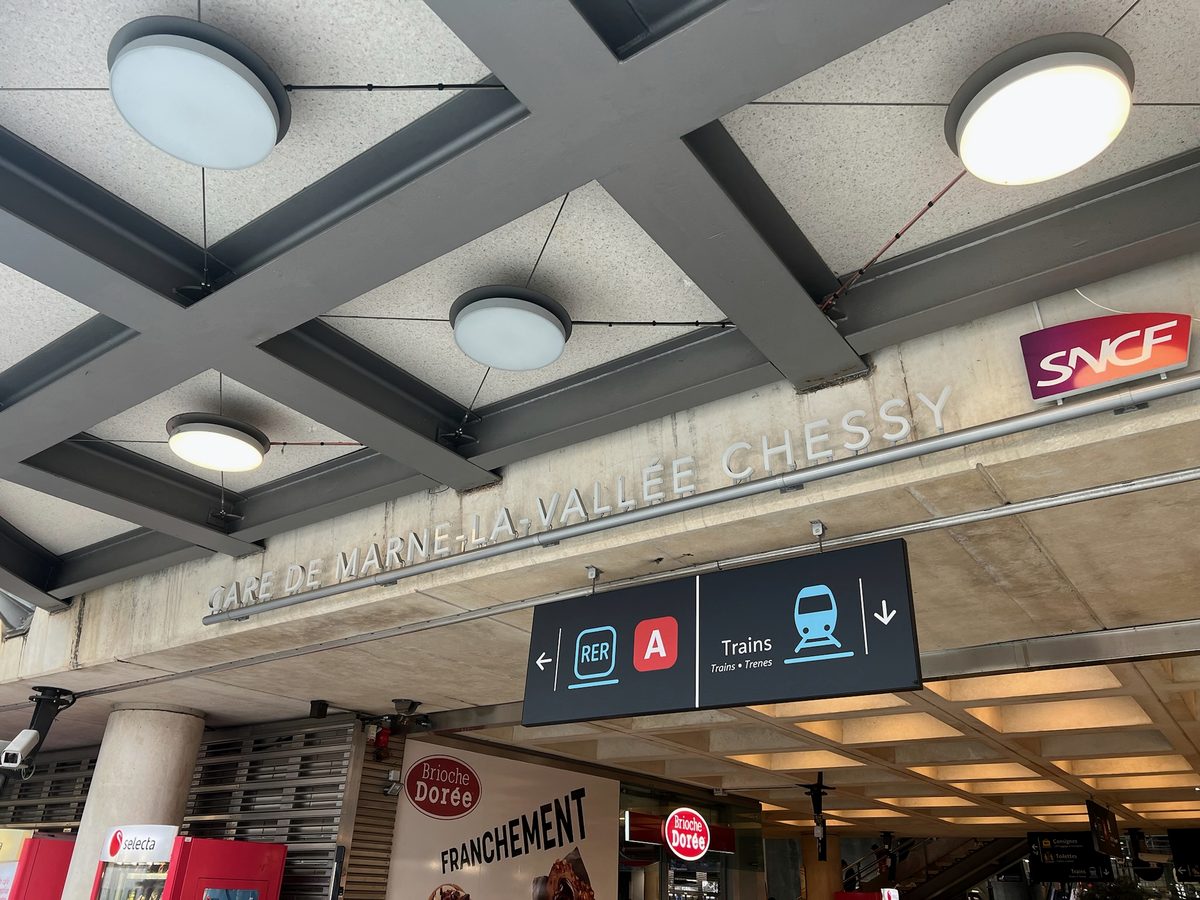
Useful links
- How to get to Disneyland Paris: the official page for crossing times, routes and the drive.
- Eurostar to Disneyland Paris: the via-Lille booking, fares and luggage rules.
- Magical Shuttle: the official airport coach from Charles de Gaulle and Orly, with live fares.
- Driving in the EU: the GOV.UK guidance on documents, kit and the child car-seat rules.
- Tickets and passes: how Extra Magic Time, the MagicPass and UK booking work.
- Disneyland Paris with little ones: our guide to the resort, its parks and the hotels.
Last updated 8 July 2026.