Disney's Fort Wilderness Resort
Fort Wilderness is Walt Disney World's campground, a 750-acre forest of pine and cypress on the shore of Bay Lake, near Magic Kingdom. You stay in one of its rebuilt Cabins, which sleep six and have a full kitchen, or on a campsite for a tent, caravan or RV. It's the outdoorsy corner of the resort, with a nightly campfire, pony rides and fishing, wild deer around the pitches and a boat that reaches Magic Kingdom in ten to fifteen minutes.
On this page
Is it worth it?
Strongest if you want space and the outdoors alongside the parks, and you'll take it as a campground, not a hotel.
Fort Wilderness is the only place at Walt Disney World where you stay in a forest rather than a building, on the shore of Bay Lake, open since 1971 alongside Magic Kingdom. There are two ways to stay, in one of the rebuilt Cabins or on a campsite for a tent, caravan or RV, and either way the draw is the outdoors, with wild deer and armadillos around the pitch, a nightly campfire with Chip 'n' Dale, pony rides and fishing and a boat to Magic Kingdom. For a family who wants space and somewhere to slow down between park days, there's nothing else like it on the resort.
The reasons to pause are practical. It's a huge site, about a mile and a half end to end, so getting anywhere takes planning. Every park day but Magic Kingdom is a two-leg journey out to the bus depot and on to the park. Experienced visitors rank it lowest for a first Disney trip for exactly these reasons, and for 2026 there's one more, the new Disney Lakeshore Lodge under construction on the Settlement's doorstep, which some regulars suggest waiting out until it opens in 2027.
Best for
You want space, wildlife and a real campfire alongside the parks, and a full-kitchen cabin for bottles, formula and familiar food.
Cabins or camping?
The rebuilt Cabins are the easy family lodging, with a kitchen and a separate bedroom. A campsite is cheaper and more sociable, and better if you've camped before.
The space and kitchen
A cabin sleeps six with a full kitchen, a bedroom with bunks and a deck with a grill. The one bathroom has a walk-in shower and no bath, which is harder with a baby.
The activities
A nightly campfire with Chip 'n' Dale, pony rides from age three, archery, fishing and bikes. Enough to fill a day out of the parks.
The boat to Magic Kingdom
A scenic crossing of Bay Lake, ten to fifteen minutes, where the pram stays open, reaching Magic Kingdom, Wilderness Lodge and the Contemporary.
Getting around
The site is large and spread out, linked by internal bus. A golf cart makes trips far easier, so it's worth booking one with your stay.
Where is it?
The Magic Kingdom resort area of Walt Disney World, a forest on the shore of Bay Lake, next to Disney's Wilderness Lodge.
Quick facts for UK families
A 750-acre forest on Bay Lake
Wild deer and armadillos, and three areas you move between by internal bus.
Fort Wilderness is pine and cypress woodland on the shore of Bay Lake, and it's one of the three original Walt Disney World resorts, open since 1971. The accommodation is the forest itself. White-tailed deer graze past the cabins and pitches, and families report wild turkeys, armadillos, rabbits and sandhill cranes around the site, which is a surprise most UK families don't expect from Florida Disney. The theme, as Disney is upfront about, is mostly the woodland rather than built scenery, so if you're after the crafted theming of Wilderness Lodge or the Polynesian this isn't that.
The resort is too big to walk end to end, about a mile and a half long, and it's organised into three areas linked by internal bus. The Outpost at the front holds reception and the depot for the park buses, and the cabin loops sit at this end. The Meadow in the middle is the activity hub, with the main pool, the nightly campfire and the Bike Barn where you book recreation. The Settlement at the lakeside end holds the dining at Pioneer Hall, the marina, the boat to Magic Kingdom and the beach. Those three names are worth learning, because where you stay and what you're doing decide how much of the site you cross in a day.
You can stay in one of two ways, and it pays to choose deliberately rather than by price alone. The Cabins are the simpler option for a family with a baby or toddler, with a kitchen, a separate bedroom and parking at the door. A campsite is cheaper and more sociable, and it suits families who've camped before and don't mind a walk to a shared bathhouse. One safety point applies to both. Man-made canals run through parts of the resort, the lake and canals have alligators, and children should be kept away from the water, so it's worth avoiding a campsite that backs onto a canal. Bay Lake isn't for swimming either, so the beach is for the view and the fireworks.
Some historyThe log hall and the lost attractions
Fort Wilderness has more history than its quiet loops suggest, and some of it is fun to point out to older children. Pioneer Hall, where the dining and the dinner show are, went up in 1974 from 1,283 hand-fitted Montana pine logs, brought in because the Florida pines were too short and the wrong sort. A narrow-gauge steam railroad once circled the campsites in the 1970s, and for years a tree near the lake that had grown around an abandoned push lawnmower was kept as a curiosity with its own sign, until it was felled in 2013. The nightly campfire has a forerunner too, Marshmallow Marsh, an after-dark event where guests canoed to a quiet corner of Bay Lake to toast marshmallows and watch the Electrical Water Pageant pass. The biggest lost piece is River Country, which opened in 1976 as the first of Disney's themed water parks and closed in 2001, and it's that lakeside plot being built on again today.
The Cabins
Rebuilt in 2024 as Disney Vacation Club villas, sleeping six with a full kitchen. One room type, one bathroom.
The Cabins are the resort's built lodging, and they were fully rebuilt in 2024 as Disney Vacation Club villas, so the ones you'll see online now are new. There's a single type, a one-bedroom cabin that sleeps six, and you can book one as an ordinary cash stay without being a Disney Vacation Club member. The campsites come in four categories for tents, caravans and RVs. The table sets the two ways to stay side by side, and the detail follows.
| Way to stay | Size | Sleeps | Notes |
|---|---|---|---|
| The Cabin | Roughly the footprint of the old cabins, plus a deck | 6 | One room type. A separate bedroom with a queen and bunks, a fold-down queen in the living room, a full kitchen, a deck with a grill and parking outside, plus one bathroom with a walk-in shower and no bath. |
| Tent or pop-up site | Pad about 10 × 25 ft | Up to 8 | The cheapest stay on Disney property. Power, water, cable and Wi-Fi, no sewer. A sandy pitch. |
| Full Hook-Up site | Pad about 10 × 50 ft | Up to 8 | Adds a sewer hook-up on a concrete pad. Quieter loops, and cheaper than Preferred for the same hook-ups. |
| Preferred site | Pad about 10 × 45 ft | Up to 8 | The same full hook-ups, in loops nearer the marina and the Settlement. |
| Premium site | Pad about 18 × 60 ft | Up to 8 | The largest pads, for a big RV, with an upgraded table and grill. |
| Premium Meadow site | Pad about 18 × 60 ft | Up to 8 | A Premium pad in the loops closest to the pool and the campfire. |
Disney doesn't publish the cabin's floor area, so the size is given by comparison with the cabins it replaced. A campsite takes up to eight guests within the pitch, and the pad sizes are a rough guide.
Inside, the cabin is a bright, modern one-bedroom with floor-to-ceiling windows, the headline change from the dark old cabins. The bedroom has a queen bed and a set of bunk beds against the wall, with little camp-lantern nightlights the bunk sleepers tend to like, so two children can share the room while the adults take the queen. The open-plan living room has a second queen that folds down from the wall, a dining table and a large TV, and it opens onto a wooden deck with a picnic table, a charcoal grill and a parking space right outside, which is a real convenience with a car full of buggy and bags. Two separate air-conditioning zones cool the bedroom and the living area.
The kitchenThe full kitchen
The kitchen is why a lot of families with young children pick a cabin. It's a full kitchen rather than a kitchenette, with a full-size fridge and ice maker, a cooker and oven, a dishwasher, a microwave, a toaster and a coffee machine. For a baby that means room to make up bottles and store milk and formula, and for a fussy toddler it means cooking the familiar food that keeps them fed instead of eating out three times a day. It's the single biggest practical advantage a cabin has over a hotel room, and a real cost saver on a longer trip.
One bathroom, and no bathThe single bathroom has a walk-in shower, not a bath
There's one bathroom for the whole cabin of six, and it has a large walk-in shower with no bath of any kind. For a family whose baby or toddler is still bathed in a tub that's a real drawback, since washing a small child in a walk-in shower is harder, and it's worth weighing if you have a little one at that stage. The layout puts one sink outside the bathroom door so two people can get ready at once, and there's a Mickey step stool under it for children, but reaching the bathroom from the bedroom means crossing the living room and kitchen, which is worth picturing for the night feeds and nappy changes. The cabins also have no washer or dryer inside, so laundry means the shared launderette near the quiet pool.
New cabins, and the lookBrighter inside, and a boxier shell
The rebuilt cabins are Disney Vacation Club villas, classed in the Deluxe Villa tier, though you can still book one as a normal stay. The rebuild split opinion over the exterior, a boxy modern shape some regulars think looks at odds with a rustic campground, while the interiors are far brighter and better equipped than the cabins they replaced, with the floor-to-ceiling windows, a dishwasher and a proper cooker the old ones never had. Most are tucked among the trees, so the outside matters less in practice than the online debate suggests. Select cabins take dogs, for a nightly fee, if you're travelling with one.
The campsites
Four categories for tents, caravans and RVs, with shared bathhouses and sociable loops.
The campsites are the original Fort Wilderness, and they're the cheapest stay anywhere on Disney property. There are four categories, from a tent or pop-up pitch up to a large Premium pad that takes a big RV, and every site has a paved parking space for one vehicle, a picnic table, a charcoal grill, power, water and Wi-Fi. A site takes up to eight guests. Tent and pop-up pitches are the cheapest and have no sewer hook-up; the Full Hook-Up, Preferred and Premium categories add one, and differ mainly in size and in how close they sit to the marina, the pool and the campfire.
There's no bathroom on your pitch, so campers use the comfort stations dotted around the resort, fifteen air-conditioned blocks with private shower and changing stalls, restrooms and a launderette, kept clean for a campground but a walk from the pitch for every bath and nappy change. They're security-locked overnight, roughly midnight to six, so there's no comfort station to reach in the small hours and nothing on the pitch itself, which is worth picturing for a night nappy change or a child who's unwell. Bring your own pool towels, which the campground doesn't provide. Families new to camping, which is more of them among UK visitors than American ones, usually find a cabin the easier stay, and the campsites suit those who know what they want from them.
If you do book a site, the loop matters. For a family using the pool and the campfire, loops 900, 1000 and 1300 sit closest, and 1500 is the tent loop nearest the Meadow; for the Magic Kingdom boat, loops 100, 200 and 400 are the short walk to the marina. Avoid a site that backs onto a canal with young children, for the alligator and water-safety reasons above. You can request a category and a loop when you book, and ask to move once you've seen the pitch, though only the category is close to guaranteed. Book early either way, and earlier still for October and December, when guests decorate the loops elaborately for Halloween and Christmas and the sites go first. Some loops take dogs, with a leash-free dog park, Waggin' Trails, at Loop 300, and there's a kennel on Disney property, Best Friends, if you'd rather board a dog by day. If you don't own a camper, approved firms will deliver and set one up on your site.
There's no shop on your pitch, so the everyday things campers are forever asking to borrow are worth packing yourself, a pair of scissors, a can opener, a corkscrew, an extension lead or two and a couple of plastic storage totes to keep food and kit off the ground. None of it is essential, but it saves a walk to the trading post on the first evening.
Where to eat
A counter-service marketplace, a couple of takeaway windows, a bar and the long-running Hoop-Dee-Doo dinner show, all at Pioneer Hall.
All the dining sits at Pioneer Hall in the Settlement, and it helps to know the shape of it before you arrive. There's no sit-down table-service restaurant here. Everything day to day is walk-up counter service with no booking, and the one thing you reserve, well ahead, is the Hoop-Dee-Doo dinner show, which rarely has room for walk-ins.
The main place to eat is Trail's End, and it changed in 2023 from a buffet to a counter-service marketplace, so any older guide calling it a buffet is out of date. You order at stations laid out like a small food hall, from a pizza oven and hot BBQ to salads, sandwiches and family-sized meals you can carry back to the cabin or pitch, and there's indoor seating. Family-sized barbecue, a half-rack of ribs with sides, feeds several for a fair price. The barbecue pizza and the sides, the mashed potato, cornbread and mac and cheese, are what regulars rate, along with the Pioneer Berry salad and the strawberry shortcake from the dinner show, which is sold here on its own. The fried chicken and the plain burger divide people more, and the advice you'll see most often is to get your burger next door at Crockett's instead. For children of nine and under there are turkey or peanut-butter-and-jam sandwiches.
Takeaway and a barP&J's Southern Takeout and Crockett's Tavern
P&J's Southern Takeout is a window from the same kitchen for fried chicken and family packs to take away, handy for eating back at the site. Next door, Crockett's Tavern is the bar, open through the afternoon and evening with indoor and outdoor seating over Bay Lake, and its burgers get singled out as some of the best on Disney property. It's bar food rather than a full restaurant, and a quiet spot for a drink once younger children are down. By the Meadow pool a snack bar covers poolside lunches, and near the campfire the Chuckwagon, a vintage-caravan food truck, sells hot dogs and s'mores kits, the American campfire treat of a toasted marshmallow and chocolate pressed between two biscuits, which you can also pick up at the Meadow Trading Post. A refillable resort mug is worth it on a longer stay, bought once and topped up free at the pool snack bar and the counter-service stations for as long as you're there. There's no character breakfast at the resort, though the boat and the parks put plenty within reach.
The dinner showThe Hoop-Dee-Doo Musical Revue
The Hoop-Dee-Doo Musical Revue is the resort's dinner show and has run at Pioneer Hall since 1974, a two-hour Wild-West vaudeville of singing, slapstick and audience participation over an all-you-can-eat family-style meal. The food arrives on shared platters, fried chicken, smoked ribs, cornbread, mashed potato and the strawberry shortcake to finish, with unlimited draft beer, wine and sangria for the adults and soft drinks for everyone else. It runs Wednesday to Sunday with three seatings a day, and it's a notable extra cost on top of park tickets, priced by how near the stage you sit, so it stays a treat rather than an everyday meal. With young children the four o'clock seating works best, since the latest one tends to end with tired children asleep, and the children's washboard parade near the end is a reliable hit with toddlers. Under-threes go free. It's the show you pay for rather than the food, which is fine rather than memorable, and it's worth booking well ahead.
The activities
A nightly campfire with characters, the ranch and its ponies, archery, fishing, bikes and boats. This is where the resort is strongest for young children.
The nightly campfire is the signature, and it's free and open to any Walt Disney World guest, not only those staying here. A cowboy host leads about twenty minutes of singalong songs by the fire, Chip 'n' Dale come out for unhurried meet-and-greets, and then a Disney film plays outdoors under the stars, with the picture changing each night. Two fire rings are lit for toasting marshmallows, and you buy the s'mores kits nearby rather than getting them free. It's repeatedly called one of the best character experiences at Walt Disney World for young children, precisely because nobody is rushed. The start time follows sunset, around seven in autumn and winter but closer to eight in spring and summer, which is late for a toddler on an early bedtime, with the trip back to a far loop on top. Bring your own chairs or cushions, since the seating is metal bleachers.
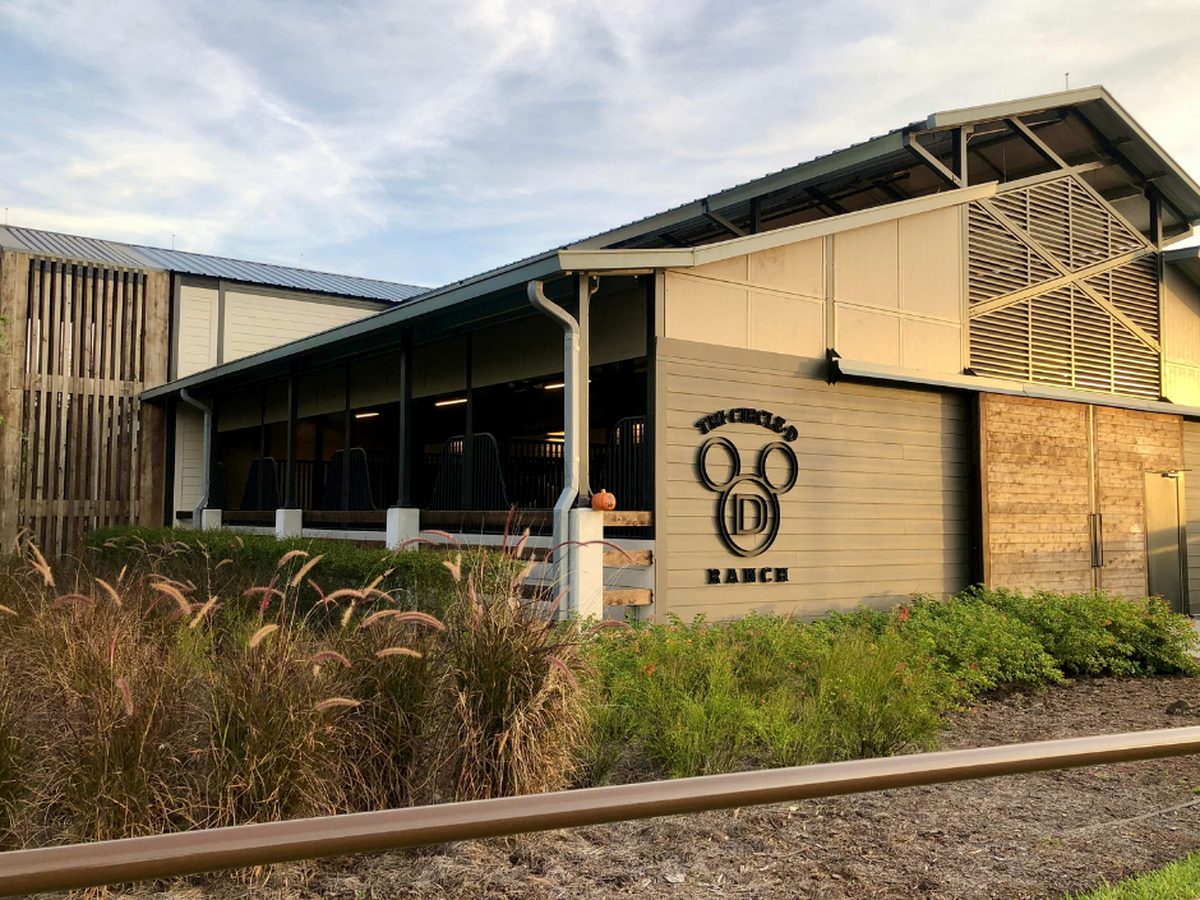
Tri-Circle-D RanchThe ranch, ponies and horse rides
Fort Wilderness has kept horses since it opened, originally for the Magic Kingdom parades, and the Tri-Circle-D Ranch is a real draw. Its name is Mickey's three-circle silhouette with a D for Disney, and the small free museum in the barn traces Walt Disney's own lifelong love of horses. You can visit the barn, that museum and a working blacksmith for nothing, ten to five each day. Pony rides run for children from age three, led by a parent, walk-up with no booking. Horse-drawn wagon rides carry all ages on weekend evenings, there are longer carriage rides too, and for older children of nine and up there are guided trail rides. In December sleigh rides run through the decorated loops. The ponies have a weight and height limit, so they suit toddlers upward rather than babies.
Archery, bikes, fishing and moreThe rest of the recreation
Beyond the horses the recreation list is the deepest of any resort on the property. There's an archery experience for children from seven, bike hire with child seats and children's bikes, canoe and kayak hire from the Bike Barn on the resort canals, and fishing, either a cane pole from the dock or a guided bass trip on Bay Lake. Add gem-mining, two arcades, several playgrounds, lawn games and courts around the Meadow and a Segway trail for older teens and adults. The canoe hire pauses whenever an alligator is spotted, and there's no self-drive boat to rent here any more, so the marina is for the guided fishing trips and the Magic Kingdom boat. Most of it costs extra and is worth booking ahead, and you could fill a rest day here without going near a park. For the grown-ups there's a wine-and-woodshop craft session, and for a special occasion a private fireworks cruise, a hired pontoon out on Bay Lake for the Magic Kingdom fireworks, more a splurge than an everyday treat.
The pools, the beach and the evening shows
A feature pool with a splash area and a new shallow end, a quieter pool by the cabins and free shows over Bay Lake at night.
The main pool is the Meadow Swimmin' Pool, with a corkscrew waterslide, a whirlpool and a fort-themed splash area with small slides for younger children, where the water is shallow and life jackets are free to borrow. A zero-entry section, added in spring 2026, slopes in gradually from dry land like a beach, which suits a baby or a child who can't yet swim. The wider Meadow pool area is being expanded through 2026, with new tennis and pickleball courts going in alongside it, and both this pool and the quieter one stay open while the work finishes, though the official recreation page is the place to check what's open for your dates. That second, quieter pool near the cabins doesn't always put out towels, so bring your own.
Down at the Settlement, Clementine Beach is a sandy stretch on Bay Lake, and while you can't swim in the lake, it's a spot to watch two free shows after dark without a park ticket. The Electrical Water Pageant, a string of illuminated floats of sea creatures, passes along the shoreline most nights at around quarter to ten, the time shifting with the season, and the Magic Kingdom fireworks carry across the water with their music. Arrive early for a spot, since it fills up.
Getting around
A scenic boat to Magic Kingdom, internal buses across the site and slower trips to the other parks. This is the resort's biggest trade-off.
The best of the transport is the boat to Magic Kingdom, a scenic ten-to-fifteen-minute crossing of Bay Lake from the Settlement marina, running through the day. The buggy stays open on the boat, unlike the buses, and it stops at Wilderness Lodge and the Contemporary too. It pauses in lightning and storms, with a bus as the backup.
Everything else is more involved, and this is the main trade-off of a resort this size. Internal buses loop the site every ten to fifteen minutes, connecting the loops to the two depots, since it's too far to walk end to end. For Magic Kingdom you take the boat; for every other park, and Disney Springs, you catch a bus from the Outpost depot, which makes those days a two-leg journey, an internal bus or cart out to the Outpost and then a park bus. Getting to a park gate for opening is harder here than at most resorts, so allow well over an hour on the mornings that matter, and plan the return knowing tired children face the same trip in reverse. Families with a hire car often just drive themselves to the non-Magic-Kingdom parks to skip the wait.
The golf cartWhy families hire a golf cart
This is why so many families hire a golf cart. It turns every pool trip, meal and errand from a bus wait into a short drive, and most sources call it close to essential rather than a luxury, especially with a toddler and all the kit you carry. They sell out, so families tend to book the cart with the stay rather than after. Disney rents them by the day, and an off-site firm can work out cheaper, though you collect that one from a vendor rather than finding it waiting at the cabin. You need to be eighteen with a licence to drive one. A Minnie Van, Disney's paid pick-up through Lyft, is the other way to get a direct ride, and it can drop you right at Pioneer Hall for the dinner show.
Arrival and the appChecking in and the day-to-day app
You can check in through the My Disney Experience app before you arrive, which is also where you find the nightly movie and campfire times and buy the paid Lightning Lane passes to skip some queues, up to seven days ahead. The cabins have the "Hey Disney" voice assistant, and Wi-Fi is free across the resort.
Babies, toddlers and the day-to-day
The kitchen and the outdoors are the wins; the bath, the laundry and the heat are the things to plan around.
For a family with a baby or toddler, the cabin's kitchen lets you feed a baby on their own routine, and the outdoors gives space to run and wildlife to watch from the deck. What needs planning around is the lack of laundry inside the cabin, and housekeeping that comes every other day rather than daily, worth knowing with a bin filling with nappies.
The two trading posts double as the resort's grocery and sundries shops, and they carry more than a typical gift shop, with nappies in a limited range of sizes, formula, baby food and sun cream alongside food and camping bits, so a cabin family can self-cater and top up on site. Stock varies, so bring a backup of anything you must have. There's no children's club or crèche, but Kids Nite Out, the third-party service Disney resorts use for in-room childcare, covers the resort for ages from about six weeks, one-to-one in your cabin or on your pitch, booked ahead and charged separately, which is how you'd arrange an evening out. There are cash machines outside Pioneer Hall and at reception, and the Front Desk changes foreign currency, worth knowing since a few of the older activities, the wagon rides among them, still take cash.
The heat and afternoon storms in summer are stronger than most UK families expect, and you feel them more at a campsite than in an air-conditioned cabin, so autumn to spring is far more comfortable with little ones. Mosquitoes vary, and while Disney manages them and most guests are fine, a wet spell can bring them out, so pack insect repellent with DEET rather than relying on citronella. There's no spa or gym on site, the recreation is the offering instead, and for anything medical the front desk and the in-park first-aid centres cover most needs, with a walk-in urgent-care clinic off site for more.
Access and mobilityAccessibility for the whole family
Disney trips often run three generations deep, so the size of the resort is the thing to weigh if anyone in the party uses a wheelchair or a mobility scooter, or a grandparent tires on a long walk. The sprawl is a bigger barrier here than at a lobby-and-lift hotel, since even your own pool can be a distance from the pitch, and a golf cart takes most of that strain off, which is worth building into the budget for a multi-generational stay. The boat to Magic Kingdom is step-free and takes a wheelchair or scooter on board without anyone having to transfer, so that route stays easy.
Some cabins have a ramp up to the deck and a roll-in shower, which you ask for when you book and are best confirmed with Disney for your dates. At the ranch there are accessible pony rides, and the Meadow Trading Post is step-free, though the horse-drawn carriage rides mean stepping up and aren't suitable for a wheelchair user. At the Hoop-Dee-Doo show the cheapest, furthest-back seats are up a staircase with no lift, so anyone using a wheelchair needs one of the two nearer tiers, which is worth knowing before you book the seats.
Loves and gripes
What families praise most, and what they flag most.
The warmest praise is for the setting, not the parks. Families talk about the wildlife, deer, turkeys and armadillos around the pitch on most stays, and about the community, the multi-generational regulars who return every year, the golf-cart parades and the loops decked out for Halloween and Christmas. The unhurried campfire character meets get warm mentions, as do the free fireworks and Electrical Water Pageant from the beach, and among the food it's the Trail's End strawberry shortcake and the Crockett's Tavern burgers that people single out.
The complaints are more specific than the sprawl everyone expects. The rebuilt cabins' boxy modern exterior divides people, with regulars calling it a she-shed or a container cabin at odds with a rustic campground, and in the cabins the single bathroom for six and the lack of in-cabin laundry come up often, with the shared launderette's payment kiosks sometimes reported out of order. On busy evenings the Trail's End mobile order can take up to forty minutes, and the app that predicts internal bus arrivals is unreliable enough that most people just wait at the stop. Tellingly, campers, who tend to know exactly what they're booking, rate their stay more highly than cabin guests, who more often arrive expecting a hotel.
Questions parents ask
A few things families check before booking, plus the official links and when this guide was last updated.
Should we book a cabin or a campsite?
Two questions usually settle it. If cost is the constraint, the campsite is the cheaper option, so that answers it. If money isn't the deciding factor, whether you enjoy camping is, since families who do take a pitch and those who don't find the cabin the easier stay with a baby or toddler.
Do we really need a golf cart?
It depends mostly on where your loop sits. Close to the Meadow pool and the campfire you can walk everywhere, so a cart adds little; out on the far cabin loops, or a pitch near the Settlement boat, you're relying on the internal bus for every trip, and most families with young children in those loops decide a cart is worth it. If you'd rather not pay for one, requesting a loop near the things you'll use most is the way to lower how much you need it.
How do we get to the parks other than Magic Kingdom?
When you're worn out at the end of an afternoon, a Minnie Van, Disney's paid door-to-door car service, will take you and the pushchair straight back to your own loop, which is the one to fall back on rather than a late bus after a two-leg trip. If you've hired a car, driving yourself to those parks is usually quicker. Magic Kingdom stays the easy one, on the boat.
Is there anywhere to bath a baby in the cabins?
No, the cabins have a walk-in shower and no bath, and a campsite is the same, since the comfort stations have showers rather than tubs. So whichever you book, plan to bring something to bath them in if your little one is still bathed in a tub. An inflatable or collapsible baby bath packs down small and is what most families in this position take.
What is there to do on a day out of the parks?
Enough that many families plan a deliberate day off the parks here rather than using the resort only to sleep. The way to set one up is to book the paid activities ahead, since they fill up, and leave the free campfire and the evening shows over the lake as walk-ups that need no reservation.
When is the best time to visit?
There's no bad season here, but a couple of things tilt it with young children. The campfire follows sunset, so out of summer it starts nearer seven than eight, which is easier on an early bedtime than the later start in spring and summer. October and December bring the loops decorated for Halloween and Christmas, the resort at its busiest, so those months are the ones to book furthest ahead. Summer's heat is the seasonal trade-off, and it's felt more at a campground than in an air-conditioned hotel.
How do UK families book it, and how does the cost compare?
It's sold from the UK by the Walt Disney Travel Company as a package of flights, accommodation and park tickets, with ATOL and ABTA protection, and you can also book the accommodation on its own through the official site. A cabin sits at the higher Disney Vacation Club price, but it sleeps six with a full kitchen, so for a family of four to six it can work out competitively per person against paying for two hotel rooms.
Is 2026 a good time to stay, with the building work?
It comes down to how much the view from the Settlement matters to you. The new Disney Lakeshore Lodge is going up right beside Pioneer Hall and the marina and is hard to miss from the dining and the boat, though the cabins, campsites, pool and campfire all carry on as normal. If a building site around the lakeside would spoil the trip, it's worth holding off until the work is done; if you'll mostly be out at the parks or over at the pool and campfire, it matters far less.
Fort Wilderness photos
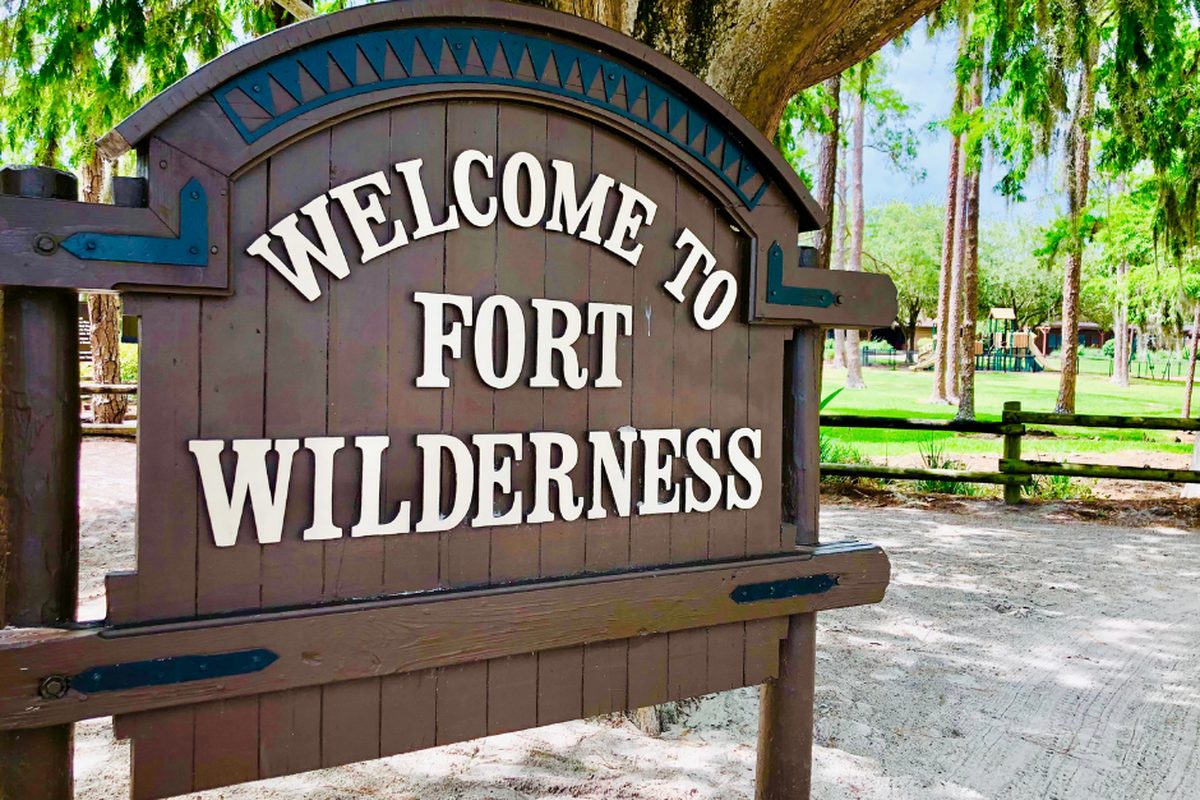
The campground's welcome sign and the Tri-Circle-D Ranch stables, all in one place.
Open the Fort Wilderness photo gallery →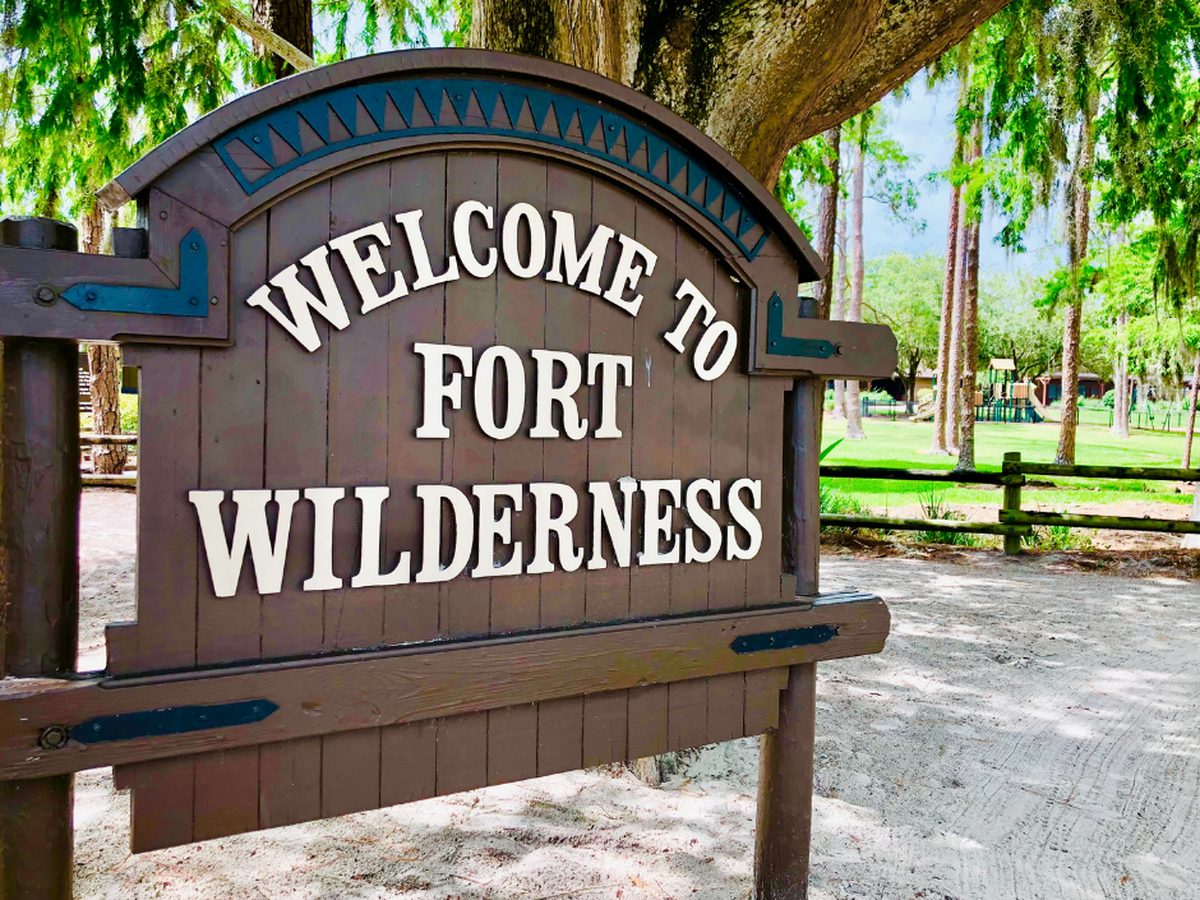
Useful links
- Disney's Fort Wilderness Resort & Campground: the official resort page for cabins, campsites and live prices.
- Disney's Wilderness Lodge: our guide to the Deluxe hotel next door, a short boat ride away.
- Magic Kingdom: our guide to the park at the other end of the boat.
- Tickets and passes: how tickets, Lightning Lane and UK booking work.
- Walt Disney World with little ones: our guide to the resort, its parks and getting there.
Last updated 9 July 2026.