Animal Kingdom
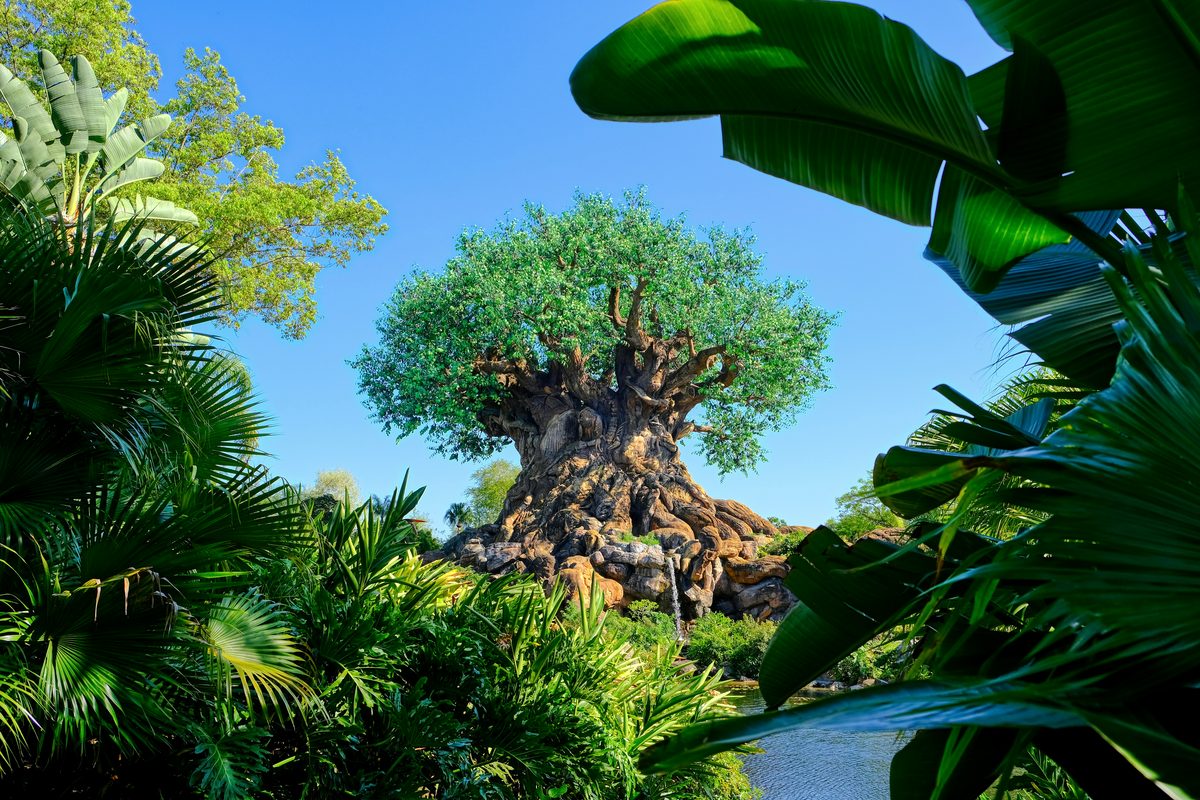
Animal Kingdom is Walt Disney World's largest park and the one built around live animals rather than rides. There's a real safari across an African savanna, there are walking trails with gorillas, tigers and otters, and the carved Tree of Life stands at its centre. It's the calmest of the resort's four parks, with no fireworks and no parade, which suits a family with young children, because the animals, the slow boat ride and the shows that fill a day here have no height requirement.
On this page
- The short version
- Quick facts
- The areas
- The Tree of Life
- The building work
- Rides for little ones
- Height limits
- Rides that can frighten
- Riding in shifts
- The animals and trails
- Shows
- Seasonal and holidays
- Meeting characters
- Character dining
- Where to eat
- A grown-up meal
- Baby care
- Disability Access
- Pushchairs
- Heat and rest
- Doing the day
- Getting there
- When to go
- Loves and gripes
- Questions
- Photos
A family verdict at a glance
Just three rides set a height limit, so a small child who's too little for any of them isn't shut out of much.
Animal Kingdom is the park to plan around the animals rather than the rides. A toddler who reaches no height mark at all still fills a day here with the safari, a slow boat through Pandora, two or three walking trails alive with real animals, a handful of shows, the character meets and a play-and-dance experience built around Bluey. The draw is animal encounters and theatre, which suits a slower day with a pushchair better than queuing for rides.
The old DinoLand has closed for good and is being rebuilt as a new land called Tropical Americas, due from 2027. Animal Kingdom also closes earlier than any other park at the resort, often by 6pm, so the morning is when you do the most and an early start matters more here than at the other parks.
Best for
Animal-mad little ones and anyone who wants a calmer, slower park than the other three.
Easiest of the four
No fireworks, no parade and the least noise and crowding of the WDW parks, so less to overwhelm a small child.
Best ages
It works from babies asleep in a carrier on the safari up. Toddlers and preschoolers get the most, and the rides with a height limit are for older children and adults.
Worth knowing
No playground, toddler spinner or splash pad at the moment, so nowhere for a toddler to run off steam or splash about.
The heat
It's shady rather than air-conditioned.
Where is it?
In the south-west corner of Walt Disney World near Orlando, reached from every Disney hotel by bus only.
Quick facts for UK families
The areas, and how the park is laid out
The whole park fans out from the Tree of Life at the centre, and a shaded path leads you in from the gates.
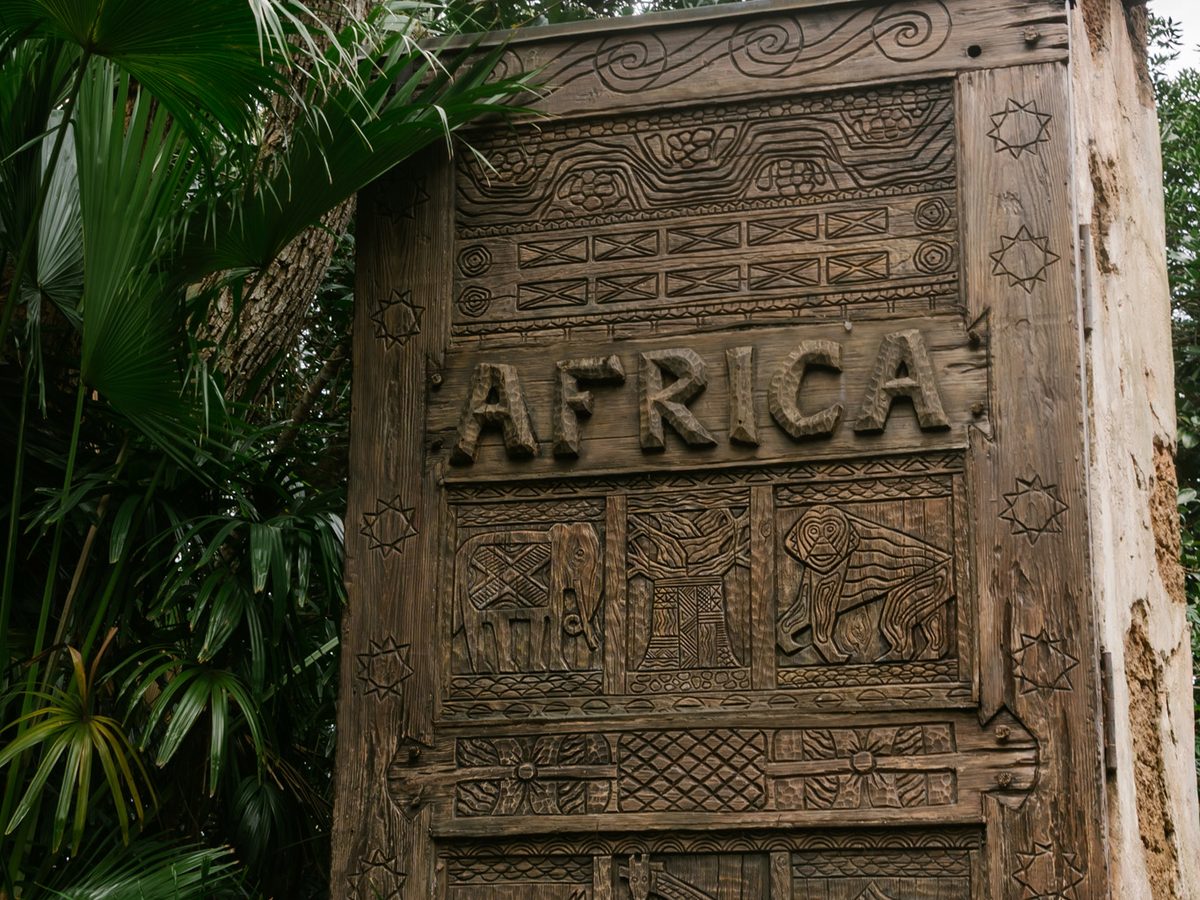
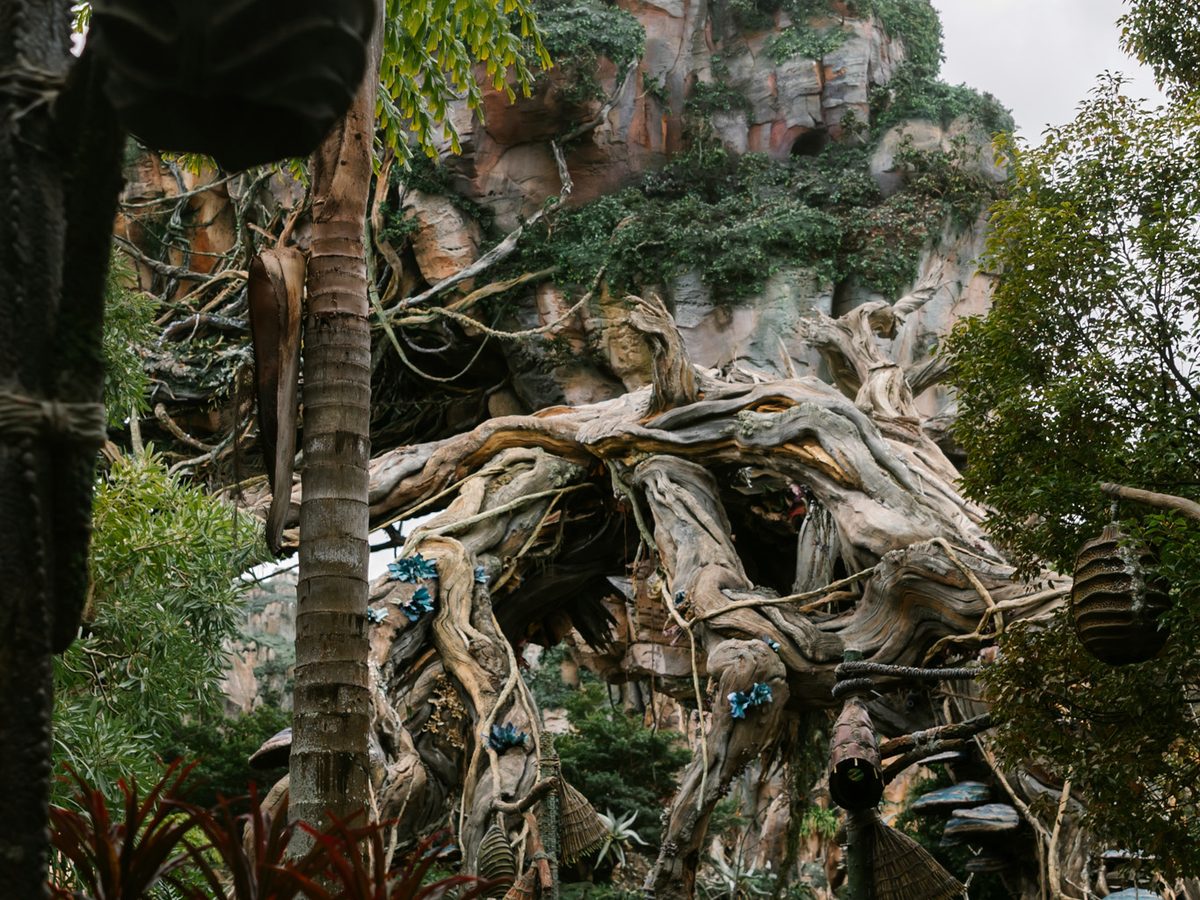
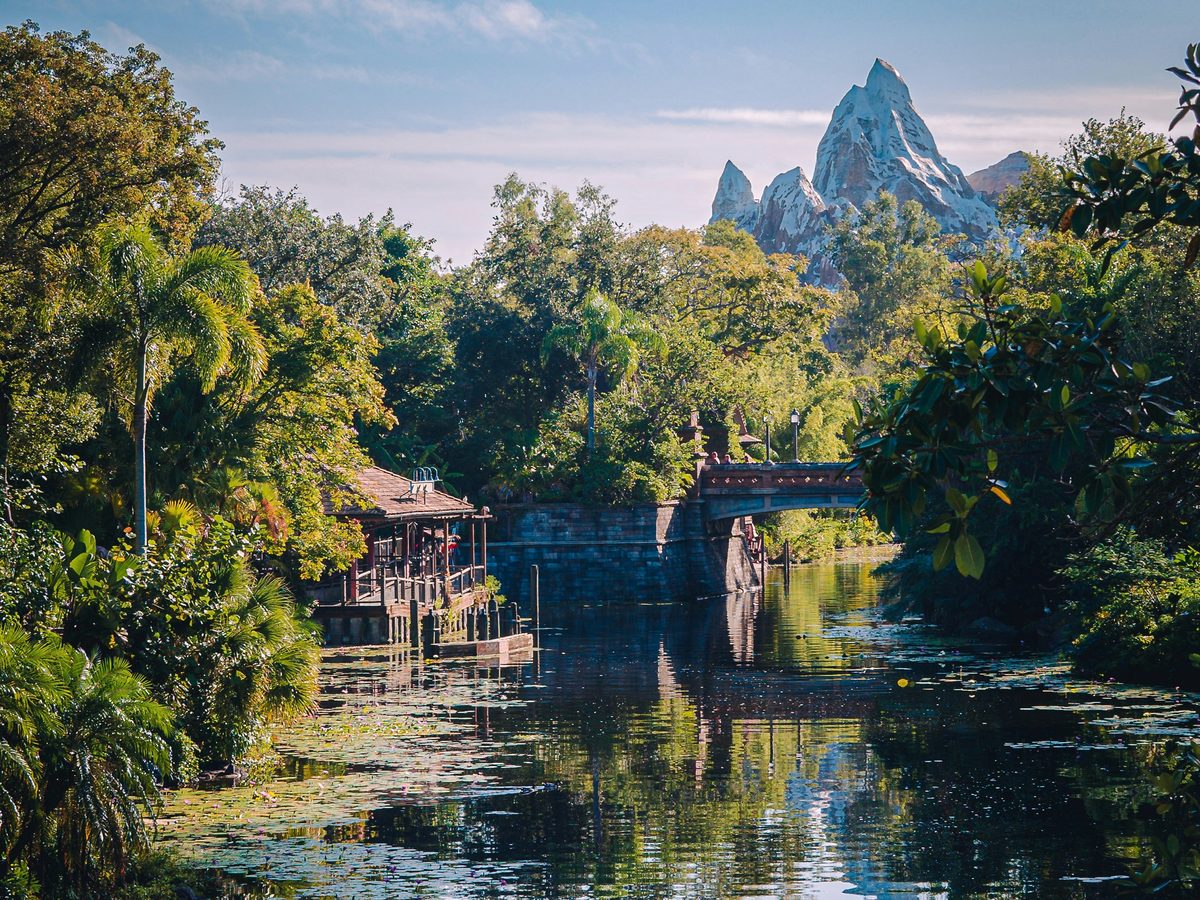
You come in through the Oasis, a shaded path of streams and small animal habitats rather than a main street. It opens onto Discovery Island, the hub, wrapped around the Tree of Life, where you'll find the Baby Care Center, the character meet with Mickey and Minnie and several of the best places to eat. Four more areas lead off from there. Pandora is the world of Avatar, with floating mountains and a slow boat ride. Africa, themed as a Swahili-coast port town, is the largest and home to the safari, the Festival of the Lion King show and a little train out to Conservation Station. Asia holds the second walking trail and the bigger rides. The sixth area, the old DinoLand, is closed and behind walls while it's rebuilt.
The centrepieceThe Tree of Life
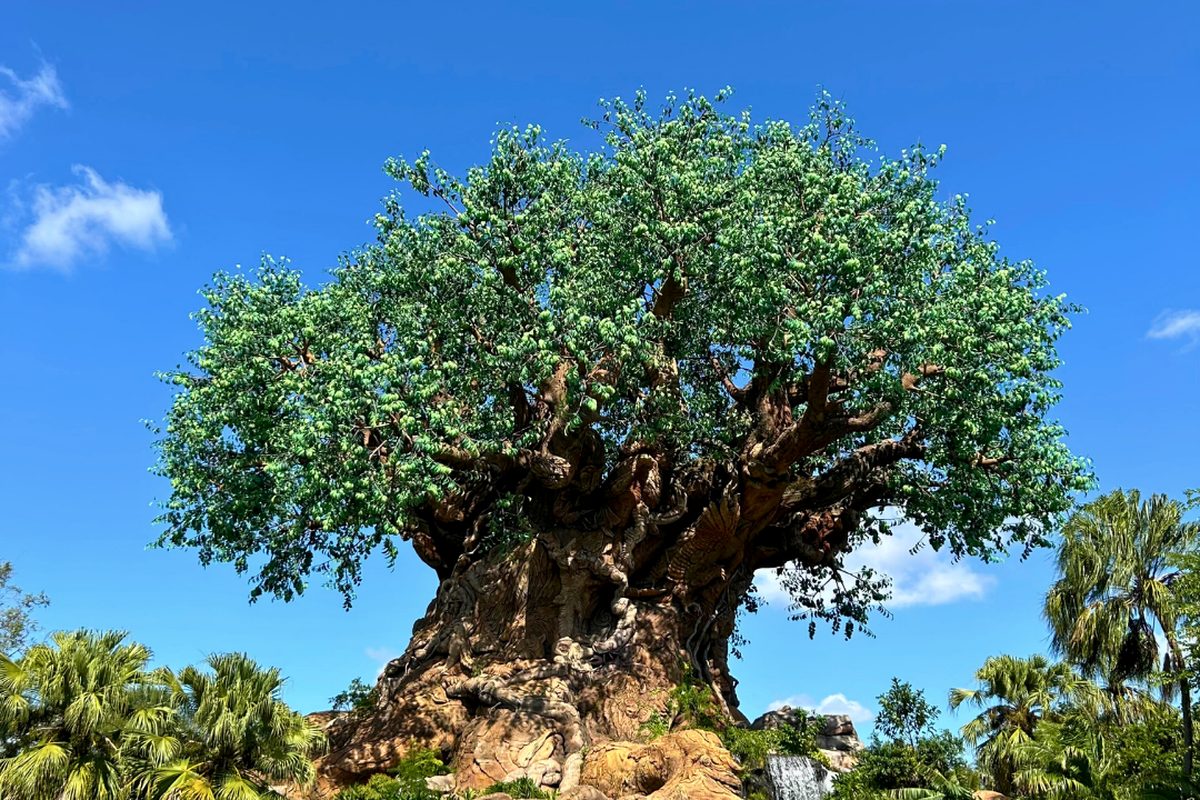
The Tree of Life stands at the centre of the park, 145 feet tall, its trunk and roots carved with 337 real and extinct animals. It's the thing small children point at first, and for slightly older ones, picking out the animals is a game in itself. What looks like a solid tree is built on the frame of an old offshore oil rig, turned upside down and encased in concrete to hold it up through a hurricane. After dark, on the evenings the park stays open late, the carvings light up in a short, silent projection show called Tree of Life Awakenings.
Before you plan the dayThe building work, and the two things missing until 2027
The whole of the old DinoLand closed for good across 2025 and early 2026, and the area is behind construction walls while Disney builds a new land in its place, Tropical Americas. It's due to open in stages from 2027, with an Encanto ride, an Indiana Jones ride, a carousel and a new children's playground. For a family with young children the loss that matters now is that the park's only playground and its slow no-height dinosaur spinner have both gone with it, and nothing has replaced them in the meantime. The walls are set well back from the main paths, so you'll barely notice the work as you walk between the other areas. The Finding Nemo show is sometimes assumed to have closed with DinoLand, but it sits nearby and separate, and still runs.
The rides, and which ones little ones can go on
Nearly everything here takes any age, from the safari to the slow boat through Pandora.
Most of what there is to ride here is open to any age and any size. Two draw the longest queues, so ride them early: Kilimanjaro Safaris, where the wait builds as the morning goes on, and the boat ride in Pandora. Na'vi River Journey, in Pandora, is a slow five-minute drift through a glowing bioluminescent rainforest, with no drops and no height limit, and a baby rides on your lap. It's widely rated one of the best rides anywhere at Walt Disney World for babies and toddlers, though it's dark inside, so it's worth knowing about for a child who startles in the dark. The Wildlife Express Train, a short steam-train ride out to Conservation Station, is a treat in itself for a small child and the only way to reach Bluey's Wild World.
Bluey's Wild World, out at Conservation Station, is the newest thing here and the biggest draw for a UK family. It opened in May 2026 as a short interactive play-and-dance experience with Bluey and Bingo, built around games from the show and ending in a shower of bubbles. For a child who knows Bluey it can be the highlight of the whole trip. It's a fair walk and a train ride away, so it works best folded into a morning out at Conservation Station rather than as a special trip. It's a group experience rather than a one-to-one meet with Bluey, which catches some toddlers out, so it helps to say so beforehand. Check the app for how you join it on the day, since Disney has changed that more than once.
There are two more reasons to make the trip out to Conservation Station. Jumping Junction, which opened in June 2026 next to Bluey's Wild World, is a walk-through home to kangaroos and wallabies, and for an animal-mad little one it's a close look at animals you won't see anywhere else in the park. It isn't a petting zoo, so you keep to the path and don't approach the animals, though a keeper may let you touch one that wanders up to you, and a pushchair comes through with you (scooters don't, and it shuts in a lightning storm). Nearby, the Animal Care building has viewing windows onto the veterinary treatment room and the animal kitchen, where children can watch real vets and keepers at work, and it's air-conditioned and calm, one of the few indoor places in the park to cool down. Between those and the train ride out, Conservation Station makes a morning in itself rather than a quick hop.
The bigger ridesThe rides with a height limit
Only three rides here set a height limit, and all three are for older children and adults rather than little ones. Heights are measured at the park in bare feet, so if your child is close to one it's worth measuring properly at home. The number to know is 97cm, or 38 inches, which is the limit for Kali River Rapids, the water ride, and a tall four-year-old may just clear it. The other two, at 112cm, are beyond almost every young child.
| Ride | Area | Height | What it is |
|---|---|---|---|
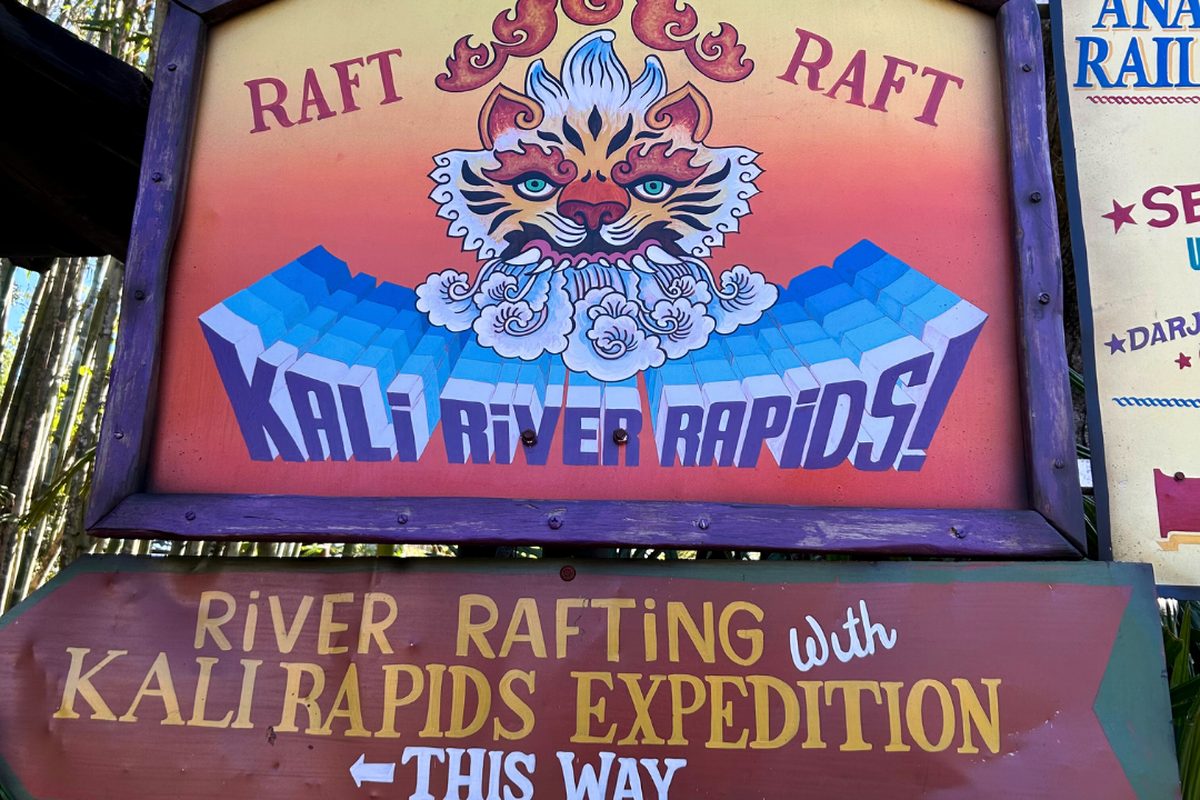
| Kali River Rapids | Asia | 97cm (38 in) | A circular raft ride through a jungle river, with one big drop and a good chance of getting soaked. Not frightening, but you'll want a poncho and a change of clothes, and there are free lockers by the entrance for anything that mustn't get wet. It shuts for a few weeks of maintenance in the cooler months, so check the app on an autumn or winter trip. |
| Avatar Flight of Passage | Pandora | 112cm (44 in) | A 3D flying ride that straps you to a banshee over Pandora, with strong motion, wind and mist. The best-regarded ride in the park and intense enough to make a fair few queasy. Too much for almost any young child even when they clear the height. |
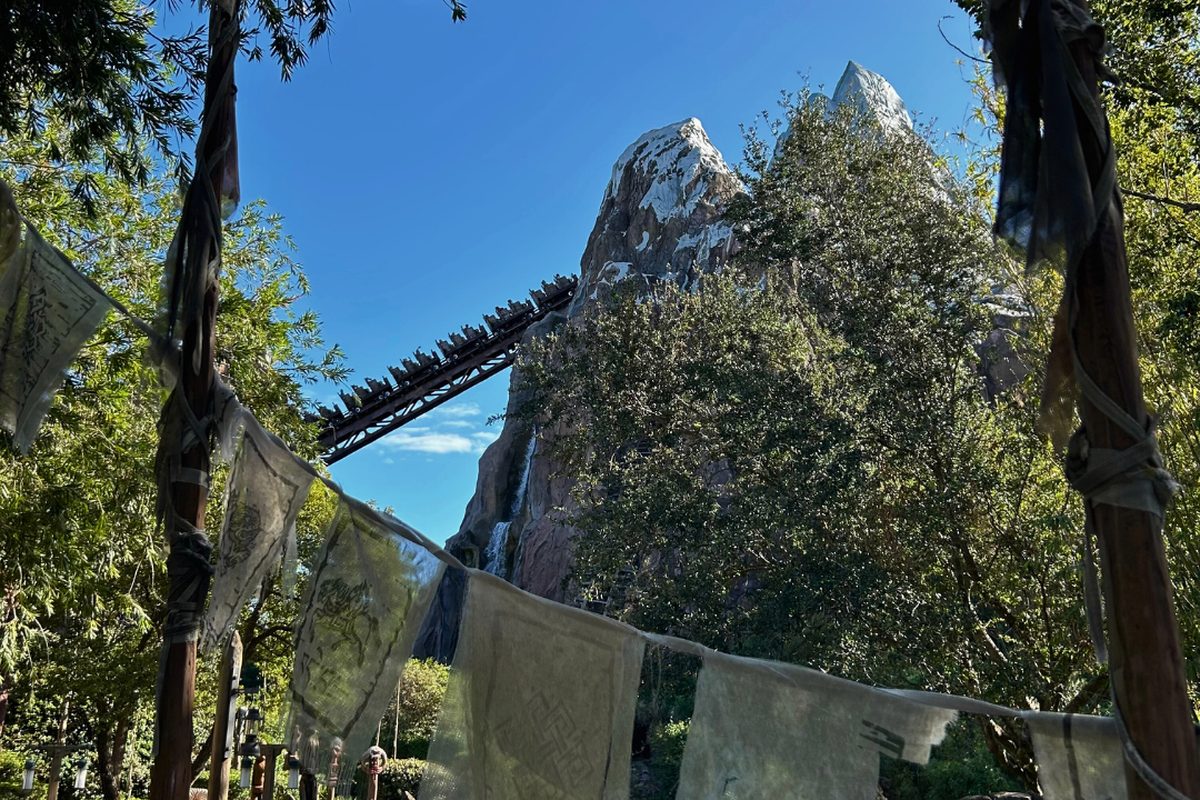
| Expedition Everest | Asia | 112cm (44 in) | The park's only roller coaster, through a Himalayan mountain, that runs backwards in the dark for part of the ride. A real step up from a first coaster and intense even for an eligible older child. |
The rides that can frighten a young child
Very little here is likely to scare a small child, which wasn't always true. The two attractions that used to reduce toddlers to tears, the old DINOSAUR ride and a 4D bug show in the Tree of Life, have both closed, and the show that took the bug show's place has none of its scares. Two mild things are left to flag. Na'vi River Journey is dark inside, though not frightening, so it's worth knowing about for a child who dislikes the dark. The bat cave on the Maharajah Jungle Trek in Asia has large fruit bats hanging in the open a few feet away, which most children love and a few find unsettling, so walk through ahead of your child and judge it.
Taking it in turnsRiding the big ones in shifts
If one of you wants to ride Flight of Passage, Everest or Kali while the other stays with a child who's too small, you don't both have to queue. Rider Switch lets one adult wait with the child while the rest ride, then swap onto the ride through the fast lane without queuing again. Ask the cast member at the entrance to set it up, and both adults need to be there. Everything else is open to any child, tall or not.
The animals, and the walking trails
The live animals are the reason the park exists, and for a small child they're the best of it.
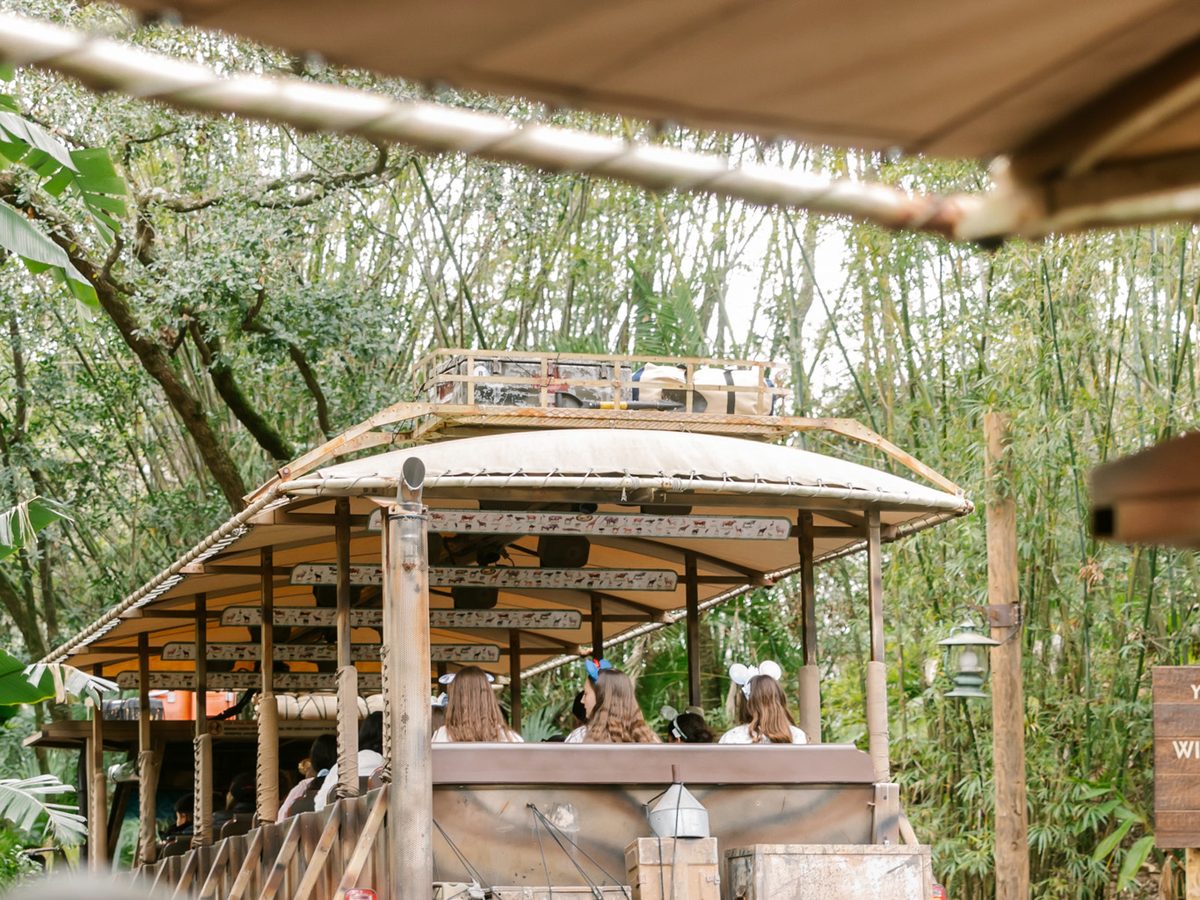
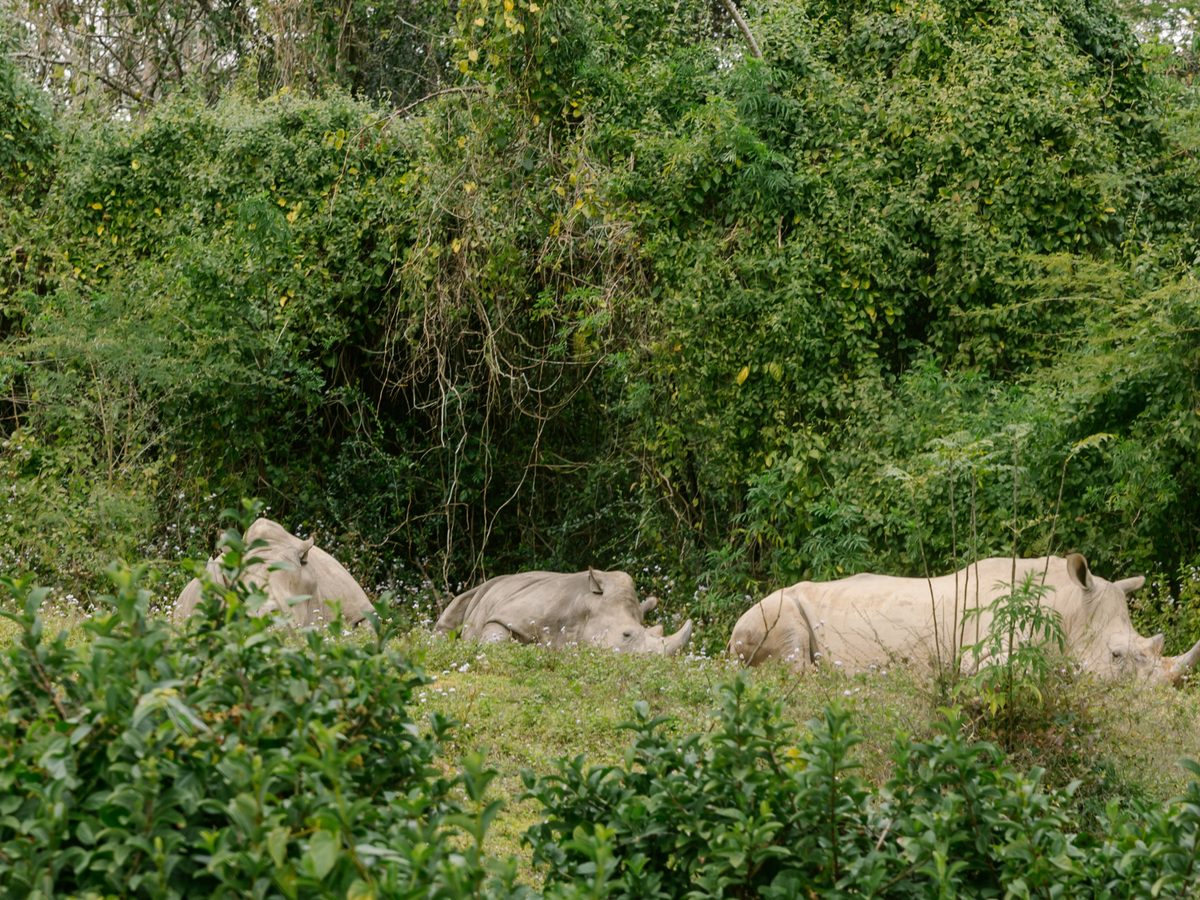
Kilimanjaro Safaris is the ride many families remember longest. You board an open-sided truck for around twenty minutes across a stretch of African savanna where the animals roam more or less freely, and children routinely end up a few metres from giraffes crossing the road, from elephants, zebra, rhinos and lions in the sun. There's no height limit, and children sit between the adults. It's bumpy, roughest in the back rows, so ask for a middle or front row, and there are no seatbelts, so keep a firm hand on a toddler's leg. A baby too young to sit up can ride in a front carrier, which the staff allow. Go first thing, when the animals have been fed and are active and the queue is shortest, or in the last hour or two before close, and skip the middle of the day when they shelter from the heat.
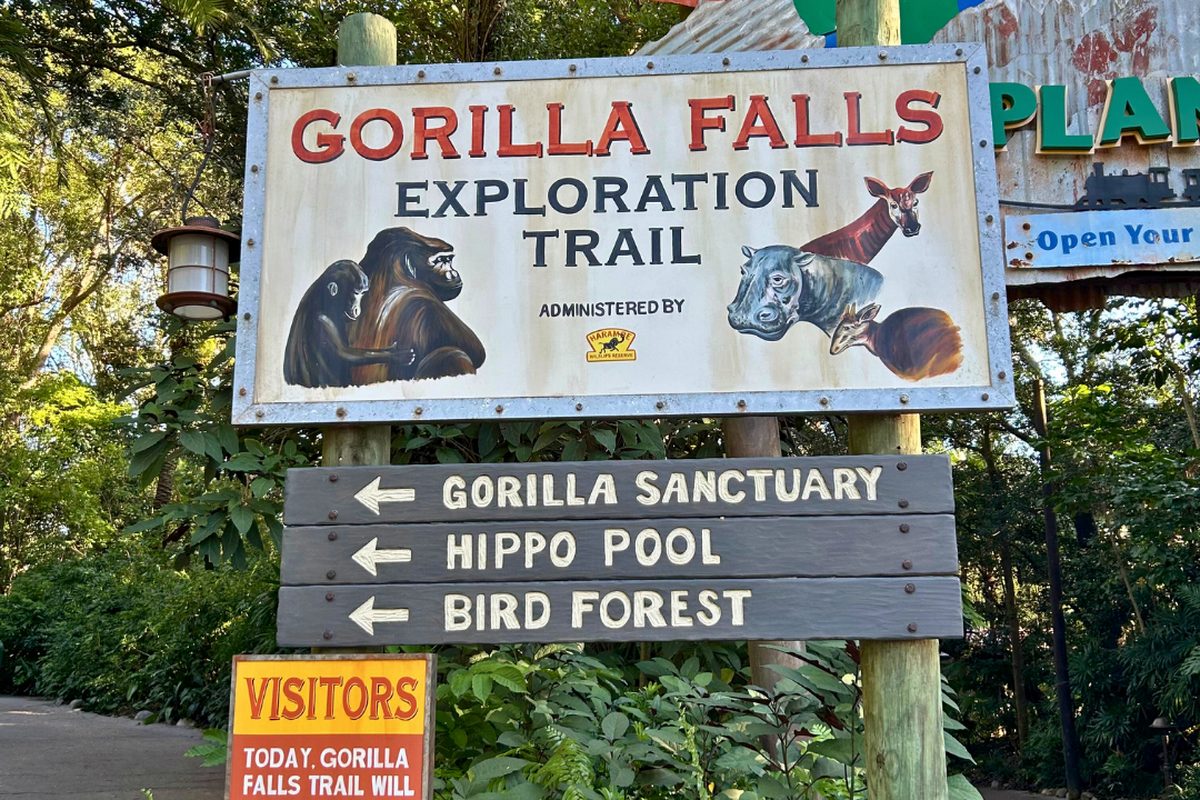
The walking trails are the other half of it, and they're not filler. The Gorilla Falls Exploration Trail in Africa passes a family of lowland gorillas through big glass panels, a hippo you can watch underwater, meerkats and okapi, and it's shaded and quiet enough that it doubles as one of the best places in the park to walk a baby to sleep. The Maharajah Jungle Trek in Asia does the same with Bengal tigers, Komodo dragons and the bat cave. Two shorter trails, one around the Tree of Life on Discovery Island and one along the entry path through the Oasis, are quieter still, with otters, lemurs, tortoises and flamingos. Hardly anyone walks them, because most people hurry past to the rides. All of them take a pushchair the whole way.
The park is a serious conservation project as much as an attraction, home to thousands of animals and one of the leading animal hospitals in North America. The story children can hold onto is the rhinos. Some of the white rhinos here were sent to a sanctuary in Uganda to help rebuild a population that poachers had wiped out, and that population has since grown many times over. It's real work, and the rhinos a child sees on the safari are connected to it.
For a family who want to get even closer, keepers give informal talks along the trails through the day, and a handful of paid experiences go behind the scenes with the animals. Of those, Up Close with Rhinos, a backstage meeting with the white rhinos, takes children from age four and is the most open to young ones. Caring for Giants gets you close to the elephants, and Savor the Savanna is a private evening safari with food. The Wild Africa Trek, a rope-bridge expedition over the savanna, sets a minimum age of eight and a height of 122cm, so it's one for older children rather than little ones. All of them book through the app and cost extra, so they're worth weighing only if a closer animal encounter is the thing your child would remember.
One free extra connects the animals for slightly older children. Wilderness Explorers is a self-paced badge trail: you pick up a booklet near the entrance and earn stickers at stations across the park by doing short nature tasks and animal spotting with the staff. It works from about age three and costs nothing. Earning the stickers gives children a reason to walk between the areas.
The shows, and the rest of the entertainment
No parade and no fireworks, so the entertainment is shows, live bands and, after dark, the Tree of Life.
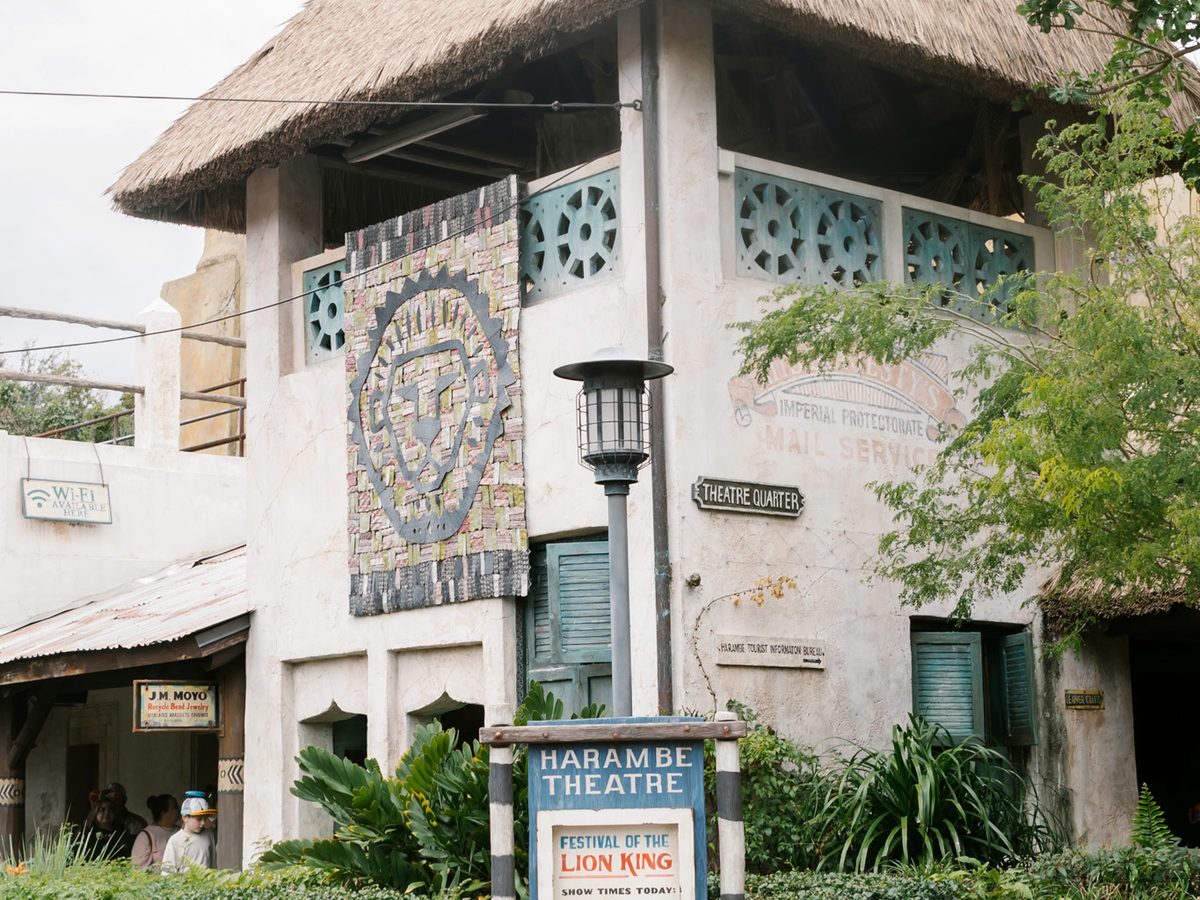
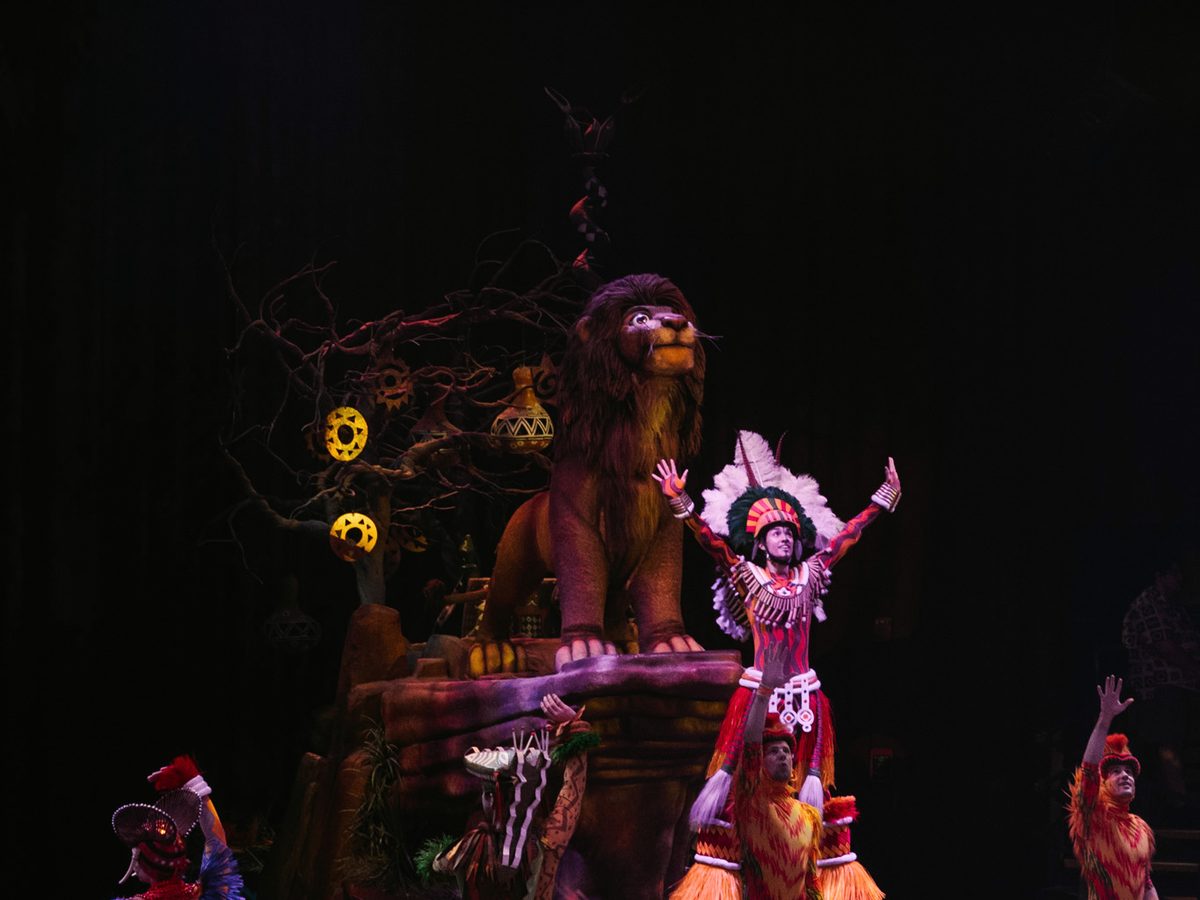
The entertainment here is calmer than at the other parks, and the shows are among the best things to do with a small child, not least because they're indoors and air-conditioned in a park short of places to cool down. Festival of the Lion King, in Africa, is a half-hour theatre-in-the-round with acrobats, huge puppet floats and singers. It's also loud, with drums and sudden musical peaks, so a noise-sensitive child may find it a lot, and sitting higher up or towards the back softens it. The seats are hard bleachers, so a cushion helps. Finding Nemo, in a big covered theatre near Asia, is the quieter of the two, about twenty-five minutes of familiar characters, bright puppets and a bubble finale, with the sadder moments of the film played down. Both are cool, dark places to sit through the hottest part of the day.
The Tree of Life theatre now holds Zootopia: Better Zoogether!, a nine-minute 3D show with Judy Hopps and Nick Wilde that replaced an older bug show. In place of the spiders and jump-scares the old show was known for, it has just a little water spray and a soft seat buzz, so young children come out fine. Asia has an outdoor bird show, Feathered Friends in Flight, where macaws and owls fly low over the audience. It isn't frightening, but it's long and the seating isn't air-conditioned, so it gets hot at midday and suits young children who'll sit through it rather than a fidgety toddler. Around Discovery Island you'll also come across live street bands, a stilt-walker dressed as a walking plant and a free fly-over of big South American macaws near the Tree of Life. Show and band times move about and some are seasonal, so check the My Disney Experience app on the day.
Around the calendarSeasonal shows and the holidays
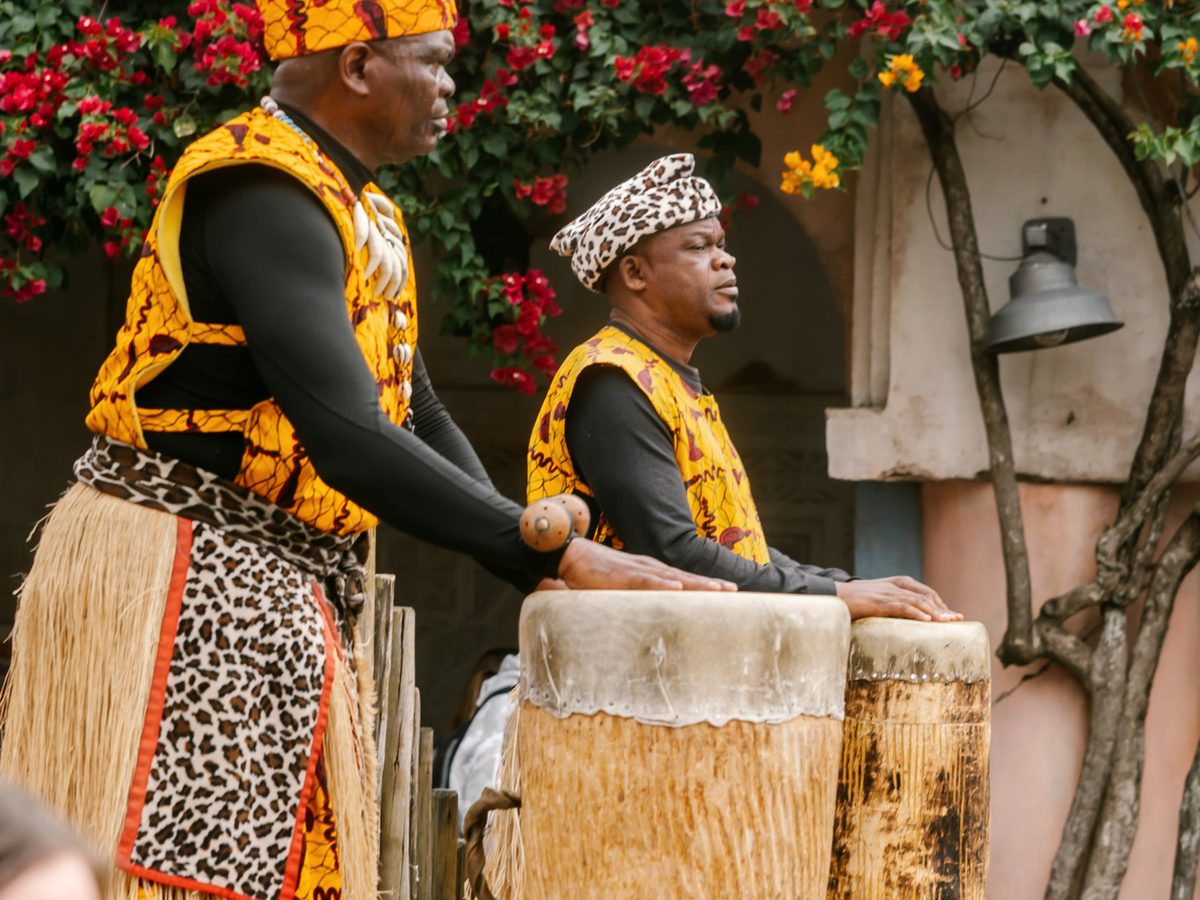
There's no Halloween event here, unlike at Magic Kingdom, so an October trip won't have one to plan around. There's more on at Christmas. Merry Menagerie brings a daytime procession of life-size winter-animal puppets, polar bears, penguins and owls, worked by performers alongside a live musician on Discovery Island, and it's a calmer festive thing than the evening events elsewhere at the resort, with nothing loud or crowded about it. Asia is decorated for Diwali as well as for Christmas, and the Tree of Life projections run holiday versions on the evenings the park's open late. The park's own birthday is Earth Day, 22 April, which sometimes brings extra conservation activity, though nothing you'd plan a whole trip around.
Meeting the characters
A handful of good meets, and one of them is the only place in the resort to meet Mickey and Minnie together.
The stand-out here is the Adventurers Outpost on Discovery Island, the only place in all of Walt Disney World where Mickey and Minnie meet together in the same room, both in safari outfits, with the bonus that the queue is indoors and air-conditioned. Go before about half past ten or in the last hour, when the wait is shortest. Elsewhere you can meet Judy Hopps and Nick Wilde from Zootopia near the Tree of Life. Moana and Pocahontas each have a spot on Discovery Island, and Russell and Dug from Up meet near the Wilderness Explorers area. Donald, Daisy, Chip, Dale and Goofy, who used to meet together in the old DinoLand, moved when it closed and now appear in safari gear around the Oasis and Africa. Two more roam the park rather than holding a spot. Kevin, the tall flightless bird from Up, walks Discovery Island near the Tree of Life, and Meeko, the raccoon from Pocahontas, turns up around there too. At thirteen feet tall Kevin impresses most children, though the very youngest can find her a lot up close. Bluey and Bingo appear at their experience out at Conservation Station. Animal Kingdom moves its character spots around more than the other parks, and the building work has shifted several, so the app is the place to see who's out and where on the day rather than a printed list.
Characters at the tableTusker House, the character meal
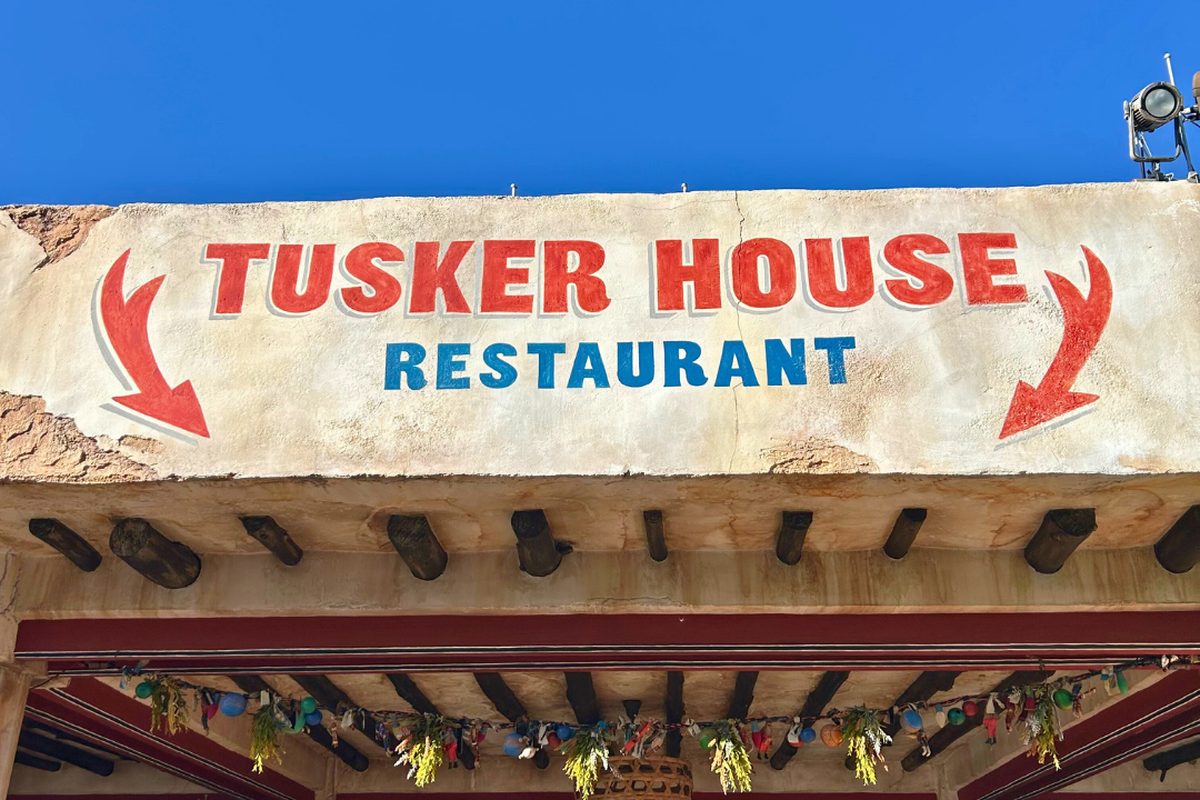
The easiest way for a small child to meet characters isn't a queue at all but the character meal at Tusker House in Africa. It's a buffet where Donald, Mickey, Daisy and Goofy come round the tables in safari gear while you eat, so there's no line to stand in and no pose to hold, and the food arrives whenever your child is ready. That suits a wary toddler far better than a face-to-face meet, and plenty of small children are wary of the big costumed figures even when they love them on screen. It's the park's priciest meal and books up, and reservations open sixty days out, with a late-morning booking covering both the breakfast and lunch menus.
Where to eat with young children
Fewer places to eat than the other parks, but the toddler basics are well covered.
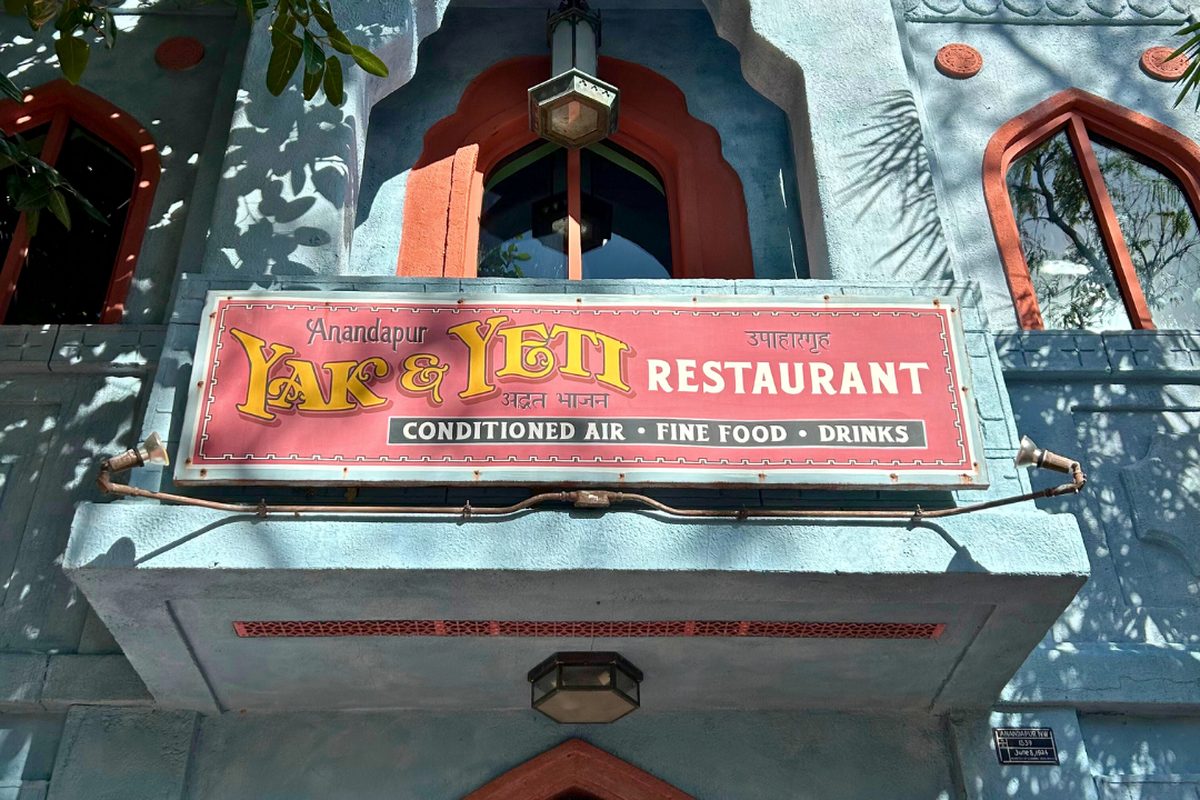
Animal Kingdom has fewer places to eat than the other three parks, but there's plenty a small child will eat. At Satu'li Canteen in Pandora you build your own rice or noodle bowl, there are good children's versions and it's all in air conditioning, which makes it an easy counter-service stop with a young child. Flame Tree Barbecue on Discovery Island does ribs, chicken and mac and cheese, with shaded tables overlooking the lagoon for a late lunch out of the sun. Pizzafari, also on Discovery Island, is the reliable indoor stand-by for pizza, pasta and plain options, and it's air-conditioned. Harambe Market, an outdoor counter in Africa, does burgers, chicken strips and wraps for something more filling on the move. All of these are walk-up, so you order at the till or on the app and carry the food to a table, with nothing to book ahead. The two you sit down to and reserve are the character meal at Tusker House and the pan-Asian Yak & Yeti in Asia, which has a manageable children's menu and good air conditioning. Both fill up, so book rather than turn up at busy times.
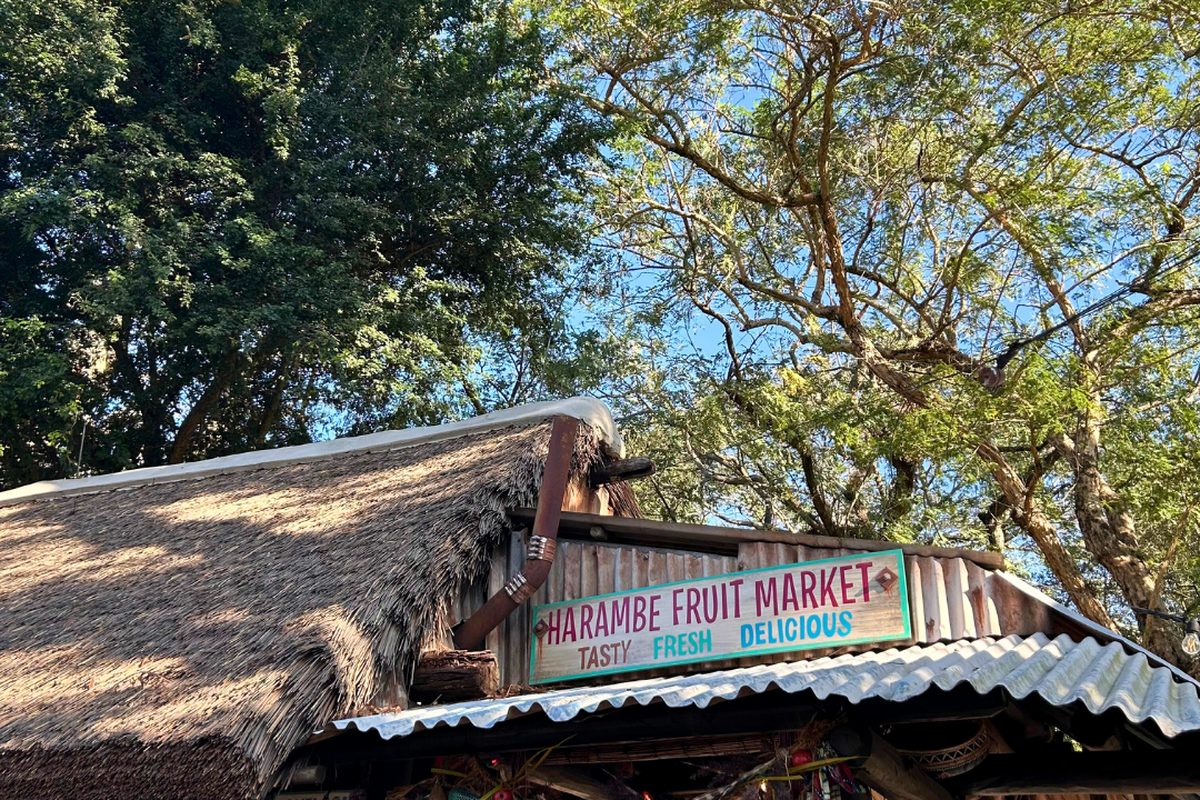
For snacks, the best known are in Pandora at Pongu Pongu, which does the Night Blossom, a frozen passion-fruit and lime drink, and pineapple lumpia, a fried pineapple and cream-cheese pastry. Satu'li Canteen has a blueberry cheesecake mousse, Tamu Tamu in Africa serves Dole Whip, the pineapple soft-serve that's a Disney institution, and the Harambe Fruit Market close by sells fresh fruit for something lighter. There are Bluey-themed treats too, a fairy bread cake, a fruit freeze and a Bluey lemonade, at Pizzafari and the Isle of Java kiosk, a small extra for a Bluey fan in the family.
Mobile Order in the app lets you order and pay ahead and collect without queuing, and it works at most counter places, so you're not standing in line with a hungry child. You're also allowed to bring your own food and snacks in, which is the simplest answer for a fussy eater. If anyone has a food allergy, you can filter for it in Mobile Order and the kitchens handle allergies well. The Rainforest Cafe sits outside the park gates, so you don't need a ticket to eat there, though it also means you can't reach it from inside.
A meal without the little onesAn evening meal for the grown-ups
If you're taking it in turns, or have someone back at the hotel to sit with the children, there's one proper grown-up meal here. Tiffins, on Discovery Island, is the park's signature restaurant and rated among the best food anywhere at Walt Disney World, a pan-global menu with African, Asian and Latin American touches, and its walls are hung with the artwork the park's designers brought back from their research trips. It's a refined, unhurried sort of place, better suited to a meal without very young children than a table full of toddlers. Next door, Nomad Lounge is an open-air walk-up bar doing small plates and cocktails with no reservation needed, an easier way to get a taste of the same kitchen with a child in tow.
Baby care, pushchairs and the heat
Where to change and feed a baby, why the pushchair matters more here and how to handle the Florida heat.
The Baby Care Center is on Discovery Island, tucked behind Creature Comforts, the park's Starbucks, next to First Aid. It's the largest of the four parks' centres and fully air-conditioned, with private rooms for feeding, changing tables, high chairs and a microwave and sink for warming bottles and food. In a park short of big indoor spaces, it doubles as somewhere cool and quiet to retreat to, worth using for that alone. It sells nappies, formula and baby food, but in American brands like Huggies, Enfamil and Gerber rather than Pampers, Aptamil or Hipp, so bring what your child actually uses and treat the centre as a backup. You don't have to trek back to it for every change, though. There are changing tables in the ordinary toilets across the park, and single family rooms at the main toilet blocks. Next door, First Aid is staffed by a nurse who can give a free single dose of children's medicine, handy if a toddler runs a temperature midday. If something needs more than a nurse, the nearest urgent-care clinic off site is AdventHealth Centra Care at Lake Buena Vista, open late every day, and Disney resort guests can arrange free transport to it through First Aid or the hotel front desk. If you get separated from your child, the Baby Care Center is also where a cast member brings a lost child to wait, so it's worth telling an older toddler that's where to go if they can't find you.
If waiting in line is hardThe Disability Access Service
If your child has a developmental disability, autism among them, and can't manage a conventional queue, Disney's Disability Access Service is worth knowing about before you travel. Instead of queuing, you're given a return time roughly the length of the current wait and come back when it's due, which for a child who can't stand in a line is the difference between a manageable day and a very hard one. It's meant for the specific child who needs it rather than any family with a young child, and Disney decides who qualifies. You register on a live video call with Disney, and you can do that from home up to sixty days before you fly, so it's one to sort out before the trip rather than at the gate. The terms have changed more than once, so it's worth reading the current ones on Disney's site when you register.
About the pushchairPushchairs, and why a good one matters more here
If naps in the pushchair are part of your plan, this is the park to bring your own for, or to hire a proper reclining one delivered to your hotel. The pushchairs Disney hires out, from Garden Gate Gifts just inside the entrance, are moulded hard plastic and don't recline, so they're no use for a sleeping child. Most families nap the child in the pushchair on a shaded trail instead, which only works if it reclines. The Gorilla Falls and Maharajah trails are the best for it, both smooth, shaded and quiet mid-morning. Your own pushchair needs to be within about 79cm wide and 132cm long, and the folding wagons some families bring aren't allowed. On the buses it has to be folded. If your child needs to stay in the pushchair for a medical or developmental reason, Guest Relations can add a red tag that lets you push it through the ride queues to the boarding point, free and with no proof of diagnosis needed.
Staying coolThe heat, and where to cool down
Central Florida is hot and humid from around May to October, often into the low thirties in high summer, with heavy thunderstorms most afternoons that clear quickly. Animal Kingdom has more natural tree shade than any other park here, which helps, but fewer big indoor buildings to duck into, so the cool spots matter. The Baby Care Center, the two show theatres, the Zootopia theatre and the indoor restaurants are the places to plan the middle of the day around. Pack sun cream, a hat and a clip-on fan, and carry a refillable bottle any counter will fill with iced water for free. It's worth writing your phone number on a wristband for a child who might wander off in the crowds. If you can travel in the cooler months from about November to March you'll get the park at its most comfortable.
Shaping the day around naps and the early close
Where to head at opening, whether the paid passes are worth it and how the early close changes the plan.
Set the My Disney Experience app up before you travel, since it runs the live wait times, the map, food orders and the paid queue passes. At opening, head straight to the back of Africa for Kilimanjaro Safaris before the queue builds and the animals settle, then walk the Gorilla Falls trail next door while they're still active. Na'vi River Journey fills up early too, so it's worth reaching before the crowds head for Pandora. After that there's little left that needs timing. The shows, the trails, the train out to Bluey and the character meets slot in around naps and meals in whatever order suits.
The paid Lightning Lane passes matter less here than at any other park at the resort. Animal Kingdom has the fewest of them, and with the early start you get as a Disney hotel guest, plus being there for opening (rope drop), a normal day rarely needs one. The single exception is for adults who want to ride Flight of Passage, which has the longest queue in the park. That's the one ride to weigh a paid single pass for, and it's the only ride here that carries one. Our tickets and passes guide covers how they work.
Because the park closes so early, it works well as a half day. A family whose toddler still naps can rope-drop the animals and the rides little ones can go on, do the whole core by the early afternoon and head back to the hotel for a proper nap and the pool, losing little by leaving, since there's not much evening to stay for. The exception is on the evenings the park does open late, when Pandora is worth staying for. After dark its plants and pathways glow, a quiet, free thing you can take in from the pushchair with no queue. Whether that's on depends on the date, so check the hours for your days. If you're staying in one of the Deluxe or Disney Vacation Club hotels, the park also runs Extended Evening Hours now and then, two extra hours after close for those guests, though it takes a turn at this far less often than the other parks, so check the app to see if it lands on one of your days.
For a souvenir on the way out, the biggest shops are Island Mercantile and the Discovery Trading Company on Discovery Island, and Windtraders in Pandora has the Na'vi plush and a build-your-own banshee that younger children tend to like. Garden Gate Gifts by the entrance is the practical one, selling ponchos, hats and sun cream alongside the souvenirs, so it's an easy last stop for anything you've run out of.
Getting there and parkingGetting to the park, and parking
From a Disney hotel the only way to Animal Kingdom is the bus, since there's no monorail, Skyliner or boat to this park, and the buses start about forty-five minutes before opening. The bus is free and included, but if you'd rather not fold the pushchair and stand, a Minnie Van, a Disney-driven car booked through the Lyft app, will come to your resort and, unlike a standard taxi or rideshare, fit an infant car seat if you ask when you book. How the buses, Minnie Vans and the rest of the resort transport fit together is in our guide to getting around Walt Disney World. Plenty of UK families hire a car in Orlando, though, and driving is straightforward. The park has its own large car park with courtesy trams to the gates, so you park and walk in with no separate transport hub to cross first. Parking is free for guests staying at a Disney hotel and paid for everyone else. Across the property it's roughly fifteen to twenty minutes' drive from Magic Kingdom or EPCOT and a little less from Hollywood Studios, and about forty minutes from Orlando airport. Since Disney's airport coach service ended a few years ago, families get from the airport to their hotel by a shuttle firm such as Mears Connect or the Sunshine Flyer, by a private car transfer, by taxi or rideshare or in a hire car of their own.
When to goWhen to go
Animal Kingdom is open every day, so timing is about crowds and weather. September is the quietest month by a distance, with the shortest queues of the year, and the last week of October, plus much of January and August, are calm too. The busy stretches are the Christmas and New Year fortnight, the spring-break weeks from mid-March to Easter and Thanksgiving. Midweek is quieter than the weekend. For the weather, the cooler, drier months from about November to March are the most comfortable with little ones, and one bonus of the earlier winter sunsets is that the park is more often open late enough to see Pandora glow.
Loves and gripes
Families praise the safari and the trails most, and grumble most about the early close and the building work.
The safari comes first for nearly every family, and parents are often surprised how much a small child gets out of a park with so few rides for them. The walking trails come up almost as often, helped by the fact that they stay near-empty while everyone else queues for the rides. Families also single out the calm compared with the other parks, the Adventurers Outpost meet as the one place in the resort to see Mickey and Minnie together, and Bluey's Wild World for a child who knows the show, and they praise the shows as much for the air conditioning as for what's on stage.
The building work is the first gripe for a 2026 or 2027 visit, and the one with an end date. After that come the early close, which catches out families who booked a full day and find themselves done by mid-afternoon, and Flight of Passage, whose queue is the one long wait worth planning around. A smaller, steadier complaint is Bluey's Wild World, which turns out to be a group play session rather than a meet with Bluey, and a train ride and a fair walk for a fourteen-minute show, so some toddlers arrive expecting something it isn't. The rental pushchairs don't recline, which catches out anyone counting on a nap, and the heat is hard to escape in a park short of big indoor spaces.
Questions parents ask
The questions that come up most before a first visit, with the official links at the foot.
Do we need to book anything before we go?
Almost nothing, which catches out families coming from the other parks. The two sit-down restaurants, the character meal at Tusker House and the pan-Asian Yak & Yeti, are the only things you'd reserve. Everything else, the rides, the shows, the safari and the walking trails, is walk-up, so unless you want one of those two tables there's nothing to sort before you fly.
How young can a baby go on the safari?
There's no minimum age or height, so even a newborn can go. A baby who can't yet hold their head up rides against you in a front carrier, and any child under seven has to ride with someone aged fourteen or over. From there it's about whether the child is happy in an open truck rather than any rule.
Do the children need tickets, and will they eat free?
Children under three don't need a ticket or a park pass and go in free. They eat free too, at the character meal at Tusker House and at the park's other restaurants, and from three a child needs a child's ticket and a child's meal.
What's the plan if it rains?
Summer storms here usually pass within an hour, so a wet afternoon rarely writes off the day. The safari is often better just after one, when the animals come back out, and the shows and the indoor restaurants are dry places to sit it out. A light poncho for everyone is worth having in the bag.
Is there anywhere for the children to run around or get wet?
Not really, so it's one to plan around. What a toddler does get is the stop-start walking along the trails between the animals, which uses more energy than it looks. For open running-about or water play there's nothing inside the park, so that's one for the hotel pool at the end of the day.
Animal Kingdom photos
The Tree of Life, the safari, the walking trails and the character dining, all in one place.
Open the Animal Kingdom photo gallery →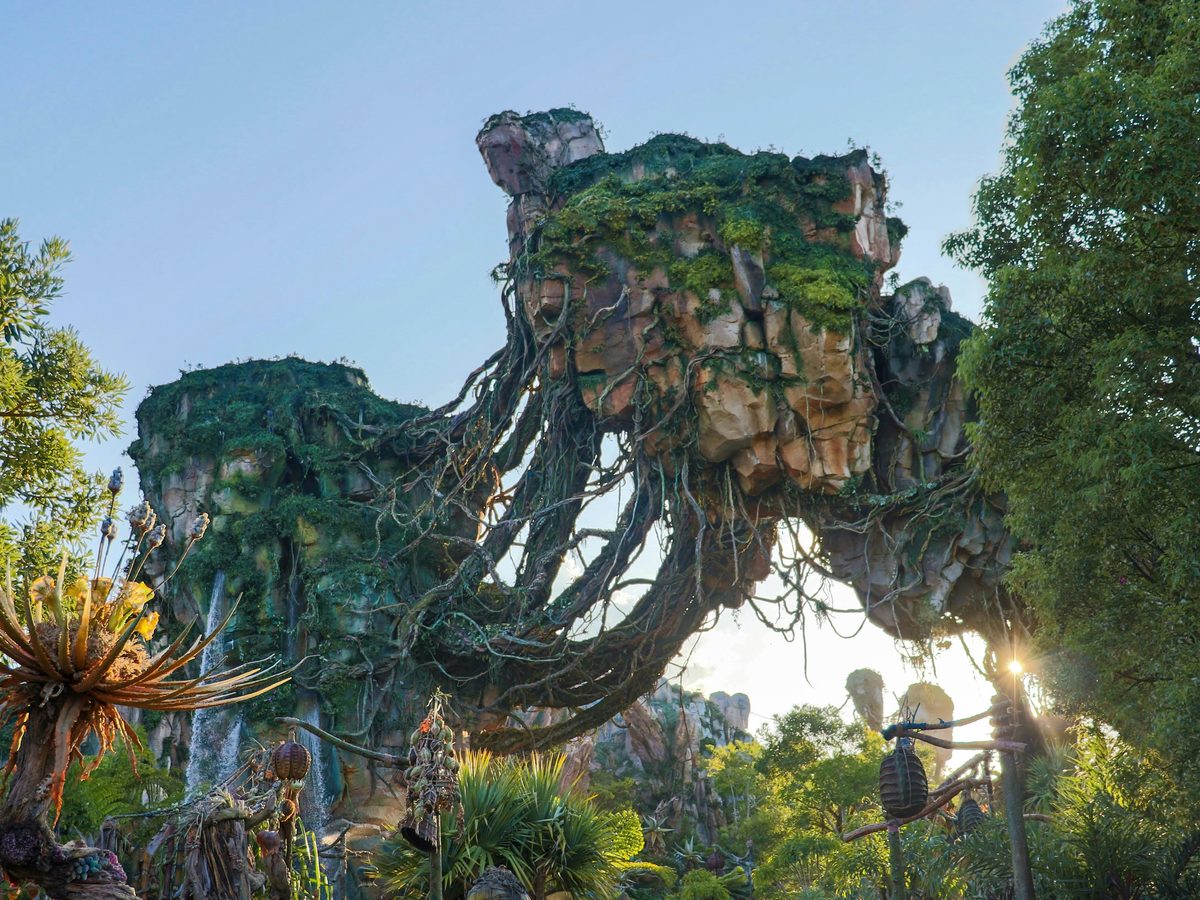
Useful links
- Disney's Animal Kingdom: the official park page for attractions, dining, show times and live opening hours.
- Magic Kingdom: our guide to the resort's castle park.
- Tickets and passes: how UK tickets, Lightning Lane and Early Theme Park Entry work.
- Getting around Walt Disney World: the buses, Skyliner, monorail and Minnie Vans, and how to move between the parks and hotels.
- Walt Disney World with little ones: our guide to the resort, its parks, hotels and getting there from the UK.
Last updated 9 July 2026.