
Disney Vacation Club explained
Disney Vacation Club is Disney's points-based holiday-ownership scheme. UK families can rent an owner's points for one trip without joining, or buy a long-term membership. Renting can cost less than booking the same Deluxe-tier villa through Disney, and one-bedroom villas and larger have a separate bedroom and a full kitchen.
On this page
You either rent points for a trip or buy in for the long term
Renting points can cost less than booking the same villa through Disney. Most studios have a kitchenette, and one-bedroom villas and larger have a separate bedroom and a full kitchen.
Disney Vacation Club, DVC, is Disney's version of a timeshare, sold in points. Members buy a deeded interest in one resort, their home resort, and receive a set number of points each year to spend on nights in Disney's villa resorts. Renting points can cost less than booking the same villa through Disney. Every DVC resort is Deluxe-tier, and one-bedroom villas and larger have a separate bedroom and more space than a standard hotel room.
You can rent points from an existing member and stay in a villa for one trip, without joining anything, or you can buy in, which is a long-term commitment priced in US dollars. Renting can cost less than Disney's cash price for the same villa, but it is a private booking rather than a protected package. Buying means taking on a contract, annual dues and currency risk for decades.
What it is
DVC is Disney's points-based timeshare. Renting points can cost less than booking the same villa through Disney, while buying gives you annual points under a long-term contract.
Why families like it
One-bedroom villas and larger have a separate bedroom, a full kitchen and their own washer and dryer.
Renting points
Rent an owner's unused points through a broker for one trip, without buying a membership.
Buying in
A decades-long commitment, bought and paid for in US dollars, with a fixed expiry date on the contract.
Who buying suits
Buying only pays back over many trips, so it suits families who already return regularly.
Not a protected package
A points rental has no ATOL or ABTA protection. Cancellation terms are stricter than a hotel's, so compare broker contracts and check that your travel insurance covers a points rental before paying.
Quick facts for UK families
Disney's timeshare, sold in points
You buy a share, get points each year and spend them on nights in the villas.
DVC doesn't tie you to one room in one fixed week. Members receive points each year and use them for different villa types, dates and resorts. Disney charges far fewer points for a studio in a quiet week than for a large villa in peak season. Members book with their points, bank unused ones into the next year or borrow from the year ahead, all within rules Disney sets.
DVC has Deluxe-tier villa resorts at Walt Disney World, Disneyland in California, Aulani in Hawaii and two US beach locations. Villas run from a studio up to a three-bedroom grand villa. The points pay for the villa and nothing else, so park tickets, dining, flights and everything else are bought separately, exactly as a family paying cash would. On site, a villa guest gets the same free Disney buses, monorail, boats and Skyliner as any Disney hotel guest, along with the same early park entry.
With young childrenWhy the villas suit a baby or toddler
The reason families with little ones look at the villas is space and a kitchen. A studio has a kitchenette with a fridge, microwave and coffee maker; a one-bedroom villa or larger has a full kitchen with an oven, hob, fridge-freezer and dishwasher. Breakfast, milk and weaning food in the villa saves the cost and the queues of eating out every morning, and a fussy toddler who won't touch a Disney menu isn't a crisis when familiar food is in the fridge.
A one-bedroom villa or larger also has its own washer and dryer, so you pack for a few days rather than the whole trip. It has a separate bedroom too, so a toddler can nap or go down early behind a closed door while the rest of the family uses the living room, instead of everyone sitting in the dark. A one-bedroom villa has roughly double the floor space of a standard hotel room, room enough for a buggy and the baby kit.
Sizing a villaA studio and a one-bedroom both hold four or five
A Deluxe studio sleeps up to four or five people depending on the resort, and a one-bedroom villa also sleeps up to four or five. Children under three don't count towards that limit, so a family of two adults and a couple of young children usually has room to spare in either. The bigger jump is the two-bedroom villa, which sleeps up to eight or nine, worth a look for a larger group or two families travelling together rather than for a couple with a baby. The exact figure moves a little from resort to resort, so each villa's own page confirms it.
Two of the newer resorts have a smaller room that also gets called a studio, the Tower Studios at Riviera and the Duo Studios in the Polynesian's Island Tower. These sleep only two, with one double bed, a kitchenette and no room for a travel cot, so they don't suit a family with a young child. When you book or rent, check you're getting a Deluxe studio or larger rather than one of these.
Baby and toddler kitCots and high chairs go out first-come, so bring your own if it's critical
You can ask for a travel cot, and at most resorts a high chair, bed rails and bumpers, non-slip bath mats and, at some of the newer ones, a step stool. None of these are guaranteed, they go out on a first-come basis and can run short in a busy week. A family who has to have a particular piece of kit, a cot most of all, is on safer ground bringing their own travel version or hiring from a local baby-equipment company than counting on the resort to supply it.
HousekeepingThe villas aren't cleaned every day
A villa isn't serviced daily the way a Disney hotel room is, and the option to pay for extra cleaning has been withdrawn. On a stay of seven nights or fewer you get a trash-and-towel visit on day four only, fresh towels, emptied bins and topped-up paper, with no full clean in between. A stay of eight nights or more gets a full clean on day four and a trash-and-towel visit on day eight. Extra towels are free to ask for at the front desk. With a baby or toddler in the party the washing builds up faster, which is one reason the in-villa washer and dryer in a one-bedroom or larger matters more to a family than daily servicing would; studio guests use the resort laundry rooms, with tokens provided. A two-week stay in particular runs largely on your own laundry rather than the housekeeping schedule.
Renting points to stay in a villa
Renting points lets you stay in a villa without joining DVC, but the booking has less protection and flexibility than a UK package holiday.
Members can rent out points they aren't using, and a family rents those points to book a villa. In practice most people go through a rental broker, which matches you with an owner. The owner makes the reservation with their points and puts your family on it as the guests, and you pay the broker. From the moment you check in it's an ordinary Disney reservation, with the resort transport, early park entry and dining windows any Disney hotel guest gets. It usually costs well below Disney's own cash rate for the same villa, and for the larger villas that saving, plus the extra space and the kitchen, is why UK families do it.
When to bookSchool-holiday villas book up early
A broker reaches the best rooms through its network of owners, who can book their own home resort up to eleven months before check-in and any DVC resort from seven months out. Popular resorts in busy weeks can sell out within hours of that eleven-month window opening. UK school-holiday dates all sit in peak demand, the summer, the half-terms, Christmas and Easter, and the villas for those weeks are taken eight to eleven months ahead. A family travelling in a school holiday is best approaching a broker around ten to eleven months before the trip. Leave it later and the choice narrows to whatever's left, often the larger resorts with more rooms or dates on either side of the holiday.
The financial riskA points rental is a private booking, not a protected package
A points rental is a private transaction for accommodation, and it does not come with the protection a normal UK Disney holiday does. It isn't an ATOL-protected package. A flight-inclusive Disney UK holiday may carry ATOL protection, so check what protection is stated on the exact package you're comparing. The owner books the reservation in your family's name, so you check in as a normal Disney guest, but they keep control of it through their DVC account. Changes and cancellations go through the owner or the broker rather than Disney. Cancelling isn't like cancelling a hotel either, and what you'd get back depends on how far ahead you pull out, covered just below. The booking also stays in the owner's name for the whole trip, so if they fall behind on their annual dues or their account is suspended, Disney can cancel the reservation. You are usually paying a large sum, well ahead of a trip, for a booking you don't directly control.
None of that makes renting a bad idea, and occasional renting is a normal, permitted part of how DVC works. It does mean going in informed. An established, long-running broker handles the reservation and, if something goes wrong, will try to secure an equivalent villa or issue travel credits or a partial refund, on terms set out in its contract. That is far more cover than a private deal arranged directly with an owner on a forum, which carries no third-party protection at all. Whichever route you take, pay by credit card where you can and treat the money as committed once the reservation is confirmed.
CancellingCancel early and most of it comes back as credit
A rental isn't flatly non-refundable, but it's a long way from a hotel's free cancellation. The main brokers run a tiered policy. Cancel a long way out, around four months or more before check-in, and you recover most of the cost as credit towards a future booking; the later you leave it the less comes back, down to nothing in the last week or two. Cancel inside roughly two months of the trip and you lose at least half. The refund is usually credit rather than cash, valid for a couple of years and good only for accommodation, not flights, tickets or dining, though one broker offers a paid upgrade that returns more of it as cash instead. Because UK families tend to book nine to twelve months ahead, most of a trip sits in the higher-refund end of that scale, but the nearer it gets the more of the villa cost is committed for good.
InsuranceCheck your insurance actually covers the rental
Travel insurance is worth having, but a points rental isn't a straightforward thing to insure. Some UK insurers treat it like any pre-booked accommodation and cover it; others class it as a private, peer-to-peer arrangement, because you're paying for a reservation made with someone else's points rather than booking a room directly, and exclude it. That's the gap to close before you pay. Keep the broker's invoice or contract, tell the insurer exactly what the booking is, ask specifically about points rentals or third-party bookings and get the cover confirmed in writing. Renting through a broker rather than a private forum deal leaves you with the paperwork insurers tend to want.
Buying into Disney Vacation Club
Buying means taking on a long-term contract in US dollars and usually suits families who return regularly.
Buying in is a different order of commitment. You buy a deeded real-estate share in one specific resort, which gives you a set number of points every year for the life of the contract. You pay an upfront price for each point, then annual maintenance dues on every point for as long as you own it. Every current resort has a fixed expiry date, somewhere between 2042 and 2075, after which the share reverts to Disney and has no further value.
It was built for US owners, and that shapes what it's like from here. The dues are charged and paid in US dollars, with no sterling option and no UK office, and you book through Disney's US member website or by phone. So the exchange rate becomes a running annual cost, and in a year when the pound weakens the same dues cost you more. Dues also rise most years, since Disney sets them to cover what the resorts cost to run. Because the ownership is US real estate, bought and paid for in dollars, it's not a UK-regulated holiday product, so it's worth taking your own legal and financial advice before you commit.
You can buy direct from Disney or second-hand on the resale market, a choice that changes more than the price, covered just below. Disney's own figures put the break-even at six to fourteen years after buying, based on a stay every year, and the dues fall due whether or not you travel. For a family going every two or three years or less, renting the points is the cheaper route. Renting first also lets you try a villa before committing.
Points and planningSchool-holiday trips in a larger villa need far more points
You choose a contract size in points, and how many you need turns on when you travel. A studio in a quiet September week takes a fraction of the points of a one-bedroom villa in July, so a family set on school-holiday trips in a larger villa needs a much bigger contract than off-season figures suggest. Points arrive once a year on your Use Year, the twelve-month cycle your allocation runs on. Unused ones don't roll on by themselves. You can bank them into the next year if you act before the banking deadline, or borrow next year's early, but miss the deadline and they expire, and borrowing permanently reduces the next year's points. For trips that land in the same school holiday each time, a Use Year that opens before that window leaves room to bank rather than lose points if plans slip.
Owning also brings an eleven-month booking window at your own home resort, against seven months for any other DVC resort. In peak weeks that head start is often the only way to get the smaller, most-wanted rooms before they go, which is why the standing advice is to buy at the resort you'd actually want to stay in rather than wherever's cheapest. If your family would always head for the same place, that priority is worth having; if you'd rather move between resorts, it counts for less, and you'd be working from the seven-month window like everyone else.
The money, plainlyPaying dollar dues from the UK takes a workaround
Disney offers finance on a direct purchase at rates that are far from cheap, and the interest can outweigh the saving the scheme is bought for, so owners who make the sums work generally pay cash. Paying the annual dues from the UK has its own wrinkle. Disney's monthly direct-debit option runs off a US bank account, which a UK owner won't have, so the bill is settled once a year by US credit card or through a currency service such as Wise, in dollars either way. It's manageable, just not the tidy monthly sterling arrangement a UK holiday usually is.
Direct or resaleBuying direct or second-hand changes what you can book
The two ways to buy aren't the same beyond the price. A resale contract costs less per point. Contracts bought on or after 4 April 2016 don't qualify for Disney's Membership Extras, the members-only discounts and perks owners call the blue card, and a buyer now needs at least 150 points bought directly from Disney to qualify. Resale at three particular resorts is restricted further. Contracts at the Riviera, the villas at the Disneyland Hotel in California and the cabins at Fort Wilderness can only ever book that same resort, never the wider DVC network, so a second-hand contract at one of them ties you to that one place. The older resorts carry no such restriction, though a resale contract bought there still can't reach those three newer resorts, and it books across the rest at the seven-month window like any other. A direct contract keeps access to the full DVC resort network. Buyers with at least 150 qualifying direct points may also get Membership Extras, which Disney can change or withdraw.
Is it worth it for a UK family?
Renting may suit one or two trips. Buying is a decades-long commitment for families who expect to return regularly.
Renting points suits a family who wants the space and separation a villa gives for a trip or two, without owning anything. You get the villa for that holiday and you can walk away after, and it usually costs less than Disney's cash rate for the same room, though a Disney offer can narrow the gap. Buying suits a family who expect to return most years for the long term, who are comfortable with costs charged in dollars that rise most years.
Disney is plain about this in its own small print, which says a membership should be bought for the holidays and the enjoyment of them, not as an investment. On Disney's own figures the payback only arrives after years of regular trips, so what settles it is how your family will holiday over the next decade or two, not what you'd save on the next trip.
A buying contract can run for decades, and over that time children grow up, budgets change and holiday tastes move on. Ownership can be sold on the resale market if plans change, though possibly for less than you paid in. Set against that, families who go often and stay committed generally find the maths works out over the years.
Rental or a UK packageRenting points against a Disney UK package
Renting points isn't automatically the cheaper way in, and it's worth pricing against a Disney UK package for your own dates and party. A flight-inclusive package from the Walt Disney Travel Company is ATOL protected and sometimes comes with a free dining offer, and when that offer is running it can land cheaper than renting points at the more affordable resorts like Saratoga Springs or Old Key West, with the protection on top. Renting tends to come out cheaper on longer stays, where the per-night saving is larger, and for larger groups who need a two or three-bedroom villa with its own kitchen and laundry. It also comes out cheaper in any period when no UK offer is on. The way to decide is to price both for your exact dates, resort and numbers. Compare the rental total plus insurance, flights and tickets against the packaged total with its dining and protection. Which comes out ahead swings on whether an offer is live, so neither is cheaper every time.
The Disney Vacation Club villa resorts
Every Walt Disney World villa resort is Deluxe-tier, but points costs, park access and resort layout vary. Those differences matter more with young children than the theme alone.
These are the Walt Disney World villa resorts a UK family is most likely to consider. Each hotel page covers the villa types, the pools, the dining and how to book on cash or by renting points, in full.
- Animal Kingdom Lodge: Savanna-view villas overlook the animal habitat, so children can watch giraffes and zebras from the room, plus a splash zone for younger children at the Kidani pool, so children can spend a lot of the holiday at the resort itself, without a park day.
- Grand Floridian: The villas sit on the Magic Kingdom monorail loop and within walking distance of the park, in Disney's most formal resort. It's the closest DVC resort to the Magic Kingdom, which pushes its peak points cost up.
- Bay Lake Tower: A DVC tower joined to the Contemporary by a walkway, on the Magic Kingdom monorail loop, with Magic Kingdom views from the upper floors. The monorail to the park suits young children who tire on the buses.
- Polynesian: South Seas theming on Seven Seas Lagoon, on the monorail to the Magic Kingdom, with studios in the longhouses, a newer DVC tower alongside them and the overwater bungalows out on the water. The monorail ride and the lagoon-side setting go down well with young children.
- Beach Club: In the EPCOT resort area, a short walk to EPCOT's International Gateway and on to Hollywood Studios, sharing Stormalong Bay, a large pool complex with a long shallow zero-entry end and a waterslide. High demand means the villas here are hard to get at the seven-month window without owning at the resort.
- BoardWalk: On the BoardWalk promenade beside EPCOT, a mile-long lakeside strip of shops, restaurants and entertainment, with EPCOT's International Gateway and Hollywood Studios both a walk away and a New England seaside theme throughout. Reaching two parks on foot suits families who'd rather skip the buses.
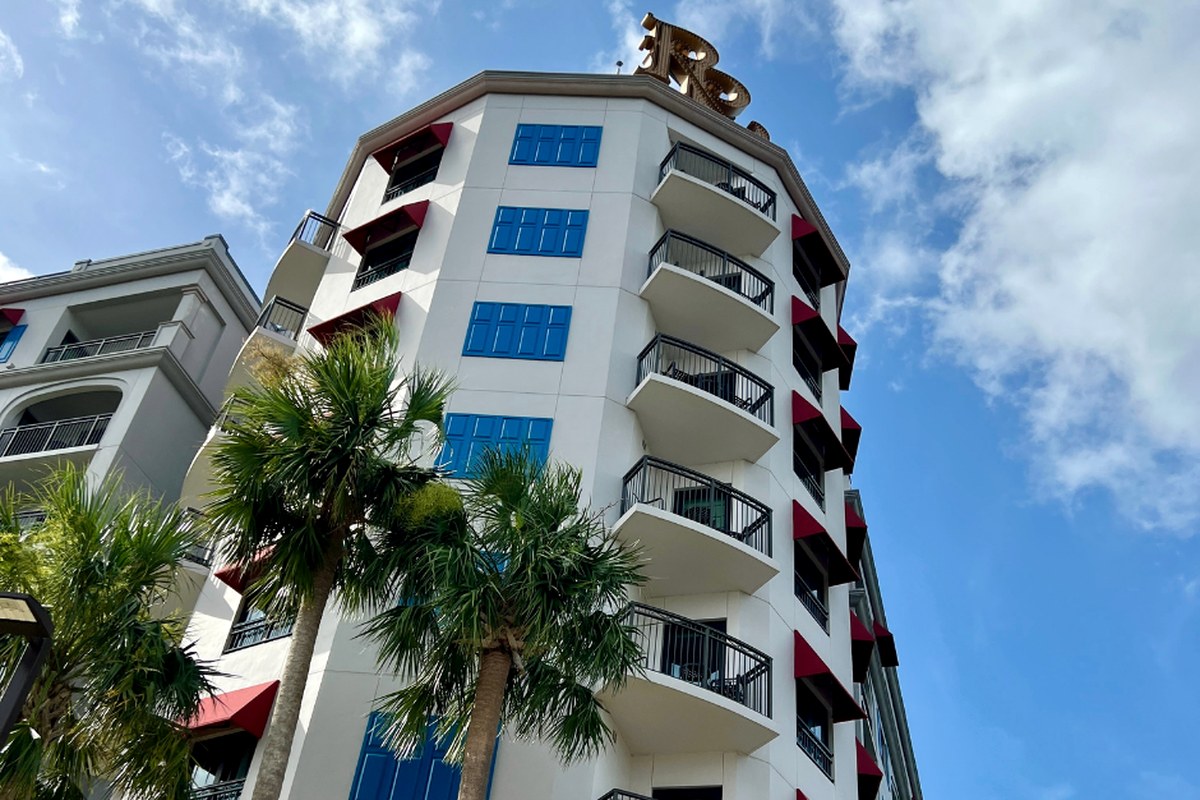
- Riviera: On the Skyliner gondola line to EPCOT and Hollywood Studios, with a European Riviera theme.
- Saratoga Springs: The largest and most spread-out of them, near Disney Springs, themed on the horse-racing spa town of Saratoga Springs in upstate New York. Its large inventory means it's often still bookable at the seven-month window, which makes it a useful choice for late or hard-to-find dates.
- Old Key West: The original DVC resort, low-density with large villas for the points spent, a boat ride from Disney Springs.
- Wilderness Lodge: A Pacific Northwest lodge on Bay Lake with a boat to the Magic Kingdom, plus the standalone waterfront Cascade Cabins at its Copper Creek villas.
- The cabins at Fort Wilderness: Standalone one-bedroom cabins in the wooded Fort Wilderness campground, each with a full kitchen, a set of bunk beds, an outdoor patio and a grill, sleeping up to six. The bunks and the space suit families with several children. These are among the newest DVC villas, and a resale contract here can only ever book Fort Wilderness itself, so most buyers go direct.
The resort you'd own or rent at changes both the points cost and the feel of the holiday. Animal Kingdom Lodge and the monorail resorts near the Magic Kingdom are the biggest draw for young children, for the animals at one and the short walk to the park at the other, while Saratoga Springs and Old Key West are the larger, more spread-out resorts near Disney Springs.
Beyond Walt Disney WorldDisneyland, Hawaii, Vero Beach and Hilton Head
DVC also includes resorts at Disneyland in California, Aulani in Hawaii, Vero Beach in Florida and Hilton Head in South Carolina.
Checks before you rent or buy
Can we stay in a DVC villa without joining?
Yes. Renting points is a one-off booking rather than membership, so you pay for that single trip and nothing after it.
Is renting points safe?
The stay is a real Disney reservation, so the risk is your money rather than the holiday. You pay most of the cost months ahead for a booking made in an owner's name, so the one check to make is confirming that reservation shows in your own My Disney Experience account (Disney's booking app) before you pay the balance. Renting through an established broker rather than a private sale on a forum is the protection that matters if an owner pulls out or a private seller turns out to be a scam.
When do we need to book a points rental?
Have both a first and a second-choice resort ready before you approach a broker, because if the first has gone they can try the second straight away rather than going back to you. The common mistake is booking flights first and leaving the villa until the smaller rooms in the holiday weeks are already taken, which is what forces a compromise on resort or dates.
Will our travel insurance cover the rental?
The cover to look for is cancellation cover for the villa money. Most of that cost is committed once the reservation is confirmed, so if illness or a change forces you to pull out, cancellation cover is what gets some of it back. Check the amount a policy would pay and the reasons it pays out on, not just that you're insured.
Which villa size do we actually need?
It comes down to whether you need a separate bedroom and a full kitchen. A one-bedroom villa gives a baby or toddler a room to sleep in with the door shut, and adds an oven, hob and in-villa laundry a studio doesn't have. If none of that changes your trip, a studio's kitchenette covers the basics. Each villa's own page sets out what sleeps where.
Should we buy before we've stayed in a villa?
There's no need to. Renting first lets you try the exact resort you'd think about buying into, and a trip or two shows whether you'd really go back often enough for it to pay, and whether planning eleven months ahead fits how your family books holidays. Plenty of families rent for years and never buy; others buy once they're sure. There's no set order.
What if we buy and our plans change?
You can sell the contract on the resale market, but selling is slow and you may get back less than you paid, and the yearly dues carry on until it sells. Because a contract's quick to buy and slow to sell, buying suits families who are already sure they'll keep going back, not those still deciding.
Useful links
- Disney Vacation Club: the official scheme, with current points, prices and the member resorts.
- Walt Disney World (UK): cash bookings and flight-inclusive packages from the UK, where the protection is stated on the booking.
- Tickets and passes: how UK tickets, packages and ATOL and ABTA protection work.
- Riviera: a full guide to one of the villa resorts, cash or on points.
- Walt Disney World with little ones: our guide to the resort, its parks and hotels.
Last updated 9 July 2026.