
On this page
- Where the ship sails, and when
- Disney has sailed from the UK before
- Where the Dream sits in Disney’s fleet
- The kids’ clubs are split by age
- The pools and the AquaDuck water coaster
- Dinner rotates through three restaurants
- Shows on deck, and no fireworks this season
- Why a no-fly start helps with young children
- The trade-offs to weigh
- What families say about the Southampton sailings
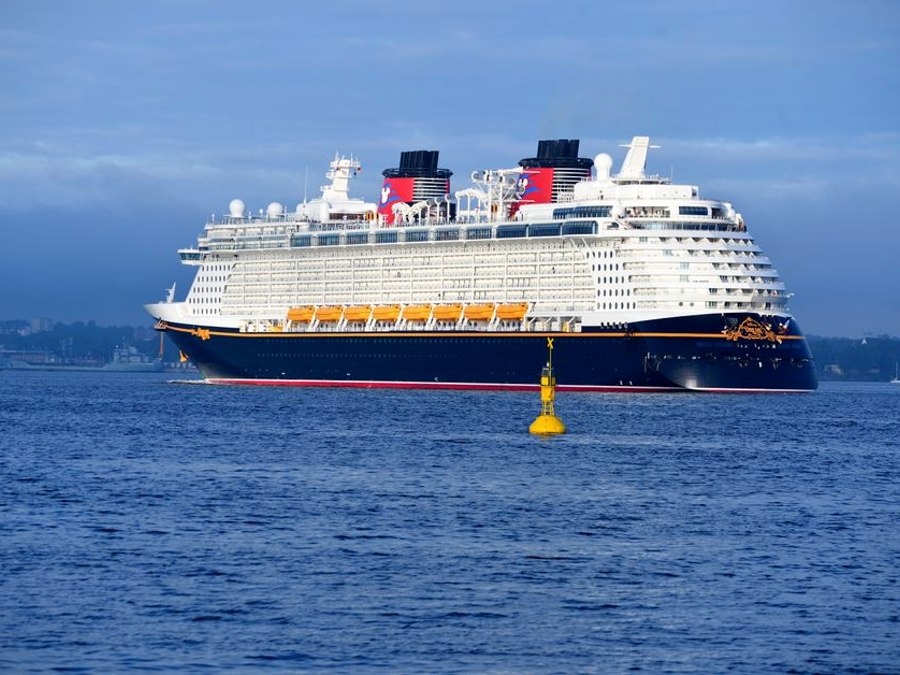
The Disney Dream is back at Southampton for the summer, its third season sailing from the port after 2023 and 2024. From late July to the middle of September it runs nine round-trip cruises of three, four and seven nights to Norway, Spain, Belgium, the Netherlands and the British Isles. For a UK family with young children the appeal is a Disney cruise you can reach by car or train, with no flight at either end.
Where the ship sails, and when
The Dream repositions from its Mediterranean season, arriving in Southampton on 27 July on a seven-night cruise from Barcelona. From then it runs a turnaround season of round trips out of Southampton, before closing the European summer with a long transatlantic crossing back to Florida in the middle of September.
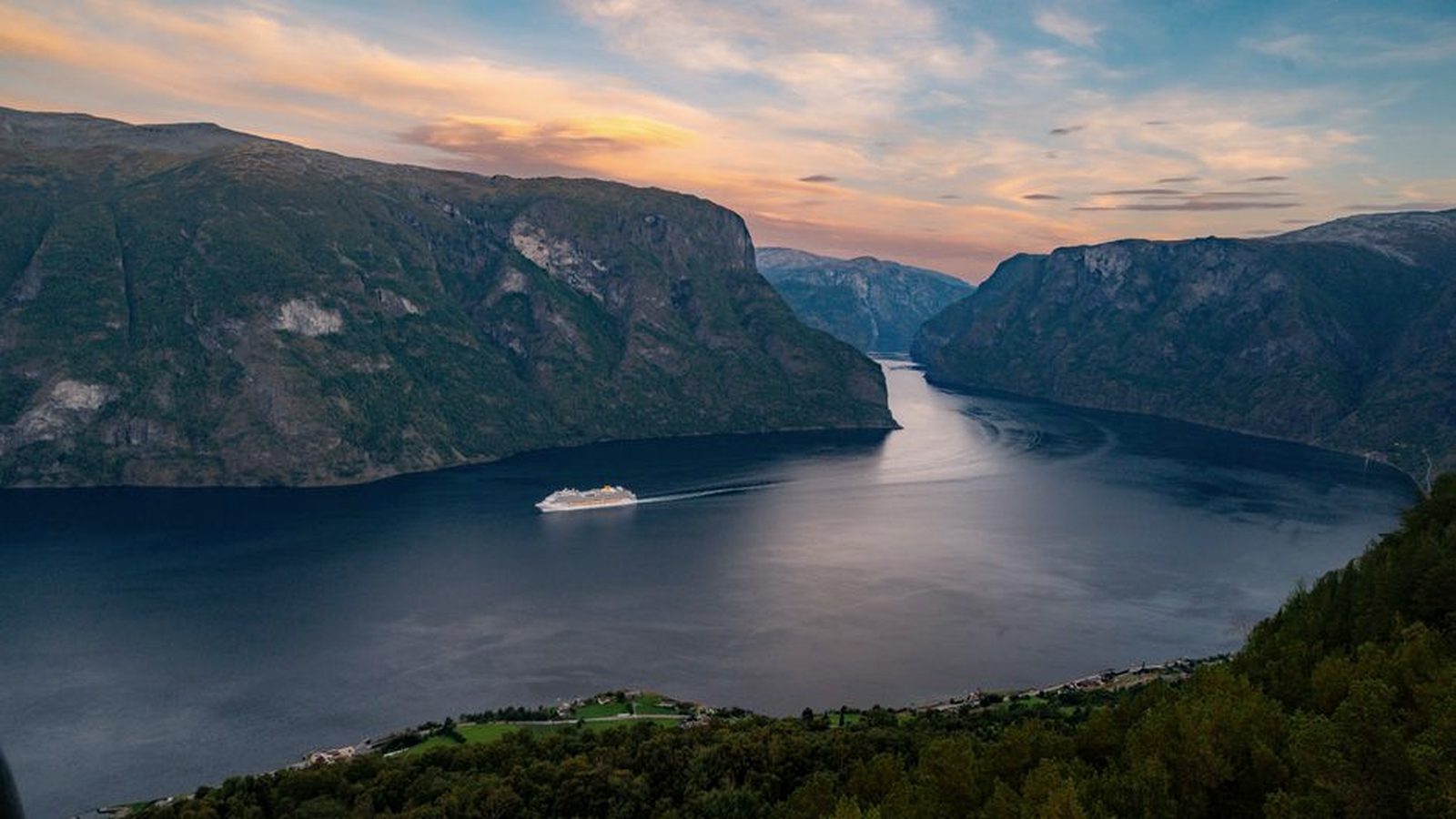
The programme mixes lengths. Two seven-night Norwegian Fjords sailings, on 27 July and 3 August, call at Norwegian ports including Ålesund, Bergen and Olden, with a day at sea in each direction. Shorter three and four-night trips run to Spain, calling at Bilbao or A Coruña, to the Netherlands, calling at Rotterdam, and to Belgium, calling at Zeebrugge, the cruise port most passengers use to visit the historic city of Bruges about 15km inland. A seven-night British Isles cruise on 7 September calls at Liverpool, Greenock for Glasgow, Cobh near Cork in Ireland and Portland on the Dorset coast, before returning to Southampton.
The split of lengths is useful with young children. A three or four-night trip is a manageable first cruise, long enough to try it without committing to a full week at sea. The seven-night Fjords and British Isles routes are built around scenery, the Norwegian coastline and mountains on one and the ports of Britain and Ireland on the other.
The fare covers the cabin, all the meals in the rotating main restaurants and the casual buffet, soft drinks at the self-service stations, the kids’ clubs, the pools and most of the shows. Gratuities, alcohol, wifi, shore excursions, the spa, the nursery and the two adults-only restaurants sit outside it and are charged on top.
Disney has sailed from the UK before
This isn’t new for Disney Cruise Line, though the run of Southampton seasons is fairly recent. The line’s first UK season used Dover, not Southampton, and the Disney Magic, not the Dream. The Magic called at Dover for the first time at the end of its 2015 season, then based a full summer there in 2016, sailing the line’s first Norwegian Fjords cruise from Dover and, that June, its first British Isles itinerary, a twelve-night trip round Scotland, England, Ireland and northern France.
Southampton came into the picture later, and first for short cruises that stayed at sea. In 2021, with international borders still restricted, the Magic ran a series of “Disney Magic at Sea” staycation cruises of two to four nights from UK ports including Southampton, Liverpool and Newcastle, none of them calling at a foreign port.
The Disney Dream’s own Southampton history starts in 2023, its first full European season, when it crossed the Atlantic, sailed the Mediterranean through the summer and then closed the season with Northern European departures from Southampton. It came back for a second Southampton season in 2024, again finishing with a seven-night British Isles cruise. In 2025 the Southampton season used a different ship, the Disney Fantasy, the Dream’s sister. So this is the Dream’s third Southampton summer, and the third year running that Disney Cruise Line has based a ship at the port.
Where the Dream sits in Disney’s fleet
The Dream is one of the older ships in a fleet that has grown quickly. It launched in 2011 as the first of the two Dream-class ships, alongside the Fantasy, both larger than the original Magic and Wonder from the late 1990s. Since then Disney has added a newer, bigger generation, the Wish class, with the Wish, the Treasure and the Destiny all entering service from 2022 onwards, plus a ship built for a year-round base in Singapore. That puts the Dream in the middle of the fleet by age, a well-established ship rather than the newest hardware, which matters mostly because the newest ships stay on Disney’s Caribbean and Bahamas routes rather than sailing to the UK.
The kids’ clubs are split by age
The clubs are a large part of why the ship suits families, and Disney changed the age bands across the whole fleet for sailings from late December 2023, so some older guides still quote the previous ranges.
The it’s a small world nursery takes the youngest children, from six months to three years. It’s a supervised, book-ahead space with limited places, charged by the hour, themed around the original concept art for the ride, and it fills up in advance. The Oceaneer Club and Oceaneer Lab cover ages three to ten, reduced from three to twelve in the 2023 change. They’re two linked themed rooms children can move between once they’ve been checked in, with free play and character-led activities in the Club and more hands-on projects in the Lab. Older children have their own spaces, Edge for ages eleven to fourteen and Vibe for fourteen to seventeen, and children of eleven and over can sign themselves in and out rather than being checked in and collected by a parent.
The pools and the AquaDuck water coaster
The pools sit on the top deck. The AquaDuck is the headline feature, a 765-foot water coaster that was the first of its kind at sea when the Dream introduced it in 2011. Two-person rafts are pushed by jets of water up and around four decks, out over the side of the ship and through a clear tube inside the forward funnel.
For younger children the water play is shallower and closer to the family pools. Nemo’s Reef is a splash area for the smallest children, with fountains and pop-jets and no deep water. Mickey’s Pool is a shallow children’s pool of about two feet with a short slide, and Donald’s Pool is the main family pool, deeper at around five feet. There’s an adults-only pool, Quiet Cove, with loungers and a café for parents who want a quieter spot.
Dinner rotates through three restaurants
Disney’s rotational dining moves each family through three main restaurants over the cruise, with the same serving team following them from one to the next. Enchanted Garden takes its look from the gardens of Versailles, with lighting that shifts from day to evening through the meal. Royal Palace is themed to the Disney princess films and runs a more formal four-course dinner. Animator’s Palate is built like an animation studio, with a Finding Nemo show woven through the meal and an appearance from Crush the turtle. There’s a casual buffet, Cabanas, for other times, and two adults-only restaurants, Palo and Remy, that carry an extra charge.
Shows on deck, and no fireworks this season
The Walt Disney Theatre stages Broadway-style shows through each sailing, including Disney’s Believe and The Golden Mickeys, and there are deck parties and scheduled character meets published in the daily programme on board. Pirate Night, the themed deck party and dinner, runs on the European season as it does elsewhere.
The at-sea fireworks aren’t part of these sailings. Disney is the only cruise line that sets them off at sea, but the system is restricted under European maritime rules, so the Northern European season runs without the closing display you’d get on a Caribbean cruise. Pirate Night still goes ahead, and it’s only the fireworks that don’t.
Why a no-fly start helps with young children
Every family sailing from Southampton drives or takes a train to the port, checks in and boards. There’s no airport security, no liquids or buggy limits to work around, no infant on a lap for a flight and no jet lag. For parents of babies and toddlers that removes the part of a big holiday people tend to dread, getting a tired, overstimulated small child through an airport and onto a plane.
Southampton has direct trains from London, Birmingham, Bristol and other cities, though most families carrying a lot of baby gear will drive and load the car with as much as it’ll hold rather than counting out baggage allowances. Coming home works the same way in reverse, straight off the ship and onto the road rather than facing a flight at the end of a long week.
The trade-offs to weigh
A Disney cruise is among the more expensive family holidays, and the fare is only part of the cost. Gratuities, alcohol, wifi, shore excursions, the spa and the nursery are all charged on top, and there’s no drinks package, so the final bill runs well above the headline fare. Cruise prices also move with demand, so it’s worth pricing the exact date and cabin on the official site or through a Disney-appointed UK agent before you plan around a figure.
The weather is a real difference from Disney’s Florida and Caribbean cruises. The Northern European itineraries run through a UK and Scandinavian summer, not a guaranteed hot one, and the Fjords and British Isles sailings are built around scenery rather than beach days. The longer trips also include a full day or two at sea in each direction, which is normal for the open-water crossings to Norway or back from Ireland, but worth knowing in advance with a toddler who needs space to run around, since there’s nowhere to get off on a day at sea. Some reviewers of the Dream’s UK sailings have found the Southampton departures busier than the equivalent US ones, with more queuing for the pools, guest services and disembarkation.
What families say about the Southampton sailings
There’s no single score for the Dream from Southampton specifically, but the picture from UK families who’ve sailed it is fairly consistent. The praise tends to land on the same things. Families single out the quick, organised check-in and boarding, the crew, the rotating dinners and the food, the ease of starting and ending the holiday without a flight, the character meets and the standard of the theatre shows. The Palo brunch, an adults-only extra, comes up often as a highlight for parents.
The recurring complaints are as steady. Price leads them, with families calling the cruise expensive next to other lines and to a normal package holiday, and pointing at how the paid extras stack up. Busier sailings and more queuing than US departures come up, as does the absence of the fireworks. At least one experienced cruiser felt the food didn’t stand out against other expensive lines, even while a Disney-loving child in the family had a great time regardless.
One practical tip recurs across first-hand accounts. If you can, pick a cabin midship on a higher deck, since cabins towards the back can pick up more engine vibration, and sort out parking or a hotel near the port for the night before rather than arriving on the day.
If a no-fly Disney cruise appeals, the summer dates are worth a look early, since the family cabins on the popular sailings tend to sell first. The main choice is between a short trip and a full week, the three and four-night sailings being a manageable first cruise and the seven-night Fjords and British Isles routes the ones built around the scenery.
We do our best to get this right. If something here looks wrong, tell us and we'll check it.